
The Sunday Ritual
You are already dressed before you need to be. The reservation is for noon but you chose the outfit at ten, stood in front of the mirror longer than you would admit to anyone, and made a decision that felt aesthetic but was actually something else entirely. The restaurant is the kind of place where the eggs cost four times what eggs cost, and you know this, and you go anyway, and when the bill arrives you feel something that is not quite pleasure and not quite pain but sits in the narrow corridor between the two.

Watch what happens at the table next to yours. A woman sets her bag on the chair beside her rather than on the floor. The bag is a specific color, a specific shape, and it faces outward. She does not look at it again for the rest of the meal. She does not need to. The work is already done.
This is not vanity. Vanity would be simpler, more forgivable, easier to dismiss. What is happening at that table, and at yours, and at every table in that room, is something far more systematic and far more ancient than a personal weakness for beautiful things. It is a language being spoken with objects instead of words, a conversation conducted entirely through the grammar of display, and everyone in the room is both speaker and audience simultaneously, performing and reading, seen and seeing, without any of it ever being named aloud.
You order something you have heard of but never tried. You say the name with the right amount of casualness. The waiter responds with a small nod that means he has registered your fluency, and you feel, briefly, something like relief. Not because the food will be good. Because you passed a test you were not supposed to know you were taking.
The coffee arrives in a vessel that is clearly designed to communicate something about the coffee before the coffee communicates anything about itself. The weight of the cup is deliberate. The imperfection of the ceramic is deliberate. Even the rusticity has been curated, which means it is not rusticity at all but a sophisticated simulation of it, a performance of simplicity that costs more than straightforwardness ever could. You drink it and you enjoy it and you are not entirely sure anymore which part of the enjoyment belongs to taste and which part belongs to the fact of being someone who drinks coffee like this, here, on a Sunday morning, in clothes you chose with more care than you used on any decision that actually mattered this week.
Outside, the street holds the same logic in different registers. The running shoes that were never meant for running. The tote bag advertising a bookshop in a city you visited once. The dog of a breed whose appeal is entirely social, bred not for any practical function but for the specific cultural signal it transmits when walked through certain neighborhoods at certain hours. Every surface is a sentence. Every choice is an argument about who you are, directed at people who are simultaneously making the same argument back at you, and none of you will ever discuss it directly because the entire system depends on the pretense that it is not happening.
This is the world that one man tried to describe with almost surgical precision at the end of the nineteenth century, at a moment when America was just beginning to understand the particular madness it had invented for itself. He was an economist who wrote like a novelist, a sociologist who thought like an anthropologist, a Norwegian immigrant’s son who watched the gilded rituals of a new ruling class with the cold, fascinated eyes of someone who had never been invited to participate and therefore never stopped seeing what the participants could no longer see at all.
He saw the bag on the chair. He saw it a hundred years before it existed.
The Lost Poet

Drama, by Fabio Del Greco, Italy, 2024.
Dante Mezzadri wants to see an old friend, nicknamed the Iguana, whom he has lost sight of for many years, and who has managed to turn their shared youthful passion for poetry into a job, becoming a famous writer and poet. The man escapes from his bourgeois life and his wife to live homeless on the Roman coast, printing and trying to sell his poetry collections. At night he sleeps in a park of old carnival floats, inside a papier-mâché tank, and waits for the opportunity to meet his old friend, who however never shows up for appointments in the places they frequented when they were young, now in ruins. Dante's poetry books do not interest anyone and to support himself he is forced to "change product": he starts selling the infamous "cannibal pill" on behalf of young drug dealers, a new drug that sells like hot cakes and causes sensory and consumerist ecstasy. However, he realizes that this powerful drug is very dangerous for those who take it, he comes into conflict with his ethical conscience and throws all the pills into the sea. However, the dealers want to collect their money.
Shot over a period of 2 years, the film is a reflection on the cultural and artistic rubble of the society in which the protagonist lives, in an increasingly mechanized, consumerist and arid world. Dante Mezzadri is yet another human being who has renounced his inspiration and his creativity, but unlike many he is not willing to give his life to a system that distances him from his true identity. The physical world around him, however, seems constructed in such a way that it seems impossible to escape from this "invisible cage". The enthusiasm of the people he meets is ignited only by sensory gratification, by unreal visions of personal affirmation and success, by "metaverses" that offer an escape into an illusory and destructive reality. The poet's house on the coast, where he met with his friends as a young man, is just a pile of abandoned rubble. What happened to all those who wanted to become poets and ended up becoming something else? Are there internal forces with which that house can be "rebuilt"?
LANGUAGE: Italian
SUBTITLES: English, Spanish, French, German, Portuguese
The Man Who Watched from Outside
There is a particular kind of clarity that comes only to those who have never been allowed inside the room. You can press your face against the glass for years and see things that the people seated at the table will never notice about themselves, precisely because they have no reason to look. Thorstein Veblen spent his entire life with his face against that glass, and what he saw there became one of the most devastating analyses of wealth and status ever written in the English language.
He was born in 1857 on a farm in Cato Township, Wisconsin, the sixth of twelve children in a family of Norwegian immigrants who had crossed the Atlantic with nothing and built their world out of stubborn, silent labor. The community he grew up in was insular, Norwegian-speaking, deeply skeptical of the pretensions of the wider American society surrounding it. English was almost a foreign language to him in his childhood. The gestures and assumptions of Anglo-American bourgeois life — its rituals of display, its careful calibrations of respectability — arrived to him not as natural air but as something slightly alien, something observed from a careful distance. This is not a minor biographical detail. This is the entire engine.
When he eventually moved through American academic institutions — Carleton College, Johns Hopkins, Yale, Cornell — he moved through them as a man who had learned to decode a culture he had never instinctively absorbed. He received his doctorate in philosophy from Yale in 1884 and then spent seven years in an intellectual limbo that would have broken a different man, unable to find a university post, returning to his family’s farm, reading voraciously, watching. When he finally entered academic life properly, at the University of Chicago in 1892, he was already thirty-five years old and had spent more than a decade on the margins of the world he was being asked to join. He never truly joined it.
The sociologist C. Wright Mills, writing in 1953, described Veblen as a man who had “no roots in any stratum of American society.” This is meant as an observation about his intellectual position, but it also describes something more visceral. He was fired from the University of Chicago, where his personal life — his serial affairs, his bohemian indifference to social proprieties — scandalized the administration. He was pushed out of Stanford for similar reasons. He drifted to the University of Missouri, where he taught in conditions of near-poverty, storing his dishes in the fireplace because he had no cupboards. He ended his career in New York, attached loosely to the New School for Social Research, and died in 1929, months before the stock market crash that seemed almost to prove his life’s work correct, alone in a cabin in California, having asked that his ashes be scattered at sea with no ceremony and no monument.
What a biography does to a theory is something that intellectual historians rarely discuss with sufficient honesty. In Veblen’s case, the life is not separate from the argument — it is the argument’s laboratory. A man who has genuinely never belonged to the leisure class, who has never performed wealth or status instinctively, who has watched those performances from the outside with the attention of an anthropologist studying a tribe whose customs remain faintly mysterious to him, will notice things that no insider can see. He will notice that what looks like pleasure is often labor. That what looks like freedom is often compulsion. That what looks like taste is almost always power wearing a borrowed aesthetic.
The book that came from this position — The Theory of the Leisure Class, published in 1899 — reads, even now, not like an economic treatise but like the report of a very calm, very precise observer who has been watching the same performance repeat itself for years and has finally decided to write down exactly what he sees.

What the Leisure Class Actually Is

Think about what you did last Sunday. Not the version you might describe to someone else, but the actual sequence of hours. The brunch that took longer than necessary, in a place that cost more than the food justified. The purchase you made not because you needed the thing but because owning it felt like a statement about the kind of person you are. The deliberate slowness of it all, the studied absence of urgency, the way you inhabited that day as proof of something you could not quite name.
Veblen could name it. In 1899, writing with the precision of a surgeon and the contempt of an exile, he argued that what you were doing on Sunday was not resting. You were performing. Specifically, you were performing exemption from labor, which is the oldest and most tenacious mark of social distinction the human animal has ever devised.
The leisure class, as Veblen defined it in that book, is not simply the rich. It is a structural position, a way of relating to time and effort that announces itself through waste. Not waste in the careless sense, but waste as a deliberate expenditure of resources, energy, and visibility in ways that signal one thing above all: I do not need to be useful. The wealthy do not consume extravagantly because they have a surplus of desires. They consume extravagantly because conspicuous consumption is itself the message. Every unnecessary object, every idle afternoon made visible to others, every skill that serves no practical function, is a broadcast. What it broadcasts is distance from the necessity of work.
This is the twin architecture Veblen erected. Conspicuous consumption is the destruction of goods or money in ways others can witness. Conspicuous leisure is the destruction of time in ways others can witness. Together they form a grammar of dominance so internalized that most people spend their lives speaking it without knowing it is a language at all. The man who learns to hunt not for food but as a gentleman’s sport, the woman who keeps her hands visibly soft and unworked, the household that employs servants not strictly because the labor is needed but because the visible presence of servants demonstrates that someone in this house does not perform their own labor — these are not eccentricities. They are syntax.
What makes Veblen’s analysis so difficult to dismiss is that he locates this not in the moral failings of the wealthy but in a logic that runs downward through every layer of society. The emulation is the mechanism. Those below the leisure class do not reject its standards. They internalize them and reproduce them at whatever scale they can afford. You do not buy the expensive coffee because it tastes proportionally better. You buy it because its cost is part of the product, because the expenditure itself communicates something about your position or your aspirations toward a position. Veblen called this pecuniary emulation, and he traced it with something close to clinical detachment, as though observing a species in its natural habitat. Which, in a sense, he was.
The Norwegian-American farm boy who grew up watching his parents break their bodies against the soil of Minnesota was not writing abstract theory. He was writing about the world that had made his parents invisible, that had assigned their labor the status of disqualification from the social category that mattered. The leisure class was not an observation. It was an indictment dressed in the language of anthropology.
And here is where it becomes uncomfortable, because the indictment does not stop at the people who own the estates. It reaches the person who ordered the elaborate Sunday brunch, who chose that café over the simpler one two streets away, who posted a photograph of the meal before eating it. The performance of exemption from necessity has democratized itself in ways Veblen could not have fully anticipated, but the underlying grammar has not changed at all.
The Predator and the Drudge
There is a kind of man who enters a room and never looks for the light switch. Someone has already turned the lights on. Someone will turn them off. This is not negligence on his part and not quite arrogance either — it is something older and more structural than either of those words can hold. It is the natural posture of a creature who has never had to think about the infrastructure of his own comfort, because that infrastructure has always been rendered invisible by other people’s hands.
Veblen had a name for this creature. He called him the predatory type, and he was careful to insist that the word carried no simple moral judgment — or rather, that it carried a precise anthropological one. In “The Theory of the Leisure Class,” published in 1899, he traced a distinction running across human history between two fundamental modes of human activity: seizure and production, capture and creation, the trophy and the tool. The predatory class, in his taxonomy, does not make things. It takes things, displays things, and derives its social identity from the distance it maintains from any activity that could be confused with making. The industrial class — and here Veblen meant everyone who actually produces, repairs, tends, and sustains — is the class that keeps civilization materially alive while being systematically devalued by the culture it supports.
Watch the man move through his inheritance. The house has thirty rooms and he uses perhaps six. He walks through the others anyway, not from need but from a kind of territorial reassertion, the way an animal patrols a perimeter not because it is threatened but because the patrol itself is the claim. He knows the names of the wines better than he knows the names of the people who serve them. This is not cruelty. It is something more insidious than cruelty — it is a trained incapacity for the kind of attention that labor requires. Georg Simmel, writing in 1900 in “The Philosophy of Money,” described this as the psychic consequence of money’s abstraction: when exchange value becomes the dominant mode of perceiving the world, persons become interchangeable with functions, and functions become invisible when they operate smoothly. The man who has never had to fix anything has never had to see the person who fixes it.
Veblen understood that the invisibility of labor was not accidental. It was structural, and it was enforced through aesthetics. The leisure class did not simply ignore work — it actively cultivated a sensibility in which the evidence of work was read as a mark of contamination. A house that showed its maintenance was a lesser house. A hand that showed its use was a lesser hand. Beauty, in this system, was precisely the beauty of uselessness — the long fingernail that proved you gripped nothing, the white collar that proved you bent over nothing, the unscuffed shoe that proved you walked only on surfaces that belonged to you.
Meanwhile, in the basement, in the kitchen, in the corridor behind the kitchen, in the hours before the house woke and the hours after it slept, there were other people. They made the smoothness that the predatory class mistook for nature. They were the actual infrastructure of the performance, and the performance required, as its first condition, that they not be seen. Not seen working, not seen tired, not seen waiting for the bus in weather the man in the house would never stand in. Their labor was the negative space inside which the leisure class defined its shape.
This is what Veblen meant when he said that pecuniary culture was not merely about money. It was about an entire civilization organized around the distinction between those who could afford to be seen and those who could not afford to be anything but invisible. The predator does not hunt anymore. He does not need to. The structure hunts for him, and calls the result dignity.
Waste as a Moral System
There is a dinner party where nothing on the table is there to feed anyone. The candles are too thin to last the evening. The silverware is too elaborate to hold comfortably. The flowers, arranged at eye level, block the faces of the guests across from you, and no one moves them, because moving them would suggest that conversation matters more than composition. The food arrives in portions so small they constitute a kind of insult dressed as refinement, and the wine is discussed at length by people who will not remember its name tomorrow. You sit in a chair that is beautiful and painful in equal measure, and you understand, without anyone saying so, that your discomfort is the point. Ease would be vulgar. Necessity would be catastrophic. The entire evening is a performance of distance from anything that could be called need.
This is not eccentricity. This is a moral system.
Thorstein Veblen identified it with surgical precision in The Theory of the Leisure Class, published in 1899, and what makes his diagnosis so disturbing is that it does not describe excess as a failure of taste or a lapse of judgment. It describes waste as the organizing principle of status itself. Not a byproduct. The engine. The leisure class does not waste because it can afford to. It wastes because waste is the only legible signal that it has escaped the condition of everyone else. Efficiency is the language of labor. To be efficient is to be constrained. To destroy resources without flinching, to consume without producing, to render beauty synonymous with uselessness — this is the grammar of dominance.
Veblen called it conspicuous waste, and he was careful to show how it colonizes not just behavior but aesthetics. Beauty, under the leisure class, gets redefined from the inside. A lawn that serves no agricultural function, tended at great expense to remain perfectly flat and green, becomes an object of genuine aesthetic admiration. A garment that restricts movement becomes elegant. A hand that has never held a tool becomes beautiful. What Veblen understood — and what remains almost unbearable to sit with — is that these are not arbitrary preferences. They are systematic inversions of utility, repeated until they calcify into what Pierre Bourdieu, nearly eighty years later, would call the habitus: the internalized structure of perception that makes one class’s constraints look like another class’s vulgarity.
The candles at that dinner party were chosen because they burn down too quickly. That is not a metaphor. It is a deliberate selection. The host knows, at some level that may not even reach full consciousness, that a candle designed to last would smell of practicality. Veblen wrote that the consumption of the more excellent goods is an evidence of gentility to the consumer. The word he used, elsewhere in the same text, is wasteful. Not in the colloquial sense of regret, but in the technical sense of non-productive expenditure. The waste must be visible. The inefficiency must be legible. Otherwise it counts for nothing.
This is where Veblen’s argument becomes genuinely vertiginous. Because once beauty is redefined as uselessness, and once uselessness becomes the marker of distinction, then anything functional carries within it the stigma of the worker who made it. The beautiful thing cannot work. The working thing cannot be beautiful. And the person who needs things to work — who depends on objects for their actual function — is quietly, structurally, aesthetically excluded from the category of refinement.
The flowers blocking your face at the table are not a mistake. They are the whole argument. They are telling you, without words, that in this room, sight lines are less important than surfaces. That what you see matters less than what can be seen. And that you were invited not to be comfortable, but to witness.
A vision curated by a filmmaker, not an algorithm
In this video I explain our vision
Emulation and the Trap Below

You buy the jacket. You already know, somewhere in the part of the mind that never quite sleeps, that you cannot afford it. But the knowing and the buying exist on separate tracks, and for a moment — at the register, card extended — they do not intersect. What you are purchasing is not warmth or even aesthetics. What you are purchasing is a proximity. A suggestion of belonging to a world that operates on different terms than the one you actually inhabit. Thorstein Veblen would have recognized the gesture immediately. He would not have judged it. He would have called it inevitable.
Pecuniary emulation is the engine beneath the surface of modern consumer behavior, and Veblen identified it with the cold precision of someone who had spent his entire life watching from the outside. The mechanism is not complicated, but its implications are devastating: the values generated at the top of the social hierarchy do not stay there. They seep downward, and every class beneath the leisure class adopts those values as its own aspirational standard, not because it has been deceived, but because the structure of esteem in a competitive society leaves no other option. You do not rebel against the standards of those above you. You chase them. You exhaust yourself chasing them, and in the exhaustion, you reproduce the very system that keeps you exactly where you are.
C. Wright Mills, writing in 1951 in White Collar, saw the same trap operating at the level of the American middle class with a sociological brutality that still reads as fresh. For Mills, the white-collar worker had surrendered any genuine value system of their own and replaced it with borrowed prestige — the symbols, manners, and consumption patterns of those whose actual power they would never share. The new middle class, in his analysis, was not a stable social formation but an anxious performance, a permanent audition for a role that would never be offered. What Mills described as the personality market — where one sells not labor but the appearance of a certain kind of self — is Veblen’s pecuniary emulation translated into the grammar of office culture and suburban aspiration.
Pierre Bourdieu sharpened the knife further. In Distinction, published in 1979, he demonstrated through exhaustive empirical research in France that taste — what you eat, what music you prefer, how you hold your body, which films you admire — is not personal preference but social positioning. Every aesthetic choice is simultaneously a claim and a boundary. The working class that adopts the consumption habits of the bourgeoisie does not thereby enter the bourgeoisie. It reveals, instead, the degree to which it has internalized the bourgeoisie’s judgment of itself. The imitation is never quite right, and the wrongness is always legible to those above. This is not cruelty. It is structure.
There is a man — middle management, two children, a mortgage that breathes down his neck every month — who rents a luxury car for a weekend to attend a colleague’s garden party in a neighborhood he will never live in. He parks carefully, slightly away from the other cars. He knows the registration gives nothing away. What he does not calculate is that the way he holds his wine glass, the slight hesitation before he laughs at the right moment, the suit that is almost but not quite — these are the things that are already being read. He spends the evening performing arrival at a destination he has not reached and will not reach, and he drives home Sunday night in the returned car in something he cannot name but that sits in the chest like a debt.
Veblen understood that the tragedy of pecuniary emulation is not that people fail to achieve the status they imitate. It is that the attempt itself confirms and consolidates the hierarchy. Every act of imitation is an act of recognition — a bowing of the head to a standard you did not set and cannot dismantle from below.
Veblen’s America and Ours
The Newport mansions were not homes. They were arguments. When Alva Vanderbilt threw open the doors of Marble House in 1892, a structure that cost eleven million dollars to build at a time when the average American worker earned less than five hundred dollars a year, she was not hosting a party. She was issuing a statement about the nature of reality — about who existed fully and who merely subsisted in the margins of someone else’s spectacle. The Carnegies, the Rockefellers, the Astors: they did not simply accumulate wealth. They performed it, relentlessly, in marble and mahogany and the peculiar cruelty of excess made visible to those who could never touch it.
Veblen was watching all of this with the cold precision of an entomologist cataloguing a new species. When he published The Theory of the Leisure Class in 1899, the top one percent of American households controlled roughly half of the nation’s wealth. The Gilded Age had manufactured a class so distant from productive labor that their entire social function was to demonstrate that distance. Conspicuous consumption, conspicuous leisure, the deliberate waste of time and money as a language of dominance — Veblen mapped this system with enough clarity that one might reasonably have hoped the diagnosis would lead somewhere. It did not.
By 2023, the top one percent of Americans held approximately thirty-one percent of total household wealth — a figure that sounds like progress until you understand that the bottom fifty percent held roughly two and a half percent. The absolute distance between the upper stratum and everyone else had not narrowed; it had simply redistributed its aesthetics. The Newport mansion became the Malibu compound, then the private island, then the orbital ambition. The behavior Veblen described did not recede with the Gilded Age. It found new surfaces.
The attention economy is perhaps the most elegant metastasis of Veblen’s original insight. When someone curates a life of visible leisure across digital platforms — the chartered flight, the hotel suite designed to be photographed rather than inhabited, the restaurant meal that costs more than a week of someone else’s wages — they are not doing something new. They are performing the precise ritual Veblen described in 1899, with the additional refinement that the audience has been expanded from a local social circle to several million strangers who have opted in to witness the performance. The sociologist Guy Debord argued in 1967 that modern capitalism had transformed social life into an accumulation of spectacles, where authentic experience was replaced by its representation. What Debord diagnosed as a structural feature of late capitalism, Veblen had already seen embryonically in the drawing rooms of the American plutocracy. The spectacle was always the point.
Luxury brand proliferation follows the same logic with almost mathematical fidelity. The economist Robert Frank, whose 1999 work Luxury Fever documented the explosion of high-end consumption in America, noted that luxury spending had grown four times faster than overall spending throughout the 1990s. The brands understood something Veblen had articulated a century earlier: the object itself is secondary. What is being purchased is the signal. A bag that costs three thousand dollars does not carry belongings three thousand dollars better than one that costs thirty. It carries a different social message, addressed to a specific audience, in a language whose entire grammar is built on exclusion.
A young woman stands in front of a mirrored surface somewhere — a boutique, a hotel lobby, the carefully arranged corner of her own apartment — and holds up a phone. She is not simply taking a photograph. She is making the same argument Alva Vanderbilt made in Newport in 1892, scaled down but structurally identical: I exist at a level that requires witnessing. The tools have democratized the gesture while leaving the underlying logic completely intact.
The Instinct He Trusted and the One He Feared
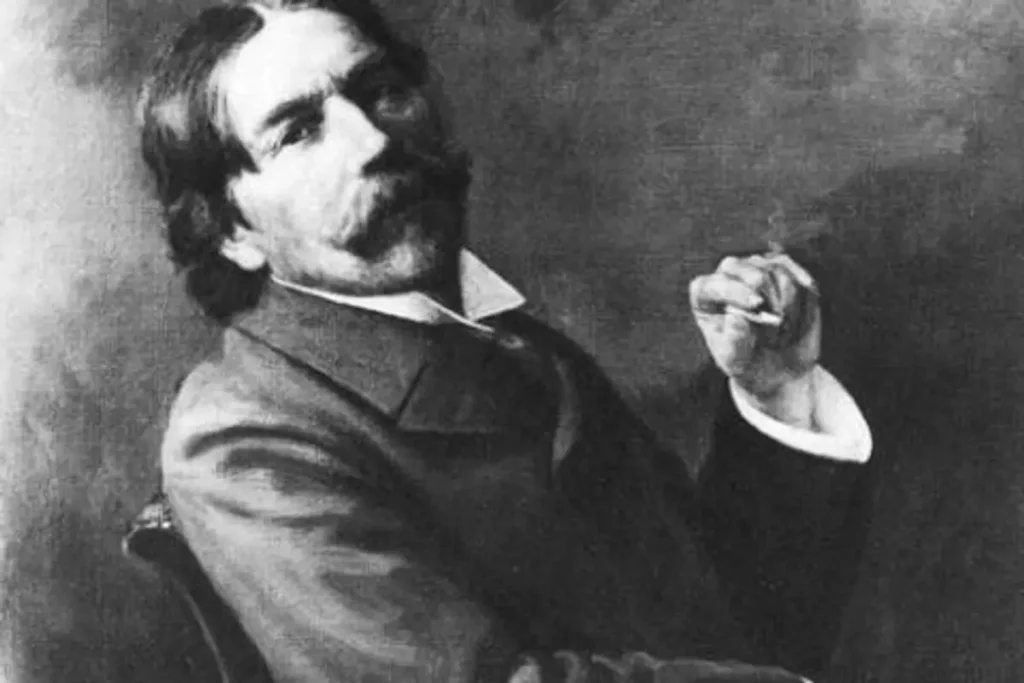
There is a moment, somewhere between waking and getting up, when you feel it — a pull toward something you cannot quite name. Not ambition, not hunger, not the rehearsed wanting that social life trains into you from childhood. Something older. A desire to do something well, to make something that holds together, to leave a mark in material that resists you. Veblen called it the instinct of workmanship, and he believed it was one of the oldest forces in human nature, buried beneath centuries of ritual degradation but never quite extinguished.
He wrote about it as early as 1898, in an essay that most economists ignored precisely because it refused to treat human beings as rational calculators optimizing utility. What Veblen saw instead was a creature constitutionally oriented toward purposeful activity, toward craft, toward the satisfaction that comes not from owning a thing but from making it. The instinct of workmanship, as he developed it in his 1914 book of the same name, was not romanticism. It was an evolutionary claim: that the capacity to work skillfully, to solve problems with one’s hands and mind together, had been selected for over millennia, and that it constituted something close to a biological baseline for human fulfillment.
And then there is the other thing. The thing that overrides it.
A man sits in a house he cannot afford, in clothes that cost more than a week’s labor, eating food he does not particularly enjoy, talking to people he does not particularly like, performing a version of himself that exhausts him by Tuesday. He is not unhappy in any simple sense. He is something more precise than unhappy — he is misaligned. The gap between what he is doing and what his body and mind were built to do has become a chronic low-grade noise he has learned to interpret as normal. He calls it stress. He calls it ambition. He calls it the price of success. Veblen would have called it pecuniary emulation, the instinct of workmanship colonized and redirected by the logic of display.
The leisure class does not destroy the instinct of workmanship through violence. It does something more efficient: it re-routes it. It takes the drive to make and transforms it into the drive to signal. The carpenter becomes someone who buys expensive tools he rarely uses. The writer becomes someone who performs writerly identity at the right parties. The intellectual becomes someone who collects prestigious affiliations the way earlier generations collected silverware. The making never happens, or it happens in private, furtively, like something shameful — because the culture has taught you that what you produce matters far less than what you can be seen to own or represent.
Thorstein Veblen understood this re-routing as the central tragedy of modern economic life, and he was not optimistic about reversing it. He had watched his own century accelerate in exactly the wrong direction. By the time he died in 1929, the advertising industry was already a mature institution, engineered precisely to manufacture the pecuniary instinct in people who might otherwise have trusted the quieter one. The GDP of wanting had become an industry. The instinct of workmanship had become a weekend hobby, sandwiched between obligations that served the other drive entirely.
What makes Veblen enduring is not that he solved this tension, but that he named it with a precision that makes it impossible to unknow. You carry both instincts. You have always carried both. The question he leaves you with — the one he refused to resolve in any of his books, in any of his lectures, in any of the sardonic sentences he aimed at the comfortable certainties of his age — is not which instinct exists in you, but which one has been making your decisions lately, and whether you have ever, in any honest moment, been able to tell the difference.
🎩 Wealth, Status, and the Theater of Society
Thorstein Veblen’s critique of conspicuous consumption and the leisure class opens a vast intellectual territory where economics meets sociology, philosophy, and cultural theory. The following articles explore the social forces, power structures, and ideological frameworks that shaped — and continue to shape — how wealth, status, and identity operate in modern civilization.
Mass Social Homologation Today
Mass social homologation is one of the defining phenomena of consumer society, echoing Veblen’s warnings about how status-seeking behavior erases genuine individuality. This article examines how conformity is manufactured and perpetuated through cultural and economic mechanisms. It offers a sharp lens for understanding the social psychology that Veblen dissected in his foundational work.
GO TO THE SELECTION: Mass Social Homologation Today
The Psychology of Power: History and Theory
The psychology of power is intimately connected to Veblen’s theory of the leisure class, which identified dominance and prestige as core drivers of economic behavior. This article traces the historical and theoretical roots of how power is acquired, displayed, and internalized across societies. Reading it alongside Veblen reveals the deep psychological architecture beneath economic systems.
GO TO THE SELECTION: The Psychology of Power: History and Theory
Banal Evil and Radical Evil: Kant and Arendt
Hannah Arendt‘s reflections on banal and radical evil offer a philosophical counterpoint to Veblen’s sociological critique of ruling elites and their moral detachment. Both thinkers probe how institutional structures normalize behavior that would otherwise seem ethically indefensible. This article illuminates the darker consequences of a society organized around prestige and class hierarchy.
GO TO THE SELECTION: Banal Evil and Radical Evil: Kant and Arendt
Thomas Hobbes: Life and Political Thought
Thomas Hobbes envisioned a society held together by force and self-interest, a vision that resonates deeply with Veblen’s portrait of competitive, status-driven social order. This article explores Hobbes’s political thought and his conception of human nature as fundamentally rivalrous and acquisitive. The parallels with Veblen’s leisure class theory make this an essential companion reading.
GO TO THE SELECTION: Thomas Hobbes: Life and Political Thought
Discover Independent Cinema on Indiecinema
If ideas about power, class, and the spectacle of wealth fascinate you, independent cinema has long been their most fearless mirror. On Indiecinema streaming you will find films that challenge conformity, expose social theater, and ask the questions mainstream culture prefers to leave unasked. Start exploring today and let independent cinema change the way you see the world.
👉 EXPLORE THE CATALOG: Watch Indie Films in Streaming
A vision curated by a filmmaker, not an algorithm
In this video I explain our vision

