
The Dinner Party You Cannot Afford to Miss
You arrived early, which was the first mistake. You stood near the drinks table with your coat still on, watching the room fill with people who seemed to know exactly where to place their hands. Someone mentioned a restaurant that had just opened in a neighborhood you quietly noted you had never visited. Someone else laughed about a wine region in a way that assumed familiarity, the kind of laugh that only works if you already know what you are supposed to find charming about it. You laughed too, half a second behind everyone else, recalibrating the pitch of your voice so it landed somewhere between enthusiastic and effortlessly indifferent. You had worn the jacket you bought three months ago, the one that cost more than you should have spent, and you wore it the way you imagined someone who owned four jackets like it might wear it: casually, as if it had simply appeared on your body through some natural process, unrelated to money or intention.

Nobody was deceived. Or rather, nobody needed to be, because deception was not the point. The point was the performance itself, the shared and unspoken agreement that everyone in that room would behave as though status were invisible, which is the only condition under which status can operate at full power. The moment you name it, it loses half its grip. So you do not name it. You refresh your glass and ask a question about the renovation someone is doing to a house in the country, a house you will never own, in a country you visit strategically rather than habitually, and you listen to the answer with the expression of a person who finds such things genuinely interesting rather than quietly terrifying.
This is not a confession of inadequacy. It is a description of a mechanism so universal and so old that it has its own literature, its own science, its own philosophers. What you felt at that dinner party, what you continue to feel at dozens of variations of it across your life, is the product of a social architecture that was not built for your comfort. It was built for your compliance.
In 1899, an economist and sociologist named Thorstein Veblen published a book that should have been scandalous and was instead largely absorbed by the culture it diagnosed. The Theory of the Leisure Class arrived at the end of the Gilded Age, that extraordinary American moment when fortunes were being assembled with a speed that made the old European aristocracies look leisurely by comparison. Veblen watched the newly rich build mansions they could not furnish with taste, throw parties whose primary function was to announce their own existence, and purchase objects whose value lay not in use but in the social information they transmitted. He gave this phenomenon its permanent name: conspicuous consumption. And then, with the particular cruelty of accurate observation, he went further. He argued that this behavior was not a corruption of some purer economic instinct. It was the instinct. The desire to signal, to distinguish, to perform superiority through waste, was not a pathology of the rich. It was the organizing principle of social life across every class, expressed at different scales.
That jacket you bought. That laugh you calibrated. That question about the house in the country. Veblen would not have found any of it surprising. He would have found it perfectly consistent with a theory he developed by observing people who were, in their own minds, nothing like you, people who would have been mortified to be compared to anyone performing anxiety at a dinner party. The aristocrats of his analysis were certain they had transcended the scramble. They were wrong. They were simply performing it at a higher altitude, where the air was thinner and the distances between people appeared, from below, to look like freedom.
The Lost Poet

Drama, by Fabio Del Greco, Italy, 2024.
Dante Mezzadri wants to see an old friend, nicknamed the Iguana, whom he has lost sight of for many years, and who has managed to turn their shared youthful passion for poetry into a job, becoming a famous writer and poet. The man escapes from his bourgeois life and his wife to live homeless on the Roman coast, printing and trying to sell his poetry collections. At night he sleeps in a park of old carnival floats, inside a papier-mâché tank, and waits for the opportunity to meet his old friend, who however never shows up for appointments in the places they frequented when they were young, now in ruins. Dante's poetry books do not interest anyone and to support himself he is forced to "change product": he starts selling the infamous "cannibal pill" on behalf of young drug dealers, a new drug that sells like hot cakes and causes sensory and consumerist ecstasy. However, he realizes that this powerful drug is very dangerous for those who take it, he comes into conflict with his ethical conscience and throws all the pills into the sea. However, the dealers want to collect their money.
Shot over a period of 2 years, the film is a reflection on the cultural and artistic rubble of the society in which the protagonist lives, in an increasingly mechanized, consumerist and arid world. Dante Mezzadri is yet another human being who has renounced his inspiration and his creativity, but unlike many he is not willing to give his life to a system that distances him from his true identity. The physical world around him, however, seems constructed in such a way that it seems impossible to escape from this "invisible cage". The enthusiasm of the people he meets is ignited only by sensory gratification, by unreal visions of personal affirmation and success, by "metaverses" that offer an escape into an illusory and destructive reality. The poet's house on the coast, where he met with his friends as a young man, is just a pile of abandoned rubble. What happened to all those who wanted to become poets and ended up becoming something else? Are there internal forces with which that house can be "rebuilt"?
LANGUAGE: Italian
SUBTITLES: English, Spanish, French, German, Portuguese
Veblen’s Wound: A Norwegian Immigrant Who Saw Everything
There is a particular kind of clarity that only comes from standing just outside the room. Not excluded entirely, not welcomed in, but positioned at exactly the right distance to see the architecture of the performance without being absorbed by it. Thorstein Veblen spent his entire life at that distance, not by choice, not by ideology, but because America never quite decided what to do with him.
He was born in 1857 on a farm in Cato Township, Wisconsin, the sixth of twelve children born to Thomas and Kari Veblen, Norwegian immigrants who had carried their Lutheran austerity and their callused hands across the Atlantic and planted them in the frozen midwestern soil. The family eventually moved to Minnesota, to a community so thoroughly Scandinavian that English remained a second language well into Thorstein’s childhood. He grew up watching his father work with the kind of focused, undecorated purpose that leaves no room for display. Everything that was done was done because it needed doing. This is not a small biographical detail. It is the lens through which he would later dissect an entire civilization.
He was brilliant in the way that institutions find uncomfortable: too rigorous to flatter, too precise to be polite, too foreign in some register that no hiring committee could quite name but everyone could feel. He earned a doctorate in philosophy from Yale in 1884 and then spent seven years essentially unemployable, living on his wife’s family’s charity in rural Minnesota, reading voraciously, writing nothing yet, metabolizing everything. When Cornell finally gave him a minor fellowship in economics in 1891, he arrived wearing a coonskin cap and carrying himself with the particular indifference of someone who has already spent years deciding that the performance of academic respectability is beneath him.
He moved through the University of Chicago, Stanford, the University of Missouri, always eventually pushed out or quietly not renewed, the reasons accumulating like sediment: his affairs with married women, his refusal to perform enthusiasm, his lectures that students found either transcendent or impenetrable with almost no middle ground. He never received the permanent, prestigious appointment his work warranted. The Theory of the Leisure Class was published in 1899, when he was forty-two years old, and it detonated something. But it did not save him from precarity. He died in 1929, a few months before the crash that would have proved him right in the most spectacular way imaginable, alone in a cabin in the California hills, the furniture sparse, the shelves full.
What his biography gave him was not bitterness, though perhaps that was there too. What it gave him was the sociological equivalent of peripheral vision. Thorstein Adorno would later write, in Minima Moralia, that the gaze that holds the object at a slight angle reveals the distortions that straight-on inspection normalizes. Veblen’s angle was built into his life before he ever theorized it. He had watched, from the margins of the Norwegian farming community, the margins of the American academic world, the margins of respectable society, how people signal position through waste. He had watched men perform their own uselessness as a form of power. He had watched women become, in his precise and devastating phrase, the “vicarious consumers” of their husbands’ status, wearing the evidence of his wealth on their bodies, their idleness the most eloquent advertisement of his rank.
The surgical coldness of the prose in The Theory of the Leisure Class is not an affectation. It is the instrument of a man who never had the luxury of misrecognizing the system as natural. When you grow up outside the performance, you never fully lose the capacity to see it as performance. That vision, for Veblen, was not a gift. It was a wound that happened to be shaped exactly like a scalpel.

Conspicuous Consumption: When Spending Is a Language
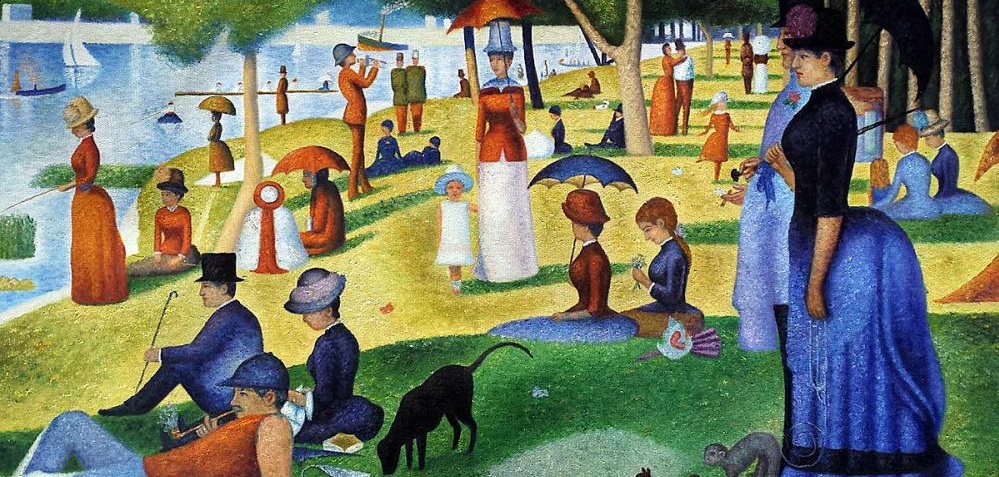
You know the moment. You are standing in a showroom, your hand resting briefly on the hood of a car you do not need, could not fully justify, and the salesman is saying something about torque or financing but you are no longer listening. You are watching yourself in the glass panel of the showroom wall, the reflection slightly distorted, and what you are actually calculating — without admitting it even internally — is how this object will translate into a statement about who you are to the people who matter to you. Not all people. Specific ones. The colleague who earns slightly more. The neighbor who recently renovated. The father who once told you to be practical. The car has become a sentence in a language you have been learning since childhood without ever being formally enrolled in the class.
This is the mechanism Thorstein Veblen named with surgical precision in 1899. Conspicuous consumption, he wrote, is not about the object at all. It is about waste as proof — the deliberate, visible expenditure of resources beyond necessity as a demonstration of the capacity to waste. The logic is ruthless in its simplicity: precisely because the object costs more than it needs to, it communicates something that a cheaper equivalent cannot. The excess is not a flaw in the purchase. The excess is the point.
What makes Veblen’s argument so difficult to dismiss is that it refuses the comfortable explanation of vanity. This is not about shallow people making foolish choices. It is about a structural feature of industrial society in which, as the inherited marks of feudal rank dissolve, spending becomes the only legible grammar left for stating one’s position. When you can no longer point to land or title or blood, you point to the watch on your wrist. Not to tell the time. The time is on your phone. You wear the watch to tell others something about the cost of your time, which is a way of telling them about the value you assign to yourself, which is a way of demanding they assign it too.
Georg Simmel, writing almost contemporaneously in The Philosophy of Money in 1900, approached the same territory from a different angle and arrived at conclusions that deepen rather than contradict Veblen’s. For Simmel, money in modern urban life does something philosophically violent: it transforms the qualitative into the quantitative, flattens the irreducible particularity of persons and objects into a single numerical equivalence. The consequence he traces is the emergence of a personality crisis — in a world where everything has a price, the individual fights to assert distinction through consumption, because that is the only arena left in which difference can be performed. The expensive object becomes a prosthesis for the self, an external organ for projecting interiority that modern life has made increasingly difficult to communicate otherwise.
The two men are describing the same animal from different sides of its body. Veblen sees the social performance, the theater of waste directed outward at witnesses. Simmel sees the existential wound underneath, the self that reaches for the object because the object will do what the self, stripped of stable communal identity, can no longer do alone. Together they produce a portrait of someone standing in a showroom, watching their own reflection in tinted glass, and experiencing both things simultaneously — the calculation and the longing, the performance and the need.
There is a scene that captures this with almost unbearable accuracy: a man dressing in front of a mirror each morning, fingering his cufflinks with an attention that looks like vanity but is actually something closer to terror, a ritual of assembly, the putting on of a self that holds together only as long as it is witnessed by the right eyes. He does not know what he wants. He knows exactly what he wants others to see.
Leisure as Work: The Exhausting Performance of Doing Nothing
There is a particular kind of stillness that belongs only to those who can afford it. You have seen it — perhaps at a dinner, perhaps through a window, perhaps in the slow deliberate movements of someone arranging long-stemmed flowers in a room so large that the sound of their own breathing barely reaches the walls. The staff move around her in careful orbits. She does not look up. The arrangement takes the better part of an afternoon, and that is precisely the point.
Thorstein Veblen understood this scene with a cold and unsentimental clarity. In The Theory of the Leisure Class, published in 1899, he argued that the abstention from labor was not simply a pleasure available to the wealthy — it was an obligation. A social performance with consequences. To be seen working, in a society organized around pecuniary distinctions, was to confess inadequacy. The gentleman who soiled his hands had already lost the argument. What mattered was the visible, legible, undeniable proof that one did not need to. Veblen called this conspicuous leisure: the public exhibition of non-productivity as the most sophisticated currency of status.
What makes this idea so uncomfortable is how little it has aged. The aristocratic ideal did not disappear; it migrated, slipped into new containers, learned to wear ironic clothing. The luxury vacation photographed from a hammock at golden hour is not rest — it is labor of a particular and exhausting kind. The image must communicate effortlessness. The caption must breathe nonchalance. And behind it lie hours of selection, lighting, revision, the careful management of what absence is supposed to look like. The performance of not performing has become its own industry.
Erving Goffman, writing sixty years after Veblen in The Presentation of Self in Everyday Life, gave this dynamic its theatrical architecture. Every social interaction, he argued, has a front stage and a back stage. On the front stage, we perform the version of ourselves our audience requires. The back stage is where the costume comes off, where the exhaustion surfaces, where the actual labor of maintaining the performance takes place. What Veblen identified as a class behavior, Goffman revealed as a structural condition of all social life — though the stakes are never equal, and the performance of leisure remains among the most demanding roles in the repertoire.
Think of the deliberate slowness of the powerful. The unhurried response to an urgent message. The meeting that starts five minutes late because lateness, at a certain altitude, signals that your time bends to no one else’s schedule. These are not accidents of temperament. They are calibrated demonstrations of exemption. Veblen would have recognized them instantly as the modern descendants of the gentleman’s studied indifference to commerce.
The cultivated hobby follows the same logic. Not any hobby — not the desperate crowding of evenings after a ten-hour shift, not the cheap pleasure seized in a gap between obligations. The right hobby requires visible investment: the hand-thrown ceramics, the serious wine cellar, the sailing lessons that cost more than a month’s rent. It announces that one has not merely time but the correct relationship to time. That one has elevated mere living into something resembling an aesthetic practice. Veblen was not sentimental about this. He saw it as a refined form of waste, and waste was the proof.
The woman with the flowers does not think of herself as performing anything. That is the most important part of the scene. The performance has been so thoroughly internalized, so long rehearsed, that it no longer feels like performance at all — it feels like character, like taste, like simply being the kind of person one is. Goffman knew this too. The most convincing actors are the ones who have forgotten they are acting.
The Predatory Class and Its Myths of Merit
There is a specific kind of speech that gets delivered in hotel conference rooms, in company all-hands meetings, in commencement addresses at business schools. A man — almost always a man, young enough to still wear his ambition visibly on his face — stands at a podium and tells the assembled crowd that success comes to those who want it badly enough. He speaks about early mornings and late nights, about sacrifice and discipline, about the refusal to accept limitations. The people listening to him work longer hours than he does. Some of them have two jobs. None of them are taking notes because they recognize, somewhere beneath the applause they will still give him, that what he is describing has almost nothing to do with their lives or his.
Veblen would have recognized this scene instantly. Not as hypocrisy, exactly, but as something more structurally revealing: the predatory class narrating itself as meritocratic while performing, almost unconsciously, the ancient gestures of the warrior caste. The leisure class he anatomized in 1899 did not emerge from industriousness. It emerged from what he called the predatory phase of culture, that long historical period in which status accrued not through productive labor but through seizure, conquest, and the conspicuous avoidance of work that could be mistaken for servility. The temperament this culture cultivated — aggressive, acquisitive, oriented toward dominance rather than contribution — never disappeared. It simply learned to wear a suit and speak the language of merit.
In 1899, the year Veblen published his analysis, the top one percent of American households controlled more than half of the nation’s total wealth. That figure would shift across the following century under the pressures of progressive taxation, labor organization, and wartime redistribution, but it would never dissolve. By the early twenty-first century it had reconverged toward figures that would have felt familiar to Veblen’s original readers. The arithmetic of predatory accumulation proved more durable than any ideology invented to explain or justify it.
The mythology of the self-made man is precisely that durability in narrative form. Pierre Bourdieu, writing in Distinction in 1979, gave this phenomenon its most precise theoretical name: symbolic violence, the mechanism by which the dominated come to experience the social order as natural, even just, applying to their own situations the categories of perception that serve the interests of those who dominate them. The executive delivering his speech about hard work is not simply lying. He is exercising symbolic violence, which is more effective than lying precisely because it does not require conscious deception. He believes what he says. The audience partially believes it too. That partial belief is the machinery’s most essential component.
What Bourdieu diagnosed as structural, Veblen had already glimpsed as temperamental. The leisure class did not merely occupy a position; it inhabited a disposition, a trained incapacity for recognizing the collective labor on which its position rested. A man who inherits the social coordinates of success — the education, the network, the cultural fluency, the assumption of his own competence — does not experience these as inheritance. He experiences them as character. The early morning he actually did wake up early becomes, in his personal mythology, the cause of everything that followed. The thousand structural advantages that preceded that morning become invisible, not through bad faith but through the ordinary workings of a self that has never been asked to account for its own conditions.
This is what makes the predatory temperament so persistent and so difficult to name inside the culture it shapes. It looks like excellence from the inside. It narrates itself as excellence to everyone within earshot. And the people who work harder, longer, for less, often end up measuring themselves against it as though it were a standard they had simply failed to meet.
A vision curated by a filmmaker, not an algorithm
In this video I explain our vision
Emulation: The Trap That Runs Downward

You buy the coat not because you want it but because you are terrified of being the person who could not buy it. There is a difference, and you know it, somewhere beneath the justifications you recite to yourself in the store — that it is well-made, that it will last, that it is actually an investment. The justifications arrive after the decision, not before. The decision was made the moment you imagined how you would look to someone whose opinion you cannot name but whose gaze you carry everywhere like a second skeleton.
This is the mechanism Veblen called pecuniary emulation, and its particular cruelty lies not in the fact that it makes people want things, but in the fact that it makes wanting structurally impossible to satisfy. Each class looks upward at the one above it and calibrates its consumption accordingly, straining toward a standard it has not yet reached. But the class above is doing the same thing, eyes lifted toward the next tier, which is itself reaching for something just beyond its grasp. The entire edifice moves like an escalator that never arrives at a floor. The direction is always up, and the standing still is always failure.
René Girard, writing in 1961 about the deep architecture of desire in the European novel, arrived at a conclusion that mirrors Veblen’s economic observation with uncomfortable precision. Desire, Girard argued, is never spontaneous and never self-generated. It is always triangular: we want what we want because someone else — a model, a rival, a figure we have invested with a kind of authority — wants it first. The object is almost incidental. What we are really pursuing is proximity to the model, a kind of ontological upgrade, the feeling that we might become what they seem to be. Veblen’s leisure class functions exactly as Girard’s mediator: it does not need to actively advertise itself. Its mere existence is sufficient to organize the desires of everyone below it.
What makes this trap so elegant in its brutality is that it runs downward with perfect efficiency. The emulation does not require contact with the class being imitated. It does not require admiration, or even awareness. A factory worker in 1899, the year Veblen published his theory, had almost certainly never met a member of the leisure class personally. But the cultural signals — the styles, the manners, the objects — percolated down through every social layer, and with them came the standards of adequacy that made his own life feel perpetually insufficient. The coat he could not afford was not a coat. It was proof.
Robert Frank, working over a century after Veblen with the tools of behavioral economics, found the same mechanism still running. In his 2007 study of relative income effects, Frank demonstrated that what determines a person’s sense of financial wellbeing is not their absolute income but their position relative to those immediately around them. The data is stark: as inequality grows, the expenditure cascades downward. Upper earners spend more visibly, which shifts the reference point for those just below them, who adjust accordingly, compressing everyone further down the scale into spending they cannot sustain. Frank documented how this cascade was measurably linked to rising personal debt, longer working hours, and the quiet psychological devastation of feeling permanently behind while being objectively, statistically better off than most of human history would recognize as possible.
And yet the feeling does not care about history. It cares about the woman in the apartment above yours, the colleague who just returned from somewhere warm, the car parked outside the restaurant where you calculated, without deciding to calculate, whether you could afford to eat. The comparison happens before thought. It happens in the body, in the chest, in the slight involuntary calibration that tells you where you stand before you have consciously asked the question.
Beauty, Waste, and the Aesthetics of Uselessness
There is a table at the market — solid oak, hand-planed, with a slight unevenness along one edge where the craftsman’s tool drifted a fraction of a millimeter. You run your finger along that drift. And you want it more because of it. Not despite the imperfection, but because of it, and somewhere beneath the aesthetic pleasure there is a calculation running that you did not consciously initiate. The crooked edge costs more. The slight irregularity is the proof of hours, of a human body bending over wood, of time spent in a way that machines have rendered unnecessary. You are not admiring craftsmanship. You are admiring expenditure.
Veblen understood this with a precision that still feels like an accusation. In The Theory of the Leisure Class, published in 1899, he argued that our very capacity for aesthetic judgment has been infiltrated by the logic of waste — that we do not find things beautiful and then assign them value, but rather that we perceive value and then experience beauty as its symptom. The hand-stitched seam, the irregular weave, the slight asymmetry of a thrown ceramic bowl: these are not beautiful in any pure or disinterested sense. They are expensive, and we have learned, over generations of social conditioning, to feel the expensive as beautiful. The aesthetic nerve and the price signal have become indistinguishable, fused at some point so early in our formation that we cannot locate the seam.
Walter Benjamin, writing in 1935, reached toward something adjacent when he described what he called the aura of the original work of art — that quality of unique presence, of being embedded in a particular time and place, which mechanical reproduction destroys. Benjamin mourned this loss, or at least described it with a melancholy that reads like mourning. But Veblen, had he lived to read Benjamin, might have offered a colder diagnosis: the aura is not a mystical property of objects. It is a socially manufactured signal of irreproducibility, which is to say, of cost. What Benjamin experienced as the trembling presence of the original is, in Veblen’s framework, the trembling presence of money — of all the human time that cannot be replicated, cannot be mechanized, cannot be cheapened. The aura is the smell of waste, and we have trained ourselves to find it sacred.
The modern luxury industry has understood this with ruthless clarity. Hermès limits the production of certain bags not because the manufacturing capacity is insufficient but because scarcity is the product. The waiting list is not a failure of supply; it is the commodity itself. Louis Vuitton destroyed unsold inventory worth hundreds of millions of euros rather than discount it, because a discounted luxury object is a contradiction in terms — it has been stripped of the signal it was built to carry. The inefficiency is not incidental to the value. The inefficiency is the value. Veblen wrote this in 1899 about the habits of American industrialists, and the sentence has simply migrated upmarket and gone global.
What makes this genuinely disturbing is not that the wealthy are deceived by artificial scarcity. It is that you are. The preference for the hand-planed table over the machine-perfect one is not false consciousness in any simple sense — the pleasure is real, the tactile response is real — but it has been educated into you by a system that needed you to feel beauty where it had placed expense. Pierre Bourdieu, in Distinction published in 1979, spent nearly six hundred pages demonstrating that taste is not personal. It is positional. It maps social space with extraordinary accuracy. What you call your aesthetic sense is largely a record of where you stand, where you want to stand, and how well you have learned to recognize the signals of standing itself.
The hand runs along the uneven edge of the oak table. The wanting is real. The question is only whose wanting it actually is.
The Mirror That Does Not Flatter
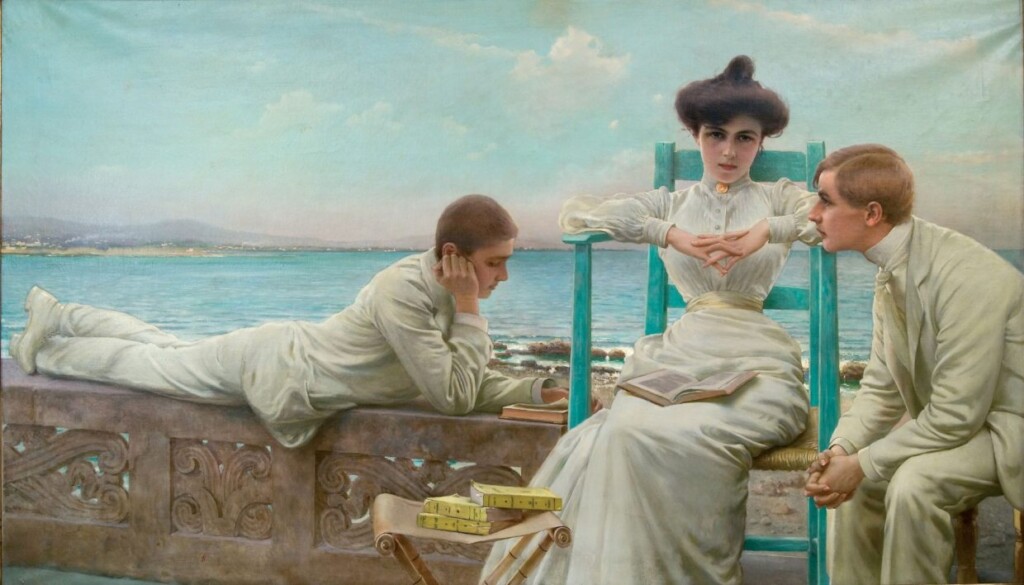
There is a moment, probably familiar to you, when you open your own profile and scroll through it as a stranger would. You are not looking for information you do not already have. You are auditing. You are checking whether the image coheres, whether the accumulation of selected moments adds up to the person you intend to be seen as. You adjust a caption, consider deleting a photograph that now seems to reveal something unflattering, not about your appearance but about your circumstances. The car in the background is too old. The restaurant looks cheap. The holiday destination reads, by current standards, as insufficiently aspirational. You are not lying, exactly. You are editing. And the editing feels rational, even necessary, in a way you would struggle to explain to anyone who asked you directly why it matters.
This is the point at which Veblen’s argument becomes genuinely uncomfortable, because it refuses to position you as the deceived. You are not the worker crushed beneath the leisure class’s contempt, gazing upward with resentment at a system you had no hand in building. You are the system. The invidious comparison that Veblen described in 1899 as the animating principle of conspicuous consumption was never a habit of the wealthy alone. It was always a democratic mechanism, a logic that reproduces itself at every level of the social hierarchy, each person oriented upward in emulation and downward in distinction. Pierre Bourdieu, extending this analysis nearly eighty years later in Distinction, published in 1979, demonstrated with sociological precision that taste is not personal preference but positional warfare, every aesthetic choice a marker that simultaneously includes and excludes, signals belonging and announces distance. The tragedy Bourdieu identified is not that people are manipulated from outside but that they have genuinely internalized the criteria of their own judgment. They believe their preferences are theirs.
Thorstein Veblen was not a moralist, which is what makes him so difficult to dismiss. He did not argue that conspicuous consumption was wrong in any transcendent ethical sense. He argued that it was wasteful in an evolutionary sense, a diversion of human productive energy into the performance of status rather than the satisfaction of genuine need. But he was precise enough to see that the category of genuine need is itself contaminated, that what counts as necessity is always socially defined, always saturated with the logic of standing. When Erving Goffman published The Presentation of Self in Everyday Life in 1959, he gave a different vocabulary to the same underlying structure, describing social life as continuous performance, every interaction a stage on which identity is not expressed but constructed and defended. What he did not fully anticipate, because he could not have, was a technology that would transform the backstage into another stage, that would make the private rehearsal of identity into a public archive, permanently accessible, permanently auditable.
You scroll back up through your own profile and something almost like vertigo is possible in that moment, a brief doubling in which you see yourself seeing yourself, in which the performance and the performer seem to separate by a fraction. It lasts perhaps two seconds. Then you close the application, or you make the small edit you came to make, and the vertigo closes over. Veblen’s text was written about men in frock coats and women in corsets, about Newport mansions and the conspicuous leisure of a class that had no need to work and demonstrated its power precisely through that exemption. The specific costumes have changed entirely. The mechanism has not moved an inch. What has changed is the scale, the granularity, the speed at which comparison is now possible, and the intimacy of the arena in which it is conducted. The question that remains, sitting just beneath the surface of every edited image and every carefully chosen caption, is not whether you are aware of the trap. Awareness, it turns out, was never the thing that set anyone free.
🏛️ Power, Status, and the Critique of Modern Society
Veblen’s Theory of the Leisure Class dissects the social rituals of conspicuous consumption and the performance of status, revealing how economic power shapes culture and identity. These related articles explore the philosophical, political, and sociological threads that run through Veblen’s landmark critique, from theories of power and domination to the aesthetic and existential dimensions of modern life.
The Psychology of Power: History and Theory
The psychology of power examines how authority, dominance, and submission structure human societies at every level — from intimate relationships to vast political systems. Understanding the psychological underpinnings of power is essential to grasping why Veblen’s leisure class perpetuates its status through ritual and display rather than genuine merit.
GO TO THE SELECTION: The Psychology of Power: History and Theory
Mass Social Homologation Today
Mass social homologation describes the process by which consumer culture erases individual difference, pressing people into conformist patterns of behavior and taste. This phenomenon resonates deeply with Veblen’s analysis of emulation, where lower classes imitate the consumption habits of the wealthy in an endless, self-defeating cycle of social mimicry.
GO TO THE SELECTION: Mass Social Homologation Today
Herbert Marcuse and Art: The Aesthetic Dimension
Herbert Marcuse’s aesthetic theory argues that genuine art retains a subversive power capable of challenging the repressive norms of advanced capitalist society. His thinking extends and radicalizes Veblen’s critique, asking not just how leisure is performed but whether culture itself can become an instrument of liberation rather than domination.
GO TO THE SELECTION: Herbert Marcuse and Art: The Aesthetic Dimension
La Bohème: History and Myth of the Poor Artist
The myth of the poor artist and the Bohemian tradition represent a deliberate rejection of bourgeois values and the logic of conspicuous consumption that Veblen so precisely anatomized. By choosing poverty and creative freedom over social respectability, the Bohemian figure enacts a living critique of the leisure class’s obsession with status and display.
GO TO THE SELECTION: La Bohème: History and Myth of the Poor Artist
Explore Ideas Through Independent Cinema
If Veblen’s critique of status, consumption, and social performance has sparked your curiosity, independent cinema offers some of the most penetrating and uncompromising explorations of these very themes. On Indiecinema streaming you’ll find films that challenge, provoke, and illuminate — discover them now and see society through a radically different lens.
👉 EXPLORE THE CATALOG: Watch Indie Films in Streaming
A vision curated by a filmmaker, not an algorithm
In this video I explain our vision

