
The Museum on a Tuesday Afternoon
You stand in front of a large canvas — ochre and black, imposing in its dimensions — and you feel almost nothing. Not nothing exactly. A kind of readiness to feel, a posture of reception, the internal arrangement of someone who has purchased a ticket and therefore owes the work a certain quality of attention. You tilt your head slightly. You step back. You read the placard on the wall, which tells you the artist’s name, the year, the medium, the title, which is something like “Untitled No. 7” or “Study in Grief” or “After the War,” and for a moment the words do more work than the painting. You nod, almost imperceptibly, at no one. Then you move on.

This is the Tuesday afternoon museum experience, and it is one of the most quietly devastating rituals of contemporary life precisely because it masquerades so convincingly as its opposite. You came here, after all, to be moved. You came because you believe — or you have been taught to believe, which is not the same thing but has become indistinguishable from it — that art is the place where the administered world loosens its grip, where something true and excessive and irreducible to market value survives. And yet here you are, performing contemplation in a building specifically designed and funded and curated to make you feel cultured, elevated, alive to beauty, and you are leaving more or less exactly the same person who walked in.
Herbert Marcuse understood this before most of us had the vocabulary to describe it. In “The Aesthetic Dimension,” published in 1978 as one of his final theoretical interventions, he argued something that still manages to disturb: that art’s radical potential does not reside in its political content, its subject matter, its ideological alignment, but in its very form — in its capacity to estrange reality, to refuse the logic of what exists, to make the given world appear as contingent rather than natural. And he argued, with the lucidity of someone who had already watched the counterculture dissolve into commodity, that this capacity was being systematically drained. Not through censorship, not through explicit suppression, but through absorption. Through the museum. Through the ticket price. Through the ochre canvas on the Tuesday afternoon wall.
Marcuse had arrived at these conclusions by a longer road than most. Trained in the German philosophical tradition, deeply shaped by Hegel’s insistence that contradiction drives historical movement and by Freud’s mapping of the psychic cost of civilization, he spent the middle decades of the twentieth century elaborating what it would mean for human beings to be unfree in conditions of apparent freedom. “One-Dimensional Man,” published in 1964, diagnosed a society so efficient at absorbing dissent, so skilled at converting refusal into style and opposition into product, that the very grammar of negation was being colonized. The book sold over 100,000 copies in its first years and became foundational to the New Left, to students in Paris in May 1968, to activists who recognized in its pages the mechanism of their own pacification. Marcuse himself was by then in his mid-sixties, a German-Jewish intellectual who had fled National Socialism, worked for American intelligence during the war, and ended up teaching in California — a trajectory so dense with historical irony that it reads like a theorem about the twentieth century’s relationship to its own contradictions.
What he saw in the museum — and in the concert hall, and in the literary prize, and in the retrospective, and in the coffee table book — was not the failure of art but the success of a system. A system so totalizing that it could accommodate the most radical gesture, frame it beautifully, light it professionally, and sell it to you at twenty-two dollars a ticket, leaving you on the pavement afterward, blinking in the ordinary light, unchanged.
The Lost Poet
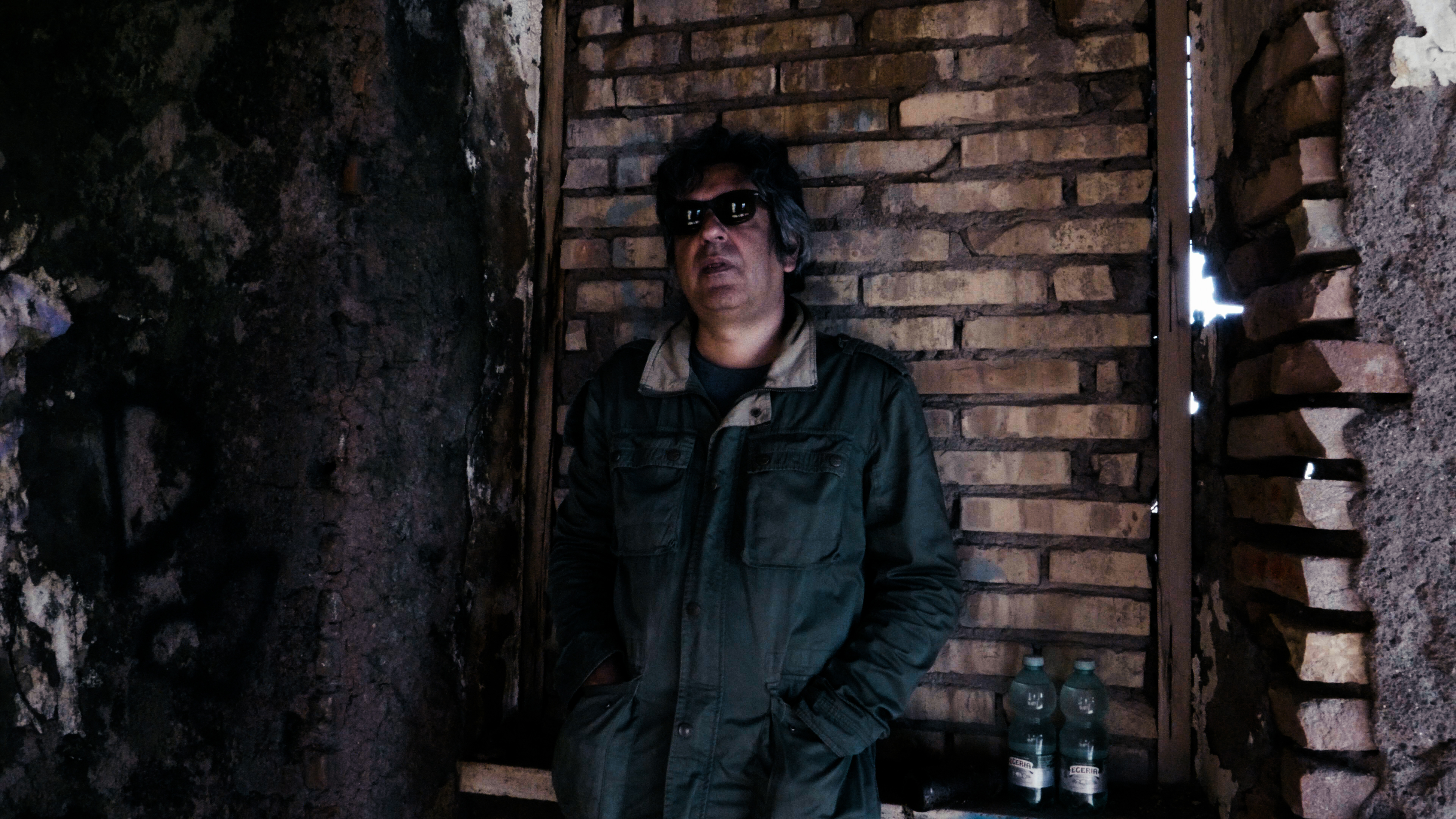
Drama, by Fabio Del Greco, Italy, 2024.
Dante Mezzadri wants to see an old friend, nicknamed the Iguana, whom he has lost sight of for many years, and who has managed to turn their shared youthful passion for poetry into a job, becoming a famous writer and poet. The man escapes from his bourgeois life and his wife to live homeless on the Roman coast, printing and trying to sell his poetry collections. At night he sleeps in a park of old carnival floats, inside a papier-mâché tank, and waits for the opportunity to meet his old friend, who however never shows up for appointments in the places they frequented when they were young, now in ruins. Dante's poetry books do not interest anyone and to support himself he is forced to "change product": he starts selling the infamous "cannibal pill" on behalf of young drug dealers, a new drug that sells like hot cakes and causes sensory and consumerist ecstasy. However, he realizes that this powerful drug is very dangerous for those who take it, he comes into conflict with his ethical conscience and throws all the pills into the sea. However, the dealers want to collect their money.
Shot over a period of 2 years, the film is a reflection on the cultural and artistic rubble of the society in which the protagonist lives, in an increasingly mechanized, consumerist and arid world. Dante Mezzadri is yet another human being who has renounced his inspiration and his creativity, but unlike many he is not willing to give his life to a system that distances him from his true identity. The physical world around him, however, seems constructed in such a way that it seems impossible to escape from this "invisible cage". The enthusiasm of the people he meets is ignited only by sensory gratification, by unreal visions of personal affirmation and success, by "metaverses" that offer an escape into an illusory and destructive reality. The poet's house on the coast, where he met with his friends as a young man, is just a pile of abandoned rubble. What happened to all those who wanted to become poets and ended up becoming something else? Are there internal forces with which that house can be "rebuilt"?
LANGUAGE: Italian
SUBTITLES: English, Spanish, French, German, Portuguese
Affirmative Culture and the Beautiful Lie
She buys the ticket alone, tells no one. There is something faintly illicit about it, the way she folds her coat over her arm and finds her seat before the lights go down, before anyone might notice she has come to this place without occasion, without a companion to justify the expense. The music begins and something moves in her chest that she does not have a name for, something that feels disturbingly close to grief, or hunger, or both. By the interval she is barely breathing. By the final act she is, in some precise and undefendable sense, undone. She walks home through streets that feel suddenly insufficient, the ordinary architecture of her life pressing in from all sides, and she thinks: something must change. She thinks it with the full force of a person who has just been broken open by beauty. And by morning, she has made coffee, answered three emails, and the feeling is a residue, not a revolution.
Marcuse would have recognized that walk home. In 1937, writing in exile and in the specific fury of someone watching fascism absorb the cultural prestige of a civilization that claimed to have transcended barbarism, he published an essay that named what had just happened to that woman with surgical precision. The affirmative character of culture, he argued, is not an accident of bourgeois taste. It is a structural function. The elevation of art into a separate spiritual realm, luminous, transcendent, sealed off from the material conditions of daily life, serves precisely to prevent art from touching those conditions. Beauty is granted its own kingdom so that it will not interfere with any other.
The logic is almost elegant in its cruelty. Art is permitted to speak of suffering, longing, injustice, and the full catastrophe of human unfulfillment, but only from within a frame that designates all of this as spiritual rather than political, as inner rather than systemic. The opera is permitted to break your heart. It is not permitted to organize your dissatisfaction into action. The museum is not incidentally the architecture of this bargain. It is the bargain made physical, the institution that lifts the object out of the world and places it somewhere the world cannot follow. You enter, you feel, you leave, the painting stays. The circuit is closed. Nothing leaks back.
What Marcuse understood, drawing on both Marx and Freud with an intellectual pressure that neither alone could generate, is that this separation between the beautiful and the real is not natural. It was constructed, historically, through the specific social arrangements of bourgeois society, which needed a place to deposit the longings it could not satisfy materially. The promise of happiness, of wholeness, of a life genuinely lived, was not abolished. It was relocated. Moved upstairs, as it were, into the concert hall, the gallery, the cathedral of aesthetic experience, where it could be felt intensely and then filed away. Schiller had given this process its vocabulary when he wrote about the aesthetic education of man in 1795, imagining art as the domain where sensuous and rational impulses might be harmonized. Marcuse read that same text and saw the mechanism of containment hidden inside the dream of liberation.
The woman in the concert hall has not been deceived in any simple sense. The feeling was real. The music genuinely opened something. That is precisely the trap. Affirmative culture works not by offering false experience but by offering real experience that is structurally prevented from producing consequences. You are moved. The movement goes nowhere. The emotion is genuine and perfectly inert, like a fire built inside a room with no doors. And the morning after, the emails, the coffee, the life that did not change, is not evidence of her failure. It is evidence of the system working exactly as designed.

Eros Against the Performance Principle
You sit in the dark and something moves through you that has no name in your working life. It is not quite grief and not quite longing and not quite the rage you swallow every morning on the commute, but it contains all three in solution, the way seawater contains salt without looking like it. For two hours something in you that has been held underwater finally breaks the surface. Then the lights come up. You find your coat. You step back into the same street, the same cold, the same silence that was waiting for you like a patient creditor.
Marcuse understood this experience with a precision that most aestheticians miss because they are too busy being tasteful. In Eros and Civilization, published in 1955, he performed a rereading of Freud that was neither a celebration nor a refutation but something more disturbing: a demonstration that Freud had correctly diagnosed civilization while refusing to imagine its cure. The argument is deceptively simple. Civilization requires that libidinal energy — the diffuse, polymorphous drive toward pleasure, connection, and the dissolution of boundaries — be redirected toward productive labor. Freud called this repression necessary and universal. Marcuse called it contingent and historically specific. The repression required by a society organized around scarcity and domination is not the same as the repression required by nature. He named the surplus, the amount of self-suppression imposed not by biological necessity but by social arrangement, the performance principle: the injunction to produce, to achieve, to justify your existence through output.
Art exists inside this architecture as an anomaly. It is one of the few cultural spaces where Eros — the drive toward union, beauty, non-instrumental existence — is permitted to surface without immediate punishment. But permitted is exactly the right word, and it carries the full weight of its ambivalence. The permission is conditional. The surfacing is temporary. The energy that rises in the dark does not transform the world; it circulates for a measured interval and then returns to its channels, and you return to your apartment with something that feels like having been briefly, almost accidentally, alive.
Think of the man sitting with his television in a room that has accumulated the specific silence of a life lived beside itself rather than inside itself. Around him the objects of his days — the unwashed cup, the folded newspaper, the blue light of the screen — hold the shape of a self that has been performing rather than living for so long that the performance has become indistinguishable from the person. And then something on the screen opens a door he had forgotten was there: a moment of tenderness between two people, or a flash of anger that names exactly what he has been unable to name, or simply an image of somewhere else, a landscape that his body recognizes as a possibility his biography has foreclosed. He does not cry, or perhaps he does, briefly, in the particular way men cry when no one is watching. Then it ends. He turns off the light.
This is not a failure of art. This is art functioning precisely as Marcuse described it: as a great refusal that is also, structurally, a great accommodation. The refusal is real. The tenderness that moves through you in those two hours is not false. The desire for a different life that rises in your chest like water finding its level is not an illusion. But the system has learned to contain that refusal, to give it a scheduled time and a comfortable seat, to let it exhaust itself in the dark so that it does not spill into the morning.
Herbert Marcuse was not naive about this. He was, if anything, almost brutal in his clarity. The aesthetic dimension, he would write in 1978, contains a promise of liberation that civilization simultaneously requires and cannot fulfill — because to fulfill it would be to become something civilization, as currently organized, cannot survive being.
One-Dimensional Man and the Absorption of Transgression
There is a moment, familiar to anyone who has walked through a major contemporary art museum in the last fifty years, when something strange happens almost without your noticing. You stand before a canvas that was once genuinely dangerous — painted by someone who believed, with absolute conviction, that this gesture, this rupture of form, this refusal of beauty’s conventions, was an act of resistance. And the museum has placed it between temperature-controlled walls, under carefully calibrated lighting, with a small placard explaining its historical importance. The admission ticket cost you twenty-two dollars. There is a gift shop where you can buy a tote bag printed with its image.
This is not irony. This is the system functioning perfectly.
In 1964, Marcuse published the book that named what many were sensing but could not yet articulate. His diagnosis was precise and devastating: advanced industrial society had developed an extraordinary internal capacity to absorb its own negation. Not through censorship, not through brute suppression, but through something far more elegant and far more total. The society could take the gesture of rebellion, strip it of its antagonistic charge, and reintegrate it as evidence of its own openness. The revolutionary becomes an icon. The icon becomes a commodity. The commodity becomes proof that the revolution was never really necessary, because look — it is all here, visible, celebrated, available for purchase.
Marcuse called this process, in one of his most clinical formulations, the containment of social change. The one-dimensional society he described was not a society that prohibited transgression. It was a society that consumed it. Dissent became style. The avant-garde became a museum wing. The very existence of the provocation was reframed as confirmation that the system could hold everything, absorb everything, metabolize everything without altering its fundamental structure.
The historical evidence for this mechanism arrived with a clarity that borders on the grotesque. In the years following the Second World War, the Abstract Expressionist movement — Pollock, de Kooning, Rothko, Kline — was quietly and systematically promoted by the Congress for Cultural Freedom, an organization secretly funded by the Central Intelligence Agency. Frances Stonor Saunders documented this in meticulous detail: the international exhibitions, the subsidized tours, the journals and publications, the strategic deployment of what had been an authentically difficult, psychologically raw, formally radical body of work as a weapon of soft power against Soviet socialist realism. The paintings that had emerged from genuine crisis, from alcoholism and breakdown and the desperate attempt to find a visual language adequate to the horror of the mid-century, were repackaged as proof of American freedom. The market. The individual. The open society. Abstract Expressionism was not suppressed. It was promoted, precisely because its formal radicalism could be separated from any social content and exhibited as the beautiful face of liberal capitalism.
This is the mechanism Marcuse was trying to name. And it operates not through conspiracy — the CIA intervention is real and documented, but it is almost beside the point — but through a structural logic that requires no conscious coordination. A young man stands in a doorway, wearing a t-shirt printed with the face of a revolutionary who died before the age of forty, trying to change the world by violence and will. The shirt costs thirty-five dollars. He bought it online. The system absorbed that gesture before he even made it.
There is a scene where someone watches television for hours — not passively, but hungrily, as though searching for something the screen cannot provide. What they are watching is a sequence of images of protest, of rupture, of bodies in the streets. The broadcast presents it as compelling content. The revolution is live. The revolution has good ratings. The revolution will return after the break.
Marcuse understood that the most effective form of control is the one that feels like freedom.
The Great Refusal
There is a painter who has filled his studio with ash. Not metaphorically — literally. Canvas after canvas burned or slashed before the image could solidify into something finished, something that could be looked at and accepted and moved past. Visitors assume he is blocked, tortured by perfectionism, condemned by some neurotic inability to arrive. They are wrong. The destruction is the work. What he refuses is not failure but resolution — the moment when a painted surface stops being a wound and becomes a decoration.
Marcuse called this the Great Refusal, and he meant something far more precise than rebellion or negation. He meant the absolute rejection of what exists not in the name of an alternative program, not toward any specific utopia, but in fidelity to the possible as such — to the dimension of reality that the administered world has systematically buried under the weight of what already is. In “Eros and Civilization” published in 1955, and then with greater urgency in “An Essay on Liberation” in 1969, he identified a specific kind of refusal that operates below the level of politics, anterior to ideology, rooted in the body’s own memory of pleasure and its rage at having been made to forget. The Great Refusal is not a manifesto. It is a posture of the entire organism against the reality principle as it has been historically deformed by surplus repression.
Art, when it is genuinely art, holds that posture. It does not propose. It does not solve. It keeps open the wound of what is missing and refuses to let that wound close into scar tissue, into the numb, functional surface that makes daily life bearable and political resignation seem reasonable. The painter who burns his canvases before they harden into acceptability is practicing this refusal with a literalism that most aesthetics cannot account for, because most aesthetics is still organized around completion, around the artifact, around the object that survives its making and enters the world as a thing to be owned and interpreted.
Marcuse’s reading of Surrealism clarifies what is at stake. He did not love Surrealism uncritically, but he recognized in it something that academic art had surrendered entirely: the attempt to recover what waking life amputates. André Breton and the Surrealists understood — with the urgency of people who had survived the first industrial slaughter in European history — that consciousness as organized by capitalist modernity was a diminished thing, an instrument calibrated to manage and produce, stripped of the perceptual excess that might allow it to know what it had lost. The unconscious, in their reading, was not merely a repository of neurosis. It was a counter-archive, holding images of possibility that the daylight world had declared inadmissible.
What Marcuse saw in that gesture was not primitivism or irrationalism but a form of cognitive resistance. The images that surface when the censoring function of social reason is loosened are not fantasies. They are memories of a different relation to reality — one in which gratification is not perpetually deferred, in which the body is not simply an instrument of production and consumption, in which time has not been entirely colonized by function. Authentic art, he argued, preserves this dimension. It does not represent it positively, does not depict a better world in the manner of socialist realism or political allegory. It preserves it negatively, by refusing to let the existing world appear complete.
This is the specific cruelty of the Great Refusal: it offers nothing in exchange for what it takes away. The painter stands before ash and cannot tell you what the painting should have been. That ignorance is not failure. It is the precise shape of what the world has made unimaginable, held open by the refusal to replace it with something that fits.
A vision curated by a filmmaker, not an algorithm
In this video I explain our vision
Form as Political Act

There is a moment when a camera simply refuses to move. A woman sits at a kitchen table after something has broken — a marriage, a faith, a version of herself she can no longer maintain. The shot holds. It holds longer than comfort allows, longer than narrative demands, longer than any reasonable editor would permit. Nothing happens. Everything has already happened. And in that refusal to cut, in that formally rigorous act of stillness, you understand something about the weight of her life that twenty minutes of dialogue could not have delivered. The form is the argument. The duration is the politics.
This is precisely what Herbert Marcuse was trying to say in 1978, when he published The Aesthetic Dimension to near-universal hostility from the left. The orthodox Marxist critique was swift and unforgiving: Marcuse had abandoned the cause, retreated into bourgeois aestheticism, betrayed the revolutionary promise of his earlier work. Theodor Adorno had walked a similar tightrope and was accused of the same. But Marcuse’s position was more radical than his critics grasped, and more uncomfortable, because it refused the easy consolation of committed art.
His central claim is counterintuitive to the point of provocation: it is not what a work says that constitutes its political force, but how it is made. A novel that depicts factory exploitation in explicit, documentary terms can leave the existing order entirely undisturbed. A painting that translates suffering into form — that gives it shape, color, internal necessity — already performs a negation. It says: this suffering has a structure. It is not random. It is not natural. It could be otherwise. Marcuse writes that authentic art contains an inherent opposition to the established reality principle, and this opposition resides in aesthetic form itself, in the transformation of suffering and rebellion into image, narrative, rhythm. The content can be anything. What cannot be compromised is the formal integrity of that transformation.
Think of the way a certain kind of cinema frames violence not with the kinetic grammar of spectacle, but with a cold, almost bureaucratic stillness. A man is beaten in a courtyard. The camera watches from a distance that refuses both sentimentality and excitement. You are not invited to feel the adrenaline of the aggressor or the pathos of the victim. You are invited to see the structure of the event — its social geometry, its banality, its absolute normality within the world that produced it. That formal distance is not indifference. It is the most politically charged choice available. It forces you to think rather than feel your way out of what you are seeing.
Marcuse understood that the culture industry — he and Adorno had theorized it together as early as 1944 in Dialectic of Enlightenment — had become extraordinarily efficient at absorbing critical content while neutralizing critical form. A film can depict poverty, racism, institutional violence, and still be structured like an advertisement for the world it appears to condemn, because its rhythm, its resolution, its formal grammar reassure you that things make sense, that suffering has meaning, that the system is ultimately legible and therefore manageable. The subversive content drowns in the affirmative form.
What Marcuse’s 1978 book insists on, against the grain of every easy leftist aesthetic, is that form is where ideology lives most invisibly, and therefore where its negation must be most precise. A work that aesthetically transforms suffering does not beautify it or redeem it. It estranges it. It makes it visible as a structure rather than a fate. Schiller had spoken of the aesthetic education of man in 1795; Marcuse inherits that lineage and radicalizes it, insisting that the education occurs not in the message carried by art but in the experience of its formal resistance — in the cut that comes too late, in the silence that refuses to be filled, in the shot that will not look away.
Sensuousness, Beauty, and the Body That Remembers
There is a moment when you look at your own hands and do not recognize them. Not because something has changed, but because you are seeing them for the first time outside the context of use — not hands that type, carry, wash, gesture in apology — but hands as form, as the accumulated history of every movement your body has ever made without permission from your mind. The woman in the film within a film watches her own hands on a small screen, replayed footage of herself performing some ordinary domestic act, and the recognition on her face is not vanity. It is something closer to vertigo. She is watching evidence of a knowledge she was never told she possessed.
Marcuse understood this moment with a precision that most philosophy had trained itself to avoid. The Western intellectual tradition, at least in its dominant strain, had made a long peace with the body’s subordination — sensation as noise, feeling as distraction, beauty as ornament at best and dangerous seduction at worst. What he recovered from Schiller, specifically from the Letters on the Aesthetic Education of Man published in 1795, was something far more radical than a theory of taste. Schiller had argued that the aesthetic impulse — what he called the Spieltrieb, the play drive — was the only faculty capable of reconciling the formal drive of reason with the sensuous drive of the body. Not by suppressing one in favor of the other, but by holding both in a tension that neither destroyed. Marcuse took this and pushed it somewhere Schiller’s idealism could not quite follow: if sensuousness is a cognitive faculty, then its systematic suppression is not merely a cultural failure but a political one. The body that has been trained not to know what it knows is a body that cannot resist.
By 1969, writing in An Essay on Liberation, Marcuse had arrived at a formulation that reads almost like a diagnosis of the present. He spoke of the radicalization of sensibility itself — the idea that genuine transformation could not begin in programs, manifestos, or even correct analysis, but had to begin in the nervous system. A new sensibility, he wrote, was both the precondition and the product of liberation. The politicization of the nervous system. This was not metaphor. It was a claim about where power actually lives — not only in institutions, not only in laws, but in the trained incapacity to feel certain things, to want certain things, to recognize beauty in forms that have not been pre-approved as beautiful.
The woman watching her hands understands something about this without having the theoretical apparatus to name it. The gesture she sees on screen is hers, unmistakably hers, and yet it carries within it something that the language she was given has no category for — a kind of bodily intelligence, a memory encoded not in narrative but in motion. This is what Marcuse meant by beauty as radical concept. Not prettiness, not the decorative, not the soothing arrangement of surfaces. Beauty in the sense of form that tells the truth — form that makes perceptible what has been systematically made imperceptible. The body, as he understood it following Freud’s libidinal economy, remembers pleasures and possibilities that civilization has demanded it forget. The work of genuine aesthetics is to create the conditions under which that memory surfaces.
Herbert Read, writing in The Redemption of the Robot in 1966, approached a similar threshold when he argued that education through art was not supplementary to human development but constitutive of it — that the sensory faculties, if not cultivated, do not remain neutral but atrophy into instruments of compliance. Marcuse knew this atrophy intimately. It was not passivity he described but a trained incapacity — a learned blindness to one’s own hands, to one’s own gestures, to the ordinary beauty that refuses to stay ornamental once you have actually seen it.
Art That Cannot Be Useful
There is a moment at a press conference when a director, surrounded by journalists holding microphones like small weapons, is asked what his film means. The room expects humility or eloquence, a decoding, a key. He pauses for what feels uncomfortably long, then says something like: if I could have said it in words, I would not have made the film. The journalists write this down as evasion. They are wrong. It is the most precise theoretical statement he could have offered.
Marcuse understood this refusal as something philosophically fundamental. In “The Aesthetic Dimension,” published in 1978 just one year before his death, he argued that the moment art submits to explanation, to function, to legible purpose, it collapses back into the very reality it was constructed to interrupt. The artwork’s power is not in its message but in its form, in what he called the transformation of experience through aesthetic distance. That distance is not decoration. It is the mechanism. Destroy the distance and you have information, not art. You have content, not form. You have something the system already knows how to digest.
This is the final and most uncomfortable implication of everything Marcuse built across decades of thinking, from “Eros and Civilization” in 1955 through “One-Dimensional Man” in 1964 to this last slim volume that many of his followers found almost conservative in its insistence on aesthetic autonomy. He refused, at the end, to make art a servant of revolution. Because a servant of revolution is still a servant, still useful, still inside the logic of means and ends that advanced capitalism perfected into a total environment. Art that teaches you something, that heals you, that activates you politically in ways you can name and measure, has already surrendered the territory that made it irreplaceable.
You have seen what therapeutic art looks like. You have seen what activist art that announces itself as activist looks like. There is a scene of someone watching a film that has been described to them as important, as necessary, as urgent, and you can observe the strange flatness that descends over their face, the way the mind braces for a lesson rather than opening for an encounter. The art has been pre-digested. Its edges have been sanded. It arrives already explained, already placed inside a framework that the culture found acceptable enough to promote and distribute. The system did not censor it. Something worse happened: the system welcomed it.
Walter Benjamin saw in 1935 that mechanical reproduction stripped the artwork of its aura, that quality of singular presence that makes the encounter with a work of art irreducible to any copy of itself. What Marcuse saw forty years later was the next stage of the same process: you do not even need to reproduce the work anymore. You simply surround it with enough explanation, enough context, enough educational scaffolding, and the aura dissolves without touching the object. The work remains. The distance is gone.
And yet the question that Marcuse leaves open, that he perhaps could not close even if he wanted to, is whether that distance can still be defended. Not theoretically defended, philosophically argued for in books, but actually maintained inside a system that has become extraordinarily sophisticated in its ability to absorb resistance, to commodify refusal, to sell silence as an aesthetic category, to market uselessness as a brand identity. The director who refuses to explain his film now becomes a media story about the director who refuses to explain his film. The silence becomes content. The withdrawal becomes a gesture that can be photographed, streamed, quoted, and used to sell the very thing it was meant to protect from sale. Whether there remains some interior movement of form that escapes this total recuperation, some stubbornness of beauty that the market cannot fully price, is the question Marcuse died leaving open, and it is still, perhaps more than ever, the only question that matters.
🎨 Art, Liberation, and the Critical Imagination
Herbert Marcuse believed that authentic art carries a subversive force capable of challenging the repressive order of advanced industrial society. The articles gathered here trace the philosophical and aesthetic threads that run through his thought, connecting critical theory to poetry, body politics, theater, and the transformative power of creative form.
Antonin Artaud: Life and Thought
Antonin Artaud, like Marcuse, believed that art must rupture the comfortable surface of bourgeois existence and strike the audience at a visceral, pre-rational level. His vision of theater as a force of transgression and liberation resonates deeply with Marcuse’s idea that aesthetic experience can break through the one-dimensional reality imposed by capitalist culture. Both thinkers placed the body and sensation at the center of any genuine emancipatory project.
GO TO THE SELECTION: Antonin Artaud: Life and Thought
Antonin Artaud’s Theater of Cruelty
The Theater of Cruelty represents Artaud’s most radical attempt to transform the spectator from passive consumer into a being shaken awake by the intensity of the theatrical event. Marcuse would have recognized in this project a concrete artistic practice aligned with his own insistence that true art negates the given reality rather than affirming it. Understanding Artaud’s theater is essential to grasping the political stakes Marcuse assigned to the aesthetic dimension.
GO TO THE SELECTION: Antonin Artaud’s Theater of Cruelty
Poetry as a Form of Knowledge: History and Theory
Marcuse consistently argued that poetry and art possess a unique cognitive status, offering forms of knowledge that rational discourse alone cannot yield. This article on poetry as a form of knowledge explores the epistemological tradition that grounds such a claim, tracing how poets and theorists have understood verse as a mode of truth-telling. It provides an indispensable theoretical backdrop for appreciating why Marcuse elevated aesthetic experience to a cornerstone of his critical philosophy.
GO TO THE SELECTION: Poetry as a Form of Knowledge: History and Theory
Mass Social Homologation Today
Marcuse’s concept of repressive desublimation and his critique of mass culture find a direct contemporary echo in the phenomenon of social homologation, whereby individuals are absorbed into standardized patterns of desire and behavior. This article examines how modern societies produce conformity on a massive scale, flattening difference and extinguishing the very critical distance that Marcuse saw as art’s greatest gift. Reading it alongside Marcuse illuminates why the struggle for genuine aesthetic experience remains a political act.
GO TO THE SELECTION: Mass Social Homologation Today
Discover Independent Cinema on Indiecinema
If the ideas of Marcuse and the liberating power of art have stirred something in you, Indiecinema is the place to follow that thread further. Our streaming platform is dedicated to independent and avant-garde cinema that refuses to conform, offering films that challenge, provoke, and expand the imagination exactly as Marcuse believed great art must do. Explore our catalog and let cinema become your own aesthetic dimension of freedom.
👉 EXPLORE THE CATALOG: Watch Indie Films in Streaming
A vision curated by a filmmaker, not an algorithm
In this video I explain our vision

