
The Hum Beneath the Ordinary
It is two in the morning and you are not sad. That is the first thing to notice. You are not in pain, you are not grieving, nothing has gone wrong in any nameable sense. You are lying in bed with a phone in your hand, and the light from the screen is the only light in the room, and you are scrolling. Not looking for anything. Not escaping anything specific. The feed moves and your thumb moves and somewhere in the chest there is a sensation that resembles hunger but is not hunger, that resembles loneliness but is not quite loneliness, that resembles the first few seconds after a loud noise stops. A kind of structural hum. The world is functioning exactly as it was designed to function, and that is precisely what is wrong.

This is not the crisis you were promised. The crisis you were promised had a face — fascism, poverty, war, the dramatic ruptures that historical memory knows how to hold. What you are living inside right now has no face. It has only this hum, this low and persistent frequency that modern life emits the way a fluorescent light emits sound: always there, noticed only in the moment you try to name it, and then immediately rationalized away. You put the phone down. You pick it up again. Nothing has changed and everything continues.
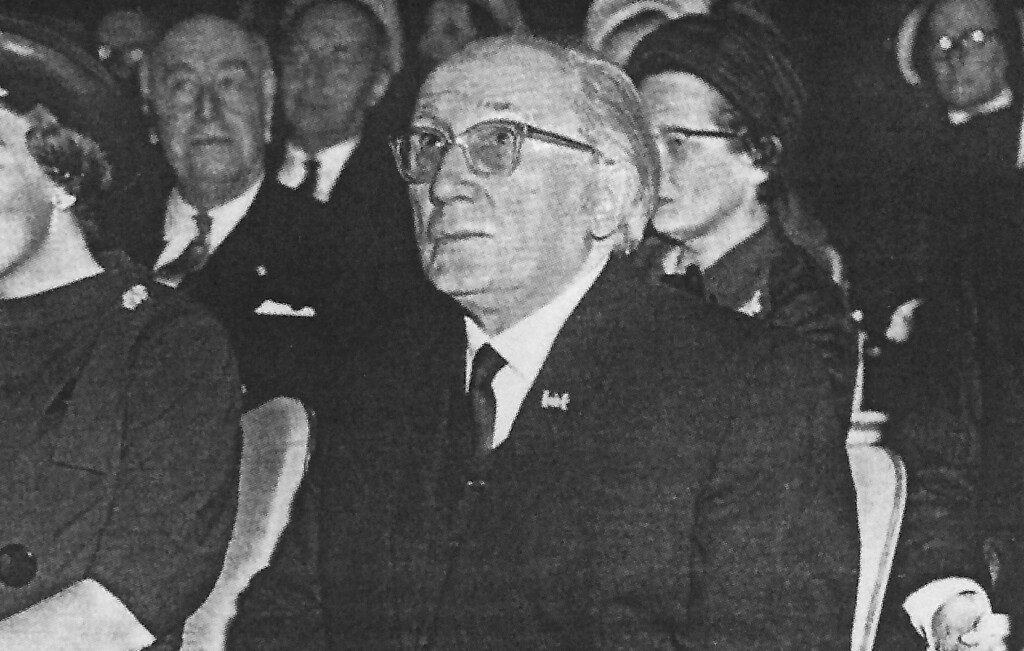
Romano Guardini spent most of the first half of the twentieth century trying to give this sensation its correct philosophical name. He was born in Verona in 1885, grew up in Mainz, and spent decades teaching at the University of Berlin and later Munich, moving through a Europe that was dismantling and rebuilding itself with terrifying speed. His most consequential book, published in German in 1950 as Das Ende der Neuzeit, translated into English as The End of the Modern World, is not a lament for a lost golden age. It is something far more unsettling: a diagnosis of a civilization that has not failed but succeeded, and in succeeding has produced a human being structurally misaligned with the conditions of his own existence.
The distinction matters enormously. A crisis of values suggests the problem is moral — that we have chosen badly, believed wrongly, lost our compass, and that the remedy is a return, a correction, a better set of principles. Guardini refuses this comfortable framing. The crisis he is tracking is a crisis of form. Not what we believe but the shape of the vessel in which belief, thought, and experience are carried. Modernity has not simply given human beings the wrong answers. It has systematically dismantled the structures through which answers of any kind could be held.
The phenomenologist Maurice Merleau-Ponty argued in his Phenomenology of Perception, published in 1945, that the body is not an instrument the mind uses but the very medium through which the world is intelligible at all. Guardini’s diagnosis operates at a civilizational scale on the same intuition. Strip away the inherited forms — religious, communal, cosmological — and you do not liberate a purer self underneath. You produce a being who is technically capable of everything and experientially capable of almost nothing. A being who can access the sum of human knowledge at two in the morning and feel, in the chest, that particular hunger that is not hunger.
The supermarket at ten on a Tuesday morning. Every product in its place. The lighting calibrated to suppress anxiety. The layout designed by behavioral economists to move you through space in a specific sequence, nudging your choices before you are aware of making them. You came for milk. You leave with seven things and a low-grade unease you will have forgotten by the time you reach the car. The machine worked. The machine always works. That is what Guardini is asking you to look at directly, without flinching, without immediately reaching for the phone.
The Lost Poet
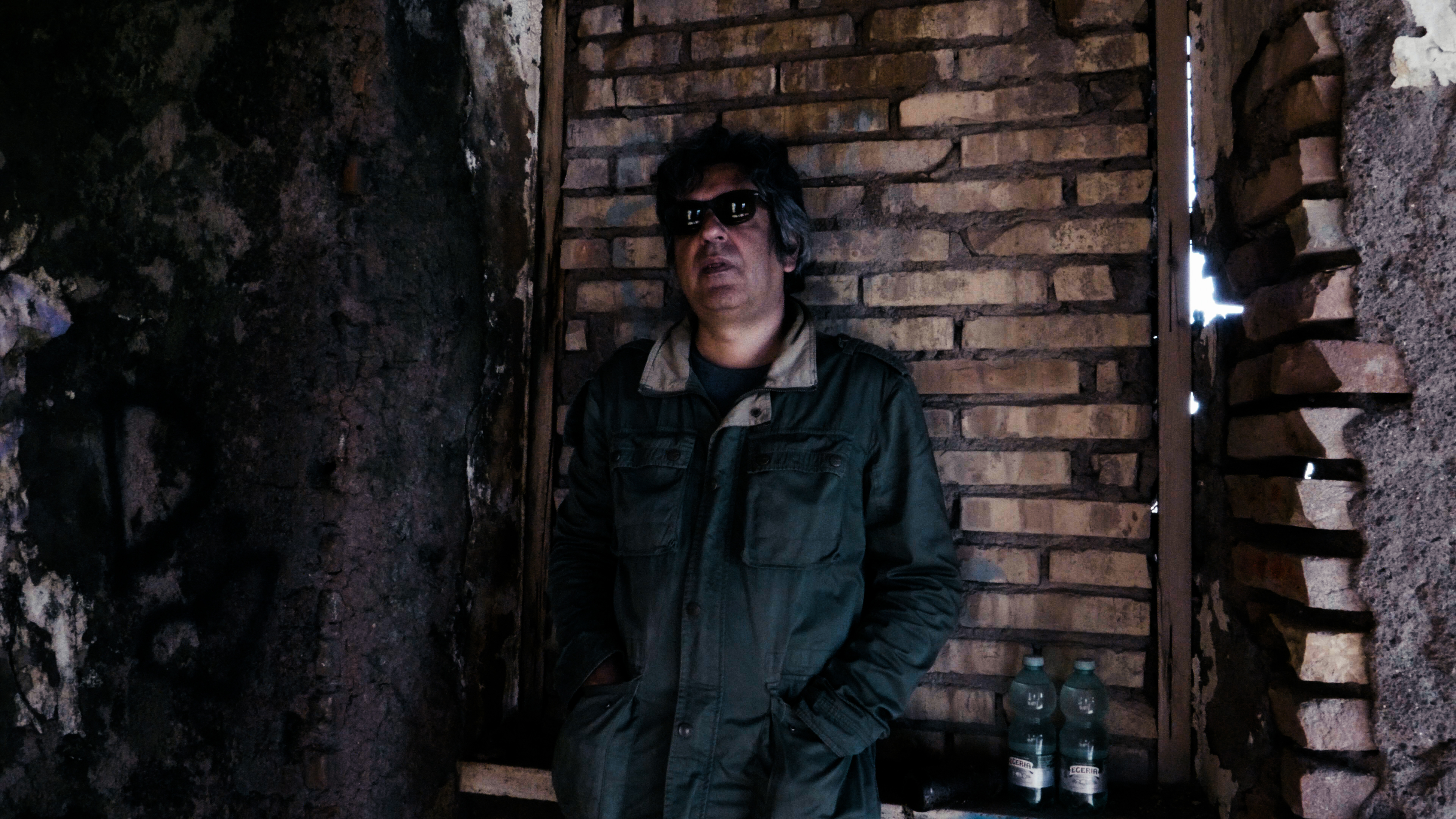
Drama, by Fabio Del Greco, Italy, 2024.
Dante Mezzadri wants to see an old friend, nicknamed the Iguana, whom he has lost sight of for many years, and who has managed to turn their shared youthful passion for poetry into a job, becoming a famous writer and poet. The man escapes from his bourgeois life and his wife to live homeless on the Roman coast, printing and trying to sell his poetry collections. At night he sleeps in a park of old carnival floats, inside a papier-mâché tank, and waits for the opportunity to meet his old friend, who however never shows up for appointments in the places they frequented when they were young, now in ruins. Dante's poetry books do not interest anyone and to support himself he is forced to "change product": he starts selling the infamous "cannibal pill" on behalf of young drug dealers, a new drug that sells like hot cakes and causes sensory and consumerist ecstasy. However, he realizes that this powerful drug is very dangerous for those who take it, he comes into conflict with his ethical conscience and throws all the pills into the sea. However, the dealers want to collect their money.
Shot over a period of 2 years, the film is a reflection on the cultural and artistic rubble of the society in which the protagonist lives, in an increasingly mechanized, consumerist and arid world. Dante Mezzadri is yet another human being who has renounced his inspiration and his creativity, but unlike many he is not willing to give his life to a system that distances him from his true identity. The physical world around him, however, seems constructed in such a way that it seems impossible to escape from this "invisible cage". The enthusiasm of the people he meets is ignited only by sensory gratification, by unreal visions of personal affirmation and success, by "metaverses" that offer an escape into an illusory and destructive reality. The poet's house on the coast, where he met with his friends as a young man, is just a pile of abandoned rubble. What happened to all those who wanted to become poets and ended up becoming something else? Are there internal forces with which that house can be "rebuilt"?
LANGUAGE: Italian
SUBTITLES: English, Spanish, French, German, Portuguese
A Priest Who Thought Like a Geologist
There is a particular kind of mind that does not seek shelter in ideas but instead uses them the way a geologist uses a hammer — to crack open the surface and read what has been accumulating beneath for centuries. Romano Guardini was that kind of mind. He was born in Verona in 1885, the son of a merchant, and carried into Germany as an infant when his father relocated the family to Mainz. He grew up German in language, culture, and intellectual formation, yet remained permanently Italian in some register of the spirit — a minor displacement that may have given him the slight angle of vision that genuine thinkers require, that slight foreignness to the obvious.
He was ordained in 1910, and nothing about his priesthood was institutional in the pejorative sense. He was not a careerist of the sacred. He read Dostoevsky with the same intensity he brought to Augustine, and he read Nietzsche not as an enemy to be refuted but as a diagnostician to be taken seriously — which is itself a form of intellectual courage that the cautious rarely manage. Nietzsche had announced the death of God in 1882 in “The Gay Science,” and what Guardini understood was that this announcement was not primarily theological. It was sociological, psychological, civilizational. It was a description of something that had already happened in the bones of European culture long before anyone admitted it at the level of doctrine. To read Nietzsche carefully, as Guardini did, was to accept that the crisis was real and that comfort was not a response to it.
By the time he began teaching at the University of Berlin in the 1920s, he had developed a reputation that academic institutions usually cannot contain. His lectures drew audiences that overflowed the rooms assigned to them — not because he was performing, but because he was thinking in public, and thinking in public about things that people were living without language for. He held the chair in Catholic Worldview, a designation that sounds bureaucratic and perhaps slightly absurd today, but which Guardini filled with something approaching geological seriousness. He was mapping strata. He was asking how the modern world had been constructed, layer by layer, and what the consequences were of those foundational decisions made centuries before anyone alive had been born.
The Nazis shut him down in 1939. This is a biographical fact worth sitting with rather than passing over quickly. A man whose thought was serious enough to be considered dangerous by a totalitarian regime is a man who was not decorating the edges of power with pious sentiment. He was removed from his position precisely because ideas, when pursued with sufficient honesty, become inconvenient to those who require populations to remain unthinking. He spent the war years in withdrawal, reading, writing, existing in that particular silence that history sometimes imposes on those it has not yet finished with.
In 1950, he published “Das Ende der Neuzeit” — “The End of the Modern World” — and the book landed not as a lament but as a diagnosis. The distinction matters enormously. A lament is an emotional position. A diagnosis is an act of perception. Guardini was not mourning modernity. He was describing its internal logic, its self-generated contradictions, the way its central promises had begun to consume themselves from within. He was doing what the great historians of ideas do at their best — reading the present as though it were already the past, with the clarity that temporal distance usually requires but that genuine intelligence can sometimes achieve in real time.
He had lived through the First World War, the Weimar Republic, the rise of fascism, the Second World War, and the beginning of the atomic age. He had watched European civilization produce its highest cultural achievements and its most systematic barbarism within the same decades. What he brought to the page in 1950 was not the wisdom of someone who had been protected from history, but the understanding of someone who had stood inside the catastrophe and refused to look away.

What the Modern World Actually Was
There is a moment, somewhere in the middle of the nineteenth century, that someone actually witnessed — a man standing at the edge of what had been a forest, watching the last of the old trees come down to feed a furnace. Not mourning exactly, or not only mourning. Something more ambiguous than that. A recognition, perhaps, that this was correct, that this was what progress demanded, that the wood existed precisely to be consumed, that the hillside had been waiting, in some sense, for this purpose all along. The feeling was not guilt. It was something closer to satisfaction, the satisfaction of a world finally being understood on its own terms, finally being made to answer.
Guardini reads that moment not as an aberration but as the logical destination of a journey that began roughly four centuries earlier. The arc is long but the internal logic is consistent: once you have decided what the human being is, you have already decided what the world around it must become. And the modern decision about the human being was made, piece by piece, with extraordinary confidence. The Renaissance did not simply celebrate the individual — it consecrated the individual as the new center of gravity, the measure by which all other things would henceforth be weighed. This was not a sudden rupture but a slow reorientation, the way a ship’s compass begins to point somewhere new before anyone on deck notices the heading has changed. Pico della Mirandola’s Oration on the Dignity of Man, written in 1486, says it plainly enough: the human being alone has no fixed nature, because the human being is the one who chooses its own nature. This sounds liberating. Guardini sees it as the first incision in a wound that would take centuries to fully open.
Then came Descartes, and the incision deepened into a severance. When he wrote his Meditations in 1641 and split the world cleanly into thinking substance and extended substance — res cogitans and res extensa — he was not simply proposing a philosophical framework. He was performing, with surgical precision, the founding gesture of the modern subject. Mind on one side, matter on the other. The human being as sovereign consciousness, nature as pure object. Once matter has no inner life, no sacred character, no inherent dignity of its own, it becomes, by definition, a resource. The forest is not violated when it is consumed. It was always already waiting to be consumed. Descartes did not build the furnace, but he built the metaphysics that made the furnace morally neutral.
Max Weber called what followed the disenchantment of the world — Entzauberung — and he traced it in 1905 through the strange alchemy by which Protestant theology gradually stripped creation of its mystery and left in its place a universe governed by calculable forces and rational procedures. What had once been sacred became manageable. What had once demanded reverence demanded instead efficiency. Weber was describing a sociological process, but Guardini heard in it something he had already been circling: the systematic evacuation of the world’s inner meaning, conducted not by malice but by method.
What Guardini names dominium is the attitude that emerges from this evacuation — humanity’s assertion of sovereign control not merely over nature but over history itself, over time, over the conditions of existence. Dominium is not the same as stewardship. Stewardship implies a relationship, a debt, a remainder of obligation. Dominium implies ownership absolute and unconditional. The man watching the forest fall did not feel he was taking something. He felt he was using something that belonged to him. The distinction sounds small. It is the distance between one civilization and another.
The Machine That Ate the Person Who Built It
There is a man sitting at a desk. Everything around him works. The reports arrive on time, the decisions move through the hierarchy without friction, the quarterly numbers confirm what the models predicted. He has a title that took twenty years to earn and a salary that vindicates every sacrifice he made along the way. His office is on a high floor. Through the glass he can see an entire city organized below him like a diagram of itself. And somewhere between one meeting and the next, while a subordinate is explaining something he already knows, he realizes he cannot locate a single reason why any of this was supposed to matter to him as a human being. Not a moral objection. Not fatigue. Something more fundamental — a vacancy where the meaning was supposed to be stored.
This is not a crisis of success. This is the endpoint Guardini spent decades diagnosing from the outside, watching it approach like weather.
His argument, pressed most fully in “The End of the Modern World” published in 1950, is not that technology is dangerous in the way a weapon is dangerous. It is far more unsettling than that. Technology, he writes, carries within it a logic that does not recognize the human being as its measure. It recognizes function, efficiency, optimized output. And when the human being spends enough time inside that logic — building it, operating it, being rewarded by it — the logic begins to colonize the inner life. Not by force. By seduction, by gradual substitution. The tools do not betray their maker. They simply become the environment, and environments shape consciousness whether we consent to them or not.
Marshall McLuhan, working in a different register but pointing at the same wall, would say in 1964 that the medium is the message — meaning the structure of a technology transforms perception before its content has had any effect. But Guardini was asking something McLuhan didn’t quite reach: what happens to the ethical self, to the person who must be responsible for something, when that person has been optimized out of the picture?
What emerges, Guardini argues, is not the monster of science fiction. It is the non-human — a category he uses with surgical precision to describe the human being who has not been destroyed but hollowed. Someone who performs all the correct operations, who is in fact excellent at performing them, but who has lost what he called the “personal core” — the interior site from which genuine moral decision originates. Hannah Arendt would encounter this figure in the flesh a decade later, watching a man in a glass booth in Jerusalem explain with bureaucratic composure how he had processed the logistics of mass murder. Her phrase “the banality of evil,” coined in 1963, is not a comfortable observation about monsters being ordinary. It is the recognition that Guardini’s non-human is a real administrative category.
The man at the high desk in the glass building is not evil. That is exactly the point. He is the product of a system so coherently designed that it required no evil from him at all. Every step was rational. Every promotion was deserved. Every moral question was either dissolved into procedure or simply never arose, because the system had pre-answered it in the form of policy. Jacques Ellul, in “The Technological Society” published in 1954, called this phenomenon “technique” — not technology in the narrow sense but the total orientation of civilization toward the optimization of means, until the question of ends becomes literally unthinkable within the operating framework.
The machine does not hate the person who built it. That would require something the machine does not have. It simply continues running, and the person who built it, if they are still inside it, runs with it.
Power Without Ethos: The New Pagan and the Collapse of the Personal
There is a man at a desk. He arrives at eight, hangs his coat on the same hook every morning, exchanges a few pleasant words with the woman who brings the coffee. His desk is orderly. He has a small cactus on the windowsill that he waters on Thursdays. He signs what is placed before him, reads what he must read, delegates what falls outside his jurisdiction. He is not cruel. He does not raise his voice. He goes home at six and asks about his children’s homework. He is, by every observable measure, a decent man. And yet the forms he signs move people toward destruction with the same efficiency as a well-oiled machine, and the thought that this might concern him personally has simply never arrived.
This is not a monster. This is what Romano Guardini feared far more than monsters.
When Guardini, writing in the early 1950s, described the emergence of what he called the new pagan, he was not conjuring a figure of dramatic wickedness. He was describing something far more unsettling: a human being who has lost the Christian sense of the sacred soul and gained nothing in its place. Not the ancient pagan, who still moved within a world saturated with gods, with spirits in the olive grove and obligation to the ancestors, with a cosmos that demanded something of you simply by existing. That ancient pagan had an ethos, however different from the Christian one. The new pagan has none. He inhabits a technical universe from which all metaphysical pressure has been evacuated, and he has adapted to this vacuum with terrifying smoothness.
Hannah Arendt, sitting in Jerusalem in 1961 watching Adolf Eichmann testify, arrived at something Guardini had been circling theoretically for a decade. She called it the banality of evil, and the phrase scandalized people precisely because it refused to make evil interesting. Eichmann in Jerusalem, published in 1963, was disturbing not because it revealed a sadist but because it revealed a clerk. A man who used clichés because he had no access to his own thought. A man who was not lying when he said he bore no hatred. His crime was not passion but the absence of it — the absence of the interior life that would have made him capable of asking what he was actually doing. Arendt wrote of a “curious, quite authentic inability to think.” Guardini would have recognized it immediately as the spiritual consequence of what he had diagnosed.
The new paganism is not a regression. It is not a failure to reach modernity’s promises. It is, in a precise sense, modernity’s success: the production of a self that is functional, adaptive, technically competent, and morally weightless. The Christian tradition had insisted, whatever its failures and corruptions, on the irreducible interiority of the person — on conscience as a space that could not be delegated, on the soul as a site of ultimate accountability that no institution could fully absorb. Strip that away, and what remains is not freedom. What remains is availability. The self becomes a surface on which power can write its instructions, and the instructions are followed not out of fear but out of a kind of professional serenity that is its own form of horror.
Guardini understood that this was not a problem of education or ideology. You could not fix it by teaching ethics as a course, by adding a module on values to a technical curriculum. The collapse was structural. It had happened at the level where a human being relates to existence itself — where the question of what one owes the world, what weight one’s actions carry in a reality larger than one’s career, used to be formed. That formation requires something like a transcendent horizon. And the new pagan, polite and efficient and entirely self-consistent, has simply never looked up to find one.
A vision curated by a filmmaker, not an algorithm
In this video I explain our vision
The Person as the Last Resistance

There is a moment when a man is offered a small, almost invisible escape. Not salvation, not redemption — just a door left slightly open, a bureaucratic loophole, a form that could be signed with a different name or dated differently, and the problem dissolves. No one would know. The system itself has provided the gap, as systems always do, because systems are never perfectly sealed and their architects understand this. The man looks at the door. He looks at the form. And then he does not sign it. He does not refuse loudly. He does not make a speech. He simply places the pen down, stands, and walks out of a room that would have been easier to stay in. What it costs him is immediate and measurable: a position, a salary, a certain kind of future that was already half-built. What he recovers is harder to name, and Guardini would have insisted on trying to name it precisely.
He called it the person. Not the individual — and the distinction matters more than almost anything else he wrote. The individual is a legal artifact, an economic unit, a node in a network of rights and obligations. Liberal modernity built its entire architecture around this figure, and it is a figure that can be replaced, quantified, managed, optimized. When a corporation speaks of its human resources, it is speaking with perfect grammatical honesty. Resources are what you extract until they are depleted. The individual fits inside this grammar with disturbing ease because the individual was, from the beginning, a category invented to interface with systems. It was never meant to name what a human being actually is.
The person, for Guardini, is something constituted differently — not through autonomy or self-sufficiency but through relation, through spirit, through the capacity to bear responsibility toward what is genuinely other. This is not a mystical claim, though it has mystical roots. It is phenomenological in its precision. The person exists only in genuine encounter, in what Martin Buber, writing in 1923 in Ich und Du, identified as the I-Thou relation — that irreducible meeting between two subjects neither of whom can be fully explained, categorized, or instrumentalized without violence being done to the reality of the encounter. Buber was explicit that most of modern life operates in the I-It register, the relation between a subject and an object, between a user and a thing to be used. What disturbed him — and what should disturb anyone who thinks carefully — is that this is not merely an ethical failure but an ontological one. When you treat another person as an It, you do not simply wrong them. You also contract yourself, because the I that emerges in an I-It relation is thinner, flatter, less fully realized than the I that comes into being in genuine I-Thou contact. Modernity has not just institutionalized the objectification of others. It has institutionalized the diminishment of the self.
Guardini reads this through a Catholic anthropology, but the diagnosis does not require that frame to land. What he sees is a civilization that has systematically dismantled every structure that might protect the person — community, tradition, contemplation, liturgical time — and replaced them with structures that require only the individual: efficient, interchangeable, productive. And into this vacuum he places not a program but a demand. To remain a person under these conditions is not a comfort. It is a discipline that costs something every time it is exercised. The man who placed the pen down and walked out of the room did not feel victorious. He likely felt the specific coldness of a choice that cannot be undone, the way a door closing behind you sounds different from every other door you have ever heard close.
That sound is not a metaphor. It is what responsibility actually feels like in the body, in real time, when the system has finished making its offer and you have finished hearing it.
The End That Is Not a Catastrophe
There is a moment, sometime around three in the morning in any large city, when you look out across the skyline and every window is lit. The offices are running. The servers are humming. The delivery routes are active. Nothing has stopped, nothing looks broken, and yet something in you registers — not panic, not grief, but a very quiet recognition — that whatever held all this together as a meaningful project has already quietly left the building. The machinery is still running. The operator is gone.
This is precisely what Guardini meant, and it is worth being careful here, because the phrase “the end of the modern world” has been hijacked repeatedly by people who want it to mean either catastrophe or vindication. Guardini meant neither. He meant something far more unsettling: the exhaustion of a paradigm from within, the moment when a set of premises has consumed itself so completely that it can no longer generate genuine belief, only momentum. The Enlightenment faith in inevitable progress does not get refuted. No argument defeats it. It simply stops being believable to anyone paying honest attention, the way a word repeated too many times loses its meaning without changing its spelling.
Oswald Spengler had arrived at something related but structurally different when he published his Decline of the West in 1918, a work that made him briefly famous and permanently controversial. Spengler saw civilizations as organisms moving through biological cycles — spring, summer, autumn, winter — each culture sealed within its own morphology, each destined for a Fellaheen twilight in which technical competence survives while spiritual creativity dies. It was a grand and melancholy vision, and it had the appeal of all tragic frameworks: it explained suffering without demanding anything from you, because if civilizations die like seasons there is nothing to be done, only witnessed. Spengler’s reader was invited to be a lucid spectator of inevitable decline, a position that carries its own aesthetic satisfaction.
Guardini refused this posture entirely. For him the end of the modern world was not a cycle closing but a threshold opening. What was dying was not culture in the Spenglerian biological sense but a specific configuration of assumptions — the sovereignty of the autonomous individual, the equation of technical mastery with human flourishing, the belief that freedom meant the absence of constraint rather than the capacity for self-determination in relation to truth. These assumptions had not always existed. They had been constructed, historically, over roughly four centuries, and their construction had produced extraordinary things alongside extraordinary costs. Now the construction had reached its internal limit. That is different from death. It is more like the moment in a long argument when the central premise is revealed to have been doing work it could not actually sustain.
A man walks through a city after midnight, through streets where the advertising is still playing on screens no one is watching, past restaurants still lit inside though the last customer left an hour ago, through infrastructure that never sleeps because stopping it costs more than running it. The sensation is not of ruin. The sensation is of a civilization performing itself after the audience has gone home, repeating gestures whose original meaning has evacuated. This is not Spengler’s winter. Winter is quiet, and this is very loud. This is something else: a system in which all the indicators still point to health while something essential has become genuinely illegible, even to those administering it.
What Guardini saw, writing from the rubble of two wars that Enlightenment civilization had produced while believing in its own civilizing mission, was that the demand was not for mourning but for a different kind of human being — one capable of living without the particular consolations that modernity had offered as permanent achievements. Not stronger, not more resigned, but differently oriented. The question was not whether the world would end but what a person was supposed to become inside the ending that had already begun without announcement.
What Remains When the Architecture Falls
There is a specific quality to certain kinds of silence that the modern world has decided to pathologize. Not the silence of exhaustion, not the silence of grief, but the silence of someone sitting in a room with no task before them, no screen opened, no productivity being extracted from the hour — someone simply present to their own interior weather, watching it pass. That quality of stillness, in the architecture of contemporary life, reads as malfunction. Something to be corrected. A symptom of depression, perhaps, or at minimum a waste of the resource that the hour represents.
Guardini knew, writing in 1950, that this was not an accident. The modern world did not accidentally produce the incapacity for interiority. It produced it systematically, because genuine interiority — the kind that generates not merely reflection but encounter with what is real — is precisely what cannot be managed, quantified, or directed toward productive ends. A person capable of true inner life is, in the deepest sense, ungovernable by the machinery of modern culture. They can still choose. Not between options presented on a menu, but at the level where choice is still genuinely free.
Josef Pieper, in that same postwar moment, pressed the same wound from a different angle. His argument in Leisure: the Basis of Culture, published in 1948, was not the comfortable one it is sometimes made to appear. He was not advocating for holidays or rest as recovery mechanisms that make the worker more efficient on Monday. He was saying something far more threatening: that the capacity for genuine thought — the kind that grasps reality rather than merely processing data about it — requires a quality of receptive openness that the modern world structurally prevents. Not accidentally prevents. Structurally. The architecture of modern time, with its endless demand that every hour justify itself through output, does not merely discourage the contemplative stance. It makes it nearly unthinkable. The person formed entirely within that architecture has lost access to the faculty that would allow them to recognize what they have lost.
This is what Guardini meant when he wrote that what comes after the end of the modern world cannot be constructed from modernity’s ruins using modernity’s own tools. The problem is not the specific arrangements of institutions or technologies. The problem is the interior formation of the human being who would do the constructing. You cannot build a genuinely different world with a self that has been shaped entirely by the world you are trying to leave behind. The new person — if that phrase means anything at all — must be formed inwardly, in the discipline of a stillness that the present order neither rewards nor recognizes.
And then there is the image of a man sitting alone in a room, late afternoon light falling across the floor at an angle that will not last, the sounds of the city continuing outside the window as they always continue — traffic, voices, the low mechanical hum of a civilization going about its business. He is not reading. He is not planning. He is not recovering from anything in particular. His hands are still. His face holds an expression that cannot be easily categorized as either peace or pain. The city does not pause for him. The world’s demand that he produce, justify, account for his hours continues without interruption, indifferent to whether he obeys.
What he is doing in that room, whether it constitutes defeat or the earliest tremor of something that has not yet found its form — whether that stillness is the last withdrawal of a self that has nowhere left to go, or the specific posture in which something genuinely new first becomes possible — is a question that Guardini spent his life refusing to answer cheaply, and which remains, as he would have insisted, exactly as open as it needs to be.
🌑 The End of the World and the Crisis of the Modern Age
Romano Guardini’s thought stands at the crossroads of theology, philosophy, and cultural diagnosis, offering a radical questioning of modernity and its spiritual consequences. The articles gathered here trace the same deep fault line — the confrontation between the modern age and the forces, voices, and visions that challenge or transcend it.
Martin Heidegger: Life and Philosophical Thought
Martin Heidegger and Romano Guardini were near-contemporaries who both identified a profound spiritual and ontological crisis at the heart of modern civilization. Heidegger’s interrogation of Being and technology resonates powerfully with Guardini’s critique of the modern world’s loss of sacred grounding. Reading the two together illuminates the broader existential landscape of twentieth-century European thought.
GO TO THE SELECTION: Martin Heidegger: Life and Philosophical Thought
Herbert Marcuse and Art: The Aesthetic Dimension
Herbert Marcuse, like Guardini, was one of the great diagnosticians of modern technological society and its capacity to suppress authentic human experience. His concept of the aesthetic dimension as a space of resistance finds a surprising echo in Guardini’s longing for a culture still capable of genuine encounter with the sacred. Both thinkers force us to confront what modernity has cost us in terms of freedom and interiority.
GO TO THE SELECTION: Herbert Marcuse and Art: The Aesthetic Dimension
Rudolf Steiner and Anthroposophy: A Guide to Modern Esoteric Thought
Rudolf Steiner’s anthroposophy represents another ambitious spiritual response to the disenchantment of the modern world, seeking to reunite scientific knowledge with inner spiritual development. Like Guardini, Steiner believed that the crisis of modernity was above all a crisis of the human being’s relationship with the transcendent. Their parallel diagnoses, though rooted in very different traditions, illuminate a shared spiritual urgency at the dawn of the twentieth century.
GO TO THE SELECTION: Rudolf Steiner and Anthroposophy: A Guide to Modern Esoteric Thought
Mass Social Homologation Today
The phenomenon of mass social homologation is one of the darkest fruits of the modern world that Guardini analyzed with prophetic clarity — a civilization increasingly incapable of nurturing genuine personhood. When individuals dissolve into anonymous collectivities shaped by technology and power, the very conditions for moral and spiritual life are threatened. This article deepens Guardini’s warning by situating it within our contemporary cultural landscape.
GO TO THE SELECTION: Mass Social Homologation Today
Discover Independent Cinema on Indiecinema
If these reflections on modernity, spirit, and the crisis of the contemporary world have stirred something in you, Indiecinema is the place to continue the journey. On our streaming platform you will find independent and auteur films that dare to ask the questions mainstream cinema ignores — films that think, feel, and challenge. Come and explore a cinema that still believes in the depth of the human experience.
👉 EXPLORE THE CATALOG: Watch Indie Films in Streaming
A vision curated by a filmmaker, not an algorithm
In this video I explain our vision

