
The Silence at the Table
You are sitting across from your father at a table you have known your whole life, and you cannot find a single thing to say. Not because you have grown apart in the way people do when years separate them, but because the distance between you is structural, embedded in the very way he holds his fork — not wrong, not embarrassing, just different, in a way that costs something to acknowledge. He eats with a kind of efficiency that has nothing performative about it. There is no ceremony to the meal, no lingering over taste or presentation. Food is fuel, and the table is where the day ends. You have spent years in rooms where people eat differently, where the meal is a social performance, where what you say about the wine matters as much as the wine itself. You are fluent in that language now. Sitting here, you realize you have become a kind of translator with no one left to translate for.

This is not estrangement. That word carries drama, rupture, a definitive break. What you feel is something quieter and more permanent: the slow erosion of a shared vocabulary. Pierre Bourdieu spent decades trying to name this process with the precision it deserved, and the concept he arrived at — habitus — is essentially a theory of the body before it becomes a theory of society. The habitus is the set of dispositions, tastes, reflexes, and silences that a class installs in the flesh before the mind is old enough to resist. It is the way your father holds his fork. It is the way you now hold yours when you are not paying attention, and the way you correct yourself when you are.
What Annie Ernaux does in one of her most devastating works is refuse to aestheticize this. She is writing about her father — a man who began as a farm laborer, became a shop and café owner in a small Norman town, and never fully inhabited either world — and she is writing about the gap that opened between them once she crossed into education, into literature, into a life organized around symbolic capital he could neither access nor entirely understand. The book appeared in France in 1983 and won the Prix Renaudot, though the award seems almost beside the point when you encounter the rawness of its method. Ernaux calls it something close to a sociological study, and she means this seriously. She is not writing a eulogy. She is performing an autopsy.
There is a scene that stays with you — a man sitting in a kitchen, listening to the radio with a focused attention that excludes everything else, as though silence itself must be justified by noise. His daughter, educated and departing, watches him from the doorway. No words pass between them, not because they are angry, but because they have arrived at different relationships with language itself. For her, words are instruments of elaboration, tools for nuance and self-definition. For him, words are practical objects, meant to convey the necessary and stop there. The distance is not emotional. It is epistemological.
Bourdieu and Jean-Claude Passeron argued in Reproduction in Education, Society and Culture, published in 1970, that educational systems do not simply transmit knowledge — they reproduce social hierarchies by treating one cultural habitus as neutral and universal while rendering all others invisible or deficient. What Ernaux is documenting, with a precision that cuts like a blade, is what this reproduction feels like from the inside: not triumph, not liberation, but a kind of amputation performed so gradually that you only notice it when you reach back for something that is no longer there.
The silence at that table is not absence. It is everything that cannot survive the crossing.
Trench

Thriller, Mystery, by Serge Turgeon, Italy, 2023.
In Venice, an art historian realizes that her brilliant mind will not be enough to solve the mystery surrounding the disappearance of an unknown woman. In addition to regaining trust in her intuition and her heart, she will need the help of a series of colorful characters from her community.
The idea behind Trench is to tell, through a detective story, the journey of an intellectual woman who suffered while growing up in a working-class district of Venice, where she never felt truly valued. In order to solve a mystery, she must face danger and rely on the help of the “non-intellectual” members of her community, rediscovering along the way her resourcefulness, her Venetian identity, and her true self.
LANGUAGE: Italian
SUBTITLES: English, Spanish, French, German, Portuguese
Writing Against Consolation
There is a specific kind of betrayal that looks exactly like tenderness. You have seen it at funerals, in the eulogies delivered over working-class dead by people who loved them genuinely but could not resist the pull of elevation — the careful sentences, the cultivated grief, the metaphors that lift the deceased out of their actual life and into something more bearable for the speaker. The body in the casket becomes a symbol. The man who repaired shoes or stocked shelves is retroactively granted a dignity that was always, apparently, somewhere inside him, waiting to be unlocked by the right words. The words belong to someone else’s tradition. They always did.
Ernaux understood this trap with a precision that bordered on fury. When her father died in 1967 and she sat down, years later, to write what would become A Man’s Place, the first problem she confronted was not memory but language itself. The literary forms available to her — the elegy, the tender memoir, the Proustian excavation of the past through sensation — all carried a freight she refused to accept. Each of those forms had been built by and for a class that her father never inhabited. To pour him into that mold would have been to complete the very erasure that his life had already half-suffered.
This is precisely what Pierre Bourdieu meant when he described symbolic violence — the mechanism by which the dominated internalize the norms of the dominant and apply those norms to their own experience, their own bodies, their own stories. In Bourdieu’s framework, developed across works like Distinction in 1979 and The Logic of Practice in 1980, symbolic violence does not announce itself as violence at all. It arrives as taste, as refinement, as the obvious and natural way to do things properly. A working-class life written in beautiful prose is not honored. It is colonized posthumously. The style itself becomes the argument that this life needed improvement.
Ernaux named her counter-strategy écriture plate — flat writing. Not simple writing, not naive writing, but deliberately drained writing, sentences from which the literary has been consciously removed the way fat is skimmed from stock. She described it as a writing closer to the language of letters sent home from the front, or the factual notations in a medical file — registers that do not perform, that have no interest in being admired. The choice was not aesthetic modesty. It was a political decision about who gets to authorize a life.
What this produces on the page is a controlled discomfort. You read her sentences about her father — his habits, his silences, the way he held a glass, the things he did not say and could not say — and you feel the absence of cushioning. There is no metaphor waiting to catch you. A man sits at a table. He does not read books. He is proud of his daughter and frightened of her at the same time. These are facts delivered as facts, and the refusal to aestheticize them is itself an act of witnessing that conventional literary elegance would have destroyed.
The philosopher Jacques Rancière, in The Politics of Aesthetics published in 2000, argued that the distribution of the sensible — the division of what can be seen, heard, and said — is always also a distribution of power. Who gets to be represented, and in what forms, is never neutral. Ernaux’s flat writing is an intervention in exactly this distribution. It insists that her father’s life does not require translation into another class’s emotional vocabulary to be real, to matter, to be worth the weight of a book. The form is the argument. The restraint is the respect. And the refusal to console — the reader, herself, anyone — is the only honesty the project could afford.

The Father’s Body as Class Document
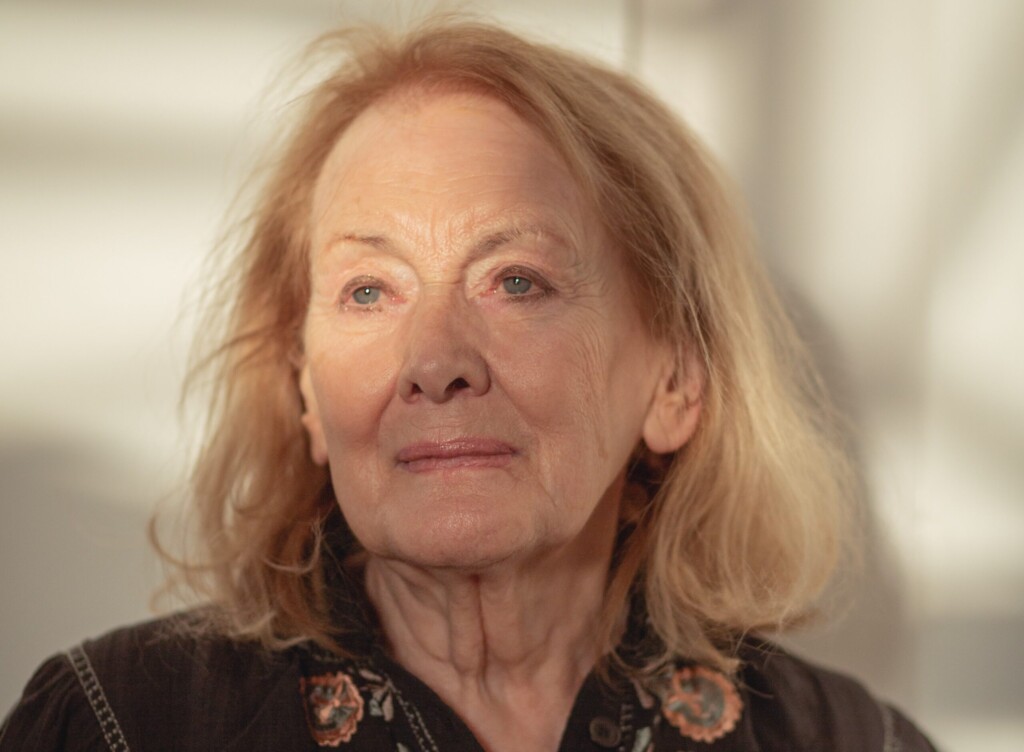
His hands were always doing something. Even at rest, they were not at rest — wrapped around a glass, pressing flat against a table, finding the edge of a chair and gripping it slightly, as if the body had never quite learned the luxury of stillness. You have seen hands like this. You know what they mean before you can say what they mean. They mean a life spent in contact with hard surfaces, with things that resist, with work that leaves a physical memory in the tendons long after the work itself is finished.
Ernaux catalogs her father’s body the way an archaeologist catalogs a site. His posture, his gait, his way of eating, his silences that were not contemplative but occupied — full of a vigilance that never fully switched off. She is not writing biography. She is reading a document, and the document is flesh. Pierre Bourdieu named this hexis: the body as the accumulated deposit of a class position, the history of a social location written into gesture, into bearing, into the unconscious choreography of how a person moves through space. In Distinction, published in 1979, Bourdieu argued that the body is not merely shaped by class — it is class made physical, class made durable, class made to feel like nature. The working-class body learns early that it must justify its presence, must make itself smaller or more useful or less conspicuous, must earn its right to occupy a given space by performing competence or deference or both simultaneously.
This is what you see in the man who enters a bank and stands slightly too straight, the overcorrection of someone who knows the room was not designed for him. Or the man who sits in a doctor’s waiting room with his hands on his knees, very still now, a stillness that is not ease but its opposite — the performance of not taking up too much, not touching things that are not his. There is a scene that stays with you: a man in a borrowed suit moving through a reception that glitters with people who have never once in their lives wondered whether they belong. He does not drink too much, he does not say the wrong thing, he does not commit any visible error. And yet his body betrays him — the way he holds his glass slightly too tight, the way his eyes track exits, the way he laughs a half-second after everyone else because he is always translating, always running a parallel calculation about what is expected, what is permitted, what will pass unnoticed.
Ernaux sees all of this in her father. She sees a man whose body had been formed by labor before it was formed by anything else — by early rising, by physical subordination to schedules and employers and seasons, by a relationship to fatigue that was not complaint but simple fact. What Bourdieu called the habitus was for her father not a theoretical construct but the texture of his entire existence: the dispositions laid down so early and so thoroughly that they could no longer be distinguished from character, from personality, from self. This is the particular cruelty of class as bodily inscription. It disguises history as nature. It makes a social wound look like a personal trait.
The silence, too, was a posture. Not the silence of someone who has nothing to say but the silence of someone who has learned, through long experience, that what they might say will land badly, will be heard wrong, will mark them. Working-class reticence is frequently misread as stupidity or lack of imagination, when it is in fact a highly developed social intelligence — the intelligence of someone who has learned to read a room faster than the room can read them, and who knows that speaking carries risks that the socially assured never have to calculate.
Shame as Inheritance
There is a moment you recognize without being able to name it. You are at a table — your family’s table, the one you grew up eating at — and you hear yourself speak, and something in the room shifts. Not dramatically. Just slightly. A small hesitation in your father’s face, almost imperceptible, before he returns to his food. You have said something the way they don’t say it there. A word borrowed from elsewhere, pronounced with an edge that wasn’t there before. And in that fraction of a second, you understand that the distance between you has become audible.
This is what Ernaux is writing about in A Man’s Place, though she never reduces it to something so tidy as a scene of linguistic betrayal. The shame she traces is not a feeling that arrives and departs. It is a structure. It organizes perception, posture, syntax. It determines which fork you reach for first and whether you apologize for reaching. It lives in the body long before it surfaces as consciousness, which is precisely why it is so difficult to name and so easy to reproduce.
Didier Eribon, writing in Returning to Reims in 2009, calls this the fundamental paradox of class mobility: the very act of escaping a social position requires you to internalize the gaze that diminishes it. You do not simply leave. You learn to see your origin through the eyes of the destination. And once you have learned that vision, you cannot unlearn it. You carry it back home like a foreign currency that cannot be exchanged. The father who watches his daughter become something he cannot follow is not simply witnessing success. He is watching the proof of his own historical location made visible in another person’s body.
In Ernaux’s account, her father’s pride and her own achievement exist in a relationship that is never simply additive. Every step she takes forward is also, structurally, a step that measures how far back he remains. He wanted this for her — that is the cruelty of it — and yet the wanting contains within it the mechanism of its own loss. A man who sends his daughter toward a world he will never enter has made a wager whose full cost he cannot calculate at the moment of placing it.
Pierre Bourdieu, whose work on social reproduction Ernaux read and whose categories inflect her prose even when she does not cite him, described this dynamic with the concept of the habitus — those durable, transposable dispositions acquired in early life that persist even when the social conditions that produced them have changed. In Distinction, published in 1979, he showed how class is not primarily a matter of income or occupation but of embodied knowledge: how to sit, how to speak, what to find beautiful, what to find embarrassing. The daughter who corrects her accent is not simply acquiring a new habit. She is overwriting the syntax of belonging that her father’s body spent a lifetime building.
And the shame transmits precisely because it is never declared. No one says: what we are is lesser. The message travels in silences, in the way certain topics are avoided, in the slight contraction of the body when an official document must be filled out, in the relief that crosses a face when a social encounter ends without humiliation. You absorb it before you have words for it. Then you spend years constructing words, and when you finally have them, you discover that the words themselves have become part of the distance.
A man watches his child become a stranger, and he does not call it shame. He calls it success. He tells the neighbors. He keeps the diplomas. And somewhere behind the pride, in a place neither of them will visit together, the original wound remains perfectly intact, passed from one body to another without ever being touched.
The Distance Education Creates
You come home for the holidays and you find yourself laughing a half-second too late at your father’s jokes. Not because they aren’t funny. Because you are now translating them, running them through some new internal mechanism you didn’t ask for and cannot switch off. The joke lands, you process it, then you laugh. That half-second is an abyss.
Richard Hoggart named this with uncomfortable precision in 1957. In The Uses of Literacy, he described the scholarship boy as a figure caught between two worlds, belonging fully to neither, developing what he called a “strange, uneasy mixture” of self-consciousness and social anxiety. The scholarship boy learns to observe his own origins as though from outside, to see his family the way a sociologist might see a subject. He doesn’t choose this. The education does it to him, quietly and without asking permission. What gets called elevation is in practice a form of removal.
Ernaux understood this not as metaphor but as the literal structure of her life. In A Man’s Place, the prose itself carries the evidence. She writes in a stripped, declarative register precisely because ornament would be a betrayal, a display of the very acquisition that separated her from her father. The style is the wound being held open. When she describes her father’s gestures, his silences, his relationship to money and to dignity, she is writing across a distance she cannot pretend doesn’t exist. The book’s formal restraint is not aesthetic choice in any simple sense. It is the only honest way to write when you know that every flourish of language is also a reminder of what he didn’t have.
There is a scene she returns to, a meal where the conversation simply stops. Not because there is hostility, but because the shared vocabulary has quietly run out. What fills the silence is not absence of feeling but excess of it, a grief that neither party can translate into the language the other now requires. He speaks in the idiom of the cafe, the factory floor, the specific humor of people for whom laughter was also armor. She has been living for years in the idiom of the university seminar, of literary criticism, of the kind of irony that explains itself. These are not merely different registers. They are different epistemologies, different ways of understanding what counts as real.
Pierre Bourdieu mapped this terrain in Distinction, published in 1979, arguing that cultural capital functions as a mechanism of class reproduction precisely because it feels natural, even inevitable, to those who possess it. The educated child returns home and experiences what Bourdieu called the habitus split — the embodied sense that two worlds are inhabiting the same body and refusing to reconcile. What looks from outside like success is from inside a permanent dislocation. You have learned to speak in a way your father cannot follow and cannot respect, not because he is limited, but because the language you now speak was built to exclude him. The institution doesn’t tell you this. It gives you the language and sends you home to discover the damage yourself.
A man comes home to find his son has become, in some precise and horrible way, a foreigner. He recognizes the face. He no longer recognizes the grammar. He sits at the table where he has always sat and feels, without being able to say it, that he has been subtly judged and found deficient by someone who once needed him for everything. The son feels this too. The son would do anything to undo it and cannot. The education is irreversible. That is the point of education. You cannot unlearn the distance. You can only learn to carry it with different degrees of honesty, which is what Ernaux does on every page — refusing to pretend the distance isn’t there, refusing equally to aestheticize it into something bearable.
Knowledge became a wall. She built it by going to school. She spent the rest of her life pressing her hands against it.
A vision curated by a filmmaker, not an algorithm
In this video I explain our vision
Memory as Archaeology, Not Archive

There is a pair of hands you remember but cannot place inside a story. They were doing something ordinary — turning a key, folding a newspaper, pressing down on a table edge to stand — and you watched them without knowing you were memorizing them. That is not how archives work. Archives require intention, classification, the decision that something is worth keeping. What you carry instead is sediment: the residual deposit of presence, accumulated without consent.
Ernaux does not reconstruct her father. She excavates him. The distinction is everything. Reconstruction implies a blueprint, a known form toward which fragments are assembled. Excavation means you follow what the earth offers, and you stop when the earth stops giving. What emerges is not a portrait but a stratigraphy — layers that do not resolve into continuity but reveal, through their very discontinuity, the shape of a life lived without self-narration.
Walter Benjamin wrote about the dialectical image as a flash, a moment in which past and present collide so violently that both are illuminated and neither survives the encounter unchanged. His unfinished Arcades Project, assembled across the 1930s until his death in 1940, was itself an act of fragmented archaeology — a refusal to smooth the ruins into coherent history. Ernaux works in the same mode, though her ruins are domestic rather than metropolitan. A detail about the way her father ate, the specific posture of a man who learned early that the table was not a place of conversation but of necessary refueling, carries more historical density than any biographical summary could. The fragment does not illustrate a thesis. It is the thesis, incomplete and therefore honest.
Maurice Halbwachs, whose work on collective memory was cut short when he died in Buchenwald in 1945, argued that no memory is ever purely individual — that we remember within frameworks provided by the groups we belong to, and that losing those frameworks means losing access to what they once made visible. Ernaux’s father belonged to a world that left no frameworks behind, or rather, left frameworks that his daughter was taught to abandon. The social ascension that education represents is also, always, a dismantling of the scaffolding through which the previous generation’s experience was stored and transmitted. What Ernaux inherits is not a coherent memoir of her father’s inner life but a scattered inventory of gestures, objects, habits — all of it collective memory that has lost its community of reference.
Somewhere a man works behind a counter, moving with the quiet efficiency of someone who has never expected to be watched. He does not perform his labor. He does not frame it for an audience. His hands know the work so completely that his face has gone somewhere else — inward, or simply absent — and in that absence there is a dignity so private it looks, to eyes trained in other traditions, almost like blankness. To film a man like this, or to write him, is an act of attention that he would not have requested and might not have recognized as love. But it is love, of a specific and demanding kind: the love that refuses to simplify what it sees.
This is what Ernaux’s method ultimately performs. Not the warmth of a tribute, not the distance of sociology, but something that combines both without being reducible to either. She writes the gestures that were never meant to be written, the silences that were never meant to be heard, the choices that were never experienced as choices at all — simply as the only possible ways of moving through a world that had assigned a very specific kind of motion to people of a specific kind of origin. And in writing them, she does not restore them. She reveals what was always there, waiting in the sediment, unchanged and unread.
What Cannot Be Translated
There is a kind of knowledge that dies with the body that held it. Not because it was secret, not because anyone chose to withhold it, but because it never found a form that the institutions of record-keeping recognized as worth preserving. Your grandfather knew how to read a sky before rain, how to feel in the resistance of wood whether the grain would hold or split, how to move through a room full of people who had more money than him without flinching and without dissolving. None of this appears anywhere. It left no archive. It has no footnote.
E.P. Thompson understood this as a structural violence, not a mere oversight. In The Making of the English Working Class, published in 1963, he wrote against the tendency of history to record only what power deemed legible, arguing that the working class did not simply receive its conditions but actively made itself through experience, struggle, and a culture of extraordinary density. His project was rescue work. He was pulling people back from what he called “the enormous condescension of posterity,” the reflexive assumption that those who left no written trace had nothing to say, nothing to know, nothing to pass on that mattered. What Ernaux does in her portrait of her father is the same act of rescue, smaller in scope, devastating in precision.
Think of a man who can fix an engine with improvised tools in the cold, who knows every supplier in a thirty-kilometer radius by name and temperament, who has calibrated his entire social behavior to navigate a world that would humiliate him if he gave it the chance. His competence is total within the world it was built for. Then he enters a room where that world is not the reference point, and suddenly he appears to know nothing. The evaluation is not wrong, exactly. It is simply measuring the wrong thing, with instruments designed by people who never needed to know what he knows.
This is the epistemological gap Ernaux refuses to paper over with sentiment. The daughter has crossed it. She has acquired the forms of knowledge that the dominant culture recognizes, the ones that come with credentials and vocabulary and a particular way of holding a wine glass. But what she has left behind is not ignorance. It is a different structure of knowing, one that was never given the tools to represent itself, and therefore looks, from the other side of the gap, like absence.
A man sits in a kitchen and says almost nothing during a meal his daughter hosts for her university colleagues. He watches. He is reading the room the way he once read the faces of difficult customers, cataloguing who needs managing, who is performing, who is genuinely dangerous. But because he does not speak the language of the performance happening around him, his silence reads as simple, as empty. What those around him cannot see is that his analysis of the room may be more accurate than theirs. He has spent a lifetime reading people who had power over him. They have never had to read anyone like that. The skill is invisible because it has no name in the vocabulary they use to name skills.
Ernaux writes that her father’s intelligence had no outlet. The phrase is almost unbearable in its restraint. Not that he was unintelligent. Not that his intelligence was lesser. That it had no outlet, meaning the channels through which intelligence becomes visible, becomes valued, becomes transmissible, were simply not available to him. The energy was there. The aperture was not. And so it stayed inside, or dissipated in directions no one thought to look, and now there is only the daughter, on the other side of the crossing, trying to reconstruct what the current looked like before it disappeared into the ground.
The Book as Impossible Gift
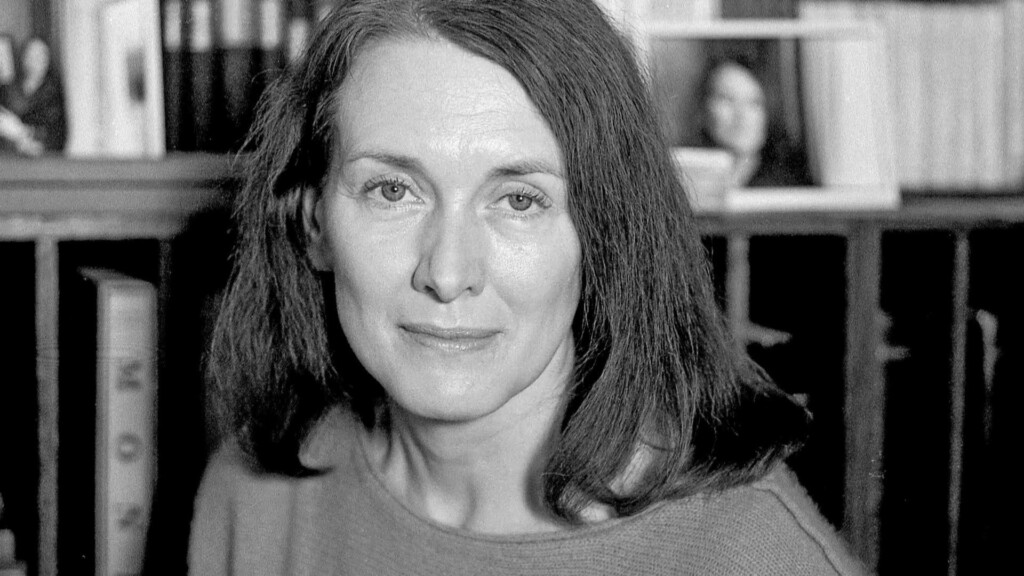
There is a particular cruelty embedded in the act of writing about someone who never read books. Not the cruelty of exposure, though that is present too, but something more structural, more quietly devastating: the impossibility of return. You write a sentence about your father’s hands, the way he held a glass, the specific silence he carried into a room, and the sentence is good — precise, honest, earned — and he will never read it. Not because he is dead, though he is, but because the very language you have learned to wield with such precision is the language that always belonged to someone else’s world, never to his.
This is the paradox at the heart of what Ernaux constructed: a book built as an act of restitution toward a man for whom books were not restitution but evidence of distance. Her father did not distrust literature because he was incurious or limited. He distrusted it because he had learned, through the accumulated small humiliations of a life lived on the wrong side of every cultural threshold, that literature was not neutral territory. It was a place where people like him appeared, when they appeared at all, as types — the rough father, the simple man, the honest worker — never as subjects with an interior life complex enough to merit sustained attention. Pierre Bourdieu, in Distinction, published in 1979, mapped with sociological precision what Ernaux was mapping with autobiographical anguish: that cultural taste is not a natural faculty but a distributed weapon, and that those who lack the consecrated forms of cultural capital learn to experience their own exclusion as personal failing rather than systemic design.
To write her father into literature was therefore not to honor him within a house he recognized. It was to carry him, posthumously, across a threshold he had always been taught not to approach. There is something in this that resembles the scene of a man standing outside a grand door, watching through a window the life that has been organized to exclude him, and then finding himself placed, by someone who loved him, inside the frame — not as guest but as subject, as the one worth looking at. Whether this is rescue or a final, well-intentioned trespass depends entirely on a question that cannot be answered.
Marcel Mauss, in his 1925 essay on the gift, argued that every gift carries within it an obligation that cannot be fully discharged, a residue of asymmetry that binds rather than frees. The book Ernaux wrote is precisely this kind of gift: one that cannot be received, one that therefore binds only the giver. She performs the restitution alone, in front of no one who was owed it, and the performance is both the most serious thing she has ever done and the thing that most perfectly demonstrates the irreversibility of what was lost. You can write someone into history. You cannot write them back into life. You can name a wound with such accuracy that the naming itself becomes a form of witness, which is not nothing — it is, in fact, the most that literature can honestly claim to do — but witness is not repair. The wound named precisely is still the wound.
What remains, after the last sentence of her book, is not resolution but the clean, unsparing shape of a question that every act of literary witness must eventually confront: whether to render a silenced life in language is to finally give it presence, or whether it is simply to make legible, one more time, and with terrible elegance, the exact dimensions of everything that was taken.
📖 Memory, Class, and the Weight of Origins
Annie Ernaux‘s A Man’s Place is a stark meditation on social class, memory, and the silence between generations. These related articles explore the philosophical and literary currents that illuminate Ernaux’s world — from theories of memory and cultural reproduction to the phenomenology of writing and identity.
Paul Ricœur: Life and Philosophy of Memory
Paul Ricœur’s philosophy of memory and narrative identity offers a profound framework for reading Ernaux’s project of bearing witness to her father’s life. Ricœur argues that memory is not mere recollection but a form of ethical duty toward the past, a tension central to A Man’s Place. His concept of ‘narrative identity’ resonates deeply with Ernaux’s attempt to construct a self through the traces of another.
GO TO THE SELECTION: Paul Ricœur: Life and Philosophy of Memory
Bourdieu’s Distinction: Taste and Social Class
Pierre Bourdieu’s theory of distinction and social taste provides an indispensable lens for Ernaux’s unflinching examination of working-class culture and the shame of upward mobility. Bourdieu maps how cultural capital reproduces class hierarchies invisibly, which is precisely the mechanism Ernaux exposes through her father’s life and her own displacement. The violence of social classification that Bourdieu theorizes finds its literary embodiment in Ernaux’s flat, surgical prose.
GO TO THE SELECTION: Bourdieu’s Distinction: Taste and Social Class
Pierre Bourdieu and the Artistic Field
Bourdieu’s analysis of the artistic field sheds light on the paradox at the heart of Ernaux’s writing: the act of turning a working-class father into literature inevitably transforms him through the very cultural codes that separated them. Understanding how the literary world operates as a field of power helps contextualize the ethical discomfort Ernaux openly acknowledges in her text. Her refusal of literary ornament is itself a gesture against the aesthetic hierarchies Bourdieu describes.
GO TO THE SELECTION: Pierre Bourdieu and the Artistic Field
Virginia Woolf: Life and Works
Virginia Woolf’s lifelong interrogation of memory, class, and the conditions of writing makes her a vital companion to Ernaux’s project. Like Ernaux, Woolf was acutely aware of how social position shapes access to language, education, and literary voice. Reading their works together reveals how women writers across different traditions have used autobiographical writing to excavate the structures that silence entire social worlds.
GO TO THE SELECTION: Virginia Woolf: Life and Works
Discover the Cinema That Asks the Same Questions
If Ernaux’s excavation of memory and class stirs something in you, independent cinema offers the same uncompromising gaze on human experience. On Indiecinema streaming you will find films that refuse easy answers and dare to look at the world with the same quiet courage as Ernaux’s prose — discover them today.
👉 EXPLORE THE CATALOG: Watch Indie Films in Streaming
A vision curated by a filmmaker, not an algorithm
In this video I explain our vision

