
The River That Does Not Teach
You pick up the book expecting a guide. You have heard it described as a spiritual classic, a roadmap to inner peace, the novel that a certain kind of person presses into your hands at precisely the moment you are most lost. You open it with the quiet hunger of someone who has been told the answer is inside. Hermann Hesse published Siddhartha in 1922, and in the century since, it has sold tens of millions of copies across dozens of languages, adopted by seekers, recommended by therapists, assigned in comparative religion courses, quoted on the walls of meditation retreats. The expectation embedded in that legacy is enormous: here is a text that will show you how to live.

And then something strange happens. The novel does not instruct you. The protagonist listens to the Buddha himself and walks away. He sits beside a river for years and learns nothing that can be written down. The ferryman Vasudeva, who is the closest thing the book offers to a spiritual teacher, teaches almost entirely by not speaking. When Siddhartha finally reaches something resembling understanding, Hesse refuses to describe it in terms the reader can extract and apply. The enlightenment the novel promises is structurally withheld — not because Hesse was being coy, but because the withholding is the argument.
This is the first trap the book sets, and most readers walk directly into it. They finish the final pages and feel they have received something luminous, a sense of peace, a warm dissolution of the self. What they have actually encountered is their own desire for resolution being gently mirrored back at them. Hesse was not writing a manual. He was writing a portrait of the longing for manuals, and the portrait is so tender, so beautifully composed, that it reads like the thing it depicts. The confusion is not accidental.
Hesse composed the novel in two phases separated by a year-long crisis of writer’s block, a rupture that is visible in the text if you know where to look. The first half moves with the confident rhythm of parable; the second half slows almost to stillness, as though the prose itself became uncertain of its destination. The psychological crisis Hesse underwent between those two phases — documented in his correspondence and later explored in his own reflections on the work — left a seam in the novel that most devotional readings smooth over entirely. But that seam is where the real thinking happens. The break between the young Siddhartha and the old one is not a narrative arc of growth; it is a discontinuity, a gap that cannot be bridged by any lesson learned or wisdom accumulated.
Carl Jung, whose friendship with Hesse ran deep and whose ideas about individuation shaped the novel’s psychological architecture, argued in Psychological Types — published just one year before Siddhartha — that the self is not a destination reached through accumulation but a paradox held in tension. Hesse had read Jung. He had also been Jung’s patient. And yet what the novel dramatizes is precisely the failure of any system, including Jung’s, to contain the movement of a single human life. Siddhartha leaves every teacher. He leaves the ascetics, he leaves the Buddha, he leaves pleasure, he leaves grief, and finally he sits beside a river that speaks in a voice which is not a voice and says something which is not a teaching.
The river in this novel does not teach. It witnesses. That distinction, quiet as it seems, collapses the entire premise on which the reader arrived. You came for instruction, for the kind of wisdom that transfers from page to person, the kind you can carry forward and use. What the river offers instead is something far more unsettling: the suggestion that carrying things forward is precisely what has been making you heavy.
I Am Nothing
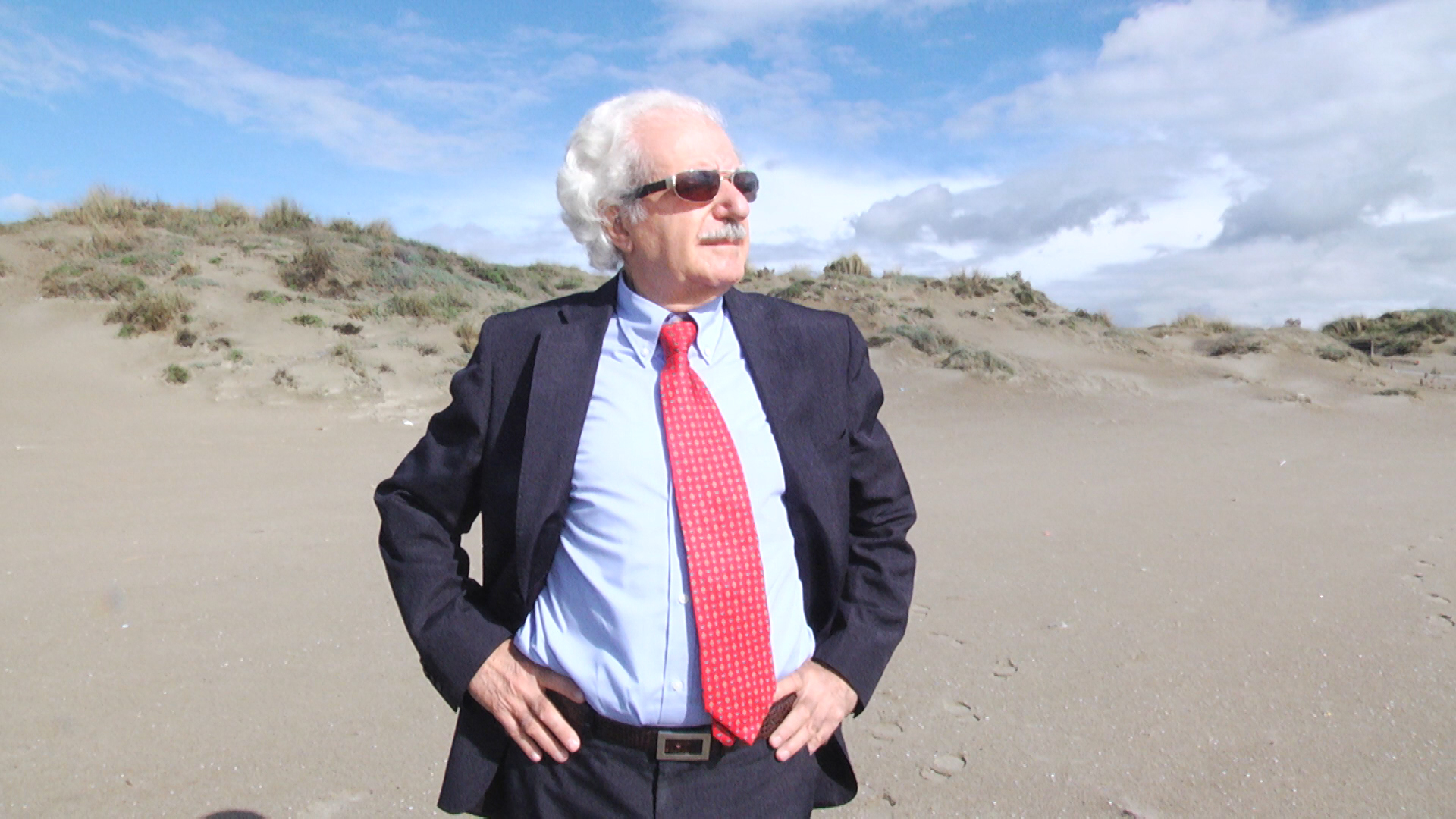
Drama, thriller, by Fabio Del Greco, Italy, 2015.
The story revolves around Vasco, a Roman builder who, at the age of 74, enjoys a life of absolute comfort. His human parable takes a dramatic turn when a mysterious encounter leads him to an ambush. Having survived, but marked by a long coma, Vasco wakes up with a new sensitivity, developing an intimate and poetic bond with nature. This new relationship with the world around him leads him to deeply explore himself, in an internal and external journey. through Italy, the United States and India, in search of a higher meaning and a cure. In parallel, the threat of a planetary cataclysm adds an epic dimension to the story.
I Am Nothing explores universal themes such as time, memory, oblivion and the connection with nature. Fabio Del Greco creates an existential drama full of food for thought. The director skillfully combines different visual materials, mixing archive images with nature photographs and dreamlike visions. This visual experimentation translates into an editing that captures the viewer's attention, guiding him through a cycle of creation and destruction. The sequences that alternate the buildings, Vasco's pride, with Indian landfills and natural landscapes create a hypnotic rhythm, underlining the beauty and fragility of life. Vasco's existential journey is a hymn to transformation and rebirth. The evolution of the protagonist, from unbridled luxury to the rediscovery of purity, represents a powerful metaphor on the meaning of life and the need to reconnect with authentic values. Io sono nulla stands out for its ability to combine introspection and visual experimentation, offering a suggestive and engaging narration. It is a film that invites us to reflect on the human condition, on our relationship with power and nature, and on the possibility of finding ourselves through change. A work that leaves its mark and lends itself to multiple readings.
LANGUAGE: Italian
SUBTITLES: English, Spanish, French, German, Portuguese
Hermann Hesse’s Wound
You are forty-three years old, your marriage is ending, your mother has just died, your son Martin has been hospitalized for schizophrenia, and the war you refused to celebrate has turned an entire civilization into a slaughterhouse. You sit down, eventually, to write a book about enlightenment.
This is the biographical pressure behind Siddhartha, and it is not incidental. Hermann Hesse entered psychoanalysis in 1916 with Josef Lang, a direct disciple of Carl Gustav Jung, and underwent roughly seventy sessions across several years. What emerged from those sessions was not serenity. It was a confrontation with what Jung had begun theorizing in those same years as the shadow — the aggregated mass of everything a self cannot acknowledge about itself. Lang pushed Hesse toward his own interior wreckage with a kind of relentless hospitality, and Hesse, who had been raised in a Pietist missionary household where spiritual performance was structural and obligatory, found that the floor of his personality was far less solid than his published persona had suggested. The Hesse who had written Peter Camenzind in 1904 and won readers with lyrical, slightly melancholic nature-mysticism was not the Hesse who emerged from those analytic hours. Something had cracked open that could not be decoratively resealed.
The breakdown Hesse experienced between 1916 and 1919 was not metaphorical. He produced the semi-autobiographical Demian in 1919 under the pseudonym Emil Sinclair, a text so raw in its depiction of psychological fracture that it won the Fontane Prize before anyone discovered its actual author. Critics who believed they were reading a young unknown were actually reading a forty-two-year-old man in crisis. The mask was the message. Hesse was already practicing, in his writing, the doubled consciousness that would later animate Siddhartha — the idea that the self observing the self is not a position of safety but an infinite regress, a hall of mirrors with no exit and no original face.
When Siddhartha appeared in 1922, the Western literary market received it as a gift from the East, a clean and luminous parable about spiritual liberation. This reception was itself a kind of colonial fantasy — the assumption that wisdom arrives from elsewhere, undamaged, purified of human sweat and failure. What the book actually contains is a man’s attempt to metabolize an experience of total interior disintegration through the only language available to him that felt large enough: the Sanskrit tradition he had absorbed from his father, a missionary who also happened to be an Indologist, and from his grandfather Hermann Gundert, who had translated the Bible into Malayalam. Hesse did not travel to India to write this book. He went to Sri Lanka in 1911, hated the journey, fell ill, and returned to Europe having experienced the East primarily as heat, alienation, and dysentery. Siddhartha is not a travelogue of discovery. It is a document assembled from childhood inheritance, scholarly reading, and the specific desperation of a man who needed a framework large enough to hold his own disassembly.
What Jung’s method gave Hesse — and what Lang specifically pressed — was the legitimacy of the irrational interior, the sense that the wound was not an obstacle to meaning but its very source. This is why the novel’s most emotionally authentic section is not Siddhartha’s forest asceticism or his eventual awakening beside the river, but his years of dissolution in the city, his addiction to gambling, to Kamala, to the slow narcosis of wealth and sensation. Hesse wrote those chapters with a specificity he could not have invented. The degradation feels documented rather than constructed, which is because in some essential sense it was. The enlightenment the novel reaches for is real, but the devastation that precedes it is the book’s actual nervous system — the place where a reader who is paying attention will feel something shift in their chest that has nothing to do with ancient India and everything to do with the particular texture of surviving yourself.

The Brahmin’s Son as Western Projection
You have read about India without ever having been there, and the India you encountered felt more familiar than foreign — that was the first sign something was wrong.
Hermann Hesse traveled to the Indian subcontinent in 1911, kept a diary of profound disappointment, and returned to Europe having found not the luminous interior world he sought but heat, poverty, and colonial bureaucracy. The India of his masterwork, published in 1922, bears no genealogical relationship to that journey. It was assembled instead from the library: from Paul Deussen’s translations of the Upanishads, from Friedrich Max Müller’s Sacred Books of the East series, from Schopenhauer’s readings of Sanskrit texts filtered through a Kantian framework. What Hesse constructed was not a culture but a screen, and onto that screen he projected the precise anxieties, hungers, and philosophical preoccupations of post-World War One European bourgeois consciousness.
Edward Said published Orientalism in 1978 and gave a name to the mechanism by which Western scholars, writers, and administrators produced the East as a knowable, manageable, and ultimately subordinate object of knowledge. The Orient in this framework is never encountered — it is authored. Hesse’s novel is a near-perfect case study in this authorship, operating not through contempt but through reverence, which Said identified as an equally distorting posture. To adore a culture you have invented is not humility. It is a more elegant form of possession.
The Brahmin household in which the novel opens carries no ethnographic weight. It is a philosophical stage set dressed in Sanskrit terminology — samana, atman, Brahman — deployed with the confidence of a man who has read translations but never heard these words spoken in their living ritual context. The Indologist Wilhelm Halbfass, in his 1988 study India and Europe, traced precisely this pattern: European thinkers appropriating Indian conceptual vocabulary while systematically severing it from the social, caste-bound, institutionally embedded reality in which those concepts actually functioned. The Brahmin caste in historical India was not a class of serene meditators pondering the unity of self and cosmos. It was a hereditary priestly institution embedded in networks of land ownership, ritual obligation, and social power that the novel renders entirely invisible. Hesse’s Brahmins have no economy, no politics, no bodies in the historical sense. They exist only as philosophy made flesh.
What replaces the real is something recognizable to any reader trained in German Romanticism: the individual consciousness in heroic friction with inherited structure, the restless seeker who must shatter every external authority to find an interior absolute. This is Faust in a dhoti. The spiritual itinerary Siddhartha traces — from orthodox religion, through asceticism, through sensual immersion, toward a final wordless wisdom — reproduces the Bildungsroman arc with such fidelity that one can map it against Goethe’s Wilhelm Meister almost chapter by chapter. The Eastern setting does not transform the European form; it decorates it.
This matters beyond literary taxonomy because the novel’s reception made it a primary vehicle through which millions of Western readers in the twentieth century believed they were accessing Indian thought. The American editions alone sold over four million copies between 1951 and 1972, precisely during the countercultural moment when readers were most desperate for an alternative to Western rationalism. They found, and mistook for an Eastern mirror, a text that was in every structural and philosophical sense a Western one. The longing was real. The object offered to satisfy it was a fabrication.
The fabrication had a specific political convenience. An India rendered as timeless, spiritually luminous, and essentially unconcerned with material history is an India that cannot demand anything — not restitution, not political recognition, not the acknowledgment that it was being administered into poverty by the same civilization now shopping its libraries for enlightenment.
What the Doctrine Cannot Hold
You are sitting at the feet of the most enlightened man alive, and he is telling you exactly how to be free. The words are precise. The path is clear. The community around you has already surrendered itself to the teaching, and the peace on their faces looks genuine. You understand, intellectually, every syllable he has uttered. And yet something in you will not move. Not stubbornness. Not pride. Something older than both — a recognition that what is being handed to you, however luminous, was earned by someone else’s suffering, someone else’s wandering, someone else’s particular darkness at a particular river on a particular night.
This is the scene Hesse constructs with surgical precision when Siddhartha stands before Gotama the Buddha and tells him, with something close to reverence and something equally close to refusal, that the teaching cannot contain the moment of liberation itself. He does not accuse the Buddha of lying. He does not leave in contempt. He leaves because he has understood something the doctrine cannot transmit: that the gap between Gotama’s enlightenment and any map of it is unbridgeable, and that crossing it requires a journey no one can make on your behalf. The Buddha’s own biography is the evidence. He did not achieve awakening by following a teacher. He sat alone under a tree, and the tree did not instruct him.
Nietzsche saw this trap with forensic clarity in Thus Spoke Zarathustra, published in installments between 1883 and 1885, when he put into Zarathustra’s mouth the most devastating thing any teacher can say to a student: you repay a teacher badly if you remain a student. The line is not rhetorical flourish. It is a structural argument about the nature of truth — that genuine insight is not a object that can be passed hand to hand like a coin, but a combustion that requires specific fuel, specific conditions, a specific life lived in a specific direction. What Zarathustra offers is not a doctrine but an instigation, and the moment it hardens into doctrine it becomes its own obstacle. The disciples who follow most faithfully are precisely those who have understood least.
What Hesse recognized, writing Siddhartha in 1922 after years of personal dissolution following a nervous breakdown, a failed marriage, and the psychic wreckage of the First World War, is that this problem is not merely philosophical. It is biographical. The seduction of a transmitted truth is never purely intellectual — it is emotional, social, deeply structural. To follow a teaching is to belong somewhere. To reject it is to stand in a field with no coordinates, responsible for a self that may not yet know what it needs. Most people, encountering that vertigo, find their way back to the group. Not because the teaching is correct, but because solitude of that intensity is an almost unbearable weight.
The rupture between lived experience and systematic thought is one that William James identified in The Varieties of Religious Experience in 1902 when he argued that religious experience in its raw form is always prior to theology — that doctrine is the scar tissue that forms after the wound of genuine encounter. The institution arrives to explain what happened, to make it repeatable, to make it safe. But the repeatability is precisely the betrayal. Siddhartha’s departure from the Buddha’s community is not a rejection of wisdom. It is a refusal to let wisdom become a procedure.
What the novel is quietly insisting, beneath its serene surface and its reputation as spiritual comfort reading, is that truth of this kind cannot survive the attempt to teach it. It can only be pointed at, circled, approached through a life that risks being wrong. The Buddha himself knew this. He sat alone. He sent everyone away.
The Trap of Kamala’s Garden
Picture a man who has learned to count money with his fingers the way a monk counts prayers. The motion is identical — rhythmic, deliberate, almost tender — but what it serves has inverted entirely. This is where Siddhartha arrives in the middle section of Hesse’s novel, not with a crash but with a slow submersion, the way a body sinks into warm water and stops noticing the temperature.
Kamala does not seduce Siddhartha in the crude sense the word implies. What she offers is far more dangerous: a curriculum. She teaches him that the body has its own grammar, that desire has a syntax more intricate than any Brahmin scripture he memorized as a boy. And Siddhartha, who has spent years emptying himself, finds that he is extraordinarily good at being filled. He becomes a merchant, a lover, a gambler — not through weakness but through the same ferocious attention he once turned toward fasting. The spiritual discipline has not disappeared; it has migrated into the service of sensation.
Schopenhauer argued in The World as Will and Representation, published in 1818, that the will is not a possession of the individual but something that possesses them — a blind, insatiable force that uses human consciousness as its instrument and offers satisfaction only as a brief interruption before the next cycle of wanting. What makes Hesse’s portrait of Siddhartha’s years in the city so unsettling is that it illustrates this mechanism without naming it. Siddhartha is not simply enjoying pleasure. He is being consumed by the metabolic logic of desire itself, which does not distinguish between sacred hunger and ordinary appetite, which takes the same quality of attention and routes it through whichever channel is available.
The garden Kamala inhabits is not merely a place. It functions as a totality — an environment engineered to make the question of meaning feel unnecessary. When every sense is occupied, the mind does not ask where it is going because arrival feels perpetual. This is what Hesse understood about luxury that most moral critiques miss: the problem is not that it is sinful but that it is genuinely, structurally satisfying in the short term. It forecloses inquiry not through violence but through completion. You do not search for an exit when no door feels missing.
What corrodes Siddhartha from inside during these years is not guilt — Hesse is careful to keep guilt absent, which is the most honest choice in the book. It is something closer to what the sociologist Émile Durkheim identified in 1897 in Suicide as anomie: the disorientation that comes not from suffering but from the collapse of any frame that would make suffering or joy legible as part of something larger. Siddhartha plays dice and wins and feels nothing. He plays and loses and feels nothing. The emotional flatness is not peace; it is the phenomenology of a man who has successfully anesthetized the part of himself that required the world to mean something.
Kamala, for her part, is not a villain in this architecture. She is, in a sense, the most honest character in the novel’s middle section because she harbors no illusions about what the garden is. She has constructed her life with precision and without apology, and she reads Siddhartha’s restlessness the way a physician reads a symptom — accurately, without being able to cure it. The tragedy embedded in their relationship is not that he leaves her but that both of them know, from very early on, that the garden was never designed to hold a man who was looking for something the garden could not name.
The seduction of forgetting is not the same as forgetting. One requires effort; it is an active turning away, a continuous and exhausting labor of not-looking.
A vision curated by a filmmaker, not an algorithm
In this video I explain our vision
The Merchant Self and Modern Identity

You already know what it felt like the first time a salary made you feel real. Not happy — real. As though the number attached to your labor was also, somehow, attached to your soul, giving it weight and location and proof. That feeling was not a personal failing. It was the architecture of a particular historical moment, built so carefully over so many generations that it no longer resembles construction at all — it resembles nature.
When Siddhartha enters the merchant world under Kamaswami’s tutelage in Hermann Hesse’s 1922 novel, he does not stumble into commerce accidentally. He walks in with full awareness, which is precisely what makes the seduction so total. He knows he is playing a role. He calls himself a game-player, tells himself the stakes are not real, maintains an ironic distance from his own desires. And then, across years measured not in wisdom but in transactions, the irony dissolves. The distance closes. He becomes the thing he was only pretending to be — not through any single betrayal, but through the slow accumulation of small surrenders that left no visible scar.
Georg Simmel, writing in 1900 in his Philosophy of Money, identified the mechanism with surgical precision: money does not merely facilitate exchange — it restructures the self that performs the exchange. Because money is the perfect instrument of equivalence, capable of converting any qualitative difference into a quantitative one, prolonged immersion in monetary culture gradually trains the psyche to measure everything, including itself, in transferable units. The result is not greed in the ordinary moral sense. It is something more structurally dangerous: the replacement of ontological coherence — the felt sense of existing as something — with the perpetual accumulation of proxies for that existence. You do not become; you acquire evidence that you are.
This is the trap Siddhartha falls into not despite his intelligence but because of it. He is gifted at business precisely because he retains a meditator’s detachment from outcomes, which paradoxically makes him a more effective accumulator. He can negotiate without desperation, risk without panic. But Simmel would recognize the irony instantly — the very detachment that was meant to protect his inner life becomes the engine of his outer success, and outer success, compounding across years, hollows out the interior it was supposed to leave untouched. By the time Siddhartha registers that something has been lost, the loss has already been completed. What remains is a man fluent in the language of the world and illiterate in every other.
The twentieth-century Western subject knows this story from the inside. The postwar economic expansion, the explosion of consumer culture through the 1950s and 1960s, the rise of what the sociologist C. Wright Mills called the “personality market” in White Collar in 1951 — all of these produced a version of identity that was essentially performative and essentially accumulative. You were what you owned, what you signaled, what you could convert. And the critical point, the one that Mills saw clearly and that Hesse had already dramatized three decades earlier, is that this was not experienced as alienation. It was experienced as freedom. The ability to construct yourself through consumption felt like liberation from the fixed identities of birth and class — and it was, partially, genuinely that. Which is exactly why the substitution was so effective and so durable.
Siddhartha’s years with Kamaswami do not end in a dramatic moral crisis. They end in exhaustion — a numbness so thorough it can no longer distinguish itself from peace. He gambles, drinks, takes a mistress not out of passion but out of a vague need to feel something sharp enough to confirm he still exists. The self that was meant to be protected by ironic distance has not been destroyed. It has been, more quietly and more permanently, replaced by its own habits.
Vasudeva’s Silence as Philosophical Provocation
You are standing at the edge of something you cannot name, and the man across from you simply nods. He does not explain. He does not offer a framework or a consolation or a path. He listens to the river, and he expects you to understand that listening to the river is the only answer he has ever had. Most readers encounter Vasudeva and feel warmth — a kind of spiritual relief that wisdom exists somewhere, embodied, available. What they are actually encountering is something far more unsettling: a figure who has permanently renounced the act of explanation, not because he is humble, but because he has concluded that explanation itself is the contamination.
This is not Eastern mysticism draped in literary clothing. It is a precise philosophical position, and Ludwig Wittgenstein arrived at the same cliff edge from the opposite direction. The seventh and final proposition of the Tractatus Logico-Philosophicus, published in 1921, reads: “Whereof one cannot speak, thereof one must be silent.” The sentence has been misread for a century as modesty, as the philosopher admitting the limits of language before the vast unknown. But Wittgenstein meant something sharper and more violent. He meant that the attempt to verbalize certain truths does not merely fail — it actively destroys what it touches. The spoken formulation substitutes itself for the thing, and the thing quietly disappears beneath the words we used to reach for it. Silence is not the absence of knowledge. It is the only form in which certain knowledge can remain intact.
Vasudeva operates by this logic without having theorized it. He has lived long enough beside the river to know that every sentence he might offer Siddhartha would install itself between Siddhartha and the experience the sentence was meant to describe. So he withholds. He rows. He points. And Hesse, to his credit, refuses to make this gesture sentimental — Vasudeva eventually disappears into the forest without ceremony, dissolving rather than departing, which is another way of saying that the teacher who teaches by not teaching cannot even make a lesson of his own exit.
What this exposes about the reader’s relationship to wisdom is genuinely uncomfortable. The desire for a Vasudeva — a silent, radiant presence who will transmit understanding through proximity — is not a spiritual aspiration. It is a fantasy of bypassing the difficulty of thinking. If wisdom can be absorbed rather than constructed, then no painful dismantling of one’s own assumptions is required. The ferryman becomes a screen onto which the reader projects the wish to be saved from the labor of consciousness itself. The silence that Hesse renders as profound is, from another angle, the silence that the frightened student finds most convenient, because it can mean anything.
There is a sociological mechanism here that Pierre Bourdieu identified in Méditations pascaliennes in 1997, when he examined how certain cultural fields consecrate opacity as a marker of depth. The figure who speaks least is awarded the most authority, because silence cannot be falsified. The ferryman’s reticence functions as cultural capital precisely because it is unverifiable — no one can prove the river said nothing meaningful, and no one can prove it said everything. The institution of spiritual authority has always understood this. The oracle at Delphi was deliberately ambiguous not despite her centrality but because of it. The pronouncement that cannot be pinned down cannot be refuted, and the figure who embodies it cannot be displaced.
What Hesse may not have fully reckoned with is that building an entire ethical architecture on the abdication of explanation means building it on ground that cannot be inspected. Vasudeva’s silence is either the most honest gesture in the novel or the most dangerous one, and the text provides no reliable way to distinguish between them, which is perhaps exactly the point, or perhaps the novel’s deepest unexamined assumption — and those two possibilities are not as different as they first appear.
The Unity That Excludes Nothing, Including You
You have followed someone to the edge of a river. Not this river, not any river you could name, but the one that appears in the final pages of a novel you thought you understood — and you stood there, at that bank, and felt something loosen in your chest, something you could not explain to anyone who asked you about it later. The feeling was real. That is exactly the problem.
William James spent years collecting testimony from people who had touched what he called the noetic quality of mystical experience — the sense, arriving without argument, that everything is simultaneously itself and everything else, that time is not a sequence but a texture, that the self is both present and dissolved. In The Varieties of Religious Experience, published in 1902, he was meticulous about this: he did not dismiss the experiences, he catalogued them with the rigor of a psychologist who knew that the mind’s most extreme states are also its most structurally consistent ones. What he found is that mystical experience carries four markers — transiency, passivity, ineffability, and that noetic weight — and that the passivity marker is the one nobody wants to look at directly. The experience comes. It is not built. The person who receives it is always, in James’s phrasing, as if held by a superior power.
Siddhartha, in Hesse’s architecture, arrives at the river after exhausting every form of seeking. The Brahmin’s son who memorized the Vedas, the ascetic who starved sensation into submission, the merchant who drowned in pleasure and nearly drowned in a literal river before pulling himself back — none of these figures reached the unity the novel names. It is only when Siddhartha stops trying to become anything that the river speaks its single syllable, Om, and the ferryman Vasudeva smiles his departing smile and walks into the forest, his work complete. The novel presents this as arrival. What James’s data forces us to see is that it is also, structurally, an accident.
This is not a minor qualification. It is the axis on which the entire spiritual economy of the twentieth century quietly breaks. Every meditation retreat, every curated silence, every breath-counting technique sold between covers — all of it operates on the assumption that the state Siddhartha inhabits can be approached through method, that the gap between ordinary consciousness and what the river represents is a distance that effort can cross. James’s passivity criterion says otherwise. The unity that absorbs Siddhartha is not a destination; it is a visitation. The preparations do not cause it. They only, at most, clear the ground for something that may or may not arrive, and whose arrival has no obligation to you.
What makes Hesse’s novel devastating rather than merely beautiful is that it knows this and buries the knowledge in plain sight. Govinda, Siddhartha’s lifelong companion, does everything correctly. He joins the Buddha, follows the path, practices with sincerity across decades, and at the end of the novel he presses his lips to Siddhartha’s forehead and weeps — because in that instant, briefly, he sees what Siddhartha has become. The unity touches Govinda only as a reflection, only through proximity to someone else’s completion. He does not achieve it. He witnesses it. The novel does not explain why. Hesse does not explain why. There is no why available.
The river that carries all voices simultaneously — the crying and the laughing, the lamenting and the wise — does not sort its listeners by merit or preparation or sincerity of longing. Atman, the word the novel reaches toward, names the self that is also everything, the drop that is also the ocean, a formulation so old it predates written Sanskrit. But the word names something, and the naming is not the thing, and the thing has never once arrived because someone decided it should.
🕉️ Paths of the Soul: Spirit, Self, and Awakening
Hermann Hesse’s Siddhartha is a profound meditation on the inner journey toward enlightenment, weaving together Hindu and Buddhist thought with Western literary sensibility. The novel’s themes — self-renunciation, the illusion of the ego, the search for transcendence — resonate deeply across philosophy, mysticism, and world literature. The articles below illuminate the spiritual and intellectual landscape that surrounds Hesse’s masterpiece.
Ramana Maharshi: Life and Teachings
Ramana Maharshi, the sage of Arunachala, taught a path of radical self-inquiry strikingly parallel to Siddhartha’s own inward turning. Like Hesse’s protagonist, Maharshi insisted that liberation cannot be found through doctrines or teachers alone, but only through direct encounter with the silent self. Understanding his life and teachings deepens the reader’s appreciation of the contemplative core at the heart of Siddhartha.
GO TO THE SELECTION: Ramana Maharshi: Life and Teachings
Jungian Individuation and the Great Work
Carl Jung’s concept of individuation — the lifelong process of integrating the shadow and achieving psychological wholeness — mirrors Siddhartha’s wandering through pleasure, asceticism, and worldly experience before reaching inner unity. Jung saw alchemical transformation as a symbolic language for the same journey Hesse dramatizes in narrative form. Exploring the connection between Jungian individuation and the Great Work illuminates the archetypal depth of Hesse’s novel.
GO TO THE SELECTION: Jungian Individuation and the Great Work
Jiddu Krishnamurti: the Man Who Refused to Be God
Jiddu Krishnamurti, like Siddhartha, ultimately rejected the authority of organized spiritual traditions and insisted on the radical freedom of the individual inquirer. His refusal to be cast as a messiah echoes Hesse’s message that no teacher — not even the Buddha himself — can walk the seeker’s path for them. Reading about Krishnamurti alongside Siddhartha opens a rich dialogue between Eastern wisdom and the modern longing for authentic self-knowledge.
GO TO THE SELECTION: Jiddu Krishnamurti: the Man Who Refused to Be God
American Transcendentalism: History and Thought
American Transcendentalism, as shaped by Emerson and Thoreau, shares with Siddhartha a conviction that divinity is accessible through direct experience of nature and the inner life, beyond the mediation of institutions or scripture. Both traditions celebrate the sovereign individual who steps away from conformity to listen to a deeper voice. Tracing this current of thought reveals how Hesse’s novel belongs to a global conversation about the soul’s hunger for truth.
GO TO THE SELECTION: American Transcendentalism: History and Thought
Cinema That Journeys Inward
If Siddhartha’s quest for meaning speaks to you, Indiecinema is the streaming platform where that search continues on screen. Discover independent and art-house films that explore consciousness, spirituality, and the courage to live a life examined — stream them now on Indiecinema.
👉 EXPLORE THE CATALOG: Watch Indie Films in Streaming
A vision curated by a filmmaker, not an algorithm
In this video I explain our vision

