
The Silence Before the Word
You are copying something you are not supposed to have. The manuscript is not yours — it belongs to no institution, no church with a recognizable seal, no court with a documented scribe. The words on the page are arranged in a script that the empire surrounding you has never ratified, never catalogued, never permitted. You are not a rebel in any heroic sense. You are simply someone who needed to write in the only language that lived in your mouth, and the act of doing so has already placed you outside the boundary of what the administrative world considers real.

Albanian literature does not begin with a golden age. It does not begin with a court poet celebrated in a capital, or a printed Bible distributed by a reforming church to a literate population. It begins in the middle of a problem: a language spoken by hundreds of thousands of people across the western Balkans and southern Italy had, for centuries, no standardized written form, no sanctioned orthography, no single script agreed upon by those who used it. The Ottoman administration conducted its business in Ottoman Turkish and Arabic. The Orthodox clergy wrote in Greek. The Catholic missionaries wrote in Latin. Albanian existed in the mouth, in the mountain village, in the folk song transmitted from grandmother to child — and almost nowhere on the page.
The earliest surviving document written in Albanian dates to 1462. It is a single sentence, a baptismal formula recorded by the Archbishop of Durrës, Pal Engjëlli, inside a Latin letter to a church contact. “Unte paghesont premenit Atit et Birit et Spertit Senit.” Baptize him in the name of the Father, the Son, and the Holy Spirit. Fourteen words. The entire recorded presence of a language in the fifteenth century reduced to a liturgical fragment tucked inside a document written in another tongue, as if the Albanian sentence needed a Latin host body to survive at all. This is not a triumphant beginning. It is the shape of erasure interrupted for exactly one moment.
What followed was not a flowering but a scattered, almost clandestine persistence. Gjon Buzuku produced a Catholic missal in 1555 — the Meshari — considered the first substantial text in Albanian, written in a Latin-based script that Buzuku himself appears to have constructed or adapted, because no agreed-upon alphabet existed for him to simply use. He was not building on a tradition. He was inventing the conditions for one to eventually exist, with no guarantee that anyone after him would continue, or that the book would survive at all. The single known copy of the Meshari was discovered in the Vatican Library in 1740, nearly two centuries after its composition. The text had outlasted its own context by being invisible.
This pattern — writing that survives through concealment, through institutional exile, through the accident of a librarian’s curiosity centuries later — is not incidental to Albanian literary history. It is its structural condition. The Arbëreshë communities in southern Italy, descendants of Albanian refugees who fled the Ottoman expansion after the death of Gjergj Kastrioti Skënderbeu in 1468, preserved and developed written Albanian on foreign soil while the Ottoman administration systematically discouraged its use within the Balkan territories themselves. The prohibition was rarely explicit and total — it was something more insidious: the simple absence of infrastructure, of printing presses, of schools, of any official reason to write in Albanian rather than in a language the state already recognized.
What gets called a literature under these conditions is something stranger and more fundamental than a collection of texts. It is the record of a refusal to accept that a language without bureaucratic permission is a language that does not exist. Every scribe who wrote in Albanian before the nineteenth century was not making a cultural statement in any conscious ideological sense. They were simply choosing not to disappear — and that choice, repeated across generations with no coordination and no guarantee of continuity, is what eventually produced something that could be called a tradition.
Altin in the City

Drama, thriller, by Fabio Del Greco, Italy 2017.
Altin, aspiring Albanian writer arrived in Italy aboard a large ferry in the 90‘s, works in a butcher shop when he’s selected to audition for a reality of writers and finally sees a chance to be successful with his book “the journey of Ismail.” Unfortunately, this is the begin of the adventures which will lead him to learn about revenge, loneliness and extreme poverty, to the dark side of wealth and success.
The theme of Altin in the City should not lead to the assumption that it is merely the story of a young immigrant trying to integrate. In reality, it is a tale where greed, thirst for power and success, cynicism, and ambition intertwine, creating a sort of modern-day Faust and a new "pact with the devil" belonging to the 22nd century, which we could summarize as: show business. The reality show becomes the Mecca, the keystone, and the springboard for those who wish to achieve success without effort. Del Greco presents this world with subtle irony, characterized by kitsch nuances and parodic tones. However, success without effort comes at a price: Altin has sold his soul to the devil and, from being an easy prey of television showbiz, will soon become a victim of himself.
LANGUAGE: Italian
SUBTITLES: English, French, Spanish, German.
A Language Without a Country
You are handed a book printed in 1555, its pages brittle and browned, its ink pressed into vellum by a Catholic priest named Gjon Buzuku working somewhere in the northern Albanian highlands, and you realize with a slow, unsettling vertigo that this is it — the earliest confirmed written document in a language spoken continuously for longer than almost any other tongue on the European continent. Not a founding text in the triumphant sense, not a proclamation or an epic, but a missal, a liturgical manual, a tool for administering sacraments to people who needed God translated into the only language their mouths knew. The Meshari is not a beginning. It is proof that something enormous had already been living without anyone writing it down.
Albanian belongs to no family within the Indo-European tree except its own. Linguists who have spent careers mapping the migrations and mutations of Eurasian speech cannot place it beside Greek, beside the Slavic cluster, beside the Romance branch — it stands alone, an isolate within the broader structure, carrying phonological and lexical traces that suggest a lineage stretching back to populations who occupied the Balkans before Rome named them, before Alexander named himself king of anything. The most credible scholarly hypothesis connects Albanian to ancient Illyrian, a language cluster so poorly documented that the connection itself remains partially speculative. What is not speculative is the age of the thing. What is not speculative is that Albanian-speaking communities sustained a coherent cultural identity — mythologies, legal codes, ethical systems, poetry — entirely through the oral channel, for millennia, before any ecclesiastical or political institution decided their speech deserved letters.
This is where the trap closes on the unwary reader. The absence of early written Albanian has been interpreted, repeatedly and across different historical moments, as evidence of cultural underdevelopment. European Romanticism, which simultaneously idealized the oral traditions of “primitive” peoples and ranked civilizations by the sophistication of their textual archives, handed Albanian culture an impossible contradiction: your oral heritage is poetic and noble, but your lack of scripture means you are behind. The Kanun of Lekë Dukagjini — the extraordinarily detailed customary law governing northern Albanian social life, transmitted orally for centuries before being partially transcribed in the late nineteenth century — encodes a juridical sophistication that rivals written legal traditions. It regulates hospitality, honor, property, blood feuds, and gender relations with a precision that only emerges from centuries of communal refinement. It was not primitive. It was simply not printed.
Walter Ong, in Orality and Literacy published in 1982, argued that oral cultures do not merely lack writing — they think differently, structure knowledge differently, embed memory in rhythm and formula and communal performance in ways that written cultures systematically undervalue once inscription becomes the dominant mode. The Ottoman administration that controlled Albanian territories for roughly five centuries had little interest in standardizing or preserving Albanian as a written vernacular. The Orthodox and Catholic ecclesiastical structures that might have performed that function — as they had for Serbian, for Romanian, for Bulgarian — were either absent, suppressed, or operating in Greek and Latin. Buzuku’s Meshari survived in a single copy, discovered only in 1740. One copy. A language of hundreds of thousands of speakers, and one surviving copy of its first written monument.
What accumulates here is not simply a historical gap but a philosophical question about what a culture is required to prove in order to be recognized as real. Greek had Homer committed to writing by the sixth century BCE. Latin had its canonical literature consolidated by the Augustan age. Albanian had its speakers, its mountains, its unbroken spoken thread — and the implicit demand from every surrounding civilization that this was insufficient, that voice without letter is a kind of non-existence, that to be heard across time you must first be readable.

The Bektashi Poets and the Mystical Underground
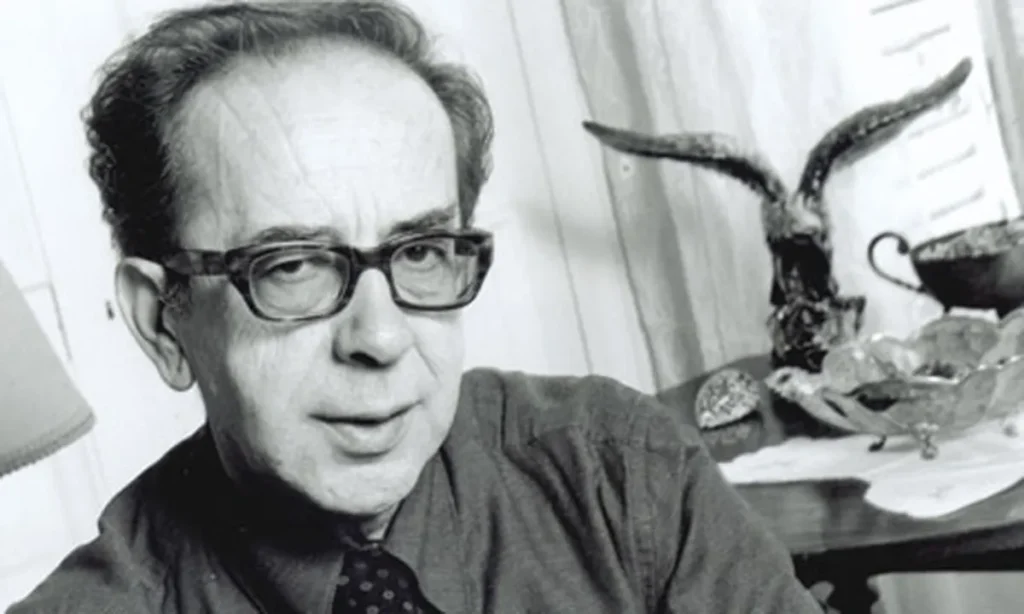
You find a manuscript in a language you cannot immediately place. The script curves in ways that suggest Arabic, but the phonemes underneath — when a scholar reads them aloud — carry the unmistakable music of Albanian vowels, that open, unhurried sound that the mountains seem to have forced into the mouths of everyone who ever lived among them. The text is erotic and theological at once, the beloved indistinguishable from the divine, desire functioning as a epistemological method rather than a moral problem. You are holding, without knowing it, the central nervous system of a literary tradition that most Albanian literary histories will mention in a footnote, if at all.
The Bejtexhinj — the name itself borrowed from the Turkish beyt, the distich form — were Albanian poets of the eighteenth and nineteenth centuries who wrote within the register of Ottoman-Islamic mysticism, specifically within the Bektashi order, a Sufi brotherhood whose theology blended Shia Islam with pre-Islamic Anatolian folk religion, traces of Christian iconography, and a systematic suspicion of orthodox authority in any form. Nezim Frakulla, writing in the early eighteenth century, produced ghazels of such technical sophistication that they circulated across the Ottoman literary world, not as provincial curiosities but as genuine contributions to a cosmopolitan form. Haxhi Shehreti, a century later, pushed the tradition toward an almost pantheist dissolution of the self, where the speaker’s identity becomes increasingly difficult to locate — swallowed, deliberately, into a larger pattern that refuses to be named directly. These were not men writing at the margins of something. They were men operating at the center of a living philosophical project.
What makes European literary historiography so uncomfortable with them is precisely their refusal to be assimilated into the narrative of national awakening. The Rilindja Kombëtare, the Albanian national renaissance of the nineteenth century, needed its poets to be straining toward a coherent Albanian identity — secular, European in orientation, resistant to Ottoman cultural dominance. The Bejtexhinj were Ottoman in their forms, Islamic in their metaphysics, and yet unmistakably Albanian in their linguistic substance. They represented a synthesis that the nationalist story had no grammatical category for. And so the story quietly absorbed them as anomalies, curiosities from a period of cultural confusion, rather than recognizing them as what they actually were: the first Albanians to use literature as a tool for sustained philosophical inquiry into the nature of the self and its relation to the absolute.
The mystical tradition in literature does not ornament philosophy — it is one of the oldest vehicles through which communities have done their hardest thinking. When Ibn Arabi developed his doctrine of wahdat al-wujud, the unity of being, in the thirteenth century, he was not writing theology in verse as a pious decoration. He was using the instability of lyric — its irreducible ambiguity, its capacity to hold contradiction without resolving it — to think through problems that prose philosophy systematically flattens. The Bejtexhinj inherited this method and applied it to Albanian experience with full awareness of what they were doing. Frakulla’s use of the mashuq, the beloved, is never simply devotional. It is a structural device for exploring what it means to desire understanding itself, to pursue meaning the way you pursue a person who keeps disappearing around corners.
The minimization of this tradition by later Albanian scholarship is not accidental ignorance. It reflects a deeper anxiety about cultural purity that nationalism everywhere produces — the need to show that the nation existed, coherently and recognizably, before the moment of its modern articulation. Any evidence that Albanian intellectual life was genuinely syncretic, genuinely entangled with Ottoman and Islamic forms rather than merely contaminated by them, becomes a problem to be managed. But synthesis is not contamination. The only question worth asking is whether the thinking was real — and in the ghazels of the Bejtexhinj, it was more real than almost anything that came after them in the name of
The Rilindja and the Invention of the Nation
You are reading a poem about shepherds and mountains, and you do not yet know you are being conscripted.
Naim Frashëri’s Bagëti e Bujqësi, published in Bucharest in 1886, presents itself as pastoral verse — flocks, seasons, the smell of Albanian soil at dusk. But the landscape it constructs is not found, it is manufactured. The mountains are not described because they are beautiful; they are described because they need to exist in the mind of a reader who may never have seen them, a reader scattered across Istanbul, Cairo, Boston, whose Albanianness has been conducted entirely in Greek or Ottoman Turkish or the dialect of a village with no written tradition. Frashëri is not recording a nation. He is making one legible to itself for the first time, and legibility, in the political context of a crumbling Ottoman Empire and a Balkans being redrawn by the Congress of Berlin in 1878, is not an aesthetic achievement — it is a survival mechanism.
Benedict Anderson argued in Imagined Communities, first published in 1983, that nations are not ancient organic formations but modern constructions enabled by print capitalism, by the capacity of a shared printed language to create the fiction of a community among strangers who will never meet. What makes his framework viscerally useful when applied to the Rilindja Kombëtare — the Albanian National Awakening that spans roughly 1878 to 1912 — is that the Albanian case reveals the construction with unusual nakedness. There was no dominant shared print language before the movement began. Albanian had been written in at least three competing alphabets — Arabic, Greek, Latin — depending on region and religion, and often not written at all. The first unified Albanian alphabet was agreed upon at the Congress of Monastir only in 1908. Which means the very tool Anderson identifies as the precondition for national imagination had to be invented mid-process, during the emergency, while the political stakes were already live.
Sami Frashëri, Naim’s brother, understood this with the cold precision of a linguist and ideologue simultaneously. His 1899 pamphlet Shqipëria — ç’ka qenë, ç’është e çdo të bëhetë (Albania — What It Was, What It Is, and What It Will Become) is a document that performs the operation Anderson describes without any self-consciousness about doing so: it reaches backward into an Illyrian antiquity to anchor a people who needed historical depth, then pivots forward into a political program for independence. The past being invoked was not falsified exactly, but it was selectively assembled, pressed into narrative shape, given the teleological momentum that real history almost never possesses on its own. This is what nationalist literature always does — it does not lie so much as it edits, and the editing is the ideology.
Girolamo De Rada, the Arbëreshë poet working in Calabria across the second half of the nineteenth century, complicates any simple reading of the Rilindja as a solely Balkan phenomenon. His Rapsodie d’un poema albanese, published in fragments across several decades beginning in 1836, drew from the oral traditions of Albanian communities in southern Italy — communities that had preserved a medieval Albanian world in suspension since the migrations following Skanderbeg’s death in 1468. De Rada was not simply preserving folklore. He was demonstrating, for an Italian Risorgimento audience as much as an Albanian one, that Albanian culture possessed the antiquity and the lyrical dignity that Romantic nationalism required as credentials. He was submitting an application, in verse, to the tribunal of European cultural legitimacy.
What none of these men could fully control was what their invention would be used for once it escaped their hands. The nation they were imagining into existence was catholic in its aspiration, religiously pluralist by necessity — Naim Frashëri himself was Bektashi — because the only way to unify Muslims, Orthodox Christians, and Catholics under a single banner was to make the banner secular, cultural, linguistic. The word they chose was telling: Shqipëri, the land of eagles, an identity rooted not in confession but in territory and tongue.
Gjergj Fishta and the Weight of the Epic
You open the book and the first thing you feel is the weight — not metaphorically, but physically, the density of a text that took its author nearly four decades to complete, revised and expanded from its earliest fragments in 1902 until its full publication in 1937. Gjergj Fishta, a Franciscan friar from northern Albania, spent most of his adult life building a single monument: thirty cantos, approximately fifteen thousand verses, an attempt to compress the entire moral universe of the Albanian highlands into the form of an oral-heroic epic transcribed and elevated into literary language. The work is called Lahuta e Malcís — The Lute of the Highlands — and it has been, in the span of a single century, declared a national masterpiece, erased from existence, and then resurrected as though the erasure had been a temporary embarrassment rather than a sustained act of cultural violence.
The oscillation is the thing worth staring at directly. When Enver Hoxha’s regime consolidated power after 1944, Fishta’s name was not simply deprioritized or quietly sidelined — it was systematically annihilated from public cultural life. The Franciscan friar was denounced as a reactionary, a nationalist of the wrong kind, a collaborator with fascist occupation forces during the Second World War. His books disappeared from libraries. His name disappeared from curricula. For roughly four decades, one of the most linguistically sophisticated works ever composed in the Gheg dialect of Albanian existed in a condition of official nonexistence. To possess the text was an ideological risk. To cite it was a form of counter-revolutionary self-incrimination. The state had decided that the poem did not deserve to live, and so it didn’t, at least not inside the borders of the country that had once called it the foundation of its literary identity.
What demands examination here is not the injustice of the ban, which is obvious, but the mechanics of how the same object was made to serve opposite masters with equal plausibility. The Italian fascist occupation that controlled much of Albania between 1939 and 1943 found in Fishta’s epic a convenient celebration of Albanian highland valor that could be reframed as compatible with their colonial aesthetics of virile nationalism. Fishta himself, whether through political naivety or something more complicated, did not publicly refuse this appropriation. This gave Hoxha’s regime the instrument it needed: the poem became guilty by association, tainted by the uses to which it had been put, as though the thirty cantos were responsible for the hands that had held them. And then, after 1990, when the regime collapsed and rehabilitation became a cultural imperative, the work was restored to canonical status — not because the questions around Fishta’s wartime posture had been resolved, but because the new ideological requirement was national continuity, and Lahuta e Malcís was too large to leave absent from the story Albania needed to tell about itself.
The philosopher Hans-Georg Gadamer argued in Truth and Method, published in 1960, that a text is never simply a fixed object waiting to be correctly interpreted — it is always in dialogue with the horizon of the reader, meaning that what a work “says” is inseparable from the historical moment in which it is being read. Fishta’s epic proves this with an almost clinical brutality. The same verses about highland warriors defending their land against Ottoman and Slavic encroachment were readable as proto-fascist myth in 1941, as dangerous bourgeois nationalism in 1967, and as foundational democratic heritage in 1993. The text did not change. The political horizon consuming it did.
This is not a phenomenon unique to Albania, but Albania makes it impossible to look away from, because the timeline is so compressed, the reversals so total, and the gap between the condemnation and the rehabilitation so short that the bad faith of both gestures becomes visible simultaneously. A literary canon is not a record of aesthetic achievement — it is a shifting instrument of collective self-authorization, and the works inside it are hostages to whoever currently controls the locks.
A vision curated by a filmmaker, not an algorithm
In this video I explain our vision
Literature Under the Bunker

You are standing in a field somewhere in the Albanian countryside, and the ground beneath your feet is not ground — it is a lid. A concrete dome, half-buried, stares up at you like a sealed eye. There are 173,000 of them across a country smaller than Maryland, one bunker for every fourteen citizens, each one poured during the decades when Enver Hoxha decided that the entire nation should live inside its own fortification. No other state in modern history translated paranoia so literally into architecture. The bunker was not a metaphor the regime chose — it was the regime’s accidental self-portrait, and every writer who worked under it understood, at some cellular level, that the structure of permissible thought had the same proportions: low, sealed, facing outward in permanent anticipation of an enemy that justified the enclosure.
What literature survives from that enclosure is not, as romantic mythology would have it, a literature of pure resistance whispering truth to power. It is something far more disturbing and far more instructive — a literature shaped by the censor as a co-author, where the writer’s deepest intelligence was spent not on expression but on calibration. Ismail Kadare published his first major novel in 1963, three years before Hoxha declared Albania the world’s first atheist state and began dismantling every institution — religious, cultural, familial — that mediated between the individual and the party. The General of the Dead Army arrives as an Italian military officer returns to postwar Albania to collect the bones of soldiers who died on its soil. The premise is already a kind of structural alibi: the perspective belongs to a foreigner, the subject matter is the past, the emotional center is grief. Kadare had found the mechanism that would define his entire career — the historical or geographical displacement that allows a narrative to conduct its real argument in the reader’s peripheral vision rather than directly in front of them.
The operation is neither purely cynical nor purely heroic, and collapsing it into either category mistakes the nature of totalitarian literary production entirely. The Hungarian critic György Lukács argued in The Theory of the Novel, published in 1920, that the novel form is inherently the form of a world abandoned by God — a world where meaning must be constructed rather than received. Under Hoxha, this abandonment was administrative. The party had replaced transcendence with itself, and the writer who wanted to work in the space between official reality and actual experience had to become an expert in the precise tensile strength of language — how much it could carry before the censor felt the weight.
By 1981, when The Palace of Dreams appeared, Kadare had moved from displacement into something more structurally radical. The novel enters the Ottoman bureaucracy of dream interpretation, an institution that collected and analyzed the dreams of the empire’s subjects in search of prophetic significance. The machinery of surveillance is rendered ancient and therefore deniable, but the phenomenology it describes — the state that enters the unconscious, that harvests the involuntary, that transforms sleeping minds into political material — was not Ottoman. Every Albanian reader in 1981 knew exactly what kind of institution produced that kind of intimacy with its citizens’ inner lives. The book was pulled from shelves within years of publication, which confirmed what the censor’s initial approval had obscured: that the danger was real, even if the address was disguised.
What this reveals is not a lesson about artistic courage but a question about readership under conditions of total ideological saturation. The censor and the dissident reader were, in that system, reading the same text for opposite purposes, each using identical interpretive tools, each finding what they were trained to find. The writer existed in the gap between those two readings, producing meaning that was simultaneously present and deniable, which is perhaps the most precise definition of literature that political extremity has ever forced into existence — not freedom, but the negative space where freedom’s outline remains visible precisely because something solid has been pressed against it.
Diaspora, Fracture, and the Untranslatable Self
You are standing in a queue at a European border crossing sometime in the 1990s, and the document in your hand is Albanian, which means it is almost nothing, which means you are almost nothing — and the officer on the other side of the glass has already decided this before looking at your face. The queue is not just a bureaucratic inconvenience. It is the first sentence of a new autobiography being written for you by someone who has never heard your name.
Fatos Kongoli understood that the collapse of Enver Hoxha’s regime in 1991 did not liberate Albanian interiority so much as expose how thoroughly it had been colonized. His novel “The Loser,” published in 1992, presented a protagonist whose psychological architecture had been built entirely by a system that no longer existed, leaving him structurally homeless even while standing on Albanian soil. The horror Kongoli identified was not political in the narrow sense — it was ontological: the disappearance of the oppressive state did not restore a self that had been suppressed; it revealed that suppression had become the self. What came after communism was not freedom but the vertigo of a subject who had been organized around absence and now had to live inside that absence without the frame that once gave it shape.
Elvira Dones carried this vertigo across borders and into Italian prose. Her 2007 novel “Sworn Virgin” — which in Albanian literary culture activates an entire ethnographic and psychological archive around the “burrnesha” tradition of women who assume male identity under the Kanun’s social contract — performs a double translation that cannot be reduced to linguistics. The protagonist Hana’s return to womanhood after years of living as Mark is not a liberation narrative. It is the exposure of how every identity, even a chosen one, even a transgressive one, is a social contract that others must honor for it to exist at all. Dones forces the reader to understand that self-determination is not an interior event but a collective ratification, and that migrating between genders, between cultures, between languages, produces not a richer self but a self that is perpetually in the accusative case — always the object, never quite the subject of its own sentence.
Ornela Vorpsi’s “The Country Where No One Ever Dies,” published in French in 2004 despite being wholly Albanian in its cellular material, makes the untranslatability structural rather than thematic. The body in Vorpsi’s prose — specifically the female body under the male gaze of a paranoid socialist state — does not metaphorize suffering; it is the surface on which ideology writes itself most directly and most violently. The fact that the book exists in French is itself an argument: the language of the Enlightenment, of universal rights and secular humanism, becomes the container for experiences that those values were supposed to have already prevented. The irony is not decorative. It is the book’s epistemological core.
What connects these three writers is not thematic overlap but a shared formal problem that translation scholars such as Lawrence Venuti, in “The Translator’s Invisibility” published in 1995, have circled without fully naming: the question of whether a text produced from fracture can be received without the fracture being aestheticized, domesticated, made comfortable for a reader who needs the pain to remain at a manageable distance. When Vorpsi’s or Dones’s prose is received in Western European literary markets as beautiful, as lyrical, as haunting — all of which it is — something is also being quietly neutralized. The reception completes the displacement in a different register: the writer has now been translated not just into another language but into another category of suffering, one that can be appreciated rather than reckoned with.
The Reader Who Was Never the Intended Audience
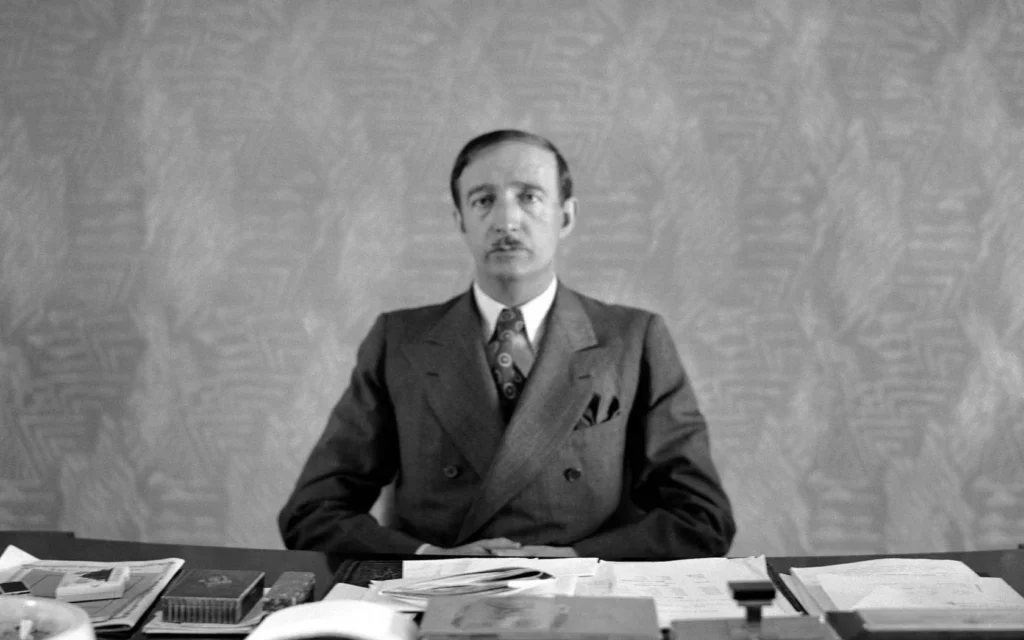
You finish the last page of a novel written in 1909 and realize, with something close to vertigo, that the man who wrote it was not addressing you — he was addressing someone who did not yet exist, a reader formed by a national continuity that had not yet been established, a cultural memory that had not yet been consolidated, a Europe that had not yet decided whether Albania was inside or outside its borders of intelligibility.
This is not a marginal irony. It is the structural condition of Albanian literature from its earliest sustained moments. When Naim Frashëri composed his lyric cycles in the 1880s, he was not writing for the Albanian peasantry of the Ottoman periphery who surrounded him — most of whom could not read the alphabet his own brother had helped standardize. He was writing toward a future subject, a national consciousness that the writing itself was supposed to help call into being. The text preceded its reader in the most literal sense: the literature was an act of willed anticipation, a demand placed on history rather than a response to it. Gjergj Fishta, whose Lahuta e Malcís stands as the most architecturally ambitious work of early Albanian letters — an epic of over fifteen thousand verses completed in its final form in 1937 — spent decades composing a monument to a reader who would need decades more to arrive, only to be banned from that reader’s hands for nearly half a century by the Hoxha regime that deemed him ideologically inadmissible. The poem outlasted the prohibition, but the interval of silence was not nothing. Silence accumulates. It changes the acoustics of any room a voice eventually enters.
The Hoxha period produced its own version of this displacement, though inverted. Writers like Ismail Kadare composed works between the 1960s and 1980s that circulated internationally — translated into French through Naïm Frashëri publishing house editions, read in Paris before they were freely read in Tirana — which meant that the work’s first genuine readership was foreign, and the domestic reader who was nominally the intended audience existed only as a fiction maintained by official literary culture. The international reader encountered allegory; the Albanian reader encountered surveillance. Both were reading the same sentences through entirely different apertures of risk.
Somewhere in a mid-sized European publishing house, a translator opens a manuscript forwarded by a literary scout, a work by an Albanian author of the post-communist generation, and discovers that none of the cultural reference points embedded in the text — the specific textures of collective apartment life, the particular shame-register of informer culture, the precise valence of certain mountain customs repurposed in urban irony — appear in any reference work available on the translator’s shelves. The translator faces a decision that is not linguistic but epistemological: whether to carry the foreignness intact and risk losing the reader entirely, or to find equivalent cultural coordinates from a more legible tradition and risk losing the book entirely, replacing its specificity with a comfortable approximation that translates not the Albanian world but the translator’s anxiety about it. Most decisions of this kind are made in silence, without acknowledgment, and the published version bears no trace of the violence committed in either direction.
What survives a literature is not simply the question of which books remain in print or which authors collect prizes at international festivals. Oral transmission carried Albanian language and verse through centuries of Ottoman prohibition without a single printing press. Canon formation requires institutional infrastructure that Albanian literary culture was systematically denied or forced to construct under conditions of ideological coercion. Readership can be manufactured, suppressed, exiled, or simply never summoned from the economic conditions that produce literate publics. And translation, that act of perpetual decision under pressure, carries a literature across borders while inevitably altering the molecular weight of everything it touches.
What remains, then, may be nothing more and nothing less than the stubbornness of a language that refused, across five centuries of institutional silence, to stop being spoken.
📚 Voices, Words, and Literary Identities
Albanian literature carries within it centuries of oral tradition, political resistance, and the search for a national identity forged through language itself. Exploring it means entering a world where literature is never merely aesthetic but always deeply bound to history, survival, and cultural memory. These related articles trace parallel journeys through other literary traditions that share similar tensions between identity, place, and the written word.
Mexican Literature: History and Main Authors
Mexican literature, like Albanian, emerged from a complex layering of indigenous heritage, colonial trauma, and the urgent need to forge a national voice. Its major authors — from Rulfo to Fuentes — used fiction as a way to excavate the buried histories of a people struggling to name themselves. Understanding this tradition illuminates how literature functions as both mirror and weapon in cultures shaped by domination and resilience.
GO TO THE SELECTION: Mexican Literature: History and Main Authors
Grazia Deledda: Life and Works
Grazia Deledda, the Sardinian Nobel laureate, wrote from the margins of Europe, transforming a peripheral and orally rich culture into universal literary testimony. Her work shares with Albanian literature a deep rootedness in local tradition, fatalism, and the moral tensions of communities caught between ancient codes and modernity. Reading Deledda alongside Albanian authors reveals how regional literatures carry universal truths precisely because of their specificity.
GO TO THE SELECTION: Grazia Deledda: Life and Works
Natalia Ginzburg: Life and Works
Natalia Ginzburg built her literary world out of family memory, loss, and the quiet violence of history passing through domestic spaces. Her prose, deceptively simple and emotionally devastating, reflects the condition of writers who must bear witness to an era while preserving an intimate human scale. Her work resonates with the Albanian literary tradition’s own negotiation between private life and the crushing weight of historical circumstance.
GO TO THE SELECTION: Natalia Ginzburg: Life and Works
Annie Ernaux: Life and Works
Annie Ernaux has made memory, class, and cultural uprootedness the raw material of a deeply political and yet intimately personal literature. Her writing explores what it means to carry within oneself the traces of a world that no longer exists, a preoccupation shared by many Albanian writers who lived through radical historical ruptures. Her method of auto-socio-analysis offers a compelling lens through which to read literatures born from the experience of erasure and recovery.
GO TO THE SELECTION: Annie Ernaux: Life and Works
Discover World Literature Through Independent Cinema on Indiecinema
The great literary traditions of the world — from the Balkans to Latin America, from the Nordic peripheries to the Mediterranean — have always found a powerful second life on screen. On Indiecinema you can explore films that breathe the same spirit as these literatures: stories of identity, resistance, memory, and transformation told through the independent cinematic gaze. Join us and let the images continue where the words leave off.
👉 EXPLORE THE CATALOG: Watch Indie Films in Streaming
A vision curated by a filmmaker, not an algorithm
In this video I explain our vision

