
The Voice Before the Page
You are standing in a market somewhere between Oaxaca and the capital, and a woman is selling flowers, and she is also telling a story. You did not ask for it. It arrived with the change she pressed into your hand, with the weight of her eyes finding yours across the stall, with a sentence that began in the middle — always in the middle, as if you had simply stepped into a river that had been flowing long before you arrived and would continue long after you left. The story involves a man who went somewhere he should not have gone, a woman who waited until waiting became its own form of violence, and a child who saw everything and said nothing. You do not know if it is true. The question does not occur to you, because truth in this context is not the point. The point is that it is being said, that it must be said, that something in the act of narrating keeps the world from collapsing into pure loss.

This is where Mexican literature actually begins. Not in the colonial scriptorium, not in the printing presses that arrived with the Spanish in the sixteenth century, not even in the extraordinary codices that survived the burning — though all of these matter enormously. It begins in the compulsion, almost biological in its urgency, to turn experience into language before experience destroys you. Walter Benjamin, in his 1936 essay “The Storyteller,” argued that the act of storytelling is bound to counsel, that the storyteller is someone who has wisdom to give, but that this wisdom is not abstract — it is worn into the body by lived experience, by travel, by suffering, by work. What he was describing, without knowing it, was something that the peoples of this territory had practiced for millennia before the European concept of literature arrived to classify and contain it.
The Nahua, the Maya, the Zapotec, the Mixtec — these were not preliterate cultures waiting to be awakened by the alphabet. They possessed sophisticated systems of recording knowledge, cosmology, history, and poetry. The Maya Dresden Codex, one of only four pre-Columbian Maya books to survive the colonial destruction, demonstrates a civilization that had been thinking rigorously and beautifully about time, astronomy, and human fate for centuries. When the Spanish burned the libraries of the Americas — and they did burn them, systematically, with theological conviction — they were not destroying primitive scratches on bark. They were destroying literatures. Fray Diego de Landa ordered the burning of Maya manuscripts in Maní in 1562, an act he later partially documented himself with the bizarre self-awareness of a man who knew he was erasing something irreplaceable. What survived did so in memory, in oral tradition, in the bodies of people who kept speaking even when the books were ash.
This is the foundational condition of Mexican literary culture: it is a literature built partly on what was destroyed, animated by the need to reconstruct what was taken, and permanently haunted by the gap between what was lived and what was allowed to be written down. That haunting is not metaphorical. It shapes syntax, it determines which silences are meaningful, it explains why so much of the greatest writing from this country feels like testimony even when it is fiction — why it carries the specific gravity of someone speaking because silence would be a second death.
The grandmother’s voice in the kitchen at night, repeating the names of the dead, is not a charming folk tradition preceding the real literature. It is the literature. Everything else — the novels, the poetry, the essays, the magical structures and the political ferocity — grows directly from that voice, from that refusal to let experience dissolve into forgetting.
Don Barry: A Quixotic Exploration
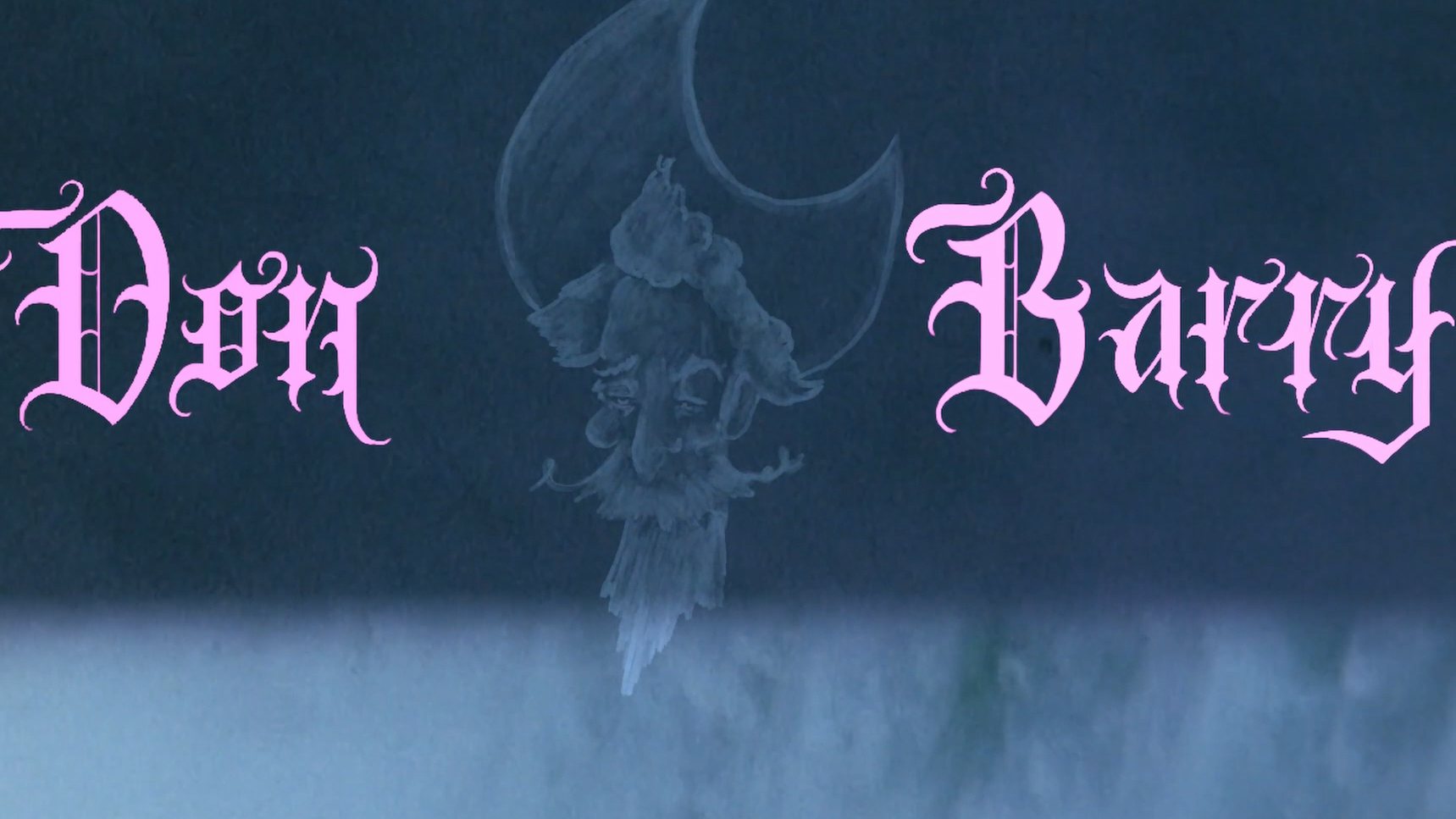
Docufiction, Experimental, by Paul Smart, Mexico, 2026.
Don Barry: A Quixotic Exploration is a debut feature that places the biography of an eighty-year-old experimental filmmaker and artist, Barry Gerson, within the metanarrative of Miguel de Cervantes’ Don Quixote. Don Barry was filmed in the city of Guanajuato during the 51st edition of the Cervantino Festival, as well as during the vibrant Day of the Dead celebrations held in the city’s UNESCO-listed tunnels. The film honors the director’s long friendship with artist Barry Gerson, drawing inspiration from Cervantes’ Don Quixote. Paul Smart’s directorial choices create something new that celebrates life and goes beyond conventional storytelling. A search for magic in our real lives. A moving film about the meaning of life, art, and death. Not to be missed.
Paul Smart is a proud outsider filmmaker with a long history of film screenings. In the 1980s, he emerged in New York’s vibrant youth art scene, working in theater production and later filmmaking, before retreating to rural upstate New York, in the Catskill Mountains, where he made a living writing and screening independent films in old parish halls for rural audiences, many of whom had never seen a film.
LANGUAGE: English
SUBTITLES: Spanish, French, German, Portuguese
What the Conquistadors Could Not Burn
Before the Spanish ships appeared on the horizon, there were already libraries. Not libraries in the European sense — stone rooms with catalogued shelves — but repositories of an entirely different epistemic order: folded bark-paper books painted in colors that had names untranslatable into Castilian, recited by trained specialists whose entire nervous systems had been shaped around the task of holding a civilization’s memory inside the body. The tlamatinime, the Nahuatl philosopher-poets, composed verses of a metaphysical precision that would not embarrass Heraclitus. “Flowers and songs,” they called the highest form of truth — in xochitl in cuicatl — understanding something that Western philosophy would not formally articulate until the Romantics: that beauty and knowledge are not separate faculties but a single act of attention.
Then, in a sequence of events that unfolded between 1519 and 1521, most of it was burned.
Bishop Juan de Zumárraga ordered the destruction of Aztec manuscripts in Texcoco in 1531. The burning at the market of Tlatelolco erased documents accumulated over generations. Diego de Landa, in the Yucatán, oversaw the incineration of Maya codices in 1562, writing afterward with a calm that reads now like a confession of something unreachable: he acknowledged that the Maya wept, and he burned the books anyway. Of the thousands of pre-Columbian screenfold books that once existed, fewer than twenty authenticated examples survived the colonial period. The Dresde Codex. The Madrid Codex. Fragments. Ghosts of a library that once held the astronomical calculations, the genealogies, the ritual calendars, the narrative cosmologies of an entire world.
What survived did so through concealment, through the speed of human memory, through the specific courage of indigenous scribes who encoded knowledge into hybrid documents — part colonial form, part subversive content — slipping past censors who could not read what they were approving. The Florentine Codex, compiled by Bernardino de Sahagún across decades of the sixteenth century, is one such compromise: a Spanish friar asking Nahuatl informants to reconstruct what had been destroyed, producing a document that is simultaneously colonial archive and indigenous testimony, an act of salvage haunted by everything it could not recover.
Walter Mignolo, in his foundational work on colonial semiosis, argues that what happened in the Americas was not simply a military or demographic catastrophe but an epistemic one — a deliberate reorganization of what counts as knowledge, who produces it, and in what form it can legitimately exist. The burning of the codices was not incidental to colonization; it was its cognitive infrastructure. Destroy the system of signs and you destroy the people’s ability to narrate themselves into existence. What Mignolo calls “the geopolitics of knowledge” means that the map of who knows and who is known is never innocent — it is always the map of a power relation drawn in the syntax of permissible thought.
But this is where the paradox opens. The Popol Vuh, the K’iche’ Maya account of creation, survived because someone — anonymous, uncreditable, possibly risking something we cannot measure — wrote it down in the Latin alphabet sometime in the mid-sixteenth century, hiding a Maya cosmology inside a European script. The text that describes how humans were made from corn, how gods failed and tried again, how the Hero Twins descended into Xibalba and outwitted death, exists today because the act of erasure created urgency. Destruction made preservation a form of resistance. The wound became generative precisely because it could not be fully closed.
Nahuatl poetry did not disappear. It went underground and came back up through the soil of everything written afterward — in colonial chronicles, in syncretic religious texts, in the oral traditions that outlasted the manuscripts, in the mouths of people who had never read a word but knew by heart what no fire had been able to reach.

Sor Juana and the Crime of Thinking
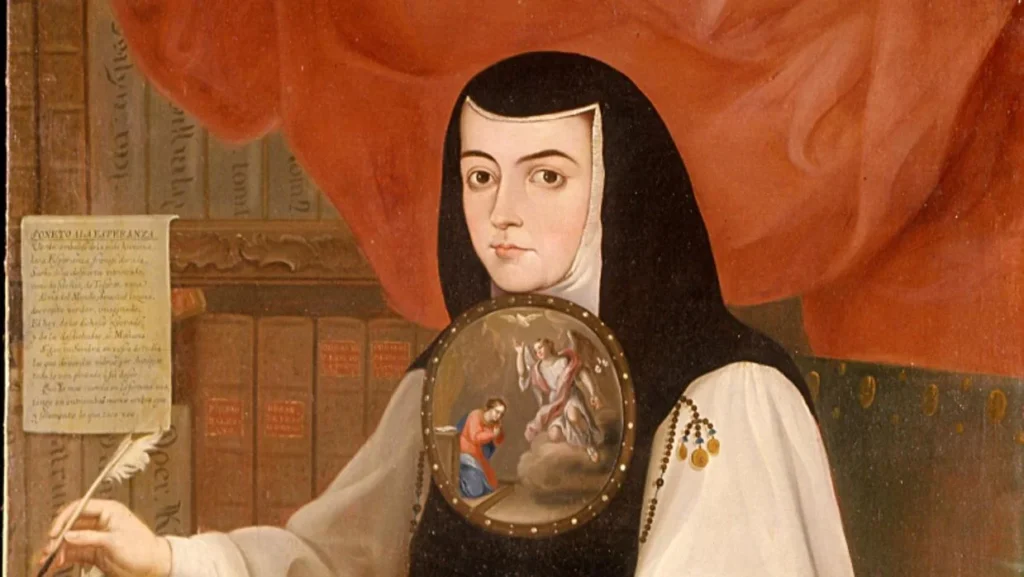
Imagine finding a single sheet of paper covered in handwriting so dense it leaves almost no margin, the ink pressed hard as if the writer knew time was finite and the thought had to survive the hand that wrote it. The words do not ask for permission. They do not apologize for existing. And yet the person who wrote them will, within four years, stop writing entirely, sell her library, give away her scientific instruments, and sign a confession in her own blood.
This is not a parable. This is what happened to Juana Inés de Asbaje y Ramírez de Santillana, born in 1648 in San Miguel Nepantla, a woman who understood before almost anyone in the colonial Americas that to think in public was a form of insurrection, and that insurrection, if you were a woman in seventeenth-century New Spain, had a very precise and very short lifespan.
There is a scene that stays with you, the kind that surfaces in memory like something you witnessed rather than read about. A woman at a desk in a room that is also a cell, writing by candlelight while somewhere behind the door a set of footsteps slows, pauses, moves on. She does not stop writing. But her shoulders change. The body knows what the mind refuses to formalize. She is being watched, and she has always been watched, and the watching is the condition under which every sentence must be constructed. The miracle is not that she writes. The miracle is what she manages to say despite the architecture of surveillance pressing down on every word.
Sor Juana’s Respuesta a Sor Filotea de la Cruz, written in 1691 in response to a bishop who had published her theological critique without permission and then admonished her for overstepping her station, is typically framed as a proto-feminist declaration. That framing, however flattering, misses something more urgent. The Respuesta is a survival document. It is the written equivalent of a person explaining, calmly and at length, why they should be allowed to keep breathing. Octavio Paz, who dedicated an entire landmark study to Sor Juana in 1982, Sor Juana Inés de la Cruz o Las trampas de la fe, understood this more clearly than most: she was not arguing for women’s rights in any abstract sense. She was arguing, with extraordinary precision and rhetorical sophistication, for the specific right of her specific mind to continue existing in its specific form.
What makes the Respuesta devastating is not its boldness but its discipline. She does not rage. She marshals Church fathers, scripture, classical precedent, every instrument of the very institution that is silencing her, and turns them into a defense of her right to know. This is what Friedrich Schleiermacher would later call hermeneutic self-assertion: using the master’s language to contest the master’s conclusions. She cites Saint Jerome, Saint Augustine, Athanasius. She is not subverting the canon. She is weaponizing it, and doing so with the controlled precision of someone who knows that one unguarded sentence could end everything.
She had always known. She had entered the convent in 1669 not out of pure religious vocation but, as she herself wrote, because it was the only institution that would permit a woman to study. The convent as refuge, as cage, as the only viable container for a mind that had no other legal vessel. By the time she wrote the Respuesta, she had produced sonnets, loas, comedies, theological arguments, a mathematical treatise. She had done all of this inside a system designed to ensure that none of it mattered. And then, sometime around 1693, the writing stopped.
The library was sold. The instruments were gone. What remained was silence, and then, in 1695, death during an epidemic she contracted while nursing other nuns.
The question that does not resolve itself is whether the silence was defeat or the final, most radical act of refusal — the withdrawal of the one thing they could never quite take by force.
The Revolution Eats Its Own Stories
You come back from a war and you do not recognize the village. Not because it has changed, but because you have. The streets are the same width, the same dust, the same dogs sleeping under the same shade. But something in the geometry of meaning has shifted, and you cannot explain it to anyone who was not there, and even those who were there will not say it out loud, because to say it out loud would be to admit that the dying was not entirely worth what it purchased.
This is the landscape Mariano Azuela walked through when he wrote Los de abajo in 1915, serialized in a border newspaper while the Revolution was still consuming bodies. He was a doctor who had followed the Villista troops, which means he had seen the idealism and the dysentery in the same trench. His Demetrio Macías rises from the earth like a natural force, a campesino driven to rebellion by a local cacique’s insult, not by doctrine or ideology. He does not fight for a program. He fights because the ground beneath his feet has been taken from him, and fighting is the only grammar he possesses for that theft. By the novel’s end, when someone asks him why he is still fighting, he picks up a stone and throws it into a ravine and watches it fall, and says: that is why. The revolution as pure kinetic momentum. A thing that began with a reason it can no longer remember.
Azuela was not celebrated when the novel first appeared. It took until 1924 for a Mexico City literary controversy to excavate the text and make it canonical, which is itself a kind of irony the book would have recognized: the establishment finally embracing the literature of anti-establishment sentiment, converting disillusionment into monument. This is what Walter Benjamin meant when he wrote, in his Theses on the Philosophy of History in 1940, that every document of civilization is simultaneously a document of barbarism. The canonization of revolutionary literature is also the domestication of it.
And yet something survives the taming. A man rides through a burning town on a horse that is as confused as he is. The flames are not metaphor. The horse does not symbolize anything. The burning is simply what happens when human organization collapses into its own hunger. There is a woman following the troops who understands the war better than any of the generals, because she is watching what it costs rather than what it produces. She has crossed half a continent on foot and she carries her losses without theater, without the luxury of ideology to reframe them as sacrifice.
The muralist movement that followed, that great public explosion of Diego Rivera and José Clemente Orozco and David Alfaro Siqueiros painting the walls of government buildings in the 1920s, was in some ways the Revolution’s attempt to give itself a mythology it could look at while eating lunch. Rivera’s murals told a history of Mexico that was vast, indigenous, triumphant, teleological. Orozco told a different story on the same walls: grotesque figures, soldiers whose faces have become the faces of the dead they killed, fire that consumes the revolution as readily as it consumed the hacienda. Orozco did not believe in the redemption narrative. He believed in the cycle, which is a more honest and more terrible thing to believe in.
The literary generation that emerged from the Revolution’s aftermath had to negotiate between these two visions, the mural and the wound, the collective epic and the private reckoning. They produced a literature that was simultaneously heroic and ashamed of its heroism, that glorified the uprising in its structure while quietly recording the betrayal in its details. You read the glory on the surface and the disillusionment in the silences between paragraphs, in what the characters do not say when they return to villages that are the same width, the same dust, the same dogs under the same shade.
Rulfo’s Silence and the Weight of the Dead
There is a village where the dust does not settle. You walk through it and the people you encounter speak to you, answer your questions, remember names, point toward houses. Only slowly, so slowly that you cannot fix the precise moment it happens, do you understand that none of them are alive. They have not been alive for a very long time. And the unbearable thing is not the revelation itself but the fact that it changes nothing about the texture of the conversation, the weight of the afternoon, the heat pressing down on the stones.
This is what Juan Rulfo understood that almost no other writer of the twentieth century managed to locate with such precision: that the dead do not haunt the living. The living haunt the dead. The living arrive, full of urgency and unresolved grievance, into a space that has already achieved its final stillness, and they are the ones who disturb it, who drag their needs and their unanswered questions through corridors that would otherwise rest in silence. Pedro Páramo, published in 1955, is one hundred and twenty pages long. It contains more compressed existential weight than most writers produce across an entire career, and its formal radicalism — the fragmented voices, the collapsed chronology, the indistinction between memory and presence — is not stylistic experimentation for its own sake. It is the only honest form available to someone writing from inside death rather than about it.
Heidegger, in Being and Time, published in 1927, argued that authentic human existence requires what he called Sein-zum-Tode, being-toward-death, a continuous orientation toward one’s own finitude that most people spend their entire lives avoiding. The structures of everyday social existence, what he called das Man, the anonymous They, function precisely to anaesthetize this awareness, to keep death at a comfortable theoretical distance. Rulfo had no interest in theoretical distance. The Cristero War, which tore through western Mexico between 1926 and 1929, left the Jalisco of his childhood populated not just by corpses but by a silence so total it had become architectural. Entire communities erased. Fathers and uncles disappeared into violence that the official nationalist narrative then swallowed and reclassified. Rulfo lost his father when he was six. His mother died four years later. He grew up in an orphanage in Guadalajara while the land outside continued to bleed quietly into itself. He did not choose the theme of death. The theme of death chose the only writer capable of rendering it without sentiment or distance.
El Llano en llamas, the story collection published two years before the novel in 1953, already performs this refusal of consolation with complete control. The prose is stripped until it achieves something that resembles not simplicity but the extreme far side of complexity, the place where all unnecessary weight has been burned away and what remains is unbearable in its clarity. Characters speak in the cadences of rural Jalisco, in a syntax that carries the rhythms of oral culture, of testimony, of the kind of speech produced by people who have learned that no official structure will record what they have lived. Gabriel García Márquez, who read the novel in 1961 and reportedly had to stop the car he was driving, understood immediately that something had shifted in what Spanish-language prose could do. He said it aloud, repeatedly, over decades. What he recognized was not influence in the ordinary sense. It was the discovery that a literary problem he had thought technically unsolvable had already been solved, quietly, by a man who worked for decades in the Mexican immigration service and published almost nothing else.
The silence surrounding Rulfo’s output — one novel, one collection, a handful of photographs — is itself a kind of formal statement. Some writers require volume to make their argument. Rulfo required the opposite.
A vision curated by a filmmaker, not an algorithm
In this video I explain our vision
The Boom, the Labyrinth, and Octavio Paz
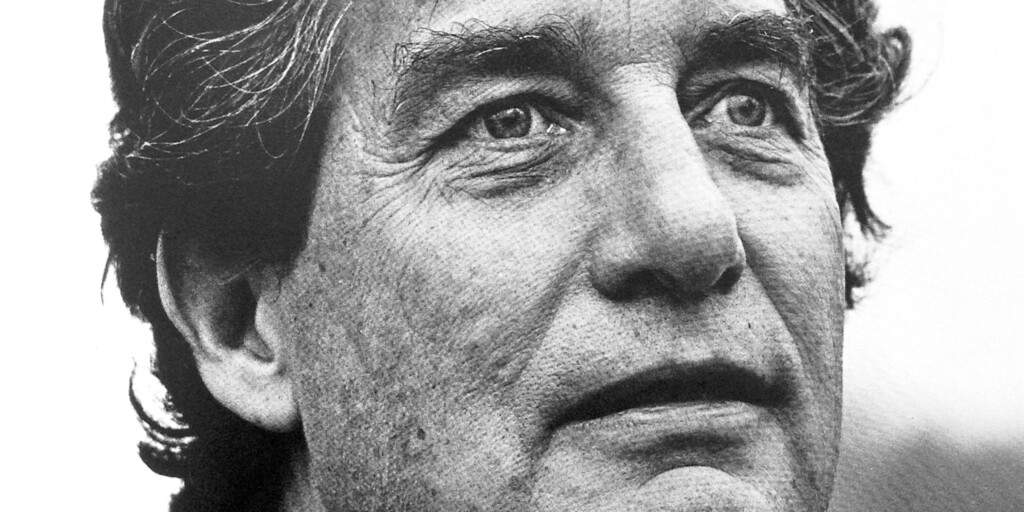
There is a moment when you read a sentence so precise about your own country that you feel simultaneously recognized and imprisoned by it. Octavio Paz wrote in 1950 that the Mexican is a being who closes himself, who hides behind a mask, whose solitude is not chosen but structural — a wound inherited from conquest and colonial rupture. Millions of readers in Mexico and beyond accepted this portrait as revelation. And that acceptance is precisely where the trap closes.
El laberinto de la soledad is a masterpiece of Mexican prose, and it is also an act of enormous cultural authority exercised by a specific subject: an urban, educated, male intellectual who traveled to the United States, observed bracero workers at a Los Angeles festival, and from that distance began theorizing the totality of Mexican being. Paz himself was twenty-eight years old when he began drafting it. The book was published when he was thirty-six, and it would spend the next seven decades being treated not as one man’s interpretation but as diagnostic truth. The philosopher Jorge Portilla, writing in the same period in his 1966 posthumous work Fenomenología del relajo, offered a competing phenomenological portrait of Mexican sociality — far less grandiose, far more attentive to the textures of collective life. He was largely forgotten. Paz became the mirror in which Mexico was supposed to recognize itself.
The question is always who holds the mirror. Paz’s thesis on the Mexican as masked, wounded, orphaned — hijos de la Chingada, children of the violated mother — tells almost nothing about the experience of Zapotec women in Oaxaca, or of mestizo laborers in Monterrey, or of the millions whose solitude had nothing philosophical about it and everything material. The sociologist Roger Bartra would spend decades arguing precisely this, most directly in La jaula de la melancolía in 1987, contending that the Mexican character as theorized by Paz and the generation of El Hiperión was less a description of reality than a nationalist mythology produced to serve the consolidating post-revolutionary state. Identity as ideology. The labyrinth as cage built by those who also handed you the key.
Carlos Fuentes understood power with more ambivalence than Paz and perhaps more cynicism. His 1962 novel follows a dying man across the fractured archaeology of his own memory, a man who was once an idealist revolutionary and became a media baron, a thief of land, a collaborator with American capital. The form refuses linear time deliberately: you meet him on his deathbed and then inside his betrayals simultaneously, neither before nor after, always during. What Fuentes was constructing was not just a portrait of one corrupt man but the portrait of the Mexican Revolution’s transformation into the very system it had destroyed. The PRI, which governed Mexico without interruption from 1929 to 2000, was the institutional heir of that revolution. Fuentes made the corpse speak, and the corpse named names without naming them.
The Latin American Boom — that extraordinary explosion of novelistic ambition in the 1960s that included García Márquez, Vargas Llosa, Cortázar, and Fuentes himself — was real as a literary phenomenon and constructed as a commercial and geopolitical one simultaneously. The Cuban Revolution in 1959 gave the Latin American intellectual left a utopian horizon. European and North American publishers gave them contracts. Barcelona became the editorial capital of Spanish-language literature partly because Franco’s Spain offered cheaper production and partly because it was neutral ground. The Boom was genuinely radical in form and frequently conservative in its relationship to metropolitan literary markets, which preferred magical reality to the mundane horror of actual political economy.
Paz won the Nobel Prize in 1990, the first Mexican writer to do so. By then his political trajectory had moved sharply rightward, and many of the writers who had admired the labyrinth found themselves outside the doors he now guarded.
Women Who Rewrote the Interior
There is a moment when a woman finishes speaking and the room remains exactly as it was before she opened her mouth. Not hostile, not dismissive in any obvious way. Simply unchanged. The words landed, were registered, and were quietly filed under the category of the personal, the subjective, the emotional — which is the bureaucratic language that power uses to mean: this does not count. She was the only one present. She saw what happened. And still the account requires verification from someone who was not there.
Paul Ricoeur argued in his work on narrative identity, particularly in the three volumes of Time and Narrative published between 1984 and 1988, that the self is not discovered but constructed through the act of storytelling. To narrate is to exist coherently across time. But what Ricoeur left partially in shadow is the prior question: who is permitted to narrate in the first place, and whose narrative is received as evidence rather than anecdote. The gap between those two categories is not philosophical. It is political, and in Mexico it has a very long and specific history.
Elena Poniatowska built her 1971 chronicle of the Tlatelolco massacre almost entirely from the voices of people the official record had decided did not exist. Hundreds of students killed on October 2, 1968, an event the government described, with extraordinary calm, as a minor incident provoked by agitators. Poniatowska assembled the testimony of mothers, survivors, bystanders — voices that were feminine not only in grammar but in their structural position within Mexican public life. Her book is not journalism in any conventional sense. It is an act of ontological insistence: these people were here, these things happened, and the fact that the powerful chose not to see them does not make them invisible. The book was suppressed, circulated, and eventually became one of the most important documents in twentieth-century Latin American literature precisely because it refused the distinction between testimony and literature, between the emotional and the historical.
Rosario Castellanos had been doing something structurally similar, though in different registers, since the 1950s. Her novel Balún-Canán, published in 1957, narrates the dispossession of indigenous communities in Chiapas through the consciousness of a child and the fragmented speech of a Tzeltal nanny whose name we never fully learn. Castellanos understood that the interior life of those who do not officially matter is not a supplement to history. It is history, compressed and deformed by the pressure of not being allowed to speak directly. Her poetry and essays pushed the same argument further, until she arrived at a feminism that was less about rights than about the epistemological violence of being permanently assigned the role of object in someone else’s narrative.
Carmen Boullosa and Cristina Rivera Garza arrive later and armed with this inheritance, but they do not merely continue it. Boullosa dismantles the historical novel from inside, placing women and ghosts and the colonized dead in positions of narrative authority. Rivera Garza, whose work in the twenty-first century has increasingly blurred the line between critical theory and fiction, introduces what she calls disappropriation — the deliberate refusal of the singular authorial voice as a political gesture. Her 2011 work Los muertos indóciles is both a manifesto and a practice: literature that undoes the myth of the solitary genius precisely because that myth has always served to concentrate narrative legitimacy in very specific bodies.
What these four writers share is not a theme. It is a diagnosis. The architecture of Mexican literary tradition — its canonical heroes, its muralist grandeur, its revolutionary mythology — was built on the assumption that interiority belonged to those with the authority to generalize from it. That a man’s wound becomes a symbol. That a woman’s wound remains a wound.
The Border as Literary Condition

There is a moment when you realize the story you are telling in one language does not survive the crossing into another. Not because the words are missing — there are always approximate words — but because the architecture of meaning shifts, the weight redistributes, and what felt like a confession in Spanish arrives in English as a complaint, or worse, as testimony for someone else’s conscience. You are no longer the subject of your own story. You have become its translator, which is a different thing entirely, a thing that requires a kind of self-betrayal so subtle you can only detect it afterward, in the silence after the sentence lands wrong.
This is not a metaphor. This is the structural condition of contemporary Mexican literature, and it has been building for decades along a border that is not only geographical but psychological, linguistic, and economic — a border that runs, as Gloria Anzaldúa argued in Borderlands/La Frontera in 1987, not just through territory but through the self, dividing consciousness along the same lines that divide land.
Élmer Mendoza arrived at this condition from the north, from Sinaloa, where the language of narco-violence had already invented its own grammar before literature found the courage to transcribe it. His Sinaloa Trilogy, beginning with Un asesino solitario in 1999, does something that took nerve to attempt: it renders the idiom of organized crime not as spectacle or moral lesson but as vernacular, as the actual texture of speech in a region where the state and the cartel have long inhabited the same sentence. Mendoza does not translate this world upward toward a metropolitan readership. He refuses the courtesy. The reader must cross into the language, not the other way around. That refusal is itself a political act, a rejection of the center’s demand that the periphery make itself legible on the center’s terms.
Valeria Luiselli works the same border from a different angle, with a formally explosive intelligence that refuses any single position. Los ingrávidos, published in 2011, moves between Mexico City and New York in a structure that mimics the fragmentation of a self stretched across two cities, two temporalities, two versions of literary ambition. By the time she wrote Tell Me How It Ends in 2017 — a book that is neither essay nor testimony but something that has not been named yet — she was working directly inside the legal machinery of the U.S. immigration system, translating for undocumented children in immigration court, watching language fail in real time, watching the forty questions of the intake form reduce lives to categorical answers that could determine whether a child was deported into danger or allowed to remain in uncertainty. The book exists because the translation was impossible, because the gap between what the children experienced and what the form could record was so vast that literature was the only container large enough to hold it.
What Luiselli understood, and what the entire arc of this literary tradition has been moving toward, is that the border does not only separate territories. It separates versions of a story. The same event, narrated in Spanish to a grandmother in Oaxaca and then narrated in English to an immigration judge in New York, is not the same event. Something is lost that is not vocabulary. Something is lost that is closer to dignity, to the right to be the one who decides what your own experience means.
Jorge Volpi argued in El insomnio de Bolívar in 2009 that Latin American identity has always been a fiction constructed under foreign pressure, a story told to satisfy someone else’s need for coherence. Mexican literature at the border has made that pressure visible, has written from inside the machinery of translation itself, has refused to pretend that moving between languages is neutral, and in that refusal it has found its most urgent and irreducible subject.
📚 Voices, Labyrinths & Living Words
Mexican literature is a vast and layered universe, shaped by pre-Columbian myths, colonial tensions, and radical modernity. To understand its depths, it helps to trace the wider currents of language, imagination, and narrative that flow through the Hispanic and universal literary tradition. These related articles offer illuminating pathways into that broader world of words and meaning.
The Spanish Picaresque Novel: History and Meaning
The Spanish picaresque novel forged one of the most enduring narrative archetypes in Western literature: the roguish outsider navigating a corrupt society with cunning and dark humor. This tradition deeply influenced Latin American writers, who inherited and subverted its satirical spirit across centuries. Understanding its origins and meaning sheds light on the social critique embedded in much of Mexican fiction.
GO TO THE SELECTION: The Spanish Picaresque Novel: History and Meaning
Don Quixote: Meaning and Analysis
Don Quixote stands as the towering ancestor of all modern novels in the Spanish language, and its influence on Mexican literature is immeasurable. Cervantes’ exploration of illusion, identity, and the power of storytelling resonates through the works of authors like Juan Rulfo and Carlos Fuentes. Analyzing its meaning and structure reveals the deep roots from which Latin American narrative imagination grows.
GO TO THE SELECTION: Don Quixote: Meaning and Analysis
Alchemy in Literature: From Dante to Goethe
Alchemy has left a profound mark on Western literary imagination, appearing in the works of Dante, Goethe, and later in the magical realist aesthetics beloved by Latin American writers. The interplay between transformation, hidden meaning, and symbolic language connects alchemical thought to the poetic and narrative ambitions of Mexican literature. This article traces those surprising and fertile intersections across centuries of writing.
GO TO THE SELECTION: Alchemy in Literature: From Dante to Goethe
The Unconscious and its Relationship With Cinema
The relationship between the unconscious and storytelling is central to understanding some of the most visionary works of Mexican literature, from the surrealist prose of Remedios Varo’s circle to the dreamlike narratives of Elena Garro. Cinema and literature share a deep kinship in their capacity to externalize inner worlds and give form to what rational language cannot contain. Exploring this connection enriches the reading of any literary tradition that dares to venture beyond realism.
GO TO THE SELECTION: The Unconscious and its Relationship With Cinema
Discover Literature, Dreams & Cinema on Indiecinema
If these literary and imaginative worlds have sparked your curiosity, Indiecinema streaming is the place to continue your journey. Our curated catalog brings together independent films that explore language, myth, identity, and the hidden dimensions of human experience with the same depth and courage as the greatest writers. Come explore the stories that mainstream cinema leaves untold.
👉 EXPLORE THE CATALOG: Watch Indie Films in Streaming
A vision curated by a filmmaker, not an algorithm
In this video I explain our vision

