
The Camera in the Ruin
You push open a door that hasn’t moved in years and the resistance you feel isn’t mechanical — it’s temporal. The hinges don’t squeak so much as groan with a kind of bewildered protest, and then you are inside, standing on a floor tiled in decades of particulate grey, the dust so fine and so evenly distributed that it looks almost deliberate, almost designed, as though someone spent enormous care making sure that every surface received an equal portion of forgetting. Light enters through windows whose panes have long since surrendered to gravity, and it does something peculiar in here, that light — it doesn’t illuminate so much as it performs. It selects. A rusted conveyor belt catches a shaft of it and becomes briefly golden, briefly noble, briefly something it never was even when it was functional. Your camera is in your hands before you’ve consciously decided to raise it.

That instinct is worth examining, because it is not innocent. The reflex to photograph a ruin is culturally encoded in ways that photography criticism has only recently begun to take seriously, and what it encodes is not simply an aesthetic preference but an entire ideological relationship to decay, to absence, to the lives that inhabited spaces before abandonment made them photogenic. Susan Sontag argued in On Photography, published in 1977, that the camera is fundamentally an instrument of acquisition — that to photograph something is to take possession of it, to convert experience into a consumable image, to perform a kind of ownership over what the lens frames. Inside an abandoned factory, that acquisition carries a particular charge, because what you are possessing is not merely a visual composition but the residue of other people’s labor, other people’s time, other people’s economic catastrophe repackaged as your artistic opportunity.
The genre has a name now — urban exploration photography, sometimes compressed into urbex — and it has accumulated a vast, searchable, internationally distributed visual vocabulary over the past two decades. Crumbling theatres in Detroit. Sanatoriums in Belgium whose corridors still hold iron bed frames. Pripyat, the Ukrainian city evacuated hours after the Chernobyl reactor exploded in April 1986, which has been photographed so relentlessly that its particular species of photogenic desolation — the gymnasium with scattered gas masks, the ferris wheel that never opened — has become a kind of shorthand for the entire genre. What is striking about the accumulated body of this work is how consistent it is, how deeply it has converged on a shared grammar: the dramatic diagonal of collapsed flooring, the tender intrusion of vegetation through concrete, the peeling institutional paint revealing earlier institutional paint beneath it. The images feel discovered. They are, in fact, constructed.
That construction is not dishonesty — it is photography’s fundamental nature operating at a frequency that ruins amplify. When Walter Benjamin wrote in his 1931 essay “A Short History of Photography” about the optical unconscious, he was describing the camera’s capacity to reveal what the human eye, distracted by continuity and purpose, systematically fails to register. The ruin intensifies this. Stripped of function, stripped of the social performances that animate occupied space, the abandoned building becomes a kind of slow-motion explosion, each detail arrested mid-disintegration, available for a sustained attention that living environments never permit. The photographer who steps into that factory is not discovering beauty so much as encountering a provocation — a place that has been quietly accumulating visual intensity for years, waiting for someone with a lens to organize it into meaning.
But the meaning that gets organized is never neutral, and the beauty that gets discovered is never simply there. Something more uncomfortable is happening at the intersection of the camera and the ruin, something that implicates the photographer in histories they did not make but are actively, if unwittingly, reshaping with every frame they choose to take.
Simon Marsden’s Haunted Life In Pictures
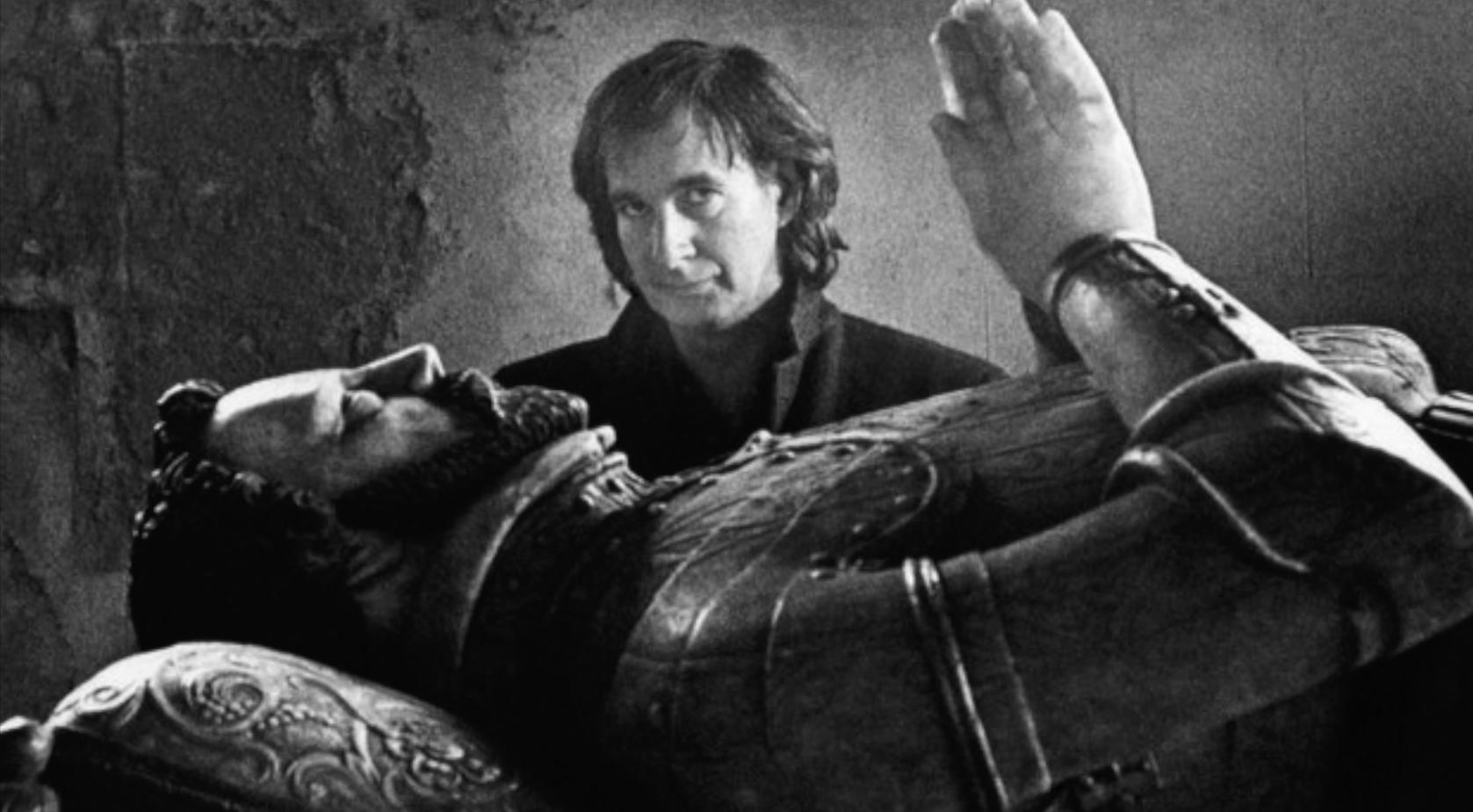
Documentary, by Jason Figgis, United States, 2019.
This documentary retraces the life and work of Simon Marsden, widely regarded as one of the foremost photographers of the supernatural. Premiered at the British Film Institute in London, the film offers a fascinating journey into his creative universe, appealing not only to photography enthusiasts but also to scholars, teachers, students, and anyone intrigued by the mysteries of the unseen. Through evocative imagery and first-hand accounts, it explores the artistic path of a photographer whose work has appeared in books, on U2 album covers, and in museum exhibitions around the world.
Although convinced of the existence of ghosts, Marsden never claimed to capture them directly with his camera. Instead, he used black-and-white infrared film to record the atmosphere and the invisible traces that, in his view, spirits left imprinted upon places. From the landscapes of Ireland to the vast expanses of Russia, passing through Venice and the American Southwest, he transformed historic buildings, ruins, and haunting locations into deeply evocative images capable of suggesting dark and unsettling stories. His photographs continue to captivate the imagination, demonstrating how the most powerful works of art can leave a lasting impression on those who behold them.
LANGUAGE: English
SUBTITLES: Spanish, French, German, Portuguese
What Ruin Actually Records
You stand in the middle of what was once a ballroom, and the floor beneath your feet is doing something a living floor never does: it is speaking. Not metaphorically. The parquet has buckled into waves, each plank lifted by decades of moisture working its way through the foundation, and the pattern of destruction is so precise, so almost rhythmic, that it looks like a record of every winter that passed through this building after the last human warmth left it. The ceiling above has partially collapsed, but the chandelier still hangs, stripped of its crystals, the bare metal arms reaching outward like a sentence someone stopped writing.
Walter Benjamin spent much of his unfinished Arcades Project — a manuscript of over a thousand pages assembled between 1927 and his death in 1940 — arguing that the debris of history is not incidental to understanding it but is, in fact, the only honest access point. His concept of the dialectical image insists that certain objects and spaces crystallize a collision between eras: the past does not simply recede but remains suspended inside matter, frozen mid-argument with the present. He was thinking about nineteenth-century Parisian shopping arcades, those iron-and-glass corridors already falling out of fashion by the time he was writing, but the mechanism he described operates with devastating clarity inside an abandoned factory or a shuttered hospital ward. The deterioration is not the loss of meaning. It is meaning becoming finally visible.
What living cities refuse to show you is the cost of their own continuity. A functioning building conceals the labor of maintenance inside its presentability, and that concealment is ideological before it is architectural. Every freshly painted facade is also a suppression of the question: who paid for this, and at what toll, and what happened to the people who worked here when the work stopped? Abandonment removes the maintenance and with it the suppression, and what gets exposed is not merely physical decay but the structural logic that was always operating underneath the surface. The rusted machinery on a factory floor is not a monument to failure. It is a legible account of a production cycle that had a beginning, a middle, and an end that was never announced to the workers who depended on it.
Sociologist Robert Marcuse, writing in the context of late industrial capitalism, identified what he called the administered society, a system so thoroughly organized around its own perpetuation that it renders alternatives unthinkable from within. An abandoned space is, among other things, a rupture in that administration. It is a place where the system lost its grip and did not bother, or could not afford, to restore it. That loss of grip is what makes the space epistemologically different from any occupied building, not more beautiful in a decorative sense, but more truthful in a structural one.
The photographer who enters such a space is therefore not engaged in nostalgia, even when the images produce that emotional register in viewers. What the camera is actually doing, when it is doing its most serious work, is registering an argument. The flaking paint on a psychiatric ward wall, the medical records scattered across a floor, the institutional green that still clings to the lower half of a corridor while the plaster above has returned to raw grey — these are not aesthetically interesting accidents. They are documentation of a specific set of decisions made by specific institutions at specific historical moments, decisions about who deserved care and under what conditions and for how long, and the abandonment of the building is the final chapter of those decisions made visible in three dimensions.
Time in a living city is experienced as sequence, one moment replacing the last. Inside a ruin, time accumulates without replacement, layers pressing against each other without any of them being permitted to disappear, and the resulting density is what the camera catches when the photographer is paying the right kind of attention.

The Aestheticization Trap
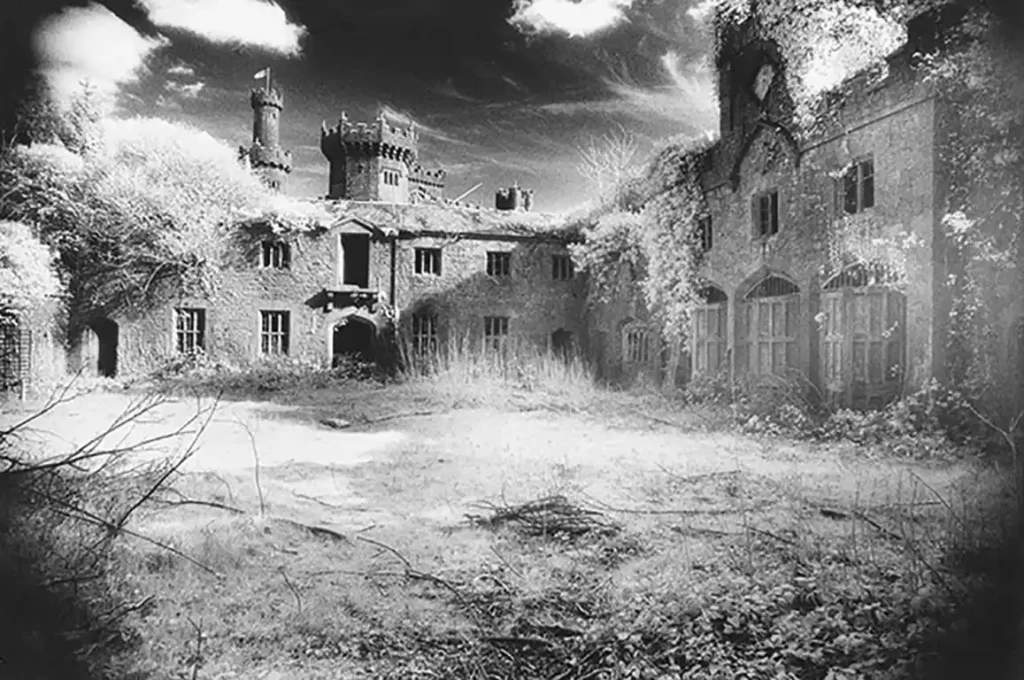
You have spent forty minutes editing the white balance on a photograph of a collapsed ceiling, adjusting the teal shadows until the broken plaster looks cinematic, and at no point during those forty minutes did you ask yourself whose ceiling it was.
That adjustment — small, technical, aesthetic — is where the trap closes. Susan Sontag argued in On Photography in 1977 that the camera does not record reality so much as it produces a relationship to reality, one characterized by acquisition rather than witness. The photographer takes the image the way a collector takes an object: to possess it, to neutralize its threat, to make it portable. What Sontag could not have anticipated was the infrastructural acceleration of that neutralizing impulse — the moment when platforms built on frictionless sharing would transform her philosophical warning into a business model. Instagram launched in 2010 with a set of filters designed to make any image look aged, worn, saturated with faded time. Ruin was not a subject the platform discovered. Ruin was already baked into the product.
The consequence is not merely visual. When desolation becomes a filter, the historical weight that gave it meaning is not preserved — it is metabolized. A factory closed in Detroit after the 2008 financial crisis, leaving behind three thousand workers whose severance packages were voided in bankruptcy proceedings, does not travel inside the photograph of its peeling murals. What travels is the mural. What travels is the peeling. The specific suffering that produced that texture is surgically removed in the act of framing, and what remains is available for consumption as a mood. The photography industry did not invent this operation, but it industrialized it, creating entire sub-genres — urban exploration, decay photography, abandonment aesthetics — with their own hashtags, their own equipment recommendations, their own celebrity practitioners with hundreds of thousands of followers who have never once published the ownership history of a building they entered without permission.
There is a distinction worth making here between difficulty and discomfort. A photograph that makes a viewer uncomfortable with what it shows is doing something different from a photograph that makes a viewer comfortable inside the discomfort — that transforms desolation into a pleasurable melancholy, a feeling the German Romantics called Weltschmerz and which the contemporary attention economy has learned to bottle. When a ruin photograph generates that particular emotional register, the one that feels profound without requiring any response, it has completed a specific ideological function: it has taught you that the world is broken in beautiful ways, and that your sensitivity to that beauty is itself a form of depth.
Walter Benjamin, writing in the 1930s in his Arcades Project, saw the commodity as an object that had been stripped of its production history — you hold the thing without holding the labor that made it. The aestheticized ruin performs an identical operation in reverse. You hold the decay without holding the production history that caused it. What produced this ruin was not simply time. Time is the alibi. What produced it was a municipal decision, a corporate withdrawal, an insurance dispute, a demographic flight organized along racial lines after policies like redlining concentrated poverty into specific geographies and then abandoned them. The photograph that presents that outcome as atmosphere is not neutral. It is performing an act of historical erasure that looks, to the person performing it, like artistic vision.
Who Was Left Behind Before the Building Was
You drive through a street where every third house has plywood where the window glass should be, and you notice, before anything else, that someone has left a ceramic planter on the porch. Still there. A small, deliberate gesture of home-making in a structure the market already wrote off years before the last tenant finally accepted what the market had decided.
The silence that photographers find so magnetic in abandoned spaces did not arrive on its own. It was administered. Between 1970 and 2000, cities across the American Midwest shed between sixty and seventy percent of their manufacturing employment — not through gradual erosion but through a series of corporate decisions made in boardrooms geographically and socially removed from the factory floors being shuttered. Detroit lost over two hundred thousand industrial jobs in roughly three decades. Youngstown, Ohio, which had organized its entire civic identity around steel production, watched that industry collapse so rapidly after 1977 that sociologists later used the city as a case study for what happens to human psychology when economic ground simply disappears beneath a community. The plants closed. The people did not immediately leave. They stayed, tried, aged, died, and only then did the buildings begin to photograph well.
This is the temporal sequence that ruin photography almost never acknowledges: capital abandonment precedes human abandonment by years, sometimes generations. The investment withdraws first — maintenance budgets are cut, then eliminated; infrastructure is allowed to degrade; municipal tax bases shrink as property values follow the jobs downward. People remain inside this slow disinvestment, patching what they can, heating rooms with inadequate equipment, watching their schools consolidate and their hospitals downgrade to urgent-care clinics. The aesthetic of decay that later draws the photographer with a camera is in fact the material record of that interval — the gap between when the money left and when the last person finally did.
Sociologist William Julius Wilson argued in The Truly Disadvantaged in 1987 that the disappearance of work from inner cities did not simply reduce income but dissolved the institutional fabric that work had sustained — the churches, the local businesses, the informal networks of mutual accountability that constitute a neighborhood as a living system rather than a collection of structures. What the ruin photograph captures, then, is not the building’s abandonment but the aftermath of a community’s forced dissolution. The aesthetic object and the social catastrophe are the same event, separated only by the time it takes for vegetation to breach the foundation and for light to fall at a photogenic angle through a collapsed ceiling.
There is a particular violence in the way that post-industrial landscapes get reclaimed as cultural property precisely after they have been fully vacated by the people whose labor made them legible in the first place. The workers who built and operated these spaces never had the luxury of encountering them as sublime. The factory was not picturesque to the person who spent eleven hours inside it. The silence that a photographer experiences as profound peace was, for the last residents of the surrounding streets, the sound of a phone that stopped ringing — fewer work orders, fewer deliveries, fewer reasons for anyone outside the neighborhood to arrive. Silence, in those terms, is not an aesthetic condition. It is the acoustic signature of economic exclusion.
And yet the images circulate, collect gallery representation, appear in coffee-table books with titles that invoke melancholy and memory. The ruin becomes a commodity in the attention economy at the precise moment it has ceased to function as a commodity in any productive sense. What gets aestheticized is not simply entropy but a very specific class relation — the relation between those whose departure created the silence and those who arrive later to find it beautiful, who have the mobility, the equipment, the cultural vocabulary, and most critically the choice to leave again before dark.
The Silence That Was Never Silent
She has not come here to be looked at, but she is being looked at. An older woman, thick coat, rubber boots crusted with clay from the road, stands near the far wall of what was once a gymnasium in a village whose name the photographer cannot pronounce and has not tried to. The ceiling beams are exposed and elegant in their decay. The light falling through a broken window panel does something extraordinary to the dust. The photographer adjusts the aperture, and the woman, who has simply come to retrieve something she left here years ago, becomes incidental — or worse, compositional.
The camera does not lie, but it chooses ruthlessly what counts as real. Susan Sontag argued in On Photography, published in 1977, that to photograph something is to appropriate it, to convert experience into a way of seeing that belongs entirely to the observer. The gymnasium does not belong to the photographer. The silence inside it does not belong to her either. But the image will. It will hang in a gallery in a Western European capital, printed large, matted beautifully, priced accordingly, and the woman in the rubber boots — if she remains in the frame at all — will become texture, human scale, evidence of pathos. She will not attend the opening. She was never invited.
There is a geography of aestheticization that mirrors older geographies of extraction. The Eastern Bloc countries that experienced Soviet dismantling after 1991 did not simply fall into picturesque disrepair — they bled population, industry, and institutional memory in a sequence of economic shocks that the West largely watched from a comfortable distance and sometimes encouraged. When photographers arrive now with wide-angle lenses and a sensitivity to ruins, they are arriving after the fact of a catastrophe they did not share and are not accounting for. The peeling paint is not a found aesthetic. It is the residue of something that happened to people who are still alive and are sometimes still in the room.
Roland Barthes identified in Camera Lucida, in 1980, a distinction between what a photograph intends to show and what pierces the viewer unexpectedly — the studium and the punctum. The studium is the cultural, trained reading: gymnasium, decay, light, atmosphere. The punctum is the detail that wounds. In the image as the photographer composes it, the woman in the coat may be the punctum — the human anomaly that makes the ruin legible as once-inhabited. But from inside her own experience, she is not a punctum. She is the entire story. The ruin is her punctum.
What the Western exhibition circuit tends to produce is a reversal of moral weight so smooth it rarely gets named. The suffering that produced the abandoned building is converted into the aesthetic that redeems the visit. The visitor leaves enriched — culturally, professionally, perhaps financially. The village loses nothing additional, because it has already lost everything, but it gains nothing either, not even the dignity of being misrepresented on its own terms. The photographs will be described as meditations on time, on impermanence, on the universal human condition. The words Eastern Europe may appear in the wall text. The specific history almost certainly will not.
There is a passage in Svetlana Alexievich’s Secondhand Time, drawn from interviews conducted across the former Soviet space through the 1990s and 2000s, in which an elderly man says that the hardest thing was not the poverty or even the chaos, but becoming incomprehensible to himself — watching the framework through which his entire life had been interpreted simply dissolve, with no replacement offered. The gymnasium was not simply a building. It was a node in a system of meaning that organized time, childhood, community, aspiration. When it closed, it did not become poetic.
A vision curated by a filmmaker, not an algorithm
In this video I explain our vision
Memory Without a Witness
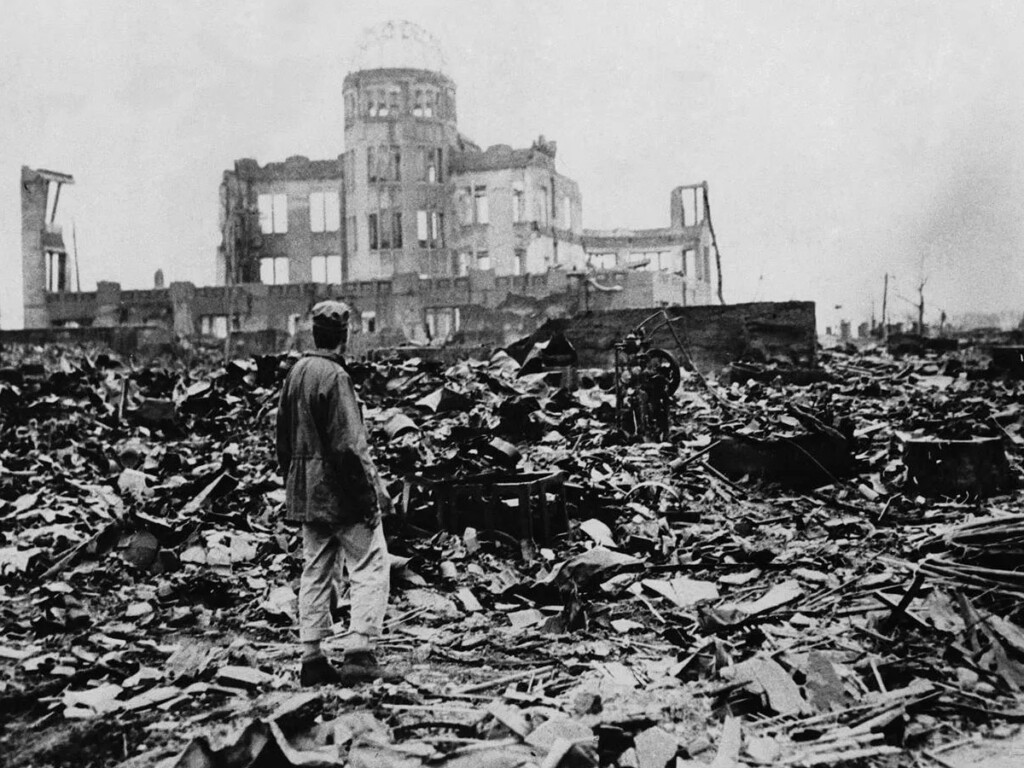
You stand in the ruins of a textile mill somewhere in the American Rust Belt, your camera raised, and the light falling through the collapsed roof in exactly the way you hoped it would. The broken looms cast long shadows. The peeling paint has arranged itself into something resembling abstract expressionism. You press the shutter and feel, genuinely feel, that you have preserved something.
What you have actually done is far stranger and more troubling than preservation.
Paul Connerton, writing in 1989, argued in How Societies Remember that collective memory is not stored in texts or archives but in bodies and in the habitual performance of shared rituals — the repeated gestures of workers clocking in, of congregants filing into pews, of families gathering in rooms designed to gather families. Memory, for Connerton, is not retrieved; it is reenacted. It lives in the friction between a body and a space, in the muscle memory of a hand reaching for a familiar door handle in the dark. When the space is abandoned and the bodies stop moving through it, something more total than physical decay begins. The community’s ability to reenact its own past — to know itself through collective repetition — is severed at the architectural root.
Abandonment is therefore not merely economic collapse or demographic shift, though it is those things numerically and measurably: the American Rust Belt lost over 400,000 manufacturing jobs between 1970 and 1990, and the populations of cities like Detroit and Gary, Indiana, fell by more than half over the subsequent decades. These are not statistics that exist in the abstract. They are the precise coordinates of a rupture in Connerton’s logic — the moment when the architecture of shared memory could no longer be entered, touched, or inhabited by the people whose identity it had structured for generations.
Into that rupture walks the photographer, carrying equipment worth several thousand dollars and a narrative almost entirely predetermined. The aesthetic conventions of abandonment photography — the romantic decay, the vegetation reclaiming corridors, the single object left behind as if in haste — were established and codified long before any particular photographer arrived at any particular site. Susan Sontag, in On Photography, published in 1977, identified this tendency with uncomfortable precision: the camera does not record the world so much as it quotes it, framing reality inside an already-existing set of visual expectations. The photograph of the ruined mill does not ask what happened here or who lost what. It asks whether the light is right.
This substitution is not innocent. When an image circulates widely — when it accumulates tens of thousands of engagements online and appears in gallery exhibitions — it begins to function as cultural memory for people who have no lived connection to the place. The image becomes the record. And because the image was composed to satisfy aesthetic hunger rather than historical honesty, the record it produces belongs to the photographer’s emotional register, not to the displaced worker, the shuttered family, the child who grew up on the street outside and now lives elsewhere. The community that experienced the loss is not merely absent from the photograph; it has been replaced by an atmosphere.
There is a specific violence in this replacement that goes beyond the usual critique of voyeurism. The aestheticization of abandonment does not simply ignore the community’s grief — it occupies the space where that grief might have been publicly legible and fills it with something serenely beautiful, something that asks for contemplation rather than accountability. A building that has been made gorgeous in its decay is a building that has been forgiven for what it represents, and that forgiveness was never the photographer’s to grant. The communities who might have needed the architecture of their past to remain visibly broken, visibly unresolved, find instead that the wound has been curated into wallpaper.
The Photographer as Symptom
You go to these places alone, or nearly alone, and you tell yourself it is about the light.
The light is real — the way it falls through collapsed ceilings in long diagonal columns, the way it catches particulate matter suspended in air that has not moved in decades — but the light is not why you are there. You are there because something in the structure of a ruin corresponds to something in the structure of your own interior life, and photographing it is the closest you can come to naming that correspondence without having to speak it aloud.
Ernst Bloch wrote in 1935, in his collection of essays published as Erbschaft dieser Zeit, that modern societies are never fully synchronized with themselves. His concept of Ungleichzeitigkeit — non-synchronicity — described the condition of people who are biologically present in a historical moment but experientially, emotionally, and culturally adrift from it. He was writing about the German peasantry’s attraction to National Socialism, tracing how populations who felt left behind by industrial modernity became vulnerable to political movements that promised to restore a temporal home they had never actually inhabited. But the mechanism he identified is far older than fascism and far more intimate than politics. It describes something that happens inside a person who moves through their own century feeling faintly out of phase with it — as though the present tense is a language they speak with an accent they cannot lose.
What the ruin offers this person is not beauty in the conventional sense. It offers permission. A building that has been abandoned by time is proof that time can be survived, that something can persist beyond the moment that claimed it, that the present is not the final authority on what matters. For a photographer who has spent years feeling like a visitor in their own era, the collapsed factory or the overgrown sanatorium is the first honest landscape they have encountered — a place whose relationship to history is as fractured as their own.
This is why the compulsion to document ruins is not simply aesthetic. The French psychoanalyst André Green, writing in the 1990s on what he called the dead mother complex, described how certain people organize their inner life around an absence — around the psychic imprint left by something that was once present and is now gone, that continues to exert gravity precisely through its withdrawal. The ruin is architecture that has undergone exactly this transformation. It was once full of duration, of daily time, of people moving through corridors with intentions and habits and small frictions. Its emptiness now is not neutral — it is charged, it hums, it is an absence that has weight. The photographer who cannot stop returning to these spaces is not simply chasing a visual effect. They are pressing themselves against a form that mirrors something they have never been able to photograph directly.
There is a particular kind of image that comes out of this dynamic — not the technically accomplished wide-angle ruin shot with its cathedral symmetry and its controlled HDR gradients, but the off-center, slightly underexposed photograph that catches a single object in a room: a child’s shoe, a calendar stopped in a specific month, a chair facing a wall. These images have a different temperature. They are not about the ruin as totality. They are about the moment inside the ruin where time became a wound rather than a backdrop, and the photographer recognized it because they carry a version of that wound themselves.
What this means is that the entire genre of ruin photography, when pressed hard enough, stops being about the external world at all. The photographer moves through the collapsed building with a camera and believes they are documenting a historical residue, an architectural elegy, a record of disappearance — and all of that is true, and none of it is the point. The point is that the ruin is the first place they have stood where their own sense of temporal dislocation does not feel like a malfunction.
Beauty as a Political Act Gone Wrong
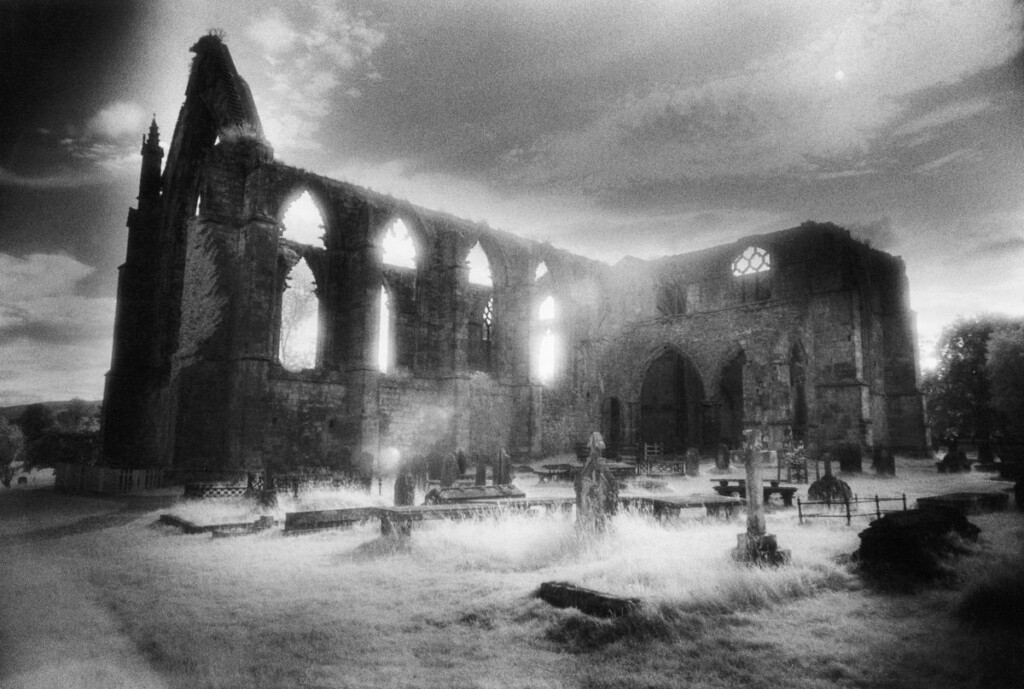
You have walked through a ruin with a camera and felt, somewhere beneath the aesthetic pleasure, something that resembled righteousness — as though bearing witness to decay were itself a moral act, as though the photograph absolved you of any complicity in what the photograph depicts.
That feeling is the trap. Not because beauty is dishonest, but because beauty, in the context of ruins produced by economic abandonment and racial disinvestment, performs a specific kind of forgetting. When Camilo José Vergara published his documentation of American urban decay across decades — most fully realized in “The New American Ghetto” in 1995 — he brought a sociological conscience to the work that most ruin photographers quietly discard. He named neighborhoods. He returned to the same corners across twenty years. He refused the seduction of pure aesthetics by insisting on time, on the people who remained, on the structural forces that had hollowed these places out. And then he proposed turning twelve blocks of Detroit’s most devastated downtown into a preserved ruin park, an American Acropolis, a monument to industrial collapse. The backlash from Detroit residents and Black community leaders was immediate and scorching. They did not want their poverty framed and mounted. They did not want the evidence of what had been done to them transformed into a destination for contemplative tourism. What Vergara had imagined as preservation, they recognized as something closer to burial.
The distinction matters enormously, because it exposes the fundamental grammar of aestheticization: to make something beautiful is, in the same gesture, to make it static, to drain it of its demand. A ruin that has been photographed compellingly has been, in a quiet but irreversible way, resolved. The image produces closure. The viewer receives a feeling — melancholy, wonder, the particular satisfaction of having encountered something genuine — and the transaction completes itself. What does not survive this transaction is the political content of the decay: the redlining maps drawn by federal agencies after 1934, the deliberate highway routing decisions that severed Black neighborhoods from economic centers throughout the 1950s and 1960s, the plant closures that followed deindustrialization in the 1970s and 1980s as corporations extracted capital from communities they had no intention of sustaining.
Susan Sontag argued in “On Photography” in 1977 that the camera creates an aestheticizing relation to the world, that to photograph suffering or devastation is to impose a formal order on it — and that this formal order is never politically innocent. What she did not fully anticipate, perhaps because the ruin photography genre had not yet metastasized into the cultural phenomenon it would become by the 2010s, was how thoroughly that aestheticizing impulse would migrate from professional documentation into a mass participatory practice. Instagram’s abandoned places hashtag has accumulated tens of millions of images. The urban exploration subculture generates content consumed by audiences who will never visit Detroit or Chernobyl or Gary, Indiana, but who will feel, looking at these images, that they have touched something real and important.
Georges Didi-Huberman wrote in “Phasmes” that the trace — the material remainder of something that has disappeared — carries within it an ethical obligation to the force that produced it. The ruin is a trace. The abandoned school is a trace. The collapsed factory floor with wildflowers growing through the concrete is a trace. What photography does, at its most irresponsible, is receive the trace and convert it into atmosphere, into mood, into the pleasant melancholy that Romantic aesthetics since at least Friedrich’s “Wanderer Above the Sea of Fog” in 1818 has trained us to experience as depth and meaning. The wanderer in that painting has his back to us, and we have never questioned whether the fog he contemplates might be someone else’s burning.
🏚️ Ruins, Silence, and the Gaze of Memory
Abandoned places speak a language that transcends words — one of moss-covered walls, fractured light, and time suspended. The photography of dereliction invites us to look beneath the surface of things and ask what beauty survives dissolution. These related readings deepen that gaze, connecting visual silence to philosophy, memory, and the melancholy of impermanence.
Japanese Aesthetics: Wabi-Sabi Mono no Aware and Yugen
Japanese aesthetics offers some of the most refined frameworks for understanding beauty in decay. Wabi-sabi celebrates the imperfect and the transient, finding elegance precisely in weathered surfaces and abandoned forms. For photographers drawn to ruins, this philosophy provides an almost spiritual vocabulary for what their lens already seeks.
GO TO THE SELECTION: Japanese Aesthetics: Wabi-Sabi Mono no Aware and Yugen
Mono no Aware: The Melancholy of Things in Japanese Culture
Mono no aware — the gentle ache of things passing — is perhaps the most resonant concept for anyone who photographs abandoned spaces. It describes that bittersweet awareness that beauty and loss are inseparable, that a crumbling wall is also a record of all the life it once held. This article explores how Japanese culture turned that melancholy into an art of attentive seeing.
GO TO THE SELECTION: Mono no Aware: The Melancholy of Things in Japanese Culture
Memento Mori: History and Meaning
The memento mori tradition in Western art has long insisted that beauty and death share the same breath. From Baroque vanitas paintings to modern photography, artists have used objects of stillness and decay to remind viewers of life’s fragility. Exploring this history illuminates why abandoned interiors carry such an uncanny emotional weight.
GO TO THE SELECTION: Memento Mori: History and Meaning
Pierre Nora and the Sites of Memory
Pierre Nora’s concept of lieux de mémoire — sites of memory — offers a powerful lens through which to interpret abandoned places as more than mere ruins. These spaces become dense repositories of collective experience, frozen at the moment of their desertion yet still vibrating with cultural significance. Understanding Nora helps photographers and viewers alike grasp why silence in these places feels so eloquent and charged.
GO TO THE SELECTION: Pierre Nora and the Sites of Memory
Discover the Cinema of Silence on Indiecinema
If these reflections on beauty, abandonment, and memory have stirred something in you, Indiecinema is the streaming platform where that feeling finds its moving image. Explore a curated catalogue of independent and art-house films that dare to linger in silence, ruin, and the extraordinary ordinary — stream them now on Indiecinema.
👉 EXPLORE THE CATALOG: Watch Indie Films in Streaming
A vision curated by a filmmaker, not an algorithm
In this video I explain our vision

