
The Photograph You Did Not Consent To
You are standing near the edge of the room, holding a glass you have barely touched, half-listening to a conversation that does not quite include you, when someone twenty feet away raises a camera and takes your photograph. You did not see it coming. The shutter closed before your face could arrange itself into something intentional, before you could decide what version of yourself to offer the world. By the time you register what happened, the image already exists. It is already somewhere else — in a device, in a pocket, moving toward a screen you will never see. You have been recorded. You have been kept.

What strikes most people in that moment is the mild embarrassment, the instinct to ask whether it was a good shot, the faint anxiety about what the image revealed. But underneath all of that is something older and harder to name: the recognition that something was taken from you without negotiation, that a transaction occurred in which you were the object and not the party. The photographer made a choice. You did not. This asymmetry is not incidental to the photographic act — it is its architecture. The camera does not ask. That is precisely what makes it an instrument of power rather than merely a tool of memory.
Photography was not always understood this way. When Louis Daguerre demonstrated his process to the French Academy of Sciences in August 1839, the cultural imagination surrounding the new invention was saturated with wonder at its fidelity, its ability to preserve what the eye sees and time destroys. The human figure captured in those early plates was understood as a gift, a rescue from impermanence. The language was redemptive. Nobody spoke, in those first intoxicated years, about what the subject lost in the exchange. The metaphysics of gain dominated entirely, and the metaphysics of taking was left unexamined for more than a century.
It took the collision of photography with war, colonialism, and tourism — all three forms of practiced intrusion — to make the extraction visible. When photographers traveled into territories their own governments were simultaneously occupying, the camera followed the gun. Not as propaganda, or not only as that, but as an epistemological instrument: a device for confirming that certain people and places could be entered, framed, and carried home as evidence of having been there. The photographed subject was rendered legible to an audience that had not been invited, classified by a gaze that owed them nothing. In that transaction, the photograph did not simply document a power relation. It enacted one.
This is the terrain Susan Sontag entered with On Photography, published in 1977, building the book from six essays that had appeared in the New York Review of Books beginning in 1973. Sontag was not primarily making an argument about aesthetics or even about ethics, though both are present throughout. She was interrogating a habit — the compulsive, normalized, socially rewarded habit of photographing — and asking what kind of relationship to reality it produces in the person who photographs and what it does to the person or thing photographed. Her central intuition was that the camera positions its user as a consumer of reality, and that this consumerism is not passive. To photograph something is to exercise a form of authority over it: to decide that it is worth capturing, to decide how it will be framed, to carry it away into contexts it cannot control.
The person standing twenty feet from you at that event understood none of this consciously and probably meant nothing hostile by lifting the camera. Intent, though, is almost irrelevant to the structure of the act. The image was made. You are now inside it, fixed, held in a fraction of a second you did not choose, readable to strangers in ways you will never be able to anticipate or correct.
Simon Marsden’s Haunted Life In Pictures
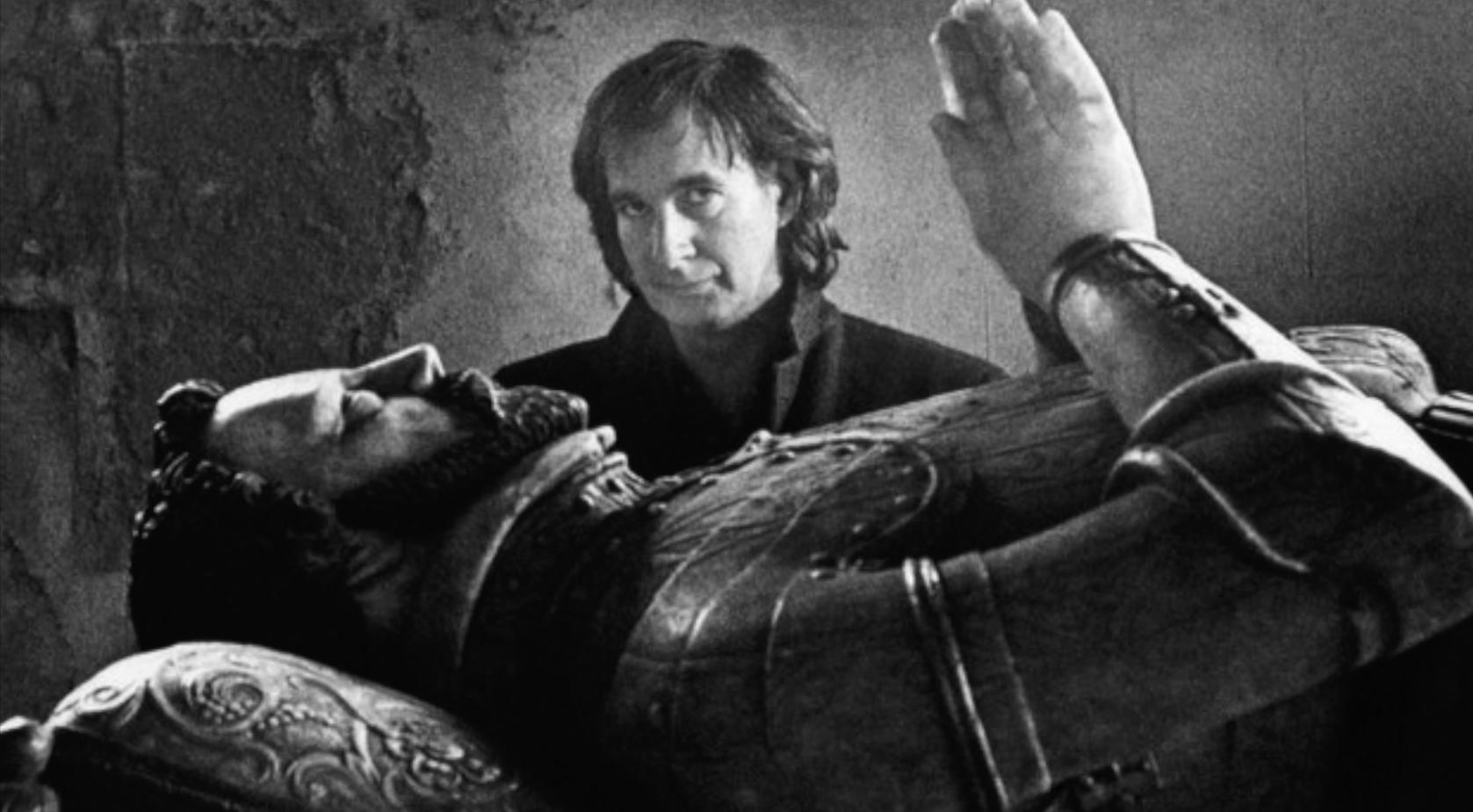
Documentary, by Jason Figgis, United States, 2019.
This documentary retraces the life and work of Simon Marsden, widely regarded as one of the foremost photographers of the supernatural. Premiered at the British Film Institute in London, the film offers a fascinating journey into his creative universe, appealing not only to photography enthusiasts but also to scholars, teachers, students, and anyone intrigued by the mysteries of the unseen. Through evocative imagery and first-hand accounts, it explores the artistic path of a photographer whose work has appeared in books, on U2 album covers, and in museum exhibitions around the world.
Although convinced of the existence of ghosts, Marsden never claimed to capture them directly with his camera. Instead, he used black-and-white infrared film to record the atmosphere and the invisible traces that, in his view, spirits left imprinted upon places. From the landscapes of Ireland to the vast expanses of Russia, passing through Venice and the American Southwest, he transformed historic buildings, ruins, and haunting locations into deeply evocative images capable of suggesting dark and unsettling stories. His photographs continue to captivate the imagination, demonstrating how the most powerful works of art can leave a lasting impression on those who behold them.
LANGUAGE: English
SUBTITLES: Spanish, French, German, Portuguese
Sontag’s Diagnosis: The Camera as Instrument of Acquisition
You already own the images before you take them. That is the uncomfortable truth Sontag laid bare in 1977, in a book that began as a series of essays for the New York Review of Books and became one of the most unsettling pieces of cultural criticism written in the twentieth century. On Photography did not argue that cameras were dangerous in the wrong hands. It argued that the act of photographing was itself a form of aggression, structurally, regardless of the photographer’s intentions, regardless of the beauty of the result.
Her central claim was deceptively simple: to photograph something is to appropriate it. Not in the loose metaphorical sense of influence or admiration, but in the harder economic sense of taking possession, converting something alive and particular into an object that can be stored, reproduced, sold, and consumed. The photograph does not capture reality; it substitutes a version of reality that the photographer controls entirely. The subject has no say in how they are framed, in what light, at what moment, for what purpose. They surrender something the moment the shutter closes, and they rarely know what they have surrendered.
Sontag reached for the word “predatory” deliberately, and it is worth sitting with that word rather than softening it. Predation implies appetite, pursuit, and a relationship between a subject who acts and an object who cannot. The photographer moves through the world in a condition of perpetual acquisition, scanning environments and people for images worth taking. The language of photography has always betrayed this dynamic: you shoot a subject, you capture a moment, you take a portrait. Every verb in that lexicon belongs to the vocabulary of seizure. Sontag was not being poetic when she drew this out; she was being precise.
What made the diagnosis genuinely radical was her insistence that this possessive logic applied even to photographs made with tenderness, even to portraits made with the full consent and cooperation of the subject. The transformation from person to image is not a neutral transcription. It is a reduction. The three-dimensional, time-bound, contradiction-filled human being becomes a flat surface, frozen, interpretable, infinitely reproducible. The photograph can outlive the subject, circulate without them, mean things they never intended, be cut and cropped and recontextualized in ways that erase everything they were outside the frame. The image does not serve the subject. The image serves whoever holds it.
This was the deeper implication Sontag was pressing toward: photography did not merely record a consumer society, it was one of its primary mechanisms. By 1977, the democratization of the camera had been underway for decades, accelerated by Kodak’s mass-market Brownie in 1900 and then again by the postwar proliferation of affordable 35mm cameras. Photography had become a ritual of middle-class life, the means by which families documented themselves, tourists consumed foreign landscapes, journalists metabolized catastrophe into product. Sontag saw in this not liberation but an enormous expansion of the appetite to own experience rather than live it. The camera becomes a way of managing anxiety in the face of the world’s uncontrollable richness — if you photograph it, you have it, you can return to it, you can prove you were there. The image is the receipt for an experience that was never fully yours to begin with.
The tourists she described were not villains. They were ordinary people behaving in ways that their culture had trained them to behave, reaching for their cameras in moments of beauty or strangeness because the culture had convinced them that un-photographed experience was somehow incomplete. The camera stood between them and the thing they had traveled to see, and they pointed it forward as both instrument and shield, acquiring images of a world they were no longer quite inhabiting.
What Sontag diagnosed was not a pathology of individuals but a grammar of looking — a set of invisible rules governing who is permitted to look at whom, under what conditions, and to what end.

The Democratic Lie of the Lens
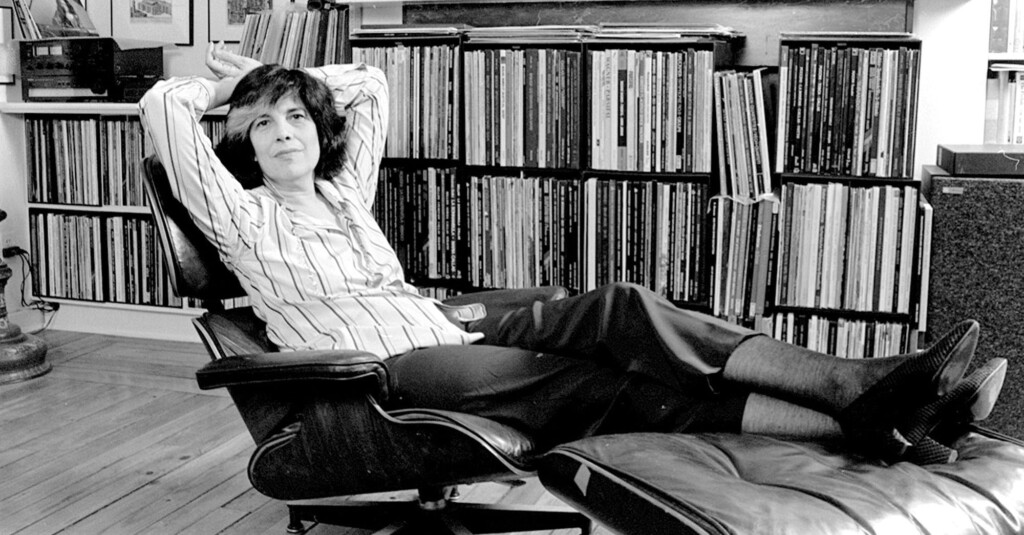
You have seen the photograph before, even if you have never seen this particular one: a man seated with the quiet authority of someone who expects to be looked at, his posture unhurried, his gaze directed not at the camera but slightly past it, as though the future itself were already his to survey. The daguerreotype studios that opened across American cities in the 1840s were flooded with men like him — merchants, lawyers, landowners — who understood almost instinctively that being photographed was not a neutral act but a form of property, another thing one could acquire and bequeath.
The story we inherited about photography’s arrival insists on democratization. The argument runs something like this: painting had always served the wealthy, but the camera made likeness affordable, available, universal. By 1853, roughly three million daguerreotypes were being produced annually in the United States alone, and this sheer volume seemed to confirm the democratic promise. Alan Trachtenberg, in Reading American Photographs published in 1989, dismantled that promise with the patience of a scholar who knows the archive does not lie, only the story told about it. What Trachtenberg showed was that early American photography did not dissolve the social hierarchies of the antebellum world — it absorbed them, reproduced them, and gave them a new kind of permanence. The subjects who filled those early studios were overwhelmingly white, male, and propertied, not because the technology excluded others by design, but because the technology was never socially neutral to begin with. It entered a world already organized by power and reflected that world back with the serene confidence of a mirror that mistakes itself for a window.
The poor were photographed too, but rarely by choice and almost never for themselves. They appeared in documentary projects, in ethnographic surveys, in the reform photography that Jacob Riis made famous in 1890 with How the Other Half Lives — images intended to move the comfortable gaze of those who would never appear in such photographs. The subject of documentary photography in this period was structurally the object of another person’s civic concern, which is a polite way of saying they were rendered visible on terms they did not negotiate. Visibility, it turns out, is not the same as recognition, and the distinction matters enormously because the language of democratization collapses the two.
There is a deeper mechanism at work here that has nothing to do with access to studios or the cost of materials. Roland Barthes in Camera Lucida, published in 1980, wrote about the way photography transforms the subject into an object — the person photographed becomes a spectrum, he said, a ghost caught in the amber of the chemical process. What this means practically is that the photograph does not simply record a power relation; it fixes it. The living asymmetry between the one who looks and the one who is looked at becomes permanent, portable, reproducible. Every reprint is a repetition of that original relation, which is why the archives of empire are also archives of the gaze — not incidentally but constitutively.
Photography arrived in the same decade that the United States was convulsing over the legal status of enslaved people, and it is not a coincidence that some of the most disturbing early American photographs were daguerreotypes commissioned by the Harvard naturalist Louis Agassiz in 1850, images of enslaved men and women posed without clothing to support his polygenist theories. The camera was pointed at them not to acknowledge their humanity but to deny it scientifically. The democratic lens was, in that moment, doing exactly what the undemocratic world required of it — producing evidence for a hierarchy already decided in advance, dressing that hierarchy in the impartial grammar of light and chemistry, and sending it forward into a future that would mistake the document for the truth.
Who Holds the Camera Holds the Story
You have been in that room, the one with the whitewashed walls and forty photographs pinned in a grid, and you felt something you couldn’t name — a faint unease at how still everyone in those images was, how perfectly they held their suffering for you. That stillness is not accidental. It was selected.
John Berger understood in 1972, in Ways of Seeing, that the act of looking is never symmetrical. The one who surveys and the one who is surveyed occupy structurally different positions — not because of any individual cruelty, not because any particular photographer woke up intending domination, but because the division is built into the apparatus itself. To hold a camera is to inherit a grammar of authority. The frame is not a neutral window; it is a claim. It says: this is what happened, this is what mattered, this is the shape of someone else’s reality as rendered legible for you. Berger traced this logic through centuries of European oil painting — the way women were posed not as subjects experiencing their own interiority but as objects arranged for a masculine eye — and his argument did not stop at canvas edges. It extended forward into every image-making technology that followed, including the lens.
What photography added to this inheritance was the alibi of mechanism. A painting requires a hand and therefore implies a choice; a photograph appears to require only light, and so the choice disappears into the chemistry. This is precisely where the ideology hides most effectively: inside the assumption of automatism. The camera clicked, therefore the image is what occurred. But someone stood somewhere. Someone pointed the lens in one direction and not another. Someone pressed the shutter at one moment and not the one before or after.
Consider a photographer embedded with a military unit in a theater of active conflict, sometime in the early years of the twenty-first century when digital transmission made it possible to send an image from a forward position to a picture desk in New York or London within seconds. She has perhaps forty minutes in a particular village before movement orders change. She sees three scenes simultaneously: a soldier tending to a wounded colleague, a child sitting in rubble beside a dead adult whose face is uncovered, an elderly man walking away from a burning structure with a plastic bag in his hand. She cannot photograph all three equally. Her editors — and she knows this without being told, because the knowledge is structural, absorbed through years of which images ran and which were killed — will use the one that confirms a legible narrative. Grief that looks like grief as Western audiences have been trained to recognize it. Suffering that does not require explanation. The child in the rubble is the image that moves. The old man with the plastic bag is the image that asks too many questions. She takes both, and she already knows which one will exist in the archive and which will not.
This is not a story about bad faith. The photographer may be scrupulous, even anguished. The editors may believe in their mission of bearing witness. The failure is not moral in the individual sense; it is epistemological in the collective one. Roland Barthes, writing in Camera Lucida in 1980, identified the punctum — the detail in a photograph that pierces, that rises unbidden from the image and wounds the viewer personally — but he was describing the experience of the receiver. He was not asking who decided that this image, and not another, would reach the receiver at all. The chain of selection that precedes the viewer’s encounter with any photograph is invisible by design, and its invisibility is where power lives most comfortably, not in the image that shocks but in the image that was never taken, never transmitted, never printed, never pinned to any wall for anyone to stand before and feel that unnamed unease.
Roland Barthes and the Violence Buried in the Punctum
You are looking at a photograph of someone you have never met, and something in it stops you — not the composition, not the light, not anything you could defend in an argument. A hand at an odd angle. The collar of a shirt. The particular way a child is not looking at the camera. Something catches, like a splinter you cannot see but can feel, and for a moment the distance between you and that stranger collapses into something uncomfortably close to recognition.
Roland Barthes named this in Camera Lucida in 1980, the last book he finished before his death, and he called it the punctum: the detail that wounds. He distinguished it from the studium, the cultural, readable, intentional content of an image, the part you can discuss over dinner. The punctum was the other thing, the uninvited intrusion, the element that was not meant to address you but does anyway, piercing the composed surface of the photograph and landing somewhere beneath your defenses. Barthes framed this as intimate, even tender, a private experience between a viewer and a specific photograph. What he did not fully excavate — and perhaps could not, given that the book was also his grief for his recently dead mother — was the degree to which that wound is not accidental. It is structural.
The punctum does not find you by coincidence. It finds you because you have a body, a history of loss, a neurological system primed by evolution to respond to particular configurations of face, posture, and gaze. Photographers and editors and art directors know this, not always consciously, but know it the way a skilled interrogator knows where to apply pressure without leaving a mark. The cropping that removes context and leaves only a face. The frame that isolates a child’s bare foot against a stone floor. The angle that makes a subject look up at the lens with something indistinguishable from supplication. These are not the accidents of the punctum. They are its manufacture.
This matters because the experience of being wounded by an image feels private, and what feels private feels authentic, and what feels authentic is nearly impossible to interrogate. The machinery of advertising understood this by the 1950s, long before the theoretical vocabulary existed to describe it. A study conducted by Ernest Dichter, the Austrian-American psychologist whose Motivations in Marketing from 1964 laid out the emotional architecture of consumer desire, demonstrated that purchasing decisions tied to images of faces and hands were far more resistant to rational counter-argument than those tied to product descriptions. The wound bypasses the critical apparatus. It goes straight to the nerve.
What Barthes identified as aesthetic experience is therefore also a map of entry points, a diagram of where the protected self thins out and becomes permeable. Photojournalism has known this for decades, and the knowledge is rarely spoken aloud in its professional ethics debates, which tend to focus on dignity and consent and whether to publish the dead. What the debates rarely address is the more uncomfortable question: whether the emotional response the image is designed to generate in the viewer is a form of manipulation of the viewer, not just of the subject. The person who weeps at the photograph of the drowned child on the beach is experiencing something real. That reality is also useful to someone.
Power does not need to announce itself to operate. It needs a surface that feels personal enough to disarm suspicion, intimate enough to short-circuit reflection. The photograph offers exactly this: an object that looks like evidence but functions like an argument, dressed in the grammar of the real. And the punctum is not the exception to this operation. It is the mechanism by which the argument lands before you have had the chance to decide whether you wanted to hear it.
A vision curated by a filmmaker, not an algorithm
In this video I explain our vision
Colonial Archives and the Photograph as Administrative Tool

You have seen the photograph before, even if you have never seen this particular one: a row of men standing against a white wall, their faces turned toward the camera with the flat compliance of people who have learned that resistance to this specific gesture costs more than it returns. The year is somewhere in the 1880s. The location is a colonial administrative outpost. The photographer is an official. The men do not know what will be done with their images, but they understand, at a level beneath articulation, that something is being taken from them that has nothing to do with light striking a chemical surface.
Allan Sekula‘s 1986 essay “The Body and the Archive” makes visible the machinery that produced that photograph and the thousands like it. Sekula traced the emergence of photography not as an art form straining toward truth but as a bureaucratic instrument designed to manage populations too large, too mobile, or too foreign to be governed by direct personal recognition. The archive, in his analysis, is not a neutral repository. It is a system of power that determines who gets classified, on what terms, and toward what ends. The camera became the state’s prosthetic eye precisely because it could produce a standardized, reproducible, legally legible record of a human face — a face stripped of context, stripped of voice, reduced to a set of measurable features that could be compared, filed, and retrieved.
Alphonse Bertillon’s anthropometric system, developed in France in the 1880s, codified this reduction into a formal science. Bertillon believed that the criminal body announced itself through physical proportion, and that systematic measurement combined with frontal and profile photography could create an infallible identification system. The French colonial administration recognized immediately that this logic extended far beyond criminology. Applied to the populations of Algeria beginning in the 1870s, photography became a mechanism of taxonomic conquest — indigenous people were photographed not as individuals but as specimens of a type, their portraits arranged in grids that communicated racial hierarchy as empirical fact. The grid itself was the argument. Arrangement implied classification, classification implied hierarchy, and hierarchy implied the naturalness of domination.
In India, the colonial photographic project took on an almost encyclopedic ambition. The eight-volume “The People of India,” published between 1868 and 1875 under the direction of the India Office, presented 468 photographs organized by caste, tribe, and occupation. The editors described it as a scientific record. What it produced was a visual taxonomy that mapped the subcontinent’s human diversity onto a fixed, legible order — an order that conveniently positioned British administrators as the neutral observers standing outside the frame, capable of seeing the whole because they had constructed it. The camera did not document Indian society. It legislated a particular version of it into official visibility.
The Congo under Belgian administration after 1885 introduced a further perversion. Photographs of mutilated Congolese bodies — hands severed as punishment for failing rubber quotas — circulated in European reform campaigns as evidence of atrocity. Yet even in their humanitarian deployment, these images followed the same logic: African bodies as objects of documentation, as evidence to be marshaled by European actors for European arguments. The Congolese subjects remained voiceless within the frame, their suffering instrumentalized first by the colonial administration and then by its critics, neither position granting them the standing of someone whose testimony mattered independently of its usefulness to a white political purpose.
What Sekula illuminated, and what the colonial archive makes viscerally plain, is that the photograph has never been a passive witness. Its apparent neutrality — the mechanical reproduction of what stands before the lens — has always functioned as a disguise for the act of selection, framing, and classification that precedes the shutter’s release. The question of who holds the camera, who controls the archive, and who determines the categories into which images are sorted is never a technical question.
The Selfie as Internalized Surveillance
You have already decided what your face should look like before you raise the phone. The angle is memorized, the light is mentally pre-screened, the expression is calibrated to a version of yourself that you have tested and approved in previous iterations. You are not capturing a moment. You are manufacturing evidence of a self that conforms to a standard you did not invent and cannot fully locate.
Over 93 billion selfies were taken in 2023. That number resists comprehension until you stop trying to picture it as a quantity and start recognizing it as a behavior — a collective, near-universal ritual of self-documentation that operates with the regularity of breathing and the anxiety of an audition. The camera no longer belongs to the stranger across the room, the state photographer at the border crossing, the journalist at the protest. It belongs to you, and you have turned it inward, and you have done so voluntarily, and you have done so with pleasure, and that combination — voluntariness, pleasure, regularity — is precisely what makes it so structurally complete as a mechanism of control.
Shoshana Zuboff, in The Age of Surveillance Capitalism published in 2019, articulated what was already becoming viscerally obvious: that the most profitable raw material of the twenty-first century is behavioral data, and that the genius of the system is not extraction by force but extraction by desire. Platforms do not steal your image. You upload it. You optimize it. You track its performance in the form of engagement metrics, and then you adjust your next self-presentation accordingly. The feedback loop is so tight, so immediate, so woven into daily experience that it no longer feels like surveillance. It feels like self-expression. That confusion is not accidental. It is the architecture.
What has shifted from the older logic of the photographic gaze is the collapse of the distance between watcher and watched. Michel Foucault described in Discipline and Punish in 1975 how the panopticon worked not because the guard was always present, but because the prisoner could never be certain the guard was absent. The selfie eliminates even that residual uncertainty by making the prisoner the guard. You are both simultaneously, at all times, with no shift change and no possibility of abandonment. The most efficient form of a system is one that requires no external enforcement because the subject has absorbed the logic entirely and administers it to themselves.
This absorption happens early. Studies of adolescent social media use — including research published in the journal JAMA Pediatrics tracking cohorts between 2016 and 2020 — found that the primary source of anxiety was not exposure to others’ images but the perceived inadequacy of one’s own. The threat was not the gaze of a stranger. It was the anticipated insufficiency of one’s own image in the economy of attention. Children are learning, before they can fully articulate it, that their face is a product, that their emotional legibility is a liability, and that the successful self is the one that can be compressed into a rectangle and made to perform.
What Susan Sontag intuited in On Photography in 1977 — that to photograph something is to exercise a form of power over it, to fix it, to possess it, to reduce its complexity to a surface — now applies in a hall of mirrors, because the subject and the photographer are fused. When you turn the lens on yourself, you are not escaping the power dynamic she described. You are internalizing it so completely that the seam between your desire and the system’s appetite becomes invisible. The violence is not in the image. It is in the moment before — when you adjust your jaw, soften your eyes, decide which version of your face deserves to exist in the record, and delete the one that looked too much like you actually are.
Empathy’s Failure and the Aestheticization of Suffering
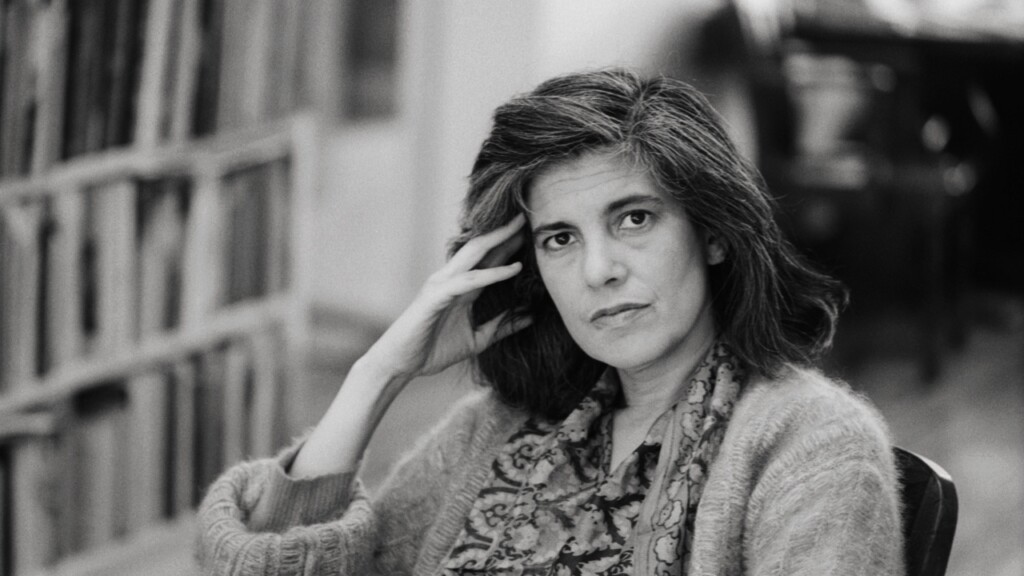
You are watching a photograph of a burned village, and you feel something — you are almost certain you feel something. The image arrives on a screen or a page, saturated with detail: ash, collapsed walls, the particular gray of wood that has surrendered entirely to fire. For a moment the world tilts slightly. Then you scroll, or turn the page, and the tilt corrects itself, and you continue.
This is precisely the mechanism that Susan Sontag spent the last years of her life trying to name with surgical honesty. In “Regarding the Pain of Others,” published in 2003, two years before her death, she performed something rare in intellectual life: a public retraction not born of social pressure but of rigorous rethinking. The optimism that had threaded through “On Photography” in 1977 — the faith that saturation eventually produces moral numbness, implying that the right image at the right moment could still pierce — gave way to a darker and more precise diagnosis. The problem was never too many images. The problem was the structure of spectatorship itself.
Sontag drew directly on Virginia Woolf‘s “Three Guineas” from 1938, where Woolf had already interrogated whether photographs of atrocity — specifically, images from the Spanish Civil War — could actually create shared moral ground between a privileged woman in London and a soldier at the front. Woolf’s answer was more ambivalent than it first appeared, and Sontag took that ambivalence seriously enough to weaponize it: the act of looking at suffering, when conducted from safety, does not narrow the distance between the viewer and the victim. It formalizes that distance. It gives the distance a cultural legitimacy, even a moral alibi. Having looked, one has participated. Having participated, one is absolved.
What makes this more than a critique of individual passivity is the recognition that aesthetic distance is not an accident of how images circulate — it is a preferred outcome for those who benefit from inaction. A population that responds to atrocity with feeling rather than structural demand is extraordinarily useful. Emotion exhausts itself; grief has a half-life; outrage, as any communications strategist knows, degrades within a news cycle. The image of suffering, aestheticized and framed and distributed through the same channels that distribute entertainment, does not radicalize its viewer. It inoculates them. Small doses of horror administered regularly produce not immunity in the medical sense but a practiced capacity to absorb shock without converting it into political will.
The photojournalist’s ethical dilemma — to shoot or to intervene — has been debated endlessly since Kevin Carter‘s 1993 Pulitzer-winning image of a vulture and a starving Sudanese child, an image that generated worldwide moral convulsion and changed nothing about the policies that produced the famine. Carter died by suicide the following year, having written that he was haunted by what he had seen. The audience that consumed his image experienced something altogether different: a transient devastation, a dinner-table conversation, perhaps a small donation. The photograph did its cultural work and released them back into their lives.
Sontag’s final position was not cynicism — it was something more demanding than cynicism, which is at least a stable resting place. It was an insistence that the relationship between seeing and acting has never been natural or automatic, that every assumption about photography’s moral power had been a convenient story told by people who preferred the manageable emotion of witnessing to the difficult arithmetic of accountability. The camera does not make us responsible for what it shows us. It offers us the experience of concern without the obligations that actual concern would impose, and in doing so it performs, every single day, an act of enormous political service to the structures that require our passivity most.
To understand this is not to stop looking — it is to stop believing that looking is enough, and to recognize how much energy has been spent, for over a century, convincing us that it was.
📷 The Gaze, Power, and the Politics of Images
Susan Sontag’s meditation on photography as an act of power invites us to explore how images construct reality, manipulate desire, and exercise control over those who are seen. The following articles trace the intellectual landscape surrounding Sontag’s thought, connecting photography to broader questions of surveillance, representation, semiotics, and the spectacle of modern life.
The Surveillance Society: History and Theory
Sontag’s insight that photography turns the world into a collection of images finds its darkest institutional expression in the surveillance society, where the gaze becomes an instrument of systematic control. This article traces the genealogy of watched societies from Bentham’s panopticon to digital mass monitoring, revealing how the photographic eye has been absorbed into the architecture of power. Understanding surveillance as a cultural and philosophical phenomenon is essential to grasping what Sontag feared most about the proliferating camera.
GO TO THE SELECTION: The Surveillance Society: History and Theory
Boorstin’s The Image: Analysis
Daniel Boorstin‘s landmark analysis of the image-saturated society prefigures many of Sontag’s central anxieties about photography, particularly the way mediated representations displace lived reality. Boorstin argued that modern culture increasingly mistakes the image for the event itself, producing what he called ‘pseudo-events’ engineered purely for reproduction and consumption. Read alongside Sontag, Boorstin reveals how the photographic gaze does not merely capture the world but actively manufactures it.
GO TO THE SELECTION: Boorstin’s The Image: Analysis
Roland Barthes: Life and Works
Roland Barthes devoted much of his intellectual life to examining how images produce meaning, culminating in ‘Camera Lucida,’ his deeply personal theory of photography and its relationship to time, loss, and death. Like Sontag, Barthes understood that the photograph is never innocent: it is always a cultural construction embedded in codes, ideologies, and power relations. Exploring Barthes’s life and works provides an indispensable companion perspective to Sontag’s more politically charged critique of photographic representation.
GO TO THE SELECTION: Roland Barthes: Life and Works
Pierre Bourdieu and the Artistic Field
Pierre Bourdieu‘s sociology of the artistic field offers a rigorous framework for understanding how aesthetic taste, including the appreciation and legitimation of photography, is inseparable from class position and social power. Bourdieu demonstrated that the authority to define what counts as a meaningful image is distributed unequally across social hierarchies, echoing Sontag’s concern that the photographic gaze is always already a gaze of domination. This article situates Bourdieu’s thought within the broader debate about who holds the power to look and to be looked at.
GO TO THE SELECTION: Pierre Bourdieu and the Artistic Field
Discover the Cinema That Dares to Look Differently
If Sontag’s reflections on the gaze and the power of images have stirred something in you, Indiecinema is the streaming platform where that curiosity can go further. Explore independent and auteur films that challenge the conventions of visual representation, question who holds the camera, and transform the act of watching into an act of critical thought. The most powerful images await you — just press play.
👉 EXPLORE THE CATALOG: Watch Indie Films in Streaming
A vision curated by a filmmaker, not an algorithm
In this video I explain our vision

