
The Cell That Made the Poem
You are sitting in a cell in Montgomery Jail, Lahore, in the winter of 1951, and the light that reaches you arrives through a single aperture in the stone as though the architecture itself has decided how much reality you deserve. The air carries the particular cold of the Punjab in December, not the sharp alpine cold that announces itself but the slow damp cold that settles into cloth and bone without drama, the cold of being forgotten. You have been here since March, arrested under charges that accused you and several military officers of plotting to overthrow the newly formed government of Pakistan in what colonial-era legal machinery quickly labeled the Rawalpindi Conspiracy Case. The charges were real enough in their consequences — years stripped from your life, your newspaper Dawn silenced, your name transformed from a celebrated poet into a category of threat — but what the state could not calculate, what no state ever calculates correctly, is what a disciplined imagination does with imposed silence.

Faiz Ahmad Faiz had already published Naqsh-e-Faryadi in 1941, a collection that announced a voice unlike anything Urdu poetry had produced since Mir and Ghalib — not because it broke with the classical ghazal tradition but because it radicalized that tradition from the inside, turning the beloved of classical Persian-Urdu verse into something collective and political without ever becoming a slogan. The ghazal, a form built on separation and longing, became in his hands an instrument for encoding public grief in the language of intimate desire. What censors look for is the declaration. What Faiz understood, almost biologically, was that the declaration was unnecessary if the image was precise enough. The jailer reads the surface. The poem lives underneath it.
There is something philosophically significant in what incarceration does to language. Michel Foucault, in Discipline and Punish published in 1975, traced how the prison is not merely a place of detention but a machinery for producing a particular kind of subject — surveilled, categorized, corrected. The entire architecture of the modern prison, Foucault argued, is designed to make the body legible to power, to strip it of opacity. But poetry, specifically the kind of compressed symbolic language Faiz was writing inside Montgomery Jail, operates through opacity as a structural feature. It refuses legibility on institutional terms. The prison was built to make Faiz readable. The poem was his insistence on remaining unreadable to exactly those instruments of reading.
The poems from this period — collected later in Dast-e-Saba, published in 1952, and Zindan-Nama, published in 1956 — are not bitter. This is the thing that should unsettle you, the thing that does not fit the narrative of martyrdom that later admirers sometimes impose on this period. They are luminous. They move with a patience that suggests the writer understood something about time that his captors had not grasped. When Faiz writes in “Subh-e-Azadi,” his devastating interrogation of the 1947 partition and independence, that this stained dawn is not the dawn they had been waiting for, he is not despairing — he is holding the state to a standard it set for itself and already failed to meet. That is not the language of defeat. That is the language of an unresolved demand that will outlive every administration that ignored it.
What the Rawalpindi Conspiracy Case actually produced, in its attempt to neutralize a dissident voice, was the concentrated conditions under which that voice discovered its full register. Power applied pressure expecting silence and received instead the poetry of Zindan-Nama — work that circulated in handwritten copies, was memorized and sung across the subcontinent, and embedded itself in collective memory with a durability that the legal proceedings against its author did not survive.
When the State Decides What Beauty Is Allowed to Say
You are sitting in a government office in Lahore, 1958, and a functionary is reading your poem. He is looking for the crime. He knows it is there — someone has told him it is there — but the words on the page keep slipping away from him, dissolving into the inherited perfume of classical Urdu verse, into the beloved’s hair and the night wind and the candle’s wound. The poem will not confess. This is not an accident.
Faiz Ahmad Faiz understood something about power that most dissidents learn too late: that a regime which controls the vocabulary of sedition also controls the boundary of what resistance can mean. Ayub Khan’s military government, which seized Pakistan in October 1958 and ran it through martial law until 1969, did not only censor newspapers and jail journalists. It attempted something more architecturally ambitious — the construction of a permitted aesthetics, a landscape of approved beauty from which the political had been surgically removed, leaving only the decorative husk. Folk music became cultural heritage. Poetry became national sentiment. Both were welcome, provided they pointed nowhere dangerous.
What the censors could not account for was that Faiz had chosen a form that predated the Pakistani state by several centuries and whose entire emotional grammar was built on concealment and displacement. The ghazal, as a classical Urdu and Persian structure, had always operated through the figure of the beloved as a site of impossible longing — but this very impossibility had historically sheltered meanings the powerful could not safely acknowledge. The thirteenth-century Persian poet Rumi used the beloved’s face to hold what theology could not contain without violence. By the time the tradition reached the Mughal courts and then the colonial period, the convention was so deeply embedded that its double register — the literal and the seditious — had become structurally inseparable. You could not amputate the political valence without destroying the form itself.
This is what made Faiz’s method so surgically resistant. When he wrote of the beloved’s lips as the color of a wound, or when he addressed the jailer with the same tenderness reserved for the lover, he was not smuggling politics into poetry through a disguise. He was activating the full depth of a tradition that had never agreed to be innocent. Walter Benjamin argued in his 1936 essay “The Work of Art in the Age of Mechanical Reproduction” that fascist aesthetics resolves the political into the beautiful in order to neutralize it — it gives masses an expression while leaving property structures intact. What Faiz inverted was precisely this move: he restored to beauty its capacity to be dangerous, which meant restoring to the reader the discomfort of recognizing themselves inside an unjust arrangement.
The Cold War context multiplied this pressure exponentially. Pakistan’s alignment with the United States after 1954 through SEATO produced a cultural climate in which leftist aesthetics were not merely suppressed but actively pathologized — framed as foreign contamination, Soviet infection, a betrayal of Islamic national identity. Faiz had already served nearly four years in prison between 1951 and 1955, arrested on charges connected to the Rawalpindi Conspiracy Case, accused of plotting a communist coup. The state had named him, tried him, imprisoned him — and his poetry had continued to circulate in handwritten copies passed between people who whispered the lines to each other in rooms where they were not supposed to exist.
A regime that cannot make the poem confess must eventually make the poet disappear. But here is the structural problem the Pakistani state never solved: Faiz had written himself into a tradition so wide and so old that removing him from it required removing the tradition itself, and the tradition was what millions of ordinary people understood as the sound of their own inner life.

The Revolutionary Grammar of Longing
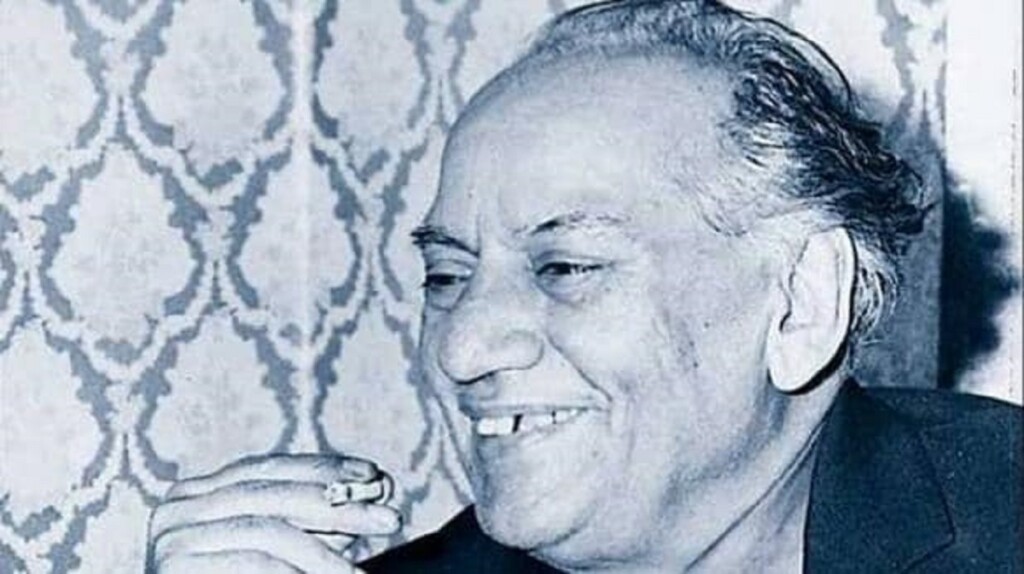
You are handed a ghazal and you read it twice before you understand it is not about a woman at all — or rather, it is entirely about a woman, and that is precisely the problem you have been trained not to see.
The Urdu tradition of ishq carries a weight that Western Romanticism never quite managed. It is not merely the yearning of one body for another; it is a metaphysical grammar in which desire and its frustration become the structuring logic of existence itself. The beloved in classical Urdu verse — the mahboob — is simultaneously unattainable, tyrannical, and luminous, and the lover’s degradation before that figure is not failure but discipline. Centuries of this tradition, from Mir Taqi Mir’s ravaged self-dissolution in the eighteenth century to Ghalib’s corrosive irony in the nineteenth, had built an emotional vocabulary so refined that it could hold contradictions without collapsing them. Faiz Ahmad Faiz inherited this entire architecture and did something that should have been structurally impossible: he kept it standing while changing what lived inside it.
Antonio Gramsci, writing in a Fascist prison between 1929 and 1935 in what became the Prison Notebooks, argued that the organic intellectual does not descend from above to educate the masses but emerges from within a class and gives that class’s existing experience a coherent and historically conscious form. The organic intellectual does not invent the feeling; the feeling already exists, diffuse and inarticulate, in the bodies of working people, in the rhythm of labor and humiliation and deferred hope. What the organic intellectual does is find the language in which that feeling recognizes itself. Faiz did not bring Marxist consciousness to Urdu poetry from outside; he found Marxist consciousness already latent in the structure of longing that Urdu poetry had always performed.
The mechanism was not metaphor in the decorative sense. When Faiz writes in “Mujh se pehli si mohabbat mere mahboob na maang” — do not ask of me that first love again, beloved — he is not abandoning the beloved but indicting a world that has made private tenderness into a luxury the conscience can no longer afford. The poem, written in the 1940s, holds both registers at once without sacrificing either. The personal grief is real; it does not serve the political meaning as a disguise. The political grief is equally real; it does not reduce the personal to allegory. The two forms of longing occupy the same grammatical space because, for Faiz, they were not different in kind. Both were responses to a world organized around the systematic denial of what human beings most essentially need.
This fusion was not ideologically innocent, and Faiz knew it. The traditional beloved in Urdu verse is passive, cruel, and aristocratic — a figure whose indifference mirrors the feudal structures of premodern South Asian society. By redirecting the entire emotional weight of that tradition toward the suffering of the poor, toward the figure of the incarcerated comrade or the dispossessed laborer, Faiz was committing an act of class violence against the form itself. He was taking the emotional sophistication that had been cultivated by and for a literate elite and making it the property of historical grief that elite had largely ignored.
What survived this violence was the intimacy. And this is the feature that resists easy categorization. Most political poetry of the twentieth century paid for its commitment with its tenderness; the lyric subject was sacrificed to the collective voice, and what remained was often noble and cold. Faiz never made that trade. The “we” in his poems does not dissolve the “I” — it amplifies it, gives it a density it could not have achieved alone, because now the personal wound carries the pressure of a million unspoken wounds pressing against it from behind.
What Progressive Literature Actually Cost
You are handed a manifesto in a London drawing room in 1936, and you do not yet know what it will cost you. The document circulating that evening among Mulk Raj Anand, Sajjad Zaheer, and their colleagues contains a sentence that sounds almost reasonable in the amber light of an English evening: literature must not be separated from the social and political life of the people. Reasonable, yes — until the state decides what counts as separation, and who decides what the people actually need.
The All India Progressive Writers’ Movement did not emerge from abstraction. It emerged from the specific shame of a literature that had retreated into ornament while colonial administration starved provinces and crushed dissent by bureaucratic exhaustion. The founding declaration, shaped partly by the influence of European anti-fascist intellectual currents gathering force in that decade, committed its signatories to a writing that would confront feudalism, obscurantism, and the exploitation of those who worked the land and ran the looms. These were not metaphors. They were occupational categories, and committing to write honestly about them meant committing to the enmity of every institution that depended on those categories remaining invisible.
What followed, across the subcontinent and then across the partition line, was not a literary controversy. It was a political reckoning. Faiz had joined the movement in the years before independence, and his early poetry already carried the movement’s dual inheritance: the formal architecture of classical Urdu ghazal pressed into service for a fury that the classical form was never meant to contain. The beloved in his verse was never only the beloved. Every time a censor or a general read his lines, they understood this perfectly, even when they could not prove it in a courtroom. The ambiguity was the accusation. In 1951, Faiz was arrested in Pakistan under the charges connected to the Rawalpindi Conspiracy Case, accused of involvement in a plot to overthrow the government. He spent four years in prison across different facilities, including Montgomary Jail and Hyderabad. During that time he wrote Dast-e-Saba, published in 1952, a collection in which confinement became cosmology — the prison walls not walls but the temporary architecture of an unjust order whose foundations were already cracking.
The progressive movement’s membership paid differently according to what the state found most threatening about them at any given moment. Some faced trial, some lost academic positions, some were unpublished by institutions that had no legal obligation to explain themselves. Blacklisting in postcolonial bureaucracies rarely announced itself. It arrived as silence — unreturned calls, withdrawn invitations, manuscripts that disappeared into editorial offices and were never discussed again. This form of erasure was designed to be unprovable, so that its targets could be made to seem paranoid, unsuccessful, irrelevant by their own failure rather than by decision from above.
When Ayub Khan’s military coup consolidated power in October 1958, Faiz was already a marked figure. The martial law regime that followed moved systematically against voices it categorized as leftist, progressive, or simply inconveniently popular. Faiz lost his editorial position at the Pakistan Times, a paper he had shaped for years into a space that took seriously the condition of workers and the poor. The paper did not disappear — it was simply handed to administrators who understood what kind of journalism would not invite trouble. He was again imprisoned. The poetry he continued writing was not inspirational in the way comfortable retrospectives later made it sound. It was precise, furious, and formally controlled in the way that only someone who has learned that rage without structure merely confirms the chaos the powerful want you to represent.
By this point the founding document from London had become something no drawing room could have anticipated — not a program but a debt, one that Faiz and those who wrote beside him paid in years subtracted from ordinary life, from safety, from the quiet that most people call home without noticing it is a privilege.
The Beloved Is Not a Woman
You have been reading him wrong, and the error is not incidental — it is structural, built into the very habits of mind you bring to a love poem.
When Faiz writes “mujh se pehli si mohabbat mere mahbub na maang” — do not ask of me that first love again, my beloved — the instinct is immediate and comfortable: here is a man addressing a woman, desire redirected through the pressure of political conscience. The poem becomes a document of sacrifice, the personal surrendered to the collective, and everyone nods approvingly. The left claims him as proof that revolutionary commitment transcends private feeling. The literary establishment frames it as beautiful renunciation. Both readings consume the poem and leave nothing alive in it.
The mahbub in Faiz is not a woman and is not a symbol for something else. It is a mobile site, a grammatical position that can be inhabited by multiple referents without collapsing into any of them. Urdu’s classical tradition, particularly the Sufi ghazal lineage running from Rumi through Mir Taqi Mir and into the nineteenth-century courts where the beloved was always grammatically ambiguous — neither fixed as male nor female, neither human nor divine — gave Faiz a formal permission that European lyric poetry had long revoked. When the beloved speaks or is addressed in that tradition, the poem exists in a state of productive instability. It refuses to resolve.
This is not a rhetorical device. The philosopher Mikhail Bakhtin, writing in “The Dialogic Imagination” in 1975, described the capacity of certain language to hold competing social voices simultaneously without forcing a synthesis — what he called heteroglossia, the condition in which a single utterance carries the ideological freight of multiple worlds in friction. Faiz’s beloved operates precisely this way. In the same stanza, the image can carry the erotic weight of longing, the political charge of a nation under colonial or military siege, the theological ache of the soul before the divine, and the economic grief of a body exhausted by labor. These are not layers to be peeled away to find the real meaning underneath. They are all simultaneously the meaning.
Consider what that costs any ideology that tries to domesticate him. The Pakistani state censored him because the beloved looked too much like a revolutionary cause. But the Marxist critics who championed him at the Progressive Writers’ Association — founded in Lucknow in 1936 with a manifesto that demanded literature serve social transformation — often performed their own reduction, reading the beloved as pure allegorical stand-in for the proletariat or the liberated nation, sanding down the erotic and the sacred into mere rhetorical decoration. Both the censor and the comrade committed the same violence: the demand for a single legible meaning.
What makes Faiz genuinely dangerous, in ways that neither his defenders nor his suppressors fully confronted, is that desire itself becomes politically uncontrollable the moment it refuses to name its object. Longing that cannot be captured by a single referent cannot be satisfied by any single political program, any national liberation, any achieved revolution. It always exceeds what history delivers. This is the implicit critique buried inside every line that promises dawn — the subh-e-azadi, the morning of freedom — while making that dawn shimmer with an ache that no calendar date can finally resolve. When Pakistan gained independence in August 1947 and Faiz stood in it rather than in the utopia the poetry had seemed to describe, the poetry did not become false. It became more honest.
The reader who wants the beloved to be a woman wants the poem to be finished. The reader who wants her to be the nation wants the revolution to be possible. Both wants are understandable, human, and entirely beside the point of what is actually on the page — which is an address to something that keeps moving just as you reach for it, and which names, in that very motion, the condition of being
A vision curated by a filmmaker, not an algorithm
In this video I explain our vision
Translation as Erasure, Mistranslation as Survival

You hold a translated line of Faiz in your hands — “Speak, your lips are still free” — and something tightens in your chest, something recognizable, something that feels like it was written for exactly this moment, this city, this grievance. You are not wrong to feel that. You are also, in a precise and irreversible sense, holding the corpse of the poem.
The Urdu original of “Bol” moves through a sonic architecture that the Roman alphabet cannot house. The word “bol” itself — an imperative, a command, an exhalation — carries a dental stop and a resonance that positions the body of the speaker before it positions the mind. The metrical system underlying classical Urdu poetry, derived from Arabic prosody and refined across centuries of Mughal and post-Mughal literary culture, operates on a logic of quantity — long and short syllables weighted like measures of breath against silence. When that architecture is dismantled and rebuilt in English free verse, what survives is propositional content. What disappears is the kinetic event. The poem stops being something that happens to the body and becomes something the mind approves of.
Faiz received the Lenin Peace Prize in 1962, placing him inside a global network of sanctioned resistance that included Pablo Neruda and Paul Robeson. The prize was simultaneously an honor and a frame — it categorized his work within a Cold War topology of leftist solidarity that smoothed over the specifically subcontinental, specifically Islamicate texture of his imagination. His circulation in Arabic-speaking resistance movements of the 1970s and 1980s followed a similar logic: the poems arrived already translated twice, once linguistically and once politically, reduced to their most transferable argument. Palestinian readers encountered a Faiz who confirmed their own grammar of dispossession. They were not wrong to claim him. But the Faiz they claimed was a figure assembled from their own needs, held together by the adhesive of shared injury rather than by shared form.
This is not a failure of those readers. It is the structural condition of all translation that crosses not merely languages but entire prosodic civilizations. Walter Benjamin argued in 1923, in his introduction to his translation of Baudelaire, that translation reveals the afterlife of a work, the way a text continues to mean as it moves through time and other tongues. What he could not fully account for — or what his own position as a European thinker inside a European literary tradition kept partially blind to him — is the asymmetry of that afterlife when the source culture is colonized or peripheral. The afterlife of Faiz in English is not an extension of the poem’s life. It is a substitution.
The contemporary resurgence of Faiz in post-2016 protest contexts — his lines appearing on placards in Delhi in 2019 and 2020, circulating on social media in Pakistan, invoked in American activist spaces with no knowledge of Partition or the Progressive Writers’ Movement founded in 1936 — demonstrates something stranger than mere mistranslation. The poems have become memes in the original Greek sense: units of cultural transmission that replicate by shedding context. Their survival depends on their portability, and their portability depends on the precise erasure of what made them formally singular. A line that once required an educated Urdu ear to land now lands anywhere, on anyone, because it has been reduced to a slogan with the emotional temperature of poetry but none of its metabolic cost.
What this means for the question of resistance is genuinely unsettling. The poem as resistance tool functions most efficiently when it is most thoroughly stripped of its original conditions of production. The revolutionary instrument is sharpest when it has been severed from the revolution that made it.
The Trap Inside the Tribute
You are standing in a bright, airy festival tent somewhere in a city that considers itself culturally progressive, and the canvas tote bag pressed into your hands at the entrance carries a line from Faiz in elegant gold typography. The line is about chains. It is beautiful. Around you, the lanyard crowd moves between panel discussions on the future of literature, and nobody is being arrested, and the chai is excellent, and in a corner near the fire exit a poet who fled her country eight months ago sits behind a table with thirty copies of a book that nobody is picking up.
The process by which dangerous thought becomes decorative object has a precise mechanism, and Antonio Gramsci mapped it from a prison cell in 1929 when he began writing what would become the Prison Notebooks — a work the fascist state assumed would be buried in obscurity, which is exactly what the state always assumes. Gramsci understood that the dominant culture does not primarily defeat its enemies through censorship or violence; it defeats them through absorption. It takes what was disruptive, waits for the disruptor to die, and then frames the disruption as a distinguished contribution to the shared heritage. The danger is laundered into dignity. Dignity is then merchandised.
Faiz spent two years in Lahore’s Montgomery Jail and was formally charged under the Public Safety Act in 1951 following the Rawalpindi Conspiracy Case. He watched Pakistan’s first military consolidation from inside it. His poetry from those years is not melancholy or resigned — it is ferociously present tense, written against a specific political apparatus with specific names and specific crimes. The word “tum” in Urdu — you — when Faiz uses it in poems like “Mujhse Pehli Si Mohabbat” is not a lyrical abstraction; it carries the accusatory weight of a direct address toward power. The translation into gold lettering on cotton canvas removes that “you” from the room and replaces it with a feeling, and feelings, unlike accusations, require no response.
Walter Benjamin argued in 1936, in “The Work of Art in the Age of Mechanical Reproduction,” that reproduction strips an artwork of its aura — its embeddedness in a specific time, place, and political context. What he could not fully anticipate was that the reproduction would come to function as a replacement, not a copy. The tote bag does not claim to be Faiz in prison. It claims to honor Faiz in prison. The honoring is the neutralization. It transforms the reader’s relationship from confrontation to commemoration, from being addressed to being educated.
The living poet near the fire exit writes in a tradition directly continuous with Faiz — state persecution, displacement, the specific grammar of resistance that emerges when language is the only sovereignty you have not yet lost. Her work is formally accomplished, politically urgent, and completely unread in this tent full of people who sincerely believe themselves to be Faiz’s rightful inheritors. The canonization of the dead poet is not incidental to the neglect of the living one; it actively produces it. When resistance becomes heritage, it provides the audience with a completed transaction. They have already paid their dues to this particular form of suffering. They carry it on their shoulder in gold thread.
The sociologist Diana Crane, writing on cultural gatekeeping in “The Production of Culture” in 1992, documented how institutional frameworks determine not just which art gets seen, but which art gets legible — which work arrives with enough contextual scaffolding that an audience knows how to feel about it. Faiz arrives with decades of scaffolding: the Nobel adjacency, the Pablo Neruda friendship, the Sahitya Akademi, the Lenin Peace Prize in 1962. He arrives pre-interpreted, pre-felt, pre-safe. The woman near the fire exit arrives without scaffolding, which means she arrives asking something of the audience rather than confirming something for them, and an audience that has already confirmed its own progressiveness through the tote bag has very little appetite for a genuine ask.
Beauty as a Political Act Without a Party
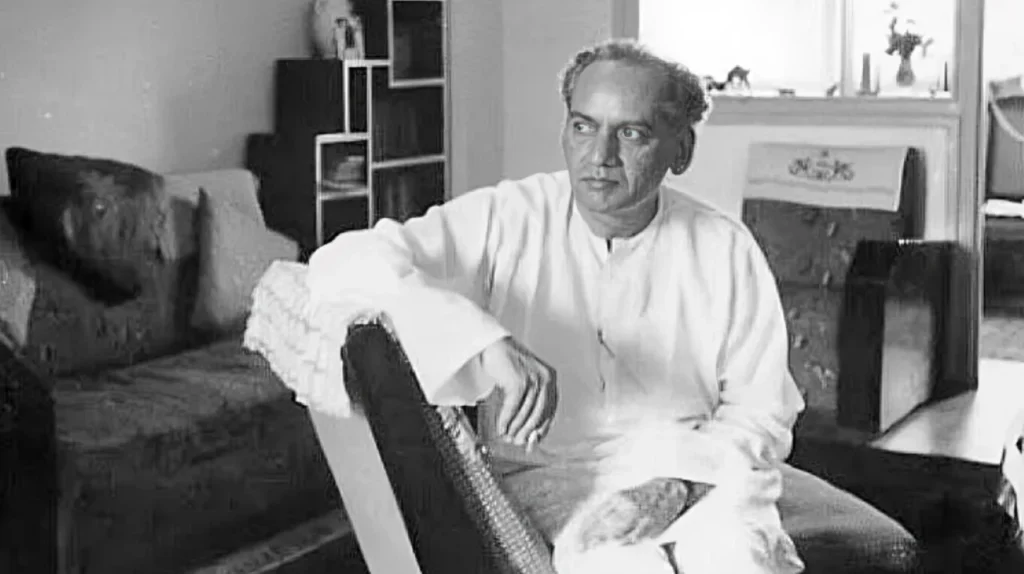
You read the poem aloud in a language you may not fully own, and something in your chest responds before your mind has processed a single metaphor — that gap, that millisecond between sensation and comprehension, is where Faiz has always lived, and it is precisely the space that no political organization has ever successfully colonized.
Faiz Ahmad Faiz held a card. He was a committed member of the Communist Party of Pakistan, attended its meetings, signed its manifestos, went to prison partly because of its enemies, and traveled to Moscow to accept the Lenin Peace Prize in 1962 with genuine conviction. He believed in the apparatus. And yet Theodor Adorno, writing in Aesthetic Theory, published posthumously in 1970, observed that authentic art resists instrumentalization even by its own creators — that the moment a poem truly becomes a poem, it exceeds the intention behind it, slips out from under the hand that wrote it, and begins to mean in directions no party congress could have authorized. Faiz’s own Communist Party, which had programmatic answers for nearly everything, never quite knew what to do with the fact that his verse kept generating longing where it was supposed to generate resolve, and kept finding beauty in exile where it was supposed to find only injustice.
This is not a small contradiction. Every serious revolutionary tradition from the Jacobins forward has harbored a deep suspicion of the aesthetic impulse, because beauty is ungovernable in the exact way that effective political organization cannot afford. Stendhal called beauty a promise of happiness, which sounds like a recruiting slogan until you realize that happiness, as a category, is structurally incompatible with the discipline of deferred gratification that mass movements require of their members. The poem that makes you ache for the beloved’s return does not also make you willing to wait another decade for the dictatorship of the proletariat. Faiz understood this tension without resolving it, which is why his most politically committed work — the poems written inside Lahore’s Montgomery Jail between 1951 and 1955, collected in Dast-e Saba — reads not as propaganda sharpened to a point but as grief expanding in all directions simultaneously.
What survived, then, is not the movement. The Communist Party of Pakistan was formally dissolved, its cadres scattered, its ambitions slowly absorbed into the various authoritarian and neoliberal settlements that redrew South Asian political geography across the second half of the twentieth century. The specific historical formation that gave Faiz’s poems their occasion is gone, and most of the causes those poems named are unresolved in ways that would have devastated him. What remains is the language itself, severed from its institutional host, circulating freely through contexts its author never imagined — sung at anti-military protests in Lahore in 2007, chanted outside the Indian Parliament, read by Palestinian poets who discovered in Urdu a grammar of dispossession that matched their own. The poems did not survive because they were flexible enough to mean anything; they survived because they were precise enough to mean something that outlasted the specific grievance.
Adorno’s deeper argument was that this kind of survival is itself political, that a work which cannot be fully appropriated by any cause, including the cause it was written for, performs a kind of resistance simply by remaining irreducibly itself. Faiz’s formal choices — the ghazal’s ancient architecture of desire and separation, the radif’s insistent return, the way classical Persian and Arabic imagery was rewired to carry twentieth-century urgency — meant that every attempt to reduce his poems to a slogan encountered the poem’s own resistance, its surplus of feeling that exceeded the message. Beauty, in his hands, was never decorative; it was the form that made the content undeniable without making it manageable, and the poems endure because that particular quality — the power to be felt before it can be argued with — belongs to no party, answers to no manifesto, and cannot be jailed.
✊ Voices That Refuse to Be Silenced
Faiz Ahmad Faiz wrote poetry from prison cells and exile, transforming personal suffering into collective resistance. His verses belong to a long tradition of art that confronts power, speaks truth to oppression, and refuses silence. These related articles explore the deep bond between creative expression, political struggle, and the enduring human need for liberation.
Shelley and the Defence of Poetry: Poets as Legislators
Percy Bysshe Shelley declared poets the unacknowledged legislators of the world, insisting that poetry holds a unique power to shape moral and political imagination. His Defence of Poetry, written in passionate response to utilitarian dismissals of art, argues that verse awakens empathy and kindles the revolutionary spirit. Like Faiz, Shelley believed that the poet’s voice carries responsibilities far beyond aesthetic pleasure.
GO TO THE SELECTION: Shelley and the Defence of Poetry: Poets as Legislators
Pablo Neruda: Life and Works
Pablo Neruda transformed the Spanish language into an instrument of love, grief, and fierce political commitment, much as Faiz did with Urdu. Persecuted for his Communist affiliations, forced into exile, and yet never silenced, Neruda embodies the archetype of the poet as witness and rebel. His life and works illuminate how lyric beauty and revolutionary anger can fuse into a single, devastating voice.
GO TO THE SELECTION: Pablo Neruda: Life and Works
Federico García Lorca: Life and Works
Federico García Lorca fused Andalusian folk tradition with surrealist imagery to create a poetry of blood, desire, and social injustice that the Franco regime ultimately answered with his assassination. His fate stands as one of the most tragic reminders that poetry can be deemed dangerous enough to kill. Exploring Lorca’s life reveals the terrible stakes that political art has historically carried for its creators.
GO TO THE SELECTION: Federico García Lorca: Life and Works
Poetry as a Form of Knowledge: History and Theory
This essay investigates the philosophical claim that poetry is not merely decorative language but a distinct form of knowing, capable of grasping truths that reason and empirical inquiry cannot fully reach. From Plato’s ambivalence to Heidegger’s meditation on the poetic word, thinkers have long debated whether verse opens onto a deeper reality. Understanding this tradition enriches our appreciation of how Faiz’s ghazals functioned simultaneously as art, testimony, and political act.
GO TO THE SELECTION: Poetry as a Form of Knowledge: History and Theory
Discover the Cinema of Resistance on Indiecinema
If Faiz Ahmad Faiz’s poetry moves you toward art that speaks truth to power, Indiecinema is your next destination. Our streaming platform brings together independent and world cinema that carries the same spirit of resistance, beauty, and uncompromising vision you find in revolutionary verse. Explore our catalog and let the films speak where words leave off.
👉 EXPLORE THE CATALOG: Watch Indie Films in Streaming
A vision curated by a filmmaker, not an algorithm
In this video I explain our vision

