
The Moment Before the Poem Arrives
The train has stopped between stations and no one knows why. The lights flicker once, hold, and the carriage settles into an unfamiliar quiet — not the quiet of an empty room but the quiet of suspended motion, of time briefly uncoupled from its own machinery. You look at your hands. You look at the window, which now reflects the carriage interior back at you rather than showing you the world outside. And then, from somewhere you cannot locate, a phrase arrives. Not a thought you were pursuing. Not the continuation of something you were already turning over. A phrase, complete, with its own weight and cadence, that seems to have been waiting just outside the threshold of your attention until this moment of stillness gave it permission to cross.

You did not write it. That is the strangest part. It arrived already formed, already yours, and yet you cannot claim to have made it any more than you can claim to have made the feeling that precedes a memory. It carries the temperature of recognition — of something known before it was understood. You reach for your phone, or a receipt, or the back of your hand, because whatever this is, it cannot be allowed to dissolve back into the silence that produced it.
This is not a mystical experience. It is, in fact, an ordinary one. The peculiarity lies only in how seldom we pay attention to it, how quickly the resumed motion of the train or the return of the electricity or the resumption of the conversation covers it over again. But in that interval, something happened that has no adequate name in the vocabulary of productivity, of information, of the organized pursuit of meaning. Something arrived that preceded your understanding of it.
Percy Bysshe Shelley, writing in 1821 in what would become one of the most consequential prose arguments in the English language, was trying to describe exactly this. A Defence of Poetry was composed in response to Thomas Love Peacock’s satirical essay The Four Ages of Poetry, which had argued with cheerful rationalist confidence that poetry was a relic of primitive thought, useful once, now superseded by science and philosophy, the intellectual equivalent of a man who insists on travelling by horse while the steam engine exists. Shelley’s response was not defensive in the petty sense. It was foundational. He was not arguing that poetry deserves a place alongside other human activities. He was arguing that it precedes them — that it is the condition of possibility for understanding itself, not its decoration.
But Shelley did not begin with argument. He began with phenomenology, with the texture of experience before theory touches it. The mind in the act of creation, he wrote, is as a fading coal, which some invisible influence, like an inconstant wind, awakens to transitory brightness. The metaphor is precise in a way that rewards attention: not a fire you light deliberately, not a controlled combustion, but the unpredictable resurgence of something already present, already warm, that an external breath — accident, stillness, interruption — momentarily illuminates. The poet, on this account, is less an architect than a receiver. Less a maker than a witness to making.
What makes this claim radical is not its mysticism but its epistemology. Shelley is proposing something that runs directly counter to the dominant self-image of modernity: that the deepest forms of knowledge are not the ones we construct through method and accumulation, but the ones that surface through us, unbidden, in the gaps that organized thought leaves open. The phrase that arrived in the silent carriage was not decoration. It was, in Shelley’s terms, a form of apprehension — a way of knowing the world that reason would only catch up to later, if it caught up at all.
The Lost Poet
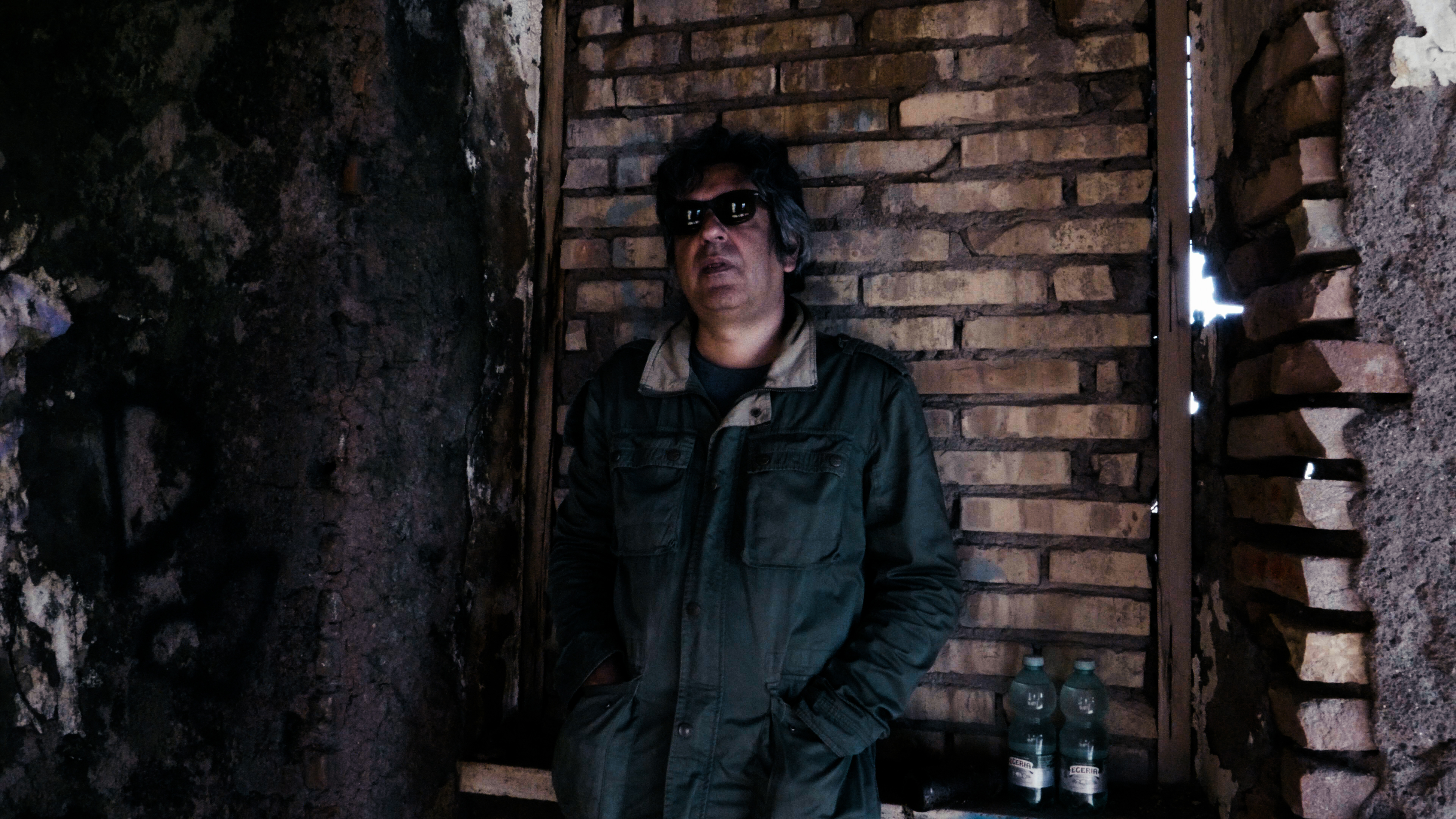
Drama, by Fabio Del Greco, Italy, 2024.
Dante Mezzadri wants to see an old friend, nicknamed the Iguana, whom he has lost sight of for many years, and who has managed to turn their shared youthful passion for poetry into a job, becoming a famous writer and poet. The man escapes from his bourgeois life and his wife to live homeless on the Roman coast, printing and trying to sell his poetry collections. At night he sleeps in a park of old carnival floats, inside a papier-mâché tank, and waits for the opportunity to meet his old friend, who however never shows up for appointments in the places they frequented when they were young, now in ruins. Dante's poetry books do not interest anyone and to support himself he is forced to "change product": he starts selling the infamous "cannibal pill" on behalf of young drug dealers, a new drug that sells like hot cakes and causes sensory and consumerist ecstasy. However, he realizes that this powerful drug is very dangerous for those who take it, he comes into conflict with his ethical conscience and throws all the pills into the sea. However, the dealers want to collect their money.
Shot over a period of 2 years, the film is a reflection on the cultural and artistic rubble of the society in which the protagonist lives, in an increasingly mechanized, consumerist and arid world. Dante Mezzadri is yet another human being who has renounced his inspiration and his creativity, but unlike many he is not willing to give his life to a system that distances him from his true identity. The physical world around him, however, seems constructed in such a way that it seems impossible to escape from this "invisible cage". The enthusiasm of the people he meets is ignited only by sensory gratification, by unreal visions of personal affirmation and success, by "metaverses" that offer an escape into an illusory and destructive reality. The poet's house on the coast, where he met with his friends as a young man, is just a pile of abandoned rubble. What happened to all those who wanted to become poets and ended up becoming something else? Are there internal forces with which that house can be "rebuilt"?
LANGUAGE: Italian
SUBTITLES: English, Spanish, French, German, Portuguese
What Shelley Actually Said, and Why It Terrified People
There is a line near the end of a short, urgent prose manuscript written in 1821 that most people have heard quoted at dinner parties, spray-painted on walls, stitched into tote bags. “Poets are the unacknowledged legislators of the world.” You have seen it framed. You have seen it misread. The word that matters, the word that almost everyone skips over in their enthusiasm, is unacknowledged. Not celebrated. Not crowned. Unacknowledged — which is to say, operating beneath the threshold of official recognition, doing structural work that power would prefer not to name, because naming it would require admitting that law and governance are downstream of something they cannot control.
Percy Bysshe Shelley wrote A Defence of Poetry in 1821 not as a love letter to literature but as a counter-argument to a specific provocation. His friend Thomas Love Peacock had published The Four Ages of Poetry that same year, a satirical essay arguing that poetry was a relic, that civilisation had matured past it, that the rational sciences had superseded the primitive singing of bards. Peacock was being deliberately provocative, but he was also articulating something the utilitarian current of the age genuinely believed: that what could not be measured could not legislate, and what could not legislate was decoration. Shelley’s response was not defensive. It was a detonation.
The argument Shelley actually makes — not the bumper-sticker version, but the structural one — is that moral imagination precedes everything. Before a law is written, someone must be able to imagine the suffering it might prevent. Before a political order coheres, something must have already shifted in the collective capacity to feel another person’s reality as real. Poetry, for Shelley, is precisely that shifting mechanism. It is not ornament applied to an already-functioning civilisation. It is the faculty by which civilisation becomes possible at all. “A man, to be greatly good,” he writes, “must imagine intensely and comprehensively; he must put himself in the place of another and of many others.” This is not a sentiment. It is a theory of causation.
To understand why this terrified people, you have to know where Shelley was writing from. Two years before, in August 1819, a crowd of somewhere between sixty and eighty thousand people had gathered at St. Peter’s Field in Manchester to demand parliamentary reform. Cavalry charged them. Fifteen people died. More than six hundred were injured. The event, sardonically named Peterloo by those who understood the bitter irony of invoking Waterloo, was not a riot that was suppressed. It was a peaceful assembly that was massacred. And the British government’s response was not remorse. Within months, Parliament passed the Six Acts — a package of legislation designed to criminalize radical assembly, restrict the radical press, and make the very act of organising dissent legally dangerous. Voices that had been merely inconvenient became, overnight, prosecutable.
Shelley was not writing from safety. He was writing from exile in Italy, banned from the England he was trying to change, surveilled, estranged from his children by a legal system that judged his atheism and radical politics sufficient grounds to deny him custody. A Defence of Poetry was never published in his lifetime. It appeared posthumously, in 1840, nearly two decades after he drowned in the Gulf of Spezia at twenty-nine. The government did not need to burn the manuscript. They simply needed to wait.
This is why reading the Defence as aesthetic theory, as a pleasant meditation on the pleasures of verse, is not merely a misreading. It is a form of domestication. It takes a document written under political siege, in response to real bodies on real ground at Peterloo, and turns it into a commemorative plaque outside a library. The argument deserved more than that then. It deserves more than that now.

The Legislator Who Leaves No Fingerprints

You are sitting in the gallery of a courtroom, watching nothing dramatic unfold. A judge reads from a precedent established in 1987. A lawyer argues that the defendant’s suffering constitutes what the statute calls “diminished capacity,” and everyone in the room — judge, jury, bailiff, the stenographer whose fingers barely pause — understands intuitively what suffering means as a legal category. They understand it not because the law defined it with sufficient precision, but because something else did, long before the law tried. The emotional architecture that makes “diminished capacity” legible to a human being — the interior knowledge that a person can be so hollowed out by circumstance that their will becomes something other than free — was not constructed in a law school. It was rehearsed, slowly, over centuries, in rooms where people sat alone and read.
This is what Shelley means by “unacknowledged.” Not hidden, not conspiratorial. Simply untraced. The legislators who leave no fingerprints are not invisible because they are covert; they are invisible because the transfer happened so completely that the destination no longer remembers the origin. The moral vocabulary arrived. It settled into the common understanding. And the courtroom proceeded as though it had always been there, as though human beings had always known how to feel their way through another person’s interiority with enough confidence to make legal judgments about it.
Shelley’s argument in the Defence, written in 1821 as a response to Thomas Love Peacock’s dismissal of poetry as a relic of primitive thought, hinges on a precise claim about what the imagination actually does. It is not decoration. It is not the emotional surplus left over after reason has done the real work. For Shelley, imagination is the faculty by which a person temporarily vacates their own perspective and inhabits another’s — and this act, repeated through the reading of poetry across a lifetime, is what produces the moral capacity to care about strangers. He writes that poetry “awakens and enlarges the mind itself by rendering it the receptacle of a thousand unapprehended combinations of thought.” The word “unapprehended” does its quiet work here: the combinations were always possible, but without the imaginative rehearsal that poetry provides, they remain permanently beyond reach.
Martha Nussbaum, writing in Poetic Justice in 1995, arrives at the same structure from a different direction. Her argument is that the “literary imagination” — the trained capacity to follow a character’s inner life with sustained attention and emotional investment — is not a supplementary quality that makes a judge more pleasant to be around. It is a cognitive prerequisite for just judgment. Without it, abstract principles of fairness collapse against the concrete particularity of actual human situations. You cannot apply a law about human dignity if you have never imaginatively inhabited a life in which dignity was systematically denied. The principle floats; the imagination anchors it. Nussbaum traces this through the novel in particular, through Dickens and the utilitarian tradition he was writing against, but the mechanism she identifies is precisely the one Shelley named first: poetry trains the organ of moral sympathy before the moral situation demands its use.
And this is why the courtroom you are sitting in proceeds as it does. The judge who reaches for a concept like “suffering” and finds it already richly furnished — already connected to interiority, to memory, to the involuntary collapse of volition — is drawing on a long imaginative inheritance that no legal document created. The law names it. The poem made it thinkable. The legislation passes through formal channels and carries visible authorship. The prior act of making the human mind capable of receiving that legislation leaves no record, no citation, no fingerprints on the wall.
A Room Where a Film Is Playing and Nobody Calls It Art
There is a man sitting behind a desk that has accumulated, over the years, the weight of every decision he has refused to make personally. The desk itself is a kind of argument — its mass, its dark wood, its stacks of paper organized by someone else — all of it saying: this is not a place where feeling enters. He has learned to read documents the way surgeons learn to cut: with the detachment that makes precision possible. He believes this is professionalism. He has been told this is professionalism for so long that the belief and the instruction have fused into something indistinguishable from character.
Then something happens that has no name in the procedural manual.
A woman enters — not to plead, exactly, but to be present in a way that changes the air pressure of the room. She does not argue her case with the logic he is trained to evaluate. She speaks about her son with a specificity that is almost embarrassing, the kind of detail that belongs to private life and has no business crossing the threshold of an institutional chamber. The color of a jacket. A habit of laughing before the joke is finished. Things that prove nothing, that cannot be entered into evidence, that exist entirely outside the architecture of procedure. And yet something in him shifts. Not dramatically — he is not the kind of man who weeps, or who would allow himself to be seen weeping. But the shift happens. Somewhere beneath the desk, beneath the professional posture, beneath the accumulated weight of every precedent he has memorized, something moves that has not moved in years. He makes a decision that deviates from the expected outcome by a margin so small that no one reviewing the file afterward would call it irregular. But he knows. The deviation is real. It came from somewhere that reason did not authorize.
This is precisely what Shelley meant, and it is more precise than it first appears. In the Defence of Poetry, written in 1821 and unpublished until 1840, Shelley does not claim that poets stand at podiums and issue commands. He claims something stranger and more accurate: that imagination is the faculty through which one human being becomes capable of recognizing another as fully real. “The great instrument of moral good,” he writes, “is the imagination.” Not argument. Not law. Not the cathedral architecture of ethical philosophy. Imagination — the same faculty that a functionary uses, against his training, when he allows a woman’s specificity to reorganize his perception of justice.
The man behind the desk did not read a poem that morning. He is not thinking about art. He would probably resist the suggestion that what just happened to him has anything to do with culture or creativity. And yet the capacity he just exercised — the capacity to feel the reality of another person as a pressure upon his own choices — was built by everything he has ever encountered that expanded him beyond himself. Every story he was told as a child. Every face in a photograph that stopped him without explanation. Every piece of music that arrived at a moment when argument had already failed. These are the invisible legislators. They did not announce themselves. They did not present credentials. They worked in the way that water works on stone: without declaration, without schedule, accumulating their effect in the silence between intentions.
Percy Bysshe Shelley understood something that institutional life is organized, at great expense, to prevent: that the imagination does not wait for permission to act upon us. It has already legislated by the time we arrive at the moment of decision. The man behind the desk thinks he made a professional judgment. He did not. He ratified, belatedly, something that had already been decided in a part of him that no procedural manual has ever reached.
The Violence of Not Being Imagined
There is a particular kind of erasure that does not announce itself. It does not arrive with fire or edicts. It arrives as silence, as the simple absence of a name in the record, as the unwritten life that leaves no trace precisely because no one with a pen thought it worth the effort of notation. You do not feel it as violence because you are never there to feel it. You are simply not rendered. You do not exist in the imagination of those who hold power, and therefore, in every practical and political sense, you do not exist at all.
Shelley understood something about this, though he did not follow the thought to its darkest consequence. In the Defence of Poetry, written in 1821, he observes that the periods of poetry’s decline are not merely aesthetic failures — they are moral ones. When imagination contracts, when the capacity to feel the life of another diminishes in a civilization, what follows is not simply bad verse. What follows is cruelty made administratively possible. The two are not coincidental. They are structurally related. A society that stops practicing the art of rendering other lives imaginable is a society that has begun, quietly, to prepare itself for atrocity.
The scholar Saidiya Hartman spent decades trying to recover the lives of enslaved Black women in the nineteenth-century Atlantic world, women who appeared in the archive only as property, as cargo weight, as tallied units of loss. In her work Lose Your Mother and later Wayward Lives, Beautiful Experiments, she developed what she called critical fabulation — a method of constructing, from the fragments the archive permitted, the interior lives that the archive was specifically designed to suppress. The archive was not neutral. It was a weapon. It recorded what power wished to preserve and left to disappear everything that might complicate power’s self-image. Hartman’s argument is not sentimental. It is structural: the absence of language for a life is not an accident. It is a policy.
This is the shadow inside Shelley’s thesis. He argued that poets are the unacknowledged legislators of the world, that imagination is the engine of moral expansion. But the inverse is equally true and considerably more brutal: those who are never made imaginable by language are legislated out of moral consideration entirely. The women of the Romantic period — and there were many, more than the canon long admitted — wrote in a cultural atmosphere that regarded female intellectual ambition as either pathetic or dangerous. Felicia Hemans sold more copies than Byron in her lifetime. She was read everywhere and remembered as a domestic ornament, her work categorized as feeling rather than thought, sentiment rather than vision, precisely because the critical apparatus was not equipped — or willing — to imagine a woman’s mind as a legislating one.
The colonial suppression of oral traditions operated on the same logic, only with greater deliberate force. When the British administration in West Africa, India, and the Caribbean systematically delegitimized oral poetic forms — dismissing griot traditions, bardic lineages, the intricate mnemonic structures through which entire cosmologies were transmitted — it was not simply destroying culture as a collateral consequence of empire. It was destroying the mechanism by which those cultures rendered themselves imaginable to themselves. Cut a people off from the forms in which they narrate their own existence, and you have not merely silenced them. You have begun the process of making them unimaginable, even to their own children.
Hartman’s concept of the afterlife of slavery names something precise: the way that the original act of erasure propagates forward through time, continuing to organize who is legible and who is not, long after the explicit structure that produced it has been formally abolished. The imagination, Shelley insists, is the instrument of moral life. Which means its absence — its systematic withdrawal from certain lives — is not a passive omission.
A vision curated by a filmmaker, not an algorithm
In this video I explain our vision
When the Poet Becomes the State

There is a moment you recognize even if you have never stood at a podium. A man adjusts the microphone, clears his throat, and begins to read. The words are beautiful — genuinely beautiful, the kind that once moved people to weeping or to fury. But as he reads them aloud in that hall, before those flags, under those lights arranged to flatter official solemnity, something has left the room. The syllables are all correct. The rhythm is intact. And yet you are watching a taxidermied thing, perfectly preserved and absolutely dead.
This is what happens when the poet accepts the invitation.
Shelley was precise about this, almost prophetically so. His argument in the Defence was not simply that poets happen to influence the moral imagination of their age — it was that this influence operates through invisibility, through indirection, through the slow seepage of language into consciousness before consciousness can defend itself. The legislative power of poetry works, in his account, precisely because it carries no badge, no seal, no official mandate. It enters through the side door of feeling. The moment you give it a front door, a plaque, a ceremony, you have created something categorically different. You have created performance in the place of penetration.
The Soviet Writers’ Union, established in 1932 under Stalin’s cultural reorganization, understood this with terrifying clarity — and then deliberately destroyed it. Writers were not simply encouraged to serve the state. They were institutionally required to do so, through a doctrine called Socialist Realism that mandated optimism, heroism, and historical inevitability as formal aesthetic criteria. What resulted was not poetry in Shelley’s sense. It was poetry’s corpse dressed in poetry’s clothes. The Union’s membership conferred privileges — housing, publication, access to food supplies in times of scarcity — and so the transaction became explicit. Language for bread. Vision for a dacha. Osip Mandelstam, who refused, was arrested twice, died in a transit camp in 1938, and had his manuscripts hidden in his wife’s memorized mind because there was no other safe place for them. Nadezhda Mandelstam’s memoir Hope Against Hope, published in 1970, is among other things a forensic account of what official literary status costs: the precise weight of the soul surrendered per bureaucratic privilege received.
The Poet Laureate tradition in England carries a more genteel version of the same corruption. Its origins in the seventeenth century were already entangled with court flattery, and the appointment has oscillated ever since between genuine poets who quietly ignore its ceremonial obligations and figures whose selection reflects political legibility rather than poetic force. The question is never whether the individual writer is talented. The question is what the appointment does to the relationship between their language and its audience. Once you are the official voice, you are no longer the voice that speaks from outside the structure of power. You are the structure, speaking through a human instrument.
And this is the inversion Shelley feared most, even if he did not name it in these terms: the poet who becomes the state does not merely lose independence. The poet becomes a specific kind of lie — the lie that the state has a soul, that power is capable of beauty, that the machinery of governance participates in the same order of truth as genuine imagination. It is a more dangerous untruth than simple propaganda, because it wears the face of the real thing.
The man at the podium finishes reading. There is applause, measured and appropriate. He folds his papers with practiced hands. Somewhere, in a different room entirely, in a language that has not yet been invited anywhere, someone is writing something the state has not yet thought to ask for. That is where the unacknowledged legislation is still happening.
Imagination as Infrastructure
There is a moment that happens in classrooms so routinely it has stopped being noticed. A teacher asks what a poem means, and the student — twelve, maybe thirteen, sitting near the window — goes quiet not from boredom but from something closer to panic. Not because they have no answer, but because they have too much of one, a whole pressurized interior that has never been given the tools to become language. The feeling is there. The words are not. And after a few seconds of silence, the lesson moves on.
Shelley would have recognized that silence as a civilizational symptom. His argument in A Defence of Poetry, written in 1821 though not published until 1840, is not — whatever the caricatures insist — a hymn to sensitivity. It is a structural claim. The imagination, for Shelley, is not an ornament to human life but its organizing faculty, the capacity by which we extend the reach of our sympathy beyond the immediate, the self-interested, the already-known. Without it, reason becomes what he called “a sword without a scabbard” — precision in the service of nothing, intelligence that cannot choose its own ends. This is not romanticism in the pejorative sense. It is cognitive architecture.
Which is exactly why Antonio Gramsci, writing a century later from a prison cell in fascist Italy, arrived at a structurally identical conclusion from a completely different direction. For Gramsci, the decisive terrain of political power was not primarily the state apparatus but what he called hegemony — the organization of consent, the management of what people are able to imagine as possible. Those who control the stories, the symbols, the emotional and aesthetic vocabulary of a culture do not need to govern by force. They govern by horizon. They determine what it even occurs to people to want. This is not manipulation in the crude sense. It is infrastructure. It is the road system of thought.
When a government systematically withdraws funding from arts education — as happened in England with extraordinary consistency after 2010, when the English Baccalaureate was introduced in a form that structurally deprioritized creative subjects — it is not making a neutral administrative decision about resource allocation. It is dismantling infrastructure. Between 2010 and 2023, entries for creative arts GCSEs fell by roughly forty percent. That number does not represent a shift in student interest. It represents a policy that made explicit what the culture had long implied: that the imagination is a luxury, a supplement, something you return to once the serious work is done. What Shelley and Gramsci both understood is that this is precisely backwards. The imagination is not the reward for completing the curriculum. It is the precondition for having anything to do with the curriculum at all.
The boy in the classroom who has grown into a young man carries that old silence with him. He can solve for x. He can recite dates. But when something happens to him — a loss, a fury, a love he cannot explain — he has no internal vocabulary to meet it. He was never given one. So he borrows the ready-made language that the culture supplies: the language of transaction, of performance, of irony as armor. It is not that he is inarticulate. It is that the instrument was never tuned. And the tragedy is not personal but structural, because that instrument — the capacity to name inward life, to imagine another’s experience as real, to hold two contradictory truths in the same breath — is precisely what Shelley meant when he said poets were the unacknowledged legislators of the world. Not that they pass laws. That they build the space inside which laws become thinkable, and inside which the question of what kind of world we want remains a question at all, rather than a given.
The Unfinished Legislation
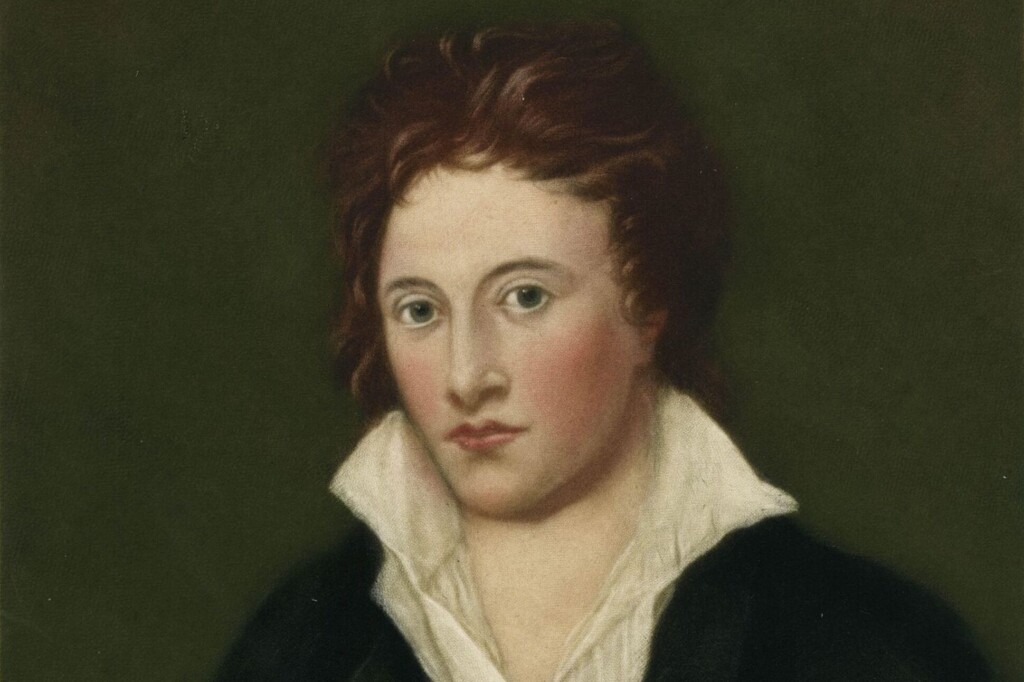
There is something already written inside you that you did not choose and cannot fully read. Not yet. You know this the way you know a word is on the tip of your tongue — the knowledge precedes its own articulation, hovers just outside the reach of conscious retrieval. Think of the novel you read at sixteen, probably too young for it, probably in the wrong season of your life for it to land where it was supposed to. You did not understand it then. You understood something else, something adjacent, something that cracked open a room in you that has never since closed. Years later, grief arrived — real grief, the kind that has a face and a date — and you discovered, with a shock that felt almost like betrayal, that you already had a language for it. Someone had given it to you in advance. You had been legislated without your consent, shaped by a syntax of feeling that preceded the feeling itself.
This is exactly what Shelley could not close his argument around, and he was honest enough not to pretend otherwise. The Defence of Poetry, written in 1821 and left unpublished until 1840, five years after his death, trails off precisely because its central claim cannot be finalized: poetry does not act on the self that reads it now but on the self that does not yet exist. The legislation is written in a future tense that grammar barely accommodates. You cannot know what has been planted in you until it blooms under conditions you could not have anticipated when you first encountered the poem, the song, the image. The unacknowledged lawmakers make their laws for citizens who are still becoming.
Walter Benjamin understood something adjacent to this when he wrote, in his Theses on the Philosophy of History composed in 1940, that every generation is endowed with a weak messianic power, a claim upon the past that the past itself somehow anticipated. It is weak because it is not guaranteed, not triumphant, not the thunderclap of revelation. It is a capacity — fragile, contingent, easily squandered — to redeem what was unfinished by imagining forward with sufficient intensity. The poet who writes today is addressing a reader who does not yet exist, and that reader, when they arrive, will carry a weak messianic power of their own: the ability to recognize, across time, what was meant for them. The transaction is never simultaneous. It always happens across a gap that cannot be closed, only bridged by the act of reading itself.
Think of the song that reached you at the wrong moment — or perhaps the precisely right moment disguised as the wrong one. You were not ready. You became ready by having heard it. The sequence cannot be reversed or fully explained. Something in the arrangement of words or notes found a structure in you that it then modified, the way water finds a channel and simultaneously deepens it. You did not choose this. The legislation preceded your consent. And yet it is the most intimate thing in you, more yours than most of the opinions you hold consciously and defend in conversation.
Shelley wrote that poets are the mirrors of the gigantic shadows which futurity casts upon the present. Not the light itself. The shadows. The shapes of what is coming, cast backward onto the wall of now, legible only to those who have already been changed enough to read them. You have been changed. You carry legislation you did not draft and have not fully interpreted, written into you by someone who may have been dead for centuries before you were born, someone who was themselves trying to articulate something they could feel but not quite see, reaching forward through language toward a reader they could only imagine, which is to say, toward you, which is to say, toward whoever you have not yet finished becoming.
🔥 The Poet as Prophet: Language, Power, and Vision
Shelley’s Defence of Poetry raises timeless questions about the role of imagination in society and the poet’s claim to moral and political authority. These articles explore the deep roots of that vision, tracing how poetry, consciousness, and philosophical rebellion have shaped Western thought.
The Cursed Poet: History and Figures
The figure of the cursed poet — from Villon to Rimbaud — embodies the tension between visionary power and social marginalization that Shelley theorized in his Defence. These poets saw themselves as legislators precisely because society refused to recognize their authority. Exploring their biographies illuminates how the romantic ideal of the poet-prophet was lived, suffered, and transformed into literature.
GO TO THE SELECTION: The Cursed Poet: History and Figures
Poetry as a Form of Knowledge: History and Theory
Shelley’s claim that poetry is a form of superior knowledge finds direct resonance in the long philosophical tradition that treats verse as a mode of understanding irreducible to reason alone. This article traces how thinkers from Plato to the Romantics debated whether poetry reveals truths inaccessible to science or logic. It provides an essential theoretical backdrop for anyone seeking to understand Shelley’s audacious epistemological claims.
GO TO THE SELECTION: Poetry as a Form of Knowledge: History and Theory
American Transcendentalism: History and Thought
American Transcendentalism drew heavily on the Shelleyan conviction that the poet-philosopher occupies a privileged relationship with nature and moral truth. Emerson and Thoreau inherited and transformed the Romantic idea of the legislating imagination into a distinctly American spiritual and political project. Understanding this movement clarifies how Shelley’s ideas crossed the Atlantic and took root in new cultural soil.
GO TO THE SELECTION: American Transcendentalism: History and Thought
Johann Wolfgang von Goethe: Life and Works
Goethe and Shelley were near-contemporaries who both grappled with the poet’s responsibility toward humanity and the transformative power of artistic creation. Goethe’s life and works illuminate the broader European Romantic context in which Shelley composed his Defence, revealing shared anxieties about reason, myth, and the redemptive role of the creative spirit. Reading Goethe alongside Shelley deepens our grasp of what was truly at stake in Romanticism’s philosophical ambitions.
GO TO THE SELECTION: Johann Wolfgang von Goethe: Life and Works
Discover the Cinema of Ideas on Indiecinema
If Shelley’s vision of poetry as a force that transforms the world speaks to you, independent cinema carries that same rebellious and visionary spirit. On Indiecinema you will find films that think, provoke, and illuminate — the true inheritors of the poetic legislators. Explore our streaming catalog and let independent cinema change the way you see.
👉 EXPLORE THE CATALOG: Watch Indie Films in Streaming
A vision curated by a filmmaker, not an algorithm
In this video I explain our vision

