
The Island Before the First Stone Is Thrown
You are standing on warm sand with forty other boys and the plane that brought you here is already gone, swallowed by the ocean’s indifference, and for exactly one moment — before hunger, before the first argument about who gets to speak — the island feels like a gift. The trees produce fruit. The lagoon is impossibly blue. Someone suggests they should have a meeting, and every boy nods, because meetings are what adults do, and adults are what you are supposed to become, and the whole architecture of that expectation arrives on the beach completely intact even though no adult is watching. That is the detail most readers pass over without pausing: the rules did not need to be imposed. They were performed, voluntarily, by children who had only recently left classrooms and dinner tables, as though civilization were a costume they were afraid to take off in the dark.

William Golding published his first novel in 1954, nine years after he watched the Second World War dismantle every comfortable European assumption about what educated, Christian, Western humanity was capable of doing to itself. He had served in the Royal Navy, participated in the D-Day landings, and come away with something colder than pessimism — a clinical suspicion that the barbarism erupting across Europe between 1939 and 1945 was not an aberration produced by exceptional monsters but the predictable output of ordinary human beings given permission to stop performing. The island in the novel is not a metaphor for childhood. It is a controlled experiment: remove the audience, and observe what remains.
What remains, Golding insists, is not innocence waiting to be corrupted by circumstance. The philosopher Jean-Jacques Rousseau spent much of his 1762 treatise Emile constructing the idea of a natural goodness in the human child that society systematically ruins — a vision so seductive it became the philosophical foundation of progressive education, of Romantic poetry, of almost every modern theory that locates the problem outside the self. Golding read that tradition and concluded it was a beautiful lie told by people who had never actually spent time unsupervised with a group of frightened boys. The savagery that emerges on the island does not arrive from outside. It surfaces from within the same boys who, on the first page, are already sorting themselves into leaders and followers, already deciding whose voice carries weight and whose does not.
The conch shell they find and use as a speaking instrument is not invented by the boys — it is imported, conceptually, from the world they left behind. The one who holds it has the right to speak. The logic is parliamentary, recognizable, almost touching in its fidelity to a system none of them designed and all of them instinctively reproduce. Sociologist Erving Goffman spent much of his 1959 work The Presentation of Self in Everyday Life demonstrating that social order is not a natural condition but a dramaturgical achievement — a collaborative performance in which every participant maintains the fiction of the role they have accepted. The boys on the beach are Goffman’s actors without a theater, improvising the set from memory, terrified of the silence that would follow if someone broke character first.
What makes the early chapters of the novel so quietly devastating is precisely that everything looks chosen. The election of a leader feels democratic. The division of labor feels reasonable. The older boys defer, the younger ones follow, and the whole arrangement has the texture of consent. But consent requires the continuous possibility of withdrawal, and on this island, in this group, at this age, no one has the psychological vocabulary to recognize that what they are consenting to is not a system of fairness but the first rough draft of a hierarchy that will eventually produce its own enforcement mechanisms, its own internal logic, its own hunger for a body to place outside the boundary of protection.
Golding's Biographical Wound and the Novel's True Origin
You sit in a classroom in the 1930s, watching boys parse Latin verbs, and you believe, the way a young teacher believes because he has not yet seen enough, that education is a kind of inoculation. William Golding believed this. He taught schoolboys in Salisbury at Bishop Wordsworth’s School before the war, and he would later say that the experience taught him more about human nature than any book he had ever read — not because the boys were monstrous, but because he could see, even in their ordinary cruelties on the playground, exactly how thin the social film truly was.
Then the war came and stripped the metaphor entirely away. Golding enlisted in the Royal Navy in 1940 and spent five years moving through the machinery of industrialized violence. He was present at the sinking of the Bismarck. He commanded a rocket-launching craft during the Normandy landings on June 6, 1944, which means he watched young men — not allegorical figures, not symbols, but actual bodies with names — die in water that was warm with their own blood before it reached the shore. This is not a background detail that critics may note and pass over. It is the epistemological foundation of the entire novel. Golding did not imagine evil. He administered it, witnessed it, and survived it, which is its own particular form of damage.
What distinguishes Lord of the Flies, published by Faber and Faber in September 1954 after being rejected by twenty-one publishers, is precisely this empirical weight pressing against every page. Most dystopian literature of the postwar period was constructed from ideological anxiety — from fear of systems, of totalitarianism, of the machinery of the state. Golding was not afraid of systems. He was afraid of what he had seen men do voluntarily, with enthusiasm, once the systems collapsed or looked away. The distinction is philosophically enormous. A fear of systems locates evil externally, in structures that can in principle be dismantled or reformed. What Golding brought back from the North Atlantic and the beaches of Normandy was something that had no address, no institution, no correctable mechanism behind it.
Sigmund Freud had already named this zone in 1930 in Civilization and Its Discontents, arguing that culture is not the natural state of the human animal but a negotiated suppression of drives that remain permanently insurgent beneath it. Golding had almost certainly read Freud, but he did not need the theory. He had the evidence. What he did with that evidence was make it legible through the oldest literary technology available: he put children on an island and removed every adult, every uniform, every institutional memory that might have held the suppression in place. The children in the novel are not metaphors for adults. They are a controlled experiment in what adults actually are when the negotiation fails.
The twenty-one rejections the manuscript accumulated before reaching Faber reveal something uncomfortable about the cultural moment into which the novel was trying to be born. The mid-century West was engaged in a massive collective project of rehabilitating its own image after the Holocaust, after Hiroshima, after the revelations of what ordinary people had done to other ordinary people under conditions of permission and anonymity. Publishers wanted stories of resilience, reconstruction, the human spirit reasserting itself. Golding was offering something that made that reassertion impossible to sustain without bad faith. One rejection letter reportedly called the novel absurd and uninteresting, which is perhaps the most precise document of cultural denial that the decade produced.
What Golding understood, because he had stood on the bridge of a vessel and given orders that killed people, was that the distance between civilization and its opposite is not measured in centuries or institutions but in hours, and that the most dangerous lie a culture can tell itself is that the men who crossed that distance were different in kind from the men who did not.

What Rousseau Got Wrong and Why We Still Believe Him
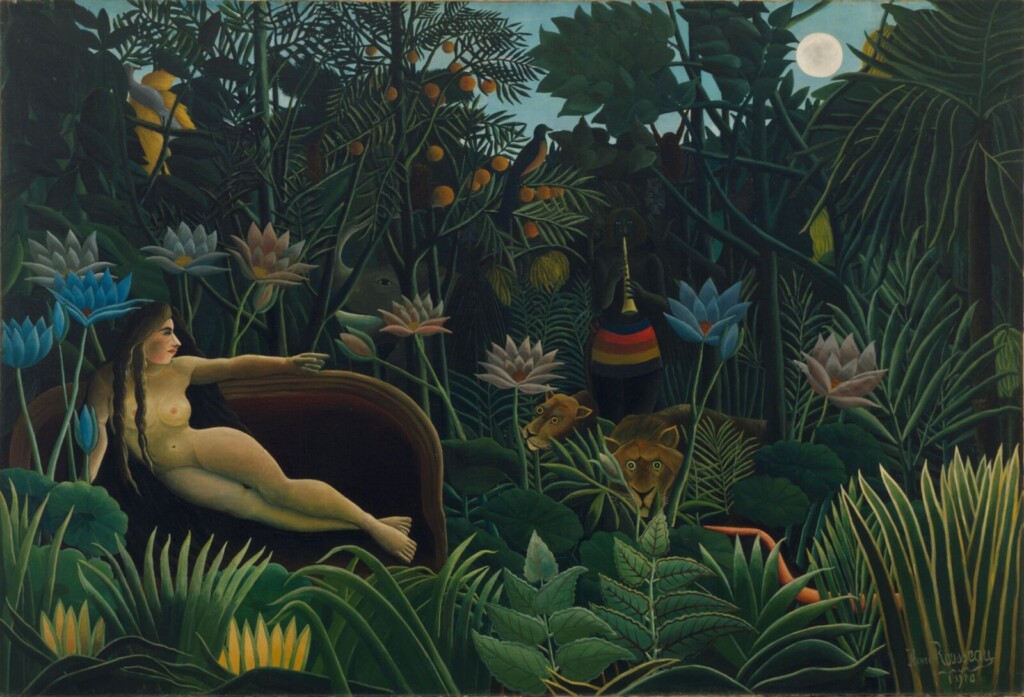
You already know the story you prefer. Children, left to themselves, would build something gentle — they would share, negotiate, tend to the weak. The violence, when it comes, must have arrived from somewhere: bad adults, broken homes, the contaminating pressure of civilization itself. This is not naivety. It is a philosophical position with a precise birthday, and that birthday is 1762, the year Jean-Jacques Rousseau published his Emile and, in the same breath, offered Western modernity its most seductive lie — that the human being arrives in the world uncorrupted, and that society is the only instrument of his ruin.
Rousseau’s architecture is elegant enough to be almost irrefutable. If the child is naturally good, then evil requires an external explanation, a source outside the self, a contaminating vector that can in principle be identified and removed. This is enormously comforting because it preserves the fantasy of a recoverable original state. Purify the environment, restructure the institutions, eliminate the pathological influences — and goodness, suppressed but never extinguished, will re-emerge. An entire tradition of progressive education, from Pestalozzi through A.S. Neill’s Summerhill experiment in 1921, ran on this fuel. Even Freud, who had no illusions about the unconscious, located the mechanism of damage in the family structure, in the specific failures of specific adults, not in the child’s own constitution.
Golding had read his history. He had also taught schoolboys for years at Bishop Wordsworth’s School in Salisbury, and what he encountered in classrooms was not innocence awaiting liberation but something considerably more volatile — a capacity for cruelty that did not require adult instruction to become operational. The novel he wrote was therefore not primarily a story about what war does to children. It was a direct philosophical argument addressed to Rousseau across two centuries, and its real provocation is structural: the island is designed to be perfect. No adults. No inherited hierarchies. No institutional corruption. Every condition the Rousseauian tradition had ever demanded is satisfied from the first chapter, and the result is a severed pig’s head mounted on a stick.
What makes this genuinely unsettling — rather than merely grim — is that the boys are not deprived children, not abused children, not children who have been systematically brutalized before the story begins. They are choir boys and school prefects, products of precisely the kind of organized civilization Rousseau blamed for mankind’s deterioration. And yet the violence they produce is not a rebellion against their schooling. It is something that erupts through it, beneath it, as if the grammar-school diction and the uniforms were always only a membrane stretched over something that had been waiting. Roger throws stones at the littluns in the second chapter, and he misses — not because he lacks the impulse, but because the conditioning is still fresh. The space around Henry is, Golding writes, “the taboo of the old life.” It takes days, not decades, for that space to close.
This is the specific point at which Golding breaks from his century’s dominant therapeutic instinct. The assumption embedded in most twentieth-century social thought — from the Frankfurt School’s analysis of the authoritarian personality to the entire postwar expansion of developmental psychology — is that pathology is always downstream of experience, that you must locate the wound inflicted from outside before you can explain the damage. Golding refuses this logic without becoming a reactionary, which is the difficult move most of his critics have missed. He is not arguing for original sin in any theological sense. He is arguing for something harder to metabolize: that the capacity for organized cruelty is not an accident introduced into human nature but a feature of it, available under the right conditions to children who have never known deprivation, who have every reason to cooperate, and who choose, incrementally, not to.
The Conch as Social Contract and Its Structural Lie
You already know what the conch is before anyone explains it to you. You have seen its equivalent on every committee table, in every parliamentary chamber, in every schoolroom where the teacher designates one child to speak while the others are supposed to listen. The object is not the point. The agreement to treat the object as meaningful is the point, and that agreement is the most fragile architecture human beings have ever constructed.
When Ralph first lifts the conch on the beach, he does not invent authority. He discovers that authority was never a property of persons or institutions but a performance ratified by an audience. Thomas Hobbes understood this in 1651 with a precision that still embarrasses political theorists who prefer to think of governance as something more noble than a protection racket with good public relations. In Leviathan, the sovereign’s power is not God-given or natural — it is the product of frightened individuals surrendering their autonomy in exchange for the promise that someone will stop them from killing each other. The conch is Golding’s translation of that contract into something a child can hold, something warm and ridged and real. The boys do not grant Ralph authority because he is wise or strong. They grant it because the conch produces a sound that travels, because it called them together when they were scattered and alone, because the alternative — silence, dispersal, no agreement at all — was more terrifying than submission.
What the novel then performs, with the patience of a geologist watching erosion, is the demonstration that symbolic authority has no tensile strength of its own. It is entirely dependent on the continuous renewal of belief, and belief is not a stable substance. It metabolizes. It responds to fear, to hunger, to the presence of someone who offers a different and more visceral form of protection. By the time the boys are deep in the island’s interior, painting their faces and organizing around Jack’s promise of meat and belonging, the conch has not lost any of its physical properties. It is still smooth. It still sounds. What it has lost is its congregation. Hannah Arendt, writing in 1951 in The Origins of Totalitarianism, made a distinction that most readers of political philosophy walk past without stopping: power, she argued, is never the property of an individual but belongs to a group and remains in existence only so long as the group keeps together. The moment that coherence dissolves, power evaporates — not weakens, not diminishes, but vanishes entirely, the way a temperature vanishes rather than relocating. What Golding stages among children on a tropical island is precisely this: not the corruption of power but its ontological dependence on collective assent, and the terrifying speed with which that assent can be redirected.
The structural lie concealed inside every Hobbesian arrangement is that once the contract is established, it becomes self-sustaining. It does not. Every morning that citizens obey, they are re-signing the document. Every morning that they could choose otherwise and do not, they are renewing a covenant that has no enforcement mechanism beyond their own continued participation. The conch does not protect itself. Ralph cannot compel anyone to recognize it. When Piggy holds it at Castle Rock and demands to be heard, he is not appealing to an institution — he is appealing to a memory of an institution, to the ghost of a consensus that the other boys have already abandoned. The boulder that kills him does not destroy the conch’s authority; it simply makes visible what had already become true. The authority was gone before the fall. The violence only announced an absence that had been growing for days, quiet and unremarked, the way a debt accumulates before the creditor arrives.
What this means for every flag planted, every oath sworn, every constitution ratified with ceremony and ink, is something most civic education actively works to prevent you from thinking.
Ralph, Jack, and the Two Faces of Every Institution
You already know which one you are. In a meeting where the agenda is slipping, where voices are rising and the original purpose of the gathering has dissolved into something rawer and more exciting, you feel the pull in two directions simultaneously — toward the whiteboard where the plan still lives, and toward the man standing on the table making everyone laugh. That doubling is not a moral failure. It is the structural condition of every institution that has ever tried to govern human beings.
Golding built his two central figures not as opposites but as administrative types, and the distinction matters enormously. Ralph holds the conch. He calls assemblies. He insists on the signal fire, on shelters, on the systematic maintenance of conditions for rescue. His entire psychology is procedural — he believes, with a faith that is almost religious in its stubbornness, that if the correct forms are preserved, the correct outcomes will follow. This is not naivety in the literary sense. It is a precise portrait of the bureaucratic temperament: the conviction that legitimacy inheres in process, that the rules protect everyone equally, that the institution itself is neutral and therefore good. Every organization that has ever drafted a mission statement has Ralph somewhere in its founding documents.
Jack does not reject the institution. He infiltrates it. His move is not anarchy but counter-bureaucracy — he establishes his own hierarchy, his own rituals, his own uniform, his own economy of reward and punishment. What he offers is not freedom from structure but structure redesigned around appetite. The hunters paint their faces not to abandon civilization but to create a new one, with its own aesthetic, its own theology, its own clear chain of command. Philip Zimbardo spent six days in August 1971 watching Stanford undergraduates — randomly assigned, psychologically screened as normal — transform an institution from within. The guards did not arrive as sadists. They arrived as students. The roles produced the behavior. By day five, the experiment had to be terminated because the institutional logic itself, the simple grammar of power and subordination, had begun generating cruelty without any individual cruelty being required.
What Zimbardo’s data made structurally visible is what Golding dramatized through narrative: situational evil does not need evil people. It needs a situation with a vacancy for someone to fill the role of enforcer, and a second vacancy for someone to decide that the enforcer is necessary. Jack does not corrupt the boys through charisma alone. He offers them the cognitive relief of clarity — there is a chief, there is a rule, there is an enemy, there is a feast. Ralph offers them the anxiety of self-governance, the demand that they remain conscious of their own responsibility. Most human beings, under pressure, will choose the feast.
The cruelty of Golding’s construction is that Ralph never becomes Jack, and that this is not to Ralph’s credit. His proceduralism is also a way of not seeing — he holds the conch because holding the conch means he does not have to ask what happens when the conch no longer works. Every institution contains this figure: the one who archives the minutes of meetings at which atrocities are planned, who sends the calendar invites, who believes that his own administrative compliance exempts him from moral participation in what the institution is doing. Ralph weeps at the end of the novel, and his weeping is genuine, and it changes nothing about what he failed to understand while the conch was still whole.
The two temperaments are not sequential — it is not that institutions begin as Ralph’s and degrade into Jack’s. They coexist from the first day, in the same boardroom, the same parliament, the same classroom, each waiting for a shift in material conditions to determine which administrative grammar takes over.
A vision curated by a filmmaker, not an algorithm
In this video I explain our vision
Simon's Body and the Sacred That Cannot Survive Truth

You already know what the beast is before Simon tells you. That is the unbearable part. You have always known, in the way people know things they have collectively agreed never to say aloud — and when Simon crawls out of the forest with the actual answer trembling in his throat, the boys do not pause to listen. They do not even register him as a person. The circle closes, the sticks fall, and the knowledge dies with the body in the water. Golding describes the corpse moving out toward the open sea with a kind of luminous precision, surrounded by phosphorescent creatures that trace a halo in the dark ocean. It is beautiful and it is merciless, and its beauty is the point: the world does not care that the only person who was right is gone.
Simon has been read, persistently and lazily, as a Christ allegory, which is a way of domesticating him. The Christ frame gives his death a redemptive architecture — martyrdom implies resurrection, sacrifice implies meaning, blood implies covenant. But Golding’s Simon does not redeem anything. The boys do not know what they have done by morning, and those who do know are incapable of bearing it. His function in the novel is not devotional. It is epistemological. He is the only character who walks directly to the source of the terror, sits with the decomposing officer’s corpse, understands that the skull is not a lord but a biological fact dressed in flies and rot, and then turns back toward the firelight to bring that understanding home. What destroys him is not the darkness. It is the direction he is walking.
Nietzsche wrote in Thus Spoke Zarathustra, published in four parts between 1883 and 1885, that the truth-teller is not undone by enemies — enemies are too honest a threat. He is undone by the crowd’s hunger for the illusion that holds them together. The crowd does not attack the truth-teller out of malice. It attacks him out of metabolic necessity, the way an organism rejects a transplanted organ. Simon arrives at the feast not as an enemy but as a rupture, and ruptures in collective myth are experienced as violence even when they arrive in the body of an exhausted, half-delirious child stumbling toward the light. The boys have already become the ritual. By the time Simon reaches them, there is no longer a space inside that circle where a human being with inconvenient news can survive.
What Golding understood, and what the novel enacts with a coldness that still lands like a physical blow, is that groups do not protect their illusions because they are stupid or cruel in some individual sense. They protect them because the illusion is the group. Remove the beast-as-external-entity and you remove the coherence of the tribe, the legitimacy of the hunters, the moral architecture that allows the violence to feel righteous rather than merely pleasurable. The French sociologist Émile Durkheim, writing in The Elementary Forms of Religious Life in 1912, described collective effervescence as the emotional electricity generated when a group fuses into a single organism during ritual. The boys on the beach are not a mob committing murder. They are a congregation completing a sacrament, and Simon is the contaminating fact that threatens to break the spell.
The phosphorescent glow around his body is not Golding being sentimental. It is Golding refusing to let the novel take comfort in the boys’ ignorance. The beauty of that death is an accusation. It insists that something real and rare entered the water and will not be replaced, that the sacred — in the only sense Golding seems to mean it — is not the ritual the boys perform but the capacity to tolerate what the ritual exists to deny.
The Naval Officer's Arrival as the Novel's Most Dangerous Sentence
You are standing on the beach when the man in the white uniform appears, and for one breath you believe it is over. The smoke has worked. The adult world has heard the fire, crossed the water, and arrived to collect the lost. Ralph weeps with relief, and the reader exhales with him, because the entire architecture of the novel has been building toward the idea that civilization, however fragile, exists somewhere offshore, waiting, intact.
Then Golding detonates the sentence no one discusses at the necessary depth: the naval officer has come from a warship. Not a rescue vessel. Not a coast guard cutter. A warship, engaged in active military operations, belonging to a geopolitical order that in 1954 had already demonstrated, twice in a single generation, its capacity for industrialized massacre. The officer looks at the children with mild embarrassment, the faint distaste of a professional who has stumbled onto an amateur production of the very thing he does with precision and funding. He expects to find boys playing, and he finds boys killing, and the distinction he draws between those two activities is the moral catastrophe at the center of the novel’s final page.
Hannah Arendt, writing in The Origins of Totalitarianism in 1951, argued that the horror of modern political violence was precisely its administrative normalcy, its capacity to present itself through uniforms, procedures, and the benevolent language of order. The naval officer embodies this completely. He does not arrive as a conqueror; he arrives as a rescuer, and the reader is manipulated by genre expectation into accepting his frame. Children rescued by the navy means the navy is good, which means the order the navy represents is good, which means the civilization that dispatched the warship is the opposite of the island. Golding refuses this equation with brutal economy. He refuses it not through argument but through a single, unremarked fact of narrative furniture: the ship in the water is armed.
The boys have killed two of their own number. The civilization on the horizon has, within living memory of every adult reader in 1954, killed between seventy and eighty-five million human beings across six years of coordinated global conflict. The island is not an exception to the civilized order. It is a compressed and accelerated demonstration of the civilized order operating without the bureaucratic insulation that makes the violence invisible. Jack’s hunters need to see the blood. The systems that produced Hiroshima, Dresden, and the Bengal famine of 1943 had evolved the profound institutional mercy of not requiring that of their participants.
What the officer cannot see, because he has been produced by the same logic he is meant to counter, is that Ralph’s grief is not the grief of a child who has witnessed savagery. It is the grief of someone who has briefly lived inside the machinery of power and cannot unknow how it operates. He has led, he has been led against, he has watched the group reorganize its violence around each new target with the fluid efficiency of a system that does not require conspiracy because it requires only permission. The permission is always given. The beast is always identified. The hunt always begins with ritual and ends with what ritual is designed to contain but instead amplifies.
Golding published the novel in September 1954, nine years after the atomic bombings and three years into a Cold War that had already produced the Korean conflict, the Mau Mau emergency, and the French catastrophe at Dien Bien Phu. The officer on the beach is not a solution arriving from outside the problem. He is the problem wearing a cleaner uniform, and the question Golding lodges in the reader’s chest without ever voicing it is whether the children on the island were ever, for a single day, more savage than the world that sent a warship to retrieve them.
What the Boys' Faces Tell You About Your Own Morning Routine
You pressed snooze twice this morning, then stood in front of a mirror and made a series of decisions that had nothing to do with comfort or practicality — decisions about who you were going to be for the next eight hours, which version of yourself would be credible in the room you were about to enter. You did not think of this as performance. You thought of it as getting ready.
Erving Goffman spent the 1950s watching people do exactly this, and in 1959 he published The Presentation of Self in Everyday Life, a book that treats every social interaction as a theatrical production with front stages, backstages, props, and audiences. His central claim is not that people are fake — it is far more unsettling than that. He argues that the self is not a fixed entity that gets expressed through social behavior but is instead an effect produced by social behavior. You are not performing a role on top of who you really are. The performance is the only site where the self exists at all. Which means the face you arranged this morning was not a mask over something more authentic underneath. It was the thing itself.
The boys on the island lose their props in sequence. The uniforms dissolve first, then the formal names, then the rules of address, then the basic grammar of who may speak and who must listen. Each loss is described in Golding’s novel as a regression, a sliding back toward something primitive, but that reading requires you to believe that the social architecture they arrived with was natural rather than constructed. It was not. The choir’s hierarchy — Jack commanding, the others moving in formation — was as arbitrary as any org chart, sustained by repetition and the threat of social cost to anyone who broke rank. What the island reveals is not what happens when civilization is removed but what happens when one particular set of conventions loses its enforcement mechanism and another set rushes in to replace it.
The replacement is always faster than anyone expects. Social psychologist Henri Tajfel demonstrated through his minimal group experiments in the early 1970s that human beings will begin favoring their own group over others within minutes of being assigned to that group by a coin flip. The criteria for group membership do not need to be meaningful. They need to be shared and recognized. Jack understands this before he understands it consciously — the painted faces, the chant, the ritual of the hunt are not decorations applied to a power structure that already exists. They are the mechanism by which the power structure is called into being and made to feel inevitable.
Every meeting room contains this mechanism. Someone sits at the head of the table not because the geometry of the room demands it but because a sequence of small social decisions — who deferred first, who spoke with slightly more volume, whose hesitation was read as authority rather than weakness — crystallized into a hierarchy that now feels like furniture. The violence in these rooms is not the kind that leaves marks. It is the violence of the interrupted sentence, the idea attributed to someone else thirty seconds after the original speaker said it, the question directed to the man beside the woman who actually answered it. It operates through the same logic as the conch: legitimacy is not inherent in the object or the person, it is granted by the group’s ongoing willingness to act as though it is inherent, and that willingness is always, without exception, a choice.
What Golding understood, and what most readers resist understanding, is that the boys did not become something they were not. They became something more fully themselves — selves shaped by every lesson their world had already taught them about who has the right to use force and call it order.
🪰 Savagery, Power, and the Darkness Within
Golding’s Lord of the Flies is not merely a story about boys stranded on an island — it is a ruthless dissection of civilization’s fragile shell and the primal forces lurking beneath human reason. These related articles explore the philosophical, psychological, and literary territories that surround Golding’s masterpiece, from the nature of power and evil to the regression of the civilized mind.
Rousseau and Nature: The Noble Savage
Rousseau’s concept of the Noble Savage stands in direct and provocative dialogue with Golding’s vision of human nature. Where Rousseau believed civilization corrupts an inherently good humanity, Golding inverts this entirely — his island strips away social structures only to reveal the violence within. Lord of the Flies can be read as a bitter literary refutation of Rousseau’s most optimistic philosophical premises.
GO TO THE SELECTION: Rousseau and Nature: The Noble Savage
The Psychology of Power: History and Theory
The Psychology of Power examines how authority, domination, and submission function within human groups, making it an essential lens through which to read Golding’s novel. Jack’s rise to tribal leadership on the island mirrors historical patterns of charismatic authoritarianism that psychologists have long studied. Understanding the mechanisms of power helps illuminate why the boys so readily abandon democratic reason in favor of fearful obedience.
GO TO THE SELECTION: The Psychology of Power: History and Theory
Regression in Psychology: When the Mind Returns to Childhood
Regression in psychology describes the process by which individuals or groups revert to earlier, more primitive modes of thinking and behavior under stress or social breakdown. This concept maps almost perfectly onto the arc of Golding’s schoolboys, who shed the veneer of English civilization with alarming speed. The island becomes a psychological laboratory in which regression is not exception but terrifying rule.
GO TO THE SELECTION: Regression in Psychology: When the Mind Returns to Childhood
Banal Evil and Radical Evil: Kant and Arendt
Hannah Arendt’s distinction between banal and radical evil offers a powerful philosophical framework for understanding the violence in Lord of the Flies. The boys who participate in Simon’s murder do not act out of individual malice but out of collective hysteria and the abdication of moral thinking — precisely the banality Arendt described. Golding and Arendt, working from different disciplines, arrive at a shared and disturbing conclusion about the human capacity for atrocity.
GO TO THE SELECTION: Banal Evil and Radical Evil: Kant and Arendt
Discover the Cinema That Dares to Look Into the Darkness
If these themes of power, civilization, and human nature speak to you, Indiecinema is the streaming platform where independent cinema confronts the same questions with uncompromising vision. From psychological dramas to political allegories, you will find films that go where mainstream cinema rarely ventures. Explore Indiecinema and let independent storytelling challenge everything you thought you knew.
👉 EXPLORE THE CATALOG: Watch Indie Films in Streaming
A vision curated by a filmmaker, not an algorithm
In this video I explain our vision

