
The Island Before the Adults Arrive
You are eight years old and you are arranging stones on a beach. Not randomly — you are choosing them, rejecting some, placing others with a precision that surprises even you. A line is forming. It curves around a patch of sand you have decided, without deliberating, belongs to you. A boy approaches from the water’s edge, still dripping, and something in your chest tightens before your mind has produced a single thought. The line of stones means something. It was not built to keep him out, but now that he is approaching, that is exactly what it does.

No one taught you this. That is the part no theory of socialization can fully account for — the speed of it, the pre-linguistic certainty. The border existed in your hands before it existed in your reasoning. Children do not learn exclusion the way they learn arithmetic. They arrive at it the way they arrive at hunger: from the inside, without instruction, with a fluency that shames the adults who later tell them to share.
William Golding understood something about this that most of his contemporaries in 1954 found genuinely disturbing, not because it was unfamiliar, but because it was too familiar. When Lord of the Flies appeared, the dominant cultural story about children was still largely Romantic in structure — Rousseau’s ghost still haunted the nursery, insisting that innocence was the natural state and that corruption came from outside, from society, from adults, from institutions. Children, in this telling, were the proof of what humanity could be before it was ruined. Golding looked at that belief and felt, by his own account, that it was a comfortable lie that World War II had made intellectually untenable. He had served in the Royal Navy. He had watched men, educated men, principled men, men who quoted poetry and loved their families, do things to other men that the Romantic tradition had reserved for savages and aberrations.
The novel he wrote in response is not, despite its reputation, a simple allegory of civilization versus savagery. That reading flatters the reader too much. It lets you place yourself on the side of Ralph, the reasonable boy, the democratic boy, and watch Jack’s descent into tribalism as a cautionary fable about other people, weaker people, less enlightened people. But Golding spent years as a schoolteacher in Salisbury, and he was not writing about abstract children or symbolic children. He was writing about the specific boys he had watched in classrooms and playgrounds, the ordinary arithmetic of cruelty that operates below the threshold of adult supervision. He said, in a 1983 Paris Review interview, that he had watched children be horrible to each other and had found no bottom to it.
The island in the novel is often read as a paradise that becomes corrupted. But Golding structures it differently. The island is already a stage, already a space in which the logic of hierarchy activates the moment two boys meet. The conch shell — that famous object, that accidental symbol of democratic order — appears on page one not as a solution but as a tool of immediate social differentiation. The boy who holds it speaks. The boy who does not, waits. The logic is so natural that the boys accept it without discussion, and the reader, almost certainly, accepts it too, because it mirrors every meeting room and classroom and family dinner table they have ever sat at.
This is what makes Golding dangerous in a way that purely political novelists are not. He is not writing about systems. He is writing about the moment before systems, the raw animal second in which a child picks up a stone and begins drawing a line in the sand, and another child watches the line form, and both of them feel, with absolute certainty, which side of it they are on.
Golding’s War and the Collapse of the Innocent Child Myth
You are sitting in a classroom in 1953, and someone has just handed you a manuscript about boys stranded on an island who build a fire and elect a leader and slowly begin to murder each other. Your first instinct is that this is a parable, a moral fable dressed in adventure clothing, the kind of thing a literary man invents to make a philosophical point about human nature. You would be wrong, and the wrongness of that assumption is precisely what Golding spent his entire career trying to correct.
William Golding did not invent the violence in Lord of the Flies. He transcribed it. Between 1940 and 1945 he served as a lieutenant in the Royal Navy, and what he witnessed during those years was not the abstraction of war that historians later organized into clean chapters and decisive turning points, but the raw, proximate fact of human beings choosing to destroy one another with extraordinary efficiency and almost no psychological resistance. He was present at the sinking of the Bismarck in May 1941, watching from a vessel close enough to observe what happens to men in water when the machinery of coordinated state violence has finished with them. He commanded rocket-launching craft during the Normandy landings in June 1944, which means he did not watch D-Day from a distance but directed organized killing at close range, close enough that the distinction between soldier and animal became genuinely unclear to him. These were not experiences that produced metaphors. They produced conclusions.
The particular conclusion that shattered everything Golding thought he understood was not about adults. Adults had already been given permission by centuries of political philosophy to be violent, self-interested, and tribal. What collapsed for Golding was something far more foundational: the Western construction of childhood as a space of natural innocence, a pre-social Eden that civilization either preserves or corrupts. This idea had been built carefully and over a very long period. Jean-Jacques Rousseau‘s Emile, published in 1762, had argued that the child arrives in the world fundamentally good and is subsequently deformed by social institutions. Romantic poetry had elaborated this into an entire metaphysics of childhood purity. Victorian literature had then turned it into a cultural industry, with the innocent child functioning as moral anchor in novels where adults did terrible things but children remained untouched by original sin. By the early twentieth century, this was not a philosophical position anyone consciously held. It had become a reflex, a background assumption so deep it no longer needed defending.
What Golding saw in the Royal Navy was that young men — not yet middle-aged, not yet fully processed by institutional life, many of them barely out of adolescence — required almost no instruction in cruelty. The hierarchies formed rapidly. The scapegoating organized itself without prompting. The appetite for collective violence did not need to overcome some prior layer of innocence. It simply appeared, quickly and naturally, the moment conditions permitted. Golding later described the war as having taught him that man produces evil as a bee produces honey, and while that line has been quoted often enough to become comfortable, its actual content remains unsettling: he is not describing a tendency or a risk but a production, a metabolic process, something the organism does as a matter of course.
The manuscript he wrote in the early 1950s was rejected by twenty-one publishers before Victor Gollancz accepted it. Those twenty-one rejections are not a footnote about literary taste. They are a data point about what a culture will and will not permit itself to see. The editorial readers who turned it down described it variously as unpleasant, pessimistic, and not commercially viable, which in the language of publishing means: this document disturbs something we have agreed not to disturb, and we would prefer it did not exist.

The Rousseau Lie and Its Comfortable Heirs
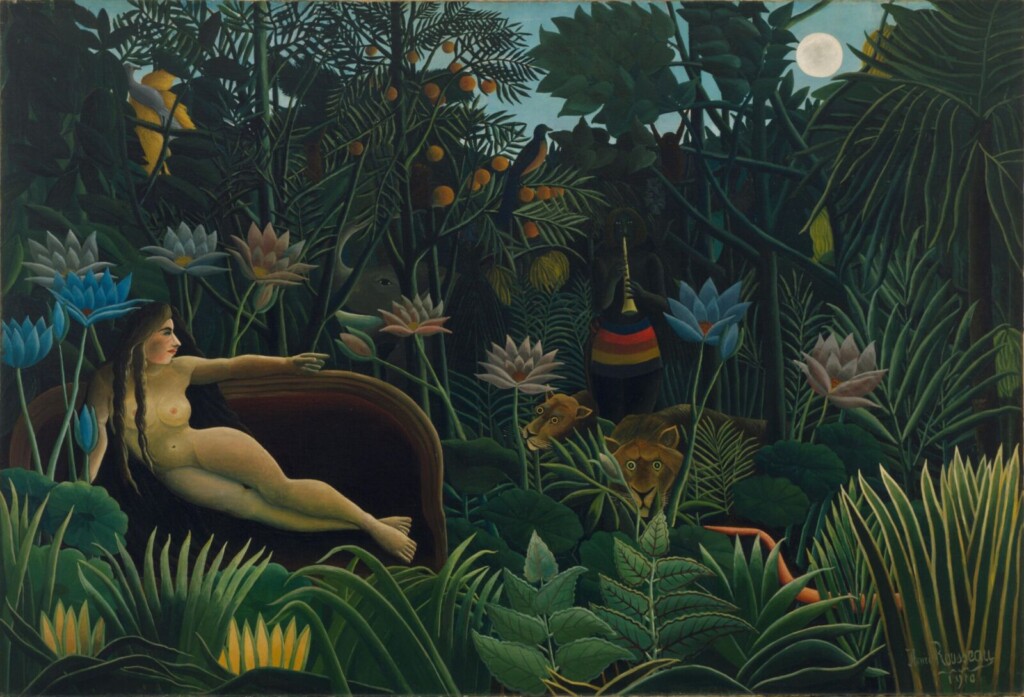
You already believe, at some level, that children are the last honest creatures — that they arrive in the world trailing some residue of original goodness that adults spend decades contaminating. This is not an instinct. It is a curriculum. Someone taught it to you before you were old enough to question it, and the teacher was taught it before that, and the transmission goes back to a single enormously influential book published in 1762 that restructured the entire Western relationship to childhood.
Jean-Jacques Rousseau‘s Emile, or On Education did not merely argue that children were innocent. It built a cosmology around that innocence, positioning the child as a creature of natural virtue whose moral deterioration was a social achievement, something civilization accomplished through contamination. “Everything is good as it leaves the hands of the Author of things,” Rousseau wrote in the opening lines, “everything degenerates in the hands of man.” The child, in this framework, is not a human being in formation — it is a moral argument against human society. Pedagogy becomes therapy, a protected enclosure where civilization’s poisons can be kept at bay long enough for natural virtue to take root. The consequences of this idea have been so vast and so rarely examined that they have become essentially invisible.
Friedrich Froebel opened the first kindergarten in Blankenburg in 1837, and the word he chose was not accidental — a garden for children, a space where young things could grow according to their own organic logic, shielded from the distorting pressures of adult society. Froebel was a romantic idealist who believed in the divine nature of childhood development, in play as a form of spiritual self-realization. By the early twentieth century this vision had migrated across the Atlantic and fused with the progressive education movement, where John Dewey was reconstructing American schooling around the child’s inherent curiosity and social instinct. Dewey’s 1916 Democracy and Education treated the child’s natural impulses as the raw material of democratic citizenship — not obstacles to be disciplined but energies to be guided. The institution was wrong, not the child. The environment was corrupting, not the soul.
What is extraordinary is not that these ideas were wrong in every detail. What is extraordinary is the ferocity with which the framework excluded counter-evidence. By the time A. S. Neill founded Summerhill in Suffolk in 1921, the progressive movement had produced something close to a theology — a system of belief so internally consistent that any child who behaved destructively, cruelly, or sadistically was explained as a victim of prior adult failure. The child was never the source. The child was always the site of damage inflicted elsewhere. This interpretive move had the appearance of compassion and the function of a closed loop. It made the framework unfalsifiable, and therefore immortal.
Golding watched this consensus operate throughout his years as a schoolteacher at Bishop Wordsworth’s School in Salisbury, a position he held for nearly two decades before Lord of the Flies was published in 1954. He was not speculating about child nature from a distance. He was in a room with it every day, managing thirty adolescent males, watching what happened in the interstitial spaces between adult supervision. What he saw was not corruption imported from outside. What he saw was something that did not require importation at all — something that organized itself spontaneously, with its own hierarchy, its own cruelties, its own pleasure in the exercise of power. The progressive framework had no language for this because it had decided in advance that the language was unnecessary.
The most dangerous lies are not the ones that distort reality completely. They are the ones that illuminate half of it with such warmth and moral beauty that the other half becomes unthinkable — and in that unthinkability, free to operate without interference or name.
What Stanley Milgram Heard in the Screams
You already know what happened in that basement corridor at Yale University in 1961, even if you have never heard the name Stanley Milgram. You know it because you have felt the particular relief that comes when someone with a clipboard and a lanyard tells you that what you are about to do is necessary, is sanctioned, is part of a larger process you need not fully understand. Milgram placed ordinary American adults — schoolteachers, postal workers, accountants — in front of a shock generator with thirty switches ranging from 15 volts to 450 volts, and a confederate actor on the other side of a wall who screamed on cue. Sixty-five percent of participants administered what they believed to be the maximum shock. Not because they were sadists. Not because the screams did not reach them. Because a man in a white coat said, calmly, “please continue.”
What Milgram captured in those electrodes and those scripted screams was not a portrait of monsters. It was a portrait of architecture — the architecture of permission, of hierarchy, of the way ordinary moral capacity collapses the moment it is placed inside a structure that assigns responsibility upward. His findings, published formally in Obedience to Authority in 1974, but already circulating through academic journals by 1963, revealed that the threshold between decent behavior and cruelty was not a matter of character so much as context. Change the white coat for a suit, change the Yale laboratory for a government office, change the actor’s screams for bureaucratic paperwork, and the mechanism remains identical. The distance between the hand on the switch and the body receiving the current is, in Milgram’s framework, not a moral insulation but a moral accelerant.
Hannah Arendt was watching something very similar from a press gallery in Jerusalem. She attended the trial of Adolf Eichmann in 1961, expecting to encounter the embodiment of ideological hatred, a man whose face would confirm every assumption about what it takes to participate in the murder of six million people. Instead she found a bureaucrat. A man who spoke in clichés, who expressed concern for procedural correctness, who insisted, repeatedly, that he had not hated Jews but had simply followed orders within a chain of command he found entirely legitimate. Eichmann in Jerusalem, published in 1963, was not a book about Nazism specifically. It was a book about what happens when moral imagination is replaced by institutional loyalty — what Arendt called the “banality of evil,” a phrase that scandalized people precisely because it refused them the comfort of the exceptional monster.
Golding had already written that refusal into fiction nine years earlier. The boys on the island in Lord of the Flies do not become violent because they are uniquely corrupt. They become violent because the structures that previously externalized their moral authority — school, church, family, the British state — have been removed, and nothing inside them has been trained to function in the absence of those structures. Roger, the boy who rolls the boulder that kills Piggy, had spent an earlier chapter throwing stones at a younger child but deliberately missing, held back by what Golding calls “the taboo of the old life.” When the old life’s taboo loses its institutional weight, Roger’s arm completes its arc. Milgram would recognize that arm. Arendt would recognize the calm on Roger’s face.
The three of them — a novelist, a political philosopher, and a social psychologist — arrived at the same discovery from different directions in the same decade, which is not a coincidence but a symptom. The 1960s were a period in which the liberal consensus about human nature was being methodically dismantled by evidence that human nature, left to its own devices, is not liberal at all. Philip Zimbardo’s Stanford Prison Experiment in 1971 would extend Milgram’s findings into something even darker: that you do not need a white coat to activate cruelty, only a role, a uniform, a cell block, and forty-eight hours.
The Second Scene: A Classroom Sorting
The substitute teacher has been gone for four minutes. That is all it takes. Before the door has finished swinging shut behind her — sent to retrieve a forgotten attendance sheet from the front office — the room has already begun its reorganization, quiet and efficient as a tide going out.
One boy, sitting near the window, does not stand up or raise his voice. He simply shifts in his chair toward the center of the room, and something in that small pivot communicates authority with a precision no adult announcement could match. Three others orient themselves toward him within seconds, not because they have decided to but because the body knows rank before the mind does. A girl near the back attempts a joke, directed at the room generally. Nobody laughs, not because the joke is bad, but because she has misjudged her position in a hierarchy that assembled itself while she was still deciding whether to speak.
What is happening in that room is not chaos. It is the opposite of chaos. It is a social order forming at speed, without instruction, without deliberation, using criteria that no curriculum has ever named. The ethologist Frans de Waal spent decades documenting exactly this process in primates, particularly in chimpanzees, and his 1982 work Chimpanzee Politics mapped the coalition-building, the deference signals, the calculated alliances that govern group dynamics among creatures who share roughly ninety-eight percent of their genetic sequence with the children now rearranging themselves around that window seat. De Waal was not making a cynical point. He was making a structural one: the grammar of dominance is older than language and operates beneath it, surfacing whenever formal scaffolding is temporarily removed.
The girl who misjudged her position tries again, this time directing her remark at the boy by the window. He acknowledges it with the minimum response available to him, a half-smile, controlled, a gift carefully measured. She accepts this as sufficient. She has recalibrated. There is no cruelty in any of this, which is precisely what makes it so difficult to see clearly. Cruelty would be a moral event, something to name and correct. What is happening instead is social physics, impersonal and without malice, as indifferent to the individuals involved as gravity.
The psychologist Philip Zimbardo, writing in The Lucifer Effect in 2007, made the argument that situation overwhelms character with a consistency that the Western moral tradition has spent centuries refusing to acknowledge. His conclusion was not that individuals do not exist but that the containers we place them in shape the content more decisively than personal virtue ever does. The children in that room are not bad. Several of them are, by any ordinary measure, kind. Yet the room itself, emptied of its official authority for four minutes, has produced a structure that rewards one kind of behavior and silences another, and the children are following it as naturally as water finds its level.
Two of the quieter students have not moved at all. They sit with the particular stillness of those who have learned to make themselves unreadable, to offer nothing the hierarchy can use. This too is a strategy, older than any they have been taught, and it costs something to maintain. The energy spent on invisibility is not available for learning. This is what the classroom as a social environment actually produces, alongside its official curriculum, running parallel to every lesson plan, invisible to administrators and standardized tests alike.
The teacher returns in under six minutes. The room reassembles its surface of equivalence immediately, chairs forward, voices lowered, faces arranged into the polite neutrality that the institution requires. She notices nothing, or seems not to.
A vision curated by a filmmaker, not an algorithm
In this video I explain our vision
Pinker’s Objection and Its Blind Spot

You are handed a graph showing that humanity is getting better. The line descends across centuries — battles per capita, homicide rates, executions recorded by state apparatus — and the slope is undeniable, elegant, almost comforting. Steven Pinker built an entire civilizational argument on that descending line in 2011, marshaling roughly seven hundred pages of data to demonstrate that violence, measured across history, has contracted. The thesis arrived at precisely the moment Western liberalism needed reassurance, and it was received accordingly: as vindication, as proof that the Enlightenment project had delivered on its oldest promise.
The problem is not the data. Pinker’s numbers, drawn from historical criminology, from the work of Manuel Eisner on European homicide trends across six centuries, from correlates of war datasets, from Norbert Elias’s sociology of the civilizing process — these are real. The murder rate in fourteenth-century England was roughly thirty-five per hundred thousand; by the twentieth century it had collapsed to around one. That is not a fiction. But the architecture of what gets counted, and what consequently disappears from the graph, contains a structural omission large enough to swallow the entire argument.
Institutional recording captures what institutions are designed to see. A corpse with a blade wound in a marketplace is recorded. A child whose social world is systematically annihilated by exclusion, mockery, and coordinated humiliation leaves no coroner’s report. The playground, the dormitory corridor, the school cafeteria operate at a scale of cruelty that has never required a weapon, never triggered a legal threshold, and has therefore never populated a dataset. Golding understood this with the precision of someone who had spent years as a schoolmaster watching boys interact when adults were technically present but functionally absent. The island in his 1954 novel is not a metaphor for the absence of civilization. It is a controlled experiment in what civilization’s presence actually conceals rather than eliminates.
What Pinker’s framework cannot accommodate is the category of violence that has always been most efficiently delivered through social mechanics — through the withdrawal of recognition, through the engineering of shame, through the weaponization of belonging. Erving Goffman, writing in Stigma in 1963, mapped the precise choreography by which groups render individuals socially dead without touching them. This apparatus does not appear in homicide statistics. It does not appear in war datasets. It operates in the register of the informal, the deniable, the everyday — and it operates, Golding’s work insists, with the same eliminationist logic that the optimistic graph claims we have outgrown.
The civilizing process Elias described in 1939 was fundamentally about the internalization of violence, its removal from public spectacle into private space and psychological form. Pinker reads this as progress. What it also describes, read without the celebratory frame, is the migration of cruelty into domains that are harder to see and impossible to quantify. The torturer who leaves no marks. The group that destroys an individual while maintaining plausible deniability. The institutional structure that produces suffering at the level of procedure rather than intention. The graph goes down; the experience does not necessarily follow.
There is something almost theological about the need for that descending line — the need to believe that the arc of history bends, that the centuries of accumulated governance and literacy and trade have produced not merely different configurations of harm but genuinely less of it. Golding would not have argued with the graph’s arithmetic. He would have asked what kind of violence the graph was capable of being curious about, and whether the answer revealed something about the civilization producing the graph rather than the one it claimed to be measuring. The boys on the island are never more dangerous than when they have developed a set of rules.
The Nobel Lecture Golding Never Fully Delivered
You are sitting in a gilded hall in Stockholm, December 1983, surrounded by people who have spent their professional lives learning how to receive difficult ideas at a safe aesthetic distance, and a seventy-two-year-old man walks to a podium and tells you, in plain English, that the average human being is sick. Not corrupted. Not flawed in the romantic sense that makes corruption interesting. Sick. The word lands and the applause, when it comes, is warm and generous, because everyone in the room has already decided he is talking about literature.
That decision — the collective, instantaneous conversion of an empirical claim into a literary posture — is one of the more revealing reflexes of educated culture. Golding did not say that Ralph or Jack or the unnamed naval officer was sick. He was explicit and unambiguous: not exceptional man, but average man. He was describing the statistical center of the human distribution, the median moral creature who pays taxes, raises children, attends ceremonies, and under the right structural conditions will participate in atrocities without losing sleep. This is not a novelist’s dark fantasy. It is, with uncomfortable precision, what the social psychologist Stanley Milgram had already demonstrated in 1961 when sixty-five percent of ordinary American volunteers administered what they believed were lethal electric shocks to strangers because an authority figure in a white coat told them to continue. Milgram published his full account in Obedience to Authority in 1974, nearly a decade before Golding stood at that podium, and the data had been sitting there the whole time, largely unassimilated by the culture that produced it.
The mechanism by which a civilization refuses empirical self-knowledge is not ignorance — it is genre. When a scientist publishes findings that implicate the average person in structural violence, the findings enter a specialized discourse and are debated, contextualized, and eventually absorbed into the margins of academic psychology. When a novelist writes the same claim into a story about children on an island, the claim is received as allegory, as art, as the kind of thing one appreciates rather than believes. Genre functions as an immunization system. It allows a culture to metabolize disturbing truth as aesthetic experience, to feel the weight of an idea without accepting its factual jurisdiction over daily life. Golding understood this, which is why his Nobel speech represented a deliberate and frustrated attempt to step outside the frame — to say, in the declarative mode of testimony rather than the conditional mode of fiction, what he had spent thirty years encoding in narrative form.
What it costs a culture to take that sentence literally is not merely psychological comfort. It is the entire architecture of liberal optimism that has underwritten Western political institutions since at least 1789, the premise that human beings, properly educated and properly governed, tend naturally toward decency. That premise is not a finding. It is a founding myth, and founding myths are structurally immune to disconfirmation because every piece of evidence against them is reclassified as an exception, an aberration, a temporary failure of institutions that are themselves sound. Hannah Arendt spent years after the Eichmann trial in Jerusalem — the trial concluded in 1961, her report published in 1963 — trying to explain to a horrified readership that the most terrifying thing about Adolf Eichmann was not his monstrousness but his normalcy, his bureaucratic competence, his absence of demonic motive. The readership was horrified precisely because it understood her, and understanding her meant surrendering something it could not afford to surrender.
Golding’s lecture was received as provocative metaphor because the alternative — receiving it as the considered empirical conclusion of a man who had lived through the Second World War, taught adolescent boys for decades, and watched nations construct genocide through administrative paperwork — would have required the audience to ask what kind of institution they were sitting inside, what ceremony they were performing, and what comfortable distance they were being asked to close.
What the Conch Actually Was
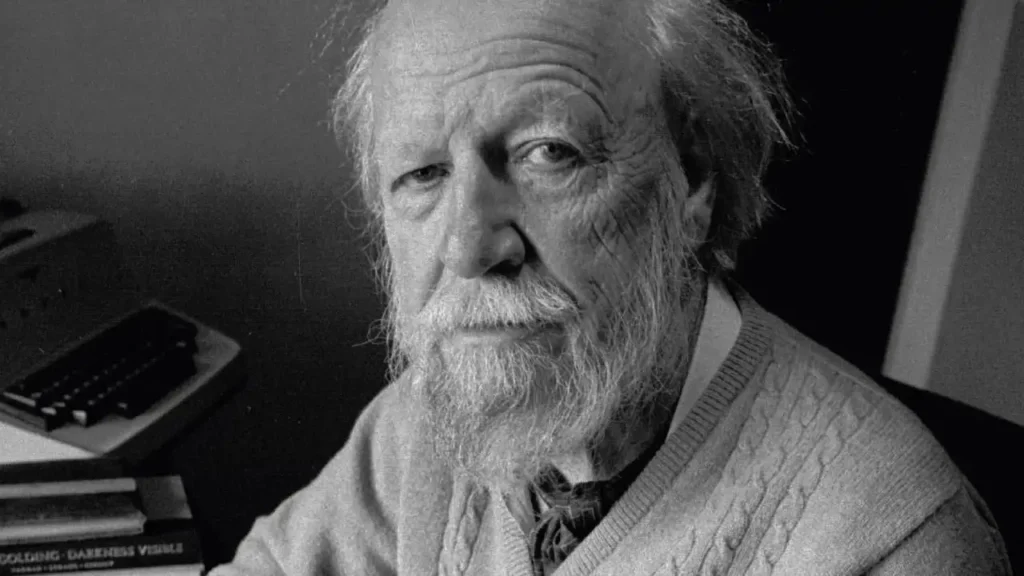
You already know what the conch was, because you have held versions of it your entire life. Not the shell itself — the principle it embodies, the fragile agreement that certain objects, certain titles, certain documents carry authority not because they contain power but because enough people in the room have agreed to act as though they do. The conch on the beach was never magical. It was a prop around which a temporary consensus had crystallized, and the moment that consensus dissolved, the shell became exactly what it had always been: calcium carbonate, aesthetically pleasing, biologically inert.
What Golding understood, and what his readers have spent seven decades carefully misreading, is that the conch does not represent democracy. It represents the precondition of democracy — which is the collective performance of believing in democracy. Jean-Jacques Rousseau wrote his Contrat Social in 1762 and described the sovereign will of a people as something that cannot be alienated or represented, only enacted. What he did not say clearly enough, and what the boys on the island demonstrate with brutal efficiency, is that this enactment requires daily renewal. The moment a critical mass stops performing belief, the entire architecture collapses not gradually but instantly, the way a held breath is released.
Sociologists have a clinical term for this: Thomas theorem, articulated by W.I. Thomas in 1928 — if people define situations as real, they are real in their consequences. The inverse is equally true and far less discussed. When people stop defining a situation as real, its consequences evaporate with a speed that should terrify anyone who has ever signed a lease, voted in an election, or trusted that the person behind the pharmacy counter would actually give them the correct medication. Every institution you depend on is the conch. Every one of them functions only inside a shared hallucination that most participants have never consciously chosen to enter.
This is not nihilism — it is structural description. Yuval Noah Harari, in Sapiens published in 2011, argued that large-scale human cooperation is made possible entirely by shared fictions: money, nations, corporations, human rights. None of these have physical mass. They exist because enough minds simultaneously agree to treat them as existing. The difference between Harari’s framing and Golding’s is that Harari presents this as humanity’s superpower, while Golding — writing in 1954, nine years after watching what agreed-upon fictions had licensed in Europe — presents it as the precise location of humanity’s catastrophic vulnerability.
A second boy arrives somewhere in the middle of this, always: not on a tropical island but in a boardroom, a courtroom, a parliament chamber, any room where someone holds an object or a title and speaks, and the room listens, not because the words are true but because the room has tacitly agreed that people holding that object in that room are the ones whose words count. The conch does not fall apart because children are barbaric. It falls apart because one boy — just one — refuses the performance convincingly enough that the performance becomes visible as a performance to everyone else, and visibility is lethal to consensus.
Piggy dies holding reason. Ralph survives holding nothing. The naval officer who arrives at the end to restore order arrives carrying his own conch — a uniform, a rank, a nation-state’s monopoly on legitimate violence — and the reader is meant to feel relief. Golding counted on that relief. He needed it, because the relief is the trap: the instinct to believe that this new conch, held by an adult, by an institution, by a civilization, is fundamentally different from the one that just shattered on the rocks. The shell was always borrowed. The authority was always on loan from the credulous, and the credulous are always, in every generation, one decisive moment of clarity away from stopping.
🪰 The Darkness Within: Evil, Power, and Human Nature
William Golding spent his career mapping the savage territory hidden beneath civilization’s thin veneer. These articles explore the philosophical, psychological, and literary landscapes that give shape to his haunting vision of human nature.
Banal Evil and Radical Evil: Kant and Arendt
Hannah Arendt’s concept of the ‘banality of evil’ and Kant’s notion of radical evil offer two philosophical poles for understanding how ordinary beings commit extraordinary harm. Golding arrived at similar conclusions through fiction, showing that evil does not require monsters — only children left without structure. This article illuminates the theoretical framework that underpins what Lord of the Flies dramatizes so viscerally.
GO TO THE SELECTION: Banal Evil and Radical Evil: Kant and Arendt
Rousseau and Nature: The Noble Savage
Rousseau’s belief in the natural goodness of humanity — the noble savage uncorrupted by society — stands as the direct philosophical counterpoint to Golding’s worldview. Where Rousseau saw civilization as the source of moral rot, Golding argued the savagery was already inside us, waiting. Understanding this tension is essential to grasping the full provocation of Golding’s literary project.
GO TO THE SELECTION: Rousseau and Nature: The Noble Savage
Regression in Psychology: When the Mind Returns to Childhood
Psychological regression — the mind’s retreat toward more primitive modes of functioning under stress or fear — is precisely what Golding dramatizes when his schoolboys shed their uniforms and their ethics together. This article explores how psychology understands the return to childhood states, and why groups under pressure so often abandon adult rationality. Golding gave this clinical phenomenon its most terrifying literary form.
GO TO THE SELECTION: Regression in Psychology: When the Mind Returns to Childhood
Jorge Luis Borges and the Labyrinth of Identity
Borges and Golding share a fascination with structures that trap and reveal: the labyrinth is both a physical space and a metaphor for the self unable to escape its own nature. In Lord of the Flies, the island itself becomes a labyrinth of moral disintegration from which there is no true exit. This article on Borges and identity explores the literary and philosophical dimensions of that inescapable maze.
GO TO THE SELECTION: Jorge Luis Borges and the Labyrinth of Identity
Discover the Cinema That Dares to Look Into the Dark
If Golding’s unflinching gaze into the human soul moves you, Indiecinema is the streaming platform where independent cinema asks the same courageous questions. Explore films that refuse comfortable answers and dare to portray the full complexity of what it means to be human.
👉 EXPLORE THE CATALOG: Watch Indie Films in Streaming
A vision curated by a filmmaker, not an algorithm
In this video I explain our vision

