
The Performance Before the Mirror
You check your reflection one last time before leaving the apartment — not for vanity, but for calibration. You adjust your collar, yes, but you also rehearse the slight upward inflection you’ll use when greeting your colleague, the one who mistakes warmth for weakness and needs to hear confidence first. You soften the set of your jaw for the friend who finds directness aggressive, then almost immediately harden it again for the client meeting afterward, where softness reads as uncertainty. You do all of this in under ninety seconds, without noticing you’ve done it, and then you open the door and walk into a performance so habitual it no longer feels like one.

Erving Goffman spent a career naming what you just did. In “The Presentation of Self in Everyday Life,” published in 1959, he argued that social interaction is structurally identical to theater — not metaphorically, not loosely, but with genuine dramaturgical precision. Every encounter has a front stage, where the managed performance occurs, and a backstage, where the performer recovers, rehearses, or simply collapses. What Goffman understood, and what remains quietly devastating, is that there is no version of the self that exists prior to the performance. The backstage is not where the real you lives. It is where you practice the next performance in a different register.
This is the part people resist. The common instinct is to locate authenticity somewhere behind the roles — to believe that the person you are when alone, in silence, without an audience, is the true one, and that social presentation is a distortion imposed upon it. But that private self is also constructed. The internal monologue you conduct when no one is watching has an imagined audience built into it: the version of your mother who still judges your choices, the peer whose admiration you’ve been quietly auditioning for since adolescence, the abstract tribunal of people who might one day read your diary if you kept one. William James noted in 1890, in “The Principles of Psychology,” that a person “has as many social selves as there are individuals who recognize him” — and crucially, he did not treat this as a tragedy or a pathology. He treated it as the basic architecture of human consciousness.
What becomes strange, under this lens, is not that people perform — it’s that they are surprised to discover they do. The surprise itself is a kind of performance, a way of asserting that somewhere beneath the costume there is a naked, unmediated person being betrayed by social necessity. This belief functions less as a psychological truth than as a moral alibi. If the performing self is false, then the failures of the performing self — the moments of cruelty, cowardice, dishonesty enacted under social pressure — can be attributed to the costume rather than the wearer. “That wasn’t really me” is among the most common sentences uttered after betrayal, and it is almost never examined for what it actually claims: that the self is a stable entity temporarily displaced by circumstance, rather than a process continuously shaped by it.
The deeper problem is that the mirror precedes the face. You did not develop a self and then learn to present it. You developed a self through the act of presenting it — through decades of watching which versions of you were received with warmth, which with contempt, which with indifference, and adjusting accordingly. The psychoanalyst D.W. Winnicott wrote in 1960 about the “true self” and the “false self,” but even his framework, sympathetic as it was to the idea of authentic interiority, acknowledged that the false self develops as a protective structure, not an alien invasion. It grows from the same ground. It cannot simply be removed to reveal something cleaner underneath, because the act of removing it is itself a performance — the performance of someone claiming not to perform.
Goffman's Stage and the Price of Admission
You have rehearsed the version of yourself you are about to perform before you even opened your eyes this morning. The words you will use in the meeting, the register of warmth calibrated for the family call, the particular slope of competence you wear in front of people who have the power to evaluate you — none of this was improvised. It was assembled, checked, and packed the night before like a costume.
Erving Goffman spent the better part of the 1950s watching people enter rooms, and what he documented in The Presentation of Self in Everyday Life in 1956 was not hypocrisy — it was architecture. He proposed that all social interaction is performance in a technical and almost engineering sense: there is a front stage where impression management governs every gesture, and a back stage where the performer drops the props and breathes differently. The genius of this model was not its cynicism but its precision. Goffman was not accusing anyone of fakery. He was describing the structural conditions under which any self becomes legible to another person at all. You cannot transmit identity directly, neuron to neuron. You can only signal it, through clothing, tone, posture, timing — and the audience reads those signals according to codes they did not invent either.
The cost of breaking character is rarely theoretical. It arrives as a silence that lasts a half-second too long, a joke that does not land because the room had not given permission for that register, a truth spoken at a family dinner that creates a chill so total it functions like a small death. The job interview is perhaps the most nakedly theatrical institution modern societies have normalized: a room in which two parties pretend that scripted answers reveal genuine personality, that the performance of capability is identical to capability itself, that the panel’s own performance of authority is not equally rehearsed. When someone breaks the script in that room — laughs at the wrong moment, admits uncertainty, refuses the grammar of confident self-presentation — they are not failed for incompetence. They are failed for illegibility. They violated the tacit contract that makes the ritual function, and the ritual punishes defection with the efficiency of a reflex.
What Goffman could not fully account for, because the data did not yet exist in that form, is how thoroughly the front stage has colonized the back stage in digital environments. The backstage was never perfectly private — neighbors existed, walls were thin — but it retained a structural separateness. The self had somewhere to go. By 2010, approximately two billion people were managing public profiles, curating what sociologist David Brake, writing in Sharing Our Lives Online in 2014, called “the imagined audience” — a phantom demographic you perform for even when no specific person is watching. The performance does not pause. It only shifts platforms.
Professional hierarchies add a dimension Goffman mapped but that has compounded since his era: the mask is not neutral across power gradients. A junior employee performing deference to a senior one is not engaged in the same transaction as the reverse. Pierre Bourdieu‘s concept of symbolic violence, developed across Reproduction in Education, Society and Culture in 1970 and Distinction in 1979, describes the way that socially dominated groups internalize the codes of the dominant and then perform those codes at cost to themselves, because the alternative is exclusion. The mask in that case is not freely chosen costuming — it is the price of admission to spaces that were not built for you and will not rebuild themselves to accommodate your presence. The energy spent performing acceptability in those spaces is real metabolic expenditure, documented in research on what social psychologists Claude Steele and Joshua Aronson identified in 1995 as stereotype threat: the cognitive load of managing a threatening social identity actively reduces measurable performance on unrelated tasks.
What is exhausting, then, is not the work itself but the parallel work of maintaining the fiction that the work is all there is.

The Self That Was Assigned

You did not choose your name. Someone announced it before you had the capacity to object, and from that moment forward every institution you would ever enter — school, church, state office, employer — would call that name and watch you turn around. The turning is the trap. Not the name itself, not even the institution, but the reflex: the way you pivot without thinking, as if the call had always been yours to answer.
Louis Althusser described this mechanism in his 1970 essay “Ideology and Ideological State Apparatuses” with a deceptive simplicity that his critics spent decades trying to defuse. A policeman shouts “Hey, you!” in the street. One person out of many turns around. That single rotation, Althusser argued, is not a neutral act of recognition — it is the birth of a subject. The individual becomes a self precisely by accepting that the call was addressed to them. What looks like identity is actually compliance dressed in the grammar of personhood. The subject does not pre-exist the hailing; the hailing manufactures the subject on the spot, retrospectively making it seem as though there had always been a coherent someone standing there waiting to be named.
What makes this genuinely unsettling is the temporal sleight of hand embedded in the process. Interpellation works by making you feel you are finally being seen for who you already are — when in fact you are being assembled into a shape that serves the needs of the structure doing the calling. The Catholic child who stands during Mass is not expressing a pre-existing spiritual nature; she is learning to recognize the standing as an extension of herself, until one day she cannot remember a version of herself that did not stand. The student who excels in examinations does not discover a native intelligence; he learns to map his worth onto a metric designed by nineteenth-century Prussian administrators who needed to sort young men into army officers and factory workers. By 1900, nearly every Western European nation had imported some version of that sorting architecture, and it has never left.
The inheritance runs deeper than institutions, though, because it operates through bodies before it reaches language. The French sociologist Pierre Bourdieu spent much of his career documenting how class position is absorbed not as a belief but as a posture — the way a person from a working-class background holds a pen, enters a formal room, modulates their voice when speaking to someone with more social capital. He called it habitus: a system of durable dispositions inscribed into the body itself, functioning below conscious choice, reproducing social structure through the most intimate physical gestures. A person does not decide to feel out of place in an elite setting; the feeling arrives as sensation before thought catches up, because the body has already learned what it is worth and where it belongs.
This is where the fiction of the self becomes genuinely difficult to confront. It is easy to accept that your professional title is a role, that your political opinions were shaped by your environment, that your aesthetic tastes bear the fingerprints of your class. It is much harder to feel, viscerally, that the discomfort you experience in certain rooms, the ambition you experience in others, the particular texture of your shame — these too were assigned before you arrived. Not imposed by a single dramatic act of coercion, but deposited in layers, over years, through repetition so quiet it registered as nature rather than instruction.
The self you defend most fiercely is usually the one you received earliest, before you had any conceptual tools to inspect it. Resistance to that inspection is not stubbornness or stupidity — it is structural. A mask worn long enough stops being something you put on and becomes something you grow into, until the removal feels less like liberation and more like amputation.
Fiction as the Architecture of the Real
You are handed a passport at a border crossing, and the officer looks at it, looks at you, looks back at it — and in that three-second transaction, an entire architecture of belonging is confirmed. Nothing about that moment is natural. The document, the border, the category of nationality printed inside it — none of these existed two centuries ago in any form resembling what they are now. Yet they feel more solid than the ground beneath your feet.
Benedict Anderson, writing in Imagined Communities in 1983, made an observation so simple it should have been obvious but somehow wasn’t: a nation is a community of people who will never meet each other, held together by the shared belief that they constitute a community. The Indonesian peasant and the Jakarta intellectual belong to the same “Indonesia” not because they share a language, a religion, an ancestry, or a meal — but because both of them have been persuaded to imagine a horizontal fraternity extending across millions of strangers. Anderson dated this persuasion precisely to the rise of print capitalism in the eighteenth century, when newspapers began circulating to thousands of simultaneous readers who, reading the same stories on the same morning, began to feel the pulse of a shared time, a shared “we.” The nation was not discovered. It was serialized.
What makes Anderson’s argument genuinely disturbing is not the revelation that nations are constructed — that much, by 1983, was already in the air — but his insistence that this construction is not a deception layered over some truer reality. The fiction is load-bearing. Remove it and there is no hidden authentic community underneath; there is only the question of which new fiction will replace it. The scaffolding is not concealing the building. The scaffolding is what the building is made of.
Racial categories operate by the same principle, and the historical record is ruthless on this point. The concept of “whiteness” as a stable, coherent identity was largely assembled in the nineteenth-century United States as a legal and economic mechanism — not a description of something that existed prior to law, but a prescription that created what it named. W.E.B. Du Bois, in Black Reconstruction in America published in 1935, calculated what he called the “psychological wage” paid to poor white laborers: not money, not land, but the social permission to feel superior to Black workers, a compensation that fractured class solidarity with extraordinary efficiency. The fiction of racial hierarchy did not mystify an economic reality that existed independently. It structured the economy itself, determining who could organize, who could testify in court, who could read.
Class belonging functions similarly, though its mechanisms are more intimate and therefore harder to see. Pierre Bourdieu spent decades documenting, in Distinction in 1979, how taste — for music, for food, for the way one sits in a chair — functions as a classification system that appears to be about personal preference but is in fact a dense social code reproducing inherited hierarchy. The person who finds certain music “vulgar” or certain table manners “graceless” is not reporting a neutral aesthetic reaction. They are performing membership in a category, enforcing its boundaries, and simultaneously forgetting that they learned these reactions the way they learned to tie their shoes. The fiction of natural taste conceals the labor of social reproduction.
The word “fiction” here requires precision, because it is doing something unusual. It does not mean false, and it does not mean optional. A fiction in this sense is a shared symbolic structure that has real consequences — that determines who eats, who votes, who is buried in which ground, who gets to say “we.” The Latin root of “fiction” is fingere: to shape, to form, to mold. These collective fictions are not stories told about reality after the fact. They are the molds into which reality is poured while still liquid, before it hardens into what everyone agrees to call the way things are.
The Mask That Forgets It Is a Mask
You have been wearing the same face for so long that you no longer remember putting it on. Not this morning, not last year — the moment is genuinely lost, dissolved somewhere in the accumulation of repeated gestures, consistent opinions, predictable reactions that eventually stopped requiring any decision at all. The face simply moved your muscles for you, and you called it character.
William James, writing in his 1890 Principles of Psychology, made an observation so quiet it nearly disappears between the louder arguments surrounding it: that by the age of thirty, character is set like plaster, and what we call the self is largely a sediment of repeated behavior that has crystallized into the illusion of essence. He was not being pessimistic. He was being anatomical. Habit, for James, was the great flywheel of society, and what he meant by that was not comfort — he meant mechanism. The self runs on grooves worn so deep by repetition that the original choice that carved them is no longer visible, not even to the person doing the running. You do not choose your reactions anymore. You perform them, and the performance is so fluent it has become indistinguishable from spontaneity.
Carl Jung gave this process a name precise enough to be uncomfortable: the persona. Not metaphor, not poetry — a structural concept developed across his 1928 essay “The Relations Between the Ego and the Unconscious,” where he described the persona as the compromise between what the individual is and what the collective demands. Every social role generates a persona: the professional, the parent, the charming dinner guest, the reliable friend. Each one is a real adaptation to a real pressure, and that is exactly what makes it dangerous. Because a mask worn for functional reasons, worn consistently, worn without examination, begins to merge with the face beneath it. Jung’s clinical observation was that the patients most convinced of their authentic selfhood were often the ones most completely swallowed by their social role — the doctor who had become only a doctor, the respectable citizen who had forgotten there was ever anything disreputable in him worth knowing.
The mechanism is not dramatic. There is no single moment of capitulation. What happens instead is a slow erosion of distance — the gap between performer and performance narrows by fractions over months and years until one morning the gap is simply gone. Psychologists studying role embodiment have documented this in contexts ranging from military training to corporate culture: when a behavior is repeated in a consistent social environment, the cognitive work required to sustain it drops toward zero, and once it costs nothing to maintain, it is no longer experienced as maintenance. It is experienced as being. The soldier who has internalized the soldier does not feel like he is acting like a soldier. He feels like himself.
What James and Jung are each gesturing toward, from opposite ends of the same problem, is the profound unreliability of the sense of authenticity as an indicator of anything real. The feeling of being genuinely yourself is not evidence that you are. It may be evidence of the opposite — that the performance has run long enough to erase its own seams. A man who has spent two decades suppressing ambivalence to project confidence does not feel like he is projecting confidence. He feels confident. The suppression has been so thorough that it no longer registers as suppression. What was once a strategic presentation has become a perceptual filter through which he now actually sees the world, which means the world he sees is partly a construction he forgot he built.
The sociologist Erving Goffman, whose 1959 Presentation of Self in Everyday Life mapped the dramaturgy of social interaction with the precision of a cartographer, argued that the distinction between sincere and cynical performance is not fixed — it slides. You begin cynical and end sincere not because you were persuaded but because you were tired, and sincerity was cheaper.
A vision curated by a filmmaker, not an algorithm
In this video I explain our vision
When the Script Is Written by History

You are handed a document at birth that you never drafted, in a language that may not be yours, by an authority that arrived decades before you did and decided, with the confidence of surveyors, what kind of person you were going to be.
Before 1933, the question of whether someone in Rwanda was Hutu or Tutsi was answered by the body, by the cattle one owned, by the shifting social arrangements of a precolonial society that had always allowed passage between categories. A man who acquired enough cattle became Tutsi. A Tutsi who lost his herd became Hutu. The identities were real, but they were porous, contextual, negotiable in the way that all human categories are when left to the friction of actual living. Then the Belgian colonial administration introduced the identity card system following their census, and the categories hardened into biology. Anthropologists hired to do the counting used the Hamitic hypothesis — the pseudoscientific conviction that any African civilization of sophistication must have been built by a racially superior group closer to European stock — to assign fixed labels to faces and skulls. The Tutsi were measured: longer noses, taller statures, more “noble” proportions. The Hutu were measured otherwise. Every Rwandan received a card. The card said what they were. The card did not ask.
What the Belgian census accomplished was not the discovery of an ethnic reality but the manufacture of one. The philosopher Ian Hacking, in his 1999 work “The Social Construction of What?”, described what he called “looping effects” — the way that classifying human beings changes the people classified, because they begin to act, resist, and organize themselves in relation to the category imposed on them. By the time Rwandans had carried those cards for a generation, the category had become lived experience. It had produced segregated schools, differential access to colonial administration, an entire economy of grievance structured around a distinction that Belgian clerks had frozen into permanence. The identity preceded the person who was supposed to inhabit it.
This is not an aberration in colonial practice but its central method. When the British conducted their census operations across India throughout the nineteenth century, they encountered a subcontinent of shifting, overlapping religious and caste affiliations that did not resolve neatly into countable units. The 1881 census, overseen by W.W. Hunter, attempted to enumerate “Hindus” as a coherent group — a category that many of the people supposedly belonging to it had never used to describe themselves in that unified way. Bernard Cohn documented in his 1987 collection “An Anthropologist Among the Historians” how the colonial census did not measure Indian society but reorganized it, forcing the extraordinary multiplicity of regional devotional practice into a legible grid that the empire could administer and, when necessary, divide. The riots of the twentieth century were not the ancient hatreds the British cited as justification for their presence. They were, in part, the catastrophic harvest of categories planted in ledger books.
The violence of imposed identity is never only physical. It operates first at the level of self-perception, in the moment when a person stops saying “I am this” and starts saying “they say I am this, and I cannot find the seam between their version and mine.” The child who grows up inside a category does not experience it as a category. She experiences it as the shape of the world, as the texture of what is possible and what is forbidden, as the specific weight of a glance from someone who has read her card before they have read her face. The legislated self becomes indistinguishable from the felt self not through persuasion but through sheer duration — the decades it takes for an administrative fiction to calcify into something that bleeds when you press it.
The Intimacy That Demands a Character
She watches him sleep and feels something close to vertigo. Not tenderness — or not only tenderness — but a sudden, cold recognition that the person she loves, the one she reaches for in the dark, the one whose moods he has learned to read like weather, is a character she assembled sometime in the first months of the relationship and has been performing so consistently since that she no longer knows which gestures belong to her and which belong to the role. He loves her laugh. She has noticed herself producing it — timing it, calibrating its warmth — for so long that she can no longer locate the original. The laugh is now the performance of the laugh, and the performance has replaced the thing it was meant to represent.
Roland Barthes, in A Lover’s Discourse published in 1977, identified something that most people experience but few survive describing clearly: the beloved is not a person but an image, a construction assembled by the lover and then projected back onto the body of the other. The lover does not love the person — the lover loves the figure they have made of the person. What Barthes understood, and what his fragmentary, deliberately unstable form was designed to resist, is that this image-making is not a failure of love but its engine. The violence is structural: to be loved is to be frozen. Every gesture of devotion is simultaneously an act of reduction, pinning the beloved into a shape they may have outgrown, or never quite inhabited, or only briefly inhabited under very specific historical conditions that no longer apply.
What makes this particular trap so difficult to name is that the performance is rarely cynical in origin. The version of herself she has been offering him was not a lie constructed to deceive — it was a sincere bid for connection, an offering of the self she wanted to be, or the self she imagined he needed, or the self she discovered he responded to with warmth. The problem is that the bid was accepted, the character was cast, and the role became load-bearing. The relationship is now built on top of it. To dismantle the performance would not be revelation — it would be demolition.
Erving Goffman, in The Presentation of Self in Everyday Life from 1959, argued that all social interaction is theatrical in structure, that the self is not something we express but something we produce through repeated performance before audiences whose responses shape what we continue to perform. But Goffman was describing the mechanics of the process, not its cost. The cost is this: the more intimate the audience, the more total the performance must become. A stranger requires only a surface. A long-term partner requires consistency across years, across vulnerability, across the moments when the stage lighting fails and you are caught in the wrong scene with no clear script.
What accumulates is not dishonesty but exhaustion — and underneath the exhaustion, something stranger: a grief for the self that was never introduced. Not the self that was hidden or suppressed, but the self that simply never found a moment when the character she was playing paused long enough for something else to step forward. Relationships do not make space for that pause. They reward continuity. The person who suddenly becomes unfamiliar to their partner is not seen as finally revealing themselves — they are seen as changing, or worse, as having deceived. The grammar of long intimacy has no tense for emergence, only for betrayal.
Georg Simmel observed in 1908 that secrecy is not the withholding of a truth that exists elsewhere — it is the production of an interior space, the creation of a self that exists precisely because it is not shown. But what happens when the secret self was never fully formed, when the performance began before the performer had anything to conceal?
The Unmasked Face Nobody Recognizes
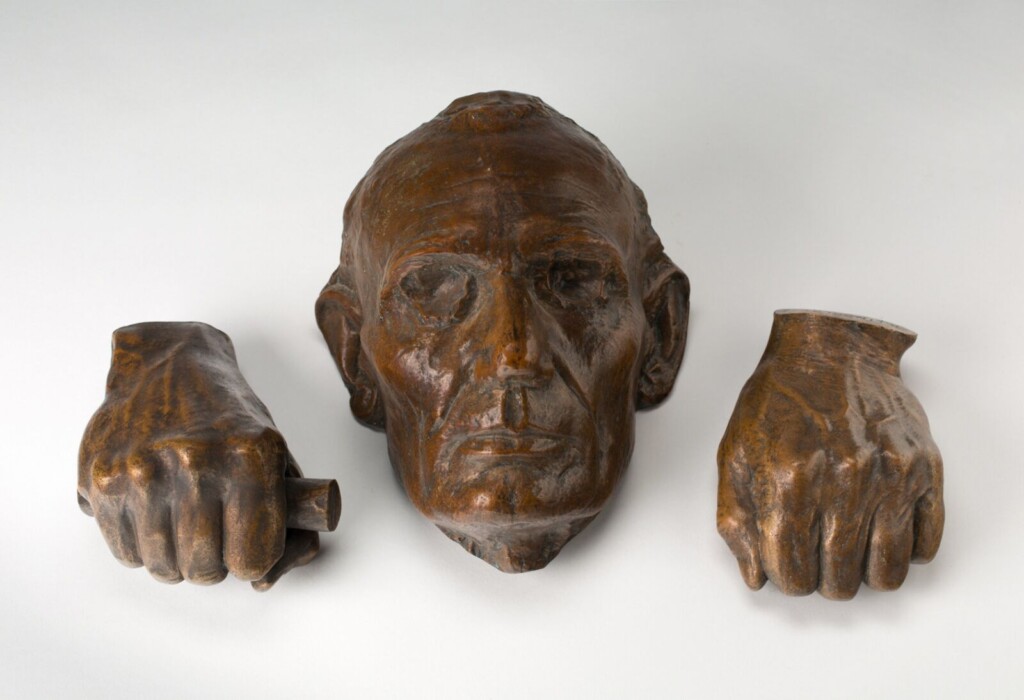
You have done it once, maybe in a bathroom mirror after something broke — a relationship, a role, a version of yourself you had been maintaining for years. You looked and found nothing you could name. Not grief, not freedom, just a face that seemed to be waiting for instructions.
This is the moment most philosophies of authenticity promise you will feel liberated. They are wrong, and the wrongness is structural, not accidental. Zygmunt Bauman spent the last decades of his life mapping what he called liquid modernity — the condition in which all solid structures of identity, community, and meaning dissolve into fluid, temporary configurations that demand constant renegotiation. His 2000 work of that name is not a lament for lost stability but something more unsettling: a diagnosis of a world where the self is perpetually under construction precisely because no construction can ever be final. What Bauman understood, and what the self-help industry built on authenticity discourse systematically suppresses, is that the absence of a mask does not reveal a face. It reveals the scaffolding where a face was supposed to be.
The philosophical tradition that told you there was something underneath — some essential, pre-social, pre-linguistic core of personhood waiting to be recovered — was borrowing its confidence from theology. The soul that existed before the world touched it, the Cartesian subject sealed inside its own certainty, the Romantic genius who suffered because the world could not contain him: these were not discoveries about human nature but inventions, each one serving a specific social and economic function. When industrial capitalism needed mobile, portable labor units capable of relocating, adapting, and rebranding themselves across shifting markets, the ideology of the autonomous self arrived precisely on schedule. Erik Erikson introduced the concept of the identity crisis in 1950, in Childhood and Society, at the exact historical moment when American society was manufacturing unprecedented pressure on individuals to define themselves as coherent, legible, marketable personalities. The timing is not a coincidence. The crisis was the product, not the diagnosis.
What makes this structurally vertiginous is that the masks are not optional. Erving Goffman’s 1959 framework of dramaturgy in The Presentation of Self in Everyday Life is sometimes read as cynical — as if he were exposing human beings as frauds. But the actual argument is more radical and more troubling: performance is not a deviation from authentic social life, it is the mechanism by which social life becomes possible at all. Without the mask, there is no legible other for anyone else to respond to. The vacancy behind the performance is not a secret truth being hidden. It is simply the condition of being a creature whose existence depends on being recognized by others who are themselves performing for the same reason.
And here is where the horror settles in, not as drama but as a quiet structural fact: if the masks are necessary, then stripping them is not courage. It is a kind of social death, and the people who have experienced it — through psychotic breaks, through the collapse of a public identity, through the slow erasure of dementia — do not report encountering their true self on the other side. They report confusion, terror, the unbearable weight of not knowing how to begin a sentence because they no longer know who is speaking. The self is not imprisoned by its performances. The self is the sum of its performances, accreted over time, borrowing coherence from repetition the way a river borrows its shape from the banks it has carved.
The face you saw in that mirror was not waiting to be freed. It was waiting to be told, once more, which mask to pick up from the edge of the sink, because without the mask there is no face at all — only the raw biological fact of a skull beneath skin, which has never, in any culture across any century of recorded human life, been enough.
🎭 The Many Faces Behind the Mask
Identity is rarely a fixed point — it shifts, fragments, and reinvents itself depending on the stage we occupy. From literature to psychology, philosophy to theater, the question of who we truly are beneath the roles we perform has haunted thinkers and artists for centuries. These articles explore the labyrinth of self, fiction, and social persona.
Pirandello’s One Nobody and One Hundred Thousand: Analysis
Pirandello’s masterwork dismantles the very notion of a stable self, proposing that identity is nothing more than a fluid construction shaped by others’ perceptions. The protagonist discovers that he is simultaneously nobody and a hundred thousand different people, each a mask imposed by social interaction. This novel remains one of the most radical explorations of identity as fiction in Western literature.
GO TO THE SELECTION: Pirandello’s One Nobody and One Hundred Thousand: Analysis
Pessoa’s Heteronyms: Analysis
Pessoa's heteronyms — Alberto Caeiro, Ricardo Reis, Álvaro de Campos — are not mere pen names but fully realized alter egos with distinct biographies, philosophies, and poetic voices. Pessoa used these fictional selves to explore the radical multiplicity hidden within a single human being, turning authorship itself into a theater of identities. His practice raises the unsettling question of whether any single ‘true’ self exists beneath the masks we create.
GO TO THE SELECTION: Pessoa’s Heteronyms: Analysis
The Strange Case of Dr Jekyll and Mr Hyde: Analysis
Stevenson’s uncanny novella literalizes the psychological split between the respectable social persona and the darker impulses suppressed beneath Victorian propriety. Dr. Jekyll’s experiment strips away the mask of civilization, revealing that identity is not a unified whole but a precarious balance between contradictory forces. The story endures as a foundational myth of the double self — the face we show the world and the one we hide even from ourselves.
GO TO THE SELECTION: The Strange Case of Dr Jekyll and Mr Hyde: Analysis
Social Hypocrisy: The Double Face of Respectability
Social hypocrisy is perhaps the most pervasive form of identity performance, the collective agreement to maintain a dignified fiction at the expense of truth. This article examines how respectability functions as a double mask — one worn for others and one gradually internalized until the wearer forgets their own face. From bourgeois literature to contemporary culture, the gap between public image and private reality reveals how deeply fiction is woven into everyday life.
GO TO THE SELECTION: Social Hypocrisy: The Double Face of Respectability
Discover Cinema That Dares to Unmask
If these reflections on identity, performance, and the fictions we live by resonate with you, Indiecinema offers a curated selection of independent films that dare to look beneath the surface. Explore our streaming platform and find stories that challenge the masks we wear — one frame at a time.
👉 EXPLORE THE CATALOG: Watch Indie Films in Streaming
A vision curated by a filmmaker, not an algorithm
In this video I explain our vision

