
The Man Who Refused to Be One
You sign your name at the bottom of a letter and pause — not from hesitation about the content, but from something stranger, a brief vertigo in which the signature itself looks foreign, like a word repeated too many times until it dissolves into meaningless shape. The pen leaves the paper and you stare at those looping marks that are supposed to anchor you to a continuous self, the same person who woke up this morning, who argued last Tuesday, who chose a career fifteen years ago and has been living inside that choice like a house you stopped noticing. The feeling passes in seconds. You dismiss it. But that flicker of dissociation — that crack between the name and the one holding the pen — is not a glitch. It is, perhaps, the most honest moment in your day.

Fernando Pessoa understood that crack not as a psychological symptom to be resolved but as the actual architecture of inner life. Born in Lisbon in 1888, he spent most of his adult existence in a city he rarely left, working as a commercial translator, living in rented rooms, and constructing in near-total obscurity one of the most radical literary experiments in the history of Western letters. When he died in 1935, a single trunk contained approximately twenty-seven thousand manuscript pages — poems, philosophical fragments, letters, horoscopes, a prose book left without a final order — the accumulated debris of a mind that had refused, with extraordinary deliberateness, to consolidate itself into one voice.
What Pessoa did was not write under pen names in the way that Georges Sand or Voltaire adopted pseudonyms as masks of convenience or protection. The distinction matters enormously. A pseudonym conceals an author; it is a door with the same room behind it. What Pessoa created were what he called heteronyms — fully autonomous literary personalities, each with a distinct biography, a distinct philosophy, a distinct aesthetic sensibility, even a distinct handwriting. Alberto Caeiro, born in 1889 according to his invented papers, grew up in the Ribatejo countryside and wrote pastoral poetry of radical phenomenological simplicity, rejecting all thought in favor of pure sensation. Ricardo Reis, a Latinist educated by Jesuits, composed odes of cold Horatian paganism. Álvaro de Campos, an engineer trained in Glasgow, produced torrential, Whitmanesque verse of industrial vertigo and erotic exhaustion. These were not voices. They were people — people who disagreed with each other, who commented on each other’s work, who wrote letters to each other and to Pessoa himself, who signed their names at the bottom of pages with the same confidence with which you sign yours, except their confidence was more honest about what a signature actually is.
The philosophical provocation embedded in this project is not merely literary. William James, writing in The Principles of Psychology in 1890, proposed that a person has as many social selves as there are individuals who recognize them — a formulation that unsettled the notion of a unified subject without quite finishing the job. Pessoa finished it. He did not argue that the self was multiple; he demonstrated it by inhabiting multiplicity so completely that the question of which voice was the real one became genuinely unanswerable, not as a riddle but as a structural fact. Caeiro was not a mask Pessoa wore. Caeiro was someone Pessoa was not — and Pessoa knew the difference, which is precisely what makes the whole construction so destabilizing.
Most people spend considerable energy resolving the vertigo you felt holding that pen. They invest in continuity — in a name, a career, a consistent set of opinions — because the alternative feels like dissolution. Pessoa looked at dissolution and saw something else: not the loss of self but the exposure of what was always true about it, which is that unity was the fiction, and the multiplicity was the ground.
The Kempinsky Method

Drama, by Federico Salsano, Italy 2020.
The introspective imaginary road movie of a man in the maze of his own mind, his memories of his youth, his never dormant passions and contradictory truths. The road is made of water, the destination is falsely unknown. His traveling companions are three mysterious men, projections of his imagination and of different aspects of his personality: the perennial melancholy, the crazy creative, the introverted child. He is also followed by a female presence that tells the umpteenth human story. At a certain point of the crossing he decides to abandon the boat and his ghosts of him diving into the sea and arrives swimming on a deserted beach, naked, with a small Pinocchio puppet closed by a padlock.
In this splendid film life is like a long sea voyage and the human being is a small creature confronting immensity. Sometimes the ocean is calm, other times there are terrible storms. Sometimes we are captains of a boat with a well-defined route, other times we are shipwrecked in search of a land in which to save ourselves. But despite the long journey and the movement in physical space, there are other questions that resonate in the mind: who are these men I travel with? What is the mystery of this immense mass of water that seems to be made of my memories? You can circumnavigate the whole world but the main question always remains the same: who am I really?
LANGUAGE: italian
SUBTITLES: english, spanish, portuguese, german, french
Lisbon, 1914, and the Invention of Others
You sit down to write and something else arrives. Not a revision of your voice, not an alter ego, not a pen name chosen for discretion or commerce — something with its own childhood, its own face, its own way of standing in a field and deciding that the field requires no interpretation. This is not metaphor. On March 8, 1914, Fernando Pessoa wrote in a single sustained burst the poems that would constitute the corpus of Alberto Caeiro, a fictional man born in Lisbon in 1889 who had spent most of his short life in the Alentejo countryside and who believed, with the rigorous calm of someone who has never needed to convince anyone of anything, that thinking is a disease of the eyes. Pessoa called it his triumphal day. He did not mean he had succeeded at something. He meant something had happened to him that could not be undone.
Portugal in 1914 was a country three years into a republic that had violently displaced a centuries-old monarchy and had not yet found its footing. Lisbon was a city of literary cafés and political volatility, of futurist manifestos arriving from Italy and Paris, of a generation that sensed Europe accelerating toward catastrophe without knowing what form that catastrophe would take. Pessoa was twenty-five, largely unpublished, working as a commercial translator, writing in three languages, and already conducting what he would later describe as the intimate drama of his own decomposition. The word he used was desassossego — unease, restlessness, a disquiet that has no object and therefore no resolution. Into this atmosphere he released not a poem but a person, and then, within days, two more: Ricardo Reis, a neo-pagan classicist educated by Jesuits, and Álvaro de Campos, a naval engineer from Tavira who had studied in Glasgow and written a violent ode to machinery and sensation. Each arrived with a biography. Each had opinions about the others.
What makes this philosophically rupturing rather than merely eccentric is that Pessoa did not treat these figures as masks. The mask, as a concept, implies a face behind it — a real one, primary, temporarily concealed. Pessoa’s move was more radical and more disturbing: he dissolved the concept of the face behind the mask entirely. In a letter of 1935, weeks before his death, he wrote that he had no personality of his own, that he had only created personalities, and that this was not a deficiency but an ontological condition he had simply made visible. William James had argued in 1890 in The Principles of Psychology that the self is plural, that we have as many social selves as there are individuals who recognize us — but James still anchored this multiplicity in a stream of consciousness belonging to one organism. Pessoa refused even that anchor. The heteronyms did not share his consciousness. They disagreed with each other. Caeiro was Reis’s master. Campos mourned Caeiro’s death. Pessoa himself, writing under his own name, occupied a position subordinate to all three — an orthonym, not an author, a man who had become the stage on which others performed.
The literary establishment of his time, and to some degree of ours, has tried to domesticate this by calling it a modernist technique, placing it alongside the unreliable narrators and fragmented voices that characterize fiction after 1900. But Caeiro did not narrate. He perceived. He wrote poems that refused to mean anything beyond their own surface, and he did so from a philosophical position — a radical empiricism that predates Pessoa’s reading of any empiricist — that the heteronym had arrived at independently. When Pessoa wrote him, he later said, he tried to be his best pupil. The student writing the teacher into existence and then submitting to his authority is not a narrative device. It is a description of what actually occurred inside a rented room in Lisbon at the beginning of a year that would end with the world on fire.

The Heteronym as Philosophical Weapon

You pick up the book and something shifts — not the pleasant drift of a novel pulling you forward, but a specific vertigo, the kind that arrives when the ground you thought was concrete turns out to be a painted surface. Three voices inhabit the same collected volume, and each one, read carefully, makes the other two impossible.
Alberto Caeiro watches a stone and insists that thinking about the stone is already a betrayal of it. His 1914 poems, later gathered under the title “The Keeper of Sheep,” perform a radical act of perceptual surrender: sensation without interpretation, existence without metaphysics, a consciousness so emptied of itself that it approaches the condition of grass. He is not being naïve. He is making a claim so total it constitutes a philosophy — that the accumulated machinery of Western interiority is a disease, and that health means looking at a river and seeing only water. This is not mysticism. Caeiro explicitly refuses transcendence. The river is not a symbol. The river is a river, and that is already enough to annihilate you if you let it.
Ricardo Reis, writing in measured Horatian odes, answers this with quiet devastation. Where Caeiro evacuates the self, Reis constructs it with deliberate, classical precision — and then sentences it. His paganism is not celebration but acceptance of permanent diminishment. The gods exist and they are indifferent, time moves in one direction, pleasure is permissible only when held at the exact distance that prevents attachment. Reis does not refute Caeiro by arguing; he refutes him by inhabiting a different emotional universe entirely, one in which sensation without form is not liberation but chaos. He is a man building an elegant structure over an abyss he has already acknowledged and decided, quietly, not to look at again.
Álvaro de Campos demolishes both of them with a kind of ecstatic aggression. His “Ode Triumphant” of 1914 and the later “Tobacco Shop” poem do not meditate or measure — they howl, accelerate, contradict themselves mid-sentence, worship modernity’s industrial noise and then collapse into a self-loathing so precise it reads like a clinical document. Campos does not choose between sensation and form; he wants everything simultaneously and recognizes, with full lucidity, that wanting everything is a form of annihilation. He is the most modern of the three in the specific sense that his suffering resembles the suffering of someone who has read too much and experienced too little, which is to say, nearly everyone.
Friedrich Nietzsche argued in “The Will to Power,” assembled posthumously in 1901, that there is no single correct perspective on reality — only perspectives, each legitimate within its own optics, each necessarily partial. This is not relativism, which implies that nothing matters; it is something more unsettling, namely that everything matters, but only from somewhere, and there is no position outside all positions from which to adjudicate. Pessoa did not merely illustrate this. He weaponized it. Each heteronym is a fully realized perspectival stance, and what makes them devastating is that none of them can be refuted from inside the others’ logic, only from a position that does not exist.
William James, in “A Pluralistic Universe” published in 1909, proposed that reality itself is irreducibly multiple — not a unified whole with parts, but a collection of genuine, sometimes incompatible facts that do not resolve into a single coherent story. James was reacting against the idealist tradition’s hunger for totality, its need to make everything cohere. Pessoa’s heteronyms are, in this sense, a literary application of radical pluralism: not a fractured self searching for wholeness, but a demonstration that wholeness was always the fiction, and that the fragments are the actual units of existence.
Forty years before poststructuralism made the decentered subject academically respectable, a man in Lisbon was not theorizing its collapse but enacting it, with names, biographies, astrological charts, and irreconcilable poems — none of which he ever claimed as his own.
What Modernity Needed to Believe
You are sitting in a seminar room, or a boardroom, or a confessional — the architecture barely matters — and someone asks you to sign your name to something. A contract, a thesis, a confession, a policy. The act feels natural, even inevitable, as though your signature were simply the physical residue of a self that was always already there, coherent and continuous, waiting to be called upon. You do not pause to question what you are certifying. You certify yourself, and that feels like the most obvious thing in the world.
This obviousness has a history, and it is neither long nor inevitable. Before the late eighteenth century, authorship in the Western tradition was largely understood as a form of transmission — the writer as conduit for received wisdom, divine instruction, or communal story. Then Romanticism arrived and performed what can only be described as a theological transfer: the attributes once belonging to God — originality, creative sovereignty, ineffable interiority — were quietly migrated into the individual human artist. Wordsworth’s Prelude, published posthumously in 1850 after decades of private revision, is perhaps the purest monument to this migration: a fourteen-book poem whose entire subject is the growth of a single consciousness, as though one mind’s development were sufficient material for an epic. The genius became sacred precisely because capitalism needed him. A legible, bounded, accountable subject could hold property, sign contracts, take credit, accept blame. The singular author was not merely a Romantic fantasy but a legal and economic necessity — the named origin point around which rights, royalties, and reputations could be organized. To multiply the self was to commit a kind of fraud against the entire architecture.
Pessoa understood this without theorizing it explicitly, which is what makes his heteronymic project so structurally dangerous rather than merely eccentric. By 1914, when he inhabited Alberto Caeiro for the first time in what he later described as a trance of twenty-odd poems written in a single afternoon, he was not performing literary playfulness. He was withdrawing the signature. Each heteronym came with a biography, a horoscope, a handwriting, a set of aesthetic convictions incompatible with the others. Caeiro had no metaphysics; Ricardo Reis had a neoclassical formalism; Álvaro de Campos moved through Whitmanesque excess toward existential exhaustion. None of them was Pessoa, and Pessoa was none of them. The man who had to appear on documents, who held a job translating commercial correspondence in Lisbon, who paid rent — that bureaucratic residue called Fernando Pessoa — was himself just another mask, listed in his own archive as Pessoa-ortónimo, the original that turns out to be no more original than its copies.
Roland Barthes announced the death of the author in 1967 as though it were a theoretical discovery, and his essay landed in French intellectual culture like a small explosion. But Barthes was, in the precise sense, late. He was describing as a critical proposition what Pessoa had enacted as a lived practice more than fifty years earlier, in a city peripheral to the European avant-garde, without manifestos or institutional support. What Barthes argued was that the author’s biographical identity had always been a retroactive imposition — a way of closing the text, of limiting its meanings by anchoring them to an origin. The reader, he insisted, comes into existence at the cost of the author’s death. Pessoa had already built an entire cosmology around this principle, except that for him there was no single death to announce, because there had never been a single life to mourn.
The deeper violence in this is not aesthetic but political. A culture that cannot locate a singular responsible self becomes ungovernable in very specific ways. You cannot tax a heteronym. You cannot hold a persona legally liable. The proliferation of selves is, at its structural root, a refusal of the kind of individuality that power requires in order to function — and that refusal was written not in pamphlets but in poetry, which made it almost impossible to prosecute.
Campos and the Body That Cannot Rest

You are standing on a dock somewhere industrial, watching ships leave, and the feeling that moves through you is not sadness exactly but a kind of metabolic rage — the body’s fury at being stationary while everything enormous moves away. Álvaro de Campos was born inside that feeling and never left it. He is the heteronym who arrives with the most noise: naval engineer, dandy, self-declared futurist, the one who wrote “Ode Triumphal” in 1914 with a velocity that seemed to want to consume the entire century before it happened. The machinery, the factories, the roar of engines and the smell of grease and salt — Campos wanted to swallow it all, and the wanting itself was the wound.
Walt Whitman is the obvious ancestor, and Campos knew it, even weaponized it. But where Whitman’s catalogs expand toward democratic ecstasy, toward a self that grows larger by containing multitudes, Campos’s accumulation turns rancid midway through. The lists accelerate, the sensations multiply, and then something buckles. “Ode Maritima,” written the same year, moves from oceanic exhilaration into a kind of hallucinatory self-dissolution that reads less like liberation and more like a man trying to outrun his own nervous system. The expansiveness is real but it is also a symptom — the organism pushing harder precisely because stillness would be unbearable.
Freud published “Civilization and Its Discontents” in 1930, sixteen years after those odes were written, but the diagnosis fits with uncomfortable precision. His central argument is that civilization is not the solution to human suffering but one of its primary engines: that the instinctual renunciations required for social life generate an aggression that has nowhere to go, a libidinal surplus that cannot be discharged, a restlessness that the organized world simultaneously produces and refuses to accommodate. The price of living inside shared structures is a permanent low-grade torment. Campos does not illustrate this thesis — he embodies it, viscerally, in the syntax of his lines, which sprint and stall and sprint again as if the verse itself cannot find a sustainable rhythm.
What makes Campos philosophically distinct from mere romantic restlessness is that he has no pastoral alternative. He is not yearning for something simpler. He is a man who genuinely loves engines and electricity and the brutal acceleration of modern life, and he is still destroyed by it. His exhaustion is not the exhaustion of someone who wanted quiet and got noise. It is the exhaustion of appetite itself — of desire that has been fully given what it asked for and discovered that satisfaction is structurally unavailable. The later poems, particularly “Tabacaria” written around 1928, arrive somewhere stripped and raw, the futurist bravado burned off, leaving a man watching a stranger cross the street and finding in that ordinary motion an accusation he cannot answer.
The body in Campos is never incidental. It sweats, it wants, it recoils. Caeiro dissolved the body into pure sensation; Reis disciplined it into classical restraint. Campos cannot manage either move. He is stuck inside the physical, unable to transcend it and unable to be satisfied by it, which is precisely the condition Freud was describing — not as a pathology of exceptional people but as the baseline condition of the civilized animal. The difference is that Campos wrote it from inside, without the clinical distance, without the theoretical consolation that at least the mechanism is now understood. Understanding the trap does not open the door. He knew what was happening to him with extraordinary precision and the knowing changed nothing, which is perhaps the most honest thing any of Pessoa’s invented selves ever admitted about the relationship between consciousness and relief, between seeing clearly and being free —
A vision curated by a filmmaker, not an algorithm
In this video I explain our vision
Ricardo Reis and the Trap of Stoic Withdrawal
You have rehearsed this posture before, even if you never called it that. The moment when something unjust happens — a dismissal, a humiliation dressed as protocol, a door closed with exquisite manners — and instead of rage you reach for calm. You tell yourself: this is the nature of things. You find the right internal distance. You even feel, briefly, superior to those who cannot manage it.
Ricardo Reis lived permanently inside that moment. The heteronym Fernando Pessoa constructed around 1914 and only fully inhabited through the 1910s and 1920s wrote odes in strict Horatian meters, invoking Lydia and Neera with the cool precision of a man who has already finished grieving. His verses accept death, inequality, the passage of time, the indifference of the gods, with a formal serenity so complete it reads as a kind of spiritual achievement. “Sê todo em cada coisa” — be entirely in each thing — sounds like presence, sounds like wisdom. It is, on close inspection, the philosophy of a man who has decided in advance that nothing is worth fighting for.
Pierre Bourdieu, in his 1977 work Outline of a Theory of Practice, introduced the concept of symbolic violence to describe something subtler than force: the way social hierarchies reproduce themselves through the voluntary participation of those they subordinate. The subordinated do not merely obey — they come to experience the hierarchy as natural, even beautiful. They develop a taste for their own position. They aestheticize constraint. What Bourdieu noticed was not cruelty but elegance: the most durable forms of domination are the ones that have been converted into style.
Reis converted everything into style. His acceptance of fate is never crude fatalism; it is Horatian, sculpted, classically educated. He quotes, implicitly, a tradition — Epicurus, Marcus Aurelius, the entire Stoic lineage — that has historically been the philosophical property of men with enough material security to afford tranquility. The Stoic sage who counsels acceptance of what cannot be changed has almost always been writing from a position where very little needed changing for him personally. Seneca was immensely wealthy. Marcus Aurelius was emperor. The advice to submit gracefully to the order of things carries different weight depending on how that order has arranged itself around you.
This is not an accident of biography but a structural feature of what Reis represents. His odes perform distinction — Bourdieu’s word for the way cultural taste functions as social currency — by demonstrating mastery over emotion, over vulgarity, over the desperate desire to resist. The reader who finds Reis beautiful is also, in that moment, practicing a kind of class gesture. To appreciate his cold Latin cadences is to signal that one has been cultivated enough to understand suffering as aesthetic material rather than as something requiring a response.
What makes this particularly difficult to name is that Reis is genuinely moving. The odes are not cynical. They contain real grief, real tenderness toward the bodies of women who will age, real acknowledgment of what disappears. The trap is not false feeling but feeling that has been redirected — away from the world and toward the self, away from the changeable and toward the eternal, away from action and toward beautiful, useless contemplation. The beauty is real and the uselessness is real at exactly the same time.
There is a kind of person who becomes more Reisian as they age — who reads Marcus Aurelius on the train, who has learned to speak of disappointments with a measured smile, who has decided that equanimity is wisdom and not, sometimes, a surrender that has simply been dressed in finer clothes than surrender usually wears. The question that Reis, unwittingly, plants in the reader is whether the peace you have made with the world is a genuine achievement or whether the world benefited most from your making it.
The Orthonym’s Silence and the Void at the Center
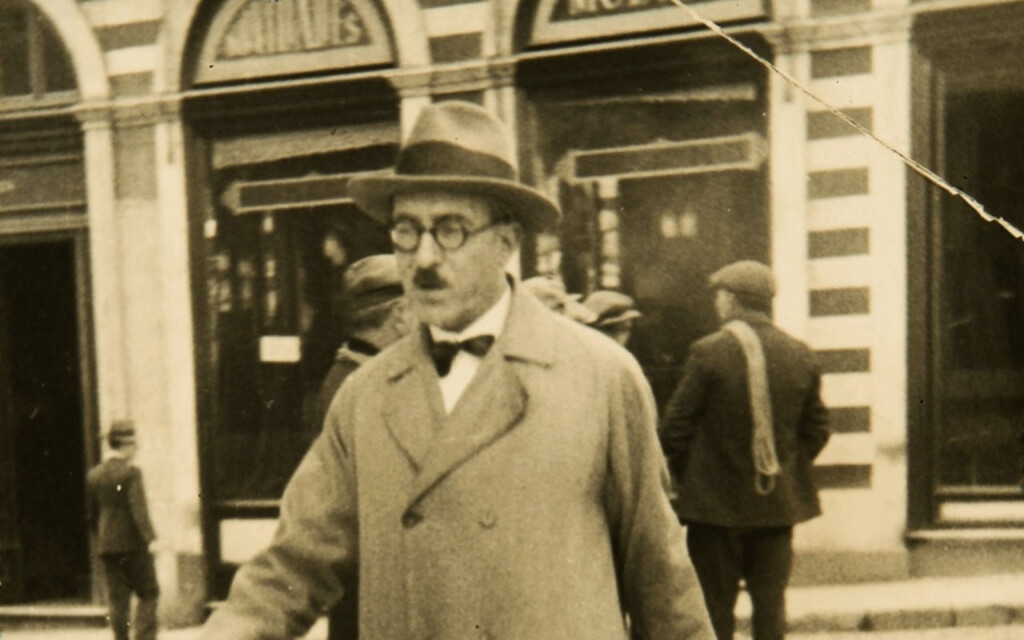
You have met someone at a party who, when asked what they do, answers by describing what their friends do. Not evasively, not modestly — with genuine precision and warmth, as if the question had been correctly understood and correctly answered. There is something in that person that does not disturb you until much later, when you realize you cannot remember a single thing they said about themselves, because there was nothing to remember. That is Fernando Pessoa, orthonym.
The orthonym is not a heteronym. This distinction is not semantic — it is ontological. Álvaro de Campos had a biography, a naval engineering degree from Glasgow, a body that drank and suffered. Ricardo Reis had a political theology, a Latinate precision, a relationship to fate that was almost Roman in its coldness. Alberto Caeiro had a countryside and a philosophy of pure sensation that D.H. Lawrence might have recognized, though Caeiro would have found Lawrence’s need to theorize it obscene. These were not masks. They were inhabitants. The one who created them, however, was not a self in any coherent sense — he was the condition of possibility for selves, which is an entirely different and far more disturbing thing.
The Book of Disquiet, attributed to Bernardo Soares but leaked from Pessoa’s own interiority with a transparency that embarrasses the fiction of distance, was assembled from fragments written between roughly 1913 and 1935 and published only in 1982, nearly five decades after his death. It has no plot because it refuses the consolation of sequence. It has no argument because argument implies a subject stable enough to hold a position across time. What it has instead is a texture — a meticulous, almost forensic attention to the experience of existing without the sense that existence coheres. Soares, the supposed author, is a clerk in Lisbon who watches the city and cannot decide whether consciousness is a gift or a punishment, and who suspects the question itself is the trap. The book does not resolve this. It accumulates it.
William James, writing in The Principles of Psychology in 1890, described the self as a stream — continuous, flowing, constitutively forward-moving. What Pessoa discovered, or what discovered Pessoa, was that some people do not have a stream. They have a delta: water that divides so many times before reaching the sea that no single channel carries enough to name. The heteronyms were not escapes from a suppressed self. They were what happened when the generative pressure of interiority had no singular container. Creation flowed outward because inward was not a place.
This reframes fragmentation entirely. The psychological tradition from Pierre Janet’s late nineteenth-century work on dissociation onward has treated divided selfhood as a symptom — evidence of trauma, of rupture, of something that should have been whole and was broken. Pessoa’s life and work constitute a counter-argument that is never stated as such, because stating it would require a unified self to make the claim. The void at the center was not the wound. It was the architecture. The gravitational pull that kept Campos, Reis, and Caeiro in orbit was not a hidden authentic Pessoa around whom they circled. It was the absence itself — a black hole generates motion not despite having no light but because of it.
What is most unsettling about the orthonym is that this makes him not less real than the heteronyms but more structurally necessary, in the way that silence is not the absence of music but its condition. Bernardo Soares writes in The Book of Disquiet that he is the gap between desire and the world. Not the desiring subject, not the world — the gap. This is either the most precise description of modern consciousness ever written, or it is the only honest thing a man without a self could say about what it feels like to generate four of them and remain, himself,
Identity as Performance Before Anyone Named It That
You are handed a form at the border. Name. Nationality. Occupation. You fill it in without hesitating, and the remarkable thing is not that you answer — it is that you never once wonder whether the person answering is the same one who will walk through the gate on the other side.
Fernando Pessoa was filling out that form in 1913 and leaving every field blank, or rather, filling each one with a different hand. Alberto Caeiro was born on April 16, 1889, in Lisbon, and died of tuberculosis in 1915 — Pessoa invented both dates with the precision of a civil registrar forging documents for someone who needed to exist. Ricardo Reis had opinions about odes. Álvaro de Campos had a naval engineering degree from Glasgow and a hunger that could not be metabolized into any single life. These were not masks in the theatrical sense, which implies a face underneath waiting to be recovered. They were the argument that no such face exists.
Judith Butler’s Gender Trouble, published in 1990, gave academic philosophy the vocabulary to say what Pessoa had already demonstrated in practice seven decades earlier: that identity is not a stable interior truth that gets expressed through behavior, but a citational performance repeated until it calcifies into the appearance of nature. Butler drew on J.L. Austin’s speech act theory and on Foucault’s genealogy of the subject to show that gender — and by extension selfhood — is constituted in the doing, not prior to it. The self is not a noun but a verb that has forgotten it is conjugated. Pessoa made the same claim not in a scholarly argument but in the actual texture of four incompatible lives written from the inside, each one believing itself real because the performance was total.
What a culture pays to suppress this knowledge is not trivial. The entire architecture of legal personhood, of psychological diagnosis, of romantic love as it is commercially structured, depends on the fiction of a unified self that persists across time and can be held accountable, can sign contracts, can be known. The DSM categorizes the multiplication of selves as disorder. Courts require a single continuous subject to be prosecuted. Marriage vows are spoken to a person imagined as permanent. The costs of believing otherwise are not abstract — they are institutional, economic, and deeply personal in ways most people are not permitted to examine without being pathologized.
The philosopher Derek Parfit argued in Reasons and Persons in 1984 that personal identity over time is not what matters — that what we call the self is a series of loosely connected psychological states with no essential core, and that this realization, properly absorbed, should change how we think about ethics, punishment, and even death. He was writing philosophy. He was received as eccentric, difficult, fascinating, and ultimately not quite applicable to ordinary life. Pessoa was writing poetry and prose that did the same thing not as argument but as inhabitation, and he was received as a literary curiosity, a Portuguese genius, safe to admire from a distance because his method could be quarantined inside the category of artistic license.
Artistic license is the cage culture builds to contain any demonstration that the cage does not exist. The heteronyms were not licensed experiments. They were a refusal of the premise that selfhood is singular, and that refusal is still considered manageable precisely because it was enacted by one man alone in Lisbon, writing in trunks, dead in 1935, now translated into forty languages for readers who consume his multiplicity as a beautiful anomaly and then go home to be, with great discipline, themselves.
The question that remains is not what Pessoa was doing or whether Butler was right, but what performance you are currently in the middle of, and whether you chose the script or whether it was already running when you arrived.
🎭 Masks, Selves, and the Labyrinth of Identity
Fernando Pessoa’s heteronyms represent one of literature’s most radical experiments in fragmented selfhood, raising profound questions about authorship, identity, and the multiplicity of consciousness. The articles below trace parallel labyrinths — from literary doubles and stream of consciousness to the philosophical roots of the fractured self.
The Double in Literature: From Dostoevsky to Stevenson
The figure of the double in literature finds its deepest expressions in Dostoevsky’s uncanny mirror selves and Stevenson’s split between Jekyll and Hyde, anticipating Pessoa’s own fragmentation of authorial identity. This article maps the psychological and literary genealogy of the doppelgänger, revealing how writers have long sensed that the self is never singular. Understanding this tradition illuminates why Pessoa’s heteronyms felt not like invention but like discovery.
GO TO THE SELECTION: The Double in Literature: From Dostoevsky to Stevenson
The Interior Monologue in Literature: History and Theory
The interior monologue as a literary technique dissolved the boundary between author and character, making way for voices that seem to speak from within with autonomous will. This article traces the technique from its proto-forms in nineteenth-century prose through Joyce, Woolf, and Schnitzler, situating Pessoa’s heteronymic project within a broader modernist revolt against unified narration. Pessoa pushed the form further still, giving each inner voice its own biography, philosophy, and style.
GO TO THE SELECTION: The Interior Monologue in Literature: History and Theory
Hesse’s Steppenwolf: Analysis
Hesse’s Steppenwolf presents a self shattered into irreconcilable halves — the bourgeois man and the wild spirit — in a manner that echoes Pessoa’s own division among Caeiro, Reis, and Campos. This analysis explores how Hesse constructs a labyrinthine inner world where identity becomes a hall of mirrors rather than a stable core. Both authors suggest that multiplicity is not pathology but a more honest account of what it means to be human.
GO TO THE SELECTION: Hesse’s Steppenwolf: Analysis
William James and Consciousness: The Stream of Thought
William James‘s concept of the stream of thought proposed that consciousness is not a fixed entity but a flowing, plural, and perpetually shifting current — a philosophical foundation that resonates deeply with Pessoa’s heteronymic practice. This article examines how James dismantled the Cartesian unified subject, opening space for literary and psychological explorations of multiple selfhood. Pessoa, whether knowingly or not, embodied James’s insight in its most extreme literary form.
GO TO THE SELECTION: William James and Consciousness: The Stream of Thought
Explore the Cinema of the Fragmented Self on Indiecinema
If Pessoa’s labyrinth of selves has stirred something in you, Indiecinema is the streaming home for films that dare to explore identity, consciousness, and the many faces we wear. Discover independent and avant-garde cinema that asks the same radical questions Pessoa posed in verse — stream it now on Indiecinema.
👉 EXPLORE THE CATALOG: Watch Indie Films in Streaming
A vision curated by a filmmaker, not an algorithm
In this video I explain our vision

