
The Monster as Mirror
You are standing in your kitchen at 2 a.m., and something is wrong. Not the creak of a floorboard, not a shadow at the window — nothing so generous as an external threat. The wrongness is interior, sourceless, the kind that makes you grip the counter edge and stare at the familiar geometry of your own cabinets as though they have become evidence of something you cannot name. The refrigerator hums. The clock moves. Everything is exactly as you left it, and that is precisely the problem. Because for one vertiginous moment you are not certain that the person who left it this way was entirely you.

Horror has always understood this moment better than psychology admitted. The genre spent most of the twentieth century wearing the disguise of external menace — the creature, the invader, the thing that comes from elsewhere — and audiences accepted the disguise gratefully, because a monster that arrives from outside carries with it the implicit promise that it can be expelled, outlasted, survived. The architecture of classical horror is ultimately optimistic: the house can be left, the evil can be named, the credits can roll on a world restored to its prior coherence. What contemporary gothic has done, with increasing precision and without mercy, is to dismantle the exit.
The distinction matters enormously and has been building for longer than most cultural criticism acknowledges. Sigmund Freud, in his 1919 essay “The Uncanny,” identified the unheimlich — the unhomely — as dread that arises not from the foreign but from the familiar suddenly estranged, the domestic turned strange, the known face wearing an expression you have never seen before. What Freud was describing was not a ghost story. He was describing the self encountering its own repressed material surfacing at the threshold of consciousness, and the terror was not that something alien had entered but that something native had returned. The horror, in other words, was always autobiography.
What the twenty-first century has done is take that theoretical proposition and build entire narrative worlds out of it, worlds in which the haunting is architectural only in the metaphorical sense — the haunted space is identity itself, memory itself, the story a person has been telling about who they are. Grief does not merely accompany the horror; grief is the horror. Trauma is not the backstory that explains the monster; trauma is the generative engine producing the monsters without end. The distinction between victim and threat begins to dissolve in ways that traditional horror could never afford, because traditional horror required moral clarity to function.
Julia Kristeva’s 1980 work “Powers of Horror” introduced the concept of abjection as the mechanism by which the self establishes its borders — the violent expulsion of what cannot be integrated, the maternal body, the corpse, the fluid, the formless — and argued that this expulsion is never clean, never complete. What is abjected does not disappear; it haunts the perimeter, pressing back. Contemporary gothic takes Kristeva’s theoretical perimeter and makes it the plot. The thing pressing back is not a demon. It is the version of yourself you decided not to be, the grief you swallowed in 2003, the love you corrupted by remaining silent during the one conversation that mattered.
This is why contemporary horror refuses catharsis in the classical sense. It is not withholding resolution out of nihilism or artistic perversity. It is being accurate. There is no expulsion ritual for the self’s abject material because there is nowhere to expel it to — it lives in the same body, dreams through the same nervous system, surfaces in the kitchen at 2 a.m. wearing the face of an ordinary Wednesday.
The Ecstasy of Isabel Mann
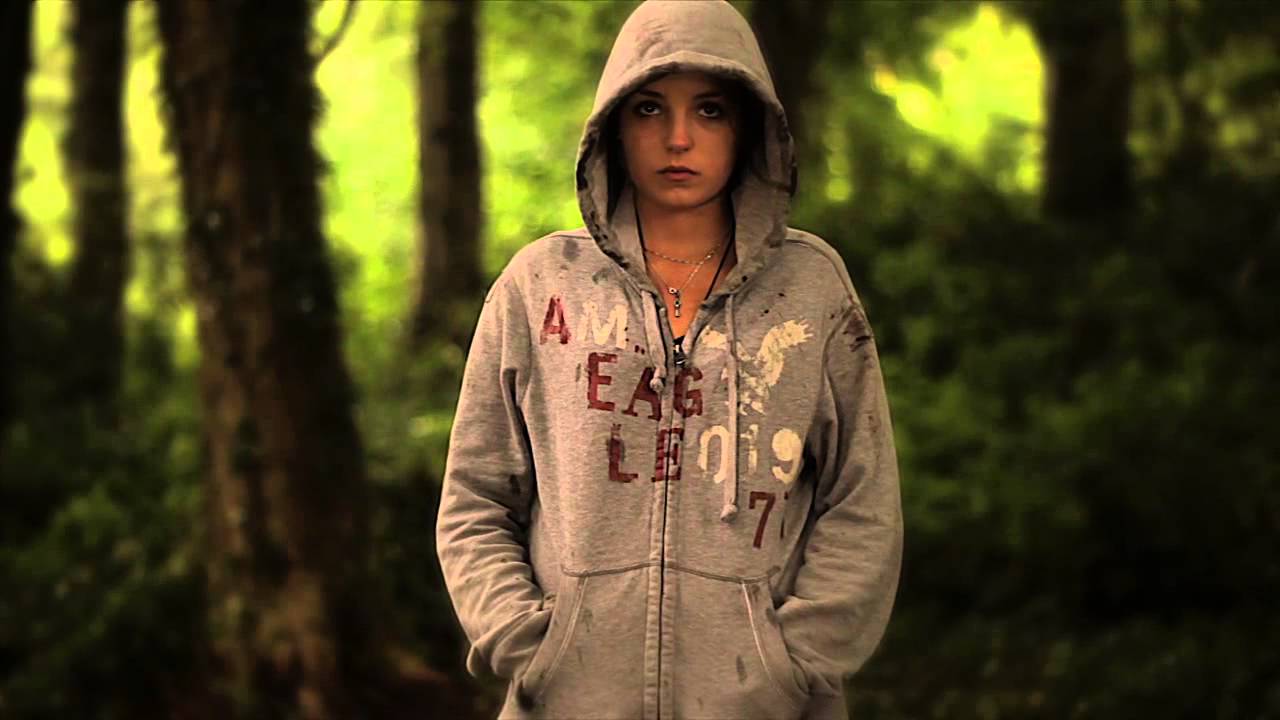
Horror, thriller, by Jason Figgis, United States, 2016.
Set in Ireland, the film tells the story of Isabel Mann, an introverted and lonely teenager who is drawn into a dark and seductive world of blood, violence, and vampirism. As the story unfolds, Isabel undergoes a disturbing transformation—from a vulnerable young girl to a ruthless creature—guided by a group of vampires who pull her into a spiral of murder and ritual. At the same time, a team of detectives attempts to shed light on a series of brutal killings that seem to be connected. However, their investigation leads them toward a truth far more unsettling than they could have anticipated.
The film stands out for its cold, disturbing atmosphere and a slow, reflective narrative that favors psychological depth over action. Vampirism here is not just a genre element, but takes on a symbolic meaning tied to adolescent alienation, the search for identity, and the longing to belong. *The Ecstasy of Isabel Mann* embraces an auteur style and carries the emotional intensity of Ellen Mullen’s lead performance. It’s a different kind of horror film—intimate and melancholic—capable of blending teenage tragedy with the vampire myth in a modern, introspective way.
LANGUAGE: English
SUBTITLES: Spanish, French, German, Portuguese
Freud's Uncanny and the Dread We Manufacture
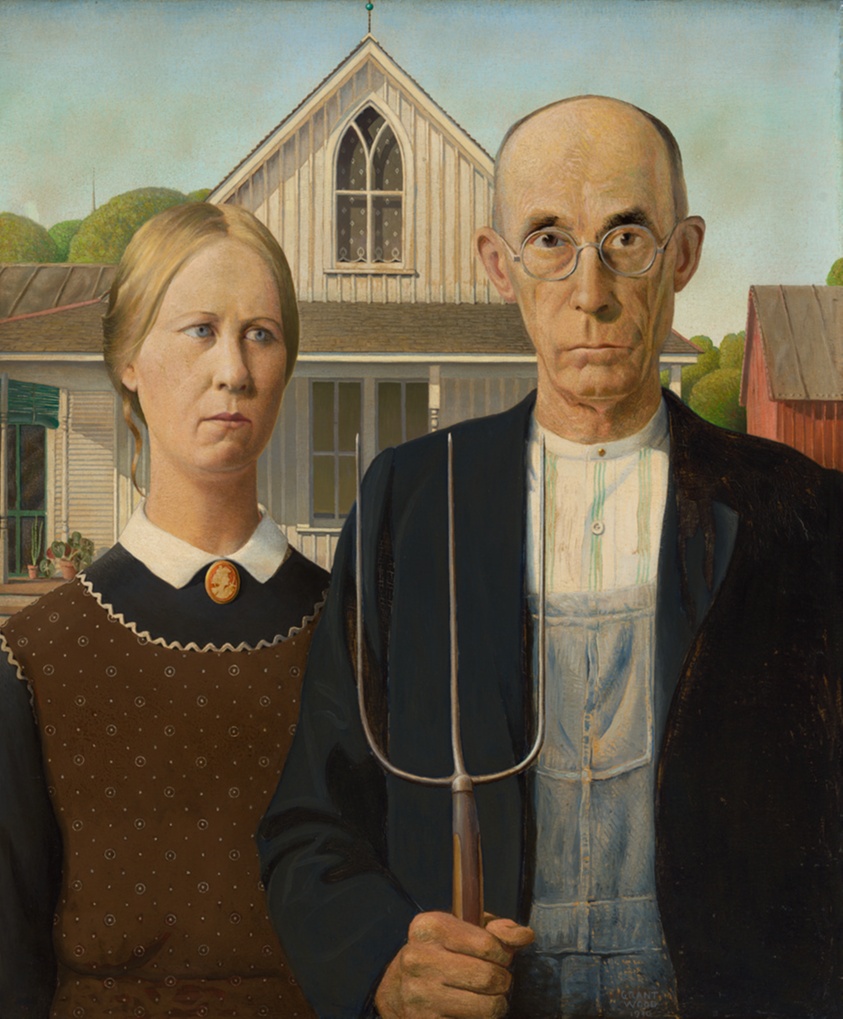
You already know the shape of what terrifies you. It is not the creature with no face. It is the creature wearing a face you love.
Sigmund Freud published “The Uncanny” in 1919, just as Europe was still counting its dead from the first industrialized war in history, and the timing was not incidental. He was not simply cataloguing aesthetic effects in literature. He was describing what happens when the psyche encounters something that should have stayed buried — specifically, the return of repressed material dressed in the clothing of the ordinary. The German word he built his argument around, unheimlich, is the negation of heimlich, meaning homely, intimate, belonging to the household. The uncanny is therefore not the alien. It is the domestic made monstrous. It is the house that kills you.
What Freud identified, with precision that most of his contemporaries missed, is that terror is not a response to the genuinely foreign. It is a response to the familiar that has been displaced just enough. The childhood bedroom at three in the morning. The sound of your name spoken in a voice that is almost right. The mirror that responds a half-second too late. These are not stimuli that overwhelm the nervous system with novelty. They are stimuli that activate recognition and simultaneously corrupt it. The brain reaches for the category — I know this, I have been here, this is safe — and finds that the category has been hollowed out and something else placed inside. That gap between recognition and wrongness is where dread lives, and it is a manufactured dread, produced not by the world but by the architecture of the self trying and failing to sort what it perceives.
This is why horror’s most decisive shift in the latter half of the twentieth century was not technological or formal. It was diagnostic. The monster moved indoors. It stopped arriving from outside and started emerging from within the domestic structure — from the father’s silence at dinner, the locked room in the family home, the children who begin behaving as though they have never known you. Ernst Jentsch, writing before Freud and whose work Freud explicitly engaged with and extended, located the uncanny in intellectual uncertainty about whether something is animate or inanimate. But Freud corrected him: the uncertainty is not intellectual. It is emotional. It concerns not what a thing is but what a person once knew and has since refused to acknowledge. The horror is in the refusal, not the thing refused.
When modern horror places its dread inside a marriage, inside a parent-child relationship, inside the geography of a home that has been lived in for years, it is not domesticating the genre or making it smaller. It is making it structurally accurate. The most efficient vector for psychological terror is not a stranger. It is a person you have organized your sense of safety around. A trusted voice delivering instructions that are subtly wrong. A familiar face whose expression no longer matches the context. The body responds before the mind catches up, which is precisely where the genre has learned to operate: in the lag between perception and interpretation, in the milliseconds before the conscious mind has decided how to categorize what it is experiencing.
Ernest Becker argued in “The Denial of Death” in 1973 that human civilization is largely an elaborate defense against the awareness of mortality — that culture, achievement, and identity are all systems constructed to make the fact of dying psychologically manageable. Horror, understood through this frame, is the genre that tears small holes in that construction and lets the original fear breathe through. But the specific horror that draws on Freud’s mechanics does something more surgical: it doesn’t threaten you with death from outside.

The Gothic as Social Autopsy
You already know the house before you enter it. The rotting threshold, the portraits watching from above the staircase, the sense that the walls themselves have accumulated grievances across generations — you recognize all of it not because you have read the right books but because the architecture is a diagram of something you have already lived, something about inheritance and debt and the weight of people who came before you and left their damage in the foundations.
Horace Walpole built that architecture in 1764 not as entertainment but as confession. The Castle of Otranto arrived dressed as a medieval manuscript, a found document from a safer historical distance, because what it actually encoded — the tyranny of patrilineal inheritance, the violence of property rights over human bodies, the way family legacy crushes the living under the mass of the dead — was too naked to be stated plainly in polite Georgian society. The gothic genre was born wearing a disguise, and every subsequent iteration has kept that disguise precisely because what it conceals remains too dangerous to speak directly.
Jeffrey Alexander, in his 2004 framework on cultural trauma published with a group of sociologists in Cultural Trauma and Collective Identity, argued that societies do not simply experience traumatic events — they construct narratives around them that determine what can be acknowledged, mourned, or absorbed into collective identity. The crucial insight is the gap between the event and its cultural processing: some wounds cannot be admitted into official discourse without threatening the legitimacy of the institutions that produced them, so they migrate sideways into symbolic forms. Gothic fiction is precisely that sideways migration. It is where a culture deposits what it cannot afford to say in daylight.
The class architecture of the gothic is not incidental ornamentation. When Ann Radcliffe’s heroines in the 1790s found themselves imprisoned in aristocratic estates by men who controlled property, the horror was legal before it was supernatural. The entailment system that transferred entire estates over the heads of living women was still fully operative English law. The villain of the gothic was not a monster but a property mechanism with a face. When audiences shuddered at the locked room and the distant screaming, they were processing the entirely rational terror of a system in which a woman’s body could be legally transferred, confined, and economically neutralized through the same instruments that transferred land.
What makes contemporary prestige horror so diagnostically interesting is that it has inherited this function without inheriting the aristocratic setting, which means the anxieties it encodes have shifted their material base while keeping their structure. The decay is now suburban. The inheritance is now psychological — generational trauma, epigenetic damage, the way a parent’s unprocessed violence reorganizes the nervous system of a child who was never told what happened. The body remains the contested territory, but the claims on it are now made by diagnoses, pharmaceutical protocols, and the bureaucratic architectures of mental health systems that determine which suffering is legible and which is not.
What the genre has always understood, and what polite therapeutic culture consistently refuses, is that individual pathology is almost never individual. The person sitting across from a clinician with symptoms that resist easy categorization is not malfunctioning in isolation — they are the most sensitive instrument in a room that has been filling with invisible gas for decades. The gothic tradition has always named the room before it named the person inside it, which is why its diagnostics survive every cultural shift while the official languages of crisis — legal, medical, economic — keep requiring new editions.
The ghost is not a dead person. It is the story a system tells itself in order to avoid accountability for what it actually did to a living one.
Psychiatry's Debt to the Haunted House

You are sitting across from a woman who cannot remember the last three years of her life. She speaks in a different register when she describes certain memories — her voice drops, her syntax changes, she refers to herself in the third person as though narrating someone else’s catastrophe. The clinician watching her is not writing a novel. But what he writes down will be indistinguishable from one.
Pierre Janet published his foundational observations on psychological automatism in 1889, the same decade that saw the explosion of gothic double narratives across European literature. This is not a coincidence waiting to be explained — it is a single cultural event wearing two different professional costumes. Janet’s patients at the Salpêtrière did not merely exhibit symptoms. They inhabited split interiors, they lost time, they were visited by presences that felt external but originated within. The clinical vocabulary Janet built to contain these observations — dissociation, fixed ideas, the subconscious as a separate agency — borrowed its entire architecture from the grammar of haunting. A part of the self that will not integrate, that returns uninvited, that speaks in a voice the conscious mind does not recognize as its own: this is the ghost story told in Latin.
What makes this convergence intellectually vertiginous is the directionality. The standard assumption is that gothic fiction dramatized real psychological phenomena, that literature metabolized what science was beginning to document. But the reverse transfer was equally operative. Gothic fiction had been constructing a phenomenology of dissociated consciousness for decades before clinical psychology acquired the instruments to measure it. Ann Radcliffe’s 1794 deployment of the explained supernatural — in which horrors that appear spectral are ultimately revealed as misread natural events — already encodes a theory of perception under extreme affect that Janet would not formalize until nearly a century later. The haunted house as a genre was doing psychology before psychology had a professional license to do it.
What psychiatry inherited from this shared vocabulary was something it has never fully acknowledged: the structural metaphor of the self as inhabited space. When a clinician speaks of compartmentalization, of walled-off affect, of material that cannot be accessed by the conscious ego, the spatial logic is borrowed wholesale from domestic architecture under siege. Freud’s own topographical model — the unconscious as a region beneath the floor of awareness, pressurized and seeking egress — is a floor plan. The terminology of repression, return, threshold, barrier: these are all words that function simultaneously as psychological description and as the stage directions of a haunting.
The diagnostic categories that emerged from the late nineteenth century’s obsession with dissociation — hysteria, multiple personality, what would eventually be systematized in 1980 under a different name in the third edition of the Diagnostic and Statistical Manual — were never free of the gothic template. The patient who loses time, who discovers evidence of actions she cannot recall performing, who feels watched from within: her clinical chart and her gothic novel share not just metaphors but epistemology. Both are organized around the question of what the self does not know about itself, and both treat that ignorance as inherently dangerous.
There is a reason the haunted house persists as the dominant spatial metaphor in popular psychology to this day — the inner child locked in a room, the trauma stored in the body like a sealed wing of a manor no one enters. The metaphor did not travel from therapy into culture. It traveled from gothic fiction into clinical practice, was laundered through diagnostic language, and returned to popular consciousness wearing the authority of medicine.
When the Genre Refuses to Save You
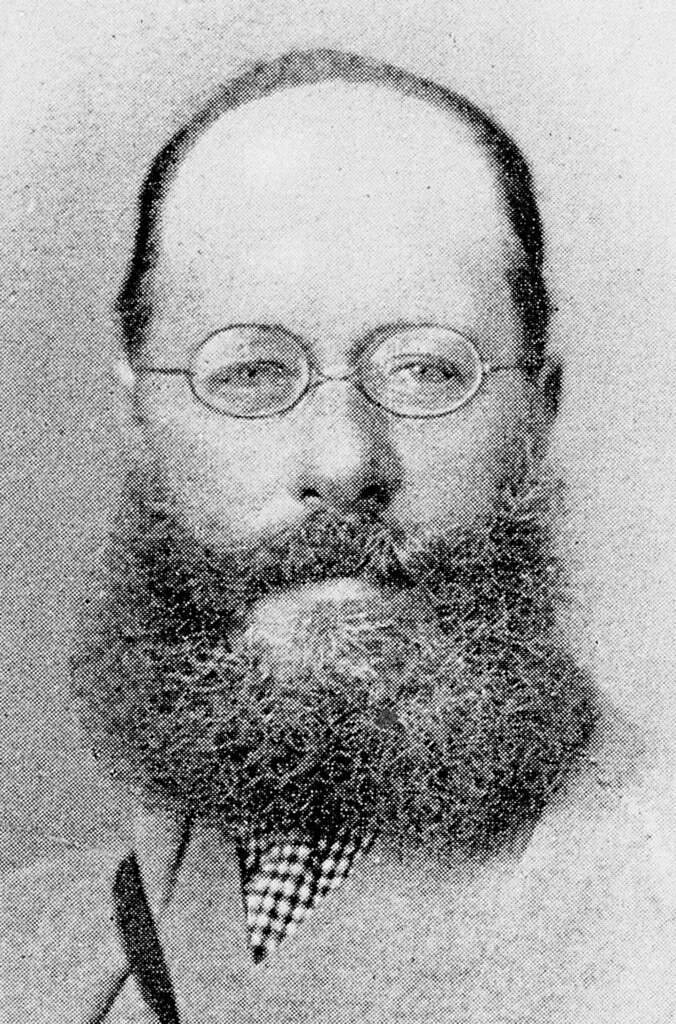
You sit through the final minutes waiting for the turn that does not come. The protagonist has named the trauma, traced it to its origin, wept in the right room with the right person watching, and still the house does not release her. The darkness does not lift. The credits arrive not as punctuation but as abandonment, and you are left holding a catharsis that was never delivered, like a prescription that turns out to be a placebo — except you were told upfront it might be.
This structural refusal is not accidental, and it is not nihilism dressed in genre clothing. It is a precise cultural diagnosis. For roughly a century, Western therapeutic culture operated on a hydraulic model of the psyche borrowed loosely from Freud’s early work — pressure builds, trauma is named and expelled, relief follows. The talking cure was also a narrative cure: confession equals resolution. What contemporary horror has noticed, with the cold attention of a discipline that has always traded in bodily sensation, is that this promise has quietly collapsed in the lived experience of millions of people who have done every correct thing and remained unwell.
Bessel van der Kolk’s research, consolidated in his 2014 work on the body’s retention of traumatic memory, demonstrated clinically what many survivors already knew intuitively: articulation does not equal integration. The body keeps its own ledger, indifferent to verbal insight. When a horror film places its character at the moment of naming — the scene where understanding finally arrives — and then refuses to grant the corresponding relief, it is not subverting a genre convention for aesthetic effect. It is being more honest about the neurobiology of suffering than most therapeutic cinema has ever dared to be.
The rupture this creates in an audience is the point. You feel cheated because you were supposed to feel cheated. The sensation of being denied resolution is itself the knowledge the film is trying to transmit, because that sensation is what chronic trauma actually feels like from the inside: the endless present tense of a wound that knows your name for it and does not care. Genre, which has always been a technology for producing feeling, here produces the precise feeling of the thing it is representing.
What is more disturbing is what this reveals about the therapeutic promise as a cultural institution rather than a clinical tool. Anne Harrington’s 2019 history of psychiatry in America traces the extraordinary arc by which mental suffering became reframed as a solvable problem — first through psychoanalysis, then through pharmacology, then through the hybrid vocabulary of trauma-informed care. Each era promised a mechanism. Each mechanism generated a new population of people who had correctly applied it and remained in pain, now carrying the additional weight of having failed a cure. The horror film that refuses catharsis is not attacking therapy. It is attacking the ideology of therapy: the cultural story that suffering is a puzzle with a solution, and that your continued suffering is evidence of insufficient effort.
What remains when the resolution is removed is not despair but something stranger — a kind of companionship in the dark. The genre stops pretending to be a guide and becomes, instead, a witness. It cannot heal you and it no longer claims to. It simply confirms that what you have been living in is real, that the structure of your experience has the shape you always suspected it had, and that the absence of an exit is not your failure but the actual architecture of the room.
A vision curated by a filmmaker, not an algorithm
In this video I explain our vision
🕯️ When the Mind Becomes Its Own Haunted House
Contemporary Gothic cinema has rediscovered its true territory: not castles or monsters, but the labyrinthine architecture of the human psyche. The horror that lingers longest is the kind that cannot be escaped by simply leaving the room. These articles trace the literary, philosophical, and cinematic roots of that intimate, inescapable dread.
Jason Figgis and the Cinema of Shadows: When Horror Becomes Drama
Jason Figgis represents a rare voice in contemporary independent cinema, one that strips horror of its genre scaffolding to expose raw psychological drama beneath. His films operate in the borderland where dread is not supernatural but deeply, disturbingly human. Understanding his work is essential to grasping how Gothic atmosphere can serve as a vehicle for genuine psychological inquiry.
GO TO THE SELECTION: Jason Figgis and the Cinema of Shadows: When Horror Becomes Drama
Stefan Zweig and Chess: The Mind as Prison
Stefan Zweig’s novella Chess Story offers one of literature’s most harrowing portraits of a mind imprisoned within itself, forced to play both sides of an eternal internal game. The chessmen become symbols of a psyche splitting under pressure, a Gothic horror without ghosts. Zweig’s insight anticipates much of what contemporary psychological horror cinema attempts to articulate.
GO TO THE SELECTION: Stefan Zweig and Chess: The Mind as Prison
Edgar Allan Poe and the Cursed House: Architecture of Terror
Edgar Allan Poe understood that the most terrifying architecture is the one built inside the skull, and his cursed houses are always mirrors of collapsing minds. The House of Usher does not merely fall — it exhales, like a consciousness finally surrendering to its own disease. Poe’s spatial psychology remains the foundational grammar for every filmmaker who uses setting as symptom.
GO TO THE SELECTION: Edgar Allan Poe and the Cursed House: Architecture of Terror
Jorge Luis Borges and the Labyrinth of Identity
Borges constructed labyrinths not as puzzles to be solved but as ontological conditions to be endured, places where identity dissolves and the self multiplies beyond recognition. His exploration of the labyrinth as a metaphor for fractured identity speaks directly to the Gothic tradition’s obsession with the unstable self. Contemporary horror cinema, at its most intelligent, is still wandering the corridors Borges first mapped.
GO TO THE SELECTION: Jorge Luis Borges and the Labyrinth of Identity
Discover the Cinema That Dares to Look Inward
If these ideas stir something in you, Indiecinema is the streaming platform where independent cinema explores exactly these shadowed territories — films that treat horror as psychology, identity as labyrinth, and the screen as a mirror held up to the unconscious. Step inside and let the maze begin.
👉 EXPLORE THE CATALOG: Watch Indie Films in Streaming
A vision curated by a filmmaker, not an algorithm
In this video I explain our vision

