
The Weight of Silence Before the Frame
You are sitting in the dark and nothing has happened yet. The film has been running for eleven minutes and there has been no jump cut, no sudden swell of strings, no figure lurching from behind a door. There is only a woman standing at a kitchen window, the grey light of an Irish morning pressing against the glass, and the camera holding her from behind with a patience that feels almost accusatory. You are waiting for the genre to rescue you. It does not come.

This is a specific and underexamined discomfort, distinct from the fear that conventional horror traffics in. Standard genre mechanics operate as a kind of contract: tension is built so that it can be released, dread accumulates toward a payoff that resets the nervous system and returns the viewer to safety. You know this contract so well that you have stopped noticing it. You arrive at horror expecting to be frightened and then relieved, the way a fairground ride promises to return you to solid ground. When a film refuses that return, when the tension simply continues and deepens without the release valve opening, something stranger happens. You do not just feel afraid. You feel implicated.
The cinema of Jason Figgis operates precisely in that refusal. Working from Dublin across a body of work that began gathering serious attention in the 2010s, Figgis has built a filmography that wears the exterior markings of genre horror while systematically dismantling its interior architecture. The films announce themselves with familiar signals: isolated houses, damaged psyches, the suggestion of violence hovering at the edge of domestic space. Then they decline to follow through in the way you have been trained to expect, and the gap between expectation and experience is where the actual work happens.
What Figgis is doing has a long and largely unacknowledged lineage in European art cinema, though it sits awkwardly within that lineage because he has never disowned genre. Robert Bresson wrote in his 1975 Notes on Cinematography that the cinema of the future would work not by accumulating effects but by subtracting them, arriving at meaning through a kind of austere negative space. Bresson was thinking of spiritual cinema, of transcendence through reduction, but the principle migrates. When you remove the expected effect, what remains in the frame is not emptiness but pressure. The viewer’s nervous system, denied its anticipated discharge, begins to project. The dread becomes interior rather than external, which is to say it becomes accurate.
Horror has always known this at some level and has almost always flinched from the full implication. The genre emerged in its modern cinematic form in the early twentieth century carrying enormous social weight: the 1922 German expressionist tradition, deeply marked by the aftermath of one war and the premonition of another, used distorted shadow and architectural menace to externalise collective psychological fracture. But even those films moved toward resolution, toward the monster being named and contained. The shadow is always eventually thrown back against a wall and revealed as a man in a costume. The externalisation that horror offers is simultaneously its limitation and its defence mechanism, for the audience and for the culture that produces it.
Figgis does not throw the shadow back against a wall. He lets it remain a shadow, which means it remains yours. The woman at the kitchen window is not waiting for something supernatural to arrive. She is waiting in the way that actual people wait, with a weight of history behind her that the film will not fully explain, because explanation would be a form of mercy the film has decided not to extend. And you, sitting in the dark, find that the eleven minutes of nothing have done something to you that two hours of conventional horror rarely manages.
Urban Traffik
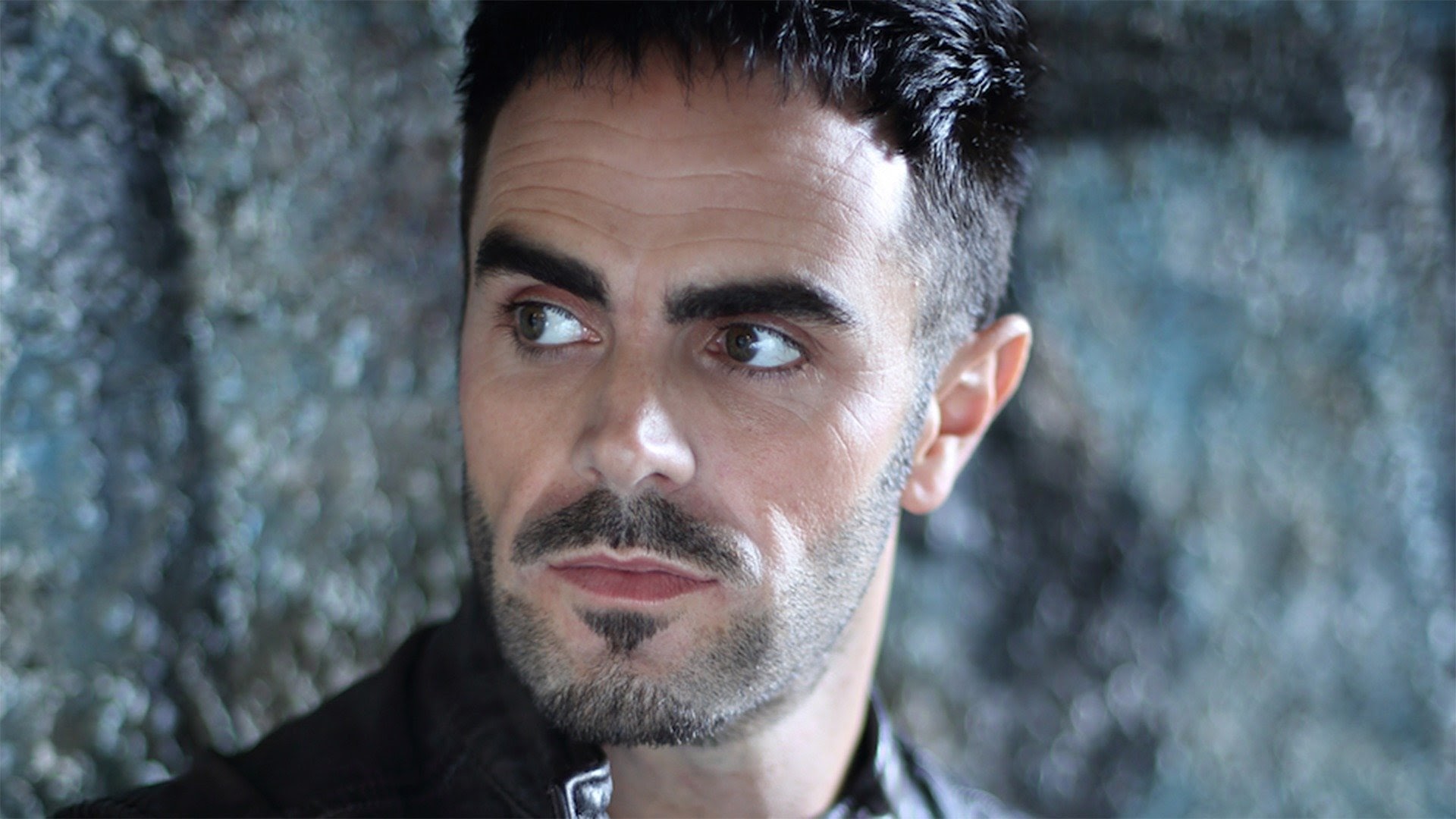
Thriller, by Jason Figgis, United States, 2017.
In the heart of a dark and hidden Dublin, Adam appears to be a kind-hearted man when he offers shelter to Sue, a lonely and vulnerable young woman who has just arrived in the city. The reality, however, is far more tragic: Adam serves as bait for a ruthless human trafficking ring led by the cold and calculating Dan and managed by his partner, Alex. Their chilling scheme is simple: lure defenseless young women and sell them into the international sex trade. But this seemingly perfect criminal enterprise is about to unravel. As disturbing family secrets linking Dan to Adam's sister come to light, and Adam desperately tries to break free from a brutal world he can no longer endure, the lives of everyone involved spiral into uncontrollable violence.
Directed by acclaimed independent filmmaker Jason Figgis, Urban Traffik leaves horror behind to embrace the raw, tense, and hyper-realistic territory of urban crime drama, recalling the visceral intensity of British cult films such as London to Brighton. The film's greatest strength lies in its outstanding performances: thanks to its razor-sharp screenplay, the cast succeeds in making viewers empathize even with its darkest and most morally ambiguous characters. Visually, the film is a noir gem. Alan Rogers' striking cinematography captures Dublin's hidden and ghostly side, transforming neglected alleyways and bare interiors into landscapes of palpable despair. Avoiding easy moralizing, Urban Traffik offers a hypnotic, intimate, and uncompromising look at the inner workings of organized crime.
LANGUAGE: English
SUBTITLES: Spanish, French, German, Portuguese
Genre as a Social Contract Nobody Signed
You sit down in the dark already knowing what you are owed. Not consciously, not with any explicit awareness of the transaction, but the knowledge is there in your body — in the slightly elevated pulse, the particular quality of alertness you carry into the seat. Horror has promised you something, and your nervous system has already begun preparing to collect.
Rick Altman, in his 1999 study Film/Genre, argued that genres are not stable categories imposed by critics but living contracts negotiated continuously between industry, text, and audience. The genre label functions as a promissory note: it tells you what emotional currency will be exchanged. What Altman identified in commercial terms carries a far more visceral implication when applied to horror specifically, because horror is the genre in which the audience’s physiological state is itself the product being delivered. You do not go to a horror film to think about it afterward. You go to feel it during — the spike, the release, the return to equilibrium that reassures you the world you stepped away from is still intact.
This is why violations of the contract in horror land differently than they do in, say, romantic comedy. If a romantic comedy refuses its happy ending, you feel cheated but remain fundamentally stable. If a horror film refuses its catharsis — refuses to resolve the dread it accumulates, refuses to let the monster be defeated or named or contained — something more foundational is disturbed. The unresolved dread does not stay in the cinema. It follows you into the car, into the following week, into half-formed thoughts at 3 a.m. that you cannot quite trace back to their origin.
Jason Figgis builds his films inside precisely this breach. Working across Irish independent cinema from the mid-2000s onward, producing and directing with the stripped economy of a filmmaker who cannot afford the safety nets of genre machinery, Figgis constructs situations that smell like horror — isolated locations, psychological deterioration, the creeping sense that something irreversible is approaching — and then systematically withholds the mechanism that would make good on the debt. The monster, when it arrives, is social. The violence, when it erupts, is intimate and quiet rather than spectacular. The resolution, structurally speaking, is not one.
What makes this more than mere avant-garde provocation is the precision with which Figgis understands what he is withholding. An artist who had never absorbed the grammar of genre could not violate it so deliberately. The violation requires fluency. It requires knowing exactly the moment when the audience’s tension peaks and the release valve would conventionally open — and then choosing, in full awareness of what that choice costs the viewer, to let the pressure hold. This is not incompetence dressed as experiment. It is a diagnostic act, one that uses the audience’s frustrated expectation as a kind of instrument to measure what we actually wanted from the darkness in the first place.
The sociologist Barry Glassner published The Culture of Fear in 1999, documenting how mediated threat — crime statistics, disease pandemics, stranger danger — is systematically amplified beyond its statistical reality to produce a population in perpetual low-grade alarm. Horror cinema, in its conventional form, participates in a strange remediation of this condition: it takes the ambient, structureless anxiety of contemporary life, assigns it a shape and a face, and then destroys that shape on screen, offering the temporary neurological relief of a problem solved. The audience leaves not merely entertained but briefly, biochemically reassured. What Figgis denies is this reassurance. He takes the ambient anxiety and returns it to you unprocessed, unhoused, without a face you can watch die.
The question this opens is not about filmmaking technique at all. It is about what we are actually doing when we pay to be frightened and then pay again, implicitly, to be rescued from that fright — and what it means that we have arranged an entire cultural institution around that cycle without once examining why we need it.

The Irish Periphery and the Aesthetics of Constraint
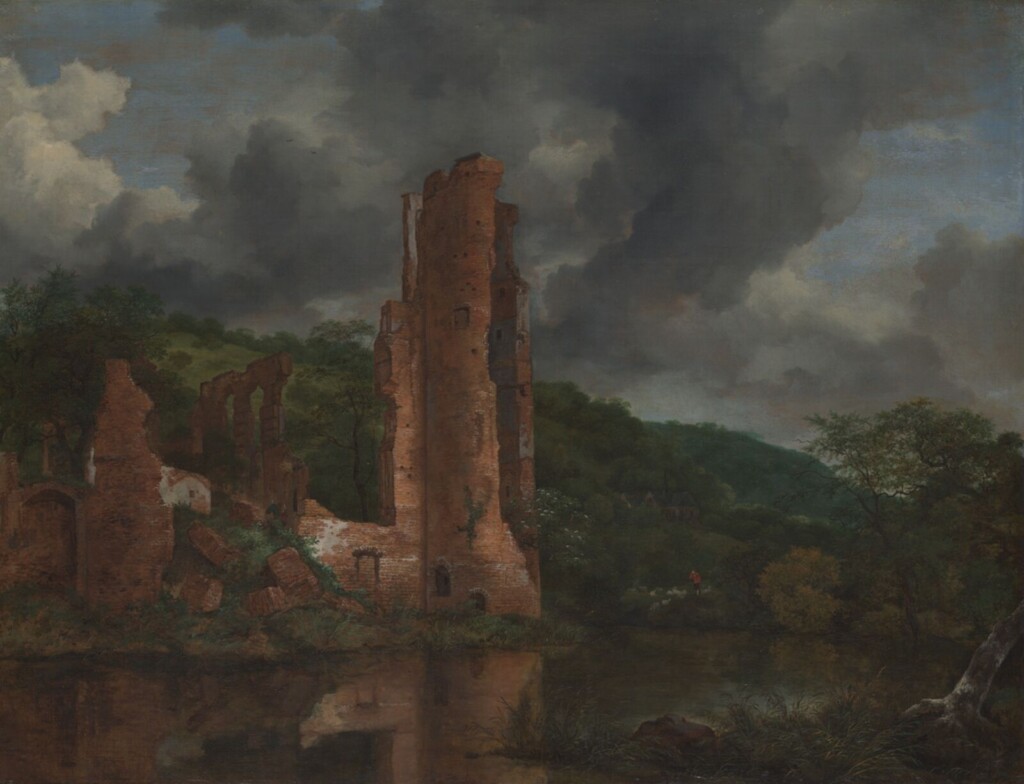
You are shooting a film in a country that has just been told, in the clearest possible terms, that it cannot afford itself. The sets are the rooms you already own. The lighting is whatever the afternoon gives you before it disappears. The cast is small because there is no other option, and the silences between lines of dialogue are long because silence costs nothing and because, in a house where financial catastrophe has just visited, people have largely stopped talking anyway.
Ireland after 2008 was not simply an economy in recession. It was a society experiencing a specific kind of vertigo that came from having believed, for roughly fifteen years, that it had finally escaped its own history. The Celtic Tiger GDP growth rates, which peaked near eleven percent in 1999 and sustained themselves through the early 2000s, had built an entire cultural self-image on forward momentum. When the International Monetary Fund arrived in November 2010 with an eighty-five billion euro bailout and a set of conditions attached, what collapsed was not only a banking sector but a story people had been telling about themselves. The domestic space — the house, the mortgage, the room you could no longer heat — became the primary theater of that collapse. Jason Figgis was making films inside exactly that theater, and the constraints imposed on him by the material reality of micro-budget independent production in post-crash Ireland turned out to be formally indistinguishable from the grammar of psychological horror.
This is not an accident that can be explained away as luck. There is a structural logic to it that the German film theorist Siegfried Kracauer identified in a different context when he argued, in his 1960 work Theory of Film, that cinema’s deepest subject is the unstaged, the found, the accidentally revealed. What Kracauer could not have anticipated was the way economic scarcity could function as a kind of enforced phenomenology, stripping a production down to what is materially inescapable and discovering that what is materially inescapable is often precisely what is most psychologically true. A filmmaker with unlimited resources can fill a frame with information. A filmmaker working with almost nothing is forced to let the frame breathe, and in that breathing the audience begins to project. Dread is, among other things, a cognitive act of projection into empty space.
The static framing that characterizes so much of Figgis’s visual language is not a stylistic choice made in the editing suite after weighing alternatives. It is the logical result of working without a camera crew large enough to execute complex movement, without the equipment to make that movement smooth, within spaces too small to accommodate a dolly track. What emerges from that necessity is something that resembles, with striking precision, the formal decisions made deliberately by Michael Haneke across his early Austrian features — a director who had every resource available and chose stillness because stillness implicates the viewer, holds them in the discomfort of looking without being guided toward interpretation. Figgis arrived at the same destination by a different road, and the destination is a frame that refuses to rescue the audience from what it contains.
Sparse dialogue in this context functions as more than minimalism. In a tradition running from Samuel Beckett‘s understanding that language is what people use when they cannot bear to mean anything directly, through to the social psychology of John Gottman’s research on how couples in crisis communicate in reduced, clipped exchanges that carry enormous emotional weight precisely because of what they omit, the stripped line becomes a pressure vessel. What is not said in a Figgis scene accumulates rather than dissipates, and the domestic space — the kitchen, the corridor, the bedroom that has been slept in separately for months — holds it all without releasing any of it into explanation.
Cathnafola - A Paranormal Investigation
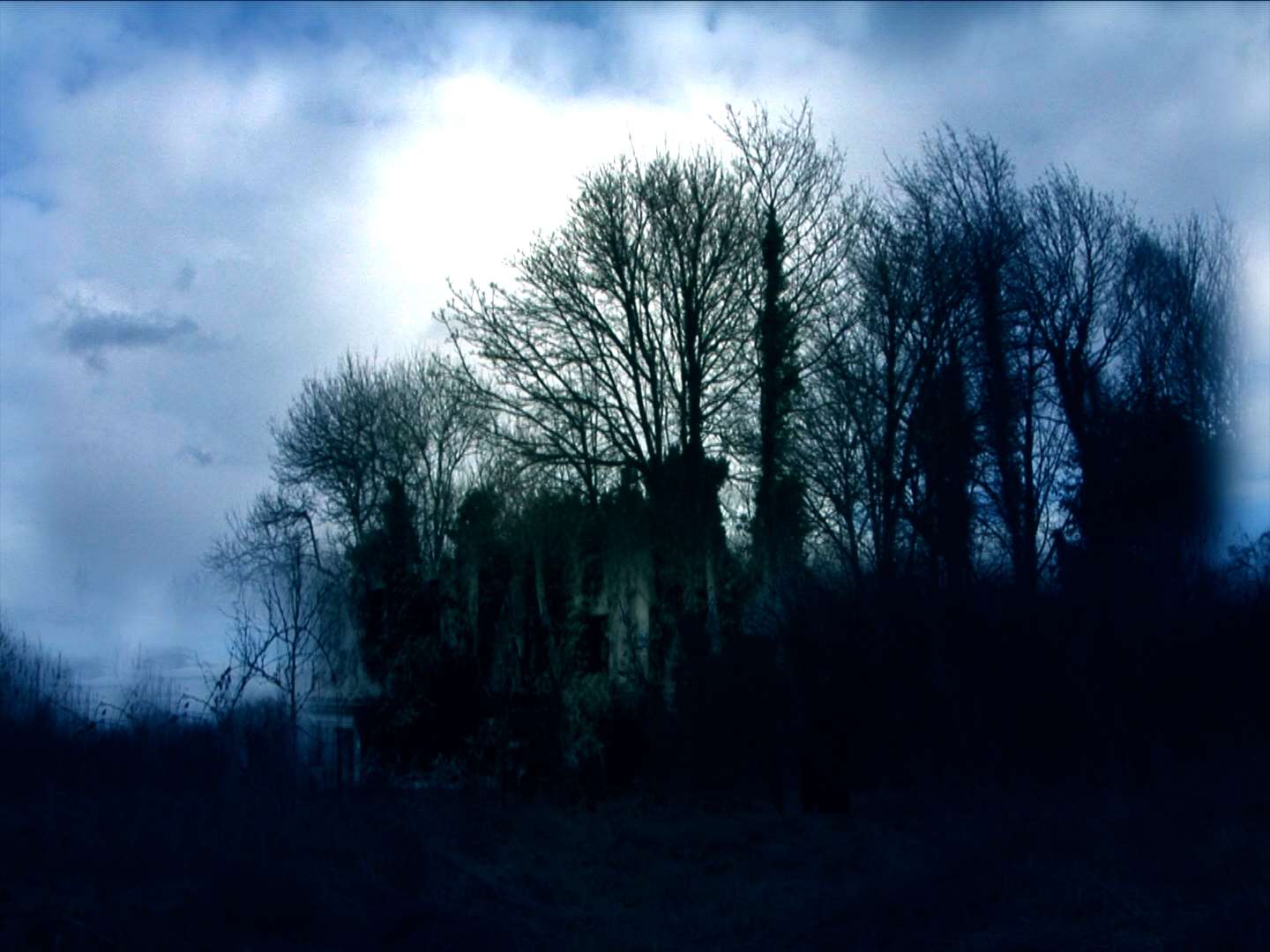
Documentary, horror, by Jason Figgis, USA, 2014.
In "Cathnafola", everything begins when renowned paranormal investigator Chris Halton of Haunted Earth UK receives footage filmed by three teenagers at the ruins of Cathnafola House in Ireland. Determined to unearth the truth behind the location’s bloody past, Halton embarks on a nighttime exploration of the infamous ruins—and soon uncovers terrifying and disturbing revelations.
LANGUAGE: English
SUBTITLES: Spanish, French, German, Portuguese
When Dread Refuses to Explain Itself
You are watching a film and nothing has been explained, and you realize with a slow, crawling discomfort that nothing is going to be. The threat in the frame is not withholding its meaning to be coy or to manufacture suspense through delay — it is withholding because explanation would be a form of mercy, and mercy is precisely what is not on offer.
Anton Chekhov, in his notebooks and in the letters he wrote to directors staging his plays, insisted on something that sounded almost like a technical instruction but was in fact a moral position: the stage should present life as it is, not life as it ought to be, and life as it is does not organize its cruelties into legible causes. His characters suffer without sufficient reason. They wait without knowing what they are waiting for. When critics of the Moscow Art Theatre pressed him to clarify what his plays meant, he responded that if he knew what they meant, he would have written an essay, not a drama. Figgis works in the same refusal. The menace that accumulates across his films — the wrongness that settles into a room before anything violent has happened, the way a conversation between two people begins to feel like a trap without any visible mechanism of entrapment — resists the diagnostic impulse the viewer brings to the screen. You want a motive. You want a history. You want the film to tell you what it is afraid of so that you can evaluate whether the fear is proportionate.
Stanley Cavell, in The World Viewed, his 1971 meditation on the ontology of film, argued that cinema presents the world as a succession of acknowledgments — that to watch a film is not simply to receive information about fictional events but to rehearse a form of moral attention. Cavell was interested in what it means to see and to refuse to see, to acknowledge another person’s reality or to protect yourself from it by converting their presence into a problem you can solve. The conventional horror film, with its revelations and its backstories and its final explanations, offers the viewer the alibi of understanding. Once you know why the house is haunted, you have transformed the uncanny into the merely unfortunate. You have, in Cavell’s terms, refused the acknowledgment by replacing it with knowledge. Figgis denies you the replacement. The dread stays dread. The face of the person who means harm remains the face of a person, not a case study.
This is a harder position for an audience than it initially seems. When narrative withholds its explanation, the viewer’s interpretive energy has nowhere to discharge, and what floods in to replace interpretation is something closer to ethical exposure. You are not being asked to understand the danger — you are being asked to remain present with it, to sit inside it without the protection of a framework. This is precisely the condition that ordinary social life trains people to avoid. The entire architecture of daily interaction is organized around the conversion of unsettling presences into manageable categories: the difficult colleague becomes a type, the frightening stranger becomes a statistic, the relationship that feels wrong becomes a diagnosis. Cinema that refuses closure refuses to perform this conversion on your behalf.
What Figgis understands, and what the machinery of commercial horror systematically avoids understanding, is that the moment of genuine dread is not the moment before you know what something is — it is the moment you accept that knowing what something is will not protect you from it. Classification is a form of distance. To name the monster is already to have survived it imaginatively, to have placed it in a genus and a species and a set of known behaviors. The unnamed thing, the thing that simply inhabits the frame with a weight you cannot account for, asks something different of you entirely.
The Domestic Interior as Ideological Trap
You have lived in a house long enough to stop seeing it. That is the first trap — the moment the threshold stops being a crossing and becomes a habit, the walls begin their real work. In Jason Figgis’s films, the home is never a sanctuary. It is a container with a lid, and the lid has been sealed from the outside.
Gaston Bachelard argued in The Poetics of Space, published in 1958, that inhabited space is not neutral architecture but a psychological extension of the self — that the house “shelters daydreaming” and becomes the first geometry of intimacy. He meant this tenderly. What Figgis does is take Bachelard’s premise and strip it of its warmth, revealing what the phenomenologist could not bring himself to follow to its end: that the same interiority which shelters the dreaming self also makes it legible, traceable, capturable. The house knows where you sleep. The house knows what you reach for in the dark.
The corridors in Figgis’s visual grammar are never transitional spaces. They do not lead from one room to another so much as they delay arrival, stretching the distance between a person and whatever they thought they were moving toward. The camera holds in those corridors longer than comfort allows, long enough for the viewer to understand that the architecture itself is performing a kind of surveillance. This is not metaphor. Historians of domestic space have documented how the Victorian corridor was specifically engineered in the nineteenth century to separate servant traffic from family movement — a spatial technology of social control built into the most intimate structure of everyday life. The house was never ideologically innocent.
What makes Figgis’s treatment so precise is the ordinary furniture. A chair positioned at the wrong angle. A kitchen table set for a meal no one will eat with ease. These objects carry the full weight of their cultural programming — they signal normalcy so aggressively that their presence becomes a kind of pressure. Sociologist Erving Goffman, in his 1959 work The Presentation of Self in Everyday Life, described the domestic interior as a backstage region, a place where the performance of social identity could theoretically relax. But in Figgis’s framing, the backstage has been colonized by the same demands as the front. There is no off. The performance never stops because the furniture will not allow it.
Consider the statistical reality that accompanies this aesthetic. According to data compiled by the World Health Organization in 2021, more than one third of women who experience violence worldwide report that the perpetrator was an intimate partner, and in the overwhelming majority of cases, the violence occurs in the domestic space — in the rooms decorated with intention, in the homes that were meant to mean safety. The horror that Figgis locates in the corridor or behind the closed bedroom door is not invented. It is archaeology. He is excavating something that was always there beneath the floral wallpaper.
There is a particular kind of scene that appears in his work — a woman moving through a house she knows completely, touching surfaces she has touched ten thousand times, and yet registering each room as if it has shifted slightly since she last passed through. The spatial familiarity and the existential unease do not cancel each other out. They amplify each other. She knows every inch of this place, and that knowledge has become its own form of confinement. The exits are known. The exits are also watched.
This is the ideological function of the domestic interior at its most exposed: it naturalizes enclosure by coating it in the language of belonging. The home promises that to be inside is to be protected. What Figgis keeps showing, with a patience that borders on the clinical, is that the promise and the threat have always shared the same address.
A vision curated by a filmmaker, not an algorithm
In this video I explain our vision
Performance Without Resolution

You have watched a face do nothing for thirty seconds on screen and felt your chest tighten anyway. Not because something was about to happen behind that face, but because nothing was — and you suddenly understood that the nothing was the event itself.
This is the register Jason Figgis operates in, and it runs directly counter to what horror cinema has trained audiences to expect from a performer’s body. The genre spent decades constructing a grammar of visible distress: the widened eye, the fractured breath, the voice that climbs a register before breaking. These signals are legible precisely because they are excessive, because they project outward with enough force to reach the back of a theatre, to cross the distance between screen and stranger. Actors in horror perform emotion as transmission, as broadcasting. What Figgis asks his performers to do is closer to withholding — to occupy a state rather than announce it, to let the camera arrive at the feeling rather than have the feeling delivered.
Erving Goffman spent the 1950s and 1960s arguing, most rigorously in The Presentation of Self in Everyday Life published in 1959, that social life is essentially theatrical — that we are all managing impressions, calibrating our front-stage behavior to meet the expectations of whichever audience we happen to be performing for at any given moment. What made Goffman’s framework genuinely unsettling was not the observation that people perform, but the corollary he drew from it: that the self capable of stepping behind the performance and existing authentically is, at best, a provisional fiction. Backstage access reveals not a truer self but simply another performance calibrated for a smaller, more intimate audience. Figgis’s actors seem to have taken this logic further than Goffman himself was willing to push it — they play characters who have stopped managing the impression entirely, who have run out of energy for the front stage and can no longer locate the backstage. What the audience watches is the collapse of the apparatus itself.
This is exceptionally difficult to watch in the way that a surgeon working in silence is difficult to watch. The viewer conditioned by expressionist horror performance is constantly looking for the cue that will orient them — the moment when the face will open and declare its interior. When that cue does not arrive, the discomfort migrates from the screen into the body of the viewer. You begin to perform in the absence of instruction, projecting inward states onto the withheld face, and then catching yourself in the act of that projection and wondering what it reveals about you that you needed to fill the silence with your own particular dread.
There is something in this dynamic that connects to what the psychologist Paul Ekman spent decades researching — specifically his work in the 1960s and 1970s on micro-expressions, the involuntary facial movements that occur in fractions of a second and that resist conscious suppression even when a person is working hard to maintain a composed surface. Ekman’s discovery was that full suppression is physiologically impossible: the face leaks. What Figgis’s performers suggest, operating in exactly the opposite direction, is that a camera patient and close enough can find those micro-leakages and build an entire emotional architecture around them, so that the withheld face becomes paradoxically more legible than the conventionally expressive one — not because it tells you more, but because it forces you to become a more active, more uncomfortable reader.
The viewer who wants to be led through an emotional experience arrives at this cinema and finds themselves doing interpretive labor they did not consent to perform. The horror, in this case, is not on the screen. It is in the recognition that the gap between what a face shows and what a person contains has always been that wide, and that you have spent most of your life agreeing not to notice.
The Second Scene: Misread as Drama
She arrives at the screening with a specific appetite. The room is small, the kind that smells like old velvet and other people’s coats, and she has come prepared for what the title promised — shadows, dread, the familiar grammar of genre. She settles in with the particular readiness of someone who knows how to watch horror, which means she knows where to put her body, how to hold her breath at the right intervals, when to let the tension spike and when to release. What she encounters instead refuses every one of those learned postures. The camera stays on a face too long. A conversation between two characters circles a wound that neither names directly. There is no release valve. By the twenty-minute mark she has shifted in her seat three times, not from fear but from something more unsettling — the growing suspicion that she is watching something that wants more from her than she budgeted to give.
This is the specific dissonance that Figgis generates, and it is worth examining why it reads initially as a failure before it reads as a choice. John Cassavetes spent most of his career being punished by critics for the same refusal — his 1974 film A Woman Under the Influence was dismissed in certain quarters as shapeless, undisciplined, too raw to be taken seriously as cinema, too uncomfortable to be enjoyed. What those critics were registering was not absence of craft but the presence of a different contract entirely. Cassavetes was not building toward catharsis. He was building toward exposure. Michael Haneke, arriving later and from a colder European tradition, made this strategy explicit when he stated in interviews surrounding his 1992 Benny’s Video that the camera’s function is not to comfort the audience but to implicate it. Both filmmakers were operating in territories where genre expectation acts as a kind of anesthesia, and both chose instead to keep the viewer awake and accountable.
What makes the Irish context particular is that the cultural inheritance of horror there is inseparable from a landscape that was itself historically weaponized — land as loss, domestic space as site of suppression, the silence inside families that followed famine, emigration, and institutional violence. When Figgis works within genre structures and then quietly dismantles them, he is not simply making an aesthetic gesture. He is activating something in the material itself, a local density that generic horror cannot fully metabolize. The woman in the velvet-smelling room is not Irish, and the film was not made for her comfort, and perhaps it was not made for her at all in the way she assumed. That asymmetry is not hostility. It is specificity, which is something entirely different and far more difficult to forgive.
The critic who later writes about the film and reaches for the word “frustrating” is not wrong in any simple sense. Frustration is real phenomenological data. But frustration directed at a work that refuses to complete your expectations is also a record of how thoroughly you have been trained to expect completion. Genre is one of the most efficient training systems cinema has ever produced, and it runs so deep that most viewers cannot distinguish between a film that has failed and a film that has declined. The critic’s vocabulary was built for a different conversation, and it shows every time a film operating in Figgis’s register gets reviewed with language borrowed from multiplex horror — pacing, payoff, atmosphere as a delivery mechanism rather than atmosphere as the argument itself.
What sits underneath the dissonance is a question about who gets to claim the form. Horror has always belonged simultaneously to the populist and the subversive, but the terms of that dual ownership are contested in ways that rarely surface explicitly, and the contestation becomes visible only when someone works the seam between them with enough pressure to make it show.
What the Darkness Was Always Asking
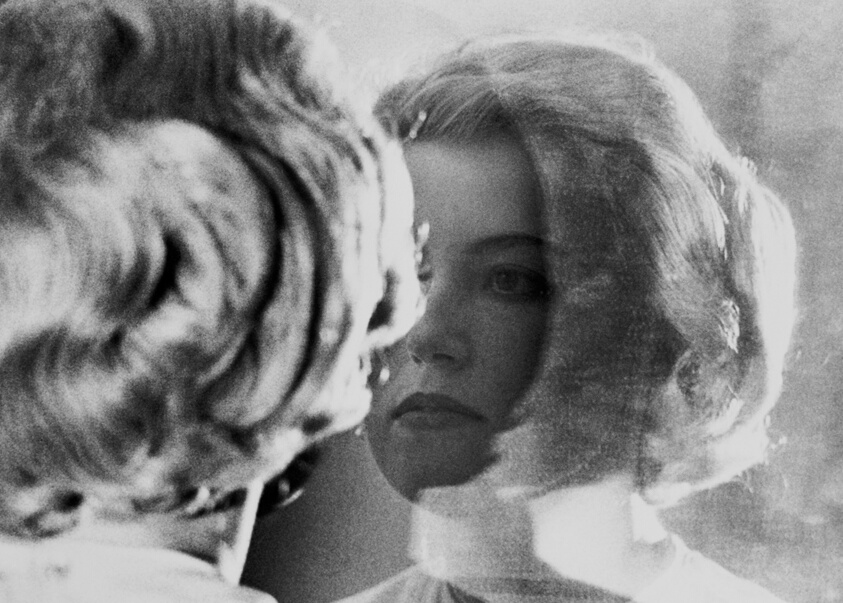
You are sitting in a dark room watching something that refuses to finish being frightening in the way you were promised it would be, and the unease that settles in is not the clean spike of a jump scare metabolized and forgotten — it is the duller, more persistent pressure of a question you recognize but cannot name.
Horror, in its dominant commercial form, is a machine for processing dread back into pleasure. The theorist Linda Williams, writing in 1991 in her essay “Film Bodies: Gender, Genre, and Excess,” identified horror alongside pornography and melodrama as a “body genre” — one that produces involuntary physical response, that bypasses cognition to work directly on the nervous system. What she observed, without quite saying it this way, is that the involuntary response is the product’s entire point. The audience does not need to think; they need to flinch, exhale, and leave. The machinery of the genre is calibrated to make sure the fear stays inside its container.
What happens when a filmmaker removes the container but keeps the fear is not simply a stylistic choice — it is an ethical provocation. When there is no monster that gets killed, no final girl who survives, no closing chord that signals the world has been restored to a manageable version of itself, the unresolved material sits in the viewer’s chest with nowhere to go. Jason Figgis’s films operate precisely in this register, and the discomfort his work generates in certain audiences is not a failure of craft — it is the sensation of unprocessed reality pressing against the inside of a form that was supposed to keep it out.
Paul Ricoeur argued in “Time and Narrative,” published in three volumes between 1984 and 1988, that narrative is the primary instrument through which human beings impose coherence on temporal experience — that we do not live stories, we construct them retrospectively to make suffering legible and therefore survivable. Genre is a subspecies of this mechanism, a pre-built narrative grammar that promises the audience their dread will be shaped, named, and discharged before the lights come up. To deny that grammar is to return the viewer to the raw, unnarrated event — to suffering before it has been made legible.
There is a man in an office somewhere who has watched the same true-crime documentary series for six consecutive evenings, not because the crimes interest him but because the format does — the expert testimony, the reconstructions, the arrested suspect in the final episode. He is not watching violence; he is watching violence administered in doses small enough to confirm that violence has an explanation, a perpetrator, a resolution. The form is doing the psychological labor he cannot do for himself, and he would be genuinely disturbed to learn this about himself, which is why he never will.
The cinema of shadows that Figgis has built across films like “The Ecstasy of Isabel Mann” and “The Dark Side of the Moon” is not outside this problem — it is inside it, forcing it into visibility. What his work ultimately interrogates is not fear itself but the audience’s dependency on the form that normally processes fear into something they can hand back to the film and walk away from. Stripped of the ritual machinery, the unresolved elements of his narratives do not disappear; they transfer. They become the viewer’s property. And most viewers did not agree to that transaction when they sat down.
The question this poses about the art form itself is whether cinema, when it refuses its consoling function, is being more honest about human experience or simply more demanding of it — and whether those two things, in the end, are even distinguishable from each other.
🎭 Shadows, Masks and the Theatre of Inner Horror
Jason Figgis occupies a rare and uncompromising space in contemporary cinema, where the conventions of horror dissolve into existential drama and psychological reckoning. His films draw on deep literary and philosophical traditions — the double, the mask, the haunted interior — that have preoccupied artists and thinkers for centuries. The articles below illuminate the cultural and aesthetic territories his work inhabits.
Edgar Allan Poe and the Cursed House: Architecture of Terror
Edgar Allan Poe transformed architecture into a projection of the human psyche, making the decaying house a mirror of the mind collapsing from within. This tradition of spatial horror — where walls breathe and rooms remember — runs directly through the atmospheric, confined dread that defines Figgis’s cinema. Understanding Poe’s cursed architecture is essential to reading the shadowed interiors of Irish Gothic filmmaking.
GO TO THE SELECTION: Edgar Allan Poe and the Cursed House: Architecture of Terror
Jung and the Persona: The Mask That Becomes a Face
Carl Jung‘s concept of the Persona reveals how the masks we construct for the world can gradually suffocate the authentic self beneath them. In Figgis’s films, characters are perpetually caught between performance and collapse, wearing social faces that crack under the pressure of unacknowledged darkness. This Jungian tension between the presented self and the hidden interior gives his horror its distinctly dramatic and psychological weight.
GO TO THE SELECTION: Jung and the Persona: The Mask That Becomes a Face
The Strange Case of Dr Jekyll and Mr Hyde: Analysis
Stevenson’s The Strange Case of Dr Jekyll and Mr Hyde remains one of literature’s most visceral explorations of the double — the respectable surface concealing a monstrous interior hunger. This splitting of identity into warring selves is a structural engine that powers much of Figgis’s dramatic horror, where ordinary men and women unravel into something unrecognizable. The novella’s enduring power lies in its insistence that the monster is never truly other.
GO TO THE SELECTION: The Strange Case of Dr Jekyll and Mr Hyde: Analysis
Sheridan Le Fanu: Irish Gothic and Domestic Horror
Sheridan Le Fanu invented a distinctly Irish mode of Gothic horror in which terror emerges not from exotic elsewhere but from the domestic, the familiar, and the ancestral home. His shadows are inherited rather than summoned, and his ghosts are psychological as much as supernatural — a tradition Jason Figgis consciously inhabits and extends in his own Irish filmmaking. Le Fanu’s world of repressed guilt and slow dread offers the clearest literary precedent for the cinema of shadows Figgis has built.
GO TO THE SELECTION: Sheridan Le Fanu: Irish Gothic and Domestic Horror
Discover Independent Cinema That Dares to Go Deeper
If these themes of shadow, identity and psychological horror speak to you, Indiecinema streaming is where the conversation continues. Explore a curated selection of independent and auteur films — including works by Jason Figgis himself — that refuse easy genre categories and challenge you to look inward. Join us and discover the cinema that mainstream platforms are too cautious to show.
👉 EXPLORE THE CATALOG: Watch Indie Films in Streaming
A vision curated by a filmmaker, not an algorithm
In this video I explain our vision

