
The Price of the Waiting Room
You sit in a chair that has held a thousand bodies before yours, the upholstery worn to a shine at the armrests, and you watch the clock because the doctor is seventeen minutes late and you have already been charged for the appointment. A form arrived in your hands somewhere between the reception desk and this seat, and you signed it without reading it because everyone signs it without reading it, because the line behind you was real and the fine print was not, not yet. The nurse who took your blood pressure was kind and efficient and gone in under four minutes, and now you are alone with a blood pressure cuff hanging from the wall like a still life, wondering whether the thing that brought you here is serious or whether you have already spent three hundred dollars to be told to drink more water.

What you are sitting inside is not simply an inefficient system. It is a system that has learned to extract value from the specific texture of your vulnerability — the fact that you came here because something frightened you, that fear makes people compliant, and compliance is enormously profitable. The corruption present in that waiting room does not announce itself with a villain or a conspiracy. It announces itself as a co-pay, as a referral that requires another appointment, as a prescription written in thirty seconds for a drug whose manufacturer sponsored the conference where your physician collected continuing education credits last spring in a hotel in Scottsdale.
Sociologists who study organizational deviance make a distinction that most laypeople never encounter: the difference between individual corruption, which involves a bad actor choosing to steal, and institutional corruption, which involves a system organized in such a way that its normal functioning produces harmful outcomes without requiring anyone to consciously choose harm. Lawrence Lessig, writing about institutional corruption in democratic systems in 2013, located it precisely in the gap between what an institution officially serves and what it actually optimizes for — a gap maintained not by criminals but by incentive structures so thoroughly normalized they no longer register as choices. The hospital that delays your discharge by one day because the reimbursement schedule rewards inpatient nights does not need a corrupt administrator. It needs an ordinary one.
The history of medicine is partly a history of the slow, contested, and never fully completed project of separating care from commerce. In the United States, the transformation of healthcare into an explicitly market-driven sector accelerated sharply in the 1970s, when investor-owned hospital chains began displacing nonprofit and municipal institutions at a rate that alarmed even the more conservative voices in the American Medical Association. By 1980, proprietary hospitals had expanded their share of the acute care market by over forty percent in a single decade, a structural shift that did not change what doctors were trained to do but changed who owned the room in which they did it. When ownership changes, accountability migrates — away from the patient, toward the shareholder, and the distance between those two destinations is where corruption finds its architecture.
None of this requires you to believe that your doctor is lying to you. That is precisely what makes it so difficult to name, to resist, or to escape. The physician may be genuinely trying to help you. The administrator may be genuinely trying to keep the hospital solvent. The insurance adjuster who denies your claim may be genuinely following a protocol designed by someone who genuinely believed it was fair. The system does not need bad people to produce bad outcomes. It needs good people operating inside structures whose logic they did not design and whose consequences they are not required to observe, sitting in their own offices while you sit in yours, watching a clock, holding a form you already signed.
Stem Cell

Stem Cell, directed by Giuseppe Di Giorgio, Italy, 2020.
A brilliant neurosurgeon is found murdered in his own operating room. The scene is gruesome. His killer used the very tools of his trade. Who is the murderer? A psychopath? Someone from within the institute? Commissioner Lorenzo Aliprandi and his team find themselves in a race against time to stop a killer who continues to murder using the same heinous methods, targeting other prominent doctors, leaving no trace behind except a trail of blood. New knowledge, intense experiences, and the race against time will test the strong character of Commissioner Aliprandi, who determined to uncover the murderers, will face every challenge head-on.
Based on the novel of the same name by Paolo Gaetani, a neurosurgeon by profession, Stem Cell addresses the major issues facing healthcare and its institutions, with a more poignant relevance than ever. Cinema thus complements the narrative and becomes a powerful tool for in-depth analysis and dissemination, exploring questions and proposing answers. It does so through the powerful tools of a fast-paced thriller rhythm and meticulous, bold cinematography. Alongside the main theme, the crimes unfold along with the intrigues, betrayals, economic interests, stories, and psychologies of all the characters.
Language: Italian
SUBTITLES: English, Spanish, French, German, Portuguese
How Medicine Learned to Speak the Language of the Market
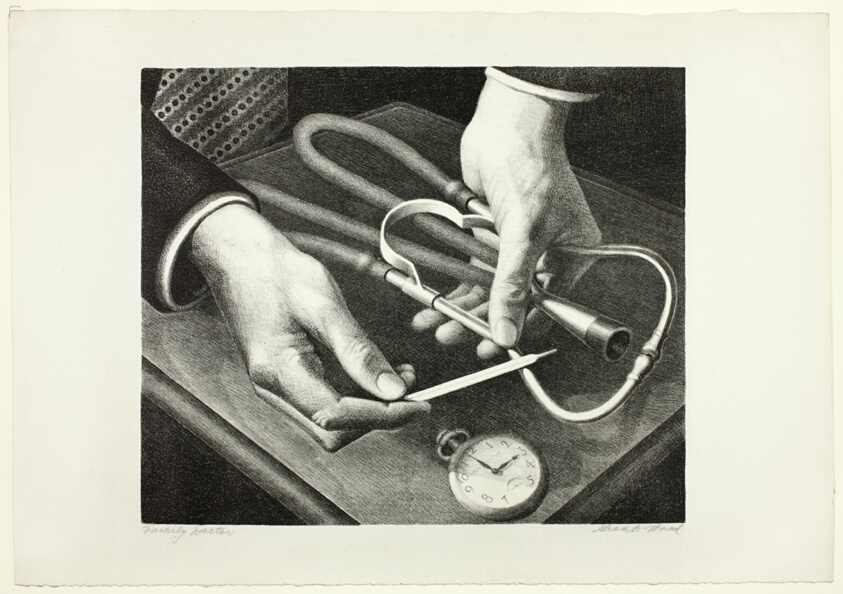
You are handed a bill after surgery and the number on it bears no relationship to anything you recognize as real — not the hour the anesthesiologist spent, not the cost of the gauze, not any price that emerged from supply and demand in any market you have ever encountered. It is a number that exists because a system was built specifically to produce numbers no one can contest, in a language no one fully speaks, settled between institutions that were never designed to represent you.
Paul Starr mapped the architecture of this transformation in 1982 with a precision that American political culture has spent four decades trying to ignore. In “The Social Transformation of American Medicine,” he traced how physicians in the early twentieth century operated less like entrepreneurs and more like members of a guild — pricing informally, treating on credit, embedded in community accountability structures that made open price gouging socially lethal. The American Medical Association spent the first half of the twentieth century not fighting corporate medicine but fighting socialized medicine, a distinction that turned out to matter enormously, because the enemy they chose shaped the ally they accepted. By defeating public health frameworks in the 1940s and positioning private insurance as the American answer to Beveridge-style systems in Europe, organized medicine did not protect physicians from the market — it handed them to it in slow motion.
The architecture that replaced public frameworks was not neutral plumbing. It was a specific design choice made under specific political pressures, and the key feature of that design was the separation of the person receiving care from the person paying for it. When the employer-based insurance model was locked into place after World War II — partly by accident, partly by tax policy, partly by the labor negotiations of a wartime wage freeze that pushed benefits as a substitute for raises — it created a tripartite structure in which hospitals billed insurers, insurers negotiated rates, and patients stood outside the transaction watching numbers pass between institutions they could not audit. This was not the corruption of an otherwise transparent system. This was the structural condition that made corruption economically rational.
What grows inside that structure is something sociologists of organizations call “institutional drift” — the process by which an entity formally committed to one purpose gradually reorients around the incentives its funding environment actually rewards. By the 1970s, the nonprofit hospital, a legal form invented to protect community health infrastructure from profit extraction, was already beginning to behave in ways indistinguishable from for-profit competitors. Not because the people running them were uniquely venal, but because the billing codes, the insurance negotiations, the capital access requirements, and the competitive pressures of a market in medical prestige all pushed in exactly one direction. The form said nonprofit. The behavior said otherwise. When the Reagan administration accelerated deregulation of hospital markets in the early 1980s, it was not introducing a foreign logic into a protected space — it was removing the last friction from a slope that had been under construction for thirty years.
What this history reveals is that the moral language medicine inherited — the Hippocratic vocabulary of duty, care, and non-maleficence — did not disappear when the market arrived. It was retained as a kind of ethical branding, a register in which institutions could still speak when speaking to patients, even as an entirely different vocabulary governed every other relationship in the system. The physician still says “your health is our priority.” The contract signed in the back office uses the language of units, reimbursement schedules, and denial criteria. Both sentences are true at the same time, in the same building, and that is not hypocrisy so much as it is the normal operating condition of a system that was never asked to choose between them.

The Sociology of Looking Away
You sit in a waiting room and the television mounted above the exit is running an advertisement for a drug whose side effects, listed in the final six seconds of the sixty-second spot, include the very condition it claims to treat. Nobody in the room looks up. This is not ignorance. This is something practiced, refined, socially coordinated — the shared agreement to not quite see what is directly in front of you.
Erving Goffman spent decades mapping the architecture of this agreement. In his 1959 work “The Presentation of Self in Everyday Life,” he argued that social institutions do not merely host human behavior — they script it, and that script depends on the active collaboration of every performer, including the audience. Backstage realities and front-stage performances are not separated by accident. They are separated by consent. What Goffman identified in the micro-rituals of face-to-face interaction scales, with brutal consistency, into the organizational structures of hospitals, insurance bodies, and regulatory agencies: the institution holds together not because everyone believes the performance, but because everyone agrees to perform belief.
Robert Merton gave this a different angle in his sociology of deviance, particularly in his analysis of what he called institutionalized evasion — the structural mechanisms by which organizations develop legitimate-seeming procedures whose actual function is to absorb scandal without producing accountability. The key insight is that the evasion is not anomalous to the institution; it is built into it. Compliance departments, ethics boards, internal review processes — these can function simultaneously as genuine oversight and as theatrical proof that oversight exists, which is precisely what makes them so durable and so difficult to prosecute.
In 2009, Pfizer paid $2.3 billion to the United States Department of Justice to settle criminal and civil allegations of illegal drug promotion, the largest such settlement in history at the time. Three years later, GlaxoSmithKline paid $3 billion to resolve charges that included bribing doctors with luxury spa treatments, speaking fees, and resort vacations to prescribe medications for unapproved uses. Neither settlement produced a structural rupture. Pfizer’s stock dipped slightly and recovered within weeks. GlaxoSmithKline’s legal costs were already factored into quarterly projections. What these numbers reveal is not malfeasance that escaped the system’s notice — it is malfeasance that the system had already priced. When a penalty can be anticipated, budgeted, and absorbed without executive accountability or operational change, it has stopped being a deterrent and become a licensing fee.
The physicians who accepted those vacations and speaking fees were not, for the most part, cynical agents consciously selling their prescribing habits. Many of them had constructed entirely sincere internal narratives about professional relationships and collegial exchange. This is what makes the social mechanism so resilient: it does not require bad faith at the individual level to produce catastrophic outcomes at the systemic level. The sociologist Diane Vaughan, studying the structural conditions that led to the 1986 Challenger disaster, named this process “the normalization of deviance” — the incremental drift by which a community of professionals comes to treat a dangerous practice as acceptable because it has not yet visibly failed. Healthcare corruption operates by the same drift, except that when it fails, it fails inside bodies, and those failures are rarely attributed to the system that produced them.
What sustains this is not a conspiracy requiring secrecy and coordination among knowing participants. Conspiracies are fragile — they depend on silence and can be broken by a single defector. What sustains institutional corruption in healthcare is something far more robust: the professional socialization that makes certain questions feel impolite, certain observations feel paranoid, and certain silences feel like the natural cost of belonging to a serious institution.
Patients as Statistical Populations

You are handed a form before anyone speaks to you. Name, date of birth, insurance provider, primary complaint — in that order, which is already a sequence that tells you something about what matters and what doesn’t. The body that walked through the door, the one carrying fear and history and particular pain, is immediately translated into fields that a database can recognize. This is not a neutral administrative act. It is the first moment of a much older transformation, one that Michel Foucault traced with surgical precision in The Birth of the Clinic, published in 1963: the reorganization of the human body from a subject of experience into an object of institutional legibility. What the clinic invented, Foucault argued, was the “medical gaze” — a way of seeing that strips the individual of their particular suffering and reconstitutes them as a case, a pattern, a data point in a population-level archive. The patient does not disappear; they are simply translated into a language that the institution can process without remainder.
What gets lost in that translation is not accidental. When knowledge about bodies is produced at the institutional level, the categories of collection determine what can be known. Race, for instance, was embedded as a biological variable in clinical data collection for most of the twentieth century, not because science demanded it but because the social architecture of medicine assumed it. The result was a knowledge system that simultaneously produced race as a medical fact and obscured the social conditions — poverty, environmental exposure, denial of care — that generated the health disparities being measured. Data appeared to confirm what ideology had already decided. The numbers looked rigorous precisely because the methodology was contaminated at the root.
The Tuskegee Syphilis Study, which ran from 1932 to 1972 under the United States Public Health Service, is almost always presented as an exception — a horror story that medicine has since corrected. But the study was not an aberration. It was the logical culmination of a system that had spent a century learning to classify certain bodies as more available for institutional use than others. The 399 Black men in Macon County, Alabama, were enrolled under the promise of treatment for “bad blood,” a local term for a range of ailments. They received no treatment. Researchers observed the progression of untreated syphilis not despite the men’s humanity but in complete procedural indifference to it. When penicillin became the established cure in 1947, the study continued for another twenty-five years. This was not a lapse in the system. It was the system operating exactly as it had been designed to operate when its subjects had been pre-categorized as research material rather than patients.
The study was only terminated after journalist Jean Heller broke the story in July 1972. The formal apology came from President Clinton in 1997 — sixty-five years after enrollment began. What followed was measurable: a 2016 study published in the American Economic Review by Marcella Alsan and Marianne Wanamaker found that Black men’s distrust of the medical system, directly traceable to Tuskegee, accounted for a significant portion of the gap in life expectancy between Black and white men in the United States. The epistemic violence of the study did not end when the study ended. It metabolized into the population it had used, producing a rational and well-founded refusal to trust institutions that had already demonstrated what they were capable of seeing when they looked at certain bodies.
What Foucault could not have fully anticipated — writing in 1963, before the digital reorganization of health data — is how thoroughly that same logic of population-level legibility would scale.
The Corruption That Wears a White Coat

You have followed the protocol correctly your entire career. You signed the forms, coded the diagnoses to match what insurance would cover, referred patients to the specialists your hospital had financial agreements with, and never once felt like a criminal. That feeling of procedural cleanliness is precisely the mechanism worth examining.
Hannah Arendt, writing in 1963 after covering the Eichmann trial in Jerusalem, described how extreme institutional harm does not require malicious actors — it requires obedient ones. The bureaucratic diffusion of responsibility is not a bug in complex systems; it is their most reliable feature. What she observed in political administration maps with unsettling precision onto modern clinical environments, where a physician can simultaneously provide genuine care and serve the financial architecture of an institution whose interests are structurally opposed to the patient’s recovery. The harm is real. The harmful person remains, in their own experience, a healer.
Richard Wilkinson’s epidemiological work, consolidated in 2009 with Kate Pickett in “The Spirit Level,” demonstrated something that should have been professionally catastrophic for health economists: inequality does not merely harm those at the bottom of a hierarchy — it degrades the cognitive and moral functioning of those at every level, including those positioned comfortably above the median. Higher-status individuals in more unequal societies show measurable increases in status anxiety, in-group favoritism, and a reduced capacity to perceive the suffering of those they outrank. Applied to medicine, this means the physician who operates inside an inequitable system does not simply witness distorted incentives — they internalize the distortion, gradually recalibrating what counts as adequate care for which category of patient.
The historical record makes this recalibration visible. The Tuskegee Syphilis Study, which ran from 1932 to 1972, was not administered by people who thought of themselves as torturers. It was administered by credentialed researchers operating inside institutional frameworks that treated Black male bodies as legitimate research material — a classification that was itself inherited from centuries of medical literature that had systematically pathologized racial difference. The physicians involved wrote papers, attended conferences, and returned home to their families. The whiteness of their coats was not ironic to them.
What makes the contemporary iteration more difficult to perceive is its market fluency. The pharmaceutical industry’s colonization of medical education — documented in detail by Marcia Angell’s 2004 analysis in “The Truth About the Drug Companies” — did not require coercion. It required only that drug companies fund the studies, design the trials, select the endpoints, and offer consulting fees and speaking honoraria to the physicians who would interpret the results to other physicians. The content of medical knowledge itself became a distribution channel. A doctor prescribing according to current guidelines may be prescribing according to evidence that was shaped before it was published.
There is a particular cruelty in how this positions the individual practitioner. They carry the ethical weight of the encounter — the patient’s fear, the family’s hope, the irreversibility of a wrong decision — while the structural forces that determined the options available to them remain diffuse, institutional, and therefore effectively invisible in the moment of choice. They are accountable for outcomes they did not fully control, using tools whose neutrality they were taught never to question.
The word “reform” implies that the structure itself is basically sound and requires adjustment at its margins, that better oversight and stricter penalties will correct a system that has deviated from its proper function. But if the function the system is actually performing — the extraction of financial value from biological vulnerability — is not a deviation but a design, then the question isn’t what kind of reform is needed, but whether a structure built to do one thing can be genuinely redirected to do its opposite without first being something other than what it is.
A vision curated by a filmmaker, not an algorithm
In this video I explain our vision
🏥 When Systems Betray: Power, Bodies, and Institutions
Corruption in healthcare is not an isolated phenomenon but a symptom of deeper structural failures where power, money, and human vulnerability intersect. To understand it fully, we must look at the sociology of institutions, the dynamics of control, and the long history of exploitation hidden behind bureaucratic facades. These articles trace the intellectual threads that illuminate how systems meant to protect can become instruments of harm.
The European Social Thriller: When Crime Is a System
The European social thriller has long used crime as a lens to expose systemic rot within institutions that should serve the public good. This genre reveals how corruption is rarely the act of a lone villain but rather a feature embedded in bureaucratic and professional structures. Understanding it helps us grasp how healthcare corruption operates not through exception but through normalized practice.
GO TO THE SELECTION: The European Social Thriller: When Crime Is a System
Kafka and Bureaucracy: The Trial and The Castle
Kafka’s vision of bureaucracy as an impenetrable, dehumanizing labyrinth speaks directly to the experience of patients and whistleblowers navigating corrupt healthcare systems. In The Trial and The Castle, the machinery of institutions crushes individuals not through malice but through indifference and opacity. This Kafkaesque logic is precisely what sociologists identify when studying how medical corruption conceals itself behind administrative procedure.
GO TO THE SELECTION: Kafka and Bureaucracy: The Trial and The Castle
The Obsession with Success in Contemporary Culture
The obsession with success and profit in contemporary culture creates fertile ground for corruption within institutions like healthcare, where financial incentives often override ethical obligations. This article explores how the cultural worship of achievement dismantles professional ethics and enables systemic abuse. The healthcare industry’s scandals are inseparable from the broader ideology of performance and accumulation that dominates modern societies.
GO TO THE SELECTION: The Obsession with Success in Contemporary Culture
Pier Paolo Pasolini and Italian Political Corruption
Pier Paolo Pasolini was one of the most lucid analysts of how political and institutional corruption functions as a normalized feature of Italian public life, not an aberration. His writings on power reveal how corruption infiltrates every system designed to care for citizens, transforming service into exploitation. Reading Pasolini alongside the sociology of healthcare corruption offers a devastating portrait of modernity’s broken social contract.
GO TO THE SELECTION: Pier Paolo Pasolini and Italian Political Corruption
Discover the Films That Dare to Tell the Truth
On Indiecinema streaming you will find independent films that confront systemic corruption, institutional violence, and the human cost of broken structures with the courage that mainstream cinema rarely allows itself. Explore our catalog and let independent cinema guide you where official narratives refuse to go.
👉 EXPLORE THE CATALOG: Watch Indie Films in Streaming
A vision curated by a filmmaker, not an algorithm
In this video I explain our vision

