
The Waiting Room That Never Empties
You are holding a number. It is printed on a slip of thermal paper, the kind that fades if you press your thumbnail against it, and the number itself — forty-seven, or ninety-three, or some arrangement of digits that felt arbitrary the moment the machine dispensed it — has become, in the last hour, the only fact about you that matters here. The clerk behind the frosted glass has not looked up. There is a second clerk, visible through a half-open door, who appears to be doing something with a stapler. The fluorescent light above your row of chairs flickers at an interval that is almost but not quite regular, which is somehow worse than if it simply failed.

You arrived with documents. You prepared those documents according to instructions you found on a website that carried the institution’s official seal, though the page had last been updated fourteen months ago and bore a notice at the bottom — in smaller print than everything else — indicating that procedures were subject to change without prior announcement. You do not know if your documents are still the right documents. You do not know who to ask. The clerk who could tell you is the clerk you are waiting to see. This is not a paradox anyone in this room appears to find remarkable.
There is a woman three seats to your left who has been here longer than you. You can tell because she has taken her coat off and folded it across her lap with the resigned precision of someone who has given up on leaving soon. She holds a folder thick enough to suggest a long history with whatever brought her here. She has the look of someone who has explained her situation many times to people who could not help her, and who has learned to explain it again anyway, with the same words in the same order, because variation might be misread as inconsistency.
This is the room Franz Kafka spent his entire adult life describing. Not as a metaphor for alienation, not as a symbol of modern anxiety that critics have spent a century packaging into digestible academic units, but as a literal architecture — the actual spatial and procedural experience of being a body inside a system that processes bodies. Kafka worked for the Workers’ Accident Insurance Institute in Prague from 1908 until tuberculosis forced his retirement in 1922. He read injury reports. He assessed claims. He watched how institutions absorbed human suffering and converted it into paper. When Josef K. is arrested without being told his crime in The Trial, published posthumously in 1925, or when the land surveyor K. arrives at the village in The Castle, also published in 1926, and spends the entire novel failing to reach the administrative authority that allegedly summoned him, Kafka is not constructing allegories. He is writing from direct professional knowledge of how systems actually behave when they encounter a person who needs something from them.
The waiting room does not empty because it is not designed to empty. It is designed to process, which is a different thing entirely. Processing and resolving are not synonyms, though institutions use them interchangeably with a confidence that borders on audacity. A case can be processed indefinitely — reviewed, referred, documented, cross-referenced, flagged for secondary review — without ever arriving at an outcome that changes anything for the person whose life the case represents. The file grows. The person waits. The distinction between the two — between the accumulating record and the living human it supposedly concerns — is one of the central perversions that Kafka’s fiction refuses to let you look away from.
The number in your hand is still forty-seven. The display above the clerk’s window reads thirty-one. Someone, somewhere, is deciding what thirty-two means.
Return to Planet Underground

Drama, Thriller, by Gideon Homes, Netherlands, 2025.
A former underground techno DJ working in a large and famous law firm delves into the dark side of society. With one eye on the past and one on the future, he stirs up the ashes of the true underground. The demand of society to function superficially and deliver top performance increasingly clashes with the protagonist's questioning of his own life reality and the values of his past. After being employed for almost six years and being a respected employee, Tyrel falls ill. On top of that, he witnesses a fraud within the company and asks to leave. But the illness creates a complex situation in which his employer starts playing a game of chess with Tyrel.
In "Return To Planet Underground", director Gideon Homes gives the audience a gripping insight into the Dutch underground techno scene, offering a gripping drama set in a dark world, full of intense moments and touching human tragedies. This film is not just a visual feast; it is a gripping exploration that immerses viewers in the lives of its protagonists. Set to a backdrop of thumping techno beats, "Return To Planet Underground" takes audiences on a rollercoaster ride through the highs and lows of human desires, drug-fueled escapades, societal pressures and the pursuit of perfectionism. Drawing inspiration from iconic films such as Trainspotting, Berlin Calling and Human Traffic, Gideon Homes' work stands out for its unique stylistic devices and unconventional storylines. Based on real events and personal experiences, "Return To Planet Underground" faced numerous lawsuits before finally conquering audiences around the world. Prepare yourself for an immersive dive into a world where music, morality and the human spirit collide.
LANGUAGE: English, Dutch
SUBTITLES: Spanish, French, German, Portuguese
Josef K. Did Not Know What He Had Done, and Neither Do You
You wake up one morning and there are two men in your room. They are not violent. They are not hostile, exactly. They show no warrant, cite no specific law, name no specific act. They tell you only that you are under arrest, and then they eat your breakfast.
This is not a metaphor. This is the first morning of a life that will end, three hundred and sixty-five days later, with a knife in a quarry. What happens between those two points is not a trial in any recognizable sense. It is something closer to a weather system — impersonal, total, impossible to appeal. Josef K. never learns what he has done. More precisely, the novel makes clear that this ignorance is not a gap in the story. It is the story.
Franz Kafka finished the manuscript in 1914, though it was published posthumously in 1925 by his friend Max Brod, against Kafka’s explicit instructions. That biographical footnote matters more than it might seem: a book about systems that override individual intention was itself released against the will of its creator by a process he could not control. The irony is not decorative. It is structural.
What Kafka mapped in Josef K.’s predicament is something that Hannah Arendt would later identify in a completely different register when she watched Adolf Eichmann sit in a glass booth in Jerusalem in 1961. Her report, published in 1963, introduced the concept that would haunt the remainder of the twentieth century: the banality of evil, by which she meant not that evil is trivial, but that it can operate without malice, without ideology felt from the inside, without a single human being who considers themselves guilty of anything. Eichmann coordinated the transportation of millions to their deaths and genuinely believed, as far as Arendt could determine, that he had simply followed procedures. He had done his job. The machinery had done the rest.
This is the world Josef K. inhabits, decades before Eichmann’s trial made it visible in a courtroom. The Court that prosecutes him has no center, no single official who carries the accusation in their chest. The examining magistrate does not hate him. The lawyer Huld does not particularly want to help him. The painter Titorelli, who sells landscapes of identical heaths to whoever will buy them, offers K. three possible outcomes — definite acquittal, ostensible acquittal, and indefinite postponement — and explains with genuine cheerfulness that definite acquittal has not occurred in living memory. No one in this system is cruel. That is precisely what makes it unendurable.
Arendt wrote that totalitarian bureaucracy transforms moral categories into procedural ones, so that the question is no longer “is this right” but “is this correctly processed.” The violence migrates from individuals into forms. Into filing systems. Into the gap between one office and the next. Guilt, in this architecture, stops being something you incur through action and becomes something the system already assumes, as a precondition of your existence within it. You are not accused because you did something. You are accused, and that accusation retroactively colonizes everything you have ever done, looking for evidence that was always already there.
This is the vertigo the reader feels in Josef K.’s orbit. Not the clean fear of having done something wrong and being caught, but the nauseating suspicion that the system knows something about you that you do not know about yourself. That the charge, if it were ever named, would be recognizable. That you would, upon hearing it, feel ashamed — not because it is false, but because it is true in some way you cannot yet locate.
The Trial does not ask whether you are guilty. It asks whether you have ever, even once, believed without evidence that you probably were.

The Land Surveyor Who Never Measures Anything
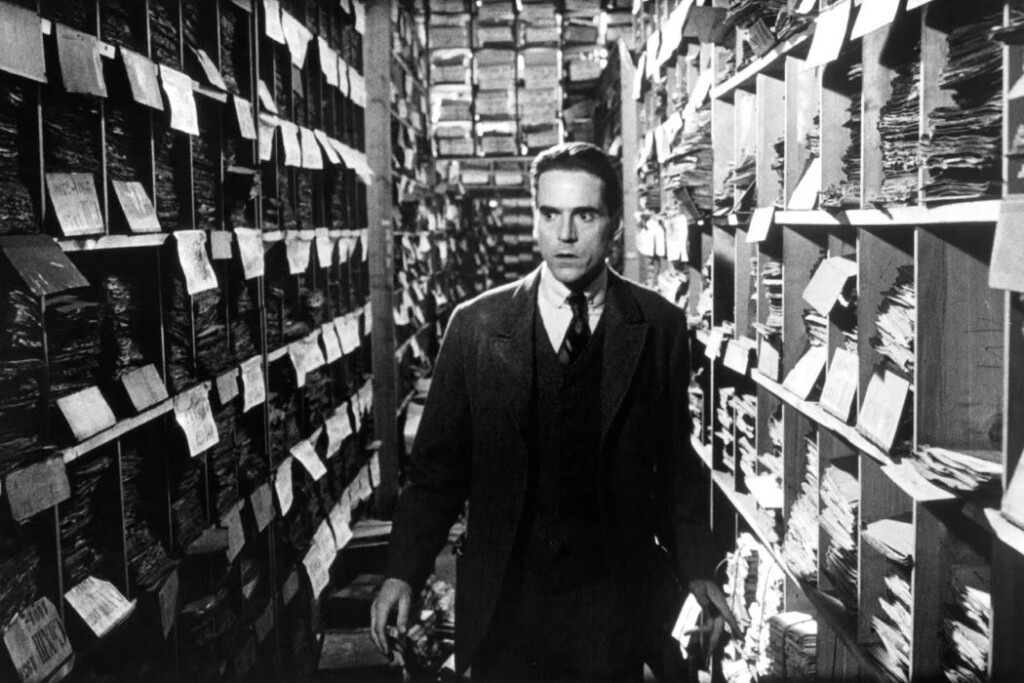
He arrives in the village at night, in the snow, carrying his tools. A land surveyor. Someone who measures, who establishes boundaries, who converts ambiguous terrain into legible fact. The very definition of a man whose competence is verifiable — you either draw the correct line or you do not, and the earth itself is the judge. Within twenty-four hours, he will discover that his tools are entirely beside the point. No one will ever ask him to measure anything.
What K. encounters in the village below the Castle is not hostility. That would be manageable. What he encounters is something far more disorienting: an apparatus of perfect procedural warmth that produces, through its very courtesy, an absolute wall. Every refusal arrives wrapped in the language of future possibility. The right official has not yet been reached. The correct channel has not yet been identified. There is always another form, another intermediary, another rung on a ladder whose top remains permanently obscured by cloud. The Castle itself sits above the village visible to the naked eye, close enough to seem almost touchable, and yet the distance between K. and its authority is not spatial. It is procedural. It is categorical. It is, in Max Weber‘s precise and devastating phrase, rational-legal.
Weber, writing in “Economy and Society” in 1922 — the same year Kafka was drafting the novel that would remain unfinished at his death — described rational-legal authority as a system in which legitimacy derives not from the personal qualities of those who hold power, not from tradition or charisma, but from the existence of formal rules themselves. The rule is legitimate because it was produced by a legitimate procedure. The procedure is legitimate because it follows legitimate rules. The circularity is not a flaw in the system. It is the system’s load-bearing structure. Weber saw this as modernity’s great achievement and, with the ambivalence of someone who understood what he was describing, as its quiet catastrophe: authority that cannot be questioned because it has removed itself from any external standard against which questioning could be measured.
K. is destroyed not by a tyrant but by this circularity. Every person he speaks to is individually sympathetic, occasionally even apologetic. The innkeeper’s wife explains the protocols with genuine regret. Barnabas delivers messages with evident good faith. Klamm, the official who becomes K.’s impossible target, is not malicious — he is simply enclosed within a procedure so dense that malice would be redundant. The system does not need to refuse K. directly. It simply continues to process him, and the processing itself is the refusal.
This is what makes his professional identity so precisely, almost surgically ironic. A land surveyor carries a competence that exists entirely outside bureaucratic procedure — the ability to read terrain, to establish objective fact, to produce knowledge that the earth itself can verify. Kafka places exactly this figure inside a world where competence of any kind is irrelevant, where the only credential that matters is positional — who you know, which rung you occupy, whether your paperwork has been seen by the right pair of eyes. K.’s expertise is not wrong. It is simply incommensurable with the logic of the Castle. He has brought the wrong kind of knowledge to a world that has abolished the very category of correct measurement.
There is a moment when he realizes, not through dramatic revelation but through exhaustion, that the question of whether he was actually summoned as a land surveyor — whether the job exists, whether the appointment was real — may simply not be answerable. The Castle’s records contradict each other. Different officials confirm different versions. The truth of the matter has been bureaucratically dissolved, replaced by an archive whose internal consistency is its own evidence, answerable to nothing outside itself.
Slow Life
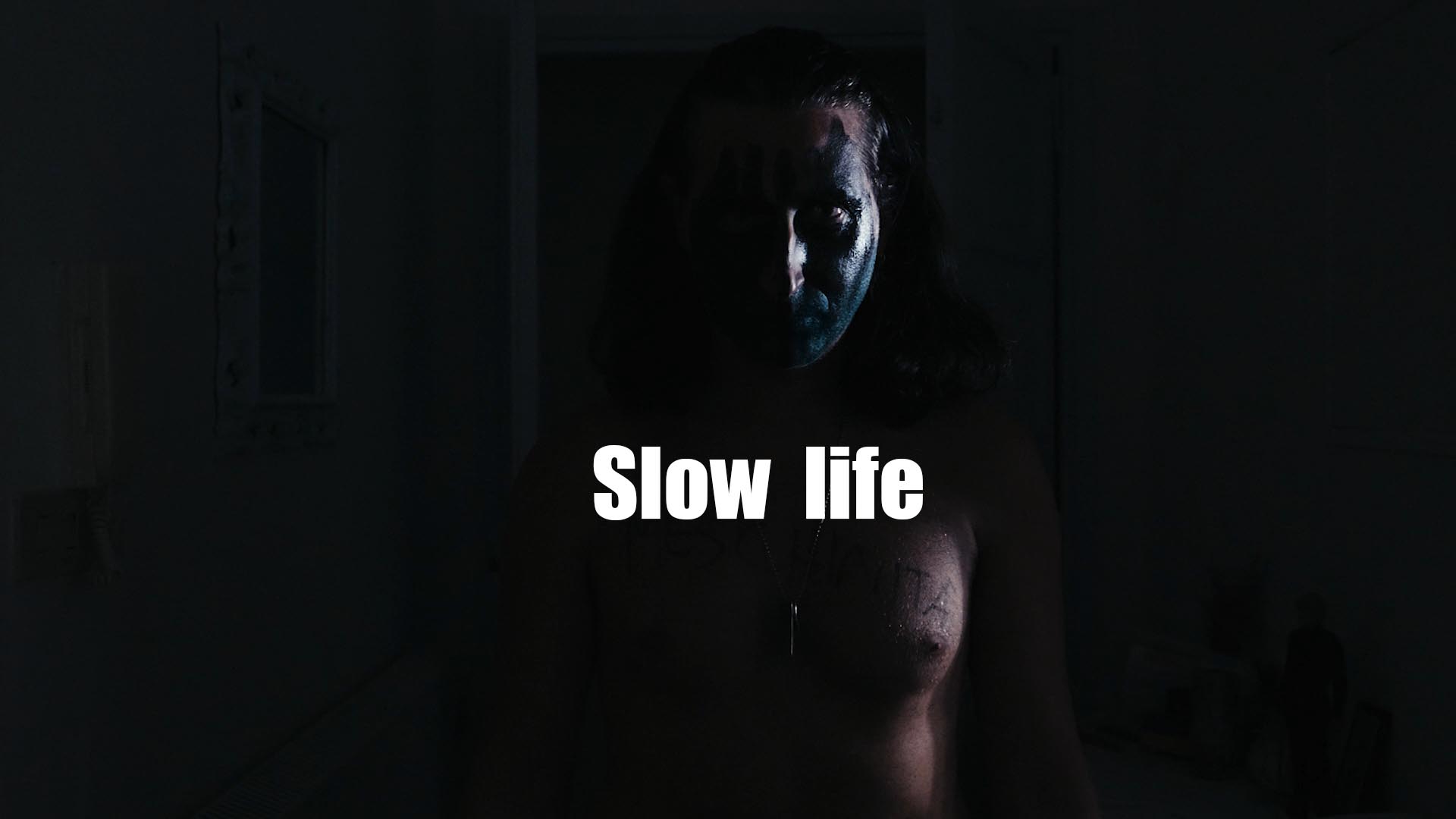
Drama, comedy, thriller, by Fabio Del Greco, Italy, 2021.
Lino Stella takes a period of vacation from his alienating job to devote himself to relaxation and his passion: drawing comics. But he did not foresee certain disturbing elements: the intrusive administrator of the building where he lives, the postman who delivers crazy fines and tax bills, an overbearing security guard, a very enterprising real estate agent, the old lady downstairs who raises the feline colony of the condominium. These characters will make his vacation hell.
Food for thought
The larger a social group is, the more rules and bureaucracy are needed, which often do not respect the individual. You have to learn to live with annoying people, but sometimes the social pressure and arrogance can become intolerable. The only laws that always come to our aid are the laws of Nature.
LANGUAGE: Italian
SUBTITLES: English, Spanish, French, German, Portuguese
Kafka Wrote His Own Condition, Then Burned It
He spent his days writing letters that told injured workers they did not qualify. Not because they were lying about the crushed hand or the factory floor that had taken three fingers, but because the paperwork was incomplete, the filing period had elapsed, the category of injury did not match the registered category of employment, or the employer had submitted documentation that technically superseded the claim. Franz Kafka understood this language from the inside. He was not observing bureaucracy from a literary distance. He was one of its fluent speakers, employed from 1908 until illness forced him out, at the Workmen’s Accident Insurance Institute of the Kingdom of Bohemia in Prague, processing the wreckage of industrial labor and translating it into the clean grammar of denial.
Prague in 1883, when he was born, was a city that contained at least three languages and at least three identities that did not reconcile: Czech, German, Jewish. Kafka belonged to all of them and was fully accepted by none. He wrote in German but lived in Czech. He was Jewish in a city where that carried specific legal and social weight, but he was also secular enough to feel estranged from the community that identity implied. His father, Hermann, ran a haberdashery and inhabited a kind of practical, aggressive certainty that Franz could never access. The famous letter Kafka drafted to his father in 1919, never sent, runs to nearly one hundred pages and reads less like a grievance than like a man attempting to prove his own existence to someone who holds the only legitimate standard of proof and will never apply it in his favor.
He was, in other words, already living inside the architecture he described. Josef K., who is arrested without being told why, who navigates a legal system that acknowledges no obligation to explain itself, was not a projection of abstract anxiety. He was a version of the man who sat in an office on Pořič Street and understood that systems designed to help can be engineered, almost imperceptibly, to produce their opposite. Kafka’s official reports on accident prevention for quarry workers and machine operators are models of clear institutional reasoning. He knew exactly how a rule functions, and he knew exactly how the same rule, applied with perfect fidelity, can become an instrument of negation.
The paradox that his biography deposits in front of you is this: the man who spent his professional life administering a system of deferral left behind, at his death in 1924, three unfinished novels and a collection of stories, with explicit written instructions to Max Brod that everything should be destroyed. Burned. Not revised, not archived, not reconsidered. Erased. Brod did not comply. He published The Trial in 1925, The Castle in 1926, Amerika in 1927, each one appearing posthumously, each one arriving in the world through an act of direct disobedience to a written order.
What you are holding when you read Kafka is the result of someone ignoring instructions. The texts exist because the system, in this one instance, failed to execute its own directive. There is something almost too precise about this. The man who wrote about institutions that absorb individual will and neutralize individual requests was himself defeated, after death, by a single person who refused to follow a clearly documented procedure. Brod’s disobedience is the crack in the machine. And through that crack came everything.
Walter Benjamin, writing about Kafka in 1934, observed that his world is organized not around guilt but around something more disorienting: the impossibility of knowing whether you are guilty. The insurance lawyer knew this operationally. He had seen how the apparatus withholds the information that would allow you to argue your own case. He had written that withholding into policy documents. Then he had written it again, differently, into literature, and tried to make both disappear.
The Architecture of Deferral
You have been waiting for forty minutes when someone finally appears, only to inform you that the person you need to speak with is unavailable today, but can you come back Thursday, and on Thursday there is a form you did not bring, and the form requires a signature from an office that is only open on alternate Wednesdays. You leave. You come back. You bring the form. The form is now outdated.
This is not malfunction. This is the system operating at peak efficiency.
What Kafka understood — and what his readers have spent a century misreading as surrealist exaggeration — is that the architecture of deferral is itself the product. The courts that convene in attic rooms above laundry lines, the castle that recedes as the land surveyor K. walks toward it, the official who falls asleep mid-sentence during the only appointment his petitioner has managed to secure after months of negotiation: these are not signs of a system failing to achieve its purpose. They are the purpose, expressed in spatial and temporal form. The building is the argument.
Michel Foucault, writing in Discipline and Punish in 1975, showed how modern institutions produce their subjects not through spectacular violence but through the slow architecture of examination, documentation, and normalized expectation. The prisoner who internalizes the guard’s gaze even when no guard is present, the student who begins to evaluate herself before any teacher arrives — these figures are not oppressed from the outside. They have absorbed the logic of the system so completely that they perform its requirements voluntarily, perpetually. Foucault called this the production of docile bodies: not bodies broken by force, but bodies shaped by repetition into compliance. Kafka arrived at the same insight from a different angle, not through the lens of power’s machinery but through the lived texture of what it feels like to be inside it.
Josef K. does not know what he is accused of. K. the land surveyor cannot reach the authority that summoned him. And crucially, neither of them stops trying. They adjust, they strategize, they seek intermediaries, they write letters, they interpret silences. They become more and more elaborately engaged with a system that has no interest in resolving their cases, only in sustaining their engagement. The system does not need to punish them. It only needs them to believe, week after week, that the next door might be different from the last.
There is a scene in which a man has spent his entire life waiting at a gate, told only that entry is not possible at this moment, the moment stretching into decades, into a lifetime, into the hour of his death when the gatekeeper informs him that this particular gate was always only his. The horror is not that he was denied. The horror is that he organized his entire existence around the expectation of eventual admission. The gate was never an obstacle to something beyond it. The gate was the destination the system had designed for him all along.
This is what makes Kafka’s bureaucracies feel more truthful than most political science: they reveal the phenomenology of institutional time. The delay is not incidental to the process. The delay is how the subject is made. Each return visit confirms the legitimacy of the authority you are returning to. Each new form you complete is an act of recognition — you are saying, with your presence and your effort, that this institution has jurisdiction over your life. You are not simply waiting. You are, in the act of waiting, continuously manufacturing the power that holds you.
Foucault gave this a structural name. Kafka gave it a body, a breath, a cold morning, a door that does not open but also, crucially, does not close.
A vision curated by a filmmaker, not an algorithm
In this video I explain our vision
The Parable of the Door and the Man Who Waited His Whole Life
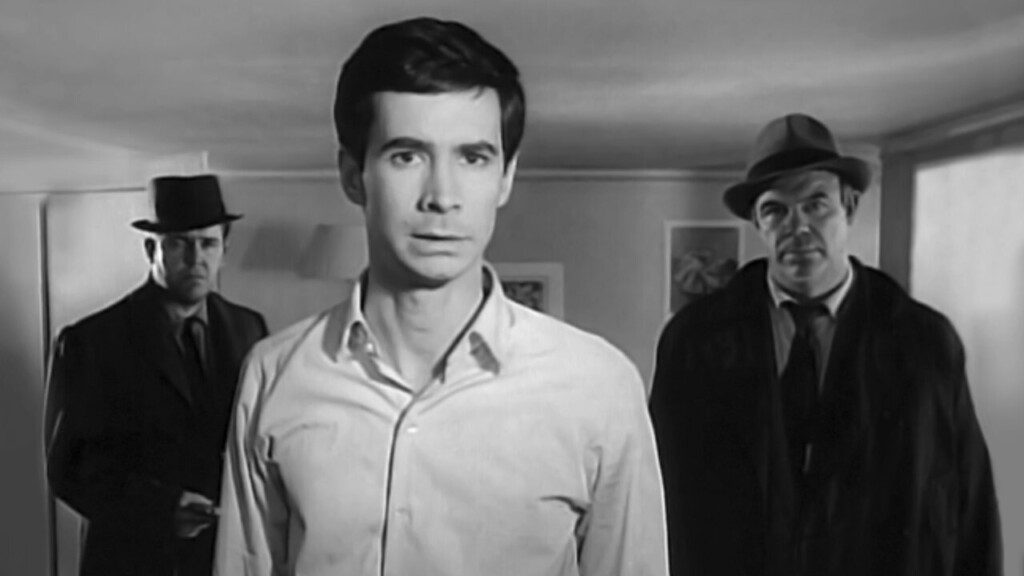
There is a man sitting on a stool outside a door. He has been sitting there for years. He brought things with him — food, bribes, patience — and he has spent all of them. The doorkeeper is still there, enormous and furred, with a nose like a beak, and the man is now old, his sight failing, and it is only in this near-blindness that he notices something he had not seen before: a light coming from inside the door. He calls the doorkeeper over and asks one final question. Why, in all these years, has no one else come to this door? And the doorkeeper answers, with the casual cruelty of someone stating the obvious: this door was made only for you. And now I am going to close it.
This is not an allegory about totalitarianism. It is not a symbol of divine inaccessibility. It is a description of a mechanism, and the mechanism is precise. The doorkeeper does not lie at any point. He tells the man, at the very beginning, that he cannot grant him entry now. Not ever. Now. The man hears a prohibition and sits down to wait for it to lift. But the prohibition was never permanent — it was only procedural, positional, tied to this specific doorkeeper at this specific threshold. The man had the option of pressing through. The law was always already his. He died of deference.
Kafka published this parable separately in 1915, one year before completing The Trial, and then embedded it inside the novel as a story told by a priest to Josef K. in a cathedral. Josef K. immediately tries to interpret it, to extract the correct reading, to determine who is right — the man or the doorkeeper. The priest refuses to adjudicate. He says the text is unalterable and opinions about it are often mistaken. What the novel understands, and what Josef K. cannot, is that the search for the correct interpretation is itself the trap. The man outside the door did not die because he lacked information. He died because he kept believing that more information, more waiting, more correct behavior, would eventually produce permission.
Byung-Chul Han argues in The Transparency Society, published in 2012, that the contemporary demand for transparency does not liberate — it merely accelerates the old subjugation into a new register. The opaque doorkeeper has been replaced by a dashboard. The door now has a progress bar beneath it. The system shows you exactly where your application stands, what percentage of the process is complete, how many steps remain. This visibility is not openness. It is a more sophisticated form of the same deferral, because now you can watch yourself waiting in real time. The anxiety is not reduced by information — it is fed by it. You refresh the page. The bar does not move. You refresh again.
Han’s point is that transparency produces not clarity but a new kind of paralysis, one in which the subject becomes complicit in their own management. You understand the system. You can see its architecture. You accept its terms of service. And yet the outcome is identical to the man on the stool: you sit, you wait, you believe that correct compliance will eventually be rewarded with passage. The digital bureaucracy has absorbed Kafka’s joke and made it comfortable. It gave the joke a user interface.
The cruelest detail in the parable is not the closing of the door. It is that the light was always visible. It was there from the beginning, streaming through the gap, and the man simply never followed it. He was too busy asking permission to notice that the light did not require any. The doorkeeper was never the obstacle. The man’s belief in the doorkeeper was.
When the System Becomes the Self
There is a moment when Josef K. stops trying to escape and starts trying to win. The shift is almost imperceptible, and that is precisely what makes it devastating. He hires a lawyer. He seeks out people who know people. He refines his arguments, reconsiders his tone, wonders whether a different form of address might open a door that blunt directness had sealed. He is no longer resisting the court. He is learning its language. And in learning its language, he has already conceded the one thing the court required of him: the acknowledgment that it exists on terms worth engaging.
This is the movement Erich Fromm diagnosed with surgical precision in 1941, writing from exile with the wreckage of European democracy still audible in the distance. In “Escape from Freedom,” Fromm argued that the authoritarian personality is not, at its core, defined by cruelty or hunger for domination — it is defined by the desperate need to dissolve into something larger than itself. The burden of individual agency, of having to author one’s own meaning in a world that offers no guarantees, becomes at a certain point simply unbearable. And so the self contracts, surrenders, finds relief in submission to a structure that, however punishing, at least implies a coherent order. The trap is not experienced as a trap. It is experienced as ground.
What Fromm described in political terms, Kafka had already mapped in existential ones. Josef K.’s gradual capitulation is not weakness in the ordinary sense. It is the deeply human response to a particular kind of dread — not the dread of punishment, but the dread of meaninglessness. The court is monstrous, yes, but it is also organized. It has procedures. It keeps records. Somewhere, presumably, someone understands what all of it means. And that presumption — that there is a someone, a center, a logic that merely eludes him for now — is what keeps K. moving through the machinery rather than stepping outside it entirely.
He never steps outside it. Neither does the land surveyor in the village below the Castle, spending his numbered days arranging meetings that are cancelled, receiving messages that contradict each other, building relationships with intermediaries who have no actual access to the authority they claim to represent. His persistence is extraordinary. But persistence is not the same as resistance. He persists within the frame the Castle has provided, and every act of persistence deepens his investment in a system that does not acknowledge his existence.
The horror, held steady across both novels, is not confinement. Confinement can be endured, even dignified. The horror is the conversion — the slow turning of the self toward the structure that diminishes it, not out of cowardice but out of the genuine psychological need Fromm identified: the need to believe that somewhere, embedded in all this procedure, there is a rule that applies to you, a category that fits you, a judgment that at least sees you fully before it condemns you. To be judged wrongly is still to be seen. The alternative — to be processed by a system entirely indifferent to your particular existence — is the deeper annihilation.
Josef K. begins to prefer the trap not because he is broken but because the trap, at minimum, implies a trapper. And a trapper implies intention. And intention implies that the universe is not simply a vast, humming apparatus generating outcomes without reference to anything that could be called justice or meaning. He would rather be guilty in a world that knows the difference between guilt and innocence than free in a world that does not.
That preference is not a flaw in his character. It is the structure of the problem itself, distributed across every person who has ever sought the right form of words to make a powerful institution finally hear them.
The Castle Is Still Being Built
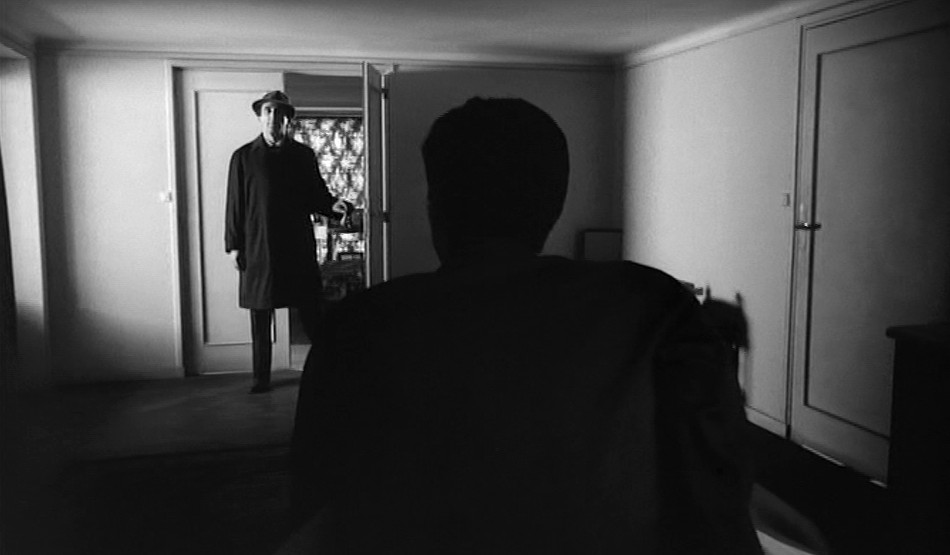
You have been trying for forty minutes to upload a document that the system says it requires, using a file format the system says it accepts, on a browser the system says it supports, and the screen has refreshed three times to the same blank form with the same blue button that does nothing when you press it. There is a help link. The help link opens a PDF last updated in 2019. The PDF tells you to call a number. The number plays a recorded message that tells you to use the online portal.
This is not a malfunction. This is the system working exactly as designed.
What Kafka understood, with a precision that embarrasses most political theorists, is that the labyrinth does not need a monster at its center. It only needs to be long enough that you begin to doubt whether you ever had a right to enter it at all. K. does not fail to reach the Castle because someone stops him. He fails because the process of seeking access gradually replaces the thing he was seeking access to. The application becomes the destination. The procedure becomes the answer. And by the time you have uploaded the same document for the third time in a slightly different format, you are no longer asking for what you originally needed. You are asking for confirmation that you submitted the request correctly. The original need has been metabolized by the process itself.
Max Weber saw this coming with uncomfortable clarity. In Economy and Society, completed shortly before his death in 1920, he described bureaucratic rationalization not as a failure of governance but as its purest success — a system that achieves its own perpetuation by converting every human need into a procedural category. The category can always be refined. The procedure can always be updated. And each refinement generates new requirements, new thresholds, new documents proving that you are who you already proved you were. What looks like inefficiency from the outside is, from the inside, a form of perfect coherence. The system is not broken. You are simply not the kind of entity it was built to process smoothly.
There is a screen that says your identity has been verified. Then there is another screen that says your identity could not be confirmed and you must start again. Both screens exist simultaneously in different parts of the same system, and neither one knows about the other. The person on the phone, when you finally reach one, can see only the screen in front of them. They cannot see the other screen. They tell you the case is being reviewed. They tell you the case has been closed. They tell you there is no case under that reference number. They are not lying. They are reading what they can see, and what they can see is a fragment of an architecture that no single person designed and no single person understands in its entirety.
This is what the priest in the cathedral does not tell Josef K., because perhaps the priest does not know it either: the man who waited his whole life before the door was not waiting for a decision. He was waiting for evidence that a decision was possible. That somewhere inside the layered structure of rooms and clerks and counters and forms and authorizations and re-authorizations, there was a place where the matter could finally be settled by someone with the standing to settle it. The parable does not tell us whether that place exists. It only tells us that the door was made for him, which is the most elegant and most devastating bureaucratic response imaginable — not a denial, not an approval, but a personalization of the waiting itself, as though the system had always known he would come, had prepared exactly this threshold for him, and had arranged things so that the question of what lay beyond it would outlast every answer he could have received.
Whether the door exists because there is something behind it, or whether the door exists only to make you believe there is, may be the only question the system was never required to answer.
🌀 Lost in the System: Power, Alienation, and Control
Kafka’s novels The Trial and The Castle are monuments to the experience of bureaucratic alienation, where individuals are crushed beneath the weight of opaque, indifferent systems of power. These related articles deepen the philosophical and literary context of Kafka’s world, tracing the roots of control, surveillance, and the loss of selfhood across modern thought.
Karl Marx and Alienation: Economic and Philosophical Manuscripts
Marx’s early manuscripts lay the philosophical groundwork for understanding how modern systems strip individuals of agency and authentic existence. Kafka’s trapped protagonists — Josef K. and the unnamed Land Surveyor — embody precisely the alienated subject that Marx diagnosed in industrial capitalism: a human being reduced to a function within a machinery they can neither comprehend nor escape. This article explores the concept of alienation as one of the most powerful lenses through which to read Kafka’s bureaucratic nightmares.
GO TO THE SELECTION: Karl Marx and Alienation: Economic and Philosophical Manuscripts
The Surveillance Society: History and Theory
The surveillance society is not merely a product of digital modernity — its roots run deep into the bureaucratic and disciplinary structures that Kafka so presciently imagined. This article traces the historical and theoretical development of surveillance as a social institution, from Bentham’s Panopticon to contemporary data regimes. Reading it alongside Kafka reveals how The Trial and The Castle anticipate the logic of invisible, omnipresent institutional power.
GO TO THE SELECTION: The Surveillance Society: History and Theory
Albert Camus: Life and Philosophical Thought
Camus placed Kafka at the very heart of absurdist literature, recognizing in his work the purest fictional expression of the absurd condition: a world that offers no coherent answers to human demands for meaning. This article on Camus’s life and philosophical thought illuminates the shared existential terrain between Kafkaesque bureaucracy and the absurdist confrontation with an indifferent universe. Understanding Camus is indispensable for grasping why Kafka’s characters keep knocking on doors that will never open.
GO TO THE SELECTION: Albert Camus: Life and Philosophical Thought
Banal Evil and Radical Evil: Kant and Arendt
Hannah Arendt‘s analysis of banal evil — the idea that monstrous systems are sustained not by demons but by ordinary functionaries — resonates profoundly with Kafka’s bureaucratic worlds. The faceless officials of The Trial and The Castle are not villains in any conventional sense; they are cogs in a machine that perpetuates itself through sheer administrative inertia. This article on Kant and Arendt’s contrasting notions of radical and banal evil provides a crucial philosophical framework for understanding how Kafka’s nightmare became the grammar of the twentieth century.
GO TO THE SELECTION: Banal Evil and Radical Evil: Kant and Arendt
Discover Independent Cinema on Indiecinema
If Kafka’s labyrinths of power and alienation have stirred something in you, Indiecinema streaming is the place to follow that feeling further. Our curated selection of independent and arthouse films explores the same territories — bureaucracy, absurdity, surveillance, and the search for meaning — through the most daring and uncompromising voices in world cinema. Step inside, and let independent film be your guide through the maze.
👉 EXPLORE THE CATALOG: Watch Indie Films in Streaming
A vision curated by a filmmaker, not an algorithm
In this video I explain our vision

