
The Bureaucrat Who Smiles
You arrive at the correct window — window four, not window three, because window three handles a different category of applicant, a distinction that was never explained to you but whose consequences you are now absorbing — and the woman behind the glass smiles at you with the particular warmth of someone who has already decided that nothing you say will change what she is about to do. She is not cruel. That is the precise, terrible point. She asks for the form you submitted six weeks ago, the one you were told you did not need to submit in person, and when you explain this, she nods with great patience, the kind of patience that functions as a wall. The office smells of recycled air and cheap carpet. A child somewhere behind you is crying without urgency, the flat sustained cry of a child who has learned that crying does not accelerate anything. You have entered a space where time operates differently — slower, thicker, like moving through an institution that has quietly decided your situation is not yet an emergency.

This is where the European social thriller begins. Not with a body in a canal or a detective lighting a cigarette at dusk. It begins here, in the fluorescent ordinary, where harm is delivered through procedure and the perpetrator has a pension and goes home to water her plants. The genre that has been reshaping European cinema and literary fiction since roughly the late 1990s — from the Dardenne brothers’ stripped-down indictments of Belgian labor precarity to Ken Loach‘s 2016 film that placed its protagonist inside an unemployment appeals process so labyrinthine it read as Gothic — understood something that conventional crime drama could not access: that the most consequential violence in post-industrial societies is administrative. It wears a lanyard. It cites paragraph seven of subsection C.
What the thriller traditionally offered was a fantasy of legibility. There was a crime, a criminal, a motive, a resolution. The genre’s entire architecture depended on the assumption that wrongdoing could be isolated, attributed, and punished. This is why Raymond Chandler‘s Philip Marlowe could walk down the mean streets and still be a man who is not himself mean — because the evil, in that world, was personal. It had a face and an address. The social thriller dismantles this entirely. In its grammar, the crime is structural, which means it cannot be solved because it is not, technically, a crime. No one is prosecuted for the death of a man who could not navigate a digital benefits system in time to avoid eviction. The system did not intend to kill him. The system does not intend anything. Intention, in fact, is the alibi.
Pierre Bourdieu spent decades trying to name this. In The Weight of the World, his 1993 collective study of social suffering in France, he gathered testimonies from people crushed by exactly this kind of frictionless, smiling institutional force — unemployed steel workers in Lorraine, social workers who had internalized the logic of the system that was destroying their clients, suburban youth caught between a school that could not see them and a labor market that did not want them. What struck Bourdieu was not the presence of malice but its absence. The people administering distress were themselves distressed. The bureaucrat at window four is also trapped by metrics, processing times, supervisory review. The violence cascades downward through people who are themselves being processed.
And yet something is still being chosen. Every system that produces this kind of harm was designed, debated, passed into law, and defended by people who understood at least partially what it would do. The social thriller, at its most unsparing, refuses to let that designed quality dissolve into abstraction.
Urban Traffik

Thriller, by Jason Figgis, United States, 2017.
In the heart of a dark and hidden Dublin, Adam appears to be a kind-hearted man when he offers shelter to Sue, a lonely and vulnerable young woman who has just arrived in the city. The reality, however, is far more tragic: Adam serves as bait for a ruthless human trafficking ring led by the cold and calculating Dan and managed by his partner, Alex. Their chilling scheme is simple: lure defenseless young women and sell them into the international sex trade. But this seemingly perfect criminal enterprise is about to unravel. As disturbing family secrets linking Dan to Adam's sister come to light, and Adam desperately tries to break free from a brutal world he can no longer endure, the lives of everyone involved spiral into uncontrollable violence.
Directed by acclaimed independent filmmaker Jason Figgis, Urban Traffik leaves horror behind to embrace the raw, tense, and hyper-realistic territory of urban crime drama, recalling the visceral intensity of British cult films such as London to Brighton. The film's greatest strength lies in its outstanding performances: thanks to its razor-sharp screenplay, the cast succeeds in making viewers empathize even with its darkest and most morally ambiguous characters. Visually, the film is a noir gem. Alan Rogers' striking cinematography captures Dublin's hidden and ghostly side, transforming neglected alleyways and bare interiors into landscapes of palpable despair. Avoiding easy moralizing, Urban Traffik offers a hypnotic, intimate, and uncompromising look at the inner workings of organized crime.
LANGUAGE: English
SUBTITLES: Spanish, French, German, Portuguese
Crime Without a Criminal
You are watching a man lose his job in the opening minutes of a story that will never once show you a villain. There is no face to hold responsible, no voice that delivers the fatal verdict with malice, only a form passed across a desk by someone who will himself be handed a form six months later. The machinery grinds, and you sit there waiting for the moment someone reveals themselves as its operator — and that moment never arrives.
This is the structural premise that separates the European social thriller from almost every other dramatic tradition in Western storytelling. The genre refuses the consolation of the identifiable perpetrator. It does not give you the satisfaction of locating evil in a body, a name, a motive. The harm is real and documented and accumulative, but it issues from no single point of origin. What commits the crime is the arrangement itself — the spacing of institutions, the grammar of bureaucratic procedure, the distance that capital places between a decision and its human consequence. You cannot arrest the spacing of institutions.
Émile Durkheim noticed something in 1897 that French society was not prepared to receive: that suicide — the most intimate and apparently personal act available to a human being — varied systematically with social integration, not with individual psychology. His concept of anomie, developed in Le Suicide and theorized earlier in De la Division du Travail Social, named the condition in which the regulatory norms of a society collapse faster than individuals can adapt, leaving people in a state of normative weightlessness. The violence that followed was not irrational. It was the mathematically predictable output of a social structure that had stopped providing coordinates. The perpetrator was the rate of change, the dissolution of collective constraints that had previously given suffering a legible frame.
Robert Merton, writing in 1938 in his essay Social Structure and Anomie published in the American Sociological Review, took that diagnosis and turned it into something sharper and more politically uncomfortable. Where Durkheim had located the problem in normative disintegration, Merton located it in the gap between culturally prescribed goals and structurally available means. American society told everyone that success was achievable through legitimate channels while systematically blocking those channels for the majority of its population. The result was not moral failure but structural pressure — a measurable force pushing individuals toward innovation, ritualism, retreatism, or rebellion, not because they were weak but because the geometry of opportunity left them no dignified exit. Crime, in Merton’s framework, was not deviance from the social order. It was one rational adaptation to it.
The European social thriller inherits this logic and makes it visceral. It does not cite Merton, but it builds its architecture according to his proportions. The character who defrauds the unemployment office is not morally distinguished from the bureaucrat who denies the claim through procedural delay — both are operating rationally inside a system that produces irrational outcomes. The distance between them is not ethical but positional: one holds the form, the other needs it. What the genre refuses is the comfortable fiction that position and ethics are separable, that the person who administers harm neutrally is innocent of it.
What makes this so destabilizing is not the political argument it implies but the perceptual demand it places on the viewer or reader. You are trained, by a lifetime of narrative convention, to scan the frame for the guilty party. Your eyes move toward faces that register cruelty, hands that sign documents with too much certainty. The social thriller knows this about you and exploits it, letting you perform that search across the entire length of the work, because the search itself is the point — because the frantic need to locate a villain is precisely the reflex that keeps the system invisible.

The Welfare State as Stage Set
You have been told, your entire life, that the system is there to catch you. The net exists. The floor holds. And the remarkable thing is not that you believed it — it is that you were right to believe it, partially, for a specific window of time, in a specific geography, under conditions that were themselves the product of catastrophe.
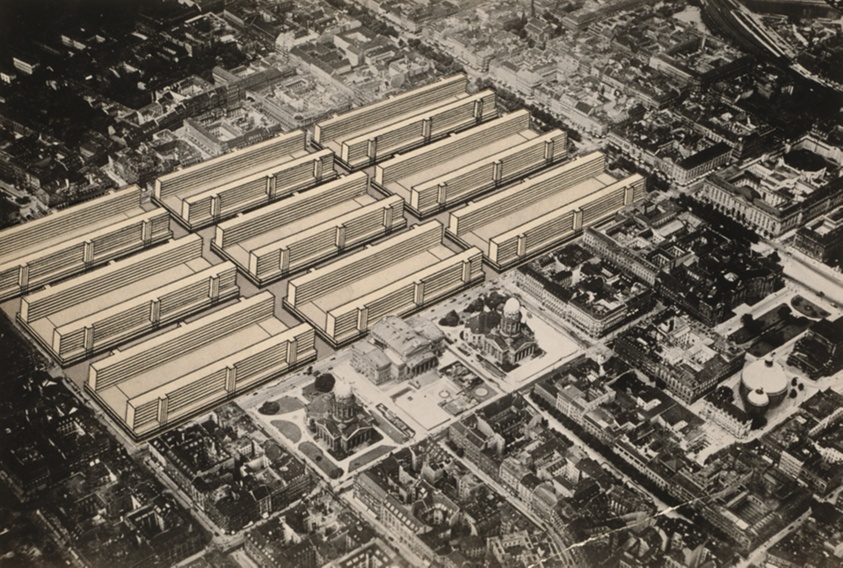
Between 1945 and 1975, Western European governments constructed something without historical precedent: a dense architecture of social protection that tied together housing, healthcare, education, and unemployment insurance into a single promise-keeping apparatus. The Trente Glorieuses, as Jean Fourastié named them in 1979, were not merely an economic boom. They were an anthropological experiment in which the state became the primary narrator of individual life. You were born into a hospital the state subsidized, educated in schools the state designed, employed in industries the state sometimes owned outright, and insured against the possibility that any of these arrangements might fail. The scaffolding was real. The floor did hold — for the white, the documented, the compliant, the geographically central.
What no one said clearly enough is that every architecture of protection is simultaneously an architecture of surveillance. Michel Foucault, writing in Surveiller et Punir in 1975, was not describing prisons metaphorically when he traced the expansion of normalization across hospitals, schools, and factories. He was identifying a structural logic: that the institution which protects you from external harm is the same institution that classifies you, measures you against a norm, and penalizes deviation from it. The welfare state did not merely offer services. It produced subjects — the deserving poor, the productive citizen, the rehabilitatable offender — and in producing these categories, it also produced their shadows: the undeserving, the idle, the irredeemable.
This is the hidden grammar of the European social thriller as a genre. The crime at its center is rarely the point. The detective — exhausted, underpaid, institutionally betrayed — moves through housing estates in Malmö or Lyon or Glasgow that were designed, in the 1960s, as monuments to collective dignity and now register, architecturally and socially, as monuments to classification. The brutalist block was never neutral. It was a spatial argument about who belonged where, built at the precise moment when the welfare consensus felt most secure and was therefore most confident in its power to assign.
A woman sits across from a caseworker in a fluorescent-lit office somewhere in northern Europe. She is applying for housing assistance. The caseworker is not cruel — this is important. He is thorough. He asks questions whose logic she can follow but whose answer she cannot produce: documentation of an address she no longer has, proof of employment she lost because she had no address. The form requires a history that her actual history has made impossible to write. She leaves without the assistance. The system did not fail. The system functioned exactly as designed, filtering at the boundary between the classifiable and the unclassifiable, and she fell on the wrong side of that boundary through no fault the form was capable of registering.
Erving Goffman, in Asylums in 1961, called this the mortification of the self: the systematic stripping of the identity a person brings to an institution, replaced by the identity the institution requires. He was writing about psychiatric wards, but the mechanism travels. The welfare state at its most procedural does not ask who you are. It asks whether you fit. And the gap between those two questions is where the thriller, when it is honest, chooses to live.
What makes the postwar European context specific is the scale of the promise that preceded the trap. The greater the articulated commitment to universal dignity, the more violent the exclusion of those who fall outside its administered categories becomes — not because the administrators are monsters, but because the system’s own legitimacy depends on the boundary holding.
Darkness, This Is my Revenge
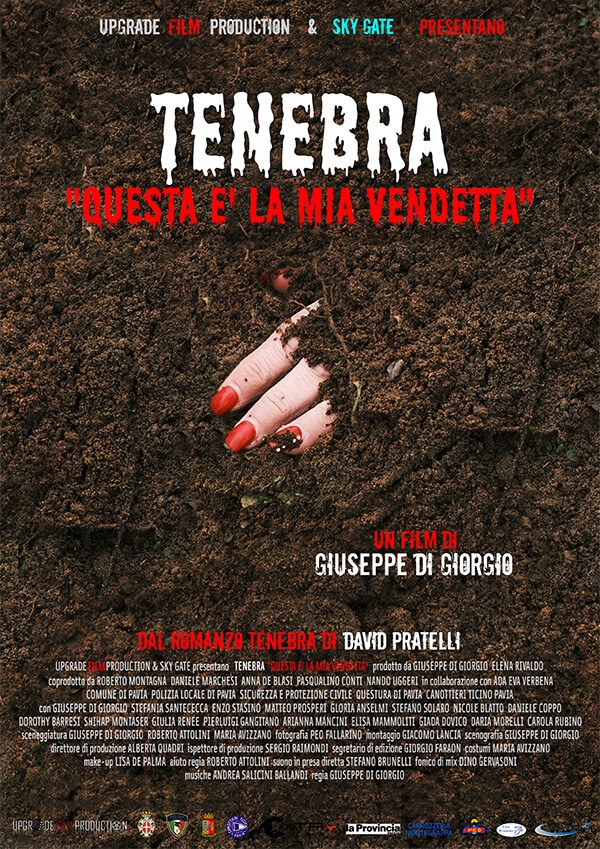
Thriller, by Giuseppe Di Giorgio, Italy, 2022.
The film tells the story of a mysterious killer who begins murdering women, leaving a message behind: "This is my revenge." Commissioner Soavi investigates, but is unable to find any clues that point him in the right direction. One thing that all the victims have in common is that they frequent a gym, but despite interrogating Nico, the gym's manager, and the other trainers, nothing useful emerges. Retired commissioner Taddei, who was involved in an unsolved case twenty years earlier, sees similarities between the two cases and tells Soavi about them. Meanwhile, the killer continues to murder.
The murders are shown in a quick, brutal, and visually effective manner. The film is based on a novel by David Pratelli, and it blends elements of thriller and detective fiction, with psycho-thriller influences in the concluding development. The narrative takes place on two different but interconnected timelines. The film keeps the audience's attention until the discovery of the culprit, and it is a well-made and suspenseful thriller.
LANGUAGE: italian
SUBTITLES: English, Spanish, French, German, Portuguese
Poverty as Plot Device vs. Poverty as Mechanism
You are standing in a queue at a government office, holding a form you do not fully understand, waiting for a clerk who has the administrative authority to determine whether you eat next week. The queue does not move. The fluorescent light above you flickers with the specific indifference of a system that was never designed to see you. You are not a character in a story about poverty. You are poverty’s bureaucratic product, its daily output, its proof of function.
There is a fundamental dishonesty in the way most cinema and television approach economic precarity, and it lies not in any single misrepresentation but in a structural choice made before the first frame is shot: the choice to position poverty as atmosphere rather than as architecture. When a story uses a crumbling flat, an empty refrigerator, or a child in worn shoes as visual shorthand for hardship, it is doing something precise and politically consequential — it is making dispossession legible as texture while leaving its machinery entirely invisible. The audience feels the weight without ever being asked to understand the load-bearing walls.
Ken Loach’s film from 2016 refuses this entirely. What makes it devastating is not the suffering of its central character — a fifty-nine-year-old carpenter recovering from a heart attack, caught between a medical system that says he cannot work and a benefits system that insists he must — but the procedural exactness with which the institutions around him operate. Every form, every automated telephone menu, every sanction, every condescending assessment interview is rendered not as cruelty but as compliance. The people administering his humiliation are following protocol. That is the point. Cruelty has been outsourced to process, and process cannot be held accountable because it is only following the rules, which were written by people who are no longer in the room.
Pierre Bourdieu spent years understanding precisely this dynamic before publishing La Misère du monde in 1993, a collective work built from interviews conducted with twenty-six individuals across France — a suburban housing project caretaker, a laid-off factory worker, a young teacher posted to a school she had no resources to serve — each testimony a portrait not of personal failure but of structural positioning. What Bourdieu grasped, and what makes the book methodologically radical, is that he refused to let suffering explain itself through the vocabulary of suffering. He imposed the sociological concept of field: each person’s distress was intelligible only in relation to the specific social space they occupied, the capital they lacked, and the institutions that defined legitimate success in terms they could never meet. Dispossession was not a condition. It was a process with a daily schedule.
The distinction matters enormously for how fiction functions politically. A story that aestheticizes poverty can generate tremendous sympathy and leave its audience’s understanding of social structure entirely intact. The viewer weeps, donates perhaps, votes with good intentions, and returns to a world whose mechanisms they have not been asked to examine. But a story that renders poverty as mechanism — that shows how the Housing Benefit assessment form, the zero-hours contract, and the school catchment boundary form an interlocking system of foreclosure — does something the sympathetic story cannot: it implicates the ordinary. It makes visible the role played not by villains but by policies that enjoy majority electoral support, by institutions administered by people who consider themselves decent, by a labor market whose brutality is understood as natural law.
Bourdieu called this symbolic violence — the way dominated individuals come to perceive their own domination through categories produced by the dominant, seeing their failure as personal where it is structural, as individual where it is collective. The social thriller that earns its adjective is the one that puts this process on screen without announcing it, without a character who explains the system in dialogue written for the audience’s benefit, without the consolation of a moment where someone names what is happening and the naming feels like resolution.
The Complicity of the Witness
You have a file on your desk, and inside it there is a child’s name written in a font so bureaucratic it seems designed to make you forget a person produced it. You read the file. You note the irregularities. You write a report. You send the report to someone whose title contains the word “coordinator,” and then you go home and feel, with some precision, that you have done your job.
This is not a failure of empathy. It is something structurally more interesting: a system that converts moral attention into procedural output, leaving the witness with the sensation of having acted while ensuring nothing changes at the level where change would cost something. What Stanley Milgram demonstrated in his 1963 obedience experiments at Yale was not that people are monsters — it was that ordinary people in ordinary professional contexts will administer harm incrementally, at each step believing themselves to be still within the boundaries of the acceptable, precisely because the structure around them keeps redefining where those boundaries are. The white coat, the clipboard, the institutional setting: these are not decorations. They are load-bearing walls of moral architecture.
Hannah Arendt, covering the Eichmann trial in Jerusalem in 1961 and publishing her account in 1963, was pilloried for suggesting that radical evil does not require a radical personality. What she saw in that glass booth was a man who had, across years of industrialized murder, never once fully inhabited the reality of what he was participating in. He processed paperwork. He attended meetings. He optimized logistics. The horror of her observation is not that he was banal but that his banality was functional — it was precisely what the system required him to be. The social worker who writes the report, the journalist who publishes the exposé, the NGO coordinator who files the quarterly impact assessment: none of them are Eichmann. But they are all, in different registers, performing a version of the same cognitive operation — translating proximity to suffering into a professional deliverable that the system can absorb without rupture.
The European social thriller understands this with a coldness that most political journalism refuses to adopt. It keeps its middle-class observer characters in frame not as heroes of conscience but as structural accomplices whose moral distress is itself a product the system needs. A volunteer who burns out after eighteen months and writes a memoir about it generates cultural legitimacy for the organizations she has left. A journalist who exposes a housing scandal and wins a minor prize provides the institution with evidence of its own transparency. The exposure becomes the alibi. Luc Boltanski and Ève Chiapello argued in their 1999 work “The New Spirit of Capitalism” that the system’s genius lies in its capacity to incorporate its own critique — to metabolize dissent as a feature rather than treat it as a threat. The witness who speaks, within the sanctioned channels, does not threaten the structure. She completes it.
What the genre refuses to offer is the comfort of the exceptional individual who sees clearly and acts decisively. The characters positioned closest to the evidence of systemic harm are almost always the ones most constrained by their institutional position — not because they are cowards but because the institution has pre-shaped the categories through which they can interpret what they see. Robert Castel, in his sociological work on social insecurity, described how the professional apparatus of social work since the late nineteenth century was designed less to resolve poverty than to manage its visibility, to make it legible to the state without making it intolerable to the public. A managed problem is not a solved problem. It is a permanent one, requiring permanent management, permanent funding, and permanent professionals who need it to remain exactly as it is.
The witness, then, is not outside the system looking in. The witness is the system’s most sophisticated interface with its own conscience — close enough to feel, trained enough to translate, and positioned precisely where the translation replaces the action it was meant to provoke.
A vision curated by a filmmaker, not an algorithm
In this video I explain our vision
Race, Paperwork, and the Violence of Legitimacy

You are already a criminal. Not because of anything you have done, but because of what you failed to produce — a document, a stamp, a number assigned to you by a bureaucracy that existed before you arrived and will continue after you are gone. The violence in this is not metaphorical. It is administrative, which is to say it is total, because it operates without a face and leaves no bruise that a court will recognize.
Étienne Balibar, writing in We, the People of Europe in 2004, identified something that liberal democratic theory had systematically refused to name: the border is not a line at the edge of a territory. It is a social relation reproduced everywhere inside that territory — in hospitals, in schools, in the moment a landlord asks to see your papers before deciding whether you are a person worth renting to. Balibar wrote this before the full architecture of post-Schengen governance had calcified, before biometric databases and the Dublin Regulation had made immobility the defining feature of the undocumented life in Europe. What he diagnosed was the grammar. The vocabulary came later, and it is spoken fluently now by over three million people living inside the European Union without legal status as of 2020 — not hiding in shadows, as the political imagination prefers to picture them, but working in restaurants, caring for children and the elderly, paying into tax systems from which they are structurally excluded from ever collecting.
The mechanism is elegant in the way that only bureaucratic cruelty can be elegant. By making a person’s legal existence conditional on documentation, the state does not merely exclude them from rights — it conscripts them into illegality as a permanent condition. The employer who pays below minimum wage is not taking a risk; they are exploiting a structural guarantee. The landlord who charges double for housing that violates every safety code is not an anomaly in the market; they are a product of it. The undocumented person cannot report either without triggering the very enforcement apparatus that defines them as the primary threat. Crime, here, is not something that happens to a vulnerable person. It is the water they are required to breathe.
What makes this a thriller in the truest sense is not the danger but the procedural trap — the way that every exit from the trap requires passing through the trap again. To regularize your status in most European countries, you must demonstrate stable employment. To access stable employment without documentation, you must accept conditions that no documented worker would tolerate. The paperwork that would liberate you can only be obtained by first surviving the conditions that the absence of paperwork creates. Kafka did not invent this logic. He only had the clarity to recognize that it was not a malfunction of bureaucracy but its deepest feature.
The figure of the sans-papiers — a term that entered French political language forcefully after the church occupations of Saint-Bernard in 1996, when hundreds of undocumented migrants staged a collective refusal to remain invisible — carries something that statistical abstraction cannot hold. It is a figure produced not by movement but by the state’s decision about what movement means. A German citizen crossing into France is exercising freedom of movement. A Malian citizen crossing the same border is committing an act that will follow them into every subsequent interaction with European governance. The geography is identical. The legal reality is a different universe entirely, and that divergence is not incidental to European integration — it is one of its foundational products.
Schengen opened internal borders in 1985 and sealed the logic by 1995: freedom of movement for those who already possessed it, intensified immobility for those who did not. The humanitarian language that surrounds migration policy in European institutions does not contradict this architecture.
What the Genre Refuses to Solve
You already know the ending before it arrives. Not because you have seen it before, but because something in the structure of the story has been quietly signaling, from the first frame, that resolution is not what this machinery was built to produce. The detective does not get the confession. The institution does not collapse under the weight of its own contradictions. The file gets closed, the perpetrator walks, the neighborhood absorbs the violence like scar tissue absorbs heat, and life — that monstrous, indifferent thing — continues at the same register.
This refusal is not a failure of craft. It is a political position embedded so deeply into the architecture of the genre that audiences trained on American crime narrative experience it as a wound. The American model, from its pulp origins through to its prestige-television apotheosis, is built on a covenant with individual guilt: someone did this, that someone will be named, and the naming constitutes a kind of moral restoration. Even when the system is portrayed as corrupt — and it often is — the corruption itself tends to be personified, given a face, made prosecutable. The infrastructure of punishment is never really questioned; only its temporary malfunction is mourned.
Walter Benjamin, writing his Theses on the Philosophy of History in 1940 while fleeing a Europe devouring itself, proposed that every document of civilization is simultaneously a document of barbarism — that what a culture builds and what it destroys are not opposite acts but a single continuous motion. He was not speaking metaphorically. He meant that the palace and the mass grave share the same ledger, that the order which produces symphonies and legal codes and public monuments is the same order that produces the conditions under which the dispossessed become invisible. The European social thriller has internalized this equation not as theory but as sensation — you feel it in the texture of every scene where an official body functions exactly as designed and produces exactly the outcome that destroys someone who was never meant to survive.
What this means structurally is that arrest cannot be the genre’s horizon, because arrest implies that the system is capable of correcting itself, and the entire moral weight of these narratives accumulates against that implication. When there is an arrest, it is almost always of the wrong person, or the right person for the wrong reasons, or a person whose prosecution leaves untouched every mechanism that made the crime possible. The crime in the European social thriller is never the act of a deviant individual who has fallen outside the social order. It is the social order expressing itself at maximum fidelity.
Catharsis, in the Aristotelian sense, requires that suffering lead somewhere — that the audience be purged of fear and pity through the completion of a tragic arc. But purgation requires an endpoint, and the European social thriller is constitutionally allergic to endpoints because the systems it describes have no endpoints. Austerity continues. Housing precarity compounds. Institutional racism rebrands. The machinery does not malfunction; it runs. To offer the audience catharsis would be to lie to them about the nature of what they are watching, to smuggle in, through the back door of emotional resolution, the very ideology the narrative spent ninety minutes dismantling.
This is why the genre’s most devastating formal move is the quiet scene — not the explosion, not the confrontation, but the moment where ordinary bureaucratic procedure is followed correctly, where every form is filed and every box is checked and someone is nonetheless consumed. There is no villain to prosecute in that moment, only a process, and processes do not go to trial. Benjamin understood that the angel of history, in his famous image from Paul Klee’s Angelus Novus, is not flying forward in triumph but being blown backward by the storm we call progress, watching the wreckage pile at its feet while unable to stop, unable to wake the dead, unable to make whole what has been smashed.
The Character Who Does Not Escape
She knows exactly what is happening to her. That is the first thing you notice — not her situation, which is familiar enough, but the precision with which she articulates it. She is nineteen, she lives in a tower block on the eastern edge of a French city whose name you would recognize, and she can explain, with the fluency of someone who has thought about nothing else for years, how the geographic sorting of social housing in the 1960s and 1970s was never accidental, how the grands ensembles built under the logic of modernist hygiene became, within a single generation, the administrative containers for populations that the republic preferred not to see. She knows the word relegation. She uses it correctly. She has read enough to understand that Pierre Bourdieu spent years documenting precisely how the space you are assigned at birth becomes the horizon of what feels possible to you — not through force, but through the quiet internalization of limits that eventually present themselves as personal choices. She could teach the class. She remains in the tower block.
This is where most analytical frameworks break down, because they are built on an implicit promise: that understanding a trap is the first step toward escaping it. The Enlightenment bequeathed us this faith so thoroughly that it feels like biology — as if consciousness were inherently emancipatory, as if naming the mechanism were already halfway to dismantling it. But clarity is not leverage. Knowing that a door is locked does not give you a key, and there is a particular cruelty in systems sophisticated enough to allow their inhabitants full cognitive access to the architecture of their own containment. The woman in the tower block is not deceived. She is simply held by forces that her understanding cannot dissolve: a rental market she cannot enter, a credential system that filtered her out at fifteen, a social network whose geography ends at the périphérique, and a hiring logic that reads her postal code before it reads her name.
Sociologists who study long-term poverty in Western Europe — Serge Paugam’s work on disqualification sociale, published in 1991, remains the most precise instrument — have documented something that disrupts the comfortable narrative of false consciousness. The people most thoroughly excluded from economic participation are often among the clearest analysts of the structures excluding them. What erodes is not comprehension but what Paugam calls the capacity for social membership — the felt sense that one’s actions have consequences in a shared world, that effort connects to outcome in any reliable way. When that thread is cut, lucidity becomes a kind of expensive furniture in an otherwise empty room.
What European crime fiction and its televisual descendants have occasionally had the honesty to show — and what mainstream political culture almost never permits — is that this condition produces neither rage nor resignation as its dominant register, but something closer to a sustained, exhausting alertness. The young woman is not broken. She is watching. She has developed an almost surgical ability to read the room, to anticipate how she will be perceived before she opens her mouth, to calibrate every interaction with institutions that hold power over her in ways those institutions do not even recognize as power. This vigilance is a form of intelligence that the system simultaneously demands and renders worthless — because the skills required to survive inside a structure of exclusion are precisely not the skills that would allow you to exit it.
The question the scene holds open is not whether she will escape. It is whether the category of escape retains any meaning when the person inside the system understands it more completely than most of the people administering it from outside — and whether a society that produces this particular combination of comprehension and captivity can continue to call what it offers its citizens anything resembling freedom.
🕵️ When Crime Exposes the Rot Beneath Society
The European social thriller is not merely a genre of suspense — it is a diagnostic tool, a scalpel that cuts through institutions, class structures, and collective silence to reveal crime not as individual deviance but as systemic necessity. The articles below trace the intellectual and literary traditions that feed this genre, from the morality of power to the literature of social exposure.
Sciascia’s The Day of the Owl: Analysis
Leonardo Sciascia‘s The Day of the Owl stands as one of the founding texts of the European social thriller, presenting the Mafia not as a shadowy underworld but as a structural organ of Italian society. The novel’s detective, Bellodi, is ultimately defeated not by criminals but by the system that protects them — a paradigm that defines the genre entirely. Sciascia understood that in a corrupt state, the pursuit of justice becomes its own form of tragedy.
GO TO THE SELECTION: Sciascia’s The Day of the Owl: Analysis
Pier Paolo Pasolini and Italian Political Corruption
Pier Paolo Pasolini‘s investigation into Italian political corruption was not journalism — it was a cultural autopsy performed on a society that had traded its soul for economic growth. His public accusations, made in the years before his murder, named corruption as an institutional disease embedded in the ruling class. Pasolini’s vision anticipated the thematic core of the European social thriller: that power and crime are not opposites but accomplices.
GO TO THE SELECTION: Pier Paolo Pasolini and Italian Political Corruption
Brecht’s The Threepenny Opera: Analysis
Brecht’s The Threepenny Opera transforms the criminal underworld into a mirror of bourgeois capitalism, arguing that business and banditry operate by identical logic. The play’s sardonic structure dismantles moral hierarchies, exposing respectability as a costume worn by those who have simply succeeded in their crimes. This Brechtian insight — that the system itself is the true criminal — runs as a red thread through the European social thriller tradition.
GO TO THE SELECTION: Brecht’s The Threepenny Opera: Analysis
Social Hypocrisy: The Double Face of Respectability
Social hypocrisy is the invisible infrastructure of every European social thriller: the double face of respectability allows institutions, families, and governments to maintain order on the surface while perpetuating violence beneath it. This article explores how the performance of virtue functions as a mechanism of power, silencing dissent and normalizing exploitation. Understanding this dynamic is essential to reading the genre’s moral architecture.
GO TO THE SELECTION: Social Hypocrisy: The Double Face of Respectability
Discover the Cinema That Dares to Name the System
If these ideas move you, Indiecinema is where the screen becomes a conscience. Explore our streaming catalog of independent European and world cinema — films that refuse easy answers and treat crime, power, and injustice as the complex, systemic realities they are. Join Indiecinema and watch the stories that the mainstream would rather leave untold.
👉 EXPLORE THE CATALOG: Watch Indie Films in Streaming
A vision curated by a filmmaker, not an algorithm
In this video I explain our vision

