
The Chemistry of Irreversibility
You pour the collodion onto the glass plate and you have maybe eight minutes. Not eight minutes as a metaphor, not eight minutes as an approximation — eight minutes before the chemical film dries, before the silver salts that have migrated into its surface lose their sensitivity to light, before the plate becomes nothing more than a piece of glass coated in something that smells faintly of ether and camphor and missed opportunity. The smell is the first thing practitioners always mention, and it is not incidental. Ether volatilizes fast precisely because it must: it is the vehicle that carries potassium iodide and potassium bromide into a viscous matrix of nitrocellulose, and when it evaporates it leaves behind a tacky, light-hungry film that Frederick Scott Archer introduced to the world in 1851 without even patenting it, a gesture of openness that cost him his fortune and secured his immortality.

What Archer gave photographers was not just a technique but a relationship with time that had no precedent in visual art. Before wet collodion, the daguerreotype demanded long exposures but offered a fixed, predictable surface — silver polished to a mirror finish, the image appearing as if by pure chemical grace. After wet collodion, dry plates and gelatin emulsions would eventually offer the luxury of delay, of preparing your chemistry in a factory and using it weeks later under comfortable artificial light. Wet collodion exists in the narrow and unforgiving corridor between these two eras, demanding that the photographer be chemist, darkroom technician, and image-maker simultaneously, all within a window so brief that hesitation is structurally eliminated as an option.
The silver nitrate bath is where the plate becomes genuinely alive. You submerge the coated glass for roughly three minutes, and in that bath a double-displacement reaction produces silver iodide and silver bromide directly within the collodion matrix — compounds that are photosensitive not because of some abstract property but because their crystal structure traps and holds the energy of photons long enough for a latent image to form. This is not a metaphor for vulnerability; it is actual vulnerability, a surface that will react to stray light, to temperature fluctuation, to the slightest variation in the ratio of your silver bath. John Towler, writing in The Silver Sunbeam in 1864, documented the almost obsessive calibration that practitioners had to maintain — silver bath concentrations measured in grains per ounce, acidity controlled by the addition of nitric acid drop by drop, each variable in a chain where no single failure announces itself until the image either emerges or refuses to.
Roland Barthes argued in Camera Lucida that photography is always a certificate of presence, evidence that something was there. Wet collodion turns this philosophical observation into a physical demand. The plate must be exposed and developed within those eight minutes not because the photographer chooses commitment but because the chemistry enforces it. There is no returning to the darkroom to reconsider. There is no chimping the back of a digital sensor to check your histogram. The image exists or it does not, and the moment of its existence is singular, irreproducible, chemically determined before you even frame the shot.
This is why the revival of wet collodion in the twenty-first century — practiced today by a growing community of artists who buy their collodion from suppliers like Photographer’s Formulary and build portable darkrooms into the backs of vans — is not nostalgia dressed up as craft. Nostalgia allows revision. Nostalgia softens the original into something bearable and then imitates that softened version. Wet collodion will not soften. Every plate that fails is a failure that happened in real time, in full view, with your hands still wet from the silver bath and the smell of ether still in the room.
Progress as Erasure
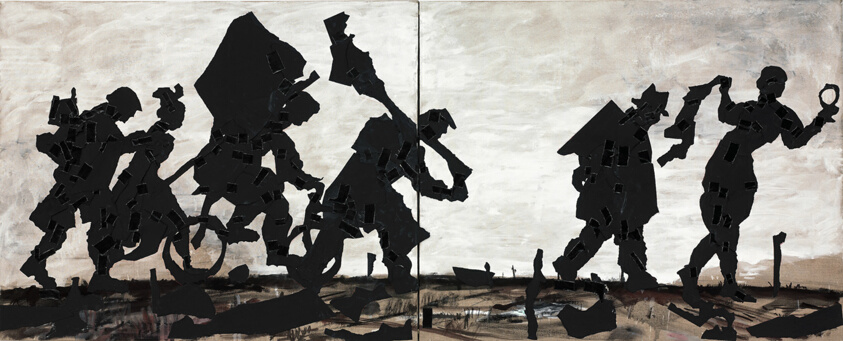
You are in a darkroom that smells of ether and silver nitrate, and your hands are the clock. The collodion has to be poured, tilted, drained, and submerged in silver bath within a window of roughly ten seconds, then exposed before the plate loses its sensitivity — a matter of two or three minutes at most. You are not operating a process. You are the process. Your body is the timing mechanism, the quality control, the variable that determines whether the image lives or dies.
When Richard Leach Maddox published his gelatin dry plate formula in the British Journal of Photography in 1871, he was not solving a chemical problem alone. He was proposing a new ontology of photographic work — one in which the image could be prepared days or weeks in advance, stored, shipped, purchased, exposed at leisure, and developed at a later date entirely disconnected from the moment of capture. By the 1880s, industrial manufacturers had refined the emulsion to the point where plates could be mass-produced and sold in standardized boxes. The photographer’s hands became, almost overnight, peripheral to the process they had previously anchored.
What the historical narrative calls efficiency conceals a deeper operation: the systematic extraction of tacit knowledge from the worker’s body and its transfer into a manufactured object. The sociologist Harry Braverman described this logic in his 1974 work Labor and Monopoly Capital as the Taylorist impulse to separate conception from execution — to ensure that skill migrates upward into management or product design, leaving the laborer with a narrower, more replaceable function. The wet collodion photographer had to understand chemistry, temperature, humidity, the behavior of specific silver salts under different light conditions. The dry plate user had to understand almost none of this. The knowledge was already baked into the emulsion. Progress, here, functioned as a redistribution of competence away from the individual practitioner.
This redistribution was not neutral. It carried within it a set of assumptions about what photography should be — fast, reproducible, scalable, accessible to those without specialized training. George Eastman understood this perfectly when he launched the Kodak system in 1888 with the slogan “You press the button, we do the rest.” The sentence is remarkable not for its marketing simplicity but for its philosophical audacity: it openly announced that the desirable photographic subject was someone who contributed nothing but the decision to press. The rest — the chemistry, the processing, the expertise — would be handled elsewhere, by other bodies, in a factory in Rochester, New York. Photography was reframed as an act of choice rather than an act of making.
The ideological weight of that reframing has never fully dissipated. It embedded itself into how subsequent generations defined photographic skill, which became increasingly synonymous with vision and composition — the eye — while the hand and its material intelligence were quietly demoted to craft, hobby, or anachronism. Susan Sontag observed in On Photography, published in 1977, that the camera had already been so thoroughly naturalized that its mechanical operations were rendered invisible, leaving only the myth of the decisive eye. What she did not press on was the specific historical moment when that invisibility was manufactured — when the chemical process was removed from the photographer’s immediate labor and reclassified as industrial infrastructure.
A technology does not simply replace what came before it. It retroactively reclassifies the replaced practice as primitive, slow, or unnecessarily difficult — adjectives that function less as descriptions than as verdicts. The wet collodion process did not become obsolete because it stopped working. It became obsolete because a new definition of productive photographic labor had been written around its elimination, and within that definition, the ten-second window, the ether fumes, and the hands calibrated to temperature were no longer evidence of skill but symptoms of inconvenience.

The Archive as Authority
You learn the name Daguerre before you learn what a darkroom smells like. It arrives in textbooks, in museum plaques, in the origin stories photography tells about itself — a name attached to a moment, 1839, a French government announcement, a gift to the world. The narrative is clean, heroic, national. It does not mention that Frederick Scott Archer, a British sculptor turned photographer, published his collodion process in 1851 in The Chemist without filing a patent, without extracting a toll, without building a wall around what he had discovered. He simply released it. And the industry consumed it whole.
Within three years of Archer’s publication, wet collodion had made the daguerreotype commercially obsolete. The process was faster to produce, cheaper to replicate, and technically superior in ways that mattered to working photographers: it could generate multiple prints from a single negative, it rendered finer detail, and its collodion base — a solution of nitrocellulose dissolved in ether and alcohol — adhered to glass with an intimacy that neither albumen nor waxed paper could match. By 1855, portrait studios across Britain, France, and the United States had converted almost entirely to the collodion wet plate. By 1860, billions of cartes-de-visite, those small albumen prints made from collodion glass negatives, were circulating through Victorian society with the velocity of a social media feed. Archer’s invention did not change photography — it became photography, for the better part of three decades.
He died in 1857, six years after publication, in poverty. His widow and children required charitable relief from a public subscription. Parliament, which had voted a pension for Daguerre in 1839, offered Archer’s family nothing. The Royal Society briefly considered his case and moved on. What the historical record preserves of him is thin: a portrait, some correspondence, the original 1851 article. What it preserves of the industry his unpatented gift generated is enormous — catalogues, price lists, trade journals, studio directories, the vast commercial infrastructure of Victorian photography. The archive kept the receipts and forgot the donor.
This is not accidental. Archives do not simply store the past — they perform authority over it. What Carolyn Steedman argued in Dust: The Archive and Cultural History in 2001 is that the archive is never neutral; it is a site of power that determines not only what is kept but whose experience constitutes evidence. The daguerreotype entered the historical record through official channels: a state announcement, a named inventor, a government transaction. Archer’s process entered through a journal article addressed to practitioners, people who worked with chemicals and glass and needed practical information. One story was legible to the institutions that build canons. The other was absorbed into craft knowledge, dispersed into the hands of photographers who used it daily without knowing or needing to know whose mind had assembled it.
Speed compounds the erasure. Photography’s dominant historical narrative prizes the moment of invention over the duration of use. Daguerre becomes foundational because his date is earlier, his story more dramatic, his name easier to anchor to a plaque. That wet collodion actually constituted the material experience of photography for most of the nineteenth century’s photographers and subjects — that it produced the Civil War images of Mathew Brady’s studio, the portraits of Nadar, the archaeological documentation of early Egyptology — gets compressed into a transitional footnote between the daguerreotype and the gelatin dry plate. The process that built the medium’s first true mass visual culture is framed as a corridor between more memorable rooms.
What survives in the archive reflects what the archive was designed to honor: novelty, priority, named individual genius. What gets dissolved is the labor of dissemination, the generosity of open release, the slow collective work of people who adopted a technique and carried it forward without attribution, because attribution was not what they were thinking about when they set the glass into the bath.
Revival and the Seduction of Difficulty

You are standing in a rented darkroom somewhere in Brooklyn or Berlin or Melbourne, your hands already stained with silver nitrate that will not wash out for days, and you are waiting. The plate has to be coated in exactly the right light, tilted at exactly the right angle, submerged before the collodion skins over, exposed before it dries. The window for everything is measured in seconds. There is no undo function. There is no histogram to consult afterward. If you fail, you start again from the beginning, and the beginning costs money and time and a certain willingness to breathe cadmium and ether in a poorly ventilated space.
The wet plate revival that gathered momentum in the early 2000s was not a movement anyone organized. It surfaced the way heresies do — quietly, among practitioners who felt that the acceleration of digital capture had removed something essential from the act of making an image. Quinn Jacobson, whose work and writing became central reference points for a new generation of collodionists, framed the practice in terms that were almost devotional: the plate as object, the process as discipline, the chemical unpredictability as a form of honesty that pixels structurally cannot offer. His book, “Chemical Pictures,” published in 2006, functioned less as a technical manual than as a manifesto for slowing down inside an industry that had just discovered it could produce ten thousand frames a day and call it productivity.
What followed was not marginal. Suppliers like Bostick and Sullivan, already servicing the alternative process community, expanded their wet plate inventories. New vendors emerged specifically to meet the demand — pre-mixed collodion solutions, silver baths, purpose-built portable darkboxes designed for location shooting. Workshops began filling months in advance. The price of a single ambrotype or tintype produced by a recognized practitioner climbed into ranges that would have seemed absurd for a photographic object made with nineteenth-century chemistry. The market, which has a remarkable talent for monetizing whatever appears to resist it, had already understood what was happening before the practitioners themselves did.
Walter Benjamin argued in 1935 that mechanical reproduction strips the artwork of its aura — that quality of singular, unrepeatable presence that emanates from the original object. What the wet plate revival discovered, perhaps without intending to, is that aura can be manufactured through deliberate inefficiency. When a process is slow enough, toxic enough, and failure-prone enough, every successful result carries the visible weight of its own difficulty. The scratches in the emulsion, the pooling at the edges, the unpredictable halation around bright areas — these are not flaws being tolerated. They are the proof of labor, the indexical trace of a human body handling a fragile chemical surface under time pressure. They are, in the contemporary market for photographic prints, extremely legible as value.
This is not an indictment of the practitioners. The desire to work with material resistance, to reintroduce consequence into a practice that had become frictionless, is neither naive nor cynical. But there is a distinction worth holding open between a technique that genuinely exceeds the market’s capacity to absorb it and one that the market finds useful precisely because it produces objects with a built-in scarcity narrative. Wet plate collodion, by 2015, had become the latter. The Instagram documentation of the process — the gloved hands, the smoking chemicals, the dramatic reveal of the dripping plate — had created a secondary image economy around the primary one, in which the performance of difficulty was itself the content being consumed.
The question this raises is not whether the images are beautiful or whether the commitment is real. Many of them are, and much of it is. The question is what it means that a technique survived its own obsolescence only to be reborn as
What the Plate Refuses to Flatten
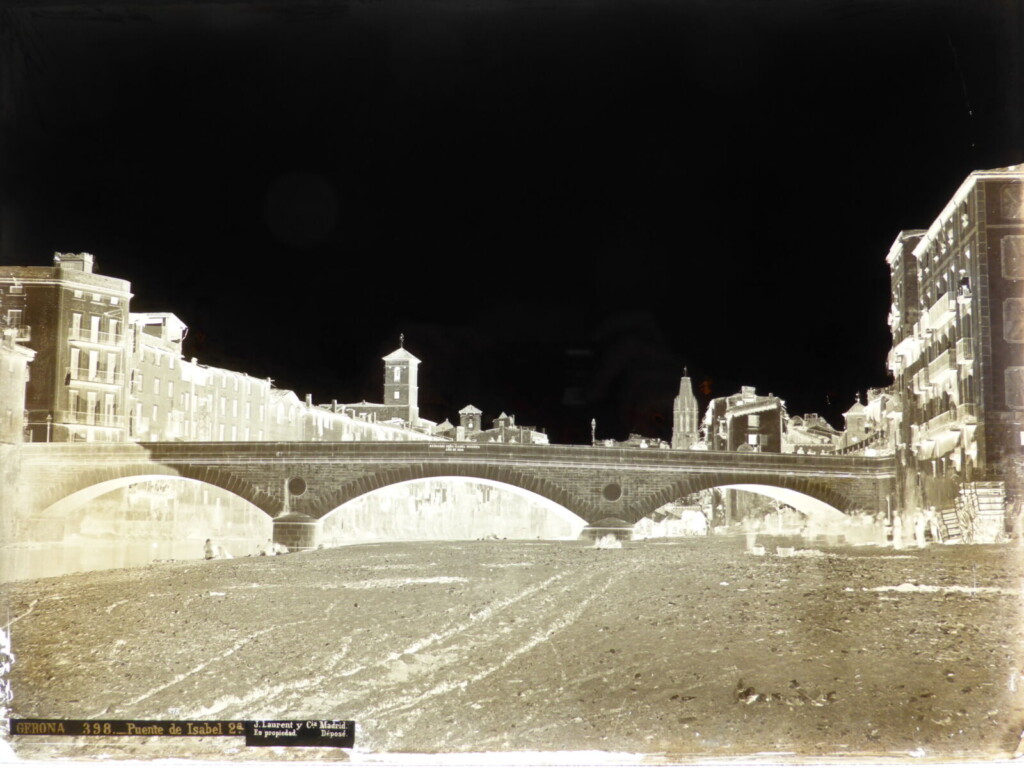
You set a glass plate in front of someone and ask them to look, not at the image, but at the surface itself — and something in them resists, because we have been trained for decades to look through surfaces, not at them, to treat the material carrier of an image as a transparent membrane between the eye and meaning.
Wet collodion refuses that transparency with a kind of physical stubbornness. The emulsion records light but it also records the moment, the temperature, the chemistry of the operator’s hands, the quality of stillness in the room. When a bubble forms in the pour, it stays. When the coating thins at one edge, that edge carries a different density forever. These are not errors awaiting correction — they are conditions of existence, and no amount of post-processing can retroactively smooth them because they are baked into silver, into glass, into a substance that has already hardened and moved on.
Roland Barthes, writing in Camera Lucida in 1980, made a distinction between the studium — the general cultural field of interest in a photograph — and the punctum, the detail that punctures, that wounds, that arrives uninvited. He was describing something felt, not designed. The entire grammar of contemporary image production works to eliminate the punctum by systematically controlling every variable, every skin texture, every lighting ratio, until the image delivers exactly what was intended and nothing more. A plate that drips at the border, that halos at the edge of a face, carries punctum not as accident but as structural inevitability — the chemistry produces what it produces, and the photographer submits to that negotiation rather than commanding it.
Benjamin Bratton, examining platform architectures in The Stack in 2016, described how computational systems accumulate invisible debts — choices made at the infrastructure level that constrain every interaction built on top of them without those interactions ever knowing it. The smartphone camera is one such infrastructure. It does not take photographs the way a wet plate takes photographs. It takes measurements and constructs images from them computationally, averaging, predicting, smoothing skin in real time using machine learning trained on billions of prior faces. The user believes they are capturing reality. They are approving a synthesis assembled from statistical consensus about what a face should look like, and that approval happens before they have time to form a conscious preference.
What the viewer surrenders in that transaction is harder to name than what they gain. They gain convenience, resolution, speed, the frictionless passage from experience to sharable artifact. What they lose is exposure to the uncomfortable particularity of a face that has not been normalized — the asymmetry, the grain, the pore, the way fatigue actually distributes itself across a jaw. A collodion portrait of a coal miner taken by an anonymous photographer in the 1870s does not let you forget that this person existed in a body that worked under specific conditions. The silver registers those conditions without editorial mercy, without the contemporary compulsion to dignify by beautifying.
There is a philosophical category that Paul Virilio spent much of The Aesthetics of Disappearance exploring in 1980 — the idea that acceleration does not just change speed, it changes what remains visible. Images produced at the velocity of contemporary platforms carry the aesthetics of their own production: smooth, interchangeable, available, forgettable. The plate slows the loop down to the point where both photographer and subject must stop, commit, and wait for chemistry that does not care about either of their intentions.
What survives that waiting is not memory made permanent but something stranger — proof that at one specific moment, light struck a surface that was prepared to receive it, and neither the light nor the surface could pretend otherwise.
A vision curated by a filmmaker, not an algorithm
In this video I explain our vision
📷 Light, Shadow, and the Alchemy of the Image
Wet collodion photography is more than a technique — it is a meditation on time, light, and the fragile chemistry of memory. The articles below explore the deeper cultural and aesthetic currents that connect this Victorian art form to wider questions about how images are made, read, and felt.
Photography as Art: The History of a Visual Revolution
Photography did not arrive in the world as art — it had to fight for that recognition across more than a century of debate and practice. This article traces the long history of photography’s evolution from scientific curiosity to full-fledged artistic medium, exploring the pioneers and movements that shaped its visual language. Understanding this history makes the wet collodion revival all the more meaningful, as practitioners today consciously reclaim a pre-industrial mode of image-making.
GO TO THE SELECTION: Photography as Art: The History of a Visual Revolution
Victorian Photography and the Supernatural: Death and Mystery Through the Lens
The Victorians were obsessed with death, and photography offered them an uncanny tool to hold the departed close. This article examines how early photographic processes — including the collodion method — became entangled with mourning rituals, spiritualism, and the desire to fix the ephemeral. The strange, silvery tonality of wet plate images lent itself naturally to this haunted cultural imagination.
GO TO THE SELECTION: Victorian Photography and the Supernatural: Death and Mystery Through the Lens
Barthes’s Camera Lucida: When a Photo Pierces the Soul
Roland Barthes’s Camera Lucida remains one of the most profound philosophical meditations on what a photograph actually does to the person who looks at it. His concept of the punctum — the detail that wounds, that pierces — resonates deeply with the visceral, imperfect textures of collodion plates, where accidents of chemistry become emotional events. Reading Barthes alongside wet plate work transforms the darkroom into a site of phenomenological inquiry.
GO TO THE SELECTION: Barthes’s Camera Lucida: When a Photo Pierces the Soul
Susan Sontag and Photography: The Gaze as Power
Susan Sontag argued that photography is never innocent — every image is an act of power, framing, and interpretation. Her landmark essays interrogate who holds the camera, what is chosen to be preserved, and what cultural assumptions are baked into photographic seeing. Her framework is essential for anyone seeking to understand why the revival of archaic photographic processes carries both aesthetic and political implications.
GO TO THE SELECTION: Susan Sontag and Photography: The Gaze as Power
Discover the Cinema of the Image on Indiecinema
If these reflections on photography, vision, and the art of capturing the invisible have stirred something in you, Indiecinema is the streaming platform where the moving image meets independent thought. Explore our curated selection of avant-garde, documentary, and artistic films that push the boundaries of what cinema can see and say.
👉 EXPLORE THE CATALOG: Watch Indie Films in Streaming
A vision curated by a filmmaker, not an algorithm
In this video I explain our vision

