
The Stillness Required of the Living
You are standing in a room that smells of camphor and cut flowers, and you have not moved in four minutes. The photographer has told you not to blink if you can help it. Beside you, your daughter is seated in the high-backed chair she always favored near the window, her head supported by a metal brace concealed beneath her collar, her hands arranged in her lap with a deliberateness that her hands never had in life. She has been dead for two days. You are not grieving right now — you are performing stillness, which is what grief requires of you in this particular decade, in this particular room, in 1862 or 1871 or any of the years when a family might call for a photographer the way they once called for a priest. The exposure demands between thirty seconds and several minutes depending on the light, and the living must hold as absolutely as the dead. In this sense, the camera does not distinguish between you.

Photography arrived in the world in 1839 with Daguerre’s announcement to the French Academy of Sciences, and it arrived already philosophically contaminated by its relationship to time. A photograph did not simply record an image — it arrested duration, pinned a moment to a surface the way a collector pins a moth, and in doing so it immediately raised the question of what exactly had been preserved. Roland Barthes would not write Camera Lucida until 1980, but the intuition he formalized — that every photograph is a certificate of death, a proof that this thing existed and therefore no longer exists in quite the same way — was already embedded in the practice from its first decades. The Victorians did not need Barthes to tell them this. They could feel it in the weight of the plate.
Memento mori photography, which peaked in Britain and America roughly between 1840 and 1900, was not a morbid aberration of a disturbed culture. It was a logical institutional response to two converging pressures: the democratization of portraiture and the omnipresence of death. Before photography, only the wealthy could commission a likeness of a dead child — a painted miniature, an oil portrait completed posthumously from memory or a hasty sketch. The daguerreotype and then the wet collodion process changed the economics of preservation entirely. By the 1860s, a carte de visite could be produced for shillings, and the studios that lined the commercial streets of London, Manchester, and Edinburgh openly advertised their willingness to attend the deceased at home. Death portraiture was not a side service. It was, for many photographers, a central revenue stream.
What makes this practice philosophically unsettling is not the presence of the corpse but the behavior of the living around it. Parents would hold their dead infants as if nursing them, siblings would be arranged beside a deceased brother with hands clasped as if mid-conversation, mothers would lean into the shoulder of a dead husband with a composure that the long exposure technically required but that the image then transformed into something that looks, to modern eyes, like acceptance. The stillness demanded by the camera’s mechanics produced images in which the living appear to be imitating death rather than mourning it, because to mourn visibly — to weep, to tremble, to look away — was to blur the photograph and ruin the record. The technology shaped the emotional performance, and the emotional performance then shaped how grief was culturally understood to look.
There is a further complication. Many of these images were the only photographs ever taken of the subject. The dead child had never been photographed alive. The death portrait was therefore not a supplement to a life of images but the sole visual evidence that a particular human being had occupied space and breathed and been loved, which means that for tens of thousands of Victorian families, death and representation arrived simultaneously, as a single event.
Simon Marsden’s Haunted Life In Pictures
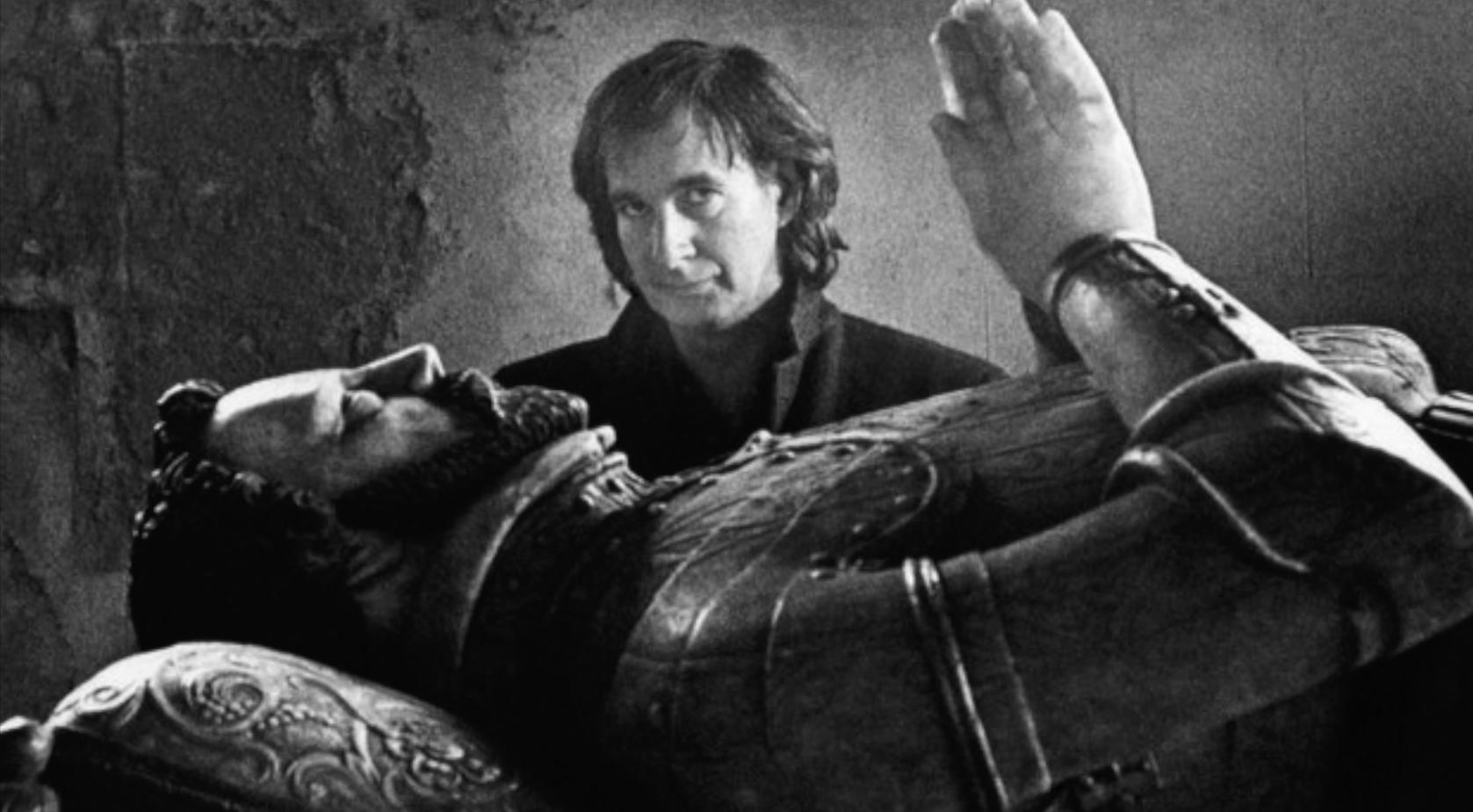
Documentary, by Jason Figgis, United States, 2019.
This documentary retraces the life and work of Simon Marsden, widely regarded as one of the foremost photographers of the supernatural. Premiered at the British Film Institute in London, the film offers a fascinating journey into his creative universe, appealing not only to photography enthusiasts but also to scholars, teachers, students, and anyone intrigued by the mysteries of the unseen. Through evocative imagery and first-hand accounts, it explores the artistic path of a photographer whose work has appeared in books, on U2 album covers, and in museum exhibitions around the world.
Although convinced of the existence of ghosts, Marsden never claimed to capture them directly with his camera. Instead, he used black-and-white infrared film to record the atmosphere and the invisible traces that, in his view, spirits left imprinted upon places. From the landscapes of Ireland to the vast expanses of Russia, passing through Venice and the American Southwest, he transformed historic buildings, ruins, and haunting locations into deeply evocative images capable of suggesting dark and unsettling stories. His photographs continue to captivate the imagination, demonstrating how the most powerful works of art can leave a lasting impression on those who behold them.
LANGUAGE: English
SUBTITLES: Spanish, French, German, Portuguese
A Technology Born Into Grief
You have been handed the only photograph that exists of someone you loved. It was taken after they died. You are looking at it right now, and the terrible thing is not the death — it is how alive they look.
The daguerreotype arrived into the world in 1839, announced by François Arago before the French Academy of Sciences on the seventh of August, with the breathless conviction that humanity had finally learned to fix the image of reality itself onto a silver-coated copper plate. What the announcement could not have predicted, and what no one bothered to mourn as a philosophical problem, was that the machine designed to capture life had an almost biological preference for stillness. Early exposure times ran between three and fifteen minutes under ideal conditions — full daylight, cooperative sky, a subject who did not flinch or breathe too visibly. The living were terrible at this. They blinked. Their chests rose and fell. Their eyes drifted toward the window. They produced, on the plate, a smear where a face should have been, a ghost before anyone had decided to call them that.
The dead, by contrast, were flawless collaborators. They held the pose with an absolute commitment that no living sitter could match. This was not metaphor or morbidity reaching for poetic convenience — it was a straightforward technical reality that photographers, particularly in Britain and America through the 1840s, began to exploit with remarkable commercial efficiency. By 1850, post-mortem photography had ceased to be an improvisation and had become an industry. Studios in London, New York, and Boston advertised last portraits as a standard catalogue service, listed alongside wedding commissions and carte-de-visite portraits of the prosperous middle class. The dead were priced, scheduled, and delivered in velvet-lined cases.
What drove this market was not morbidity in the modern sense, where death is considered faintly obscene and best kept clinical. The Victorian relationship with mortality was structured around visibility. Child mortality rates in England through the 1840s and 1850s meant that a significant portion of families buried children before the age of five, and for many of these families a post-mortem photograph represented the only portrait that would ever exist of that child. The photograph was not a document of death — it was the sole rescue of a face from total erasure. To refuse it would have been incomprehensible, a second abandonment.
Photographers understood this, and the visual grammar of post-mortem portraiture evolved with deliberate intent to blur the boundary between sleep and finality. Bodies were posed in chairs, arranged in domestic settings, surrounded by flowers and toys in the case of children. Eyelids were sometimes held open with thin wires so that the subject appeared to gaze forward, or painted open after the plate was developed, a practice so common that certain studio retouchers specialized in nothing else. In other images, the decision ran in the opposite direction — subjects posed as though peacefully asleep, hands folded, expression softened, every compositional choice borrowed from the language of rest rather than cessation.
Geoffrey Batchen, writing in Forget Me Not: Photography and Remembrance in 2004, observed that photography was never simply a recording technology — it was from its earliest decades a mourning technology, designed around the human terror of forgetting. The camera did not enter a neutral cultural space. It entered a civilization already obsessed with memento mori, with hair lockets, death masks, and mourning jewelry — a civilization that had developed elaborate material rituals for keeping the dead present. The photograph did not replace these practices. It absorbed them, supercharged them, gave them a new and unsettling realism that older objects could not approximate.
A painted miniature of a dead child could be idealized, softened, improved. A daguerreotype could not lie in the same direction — or if it did, the lie was of a different and stranger order, one that left the viewer uncertain which side of the image’s border reality had fallen on.

The Ghost in the Chemical Process
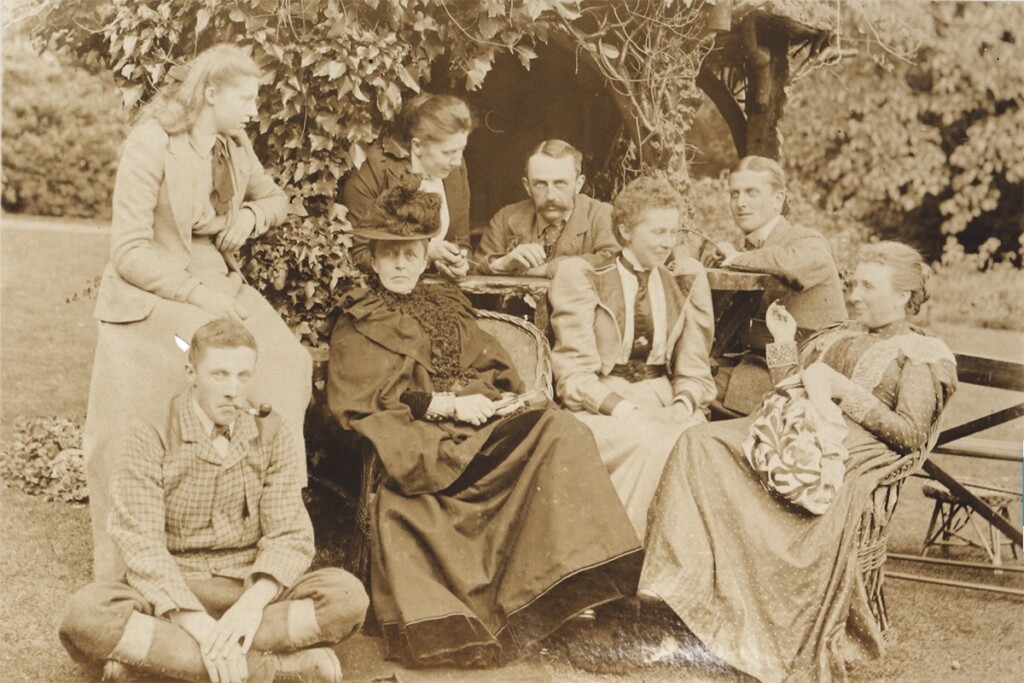
You sit in a photographer’s studio in Boston in 1861, and the man developing your portrait hands it back to you with an apology forming on his lips — except you do not want an apology, because standing behind your own image in the chemical wash of the finished plate is a figure you recognize as someone three years dead. William Mumler had not intended this. The double-exposure was a technical accident, a residue of improperly cleaned glass, the ghost of a previous sitting bleeding through the silver nitrate into a new one. What happened next had nothing to do with Mumler’s intentions and everything to do with what the Victorian mind was already prepared to believe about the photograph itself.
The camera had arrived into a culture that did not yet possess a stable theory of representation. When Louis Daguerre announced his process to the French Academy of Sciences in January 1839, the painter Paul Delaroche reportedly declared that painting was dead — but what he meant, beneath the drama, was that something had shifted in the relationship between image and world. The daguerreotype did not seem to interpret reality the way a painter did. It seemed to receive it. This distinction, apparently minor, was epistemologically catastrophic. If the image was an emanation rather than a construction, if light itself had pressed against the plate and left its signature there, then the photograph was evidence of a different order than anything produced by human hands. Susan Sontag argued in On Photography, published in 1977, that this belief never fully dissolved — that photographs were treated not as pictures of things but as traces of them, metonymic rather than metaphoric, a piece of the real detached and preserved. The Victorians lived inside this belief with an intensity we have since learned to perform only selectively.
What Mumler sold, beginning in 1862 when word of his accidental image spread through Boston’s already-fertile spiritualist community, was not fraud in the simple sense. He sold a logical extension of what the medium itself seemed to promise. If the camera captured what the eye could not consciously register — the grain of a textile, the precise arrangement of a stranger’s features, the fleeting expression a human observer would have missed — then why not the residue of the recently departed? The argument was not irrational. It was built on a premise the entire culture shared. By 1869, when Mumler was tried in New York on charges of fraud, the courtroom filled not with the credulous poor but with educated men and women who had paid ten dollars a sitting, among them the widow of Abraham Lincoln, who believed she saw her husband’s hands resting on her shoulders in the finished print. P.T. Barnum testified against Mumler, which is its own kind of historical irony — the century’s great orchestrator of manufactured wonder drawing a line at a wonder he had not manufactured.
The deeper crisis was not about charlatans. It was about the photograph’s refusal to be merely decorative or merely accurate. Every image produced during a long exposure captured time in a way no human perception could, because human perception moves and edits and selects while the plate simply accumulates. Crowds on busy streets vanished from early photographs because they did not stay still long enough to leave a mark, while stationary figures burned themselves into permanence. The living, in motion, became invisible. The still, the waiting, the already-stopped — these were what the camera preferred. Any culture paying close attention to this asymmetry would eventually arrive at the question the Victorians asked aloud and we continue to ask in quieter registers: whether the technology revealed something about presence and absence that human consciousness, by its very nature of continuous forward motion, was structurally unable to face directly.
Science as the New Séance
You sit across from a man with a notebook, not a crystal ball. He is measuring your galvanic skin response, timing the intervals between your involuntary muscle contractions, asking you to describe in precise language the shape of what appeared at the edge of the room. This is not a séance. This is an experiment. The distinction, in 1882, was far thinner than either party would have admitted.
The Society for Psychical Research was founded in London that same year by men who were genuinely, rigorously convinced that the instruments of empirical inquiry could be aimed at the question of survival after death. Frederic Myers, one of its architects, had already spent years developing what he called the “subliminal self” — a theory of consciousness that proposed the human psyche extended below and beyond ordinary waking awareness into regions science had simply not yet mapped. His posthumously published Human Personality and Its Survival of Bodily Death, released in 1903, was not a pamphlet for believers. It was nearly fourteen hundred pages of case studies, cross-referenced testimony, and methodological apparatus. William James, who chaired the American branch of the organization and whose Principles of Psychology in 1890 had established him as one of the most credible minds in the emerging science of mind, attended séances the way a clinician attends an operating theater — looking for the mechanism, not the miracle, and genuinely uncertain which he would find.
What this institutional seriousness did to photography was decisive. When a medium produced a photographic plate that appeared to show a luminous form hovering behind a grieving widow, the question was no longer simply one of faith or fraud. It entered an evidentiary framework. The SPR established committees to examine photographic evidence, developed protocols for controlling experimental conditions, and treated each anomalous image as data requiring falsification rather than devotion. The effect was paradoxical: the more rigorous the inquiry, the more legitimate the images seemed to audiences who understood rigor as the opposite of credulity. Credibility transferred not because the photographs passed the tests, but because the tests existed at all.
There is a specific epistemological trap buried here that has almost nothing to do with ghosts. When an institution with real authority — academic, empirical, socially prestigious — decides to take a question seriously, it retrospectively validates the question’s status rather than its answer. The SPR did not prove spirit photography. But its engagement announced that spirit photography was the kind of thing serious people investigated. That announcement did more cultural work than any debunking ever could, because debunking still operates inside the framework the investigation opened.
Photography itself was doing something analogous on a technical level. The chemistry of wet collodion plates and later gelatin dry plates was genuinely poorly understood by most practitioners and entirely opaque to the public. When double exposures produced translucent figures, when chemical contamination left luminous smears that resembled faces, when long exposures in dim rooms accumulated light in ways that distorted the human figure beyond recognition, these were not obviously the results of fraud. They were the results of a process that looked like science — precise, chemical, mechanical — producing outcomes that exceeded explanation. The medium William Mumler, who produced his famous spirit portraits in Boston between 1861 and 1869, was eventually tried for fraud and acquitted partly because no one in the courtroom could fully account for what his process did and did not produce. Uncertainty about the mechanism functioned as exoneration.
What Victorian scientific culture could not afford to admit was that its methods were not yet equal to its ambitions. The gap between what empiricism promised and what it could actually deliver in 1882 was vast, and the supernatural rushed into that gap not despite the scientific project but alongside it, wearing borrowed clothes, carrying borrowed instruments, asking to be measured by standards that had not yet been invented.
The Body That Would Not Disappear
You are standing in front of a cabinet card, the kind sold in the 1870s for a few shillings, and the child in it is wearing her best dress. Her eyes are closed. Her hands are folded with a precision that no living child ever maintained for longer than a second. You understand, before any caption confirms it, that she is dead — and yet the card is addressed to someone. It was sent. It was received. It was kept.
Roland Barthes, writing in Camera Lucida in 1980, gave philosophy a word for the wound a photograph opens in the person who truly looks at it: the punctum, that detail which pricks, which stabs, which arrests the eye not because it was composed for meaning but because it simply was there. His deeper argument, though, is what makes Victorian funerary photography so philosophically unbearable to contemplate: the photograph does not represent the past, it certifies it. Every photograph announces, with the flat certainty of a notarized document, that this-has-been. Not this happened, not this was like this, but this existed in front of a lens at a particular instant that cannot be unmade. The light bounced off a surface and struck silver. The fact is chemical before it is emotional.
When the Victorians pressed a dead infant into a photographer’s studio, or summoned a photographer to the bedroom where a grandmother had not yet been moved, they were not simply documenting grief. They were participating in an operation far stranger: the industrialization of refusal. Between 1860 and 1900, post-mortem photography became sufficiently common in Britain and America that entire studios listed it among their advertised services, and the carte de visite format made the results portable, reproducible, exchangeable. Grief was being formatted. The image did not flow out of mourning — it was inserted into mourning as a prosthetic, a replacement for the physical fact of the body that the family knew it would soon have to surrender to the earth.
What the prosthetic did, though, was not resolve loss. It complicated it in ways that Victorian sentimentality preferred not to examine. A body decomposes. A photograph does not. The bereaved mother who kept the cabinet card of her daughter on the mantelpiece was not preserving a memory in the way a diary entry preserves a memory — she was preserving a physical trace, light-indexed to the actual surface of the child’s skin on that particular afternoon. Each time she looked at it, the photograph did not say she was. It said she is, in the present tense of chemical fact, and the cruelty of that tense is that it cannot be revised. The photograph refuses to age with the viewer.
James Curl documented in The Victorian Celebration of Death how elaborate the material culture of bereavement had become by the 1860s — mourning jewelry, hair lockets, black-bordered correspondence paper — but these objects were symbolic. They stood in for the absent person through convention. A lock of hair is a relic; it requires interpretation, context, the agreement of those who remember. A photograph requires nothing. It confronts you with an autonomous likeness that functions whether or not anyone who loved the subject is still alive to recognize her.
This is what made the post-mortem portrait genuinely unlike any prior mourning object in human history. The medieval death mask recorded the contours of a face but remained visibly a cast, a human artifact. The portrait painting required a living painter interpreting a dead sitter — human mediation was unavoidable, and that mediation introduced mercy, a softening. The camera had no mercy. It had an aperture, and the aperture did not know the difference between the living and the dead, which meant that what came back from the darkroom was not a representation of loss but loss’s exact double, standing upright in the light, refusing every negotiation the grieving mind needed to make in order to continue.
A vision curated by a filmmaker, not an algorithm
In this video I explain our vision
Mourning as a Social Performance Under Surveillance
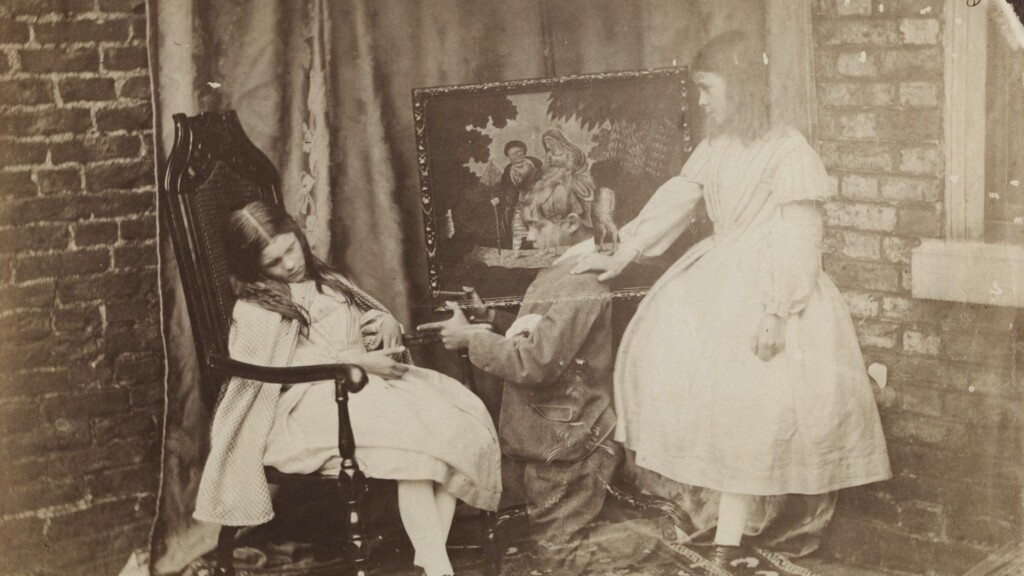
You are handed a black-edged calling card and expected to know exactly what it means — not just that someone has died, but where you stand in the social hierarchy relative to that death, how long you must grieve, in what fabric, at what depth of color, with what degree of visible devastation.
When Albert, Prince Consort, died on December 14, 1861, Victoria did not simply lose a husband. She acquired a role, and she played it for forty years without a single break in character. She wore black until her own death in 1901. She slept with a cast of Albert’s hand beside her. She had his clothes laid out each morning as though he might still dress. None of this was entirely private. It was watched, reported, reproduced — and because it was royal, it functioned as instruction. An entire nation received its lesson in how grief was supposed to look, how long it was supposed to last, and what social credentials it conferred.
Philippe Ariès, in his 1977 study L’Homme devant la mort, traced Western attitudes toward death across a millennium and identified the Victorian period as the historical peak of what he called “the death of the other” — a cultural configuration in which mourning shifted from communal ritual into intensely personalized, emotionally theatrical display. His argument carries a diagnostic precision: what looks like an era of deep emotional honesty about loss is actually an era in which grief became a performance space, and performance spaces, by definition, have audiences and expectations of craft. Ariès saw not liberation of feeling but its choreography.
The mourning dress codes enforced under Victoria’s cultural authority were staggeringly granular. A widow was expected to wear full black crape for two years and a half — one year of “deep mourning,” nine months of “second mourning,” then six months of “half mourning” in grey or lavender before any color was permitted. Mourning warehouses such as Jay’s London General Mourning Warehouse on Regent Street — operational from 1841 — made substantial commercial fortunes from this taxonomy of sorrow. The commodification was not incidental. Grief had become a market, and the market required visible compliance.
The camera entered this system not as a neutral witness but as its most efficient enforcer. A photograph of a widow in correct mourning costume was legible across class lines in a way that a letter of condolence was not. It communicated not only loss but discipline — the ability to perform the prescribed response with the appropriate resources. Working-class families who could barely afford the crape saved for postmortem portraits precisely because failure to document grief visibly carried social consequence. To not mourn correctly in the photographic era was to be seen not mourning correctly, which was an entirely different and more dangerous condition than simply feeling something privately and moving on.
What Ariès recognized, and what the Victorians themselves could not yet name, was that theatricalized grief serves social control rather than psychological integration. Mourning rituals that are rigidly timed, visually coded, and publicly surveilled do not help a person process loss. They help a community manage the disruptive social fact of death by converting it into regulated spectacle. The camera did not create this mechanism, but it gave it a permanent record — which means it gave it teeth. You could now be held accountable to your grief in a way that spoken words or private weeping never permitted. A photograph could be produced. A photograph could circulate. A photograph could indict.
The deeper disturbance is not that people were hypocritical — that they performed grief they did not feel, or extended mourning beyond genuine sorrow for social credit. Some did, many did not. The disturbance is structural: the apparatus around grief became so powerful that authentic and performed mourning became functionally indistinguishable, even to the mourner themselves, which raises a question about what exactly the camera was recording when it pointed itself at a Victorian face arranged in sorrow.
What the Faked Photographs Revealed About Belief
You are handed the proof and you set it down and walk away. Not because you are stupid, not because you are weak, but because the proof was never the point.
In 1922, Harry Price — investigator, showman, and genuinely relentless debunker — exposed William Hope and the Crewe Circle with a precision that should have been terminal. Price had marked photographic plates in secret before a sitting, then recovered them afterward bearing images that could not have come from those plates. The substitution was documented, the sleight of hand reconstructed, the fraud laid bare in the Journal of the Society for Psychical Research with the kind of evidentiary clarity that courts of law are built to reward. Thousands of people read the exposure. Thousands continued to pay Hope for sittings. By the time Hope died in 1933, he remained a celebrated figure within Spiritualist communities across Britain, mourned sincerely, his work spoken of with reverence.
The rational explanation for this is condescension: people are gullible, grief makes fools of the living, charlatans exploit vulnerability. But this explanation fails the moment you notice that the believers were not uniformly desperate or uneducated. They included engineers, solicitors, and members of Parliament. What they shared was not credulity but membership — in something older and more structural than a belief in ectoplasm.
Émile Durkheim spent decades tracing the mechanism by which religious communities generate their own reality. In “The Elementary Forms of Religious Life,” published in 1912, he described what he called collective effervescence: the state produced when a group gathers around a shared symbol and feels, through that gathering, something larger than individual experience. The symbol itself — totemic object, sacred image, photographic print of a cloudy face above a grieving widow — does not derive its power from being true. It derives its power from being held in common. To reject the symbol is not to make an intellectual correction; it is to exit the community that the symbol constitutes.
The spirit photograph was never an evidentiary claim awaiting verification. It was a ritual object performing continuity. Every sitting with Hope or his equivalents across Britain and America reproduced a ceremony: the living gathered, the camera stood as altar, the image emerged as confirmation that the boundary between here and whatever comes next was permeable, navigable, even warm. When Price dismantled the mechanism of the trick, he touched nothing inside that ceremony. He had analyzed the chalice and found it to be pewter, but the congregation had not been drinking pewter.
What made the exposure genuinely threatening — and this is why the response was not silence but active, organized hostility toward Price — was that it did not merely challenge a photograph. It challenged the social infrastructure that had grown around photographed death since the 1860s. Tens of thousands of families in post-war Britain were managing loss on a scale that had no historical precedent in their lifetimes; the 1914-1918 war had produced approximately 700,000 British military deaths, many of them in conditions that precluded bodies, funerals, or graves. The spirit photograph had become one of the primary means by which communities performed the belief that those men were somewhere, that they could be reached, that death was an address rather than an erasure. To accept Price’s findings was not to update a factual record. It was to re-kill the dead.
Durkheim’s framework makes a further demand on the reader: the opposite of collective effervescence is not rational clarity but social dissolution. A community organized around a shared symbol does not simply revise its beliefs when the symbol is challenged; it reorganizes itself against the challenger, because its own coherence is what is actually at stake. The hostility directed at Price from Spiritualist organizations in the 1920s was not the hostility of people protecting a lie. It was the hostility of people protecting each other from a void that the lie had been filling since the telegram came.
The Lens as Instrument of Unfinished Business
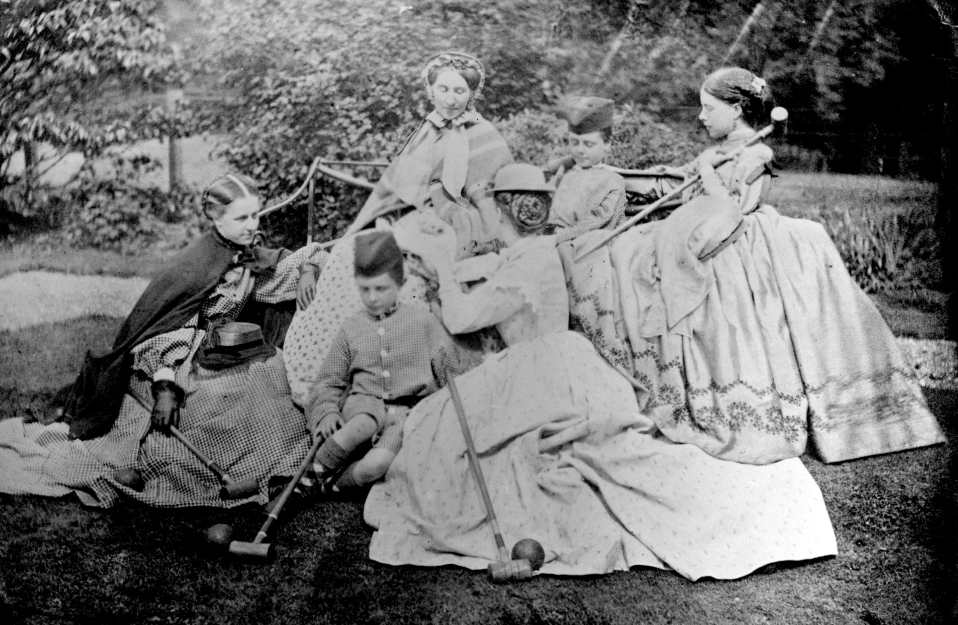
You are standing in a parlor in Sheffield, 1872, and the photographer is arranging your dead daughter’s hands for the third time, because the angle is not yet right, because something in the composition refuses to look like sleep.
The secular nineteenth century did not arrive quietly. It arrived through the compounding pressure of geological time, of Charles Lyell demonstrating in his 1830 Principles of Geology that the earth was incomprehensibly older than any scripture had permitted, of Darwin finishing that argument thirty years later by removing the human figure from the center of creation’s diagram. What these discoveries accomplished, beneath all the scientific triumph, was the quiet demolition of the scaffolding that had surrounded death for centuries. The Church had not merely offered consolation — it had offered a contractual framework, a procedural certainty: the soul persisted, the reunion was guaranteed, the suffering had direction. When that framework began to corrode under the acid of empiricism, nothing institutional moved in to replace it. The grief remained. The contract was void.
What the camera offered, arriving precisely at this cultural juncture, was not comfort in any theological sense but something more insidious: the illusion of arrest. Roland Barthes would eventually name this quality in Camera Lucida, his 1980 meditation on photography and loss, as the noeme of the medium — its essential message, “this has been.” Every photograph is simultaneously a proof of existence and a certificate of vulnerability, a record that something was present and therefore was also capable of becoming absent. The Victorians intuited this before they theorized it. They pressed the lens against death not out of morbidity but out of a structural desperation, because the photograph seemed, for a suspended and irrational moment, to make absence reversible.
Spirit photography formalized this desperation into a commercial industry. William Mumler, working in Boston from the early 1860s, did not invent double exposure — he invented the product that double exposure could become when sold to people who had lost children to cholera and husbands to Antietam. His 1869 fraud trial, in which P.T. Barnum himself testified for the prosecution, revealed how completely the culture needed the lie to be true. Mumler was acquitted, not because the evidence was insufficient, but because the jury could not bring itself to punish a man for selling something that grief had already decided to buy. By the 1880s, the Society for Psychical Research was attempting to apply rigorous empirical methodology to telepathy and apparitions, which meant that the very tools of scientific modernity were being redirected, with complete sincerity, toward validating what modernity had made necessary to believe.
The trap embedded in this entire architecture is not that the Victorians were credulous. The trap is that their credulity was structurally produced by the same intellectual revolution that congratulated itself on defeating credulity. Every daguerreotype of a posed corpse, every cabinet card with a smeared translucent figure hovering at the shoulder of the living, was a document not of superstition surviving modernity but of modernity generating the wound it then lacked the instruments to close. The camera was handed a metaphysical assignment by a civilization that had dismantled its metaphysical infrastructure, and it accepted the contract because it had no way to read the terms.
What has not changed is the assignment. The smartphone in your pocket contains more photographic capacity than every Victorian studio combined, and the impulse that makes you photograph the dying and the dead, that makes you return to images of the departed as though looking long enough might yield something the image withheld the first time, is not a historical echo of a finished obsession. It is the same unfinished business, still waiting for a technology adequate to the task that no technology was ever built to perform.
🕯️ Shadows, Spirits & the Gaze of Death
Victorian photography emerged in an age obsessed with mortality, the invisible, and the threshold between worlds. These related articles explore the cultural, symbolic, and philosophical dimensions of death, the supernatural, and the mysterious image — from ghostly folklore to the vanishing traces left by the dead. Each path leads deeper into the labyrinth of how human beings have tried to capture what cannot be seen.
Memento Mori: History and Meaning
Memento mori — ‘remember that you must die’ — is one of the oldest and most persistent symbolic traditions in Western culture, and Victorian spirit photography was its modern incarnation. By staging images of the deceased or conjuring ghostly doubles through double exposure, photographers participated in a centuries-long meditation on mortality. This article traces the full history of that tradition, from ancient Rome to the vanitas paintings that haunted European art.
GO TO THE SELECTION: Memento Mori: History and Meaning
Vanitas in Art: Symbolism and Meaning
Vanitas art — with its skulls, wilting flowers, and guttering candles — shares a profound visual kinship with Victorian memento mori photography. Both traditions used carefully arranged imagery to confront the viewer with the inevitability of death and the illusion of earthly beauty. This article explores how vanitas iconography traveled through painting and ultimately found new expression in the photographic medium.
GO TO THE SELECTION: Vanitas in Art: Symbolism and Meaning
Ghosts in Japanese Culture: History and Symbolism
Japanese culture developed one of the world’s most sophisticated symbolic languages for ghosts, spirits, and the restless dead — a language that echoes surprisingly across Victorian supernatural photography. The figure of the ghost as a faint, blurred, partially visible presence is central to both traditions, though shaped by very different cultural logics. This article maps the deep history of ghost symbolism in Japan, offering a fascinating comparative lens.
GO TO THE SELECTION: Ghosts in Japanese Culture: History and Symbolism
The Literary Fantastic: Todorov and the Theory of the Fantastic
Tzvetan Todorov‘s theory of the fantastic provides an essential conceptual framework for understanding why Victorian spirit photography held such power over its audiences. The fantastic, in Todorov’s sense, lives precisely in the hesitation between a rational and a supernatural explanation — and the blurred ghost in a photograph occupied exactly that uncanny threshold. This article unpacks the theory that helps explain the seductive ambiguity of the supernatural image.
GO TO THE SELECTION: The Literary Fantastic: Todorov and the Theory of the Fantastic
Discover the Cinema of the Invisible on Indiecinema
If these shadows and mysteries have stirred something in you, Indiecinema streaming is where the journey continues. Explore a curated selection of independent films that dare to look beyond the visible — into death, memory, the supernatural, and the hidden life of images. Join the community of curious minds who watch differently.
👉 EXPLORE THE CATALOG: Watch Indie Films in Streaming
A vision curated by a filmmaker, not an algorithm
In this video I explain our vision

