
The Founding Ambiguity of Proximity
You are standing at a fence, or a cage, or simply at the edge of a field, and the animal on the other side stops moving and looks at you. Not through you, not past you — at you. Something in your chest responds before your brain has time to organize a thought, and in that half-second gap between stimulus and interpretation, you are not quite sure who is doing the observing. The experience is ordinary enough that most people forget it by the time they reach their car. It is also, it turns out, one of the oldest epistemological crises in human history.

Anthrozoology did not arrive as a discipline until the 1980s, which is a remarkable lag when you consider that human beings have been living alongside domesticated animals for at least fifteen thousand years. The term itself was given formal academic weight largely through the work of scholars like James Serpell, whose 1986 book In the Company of Animals treated the human-animal bond not as a sentimental footnote to civilization but as a structural feature of it — one that demanded rigorous, interdisciplinary examination. The field drew from ethology, psychology, veterinary science, anthropology, and history simultaneously, which made it either impressively synthetic or suspiciously undisciplined depending on who was reviewing the grant application. What it could not escape, from its very first conferences, was a foundational tension: it claimed to study the relationship between humans and animals while operating entirely within institutions built on the premise that the two categories are categorically distinct.
That premise has a longer ideological history than most of its inheritors acknowledge. When René Descartes argued in the seventeenth century that animals were essentially biological automata — complex mechanisms capable of behavior but incapable of genuine experience — he was not describing nature. He was providing philosophical cover for a practice already well underway: the systematic use of animal bodies in ways that would have been morally intolerable if applied to humans. The Cartesian animal-machine did not emerge from careful observation of animal behavior. It emerged from a need to resolve a contradiction, and it was embraced with suspicious speed by the scientific institutions that stood to benefit most directly from its conclusions. By 1800, vivisection had become routine in European medical schools, and the conceptual framework that made it permissible was the one Descartes had conveniently supplied.
What makes this history genuinely destabilizing is not that scientists were cruel, but that the cruelty required a philosophy to sustain it, and that the philosophy was accepted not because it was convincing but because it was useful. The historian Keith Thomas, in his 1983 study Man and the Natural World, traced how early modern English society developed an increasingly elaborate set of cultural and legal distinctions between humans and animals precisely as those distinctions were becoming harder to maintain in practice. Urbanization brought animals into new proximity with human domestic life even as industrialization began to treat them as raw material at unprecedented scale. The ideological insistence on categorical difference intensified in direct proportion to the experiential evidence that the difference was something murkier, more gradient, more uncomfortable.
When anthrozoology finally named itself, it was naming something that had always been happening in the cultural unconscious — a suppressed awareness that the line between subject and object, between the creature that has moral standing and the creature that does not, was never empirically derived. It was drawn, redrawn, and enforced through law, religion, economics, and habit. The dog sleeping at the foot of your bed and the pig processed in an industrial facility eighty miles away may be neurologically comparable in their capacity for suffering, a finding supported by extensive comparative research in animal cognition since the 1990s, and yet they occupy entirely different moral universes in the same culture, often in the same household, without anyone finding this arrangement particularly strange.
A Discipline Born from Discomfort

The Domestication Myth and Its Political Uses
For much of the twentieth century, the story of animal domestication was told as a triumphant narrative of human ingenuity: our ancestors identified useful species, tamed them through selective breeding, and thereby secured the foundations of civilization. This account, however, has come under sustained scrutiny from historians, archaeologists, and anthrozoologists who argue that it obscures as much as it reveals. The so-called domestication myth tends to portray the process as unilateral and intentional, casting humans as the sole agents of change and animals as passive raw material. More recent scholarship emphasizes that domestication was a gradual, co-evolutionary process in which certain animal species—wolves, wild boar, aurochs—were active participants, drawn into proximity with human settlements by ecological opportunity rather than simple human will.
The political dimensions of the domestication narrative are equally significant. By framing the human mastery of animals as a natural and inevitable step in the march of progress, the myth has historically been used to legitimize broader hierarchies of control. Philosophers and political theorists from Aristotle onward drew explicit analogies between the domestication of animals and the governance of slaves, women, and colonial subjects, arguing that some beings were by nature suited to be ruled. Anthrozoologists have shown how these analogies were not merely rhetorical flourishes but structural elements of legal and political thought that shaped real-world institutions, from property law to imperial administration.
Contemporary anthrozoology seeks to dismantle the myth not by denying that domestication occurred, but by complicating the story it tells. Researchers such as Donna Haraway have proposed the concept of "companion species" to describe the deeply entangled, mutually transformative relationships between humans and domesticated animals—relationships defined by dependency and affection as much as by domination. This reframing has political consequences: if animals are understood as co-creators of shared histories rather than as objects of human technique, then questions of moral obligation, animal welfare, and rights become considerably harder to dismiss. The domestication myth, in short, is not a neutral description of the past but an ideological tool whose deconstruction remains an ongoing project within the field.
Affection as a Historical Variable
The Therapeutic Turn and Its Contradictions
The late twentieth century witnessed what scholars have called a "therapeutic turn" in the human-animal relationship, as animals were increasingly incorporated into formal healthcare, psychological treatment, and social welfare programs. Animal-assisted therapy (AAT) and animal-assisted activities (AAA) proliferated across hospitals, rehabilitation centers, schools, prisons, and care homes for the elderly. Practitioners and researchers argued that the presence of animals could lower cortisol levels, reduce blood pressure, alleviate symptoms of depression and anxiety, and accelerate recovery from physical illness. The dog, once a hunting companion or farm worker, was reimagined as a co-therapist; the horse became an instrument of psychosocial healing in equine-assisted programs for trauma survivors and individuals with autism spectrum disorder.
Yet this therapeutic turn is not without its contradictions. Critics within anthrozoology and animal studies have raised pointed questions about the welfare of the animals enlisted in these roles. Service dogs, emotional support animals, and therapy animals are expected to remain calm, compliant, and emotionally available across long working hours and in environments that may themselves be stressful—crowded wards, noisy classrooms, volatile populations. The needs and subjective experiences of the animal partner can be subordinated to the therapeutic goals of the human client, reproducing a logic of instrumentalization that anthrozoology ostensibly seeks to challenge.
There is also the question of evidence. Despite widespread institutional adoption, the scientific literature on animal-assisted interventions remains methodologically uneven. Many studies rely on small samples, lack control groups, and do not adequately account for confounding variables such as the presence of a handler or the simple effect of novelty. Anthrozoologists have called for more rigorous, pre-registered trials and for clearer distinctions between anecdotal enthusiasm and reproducible therapeutic benefit. The risk, some argue, is that premature claims of efficacy may ultimately undermine public and professional trust in a genuinely promising field.
Finally, the therapeutic turn raises broader cultural questions about what the turn toward animals reveals about contemporary human society. The surge of interest in animal companionship as a source of emotional support has been linked to rising rates of loneliness, the erosion of community structures, and the perceived inadequacy of human social networks. If animals are filling gaps left by the fragmentation of human relationships, the therapeutic encounter becomes a lens through which anthrozoology can examine not only interspecies bonds but also the social conditions that make those bonds feel so necessary.
A vision curated by a filmmaker, not an algorithm
In this video I explain our vision
Predation, Guilt, and the Carnivore's Cognitive Architecture

Among the most psychologically complex dimensions of the human-animal relationship is the phenomenon of predation — the act of killing another creature for food. Unlike other animals that hunt purely by instinct, humans bring to the act of killing a capacity for reflection, empathy, and moral reasoning. This cognitive architecture creates a unique tension: the carnivore who recognizes the sentience of the animal it consumes must navigate a landscape of guilt, rationalization, and cultural justification that no other predator confronts.
Anthropologists and psychologists have long observed that human societies develop elaborate rituals, myths, and moral frameworks precisely to manage this tension. Indigenous hunting traditions frequently include prayers, apologies, or ceremonial expressions of gratitude directed at the slain animal, acknowledging its life and asking for forgiveness. These practices are not mere superstition; they reflect a genuine moral reckoning with the act of killing and an attempt to restore psychological and spiritual equilibrium after it.
In contemporary industrial societies, the mechanisms for managing predatory guilt have taken a different form. The physical and psychological distance between the consumer and the slaughterhouse allows most people to eat meat without directly confronting the violence involved. This distancing is reinforced by language — we speak of 'beef' rather than 'cow,' 'pork' rather than 'pig' — and by marketing that emphasizes animal happiness on packaging. Scholars of anthrozoology describe this phenomenon as a form of cultural dissociation, in which the cognitive awareness of animal suffering is compartmentalized so that it does not disrupt everyday behavior.
The study of predation within anthrozoology thus reveals something fundamental about human consciousness: our evolved capacity for empathy extends naturally to the animals we eat, yet our survival has historically depended on killing them. The resulting moral discomfort is not a modern neurosis but an ancient feature of human cognition, one that has shaped religion, philosophy, art, and ethical thought across every culture that has ever hunted or raised animals for food.
Ethology's Destabilizing Evidence
The Species Boundary as Ongoing Negotiation
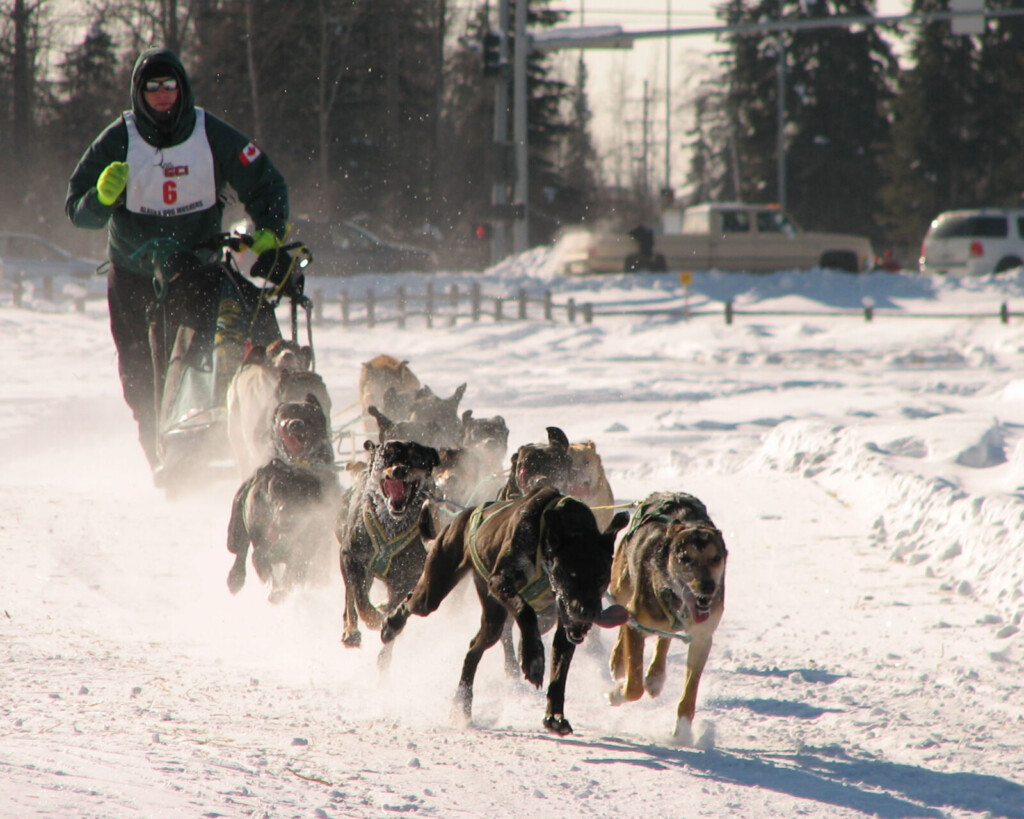
One of the most persistent challenges in anthrozoology is determining where the human ends and the animal begins — a boundary that has proved far less fixed than early naturalists supposed. For much of Western intellectual history, the species boundary was treated as a bright line: humans possessed reason, language, and moral standing, while animals were categorized as instinct-driven creatures belonging to an entirely separate ontological realm. This tidy partition has been progressively unsettled by evolutionary biology, cognitive ethology, and the social sciences, each of which has demonstrated that the traits once considered exclusively human — tool use, empathy, cultural transmission, and even rudimentary syntax — exist along a continuum shared with other species.
Anthrozoology approaches this boundary not as a biological given but as an ongoing cultural and scientific negotiation. Different societies draw the line in radically different places: some traditions extend personhood to great apes, elephants, or cetaceans, while others restrict full moral consideration to members of a single ethnic or religious community. Legal systems reflect these tensions, with landmark cases in several countries beginning to test whether certain cognitively complex animals can hold rights formerly reserved for persons. Scholars in the field examine how these legal, ethical, and symbolic boundary-drawing practices both reflect and reinforce human relationships with specific animal species.
The negotiation is also temporal. The domestic dog, for example, occupies a position in contemporary Western households that would have been unrecognizable a century ago, treated increasingly as a family member with attendant emotional, medical, and even legal protections. Conversely, species once romanticized as noble — the wolf, the bear — have at various moments been reclassified as vermin subject to extermination, only to be rehabilitated again as keystone species worthy of conservation. Anthrozoology documents these shifting classifications as data, arguing that how a society positions animals relative to humans reveals fundamental assumptions about nature, culture, and the meaning of personhood itself.
Infinite Maze: Further Explorations
Craftsmanship as Art Form: History and Philosophy
GO TO THE SELECTION: Craftsmanship as Art Form: History and Philosophy
Contemporary Sculpture: History and Protagonists
GO TO THE SELECTION: Contemporary Sculpture: History and Protagonists
History of Photography: Techniques and History of Calotype and Daguerreotype
GO TO THE SELECTION: History of Photography: Techniques and History of Calotype and Daguerreotype
Venice and Artists: History of an Ancient Love
GO TO THE SELECTION: Venice and Artists: History of an Ancient Love
Stream Independent Cinema
👉 EXPLORE THE CATALOG: Watch Indie Films in Streaming
A vision curated by a filmmaker, not an algorithm
In this video I explain our vision

