
The Ordinary Meal as Moral Blind Spot
You are halfway through dinner before you notice you have not thought about it once. The fork moves. The jaw works. Somewhere between the first glass of wine and the bread you tore without looking, an entire sequence of decisions dissolved into pure automaticity, and what remains on the plate — the pale architecture of muscle and fat, the cartilage that once held a living structure together — registers as nothing more than texture, temperature, flavor. You are not distracted. You are, in fact, quite present. You are talking, laughing, tasting. You are simply not thinking about what you are doing in any sense that would implicate you. This is not an accident of character. It is a structural achievement of culture, reproduced at every table, in every household, across centuries of unexamined repetition.

The philosopher Charles Taylor, writing in Sources of the Self in 1989, argued that moral frameworks are not primarily held as conscious beliefs but as background conditions — the invisible scaffolding that makes action possible without requiring constant deliberation. We do not think our way through each choice because the framework is doing the thinking for us, silently, efficiently, almost biologically. The dinner table is precisely this kind of infrastructure. It arranges the world so that certain questions never arise. The animal does not appear as an animal. It appears as a product, a category, a noun that has shed its verb — its capacity for suffering, for fear, for the specific biological panic that precedes slaughter. Language itself has been recruited into this concealment: we eat beef, not cow; pork, not pig; veal, not calf. The gap between the word and the living creature it once named is not incidental. It was engineered, and it has been maintained with remarkable discipline across the entire apparatus of modern food production.
In 2021, the global meat industry processed approximately 80 billion land animals. This number is so large that it functions the way astronomical distances do — it signals scale without producing comprehension. The human mind evolved to register the suffering of individuals, not populations. What cannot be individuated cannot be fully felt, and what cannot be fully felt can be managed, regulated, normalized, and ultimately financed without meaningful psychological cost to the consumer. The industry understood this long before the philosophers did. The design of the modern slaughterhouse — moved out of cities, hidden behind logistics chains, rendered legally inaccessible to public documentation in several American states through so-called ag-gag laws first introduced in the 1990s — is not merely an economic choice. It is an epistemological one. It governs what can be known, and by governing knowledge, it governs conscience.
What is extraordinary is not that people are cruel. Most are not. What is extraordinary is that an enormous, systematic, and quantifiable cruelty can be sustained entirely by people who would be genuinely disturbed if they witnessed it directly. This gap — between the act and the actor, between the harm and the person financing it — is not a psychological weakness. It is the normal condition of participation in any large institutional system. Hannah Arendt recognized a version of this in 1963 when she sat in a Jerusalem courtroom and watched a man who had helped coordinate mass deportations explain, in perfect sincerity, that he had only followed procedures. The moral vacancy she described was not monstrous in its texture. It was bureaucratic. It was ordinary. What she called the banality of evil was not an argument about Nazism specifically — it was a diagnosis of what happens when institutional structure successfully decouples action from reflection, when the mechanism becomes so smooth and so total that the question of whether one should participate stops being a question that can be heard.
The dinner plate is not a death camp. The comparison would be obscene if it were meant as equivalence. But the structural logic — the way that designed distance between act and consequence can neutralize the moral imagination of otherwise decent people — operates across very different scales and very different histories, and it is worth sitting with that discomfort rather than immediately resolving it.
Singer's Utilitarian Inheritance and Its Radical Implications
You already know that pain is pain. You have known it since the first time you watched an animal flinch from a blade, or heard one cry in a register that needed no translation. What you may not have allowed yourself to examine is why, for most of your life, you filed that knowledge away under a category labeled “lesser” and continued eating your breakfast.
Jeremy Bentham wrote the sentence that made all subsequent evasion philosophically costly. In An Introduction to the Principles of Morals and Legislation, published in 1789, he asked not whether animals can reason or speak, but whether they can suffer. That single interrogative reoriented the entire axis of moral consideration. It did not ask for empathy, which can be withheld. It asked for logic, which cannot. If suffering is the criterion for moral status, then the capacity to suffer is sufficient qualification, and nothing else — not language, not rationality, not species membership — can function as a legitimate gatekeeper.
Peter Singer understood that Bentham had handed philosophy a lever, and that for nearly two centuries nobody had been willing to use it at full force. Animal Liberation, published in 1975, was the act of applying that lever to an institution so normalized it barely registered as a choice. Singer’s argument was not sentimental. It was utilitarian in the strictest sense: the greatest reduction of suffering for the greatest number of beings capable of experiencing it. Once you accept that framework, the exclusion of non-human animals from its calculus is not a conclusion — it is a contradiction. Singer named that contradiction speciesism, drawing an explicit parallel with racism and sexism, and the parallel was not rhetorical decoration. It was structurally accurate. Each form of discrimination operates by designating an arbitrary characteristic — skin pigmentation, sex, species — as morally decisive when it is, in fact, morally irrelevant to the question of who can be harmed.
What made the book genuinely dangerous was its refusal to remain theoretical. Singer moved immediately from philosophical premise to industrial fact, documenting the conditions inside factory farms and research laboratories with a precision that stripped the reader of comfortable distance. By 1975, approximately 400 million animals were being processed annually through the American meat industry alone, in conditions that would constitute torture if applied to any creature the law recognized as a subject. Singer was not interested in making that comparison dramatic. He was interested in making it inescapable: the same nervous system, the same cortisol response, the same behavioral signals of distress — and a legal and cultural framework that registered none of it as morally relevant because the being in question belonged to a different taxonomic category.
The philosophical move at the center of the book was deceptively simple and structurally devastating. Singer did not argue that animals are equal to humans in every capacity. He argued that equal consideration of interests does not require equal treatment — it requires treating like interests alike. A pig’s interest in not experiencing prolonged agony is not lesser than a human’s interest in not experiencing prolonged agony simply because the pig cannot articulate that interest in a courtroom. The intensity of the suffering is not diminished by the absence of the vocabulary to describe it. And once that point is conceded, the entire architecture of human exceptionalism — built on the assumption that moral weight tracks species membership — begins to show its foundational crack.
What Singer exposed was not cruelty as an aberration. He exposed it as a system, rationally organized, economically incentivized, and philosophically undefended except by the circular logic that humans matter because they are human. The circularity had been invisible for so long precisely because no one had needed to defend it. The defense was never required because the question was never asked.

Speciesism as a Structural Bias, Not a Personal Failing
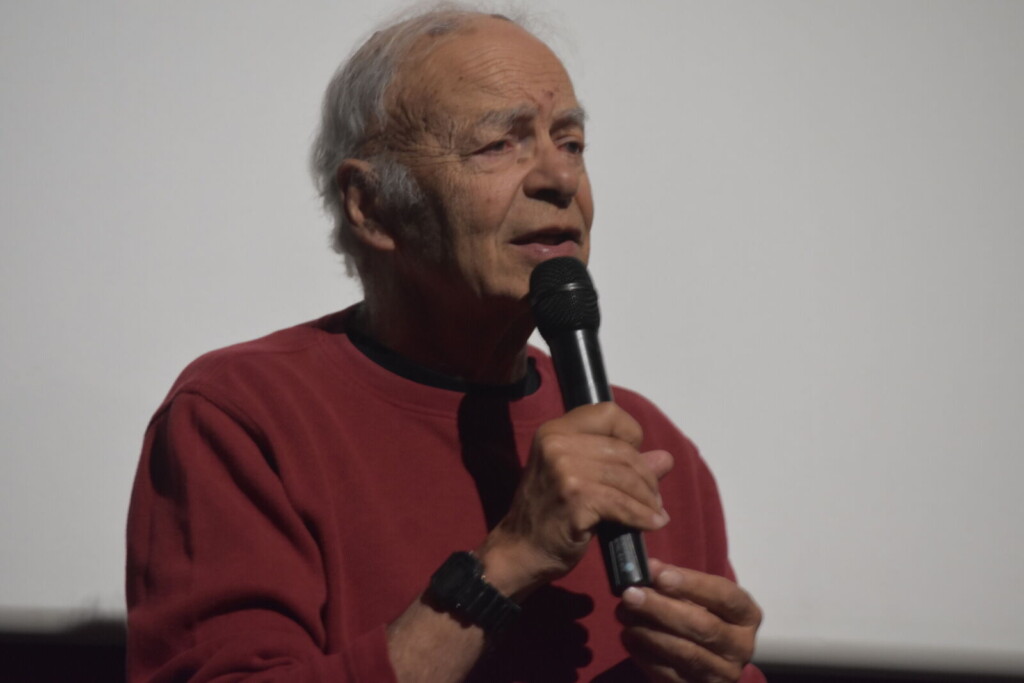
You are already doing it right now, and you probably cannot feel it. The chicken sandwich you ate at your desk, the leather shoes you chose for their durability, the curiosity you did not extend to the animal that became your lunch — none of these felt like moral decisions, because they were not registered as decisions at all. That is precisely the structure of a structural bias: it does not announce itself. It arrives pre-installed.
Peter Singer’s 1975 work Animal Liberation introduced the term speciesism not as a rhetorical provocation but as a precise analytical instrument. The word was borrowed from psychologist Richard Ryder, who coined it in 1970 to describe the routine discrimination practiced against non-human animals solely on the basis of species membership. Singer’s contribution was to show that this discrimination followed the exact logical architecture of racism and sexism — the illicit elevation of an arbitrary biological characteristic into a morally decisive criterion. In 1971, his essay “Famine, Affluence, and Morality” had already demonstrated his willingness to pursue an ethical argument wherever consistency demanded it go, regardless of how uncomfortable the destination. Animal Liberation was that same method applied with greater force to a larger population of beings.
The argument turns on a deceptively simple principle: if a being can suffer, that suffering counts morally, and it counts equally regardless of the species producing it. Singer draws this directly from Jeremy Bentham, who wrote in 1789 that the morally relevant question about animals was not whether they can reason or speak, but whether they can suffer. What Singer adds is the insistence that failing to honor this principle is not merely sentimental error — it is a logical inconsistency of precisely the same kind that once allowed educated men to deny the moral weight of suffering in people who were enslaved, or to dismiss the pain of women as less significant than the inconvenience of men. The shape of the error is identical. Only the target has changed.
This is where the argument becomes genuinely unsettling, because it means the problem is not located in the cruelty of exceptional individuals. Factory farming in the United States alone processes more than nine billion land animals per year, the overwhelming majority under conditions of documented, measurable distress — confinement that prevents normal movement, procedures performed without anesthesia, social animals denied any social contact. These are not the acts of sadists. They are the acts of ordinary people operating within systems that have been designed to make the suffering invisible, renamed, and economically rationalized. The structural nature of the bias is precisely what makes it so durable: it does not require anyone to be malicious. It only requires the collective decision not to look.
What Singer’s framework demands of consistent ethical reasoning is something most philosophical traditions have quietly refused to deliver — the extension of moral consideration beyond the boundary of the human without any appeal to sentiment or species loyalty as a justification for stopping there. The utilitarian calculus does not permit special pleading. If pain is pain, then the relevant question in any moral equation is not what kind of creature is experiencing it but how much of it there is and whether it can be prevented. A pig, whose neurological complexity and capacity for distress have been confirmed repeatedly by comparative neuroscience, does not suffer less because it is less articulate about the fact. Silence has never been a reliable measure of inner life, and a moral philosophy that mistakes it for one is not being rigorous — it is being convenient.
What makes speciesism structurally analogous to other historical prejudices is not the scale of the harm, though the scale is staggering, but the mechanism: the decision, made collectively and invisibly, to place one category of being outside the circle of moral concern before the question of their suffering has even been asked.
The Industrial Farm as a Philosophy Made Concrete
You walk into a supermarket and the fluorescent lights are doing what they always do — flattening everything, making objects of all things. The chicken breast sealed in plastic does not ask you to think about what it was. It has already been processed through several layers of abstraction before it reached you: from animal to product, from product to commodity, from commodity to a unit of protein at a price point optimized by quarterly earnings projections. The violence is not hidden so much as distributed across a chain so long that no single hand ever feels responsible for what the chain produces.
Factory farming did not emerge from sadism. This is the detail that most people, even those troubled by it, tend to misread. The industrial confinement of animals — the battery cage introduced in American poultry production during the 1950s, the gestation crate normalized for pregnant sows by the 1970s, the concentrated animal feeding operation that by 2020 was processing over 90 percent of American livestock — was constructed by people who considered themselves rational administrators of agricultural efficiency. Each individual decision was defensible on its own terms. The aggregate produces something that would have struck most earlier cultures not as modern progress but as a kind of organized derangement.
What sustains a system of this scale is not primarily force or secrecy. It is a prior philosophical commitment, so widely shared it barely registers as philosophy at all — the commitment that animals are instruments. René Descartes gave this commitment its most explicit European formulation in the seventeenth century when he argued in the Discourse on Method that animals were automata, biological machines incapable of genuine sensation. The screaming of a dog under vivisection was, in his framework, no more morally significant than the sound of a clock under pressure. This was not a fringe position. It traveled forward through Enlightenment rationalism and lodged itself inside the bureaucratic logic of modern agriculture, where the word “stock” applied to living creatures is treated as entirely natural terminology, the way “stock” applies to inventory.
The scale that resulted is genuinely difficult for the human mind to hold. Approximately 80 billion land animals are slaughtered globally each year for food. The number is so large it becomes abstract, which is precisely the psychological mechanism that allows it to continue. Sociologist Stanley Cohen, writing in States of Denial in 2001, documented how populations sustain awareness of mass harm without it ever converting into moral pressure for change — through what he called “implicatory denial,” where the facts are acknowledged but their implications are perpetually deferred. The industrial farm does not need to hide from you. It needs you to keep the implications at arm’s length, and the design of the entire consumer system is engineered to assist you in doing exactly that.
What Singer exposed in Animal Liberation in 1975 was not new information about what happened inside slaughterhouses. Some of that information was already available through earlier investigative work. What he exposed was the philosophical architecture that allowed the information to exist without disturbing anything — the implicit hierarchy of moral consideration that treated species membership as a sufficient reason to exclude a creature from ethical concern, the same logical structure he called “speciesism,” deliberately echoing the grammar of racism and sexism to make visible the arbitrariness of the boundary. The comparison was meant to destabilize, and it did, because it forced the question of what the actual criterion for moral consideration was, and whether any honest answer to that question could justify what was happening in the buildings people drove past on highways without stopping.
A philosophy does not become dangerous when it is written down. It becomes dangerous when it is poured into concrete, when it determines the dimensions of a cage, when it sets the ratio of animals to square footage that a permit will authorize, when it calculates the lifespan of a creature purely as a function of feed-conversion efficiency.
The Resistance: Cultural, Psychological, and Economic
You have read the argument. You understood it. You may have even felt, somewhere in the chest cavity where conviction lives before it becomes action, that it was correct. And then you had dinner.
This gap — between comprehension and conduct — is not a failure of intelligence. It is a structural feature of how human beings metabolize moral discomfort. Leon Festinger, whose 1957 work on cognitive dissonance remains one of the most clinically precise maps of the self-protecting mind, demonstrated that when a belief and a behavior collide, the human organism does not automatically revise the behavior. It revises the belief, or rather, it quietly manufactures a system of justifications sophisticated enough to make the behavior feel consistent with the belief. The smoker who knows the statistics. The meat-eater who has read Peter Singer’s Animal Liberation and found it, as millions have since 1975, genuinely persuasive.
What makes Singer’s specific case so analytically interesting is that the dissonance cannot be resolved through ignorance. The argument has been in wide circulation for nearly five decades. It has been taught in introductory philosophy courses at universities across the English-speaking world, assigned alongside Kant and Mill, discussed, debated, refuted in seminar rooms, and then silently abandoned upon graduation. The philosopher Shelly Kagan, who taught a famous Yale course on death that became one of the university’s most attended lectures, noted that students could engage with moral logic with total rigor inside the classroom and live in complete contradiction to its conclusions outside it. The classroom has become, in this sense, a designated space for ideas that are not expected to migrate.
The migration is also blocked by something deeper than habit: identity. To abandon meat consumption in a culture where shared meals constitute social bonding, where the Sunday roast or the holiday feast or the backyard grill carries the weight of family continuity, ancestral memory, and communal belonging, is not merely a dietary revision. It is an act of symbolic secession. Sociologist Claude Fischler, writing in the 1980s, observed that food is among the most powerful vectors of cultural identity — that what a person eats is inseparable from who they understand themselves to be. To change it under moral compulsion is to accept, at least implicitly, that the people who shaped you were doing something wrong. Most people would rather find a flaw in the philosopher than exhume the family table.
Then there is the infrastructure problem, which does not receive nearly enough attention in philosophical critiques of inaction. The global livestock industry represents something on the order of a trillion-dollar economic architecture, employing hundreds of millions of people across production, processing, distribution, retail, and advertising. This is not merely a set of bad choices that could be reversed through individual virtue. It is an embedded system with political lobbying power, agricultural subsidies amounting to hundreds of billions of dollars annually in the United States and European Union alone, and an advertising apparatus that has spent decades engineering the cultural equation between meat and vitality, prosperity, and masculinity. When Singer published his argument, he was not contending only with philosophical opponents. He was contending with a machine that had already purchased the terrain on which the conversation was supposed to take place.
The machinery does not only work through propaganda. It works through convenience, through the asymmetry between the price of a burger and the price of its ethical alternative, through the near-invisible labor of slaughterhouses kept geographically and aesthetically remote from the consumers they serve. Timothy Pachirat’s 2011 ethnographic study of an industrial slaughterhouse in Nebraska, Every Twelve Seconds, documented in granular detail how the spatial organization of modern food production is itself a moral technology — designed not to make killing invisible but to make the question of what it means to kill something structurally unavailable to the person at the end of the supply chain.
A vision curated by a filmmaker, not an algorithm
In this video I explain our vision
Where Rights Theory and Utilitarian Ethics Diverge

You are at a dinner table, and someone slides a single photograph across to you — not of suffering, not of a slaughterhouse, but of a healthy beagle sitting in a laboratory cage, looking directly at the camera with the specific, undefended alertness of a creature that has not yet learned it is in danger. Nothing in the image is dramatic. That is exactly what makes it unbearable.
Both Peter Singer and Tom Regan would want you to feel the weight of that image, but they would disagree, with surgical precision, about why it is wrong — and that disagreement is not a minor technical dispute. It is a fault line running through the entire architecture of moral thought.
Singer’s framework, built on the utilitarian inheritance of Jeremy Bentham and refined through his 1975 text Animal Liberation, asks one governing question: what arrangement of outcomes produces the least suffering and the greatest well-being across all sentient creatures? The beagle in the cage is a moral problem because its pain counts, because its capacity for suffering is real and measurable and ethically equivalent to any comparable suffering in any comparable being. The calculus is the structure. If an experiment on one beagle could, in some hypothetical scenario, genuinely prevent vast suffering for millions of creatures, Singer’s framework does not automatically prohibit it. The math is the morality.
Regan saw this as a catastrophic concession. In The Case for Animal Rights, published in 1983, he argued that reducing individuals to variables in a utilitarian equation was not a more rigorous form of justice — it was a more sophisticated form of exploitation. His concept of the “subject-of-a-life” became the philosophical weapon: any being that has beliefs, desires, perception, memory, an emotional life, preferences, the ability to initiate action in pursuit of goals — that being has inherent value. Not instrumental value. Not contingent value. Inherent value, which cannot be traded away regardless of the aggregate arithmetic. The beagle is not a unit in a sum. It is a somebody.
The practical consequences of this divergence are not academic. Regan’s position demands abolition, not reform. Larger cages are not progress under his framework — they are a more comfortable form of the same injustice. Singer, by contrast, has consistently engaged with welfare improvements, with incremental legislative change, with the reduction of suffering within systems that continue to exist. He testified before the European Parliament. He has praised specific agricultural reforms as genuine moral progress. From a rights-theory perspective, this is not gradualism — it is the normalization of a wrong, the ethical equivalent of negotiating the terms of a crime rather than ending it.
What makes this tension genuinely destabilizing is that both positions rest on arguments of considerable internal coherence. Regan’s framework resists the horror of utilitarian overreach — the philosophical machinery that, taken to its extreme, can always justify the sacrifice of individuals if the numbers are persuasive enough. Robert Nozick had already identified this failure mode when he asked, in Anarchy, State and Utopia in 1974, whether individuals can be used as mere means for others’ ends. Regan applies that same resistance to species the dominant culture had never thought to protect with it. But Singer’s response carries its own brutal honesty: rights without a theory of why rights exist, without grounding in actual sentient experience, risk becoming a kind of moral formalism, a set of categorical prohibitions that can look principled while remaining indifferent to the actual texture of pain and relief happening in the world.
Neither framework has won. The animal advocacy movement is quietly fractured along exactly this line — between organizations that pursue welfare legislation and those that consider such legislation a strategic surrender. The disagreement is not about whether animals matter. It is about whether mattering is enough, or whether some categories of wrong exist that no calculation is permitted to dissolve.
The Politics of Moral Inclusion and Historical Precedent
You are sitting across from someone who genuinely cannot understand why you are upset. They are not cruel. They have simply never been asked to include what you are asking them to include, and the request itself strikes them as a category error — a confusion of kinds, a blurring of lines that exist for good reason. This is not a description of a conversation about animals. It is a description of almost every conversation that preceded every expansion of moral standing in recorded Western history.
The abolitionist William Lloyd Garrison published the first issue of The Liberator in January 1831, and within weeks received letters arguing that slavery was natural, that the enslaved were constitutionally unsuited for the responsibilities of freedom, and that the economic fabric of civilization would unravel if the institution were disturbed. These were not arguments made exclusively by the malicious. They were made by educated men who believed in progress, who attended church, who loved their children. The philosophical architecture of exclusion has never required villainy to sustain itself — it requires only the comfortable assumption that the current boundary is self-evidently correct.
When John Stuart Mill argued in 1869 in The Subjection of Women that the legal subordination of women to men was unjust by any principle that did not also justify slavery, he was met with the claim that women’s exclusion from civic life reflected not prejudice but nature. The anti-suffragist literature of the late nineteenth century is almost interchangeable with the pro-slavery literature of thirty years earlier at the level of its deepest grammar: both insist that the proposed expansion confuses sentiment with reason, disrupts a division that serves everyone including those being excluded, and represents a kind of categorical absurdity — that the demand itself is evidence of the demander’s misunderstanding. The word “abolitionist” was used as an insult in both cases, which tells you something about how reliably the same rhetorical immune system activates.
Singer’s argument in Animal Liberation, published in 1975, inherits this structure not as metaphor but as historical claim. His use of Jeremy Bentham’s 1789 observation that the morally relevant question is not whether animals can reason or talk but whether they can suffer was a deliberate insertion of the animal question into the same philosophical lineage that had produced arguments for the extension of rights to the enslaved and to women. Bentham wrote that the day may come when the rest of the animal creation may acquire those rights which never could have been withheld from them but by the hand of tyranny — and he wrote it in a footnote to a passage about colonial subjection. The proximity was not accidental.
What each historical extension required was not primarily new facts. The facts about the suffering of the enslaved were available to anyone in 1830 who wished to look. The facts about the cognitive and emotional lives of women were not hidden in 1869. What changed was the willingness to let those facts matter morally — to refuse the conceptual operation by which a category of beings is assigned to a different register, where suffering still occurs but does not generate obligation. The philosopher Charles Patterson documented in Eternal Treblinka in 2002 how the industrial logic developed for managing and slaughtering animals in the American Midwest directly influenced the organizational architecture of twentieth-century genocide, which suggests that the category error runs in multiple directions at once and that the cost of whom we permit ourselves not to see is never contained to the beings we have decided not to see.
Every generation believes its exclusions are rational while its predecessors’ were emotional, superstitious, or self-interested. Every generation is partially right about its predecessors and entirely blind about the present case, which means the question worth sitting with is not whether we have drawn the moral circle correctly but whether we are capable, from inside any given moment, of perceiving where we have drawn it wrong.
Effective Altruism and the Arithmetic of Suffering

You are standing in a supermarket, reading a label that says “humanely raised,” and you feel, for just a moment, like a decent person. The label cost the producer eleven cents per unit to license. The animals lived in the same conditions as before. You bought the story, not the change, and the transaction made everyone comfortable enough to continue.
Singer’s later thinking refuses that comfort with a kind of mathematical brutality. In “The Life You Can Save,” published in 2009, he argued that geographical distance between a donor and a drowning child is morally irrelevant — that the physical absence of suffering from your immediate field of vision does not reduce your obligation to prevent it. This was not a new emotional appeal. It was an arithmetic claim: if you can prevent something terrible from happening without sacrificing anything of comparable moral importance, you are required to do it. The word “required” is doing enormous work there, and most readers instinctively resist it, not because it is logically wrong, but because it collapses the comfortable boundary between virtue and obligation.
Effective altruism, the movement that grew partly from Singer’s utilitarian framework and was later institutionalized through organizations like GiveWell and the broader work of philosophers such as William MacAskill in “Doing Good Better” (2015), took that arithmetic and industrialized it. It produced league tables of suffering. It asked how many cases of malaria-induced blindness could be prevented per dollar donated, then compared that figure against other interventions with the dispassion of an actuary pricing flood insurance. What this methodology revealed, almost inadvertently, was that most charitable giving in wealthy countries is not really about reducing suffering — it is about managing the donor’s feelings about suffering. People give to the causes that feel close, legible, and emotionally resonant, which is to say they give to the causes that serve them psychologically.
The same logic applied to animals produces a vertigo that most people have never fully allowed themselves to experience. If what matters morally is the capacity to suffer, and if the number of factory-farmed animals alive at any given moment exceeds seventy billion per year — a figure documented extensively by the Food and Agriculture Organization of the United Nations — then by any utilitarian calculus, the aggregate suffering occurring in industrial animal agriculture dwarfs nearly every other source of preventable pain on the planet. This is not a rhetorical flourish. It is a numerical fact that the framework of effective altruism, applied consistently, cannot avoid confronting. Some effective altruists have confronted it directly, funding research into cultured meat and plant-based protein with the same methodological seriousness they bring to global health interventions.
What makes this destabilizing is not the conclusion but the process. The moment you accept that suffering is the relevant moral variable and that scale matters, you have handed yourself a tool that does not care about your prior commitments, your cultural inheritance, your grandmother’s recipes, or the sentimental architecture of your identity. The tool is indifferent to all of it. It simply calculates. And what it calculates tends to indict not the obviously cruel but the ordinarily comfortable — the person who donates to a children’s hospital while eating a meal that required the sustained misery of creatures whose neurological capacity for pain is not meaningfully different from that of the child in the hospital bed.
The deepest unsettlement here is not ethical but epistemological. Singer’s framework does not ask you to feel more. It asks you to think more rigorously about what your feelings have always been quietly deciding for you — which pain counts, whose suffering registers, and which transactions you have been willing to accept because the cost of full awareness was simply too high to pay.
🐾 Ethics, Life, and the Rights of All Beings
Peter Singer’s Animal Liberation reshaped moral philosophy by extending ethical concern beyond the human species, forcing us to confront how we treat sentient beings. These articles explore the intellectual landscape surrounding Singer’s ideas — from utilitarian roots to political philosophy, from ecology to the critique of modern society.
Arne Næss: Life and Ecological Philosophy
Arne Næss, the Norwegian philosopher who coined the term ‘deep ecology,’ argued that all living beings possess intrinsic value independent of their usefulness to humans — a position that resonates powerfully with Singer’s rejection of speciesism. His ecological philosophy invites a radical rethinking of humanity’s place within nature, not above it. Together, Næss and Singer form two pillars of a broader ethical revolution in our relationship with the living world.
GO TO THE SELECTION: Arne Næss: Life and Ecological Philosophy
John Stuart Mill: Life and Works
John Stuart Mill’s utilitarian framework — the greatest happiness for the greatest number — laid the philosophical groundwork upon which Peter Singer built his arguments for animal liberation. Mill’s insistence on measuring suffering as the primary moral criterion made it logically difficult to exclude non-human animals from ethical consideration. Reading Mill alongside Singer reveals how a nineteenth-century liberal tradition can lead, when followed rigorously, to deeply radical conclusions.
GO TO THE SELECTION: John Stuart Mill: Life and Works
Ivan Illich and Medical Nemesis: When Medicine Does Harm
Ivan Illich‘s critique of modern institutions as systems that produce the very harm they claim to prevent finds a striking parallel in Singer’s exposure of industrial animal farming. In Medical Nemesis, Illich argued that professional monopolies destroy human autonomy — a logic Singer applies to the institutionalized exploitation of animals hidden behind the language of food science and nutrition. Both thinkers challenge us to recognize systemic violence embedded in everyday life.
GO TO THE SELECTION: Ivan Illich and Medical Nemesis: When Medicine Does Harm
Deep Ecology: History and Philosophy
Deep ecology as a philosophical movement shares with Singer’s animal liberation a fundamental critique of anthropocentrism — the assumption that human interests automatically outweigh all others. Where Singer approaches the question through utilitarian calculus, deep ecology grounds its ethics in a sense of biospheric egalitarianism that is almost spiritual in its scope. Exploring both traditions together offers a richer map of the ethical terrain we must navigate in the age of ecological crisis.
GO TO THE SELECTION: Deep Ecology: History and Philosophy
Discover a Cinema That Asks the Right Questions
If these ideas about ethics, responsibility, and the boundaries of moral concern speak to you, Indiecinema is the streaming platform where cinema becomes philosophy. Explore documentaries and independent films that challenge the way we see life, nature, and our place among other beings — stream them now on Indiecinema.
👉 EXPLORE THE CATALOG: Watch Indie Films in Streaming
A vision curated by a filmmaker, not an algorithm
In this video I explain our vision

