
The Mask You Were Handed Before You Could Speak
You are at the table again. Someone makes a claim you know is wrong — not politically contentious, not morally ambiguous, just factually incorrect — and you feel the precise moment your mouth decides not to open. It is not fear exactly. It is something older and smoother than fear, a kind of automatic adjustment, the way a gyroscope corrects without being asked. You reach for your glass instead. You nod at the right moment. You have done this ten thousand times, and you will do it again tomorrow, and the remarkable thing is not that you do it but that it costs you almost nothing anymore.

The psychologist Solomon Asch demonstrated in 1951 what most people prefer not to think about too directly. In his conformity experiments at Swarthmore College, subjects were shown lines of obviously different lengths and asked which ones matched. When planted actors unanimously gave the wrong answer, approximately seventy-five percent of real participants gave the wrong answer at least once. They were not confused. The lines were unambiguous. They simply found, in that room, that their own perception was less compelling than the social atmosphere pressing against it from all sides. What Asch revealed was not weakness but architecture — the structural fact that human cognition is not a sovereign instrument. It is a negotiating party, and it frequently loses.
What makes this harder to accept is that the negotiation begins long before any room, any table, any planted actor. The anthropologist Clifford Geertz argued in “The Interpretation of Cultures” in 1973 that there is no such thing as a human nature independent of culture — that what we call the self is always already a symbol system absorbed from the outside, a set of meanings we did not author. The child does not arrive and then encounter society. The child arrives into a pre-existing grammar of gesture, value, and prohibition that begins writing itself onto the nervous system within hours. By the time language is possible, the deepest instructions have already been filed somewhere inaccessible to conscious review.
This is not a tragedy in the classical sense because it implies no fall from an original wholeness. There was no prior authentic self waiting in the wings that society corrupted. The corruption metaphor, so beloved by Romantic thinkers from Rousseau onward, is seductive precisely because it flatters — it implies there is something pure underneath that could, in principle, be recovered. But the neuroscientist Antonio Damasio, writing in “Descartes’ Error” in 1994, showed that selfhood is not a stable essence located somewhere in the brain but a continuous biological and social construction, rebuilt moment to moment from the body’s interaction with its environment. The mask is not placed over a face. The mask is one of the materials from which a face is assembled.
And yet people walk around with an unexamined certainty that their preferences are theirs, that their values were chosen, that the things they find beautiful or disgusting or sacred arrived through some internal process of discernment rather than through the thousand invisible pressures of family, class, language, and historical accident. The sociologist Pierre Bourdieu spent the better part of his career — from “Outline of a Theory of Practice” in 1972 through “The Logic of Practice” in 1990 — mapping the precise mechanisms by which class position converts itself into taste, into bodily comportment, into the feeling of what is naturally correct. He called it habitus: the system of durable dispositions that makes the social order feel like personal preference, that makes conformity feel like authenticity, that makes the inherited mask feel, from the inside, indistinguishable from a face.
The difficulty is not that people are cowards. The difficulty is that they are, in the deepest sense, fluent in a language they did not choose, and fluency feels nothing like constraint.
Ancestral
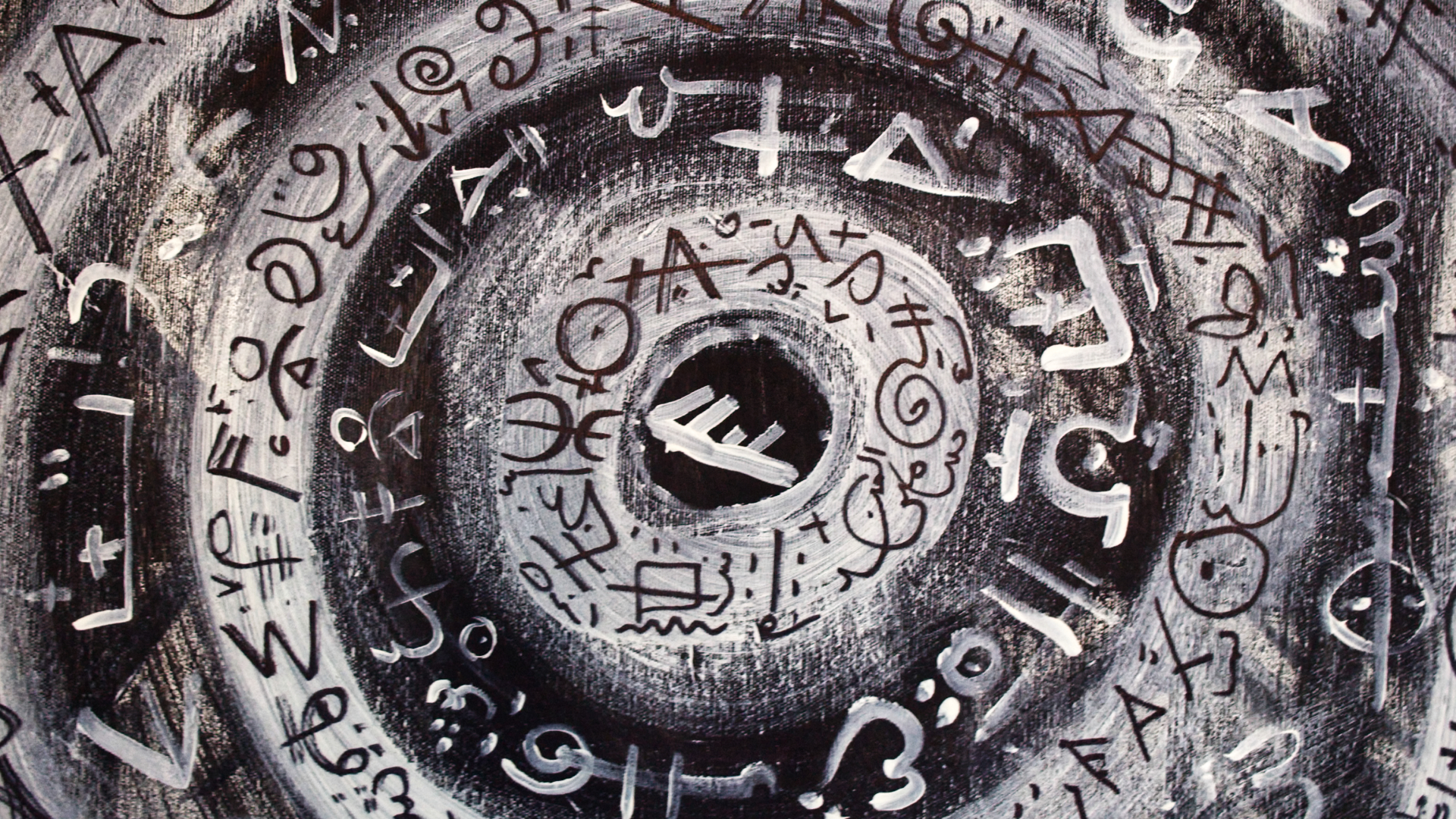
Documentary, by Lumar Brothers, Italy, 2023.
“Ancestral: Life and Art of Massinissa Askeur” is a documentary that explores the life and art of Algerian painter Massinissa Askeur. The film follows Askeur on his creative journey, showing his artistic process and his commitment to the preservation of Berber culture and tradition. Through interviews with Askeur, his family, friends and testimonies from people who knew him on a personal, professional and artistic level, the documentary tells the story of his past and his deep connection to his Berber roots. Askeur displays his art, from canvases to sculptures, which are inspired by the shapes and symbols of Berber culture, representing his search for a connection between the past and the present.
The documentary also explores the challenges Askeur faced throughout his life, including racial discrimination, poverty and the difficulty of making his art known outside of Algeria. However, despite these difficulties, Askeur continues to create and promote his art as a form of cultural resistance and celebration of his ancestral heritage. A vision far from art as a commercial product and very close, instead, to the exploration of the depths of one's own soul and the soul of the world. Massinissa's mission is to leave a testimony of his time to future generations.
LANGUAGE: Italian
SUBTITLES: English, Spanish, French, German, Portuguese
Socialization as Civilized Erasure
You are rehearsing right now. Not consciously, not dramatically — but the version of you sitting in this chair, reading these words, has already calculated the ambient expectations of whoever might glance over your shoulder, adjusted the expression on your face to something appropriately neutral or thoughtful, and tucked away whatever you actually felt when you woke up this morning under the category of things not relevant to the present social occasion. You did not decide to do this. It happened before deliberation was even an option.
Erving Goffman spent years watching ordinary people in ordinary rooms and arrived at a conclusion so uncomfortable that most readers instinctively reach for ways to qualify it: the self is not something you express in public, it is something you construct there, every time, from available materials, for a specific audience. His 1959 study of everyday social interaction described a permanent theatrical operation in which individuals manage impressions the way an actor manages a stage — controlling information, suppressing involuntary signals, aligning gesture and speech with what the situation demands. What made this disturbing was not the analogy to performance but the implication lurking beneath it: if the performance is constant, if backstage almost never exists, then the question of what lies behind the mask becomes genuinely difficult to answer. Not because the answer is complex, but because the practice of asking it has atrophied from disuse.
Social psychology had already been building the empirical scaffolding for this claim before Goffman named it. Solomon Asch’s conformity experiments in the early 1950s showed that roughly 75 percent of participants would publicly affirm a factually incorrect answer at least once when surrounded by confederates who stated it with confidence. The error was visible. The correct answer was unambiguous. And still, three out of four people bent toward the social current at least once, because the cost of visible deviation — the microsecond of awkward silence, the slight recalibration of others’ expressions — registered in the nervous system as a genuine threat. Stanley Milgram, a decade later, extended this into more violent territory, but the mechanism was the same: the social frame does not merely influence behavior, it temporarily becomes the operating system through which the self runs its decisions. What you privately believe gets filed under pending until the room empties — and in modern life, the room almost never empties.
The philosophical tradition had intuited this long before the laboratory. The stoics drew a strict line between what belongs to you and what belongs to the opinion of others, but they drew it precisely because living by that line was nearly impossible under normal social conditions. Marcus Aurelius was writing to himself, in private, late at night, instructions for how to maintain interiority against the constant gravitational pull of public roles — emperor, judge, commander — that threatened to fully colonize the person who wore them. The journal was a technology for resisting absorption. That it needed to exist at all says everything about how early the pressure begins.
Children are socialized into impression management before they have language sufficient to name the experience. Developmental psychologists have documented the emergence of what they call public self-consciousness — an awareness of oneself as a social object — appearing reliably between ages six and eight, coinciding precisely with the expansion of peer environments. By adolescence, the process has generated a second nervous system: a parallel processing unit running continuously in the background, scanning for social threat, adjusting output accordingly. What gets called authenticity in adult life is often simply the moments when this secondary system is tired, drunk, or alone. Not a deeper truth surfacing — just the guard stepping away from the post.
The question that never gets asked at graduation ceremonies, in job interviews, or in the thousand small negotiations that constitute a social life is what exactly was lost during the decades of careful calibration, and whether it can still be located somewhere in the architecture of a person who has spent a lifetime being extremely good at becoming what the room needed.

The Historical Machinery Behind Belonging
You learned to sit still before you learned to think. Someone decided that for you — not your parents exactly, not even your teachers, but a system that had already decided what a productive human body looked like before you were born, and then built rooms around that conclusion.
The factory school did not emerge from a theory of childhood. It emerged from a theory of labor. When Prussia formalized compulsory education in the early nineteenth century and Britain followed with the Education Act of 1870, the architectural logic was already set: rows of desks, bells dividing time into units, a single adult transmitting uniform information to uniform recipients. The building was not designed to cultivate minds. It was designed to produce a particular relationship to authority — the habit of waiting to be told what to do, the reflex of raising a hand before speaking, the internalization of evaluation as something that comes from outside and above. What was being manufactured was not knowledge but a specific posture toward existence: compliant, measurable, categorizable.
Michel Foucault saw this clearly in 1975, when he published Discipline and Punish and traced how the mechanisms of the prison had migrated invisibly into schools, hospitals, and barracks long before anyone thought to notice. His central concept, surveillance as a tool of normalization, described something more insidious than direct punishment. You do not need to punish everyone when everyone believes they are being watched. The panopticon works not because the guard is always present but because the prisoner can never confirm that the guard is absent. A classroom functions identically — the child who raises a hand, who writes the answer the teacher expects, who learns to read the room before reading the text, is not being educated in any ancient sense of the word. That child is being trained to perform legibility for an authority that requires standardized outputs in order to function at scale.
Industrial capitalism needed this. Not as a conspiracy but as a structural necessity. A factory producing standardized goods requires workers who can execute standardized tasks without the friction of individual interpretation. The nineteenth-century industrial city could not afford people who needed to understand why before they could act. Speed, repetition, and interchangeability were the governing values, and the school system became the first machine that transformed children into components compatible with the second machine waiting for them at sixteen. Individuality — the tendency to question, to deviate, to pursue a line of thought past the bell — was not simply discouraged. It was pathologized. The child who could not stop asking was labeled disruptive. The child who drew during arithmetic was labeled unfocused. The child who refused the group consensus was labeled difficult, immature, socially deficient.
What makes this historical moment still live in the body is that it did not stay in the past. The post-Enlightenment nation-state required not just productive workers but loyal subjects, people who identified their personal flourishing with the flourishing of a collective defined from above. The French Revolution called this citizenship. Later governments called it national character, civic virtue, social cohesion. The word changed but the demand did not: dissolve enough of yourself into the collective identity that the state can count on you when it needs to mobilize you. And the deepest achievement of this machinery was not conformity imposed from outside — it was conformity that came to feel like maturity. Growing up, in this grammar, meant learning to want what you were supposed to want, to find your particular desires embarrassing, to experience your own difference as a failure of development rather than as evidence of an actual self pressing against a mold that was never built for it.
The person who at thirty-five still does not quite fit the expected shape of an adult life does not have a disorder. They have retained something that the machine was designed to extract before adolescence was over.
What Authenticity Actually Costs
You say something true at the wrong dinner table — not dramatically, not with a prepared speech, but clumsily, mid-sentence, the way real things tend to slip out — and the room doesn’t erupt. It goes quiet in a different way than silence usually goes quiet. Someone refills a glass. Someone checks their phone. The person next to you laughs very briefly and pivots to something safer, and by the time dessert arrives, you understand that you have committed a social infraction so clean and so complete that no one will name it, because naming it would require acknowledging that it happened.
The fantasy of authenticity — the one sold in self-help literature and on the motivational posters of open-plan offices — insists that being genuine will ultimately attract the right people and repel the wrong ones, as though social life were a sorting mechanism designed to reward honesty with better company. What this model refuses to calculate is the lag, the gap between the moment of transgression and any hypothetical future reward, during which real damage accumulates in the present tense. Erving Goffman spent much of his 1959 work “The Presentation of Self in Everyday Life” mapping the unwritten contractual obligations of social performance, the way each interaction depends on all parties agreeing to maintain a shared fiction about who everyone is and what is actually happening. To break the script is not to transcend it — it is to make everyone else suddenly aware that there was a script, which is an act of aggression whether you intended it to be or not.
The career dimension of this is documented and measurable. A 2016 study published in the “Journal of Personality and Social Psychology” by researcher Francesca Gino and colleagues found that employees who deviated from organizational norms — even when their deviation produced better outcomes — were rated as less competent by supervisors than those who conformed, regardless of results. The deviation itself was the offense. The content of what was said or done became almost irrelevant once the form of its delivery violated expectation. Organizations don’t punish failure as consistently as they punish the kind of self-expression that reminds authority that it is contingent rather than necessary.
What makes this particularly brutal is that the person who breaks the script usually does not do it because they are braver than everyone else. They do it because the cost of maintaining the performance became, at a specific moment, higher than the cost they were willing to pay. It is a threshold reached, not a virtue chosen. Psychologist Rollo May, writing in “The Courage to Create” in 1975, distinguished between the anxiety of being and the anxiety of nonbeing, arguing that conformity is not comfort but a slow erasure, and that what people call courage is often simply the point at which erasure becomes unbearable. The clumsy moment at the dinner table, the ill-timed honesty in the meeting, the refusal to agree — these are not necessarily acts of heroism. They are often acts of exhaustion.
And exhaustion does not protect you from the consequences. Relational fracture follows its own timeline, often arriving months after the original moment, in the form of invitations that stop coming, of conversations that stay just slightly more surface than they used to be, of a friend who is still technically present but has quietly renegotiated the terms of what they will offer. The philosopher Charles Taylor argued in “The Ethics of Authenticity” in 1991 that modern individuals face a horizon of significance — a need to orient themselves against something larger than mere preference — but what Taylor’s framework underestimates is how thoroughly that horizon is guarded by other people who have agreed, collectively and without explicit discussion, that certain orientations are simply not available without penalty.
The price is not always exile. Sometimes it is something quieter and harder to contest — the slow reclassification of who you are in the minds of people who once held a more generous image of you.
The Existential Trap Inside Self-Expression Culture
You scroll through the feed and you notice, with a dull vertigo, that everyone is being themselves in exactly the same way. The raw confessional caption, the carefully imperfect photograph, the declaration of boundaries, the celebration of the unfiltered self — all of it performing a script so recognizable that deviation from it would feel stranger than the conformity it claims to escape.
Herbert Marcuse saw this coming in 1964, though his language was colder and more clinical than the fever we now live inside. In “One-Dimensional Man,” he argued that advanced industrial society had developed a remarkable immune response to genuine dissent: not suppression, but absorption. The system does not crush opposition — it digests it, reproduces it as a consumer option, and sells it back to the people who generated it. A subculture forms in genuine opposition to dominant values, and within a decade it is a marketing segment, a mood board, an algorithm category. What Marcuse could not have anticipated is how thoroughly this mechanism would eventually colonize the very concept of the self, so that individuality itself became the product category, and authenticity became the pitch.
The economics of this are not incidental. The global wellness and self-improvement industry was valued at approximately 1.8 trillion dollars in 2023. That figure does not represent people becoming more themselves — it represents the price of the performance of becoming more themselves. Workshops on vulnerability, retreats on presence, courses on finding your voice: all of them require you to first agree that your current voice is insufficient, broken, buried under false layers that only the correct purchase can remove. The therapy-speak that saturates social media — the trauma narratives, the inner child, the authentic core waiting beneath the conditioning — has been structurally necessary for this market to function. A person who already feels whole is a consumer who cannot be reached.
What makes this trap so difficult to recognize from the inside is that the feelings it produces are genuine. The relief that comes from naming something that hurt you is real. The sense of expansion when you act against an expectation that was never yours is real. The market did not manufacture these experiences — it learned to position itself as their necessary provider and then their mandatory stage. Erving Goffman, writing in “The Presentation of Self in Everyday Life” in 1959, described social life as a perpetual theatrical performance, but he was diagnosing something people did unconsciously to navigate shared space. What has since happened is that the backstage — the private self, the unguarded moment, the unperformed interior — has itself been colonized by performance requirements. Authenticity now has its own dramaturgy, its own costume, its own choreography of apparent spontaneity.
This produces a peculiarly modern form of exhaustion that has no clean name. It is not the exhaustion of oppression or of labor, but the exhaustion of being perpetually observed at the moment of your own self-discovery. The person who journals their healing and the person who shares that journal and the person who curates which entries to share are not three separate acts — they collapse into a single gesture that cannot locate where sincerity ends and exhibition begins. Byung-Chul Han described in “The Transparency Society” a world in which the demand for visibility destroys interiority not by force but by invitation, because the self learns to experience itself only when it is legible to others.
The cruelest refinement of this system is that resistance to it becomes immediately available as an aesthetic position. Choosing to be offline is now a lifestyle brand. Silence has influencers. The refusal to perform authenticity is itself a performance that the market has already priced, packaged, and placed beside everything else on the shelf — which means the question of where a genuine self might actually live, if it exists at all, keeps retreating just past the point where any available language can follow it.
A vision curated by a filmmaker, not an algorithm
In this video I explain our vision
Nietzsche's Diagnosis and the Herd's Invisible Jurisdiction

You are walking through a room full of people who believe something you do not believe, and the pressure you feel in your chest is not coming from anyone in particular. No one has threatened you. No one has even looked at you with disapproval. The pressure is ambient, structural, almost atmospheric — and yet it lands on your sternum with a precision that any direct confrontation would envy.
Friedrich Nietzsche named what you are feeling in 1887, in “On the Genealogy of Morality,” though he was less interested in making you comfortable about it than in exposing the architecture behind it. What he called herd morality was not a pejorative for stupidity or cowardice, though it has often been flattened into exactly that misreading. It was a clinical observation about how collective values achieve psychological jurisdiction without ever needing enforcement. The herd does not punish deviance with violence — it punishes it with incomprehension, with the slow withdrawal of legibility, with the particular cruelty of making you feel that your inner life is simply untranslatable to everyone around you.
What Nietzsche identified, and what most of his interpreters either softened or weaponized beyond recognition, is that consensus operates as a form of epistemology. When enough people agree that something is good, true, or desirable, that agreement stops functioning as opinion and begins functioning as the precondition for being understood at all. To dissent is no longer merely to disagree — it is to become grammatically foreign, to speak in a syntax the room refuses to parse. This is not a metaphor. It is the mechanism by which perfectly articulate people find themselves suddenly speechless in certain social environments, not because they have lost their argument but because the room has decided that their argument belongs to a different species of person.
The historical record of this mechanism is dense and largely unreported as such. In 1950, Solomon Asch demonstrated in a series of now-famous conformity experiments at Swarthmore College that a significant portion of test subjects would publicly state that two obviously unequal lines were the same length — not because they were threatened, not because they were foolish, but because everyone else in the room had already said so. The distortion was not in their vision but in the cost-benefit analysis their nervous systems performed in real time: to be right alone is a more threatening condition than to be wrong collectively. Nietzsche was working without the empirical data, but his genealogical method arrived at the same conclusion through a different corridor.
What makes the herd’s jurisdiction so difficult to resist is precisely that it presents itself as the absence of power. There is no monarch issuing edicts about what constitutes a meaningful life, no institution formally prohibiting you from valuing what you value. The control arrives dressed as social warmth — as the pleasure of being understood, the ease of recognition, the low-grade comfort of belonging to a frequency that others can receive. To exit it is to discover that the warmth was not incidental to the ideology but was the ideology. The reward for conformity and the mechanism of conformity were always the same thing.
This is why authenticity, wherever it emerges with any real force, tends to produce in its witnesses a reaction that resembles personal offense. The person who refuses the consensus does not merely choose differently — they implicitly expose that a choice was available all along, which retrospectively indicts everyone who did not choose. The herd cannot tolerate this exposure not because it is cruel but because its entire self-understanding depends on the belief that it has not been choosing at all, only perceiving — only seeing things as they simply, obviously, naturally are. The individual who sees otherwise is not experienced as someone with a different opinion but as someone who is distorting reality itself, and the social punishment that follows feels, to those delivering it, entirely like self-defense.
When Identity Is Structural, Not Personal
You are already halfway through a conversation about being yourself when you realize the other person has never once had the luxury of that question. Not as a philosophical exercise. Not as a weekend retreat insight. They have spent every professional interaction deciding which version of themselves is least likely to trigger a threat response in the room — and that calculation is not neurotic self-editing. It is survival arithmetic, performed under conditions you did not design and cannot opt out of by deciding to be braver.
Kimberlé Crenshaw published her essay in the Stanford Law Review in 1989, and the concept she named there — intersectionality — was not a cultural theory in the abstract sense. It was a legal observation about a specific failure: Black women who had been discriminated against by General Motors found that courts would not recognize their claim, because the company employed Black people (men) and employed women (white), and therefore, on paper, discriminated against neither. The category that was actually being targeted — Black women — did not exist as a protected class, and so the harm disappeared inside a definitional gap. What Crenshaw was describing was not an identity politics slogan. It was a structural blind spot with material consequences, documented in case law, visible in dismissed courtroom filings.
The individualist narrative of authenticity — be who you are, defy convention, refuse the mask — presupposes a self that can be expressed without that expression constituting a provocation. But the distribution of that freedom is radically uneven. A white professional who decides to stop performing corporate enthusiasm at meetings is eccentric, refreshing, maybe a little intense. A Black employee who stops performing the same deference is read through an entirely different social grammar, one shaped by centuries of projection, fear, and disciplinary architecture that has nothing to do with their personality. The freedom to be inconvenient is not democratically distributed.
Sociologist Erving Goffman spent years documenting how all social life involves performance — his 1959 work The Presentation of Self in Everyday Life mapped the front stage and the back stage of human interaction with clinical precision. But what Goffman’s framework underweighted was the cost differential. Everyone performs. Not everyone pays the same price for a failed performance, or for the audacity of refusing to perform at all. For some people, dropping the mask is an act of personal liberation. For others, it is the moment the institution decides they are difficult, threatening, or simply wrong for the role — and then quietly disappears them from the room.
There is a woman sitting in a job interview, asked to describe her greatest weakness. She knows the ritual. She knows the expected shape of the answer — something that is secretly a strength, framed with rehearsed self-awareness. She also knows that any answer she gives will be filtered through a set of assumptions she had no hand in constructing, assumptions about what someone who looks like her is likely to be, to want, to cost. Her authenticity is not a philosophical stance available to her the way it is described in the self-help literature. It is a risk calculation nested inside a structural condition nested inside a history she did not choose.
The philosopher Charles Taylor argued in Sources of the Self that authenticity is one of the central moral ideals of modernity — that the injunction to be true to oneself carries genuine ethical weight, not merely therapeutic value. But Taylor was writing from within a tradition that had already assumed the self as a sovereign unit, capable of self-determination if only it had the courage. What that tradition persistently failed to theorize was the degree to which the self is constituted in conditions of unequal recognition — and that the demand to simply be authentic, directed at someone whose existence has been systematically misread, can function less as liberation and more as a removal of the protective scaffolding they built because the alternative was erasure.
The Unbearable Clarity of the Unsocialized Moment

You are standing in a room where the expected thing is completely clear, and you do nothing. Not out of paralysis, not out of protest — the mechanisms that usually fire simply do not engage, and for three or four seconds you exist in a gap between the social script and your own body, watching the distance between them as if for the first time.
Jean-Paul Sartre called this vertigo by its precise name: the nausea of radical freedom. Not the freedom of choosing between options, which is merely consumerism dressed in philosophy, but the freedom that precedes choice entirely — the groundless instant in which you recognize that no role, no identity, no cultural inheritance actually compels you. His 1943 “Being and Nothingness” is ruthless on this point: consciousness is not a thing, it is a permanent negation, a hole in the fabric of being that cannot be filled by any performance of selfhood, however convincing. The vertigo people feel in that rare unsocialized moment is not a symptom of dysfunction. It is the sensation of touching this structural void directly, without the anesthetic of habit.
What makes the moment so difficult to sustain is not its painfulness but its illegibility. The entire architecture of social life is designed to produce readability — to ensure that what you do next can be categorized, anticipated, and absorbed into a shared narrative. Erving Goffman spent a career documenting, in works like “The Presentation of Self in Everyday Life” from 1959, the extraordinary labor people perform to remain legible to one another, the micro-adjustments of posture and timing and vocabulary that signal which script is currently running. The unsocialized moment is the moment that script produces no output, and the social world around you responds with a discomfort that is almost physical, because an unreadable person is experienced as a malfunction in a system that depends on prediction.
The deeper problem is that the moment rarely survives contact with its own aftermath. The person who acts outside all scripts — who speaks from some place prior to strategy, prior to audience-awareness, prior to the management of impression — almost immediately begins to narrate what just happened. They reach for language, and language is never neutral. Every available vocabulary for describing authentic action was built inside a cultural framework that has already decided what authenticity means, what it looks like, what it is supposed to produce. Maurice Merleau-Ponty’s work on embodied perception, developed through the 1940s in “Phenomenology of Perception,” suggests that even the body’s most spontaneous gestures are already shaped by a history of repeated action, by what he called motor habits sedimented into flesh. There is no movement that arrives from nowhere.
This is where the question becomes genuinely uncomfortable: whether the unsocialized moment is a threshold or a myth. The Romantic tradition invested enormous cultural capital in the idea that beneath all the layering of socialization there exists an original self waiting to be uncovered — pure, pre-cultural, authentically one’s own. But what the phenomenologists found, working more carefully with actual experience rather than with cultural ideals, is that the moment of apparent rawness is also a moment of exposure to everything that shaped you, not an escape from it. The vertigo is real, but it does not point downward toward some bedrock identity. It points outward, into contingency, into the terrifying recognition that what you are has been assembled from materials you did not choose, through processes you did not supervise.
And yet something happens in that gap. Something that is not reducible to socialization, not fully explainable as the output of accumulated scripts, moves through the person who stands in the room and does nothing when everything expects them to act. Whether that something constitutes a self, or merely the shadow of one, remains the question that every honest encounter with freedom eventually reaches and cannot answer on its own terms.
🌀 The Self Against the Crowd: Breaking Free from Conformity
Throughout history, the fiercest battle has not been fought on battlefields but within the individual soul resisting the pressure to dissolve into the collective. From philosophy to sociology, from literature to psychology, thinkers have mapped the tension between authentic selfhood and the suffocating pull of cultural conformity. These articles explore the roots, the weapons, and the wounds of that struggle.
Mass Social Homologation Today
Mass social homologation is one of the defining forces of contemporary life, quietly erasing difference in favor of a comfortable, marketable sameness. This article traces how conformity is manufactured, normalized, and enforced through media, consumer culture, and social expectation. Understanding this machinery is the first step toward dismantling it from within.
GO TO THE SELECTION: Mass Social Homologation Today
Mill’s On Liberty: Analysis
John Stuart Mill’s foundational essay On Liberty remains one of the most powerful defenses of individual authenticity ever written, arguing that the tyranny of prevailing opinion can be more crushing than any legal oppression. Mill insists that society flourishes only when eccentric, nonconforming individuals are allowed to live and think differently. His words feel urgently contemporary in an age of algorithmic consensus and cancel culture.
GO TO THE SELECTION: Mill’s On Liberty: Analysis
Jiddu Krishnamurti: the Man Who Refused to Be God
Jiddu Krishnamurti was groomed to be a messianic figure by the Theosophical Society, yet he famously dissolved his own movement and declared that no external authority — no teacher, no tradition, no collective belief — could ever substitute for the radical freedom of the awakened individual. His entire life was an act of philosophical revolt against spiritual conformity itself. To follow Krishnamurti was, paradoxically, to learn how not to follow anyone.
GO TO THE SELECTION: Jiddu Krishnamurti: the Man Who Refused to Be God
Pirandello’s One Nobody and One Hundred Thousand: Analysis
Pirandello’s novel One, Nobody and One Hundred Thousand is a visceral meditation on how social identity is nothing more than a fiction imposed by the gaze of others. Its protagonist, Vitangelo Moscarda, embarks on a desperate journey to destroy every image others have constructed of him, seeking a self that is truly his own. The novel remains one of literature’s most radical explorations of the war between authentic selfhood and the masks society insists we wear.
GO TO THE SELECTION: Pirandello’s One Nobody and One Hundred Thousand: Analysis
Discover the Cinema of the Unconventional Self on Indiecinema
If these ideas set something alight in you, Indiecinema is the place where those flames find their fullest expression. Our streaming platform is dedicated to independent and auteur cinema that dares to tell stories of individual courage, nonconformity, and the quiet revolution of living authentically. Join us and watch the films that the mainstream would rather you didn’t see.
👉 EXPLORE THE CATALOG: Watch Indie Films in Streaming
A vision curated by a filmmaker, not an algorithm
In this video I explain our vision

