
The Noise Before the Argument
You are mid-sentence when you feel it — the slight shift in the room, a tightening that has nothing to do with the words you are saying and everything to do with the direction they are heading. Someone across the table has gone quiet in a particular way. Not bored. Not distracted. Waiting, in the manner of someone who has already decided. You feel your own voice adjust before your mind has caught up with what is happening. The sentence you were building changes its destination. A qualifier appears that was not in the original thought. You land somewhere softer, vaguer, more acceptable — and the table breathes again, the conversation moves on, and you sit with the faint awareness that you have just performed a small, practiced act of self-erasure.

No law required it. No authority intervened. There was no threat you could have named in a courtroom or to a doctor or to anyone who might take it seriously. And yet something real happened. Something was stopped. Not by force but by atmosphere, by the particular social gravity of a room that knows what it believes and is prepared to be disappointed in you.
This is where the real argument begins — not in statutes or constitutions, not in the formal machinery of censorship, but in the texture of ordinary life where the costs of speaking are distributed so efficiently, so quietly, that most people never consciously calculate them. They just feel the weight and adjust. The adjustment becomes habit. The habit becomes character. Eventually, you stop forming certain thoughts at full strength because some older part of you already knows they will need to be softened before they can be spoken, and the effort of building something you will only dismantle seems, gradually, not worth it.
The dinner table is not exceptional. The workplace meeting where a proposal dies not because it was voted down but because nobody seconded it with real conviction — where the room’s hierarchy expresses itself through the particular silence of people who have learned to read which ideas their managers find threatening. The family message thread where one member posts something that generates a response so swift and so laden with collective disapproval that three other members who were about to agree simply do not reply, and the subject is buried not by argument but by the sheer social arithmetic of who wants to spend the next four days being corrected by their relatives. These are not dramatic scenes. They are Tuesday. They are the way things work everywhere, continuously, in the unremarkable administration of what can be said.
What makes this machinery so effective is precisely its invisibility. Formal censorship is legible — it produces martyrs, it draws lines, it can be argued against in the language of rights and justice. But the social kind leaves no record. There is no document you can appeal. There is no moment you can point to where the suppression occurred because it did not occur at a single moment; it occurred in aggregate, across thousands of minor recalibrations, each one individually defensible and collectively devastating. You were not silenced. You simply learned to be careful. The distinction matters enormously to the people who maintain the system and almost not at all to the person whose thinking it has shaped.
What a mid-nineteenth-century English philosopher understood — with a clarity that still feels almost aggressive in its precision — is that the danger to thought does not come primarily from tyrants. Tyranny is at least honest about what it is doing. The deeper danger comes from societies that have convinced themselves they are free because they have abolished the formal instruments of suppression, without noticing what they have replaced them with. A culture can be more effectively conformist than any dictatorship precisely because its pressure feels like consensus, like common sense, like the simple social fact of what reasonable people believe.
And reasonable people, it turns out, are very good at making unreasonable things feel inevitable.
Slow Life
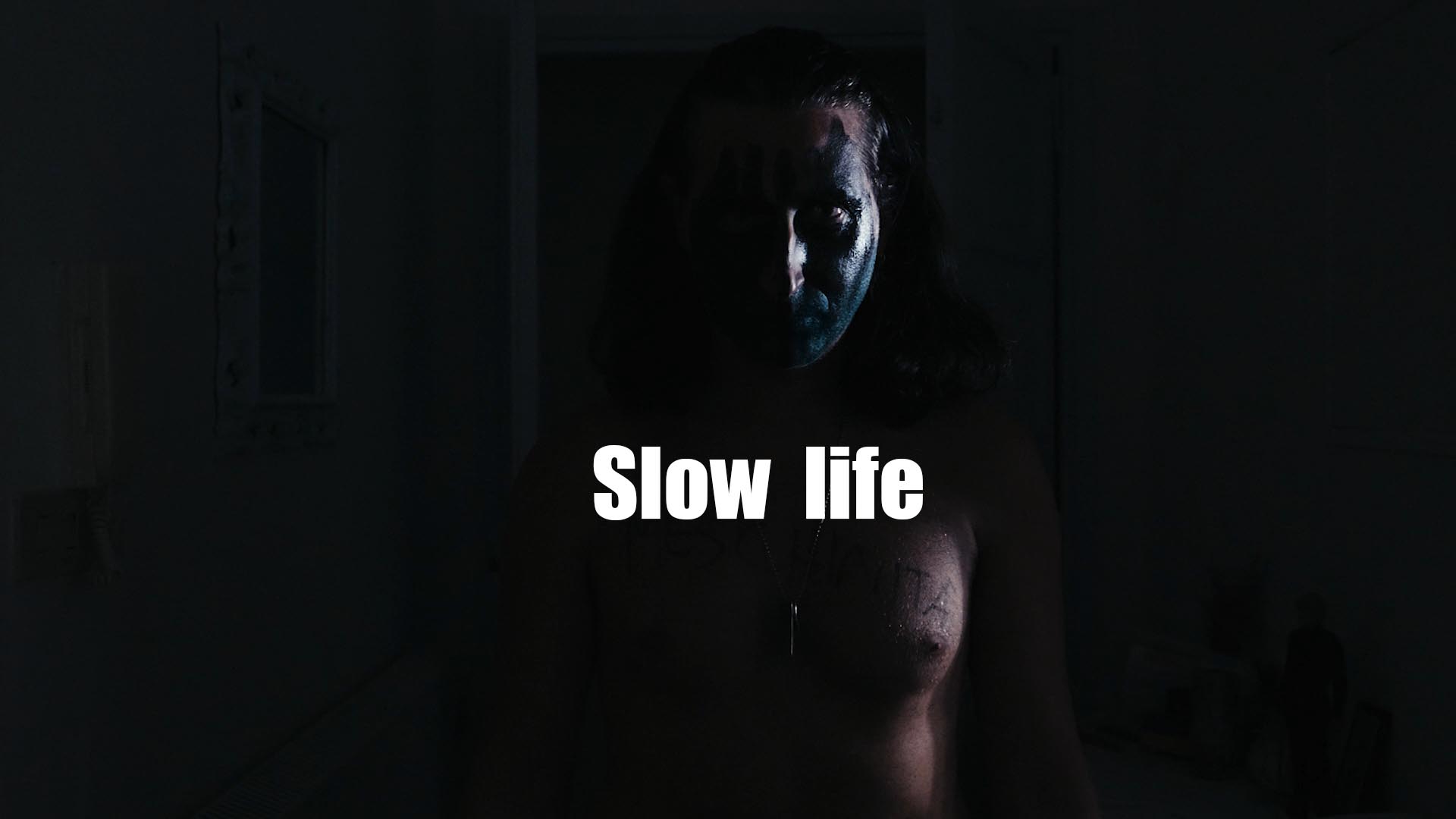
Drama, comedy, thriller, by Fabio Del Greco, Italy, 2021.
Lino Stella takes a period of vacation from his alienating job to devote himself to relaxation and his passion: drawing comics. But he did not foresee certain disturbing elements: the intrusive administrator of the building where he lives, the postman who delivers crazy fines and tax bills, an overbearing security guard, a very enterprising real estate agent, the old lady downstairs who raises the feline colony of the condominium. These characters will make his vacation hell.
Food for thought
The larger a social group is, the more rules and bureaucracy are needed, which often do not respect the individual. You have to learn to live with annoying people, but sometimes the social pressure and arrogance can become intolerable. The only laws that always come to our aid are the laws of Nature.
LANGUAGE: Italian
SUBTITLES: English, Spanish, French, German, Portuguese
What Mill Was Really Afraid Of
The book he sat down to write was not about kings. It was not about censors or inquisitors or the machinery of official repression. By 1859, the year On Liberty appeared in print, John Stuart Mill had watched something far more insidious take shape around him — something that required no dungeon, no decree, no uniform. It required only the weight of other people’s expectations, the slow accumulation of disapproval, the quiet social death that awaits anyone who thinks differently in a room full of people who have already decided.
Mill was afraid of you. Not you specifically, but the version of you that exists in aggregate — the majority, the crowd, the prevailing feeling of an age. His fear was precise and named: he called it the tyranny of prevailing opinion and feeling, and he distinguished it sharply from political tyranny precisely because it operates without visible machinery. A despot can be identified, resisted, overthrown. But what do you overthrow when the oppression is the ambient air of a society? When conformity is enforced not by law but by the raised eyebrow, the social exclusion, the quiet consensus that marks certain thoughts as unspeakable?
England in the 1850s was not a dictatorship. It was something Mill considered potentially more dangerous: a democracy learning to digest dissent by making it socially uninhabitable. Industrialization had concentrated populations into cities, cities had produced mass opinion, and mass opinion had produced what he saw as a new kind of uniformity — not the uniformity of shared belief arrived at through reasoning, but the uniformity of social pressure mistaken for consensus. The factories were reshaping not only how people worked but how they thought, or rather how thoroughly they stopped doing so.
He had spent years watching this with Harriet Taylor, his closest intellectual companion and, after a long and scandalous friendship conducted under the permanent censure of Victorian society, eventually his wife. She died in 1858, one year before On Liberty was published. Mill dedicated the book to her with a grief that is almost unbearable to read, calling her the inspirer and in part the author of everything that is best in his writings. Whatever you think of the exact proportion of her intellectual contribution — and scholars have debated it with considerable energy — what is clear is that their relationship itself had been an experiment in living against social consensus. They had endured decades of insinuation, ostracism, and the specific cruelty that polite society reserves for those who refuse to arrange their inner lives according to its preferences. Mill knew what the tyranny of prevailing opinion felt like. He had watched it operate on someone he loved.
This personal dimension matters because it prevents On Liberty from being read as a merely theoretical exercise. When Mill writes that society can and does execute its own mandates, and that it practices a social tyranny more formidable than many kinds of political oppression, he is not constructing a hypothetical. He is describing the mechanism he had observed at close range, the one that requires no executioner because it turns the victim’s own neighbors, colleagues, and family members into instruments of enforcement.
Alexis de Tocqueville had identified something adjacent to this a generation earlier, writing in Democracy in America about the tyranny of the majority — the way democratic systems could produce not liberation but a new and subtler despotism of collective opinion. Mill read Tocqueville carefully and built on that anxiety, but he pushed it further inward, further into the texture of daily life. The threat he identified was not just political majorities overriding minorities in legislatures. It was the majority of feeling — the aggregate emotional consensus of a society — making genuine individuality feel not illegal but simply impossible, socially unimaginable, exhausting beyond endurance.
That was what he was afraid of. Not the king. The neighbors.

The Harm Principle and Its Trap
You are standing in your own kitchen at eleven at night, doing something that affects no one — and three years later, a legislature somewhere has decided that what you were doing constitutes a social harm. Not because anyone was hurt. Because the category shifted.
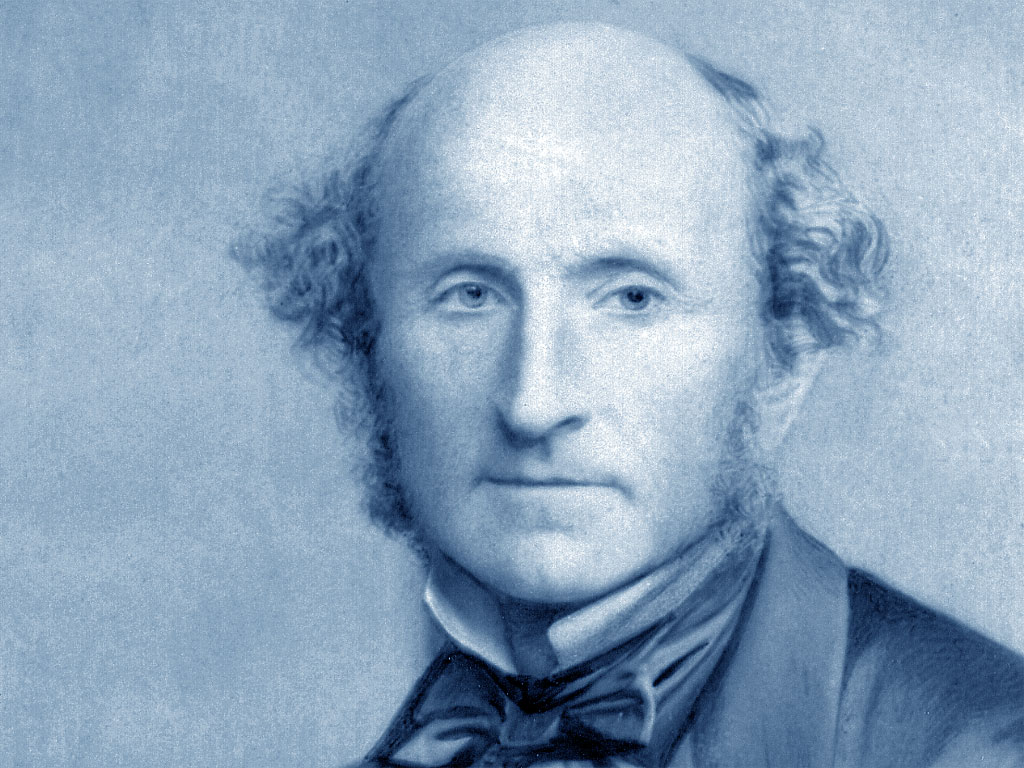
Mill thought he had drawn the line cleanly. In “On Liberty,” published in 1859, he stated it with the confidence of a geometer: the only legitimate reason for society to exercise power over any of its members is to prevent harm to others. Self-regarding actions — those that concern only the individual — are, by this principle, beyond the reach of collective authority. The formulation sounds like a wall. It was meant to function like one.
But a wall is only as solid as the ground it rests on, and “harm” has never been stable ground. It contracts when governments want to permit something and expands when they want to prohibit it. The word does not resist political pressure. It accommodates it.
Joel Feinberg spent four volumes between 1984 and 1988 — “The Moral Limits of the Criminal Law” — trying to specify what “harm” could reasonably mean in a liberal framework, and even he ended up distinguishing between setback of interests and wrongful setback of interests, between harm and offense, between remote and proximate causation, in ways that multiplied rather than resolved the ambiguity. The problem was not Feinberg’s precision. The problem was that harm is relational, contextual, and always embedded in a prior value judgment about what counts as an interest worth protecting in the first place.
Mill knew this at some level. He acknowledged that the harm principle required what he called a “tolerably enlightened” society to function — which is a quiet way of admitting that the principle depends on the very thing it was supposed to constrain. Who decides what tolerance looks like? The same social majority whose tyranny Mill was trying to limit.
A man loses his job because his employer discovered a private letter. The letter described nothing illegal, nothing violent — only an opinion his employer found destabilizing to workplace morale. Was he harmed? Was the employer harmed? Was the community that employs both of them harmed by the atmosphere his views allegedly created? These are not rhetorical questions. Courts in democratic countries with liberal constitutions have answered all three in the affirmative at different historical moments, using the same harm vocabulary Mill gave them. The principle did not protect the man. It provided the legal grammar for his dismissal.
This is the trap, and it is elegant. By making harm the hinge of liberty, Mill created a framework in which the expansion of state or social control requires only a successful argument that something causes harm — however diffuse, however mediated, however speculative. And in a society saturated with psychological, economic, and sociological expertise, such arguments are never difficult to construct. Second-hand smoke became harm. Hate speech became harm. Then offensive speech. Then speech that created a “hostile environment.” Each extension was made in Mill’s name, using Mill’s logic, inverting Mill’s intention.
Bernard Williams, writing in 2005 in “In the Beginning Was the Deed,” argued that liberalism’s deepest problem is not that its enemies are strong but that its own vocabulary is infinitely colonizable. What Williams saw was that “harm” is not a description of the world but a political achievement — something that has to be won, maintained, and defended against those who would redraw its edges.
The Harm Principle, then, is not a principle in any geometric sense. It is a placeholder. It marks the location where the real argument has to happen — the argument about power, about whose experiences count, about which bodies the law has historically been designed to protect and which it has been designed to expose.
The Marketplace of Ideas Is Not Neutral Ground
Someone is speaking at a podium. The room is full. The microphone works. Everyone applauds at the end. And yet nothing was heard, nothing changed, nothing entered the record of what people actually believe. The form of free speech was observed with perfect fidelity. Its substance evaporated before it reached the back row.
Mill’s argument for the collision of ideas is genuinely seductive, and it deserves to be taken seriously before being questioned. In On Liberty, published in 1859, he insists that even a false opinion earns its place in public discourse because it forces the holder of a true opinion to actually defend it, to feel it rather than merely repeat it. A truth never challenged becomes, in his phrase, a dead dogma — held without understanding, recited without conviction. The marketplace of ideas, on this view, is a kind of intellectual gymnasium. Friction produces clarity. Error serves truth by threatening it.
The image is elegant. It is also, as Herbert Marcuse argued in his 1965 essay “Repressive Tolerance,” a description of conditions that have never existed and perhaps cannot exist within a society already structured by economic and cultural power. Marcuse’s move is precise and uncomfortable: tolerance, when extended equally to all positions regardless of their structural weight, does not produce a level contest between ideas. It produces the appearance of one. The already-powerful idea, backed by institutions, media, money, and habit, enters the marketplace with advantages so entrenched they are invisible. The marginal idea enters with nothing but its own force. Equal treatment of unequal positions is not neutrality. It is a mechanism for preserving the existing hierarchy while providing it with the legitimacy of openness.
This is where Marcuse lands the blow that Mill’s framework cannot easily absorb. If the goal of free expression is genuinely the emergence of truth, then the conditions under which expression occurs matter as much as the formal permission to speak. A man who owns three newspapers and a television network and a man who stands on a street corner with a pamphlet are both, technically, exercising free speech. Mill’s framework, taken alone, sees no relevant difference between them. Marcuse sees nothing but difference.
There is a scene that crystallizes this precisely. A woman stands before a city council and speaks, clearly, with data, with calm, about a policy that will destroy the neighborhood she grew up in. She has three minutes. The developer who wants the contract spoke for forty, with slides, with architects, with legal counsel present. The vote happens. Her argument is never referenced in the deliberation. Later, someone will say the process was open, that everyone had a chance to be heard. This is true in the way that the podium and the working microphone are true. The form was honored. The substance was processed and discarded before it could accumulate enough weight to disturb anything.
What Marcuse identified is not simply bias or bad faith. It is something structurally embedded in how discourse functions when tolerance is abstracted from the material conditions of speaking. A culture can become expert at performing openness while systematically preventing the kind of genuine confrontation Mill believed would produce truth. The performance of tolerance becomes, paradoxically, the most efficient way to ensure that the unsettling voice never quite reaches the place where it could unsettle anything.
Mill was not naive about power. He understood that social tyranny operated through pressure and convention, not just through law. But his remedy was always more speech, more contestation, more willingness to hear. What he could not fully account for was the possibility that the machinery of hearing could itself be colonized — that the marketplace, once imagined as an open field, had long since been enclosed.
Individuality as a Political Act
Your handwriting changes when no one is watching. The loops loosen, the letters lean differently, something closer to a true signature emerges on the page before the performance of legibility reasserts itself. Mill noticed this. Not the handwriting specifically, but the mechanism — the way human beings contract themselves in the presence of collective expectation, editing out the very qualities that might have made them irreplaceable.
Chapter III of On Liberty is where Mill stops defending freedom as a legal boundary and begins arguing for it as a biological necessity. The claim is precise and almost alarming in its ambition: that individuality is not the indulgence of the eccentric but the engine of civilization itself. A society that flattens its members into conformity does not achieve peace — it achieves stagnation dressed as peace. The person who follows a custom without examining it contributes nothing, Mill argues, even if the custom happens to be correct. The value of a human action is inseparable from the exercise of faculties that produced it. A correct belief held on borrowed authority is epistemically less than a correct belief arrived at through struggle.
This is where Mill’s debt to Wilhelm von Humboldt becomes architecturally visible. Humboldt’s concept of Bildung — developed most fully in The Limits of State Action, written in 1792 though not published in full until 1851 — proposed that human beings fulfill themselves not by accumulating knowledge or social status but through the richest possible development of their inner capacities in contact with the world’s diversity. Mill quotes Humboldt directly, unusually for a philosopher who rarely advertised his influences so openly, calling the development of individuality through freedom “the leading principle” of his own argument. For Humboldt, uniformity was not merely boring — it was a form of anthropological damage. Mill absorbed this and sharpened it into something more politically confrontational: the person who has been prevented from developing individuality is not merely unfulfilled, they are a loss to everyone else. Difference, cultivated seriously, is what produces the new conditions of possibility from which entire societies eventually drink.
The argument is genuinely radical. It does not say: tolerate the eccentric because it costs you little. It says: the eccentric is your future, and your suppression of them is an act of self-harm committed in the name of self-defense.
And then the complication arrives, because it must. The philosophical architecture of Bildung and individuality was being constructed in the same historical period that produced systematic racial science, colonial administration, and the legal infantilization of women. The question of whose individuality qualified for cultivation and protection was never abstract. Mill himself administered the East India Company for seventeen years. The liberalism he theorized in London coexisted with a governance apparatus in India that classified entire populations as not yet capable of self-determination — precisely because their forms of difference, their distinct modes of life and knowledge, were not legible as individuality in the Humboldtian sense but rather as evidence of developmental deficiency.
This is not a peripheral contradiction. It is structural. The individuality that Mill’s framework valorized was already implicitly shaped by a particular cultural form — one that recognized self-cultivation when it looked like European interiority, literary ambition, or rational dissent, and pathologized it when it looked like religious practice deemed superstitious, sexual behavior deemed deviant, or cultural identity deemed primitive. The same philosophical period that canonized individual difference as sacred was using medical and legal institutions to criminalize homosexuality, to confine women’s non-conformity as hysteria, and to govern colonized populations as collectively immature.
Mill was not unaware of power’s tendency to misuse categories. But awareness of the danger does not automatically produce immunity to it. The concept of individuality, even in its most generous form, arrives pre-loaded with questions about who gets to define what a developed self looks like — and who decides when a life has diverged from custom versus when it has simply failed.
A vision curated by a filmmaker, not an algorithm
In this video I explain our vision
Harriet Taylor’s Ghost

There is a name on the cover of On Liberty, and it belongs to one person. This is where the trouble begins, not in any footnote, but in the plain fact of the title page itself, which in 1859 announced John Stuart Mill as the author of a text he described, in his Autobiography, as “more directly and literally” the work of Harriet Taylor than anything else he had published. He did not say she influenced him. He said the work was hers. He called her intellect superior to his own, her moral intuition sharper, her capacity for synthesis more penetrating. And then the book went out into the world wearing only his name, because that was the only arrangement the world would accept.
You already know where this leads. But stay with the discomfort a moment longer rather than resolving it too quickly into irony, because what is at stake here is not biographical injustice, which is real enough, but something more structurally disturbing: the essay that became the foundational text of liberal individualism, the text that argued most forcefully that every voice deserves its hearing and every mind its sovereign territory, was itself produced through an act of erasure that the tradition would go on to replicate for another century without noticing the contradiction.
Mill’s description of their collaboration is not modest exaggeration. He returned to it repeatedly and with the same insistence. He wrote that the essay on liberty specifically had been planned and discussed between them, that Harriet had contributed not just encouragement but argument, that her thinking had shaped the architecture of positions he was presenting as his own discoveries. Scholars have since debated the precise degree of her contribution, some pulling back from Mill’s most expansive claims, others finding her fingerprints most legibly on the sections concerning social tyranny, the oppression that operates not through law but through collective pressure, the crushing conformity of public opinion. Which is to say, the sections of On Liberty that feel most alive, most urgent, most sociologically precise, may bear her authorship most directly.
This matters philosophically, not just historically, because the liberal tradition that descends from On Liberty has always imagined its founding subject as a particular kind of self: bounded, autonomous, capable of reason, free from dependence. What it struggled to imagine, what it structurally excluded from the category of the individual worth protecting, was the self constituted through relation, the self whose thought emerges in conversation, in partnership, in the kind of intellectual intimacy that cannot be easily sorted into whose idea was whose. Carole Pateman’s argument in The Sexual Contract, published in 1988, is relevant here: the liberal individual was always implicitly male, because it was constructed against the background of a domestic sphere where another kind of person did the reproductive, emotional, and intellectual labor that made the autonomous individual possible while remaining invisible to liberal theory.
Harriet Taylor is the ghost in that machinery. Her presence behind On Liberty does not merely enrich the biography of a famous text. It reveals the liberal tradition catching itself in its own most serious contradiction at the precise moment of its founding statement. The essay argues that silencing any voice risks losing a truth the world cannot afford to lose. It was written in a collaboration that the world’s conventions required to be silenced into a single name. Mill knew this. He said so, plainly, in a document published after his death, when the admission could no longer embarrass the living arrangements of Victorian respectability. He named the injustice and then, in the act of publishing, participated in it anyway, because the alternative was that the argument would not be heard at all. A work about the cost of suppression entered the world through an act of suppression. The liberal tradition built its house on that foundation and called it liberty.
When Freedom Becomes a Brand
There is a photograph taken in 1981, inside a room that smells of old wood and institutional carpet, where a man holds a signed copy of a thin book and smiles like someone who has just been handed a weapon. The book is not new. It was written more than a century before that smile. But in that moment, Mill’s vocabulary — liberty, individuality, the harm principle — had been thoroughly laundered through a different tradition, pressed into service for an agenda its author would not have recognized, and possibly would have found alarming.
Friedrich Hayek did not misread Mill carelessly. He read him with precision and then made a strategic selection. In The Constitution of Liberty, published in 1960, Hayek drew a line between coercion and freedom that tracks closely with Mill’s surface language while quietly discarding the architecture underneath. For Hayek, the great enemy of freedom is collective interference — state planning, redistributive taxation, labor regulation — and Mill’s harm principle becomes, in this reading, a permanent injunction against organized society acting on behalf of its weaker members. What Hayek extracted was the negative liberty, the freedom from, and left behind what Mill had explicitly built around it: the positive conditions without which that freedom means nothing for most people.
Mill was not ambiguous on this. In On Liberty itself, and more extensively in Principles of Political Economy, first published in 1848, he argued that the state had legitimate roles in funding and mandating education, in protecting workers from contracts signed under conditions of desperation, and in limiting the terms of labor arrangements that one party could not meaningfully refuse. He supported the Factory Acts. He wrote that a contract freely entered is not necessarily a just one, and that the freedom to sell your labor under conditions of starvation is not freedom in any sense worth defending. These positions were not peripheral to his thought. They were load-bearing walls.
The deregulation discourse of the 1980s performed an elegant amputation. Ronald Reagan‘s rhetorical inheritance — government is the problem, not the solution — required a philosophical lineage, and Mill’s name, attached to the word liberty, provided cultural respectability for what was essentially a program of removing protections from people who needed them most. The language of individual freedom became indistinguishable from the language of corporate freedom, which is a different thing entirely, belonging to a different kind of agent with a different relationship to power.
This confusion between persons and entities was not innocent. When a corporation is treated as the kind of individual Mill had in mind, his entire framework collapses. Mill’s individual was embedded in society, shaped by it, capable of growth, capable of harm, and crucially — mortal, finite, dependent on others for education, language, and the slow formation of character he called self-development. A corporation is none of these things. Applying the harm principle to protect a corporation from regulatory interference is not a liberal argument. It is a category error dressed in liberal vocabulary.
What was lost in the capture of Mill’s language was his understanding that freedom is a social achievement, not a natural state disrupted by government. Isaiah Berlin‘s 1958 lecture on two concepts of liberty drew the distinction cleanly: negative liberty, the absence of external constraint, and positive liberty, the actual capacity to act. Mill was never purely a negative liberty theorist, despite how he has been packaged. His insistence on education as a precondition for meaningful autonomy, his argument in The Subjection of Women that formal freedom means nothing when social condition forecloses real choice — these are not footnotes. They are the point.
When a vocabulary is separated from the reasoning that gave it shape, it does not become neutral. It becomes available. And what became available, in the second half of the twentieth century, was a word — liberty — that could be made to mean its own opposite.
The Unsettled Remainder
The bread gets passed. Someone makes a joke. The moment seals itself over, smooth as water closing above a stone, and whatever you were about to say settles somewhere below your sternum, unspoken, becoming part of the permanent architecture of who you are in that room, with those people, at that table.
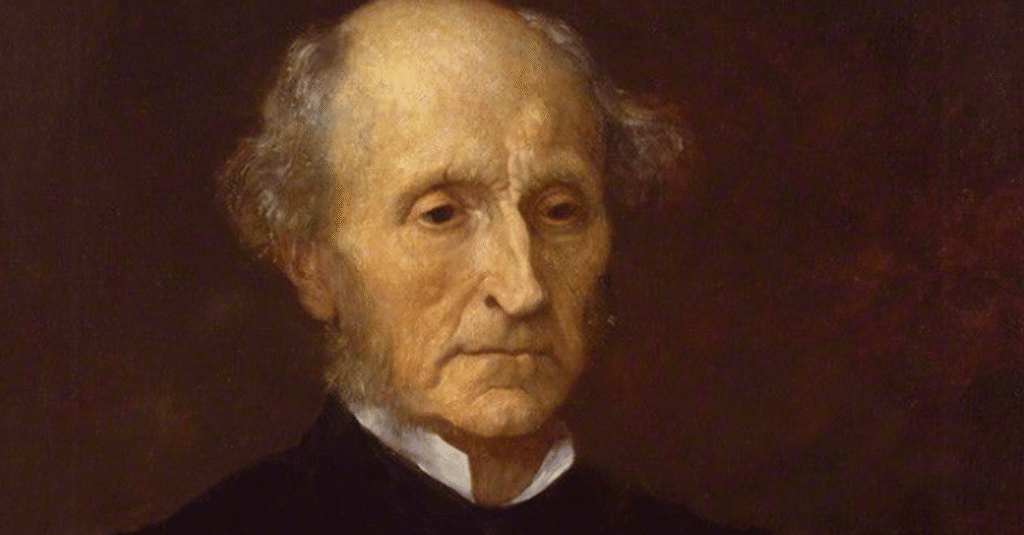
Mill could name this. He named it with extraordinary precision in 1859, calling it the tyranny of prevailing feeling, the social pressure that operates without law, without courts, without anything so crude as force — only the steady ambient weight of belonging held conditionally. His harm principle was meant to be the lever that lifts that weight: if your silence causes no damage to another person, no one has the right to demand it. The principle is elegant, genuinely radical, and it does not quite reach the thing it is trying to touch.
What it cannot fully resolve is that belonging is itself a form of harm distribution. When you speak, someone else’s comfort is disturbed. When you stay silent, your own interior life is slowly, methodically erased. The harm is not absent in either direction; it is simply allocated differently, and Mill’s framework, grounded as it is in the separability of individuals, has no clean way to adjudicate between a harm done to a self through suppression and a harm done to a community through rupture. Isaiah Berlin, working a century later, understood this incompatibility not as a flaw in liberal theory but as its permanent condition: values genuinely conflict, and no arrangement resolves the conflict without leaving a remainder. Freedom and solidarity are both real goods. They pull in opposite directions. The tension is not a problem awaiting a solution.
Every society draws the line somewhere — what can be said aloud, what must be whispered, what must not be said at all — and draws it imperfectly, by negotiation and power and historical accident, not by philosophical derivation. The Athens that produced Socratic dialogue also killed Socrates. The Enlightenment that theorized universal reason also theorized racial hierarchy. Mill himself, who wrote so penetratingly about the damage done by silencing, administered colonial policy in India for thirty-five years and found in that administration no contradiction worth naming. This is not merely hypocrisy. It is evidence that the framework’s blind spots are structural, not personal: the category of who counts as a rational individual capable of self-determination has always been drawn by those who already sit inside it.
Which means the dinner table silence is not simply a private failure of courage or a local instance of social conformity. It is the capillary endpoint of something vast — the way every liberal order produces, necessarily, an inside and an outside, a class of people whose freedom is protected and a class whose silence is simply the ambient condition of their existence, unremarkable, unlegislated, and therefore invisible to the framework designed to address it. The unfreedom that Mill’s principle cannot see is the unfreedom that looks, from the inside, like voluntary quiet.
And yet the principle survives its own limitations. Not because it solves what it cannot solve, but because it names the injury clearly enough that the injured can use that naming. The history of every expansion of recognized liberty — legal, social, expressive — runs through the vocabulary Mill helped build, even when it runs against the uses to which he put it. That is the strange durability of the harm principle: it outlasts its author’s applications, available to be turned against the very silences he did not notice.
The bread gets passed again. The table talk moves on. And somewhere in the body of the person who did not speak, the unspoken thing continues its quiet work, shaping what they will say next time, or whether they will return to the table at all.
🗽 Liberty, Power, and the Individual Mind
Mill’s On Liberty stands as one of the foundational texts of political liberalism, raising enduring questions about freedom of thought, the tyranny of social conformity, and the limits of state power. These related articles trace the intellectual landscape surrounding Mill’s ideas, from the nature of political authority to the defense of individual expression and the rights of women.
Thomas Hobbes: Life and Political Thought
Thomas Hobbes constructed a political philosophy centered on the radical surrender of individual freedom to a sovereign authority in exchange for security and social order. His Leviathan offers a stark counterpoint to Mill’s liberalism, raising the question of how much liberty individuals can and should retain against the demands of collective governance. Reading Hobbes alongside Mill sharpens our understanding of the tension between freedom and authority that defines modern political thought.
GO TO THE SELECTION: Thomas Hobbes: Life and Political Thought
Wollstonecraft’s A Vindication of the Rights of Woman
Mary Wollstonecraft‘s A Vindication of the Rights of Woman is one of the earliest and most forceful arguments for extending the principles of individual liberty and rational autonomy to women. Written decades before Mill, her work anticipates many of his arguments about the stifling effects of social custom and arbitrary exclusion on human development. Together, these texts form a continuous tradition of liberal thought that insists on reason and freedom as universal human entitlements.
GO TO THE SELECTION: Wollstonecraft’s A Vindication of the Rights of Woman
Banal Evil and Radical Evil: Kant and Arendt
Hannah Arendt‘s analysis of banal and radical evil explores how political systems can strip individuals of moral agency and reduce them to instruments of oppressive power. Her reflections on totalitarianism and the erosion of public freedom directly illuminate the dangers Mill warned against when unchecked authority silences dissent and individual conscience. Arendt’s work gives a twentieth-century urgency and gravity to Mill’s nineteenth-century call for the protection of free thought.
GO TO THE SELECTION: Banal Evil and Radical Evil: Kant and Arendt
Hobbes’s Leviathan: Meaning and Analysis
Hobbes's Leviathan offers a systematic philosophical defense of sovereign power, arguing that without a supreme authority human life descends into perpetual conflict. Its vision of a social contract built on the subordination of individual will stands in productive tension with Mill’s insistence on protecting personal liberty from both state coercion and social pressure. Analyzing Leviathan alongside On Liberty reveals the deep fault lines in Western political philosophy between security and freedom.
GO TO THE SELECTION: Hobbes’s Leviathan: Meaning and Analysis
Explore Freedom Beyond the Screen on Indiecinema
If these ideas about liberty, power, and individual conscience speak to you, Indiecinema streaming offers a curated selection of independent films that take these very questions into moving, cinematic territory. From political dramas to philosophical documentaries, our catalog is a space where free thought finds its visual voice. Discover films that dare to question, challenge, and inspire — only on Indiecinema.
👉 EXPLORE THE CATALOG: Watch Indie Films in Streaming
A vision curated by a filmmaker, not an algorithm
In this video I explain our vision

