
The Confessional as Political Architecture
You are sitting across from a man who already knows the answer. He does not need your confession to establish the truth — he needs it to establish your complicity in stating it. The room is small, the light calculated, and every silence that follows his questions belongs to him, not to you. You will speak eventually. Everyone does. And when you do, you will not simply be admitting to something you believed in private. You will be transforming that private thing into a public crime, handing it over like a deed of property, signing your own interiority across to an institution that will then own it permanently. This is not an interrogation. This is a conversion of ontological status, conducted in real time, with your own voice as the instrument.

The Spanish Inquisition was formally established by papal bull in 1478, under Sixtus IV, at the explicit political request of Ferdinand and Isabella — a fact that should immediately destabilize any reading of it as primarily a theological project. What the monarchs required was not the purification of Christian doctrine. What they required was a mechanism capable of penetrating the domestic interior, the family table, the whispered prayer, the dietary habit, and converting these invisible, unchargeable behaviors into actionable political liability. Tomás de Torquemada, appointed Inquisitor General in 1483, oversaw the prosecution of roughly 2,000 executions and tens of thousands of trials not because heresy had suddenly proliferated, but because the machinery of suspicion, once institutionalized, generates its own population of the guilty. Guilt, under this system, was not a condition you either had or didn’t have. It was a resource to be extracted.
Michel Foucault argued in Discipline and Punish, published in 1975, that the confession is among the most powerful instruments of power ever devised precisely because it recruits the subject into producing their own subjugation. But the Inquisitorial apparatus predates and in many ways exceeds Foucault’s disciplinary model, because it did not merely normalize surveillance — it theologized it. When the state and the sacred share the same administrative office, the act of doubting becomes not simply illegal but cosmically disordered. You are not breaking a law. You are rupturing the fabric of the real. The genius of this fusion is that it makes resistance feel not like courage but like madness.
What made the Inquisition a precision instrument rather than a blunt one was its extraordinary procedural sophistication. The Directorium Inquisitorum, written by Nicolau Eimeric in 1376 and expanded by Francisco Peña in 1578, constitutes a manual of such bureaucratic rigor that it reads, in places, like an early operations manual for manufacturing consent. Eimeric classified heretics into taxonomic categories, specified the exact conditions under which torture could be applied, and outlined how a confession obtained under duress could be ratified the following day in its absence — thus laundering coercion into voluntary admission. The document understands, with clinical precision, that what matters legally and politically is not what happened in the chamber but what is recorded as having happened in the chamber.
The population most systematically targeted — conversos, Jews who had converted to Christianity under social and legal pressure following the pogroms of 1391 — reveals the genuinely political architecture of the enterprise. These were not secret heretics lurking in plain sight. They were a literate, commercially successful, socially mobile class whose integration into Spanish civic and economic life constituted a structural inconvenience to an emerging nationalist project that required a pure origin myth. The Inquisition did not discover their threat. It manufactured it, in the same way that any system of governance manufactures its necessary enemies: by defining transgression in terms precise enough to catch the people already identified as undesirable, and then presenting the catch as proof of the original suspicion.
Fear as Institutional Grammar
You are already guilty before you open your mouth. The tribunal knows this. The procedure exists not to determine whether you sinned but to make you say it — to extract from your own throat the sentence that was written for you before you arrived. This is not a failure of justice. This is justice functioning exactly as designed.
When Michel Foucault published Surveiller et punir in 1975, he was ostensibly writing about the modern prison system, about Bentham’s panopticon and the birth of the penitentiary in the late eighteenth century. But the architecture of power he described — where the body becomes a surface onto which authority inscribes its meanings — reaches backward with uncomfortable precision into the cellars of the Holy Office. Foucault’s central claim was not that punishment had become more humane over time, but that it had simply relocated: from the public spectacle of the scaffold to the invisible interior machinery of surveillance and self-regulation. What the Inquisition understood, three centuries before anyone had theorized it, was that the most durable form of control is the one the controlled subject performs on themselves.
The inquisitorial procedure formalized in the thirteenth century, codified most ruthlessly in Bernard Gui’s Practica Inquisitionis Heretice Pravitatis around 1323, was a grammatical system before it was a legal one. It had syntax: first the citation, then the interrogation, then the repetition of the interrogation, then the application of torture if necessary, then the confession, then the abjuration, then the sentence. Every accused person moved through identical stages regardless of what they had actually done or believed, because the procedure was not designed to discover truth. It was designed to produce a specific kind of speech. Confession was, in Foucauldian terms, the ideal speech act of the inquisitorial state — the moment when the institution’s version of reality was validated by the very person it was destroying.
The body entered this grammar as raw material. Torture under the Inquisition was not permitted to cause permanent mutilation or death — a canonical restriction that sounds almost merciful until you realize what it actually meant in practice: the suffering could be prolonged indefinitely, renewed across sessions, suspended and resumed, because the moment it stopped permanently, the institution had failed to extract its text. The accused was not being punished during torture. They were being written. Their screams were drafts. The confession was the final manuscript, and it had to be signed by the author.
What made this system uniquely totalizing was not its violence but its epistemological closure. There was no position from which the accused could speak that the tribunal could not absorb and reinterpret. Silence was evidence of obstinacy, which was evidence of guilt. Denial was evidence of impenitence, which was evidence of guilt. Confession was evidence of guilt. Recantation of a confession was relapse, which was the gravest guilt of all, carrying mandatory death. The procedure had no exit because it had no genuine question at its center — only the performance of a question, designed to make the accused believe, at least for a moment, that an honest answer might save them.
This is where the mechanism becomes genuinely vertiginous. The accused, desperate to find the correct answer, began reasoning from inside the tribunal’s logic. They started asking themselves not “what is true?” but “what does the tribunal need to hear?” And in that shift — that precise moment of cognitive capitulation — they became the instrument of their own destruction. Not because they were broken, but because they were rational. Survival logic, applied to a system that had already determined the outcome, produced confession as its most reasonable conclusion. The Inquisition did not need to be omnipotent. It only needed the accused to believe, even partially, that omnipotence was possible.

The Bureaucratization of Heresy
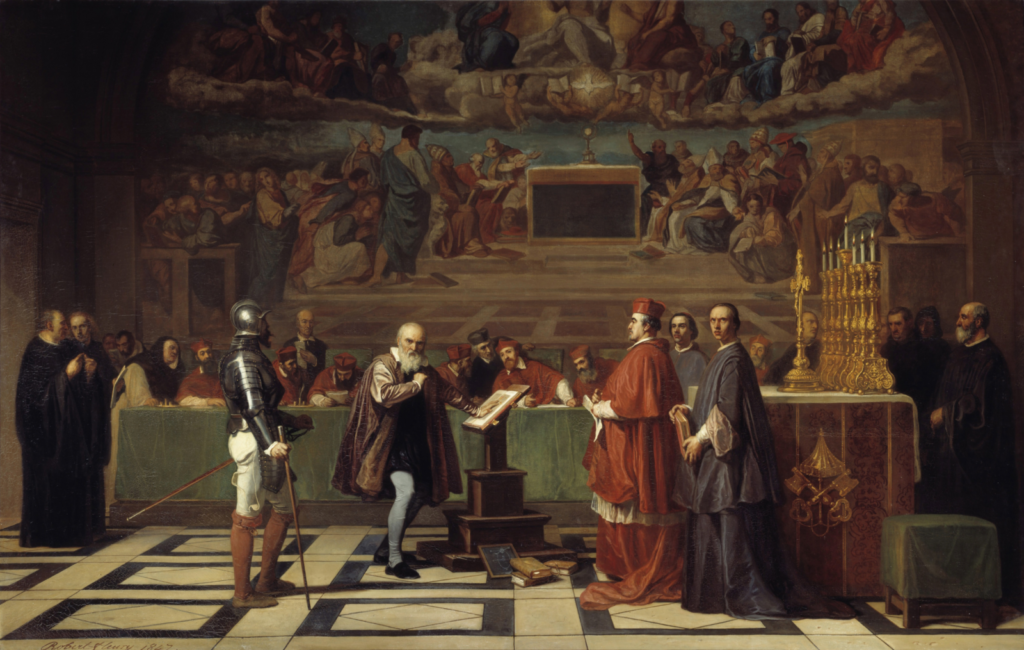
You are summoned before a tribunal that already knows your name. Not because you have done anything — or not exactly. Because someone, somewhere, mentioned you. The record exists. The record is enough.
The Spanish Inquisition, formally established under Ferdinand and Isabella in 1478 and not dissolved until 1834, processed somewhere in the range of 150,000 documented cases across those three and a half centuries. The historian Henry Charles Lea, whose four-volume History of the Inquisition of Spain remains one of the most exhaustive archival treatments of the institution, estimated execution rates hovering between one and two percent of those tried in the early decades — and declining sharply thereafter. Scholars like Henry Kamen, whose 1997 revisionist study drew on the Inquisition’s own surviving tribunal records, arrived at figures suggesting fewer than 3,000 executions across the entire operational lifespan of the institution. In a period when secular courts across Europe burned, hanged, and broke people on wheels with far less paperwork and far fewer appeals, the Spanish Inquisition was, by the grotesque mathematics of early modern justice, almost moderate.
This is the detail that refuses to fit inside the mythology, and it is precisely the detail that explains everything. An institution that kills almost no one but processes everyone produces something that mass execution cannot: it produces a population that lives permanently inside the possibility of accusation. The martyr’s death is a resolution. It closes the question, sometimes with terrible beauty, sometimes with political consequence, but it closes. What the tribunal’s procedural machinery generated instead was an open file, an ongoing condition, a citizenship of the suspect. Juan de Mariana, the Jesuit historian writing in the late sixteenth century, noted that even wealthy converso families — Jewish converts to Christianity who had been Christian for two or three generations — maintained an obsessive silence around anything that might be archived. Not because they were guilty of anything legible. Because the archive did not require guilt to function. It required only a name.
Giorgio Agamben‘s work on the state of exception — specifically his 2003 text State of Exception — offers a framework that applies here with uncomfortable precision: sovereign power reveals itself most nakedly not when it acts but when it suspends. The Inquisition’s genius, if that word can survive the contact, was that it institutionalized suspension itself. The preliminary investigation phase, the calificación process in which theologians assessed whether a denunciation merited formal charges, could last months or years. During that interval, the accused was not innocent and not charged. They existed in a bureaucratic limbo that had no name in the legal lexicon of the time because it needed no name — the limbo was the point. Property could not be safely transferred, marriages became complicated, business partnerships acquired a new texture of risk. The social consequences arrived before any verdict, because the community read the summons as the verdict.
What the apparatus had engineered, in other words, was not a system of punishment but a system of preemptive social death — one that required almost no fuel to sustain itself, because the population supplied the anxiety independently. Denunciations from neighbors, from servants, from commercial rivals, from estranged relatives, flooded the tribunals not primarily from religious zeal but from the discovery that accusation was a transferable instrument. The Inquisition did not invent social betrayal. It gave social betrayal a mailing address, a filing protocol, and institutional permanence. Michel Foucault’s argument in Discipline and Punish — that the transition from spectacular public punishment to surveillance-based control is a story about efficiency — finds one of its sharpest historical illustrations here, nearly two centuries before the panopticon became a metaphor. The watched population watches itself. The tribunal barely needs to convene when the anticipation of the tribunal has already done the work of reshaping behavior, language, silence, and the particular careful flatness that people adopt when they have learned that expression is evidence.
Guilt Without Evidence, Compliance Without Force
You are sitting in a room where the question has already been asked before you arrived. The charge is written on a document you are not permitted to read. The witnesses against you cannot be named, because naming them would endanger them — or so you are told. Your silence is noted. Your protests are noted. Everything you produce in this room becomes evidence of something, and the geometry of that something shifts depending on what the examiners need it to mean.
Hannah Arendt, writing in 1951 in The Origins of Totalitarianism, drew a distinction that most legal systems prefer to leave blurred: the difference between legal guilt, which requires an act, a victim, and a demonstrable chain of causation, and political guilt, which is attributed to categories of persons by virtue of what they represent, who they are adjacent to, or what their existence might threaten in the future. Legal guilt looks backward at what happened. Political guilt looks forward at what someone might do, might enable, or might symbolize if left uncontested. Arendt was writing about twentieth-century totalitarianism, but the architecture she described had been constructed six centuries earlier, in the procedural innovations of the medieval inquisitorial courts, where the distinction between these two forms of guilt was not blurred by accident — it was collapsed by design.
The mechanism was elegant in its circularity. Under Roman legal tradition, confessio was the regina probationum — the queen of proofs — meaning that a confession outweighed all other forms of testimony. The inquisitors inherited this principle and bent it into something structurally new: if confession was the highest form of proof, then the extraction of confession became the primary instrument of justice, and anything that prevented confession — including innocence — became an obstacle to truth rather than a defense against error. Bernard Gui, whose manual Practica Inquisitionis Heretice Pravitatis from around 1307 catalogued interrogation techniques with bureaucratic precision, was explicit that the heretic’s defining characteristic was the capacity for deception. This meant that a coherent denial was not evidence of innocence but evidence of a skilled liar. The accused who confessed confirmed the charge. The accused who refused confirmed their guilt by demonstrating the stubbornness that heresy, by definition, produced.
What this created was a loyalty test disguised as a legal proceeding. The innocent person, encountering this structure for the first time, operates under a catastrophically false assumption: that the truth of their innocence is accessible to the process, that facts will function as they function in ordinary life. They do not understand that the system is not designed to locate the truth of what happened but to produce a legible subject — someone whose compliance or non-compliance can be read as a statement about their inner disposition toward authority. The person who confesses readily demonstrates humility and submission. The person who refuses demonstrates precisely the pride and defiance associated with deviant belief. The innocent person is the one most likely to refuse, most likely to insist, most likely to appear, by the standards of the room, exactly like the guilty.
Sociologist Erving Goffman, in his 1963 work Stigma, described how individuals marked by categories of suspicion are required to perform normalcy in ways that expose them further — that every attempt to manage the stigma produces new symptoms of it. The inquisitorial accused faced an earlier and more lethal version of this trap. Their competence at self-defense read as cunning. Their distress read as conscience. The procedural demand was not for truth but for a particular kind of surrender, and the surrender itself was the political product being manufactured — not justice administered, but deference extracted, subjectivity reshaped, an entire population taught, through the spectacle of specific bodies broken or spared, that the institution’s capacity to define reality was total and that appealing to any other version of events was not merely futile but itself a form of resistance requiring suppression.
The Neighbor as Theological Weapon
You are sitting across from someone you have known for twenty years — a neighbor, a colleague, a cousin by marriage — and something shifts in their eyes when the inquisitor’s secretary enters the room. Not hostility. Something quieter and more lethal than hostility: the arithmetic of survival. In 1478, when the Spanish Inquisition formalized its denunciation protocols under Tomás de Torquemada, the system did not simply invite accusation — it structured accusation as a form of civic participation. To denounce was to demonstrate loyalty. To remain silent in the presence of suspected heresy was itself grounds for suspicion. The community did not fracture under this pressure. It reorganized around it.
This is the mechanism René Girard identified with surgical precision in Le Bouc émissaire in 1982: the scapegoat is not the consequence of social breakdown but its cure. A community saturated with undifferentiated anxiety — economic, political, theological — becomes indistinguishable from itself, loses the internal markers that tell one faction from another. Violence, normally distributed across the whole body of society, needs a point of discharge. The nominated body, the accused heretic, the converso whose prayers are reported as insufficiently enthusiastic, absorbs that diffuse violence and transforms it. After the burning, the community breathes. Order is restored not because the threat was real, but because the ritual of its elimination was collectively performed.
What made the Inquisition’s denunciation system so devastatingly effective was not coercion in the crude sense. Torture existed and was documented — the strappado, the garrucha, the toca — but the machinery ran on something far more renewable: the ordinary human desire to be on the right side of a catastrophe. Inquisitorial manuals, including Nicolau Eimeric’s Directorium Inquisitorum of 1376, later revised and expanded by Francisco Peña in 1578, explicitly outlined how voluntary denunciation could mitigate a denouncer’s own culpability. The grammar of the system was transactional: your neighbor’s guilt partially purchased your innocence. Accusation became a currency, and like all currencies, it inflated. More accusations were needed to maintain the same purchasing power of safety.
Henry Charles Lea, whose three-volume History of the Inquisition of the Middle Ages published between 1888 and 1907 remains a foundational empirical study, documented how tribunals in Aragon and Castile received denunciations at rates that made thorough investigation structurally impossible. The institution was not overwhelmed by this volume; it was sustained by it. A backlog of unresolved accusations kept entire populations in a state of provisional guilt, never fully cleared, never fully condemned, perpetually available for use. The neighbor who had denounced you last spring had not necessarily destroyed you — they had simply placed you inside the apparatus, where you would remain useful as a figure of ongoing suspicion.
What collapses under this arrangement is not community in the sociological sense — people continue to share meals, to trade, to marry their children to one another — but the possibility of a self that exists outside its legibility to power. Erving Goffman’s work on stigma, developed formally in 1963 but describing something far older, shows how identity under surveillance pressure becomes performance: you do not simply live, you demonstrate that you are living correctly, for an audience that may include anyone and therefore includes everyone. The converso who prayed loudly at mass was not expressing faith. He was filing documentation.
The genius of weaponizing neighborhood — of making proximity itself a surveillance instrument — is that it requires no ongoing administrative effort once internalized. The inquisitor does not need to be in the room. The room contains people who remember what happened to the last family on this street, and that memory does the work more thoroughly than any officer could.
A vision curated by a filmmaker, not an algorithm
In this video I explain our vision
Secular Republics and the Inquisitorial Inheritance

You are sitting in a chair bolted to the floor of a room designed to have no memorable features, and the man across the table from you is not angry — that is the first thing you notice. He is patient. He has a folder. He would like you to explain, in your own words, why you attended a meeting in 1951 that was also attended by a person who knew someone who had once subscribed to a journal that the Bureau had flagged. He is giving you the opportunity, he says, to clarify. The word clarify is doing enormous structural work in that sentence, because what it means, translated from the administrative into the honest, is: perform the right kind of self-knowledge in front of me, and we can both leave this room.
The machinery that produced that room was not theological. Joseph McCarthy never invoked heresy, and the Soviet prosecutors who staged the Moscow Trials between 1936 and 1938 were committed, at least rhetorically, to a materialist universe in which the soul did not exist. What they inherited from the Inquisition was not its metaphysics but its architecture of proof — specifically, the decision to make confession the queen of evidence, as the thirteenth-century canonist Sinibaldo Fieschi had described it, the most perfect form of legal certainty. When Nikolai Bukharin stood before the Military Collegium and admitted to crimes he had not committed, he was not breaking under mere physical pressure, though that was present. He was capitulating to a system that had made self-accusation the only available grammar of innocence. The logic ran: a loyal party member, understanding the historical necessity of the party’s current position, would recognize that his own subjective certainty of innocence was itself a symptom of his counterrevolutionary blindness. Arthur Koestler anatomized this trap in Darkness at Noon in 1940 with a precision that political science has never quite matched — not because the novel is more rigorous, but because it showed from the inside how the accused becomes his own inquisitor, performing the epistemological work the state would otherwise have to do itself.
McCarthyism operated on a slightly different register but the same underlying grammar. The unfalsifiable accusation — you are a security risk, you have associations, your loyalties are soft — cannot be disproven because it is not really an empirical claim. It is a demand for a demonstration of interiority. The Hollywood blacklist, formalized through the House Un-American Activities Committee hearings that ran from 1947 onward, destroyed careers not primarily through convictions but through the performance of the hearing itself. Naming names was not evidence of innocence; it was a ritual of reintegration, a public act of severance from the suspect community that the committee then accepted as proof of recovered loyalty. The ones who refused to name names were not protected by their silence — silence was read as its own form of confession.
Foucault noticed in 1975, working through the history of the clinic and the prison simultaneously, that modern institutions do not primarily punish deviance — they produce subjects who are legible to authority, who have internalized the vocabulary of their own assessment. The loyalty screening, the security clearance interview, the mandatory psychological evaluation before reinstatement — these are not descendants of punishment but of pastoral care, of the confessional understood as a technology for making the self transparent to an institution that claims to know it better than it knows itself. The Department of Defense’s Personnel Security Program, which processed millions of clearance investigations through the Cold War decades, was in this sense less a law-enforcement apparatus than a system for manufacturing a particular kind of self-narrating subject, one capable of presenting his own history as a clean and readable text.
What no secular republic has ever quite managed to acknowledge is that this epistemology does not require an enemy to be real in order to function — it only requires the category of enemy to remain open, adjustable, and never formally defined enough to be conclusively escaped.
The Willing Subject and the Production of Sincerity
You rehearse your own confession before anyone has asked for it. Not because you are guilty, but because the anticipation of judgment has already colonized the space where private thought used to live. This is not paranoia in the clinical sense — it is a learned posture, a reflex so thoroughly internalized that it no longer feels like performance. It feels like conscience.
Erving Goffman spent most of his intellectual life mapping what he called impression management — the continuous, largely unconscious labor by which individuals regulate their self-presentation to align with what an audience expects or demands. In “The Presentation of Self in Everyday Life,” published in 1959, he described social life as a theater in which every actor is also their own director, perpetually backstage, adjusting the costume, rehearsing the lines, deciding which version of the self to bring into the room. What Goffman was charting in the mid-twentieth century — the shopping mall, the office, the dinner party — had been architecturally installed into human consciousness centuries earlier by a far less benign stage manager.
The medieval and early modern Inquisition did not simply punish heresy. It generated a new interior life for the people it touched. The accused who appeared before inquisitorial tribunals faced a procedural structure specifically designed to make silence indistinguishable from guilt. Under the guidelines formalized in the Directorium Inquisitorum, written by Nicolau Eimeric in 1376 and expanded by Francisco Peña in 1578, a suspect who refused to confess was not exonerated — they were presumed to be concealing. The tribunal’s logic was not falsifiable from within: denial confirmed suspicion, and confession confirmed guilt. The only available exit was performed sincerity, a demonstration so thorough that it convinced the examiners the subject had penetrated their own soul and returned with clean hands.
What this produced over generations was not merely a population of fearful subjects but something anthropologically stranger: individuals who had genuinely learned to experience their own interiority as a site of potential contamination. The inquisitors did not need to be omnipresent once the tribunal had operated long enough. By the time the Spanish Inquisition reached its most institutionally sophisticated form in the sixteenth century — processing thousands of cases per decade in Castile alone, with a bureaucratic apparatus including notaries, qualifiers, and theological consultants — the external mechanism had already been replicated internally. The subject learned to conduct a preliminary tribunal on themselves before any external authority arrived.
This is the moment where political technology becomes something far more durable than legislation. Laws can be repealed. Institutions can be dissolved. The Spanish Inquisition was formally abolished in 1834. But the anthropological habit it had cultivated — the reflexive self-auditing, the preemptive correction of wayward thought — does not dissolve with the institution that created it. It migrates. It attaches itself to new orthodoxies, new audiences, new definitions of what constitutes a dangerous interiority. The form survives the content completely.
Michel de Certeau, writing in “The Practice of Everyday Life” in 1980, distinguished between strategies — the operations of institutions with fixed positions of power — and tactics, the improvised maneuvers of those who must navigate within spaces they did not design. What the Inquisition accomplished, at its most sophisticated, was to eliminate the tactical space entirely. When the subject has been trained to monitor themselves with the same vocabulary, the same categories of suspicion, and the same threshold of evidence that the institution would use, there is no interior territory left from which to improvise. The self becomes an administered zone.
The willing subject — the one who confesses not under torture but out of a genuine conviction that something in them requires correction — is not a victim in any legible sense. They have simply completed the inquisitorial project so thoroughly that the project has become their own desire, their own standard of integrity, their own definition of what it means to be a person of good conscience.
When the Accused Believes the Charge
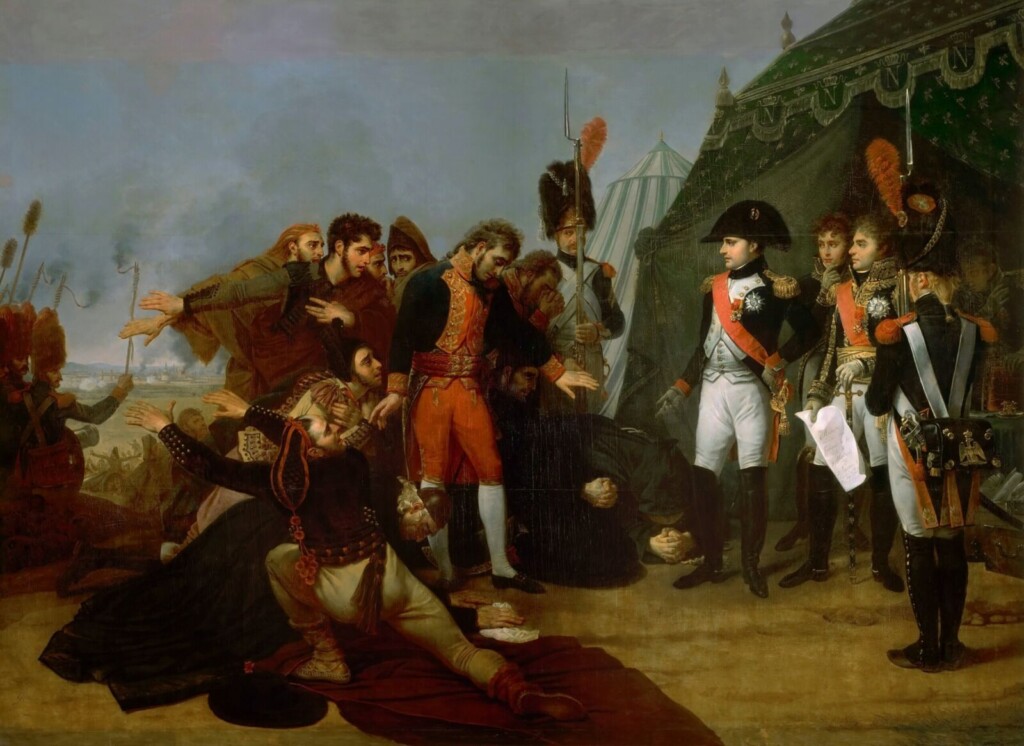
You are sitting in a room that has been designed, stone by stone, to make you doubt the contents of your own mind. The charges against you were read aloud three days ago. Since then, no one has spoken to you. The silence is not passive — it is architectural, a pressure applied with the precision of a surgeon who knows exactly where the nerve runs.
What the historical record of Inquisitorial proceedings reveals, when read against the grain of its own bureaucratic language, is that the most complete form of submission was never extracted by the rack. Torture produced confessions, but confessions are performances — they can be recanted, they leave the self intact behind the screen of pain. What the procedural structure of the tribunal achieved, in its most refined iterations, was something categorically different: it made the accused a collaborator in the construction of their own guilt. The accused was asked not to confess what they had done but to explain what they had meant, to account for the interior of their own faith. And when the interior is made the object of institutional scrutiny, the subject begins to scrutinize it alongside the institution.
Étienne de La Boétie, writing his Discours de la servitude volontaire around 1549, identified a mechanism that the Inquisition had already been operating for three centuries without naming it: that power does not sustain itself through force alone, but through the habituation of the dominated to the terms of their domination, until those terms feel like the natural shape of reality. La Boétie was writing about political tyranny, but the psychological grammar is identical. When authority presents itself as the sole legitimate interpreter of truth — including the truth of your own interiority — the subject does not merely fear disagreement. The subject begins to experience disagreement itself as a form of error, a symptom of the very corruption the institution claims to be treating.
This is where the manipulation reaches its deepest register, because it no longer requires an external agent. Several trial transcripts from the Aragonese Inquisition in the late fifteenth century document defendants who, over weeks of proceedings, began volunteering information they had not been asked for — not to please their interrogators but because the logical structure of the process had convinced them that full transparency was the only morally coherent response to the situation. They were not broken. They were converted, not to a theology but to an epistemology: the institution’s account of how truth is found and where it lives.
The philosopher Louis Althusser, in his 1970 essay on ideological state apparatuses, described the moment of interpellation — the way an institution hails the subject into existence by naming them, and the subject turns, recognizing themselves in the name. The Inquisition interpellated its accused as sinners, and a sufficient number of them turned. Not because they were weak, but because the alternative — maintaining a private self against the unanimous authority of ecclesiastical, legal, and communal consensus — required a philosophical solitude that almost no human being is equipped to sustain indefinitely. Resistance to institutional truth is not a matter of courage in the ordinary sense; it is a matter of having a stable enough counter-reality to inhabit while the official reality presses in from every wall.
What fear does, when it is sustained across weeks rather than applied in a single acute moment, is dissolve the boundary between the self that is afraid and the self that reasons. A person in prolonged institutional captivity does not merely say what the institution wants to hear — they begin to hear themselves saying it and find it coherent, find it, finally, true. The gap between coerced speech and sincere belief, which seems from the outside like an obvious and unbridgeable distance, collapses from the inside with a quietness that leaves no clear moment at which the person could have chosen otherwise, and that is precisely what makes this form of political manipulation not a historical curiosity but a permanent feature of any system willing to control not just behavior, but the faculty by which behavior is judged.
⚔️ Power, Fear, and the Machinery of Control
The Inquisition was not merely a religious institution — it was a sophisticated instrument of political terror, designed to discipline entire populations through the weaponization of fear. Understanding its mechanisms means confronting an enduring human pattern: how authority manufactures enemies to consolidate power. These related articles trace that dark thread across history, philosophy, and social thought.
Machiavelli’s The Prince: Meaning and Analysis
Machiavelli's The Prince remains one of the most lucid and unsettling manuals on the relationship between power and fear ever written. It asks whether it is better for a ruler to be loved or feared — and answers with cold pragmatism that fear, when properly managed, is the more reliable tool of governance. Reading it alongside the history of the Inquisition reveals how political theology and secular statecraft share the same brutal grammar.
GO TO THE SELECTION: Machiavelli’s The Prince: Meaning and Analysis
Orwell’s 1984: Big Brother and Total Surveillance
Orwell’s 1984 transforms the historical nightmare of institutionalized surveillance and ideological terror into a dystopian vision that feels more urgent with each passing decade. The mechanisms of Big Brother — thought control, public denunciation, the perpetual enemy — mirror with chilling precision the logic deployed by inquisitorial systems throughout history. Orwell understood that fear is not merely a byproduct of authoritarian power but its very fuel and foundation.
GO TO THE SELECTION: Orwell’s 1984: Big Brother and Total Surveillance
The Psychology of Power: History and Theory
The psychology of power explores how individuals and institutions come to wield authority in ways that corrupt, distort, and ultimately destroy human dignity. From Stanley Milgram’s obedience experiments to Philip Zimbardo’s Stanford Prison Study, science has repeatedly confirmed what the Inquisition demonstrated in practice: ordinary people become agents of terror when institutional structures sanction it. Understanding this psychology is essential to recognizing — and resisting — its recurrence in contemporary forms.
GO TO THE SELECTION: The Psychology of Power: History and Theory
Counter-Reformation: History and Cultural Consequences
The Counter-Reformation was the Catholic Church’s sweeping response to the Protestant challenge, and the Inquisition was among its sharpest instruments of cultural and political control. Far from being purely theological, this movement reshaped art, education, and social life across Europe with calculated ideological intent. Examining its cultural consequences reveals how institutions mobilize fear not only to punish dissent but to permanently remodel the imagination of entire civilizations.
GO TO THE SELECTION: Counter-Reformation: History and Cultural Consequences
Discover Independent Cinema That Dares to Tell the Truth
If these themes — power, fear, manipulation, and the courage to resist — move something in you, then independent cinema is your natural home. On Indiecinema you will find films that refuse comfortable answers and dare to look history and human nature in the face. Explore our streaming catalog and let the images do what words alone cannot.
👉 EXPLORE THE CATALOG: Watch Indie Films in Streaming
A vision curated by a filmmaker, not an algorithm
In this video I explain our vision

