
The Screen That Watches Back
You unlock your phone at 7:43 in the morning, still half-asleep, coffee cooling on the counter, and there it is: an advertisement for the exact brand of running shoes you mentioned to your partner last night while sitting on the couch, television murmuring in the background, no search engine open, no browser history to betray you. You did not type anything. You did not photograph anything. You simply spoke, in what you assumed was the private theater of your own home, and the machine heard you. You feel the chill move through you for approximately two seconds. Then you scroll past it.

That two-second chill is one of the most important emotional events of contemporary life, and almost no one treats it as such. You have learned, through sheer repetition, to metabolize surveillance the way you metabolize exhaust fumes on a city street: you register it, your body briefly protests, and then some deeper bureaucratic function in your nervous system files it under the category of things that are simply true now, immovable, environmental, not worth the energy of sustained outrage. The discomfort does not disappear. It goes underground. It becomes the faint, persistent hum beneath everything you do online, every conversation you have near a device, every photograph you take in a location your phone has already mapped and named before you thought to name it yourself.
The architecture of this arrangement is so total that describing it risks sounding paranoid, which is itself part of the architecture. When the system is omnipresent enough, the person who points to it begins to seem unstable. The discomfort becomes a personal problem, a symptom of anxiety or technophobia, rather than a rational response to an objectively documented reality. By 2023, the data broker industry in the United States alone was generating revenues estimated above two hundred and forty billion dollars annually, trading in the granular details of human behavior: where you slow your car, which aisle you pause in at the grocery store, how long you stare at a particular image before moving on. These are not hypothetical intrusions. They are the ordinary commerce of the world you wake up in.
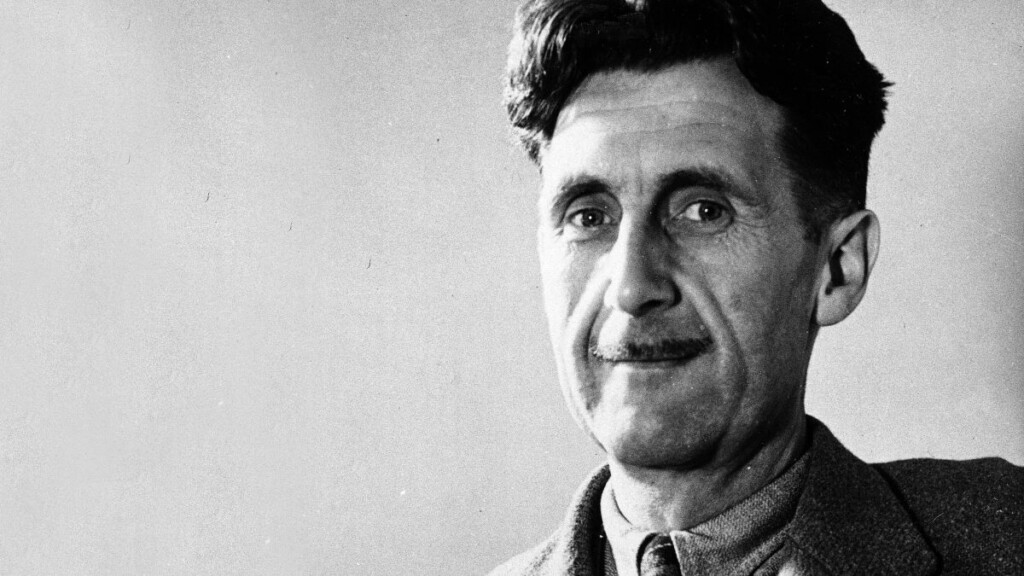
George Orwell finished writing Nineteen Eighty-Four in 1948 on the Scottish island of Jura, ill with tuberculosis, racing against his own body to complete what he understood to be the most important warning he would ever issue. The novel was published in June 1949, eight months before he died. He imagined the telescreen: a device fixed to the wall that both transmitted propaganda and received images of the citizen in their home, always on, impossible to fully switch off, watching the involuntary expressions that crossed a face in sleep, in hunger, in unguarded thought. He called the principle behind it “the mutability of the past” and “the dominance of the present,” but the machinery that enforced it was simpler and more intimate: a screen that looked back.
What Orwell could not have anticipated was that the citizens of the future would carry that screen voluntarily in their pockets, would feel its absence as anxiety, would pay monthly fees to keep it active and updated and close to their bodies at all times. He imagined coercion. He did not fully imagine desire, the way a surveillance apparatus could be made so useful, so entertaining, so woven into the fabric of social belonging, that the question of whether you consented to it would become almost grammatically strange, like asking whether you consented to language.
The chill lasts two seconds. Then you scroll. And somewhere in that gesture, in that practiced, almost elegant suppression of a perfectly reasonable alarm, lives something worth examining with far more honesty than comfort would prefer.
Children Of A Darker Dawn
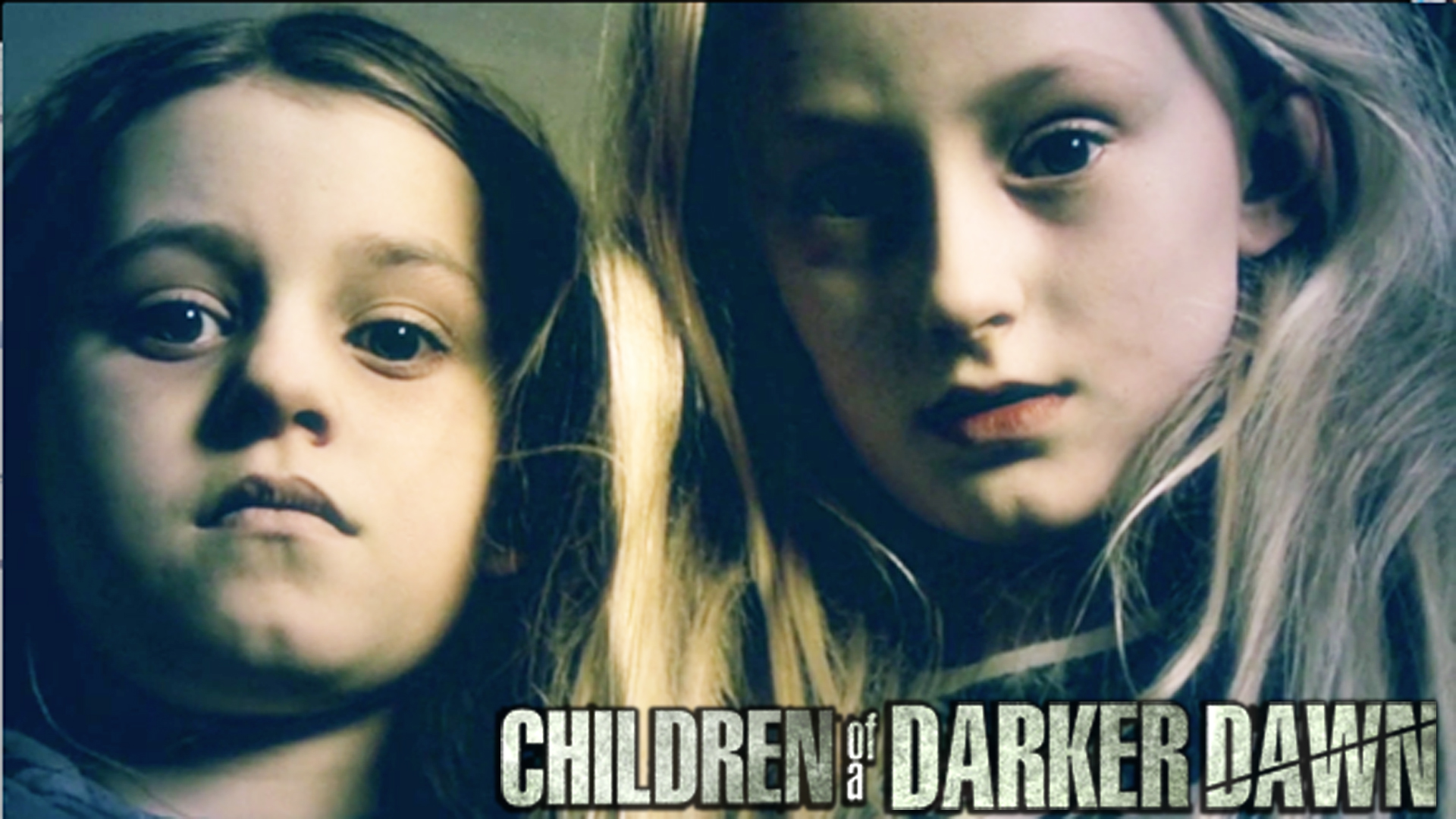
Drama, horror, sci-fi, by Jason Figgis, United States, 2012.
In a post-apocalyptic Ireland, a pandemic has wiped out the adult population, struck down by a mutant strain of flu that turns them paranoid and violent before killing them. Nine months later, the surviving children wander through abandoned buildings in search of food and shelter. Among them are Evie and her younger sister Fran, trying to survive while avoiding potentially dangerous groups of kids. Their only comfort is The Railway Children, the book their mother used to read to them. The arrival of Alice, a girl who has escaped from a gang led by her sister Kate, changes their path. After being betrayed by the gang, Evie decides to confront them, triggering a series of events that will lead to tensions and conflicts within the group.
The film, directed by Jason Figgis with limited resources but great sensitivity, is a post-apocalyptic drama that goes beyond horror, focusing on grief and the emotional fragility of its characters. The tone is somber, marked by melancholy, disturbing flashbacks, and unstable relationships. Though it recalls films like 28 Days Later, The Road, or Lord of the Flies, Children of a Darker Dawn finds its own voice through strong character development and powerful performances from its young cast.
LANGUAGE: English
SUBTITLES: Spanish, French, German, Portuguese
Orwell Wrote a Warning, Not a Fantasy
George Orwell wrote Nineteen Eighty-Four in a state of physical collapse on a remote Scottish island, coughing through the night, aware that his lungs were destroying him faster than the manuscript was progressing. He finished it in 1948. He inverted the last two digits of the year and called it a title. This is not a literary anecdote. It is a confession. The book was not set in the future. It was a portrait of the present with the serial numbers filed off, a dispatches-from-the-front document about systems Orwell had watched operate, had worked within, had felt press against the back of his own neck.
He had spent years inside the BBC during the Second World War, writing and broadcasting propaganda, navigating institutional censorship with the practiced patience of someone who has learned that the walls have ears because he helped install them. The experience corroded him. He wrote to a friend in 1944 that the atmosphere of the BBC was one of “organised lying,” and that working there had given him what he needed to understand how totalitarian culture functions not through jackboots alone but through the slow bureaucratic normalization of untruth. The Ministry of Truth in the novel, with its corridors and its memos and its particular species of cheerful compliance, was not extrapolated from Stalin’s Russia alone. It was drawn from memory, from the building he clocked into every morning.
He had also watched Stalinist purges from close range, first intellectually through the show trials of the 1930s, then viscerally in Spain, where he fought alongside the POUM militia and watched his comrades disappeared by the Soviet-backed faction, then re-described in official reports as fascist saboteurs. The men he had stood beside in trenches became, in print, enemies of the revolution. He understood this not as an aberration but as the system working exactly as designed. In his 1946 essay The Prevention of Literature, he argued that the destruction of intellectual honesty was not a side effect of totalitarianism but its primary engine. “Totalitarianism demands, in fact, the continuous alteration of the past,” he wrote, and that alteration required writers who would participate in it willingly, enthusiastically, who would not merely tolerate the lie but generate it with professional pride.
This is the machinery the novel describes. The memory hole is not a metaphor. It is a procedure Orwell had watched governments execute in real time, sometimes with the cooperation of people who considered themselves morally serious. Arthur Koestler had published Darkness at Noon in 1940, giving fictional form to the psychological mechanism by which the purged came to believe in their own guilt. Orwell read it, admired it, understood it as documentation rather than invention. The two books bracket the same historical reality from different angles.
What Orwell saw, with a clarity that still makes the reader slightly nauseated, was that surveillance does not need to be total to be effective. It needs only to be believed to be possible. He had absorbed this from his own experience of self-censorship, the internal editor that activates not when the authority figure is present but when you are alone, imagining that they might be. The telescreen in the novel cannot actually watch everyone simultaneously. The Party knows this. What matters is that no one knows when they are being watched and when they are not. The uncertainty does its own disciplinary work, more efficiently than any enforcement apparatus could.
This is the precise insight that separates Nineteen Eighty-Four from other dystopian literature of the period. It was not a horror story about what power might do. It was a clinical account of what power was already doing, grounded in the specific texture of a mid-century world where the bureaucratic and the totalitarian had discovered their deep structural compatibility, and where the most dangerous collaborators were not the true believers but the ones who simply preferred not to think about it too carefully.

Big Brother Is Not a Dictator, He Is an Architecture
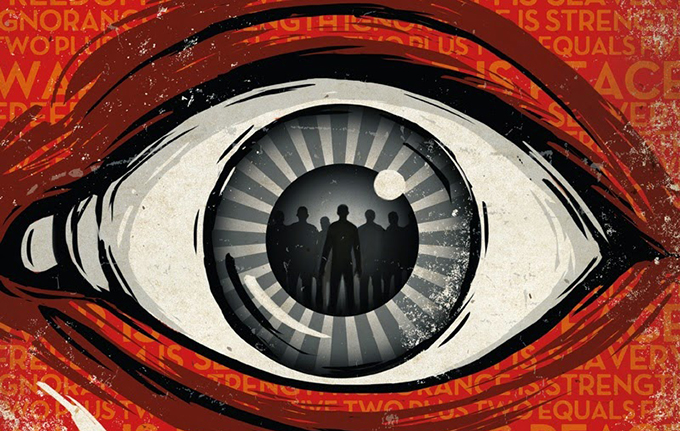
You already know how the room works before anyone explains the rules. It is white, evenly lit, with no shadows to read the time of day from, and the man sitting across from you is not angry. That is the first thing you notice. He is calm in a way that feels structural, like the walls themselves have been calibrated to a frequency of patient certainty. He does not threaten. He asks you to describe what you remember, and when you do, he nods slowly and asks you to describe it again. The second time, something shifts. Not in what happened, but in how confident you feel about what happened. By the fourth telling, you are no longer sure whether the detail you added in the third version was always there or whether you introduced it under the pressure of his stillness. He never raised his voice. He never needed to.
This is the architecture at work. Not a tyrant with his boot on a neck, not a face contorted by the pleasure of power, but a system so thoroughly internalized that coercion becomes indistinguishable from epistemology. Michel Foucault understood this with a precision that still disturbs. In Discipline and Punish, published in 1975, he traced the historical movement from sovereign power — the king who punishes the body publicly, spectacularly, as a demonstration of dominion — to disciplinary power, which operates by making the subject watch themselves. The Panopticon that Jeremy Bentham designed in 1791 was architecturally simple: a central tower surrounded by cells, each cell visible from the tower, the tower’s interior never visible from the cells. The prisoner cannot see whether the guard is watching. And so the prisoner watches himself. The genius of the design was its economy. You do not need a guard in the tower at all. You only need the prisoner to believe there might be one.
Big Brother, read this way, is not a character. He is a structural condition. The face on the posters, the eyes that follow you across the room, the voice from the telescreen — these are not expressions of a personality but projections of a principle. The question the system poses is never direct. It is always implied, embedded in the atmosphere: are you being watched right now? The uncertainty is not a flaw in the apparatus. It is the apparatus. When you cannot answer the question, you begin to police yourself, and the state has achieved something more economical and more durable than any secret police force could deliver.
What makes the scene in the white room so precise as a portrait of power is that the man conducting the conversation is not breaking the other man down. He is patiently reframing what the other man believes he experienced until the experience itself becomes unstable. This is not torture in any recognizable sense. There is no blood, no electricity, no deprivation of sleep. There is only the relentless application of a logic that suggests: your memory is unreliable, your perception is partial, your certainty is a form of arrogance. And because all of these things are partially true of any human being, the argument lands. You give ground not because you were forced to but because the architecture of the conversation was designed so that giving ground felt like clarity.
Foucault called this the production of docile bodies — not broken subjects but adjusted ones, subjects who have absorbed the geometry of surveillance so completely that they reproduce it internally without prompting. The remarkable thing about this kind of power is that it requires no conscious collaboration from above. The system does not need to believe in itself. It only needs you to. And once you do, once the tower is inside you rather than outside, the walls of the cell become remarkably difficult to see at all.
The Telescreen in Your Pocket
You open an app to distract yourself from something you cannot yet name — a low-grade unease, the kind that has not yet crystallized into thought. Within minutes the feed has shifted. The advertisements have changed register. Something in the algorithmic current has sensed the mood before you have, and now it is gently, commercially, responding to a feeling you have not yet admitted to yourself.
This is not coincidence. This is the system working exactly as designed.
Shoshana Zuboff spent years mapping the architecture beneath this experience, and what she found in “The Age of Surveillance Capitalism” published in 2019 is something Orwell intuited structurally but could not have imagined in its specific texture. The telescreen watched and transmitted. It was a mechanism of political terror, of state enforcement, of the annihilation of private space. What Zuboff describes is something simultaneously more banal and more insidious: a system that does not primarily want to punish you or control your speech, but to predict your behavior and sell that prediction as a commodity to the highest bidder. Your fear, your loneliness, your 2 a.m. restlessness — these are not threats to be suppressed. They are raw material to be harvested, refined, and monetized before you have finished feeling them.
The woman who finally understood this did so not through theory but through a specific, vertiginous moment of recognition. She had been sitting in her car outside her mother’s house, not going in yet, engine off, hands still on the wheel. She hadn’t told anyone how she felt. She hadn’t searched for anything, hadn’t typed a word. She had simply existed in that suspended state of dread that comes before a difficult conversation. By the time she walked inside and later checked her phone, the feed was already populated with content about family estrangement, about setting emotional limits, about the exhaustion of caring for difficult people. The system had read something — her location patterns, her slowed movement, the gap in her behavioral data stream, some invisible combination of signals — and had arrived at her interior before she had. It had not merely observed her. It had predicted her. And it had already sold that prediction.
This is what Zuboff means when she writes about behavioral futures markets. The product is not your attention, as the earlier digital critique claimed. The product is the certainty of your next action, the probability distribution of your next emotional state, the monetizable prediction of who you will be in the next thirty minutes. The telescreen transmitted what you did. These systems manufacture knowledge of what you will do before you do it.
When Edward Snowden released NSA documents in June 2013, the public confronted for the first time the sheer quantitative scale of what collection meant in practice. The agency had been gathering metadata on hundreds of millions of phone calls, mapping social graphs of entire populations, running programs with names like PRISM and XKeyscore that permitted analysts to search through vast rivers of private communication. The political scandal was real. But what the scandal inadvertently obscured was the way state surveillance and corporate surveillance had become structurally intertwined — the NSA was in many cases simply tapping into infrastructure that the behavioral data economy had already built. The architecture of commercial prediction and the architecture of political monitoring had grown into each other like vines around the same wall.
Orwell placed the telescreen on the wall, fixed, visible, impossible to ignore. Its menace was overt. You knew it was there. You knew it watched. The specific horror of the world it described was the impossibility of privacy even when you were certain you were alone. What has been constructed since is something the opposite in form but not in function: invisible, consensual in appearance, welcomed into the most private rooms not by force but by the slow accumulation of small conveniences.
Doublethink Is Not a Political Tool. It Is a Daily Habit
You have seen him at the meeting. He leaned forward in his chair, voice rising slightly above the others, making sure his dissatisfaction landed visibly. He chose his words with surgical precision — not cruel enough to be remembered as cruel, but sharp enough to draw blood. The colleague being discussed sat two seats away, and everyone in the room understood what was happening. The ritual required participants, and he participated fully, enthusiastically even, with the practiced ease of someone who has done this before without ever naming it for what it is.
That evening he made dinner for his children, asked them about their day, felt the warm particular pleasure of a man who considers himself decent. He was not performing decency. He genuinely felt it. The morning’s evisceration had not left a mark on his self-image because it had never been registered as evisceration. It had been feedback. Necessary honesty. Professional rigor. The architecture of his inner life had already processed the event and filed it somewhere inaccessible to conscience.
This is not hypocrisy in the classical sense. Hypocrisy requires knowing the gap between what you say and what you do, and choosing to ignore it. What this man practiced was something far more efficient. He held two contradictory beliefs — I am kind, I just destroyed someone in a room full of witnesses — without the discomfort that ought to accompany the contradiction. Leon Festinger, writing in 1957 in A Theory of Cognitive Dissonance, identified the psychological machinery behind this: when two cognitions conflict, the mind does not neutrally weigh them. It works, actively and urgently, to reduce the tension between them, almost always by distorting one of the beliefs rather than confronting the contradiction honestly. The energy of the mind is not spent on truth. It is spent on comfort.
What Orwell understood, and what makes his invention of the word doublethink so unsettling, is that this is not a feature of broken or corrupted minds. It is a feature of minds functioning exactly as they were trained to function. The citizen of Oceania who simultaneously knows that the past was altered and believes that it was not is not suffering from a pathology. He has mastered a skill. And mastery, in any domain, feels like clarity, not like confusion.
Hannah Arendt, two years before Orwell’s 1984 was published, mapped the philosophical skeleton of this process in The Origins of Totalitarianism. Her insight was devastating in its precision: totalitarian systems do not require citizens who believe the lies. They require citizens who have lost the habit of distinguishing belief from performance, truth from function. The lie does not need to be convincing. It needs to be repeated until the question of its truth becomes socially irrelevant. What matters is not whether you believe it but whether you behave as if you do — and eventually, Arendt observed, the distinction dissolves entirely.
This is where the political and the psychological become indistinguishable. Doublethink is not imposed from outside like a law or a curfew. It grows inward from the small daily decisions to not examine what you already know. The man who humiliates his colleague and goes home feeling kind has not been brainwashed. He has simply never been asked — by himself, by anyone — to sit with the discomfort of knowing both things at once. Festinger showed that humans will tolerate almost any cognitive contortion to avoid that discomfort. Arendt showed that systems of power know this and build their architecture accordingly.
The terrifying implication is not that doublethink belongs to totalitarianism. It is that totalitarianism borrows it from ordinary life, scales it, and calls it ideology. The raw material was already there, in every meeting room, every family dinner, every small erasure of what you watched yourself do this morning.
A vision curated by a filmmaker, not an algorithm
In this video I explain our vision
The Mutilation of Language

You open your mouth to complain and somewhere between the thought and the syllables, the sentence goes soft. You were going to say something sharp, something that named what actually happened, but the words that arrive are the words that were handed to you, and those words do not cut. They smooth. They process. You end up saying something like “there were some communication issues” or “the situation wasn’t optimally managed,” and the person across the desk nods, and the grievance dissolves into procedure, and you leave the room having said nothing, though you spoke for several minutes.
This is not a failure of intelligence. It is a structural condition of language under power.
Orwell understood this with a precision that most linguists of his era did not. In his 1946 essay “Politics and the English Language,” written three years before the novel, he diagnosed the mechanism with clinical anger: political language, he wrote, “is designed to make lies sound truthful and murder respectable, and to give an appearance of solidity to pure wind.” The essay is not about fiction. It is about the memos being written at that exact moment, the euphemisms already metastasizing through bureaucratic and imperial prose. Newspeak in the novel is simply the completion of a trajectory he had already mapped in reality. The Ministry of Peace wages war. The Ministry of Plenty administers hunger. These are not satirical inventions. They are extrapolations from existing practice, from the vocabulary of colonial administration, from the language of military communiqués that described civilian massacres as “pacification.”
The theoretical scaffolding behind this was being built simultaneously. Benjamin Lee Whorf, working in the 1930s and 1940s, had proposed that the language available to a speaker shapes the thoughts that speaker can form — not merely expresses them, but actively constrains them. His hypothesis, later developed in tandem with Edward Sapir, remains contested in its strong form, but its weak version is essentially undeniable: the categories a language provides determine what can be perceived as distinct, what can be remembered with precision, what can be argued with force. If a language offers you only “suboptimal outcomes” where you need “injustice,” you will find it genuinely harder to sustain the moral urgency of what you experienced. The vocabulary is not neutral packaging. It is architecture.
The man sitting across from his manager, trying to articulate what was done to him, finds himself mid-sentence reaching for a word and closing his hand around bureaucratic foam. He knows, somewhere below the words, that he was lied to, that a decision was made that damaged him and that the damage was intentional and that the people who made it knew it was intentional. He knows this the way you know something in your body before your mouth has sorted it. But the corporate lexicon that colonized his professional life over years of onboarding documents and HR communications and quarterly reviews has quietly replaced his vocabulary for wrongdoing with a vocabulary for process failures. There is no word for betrayal in that register. There is only misalignment. There is no word for cruelty. There is only a challenging dynamic.
George Lakoff spent decades demonstrating how conceptual framing does not just describe reality but constitutes the terms on which reality can be contested. His 2004 work “Don’t Think of an Elephant” showed how political language pre-loads its conclusions, makes certain arguments structurally available and others structurally incoherent before a single substantive debate has begun. This is Newspeak with a marketing budget. The reduction of vocabulary is not a dystopian fantasy. It is measurable, documented, ongoing — corporate communication research consistently shows the expansion of nominalization, the replacement of active verbs of agency with passive constructions of vague causality, the systematic erasure of the subject who acted.
And once the subject disappears from the sentence, accountability disappears with them. The damage was sustained. Errors were made. Lessons have been learned.
Room 101 Is Already Furnished
There is a moment — and you will recognize it if you are honest with yourself — when you can no longer locate the exact point where you stopped resisting and started agreeing. Not performing agreement. Not strategically nodding while privately dissenting. Actually agreeing. The shift happens beneath the threshold of conscious decision, which is precisely what makes it so annihilating when you finally notice it, if you ever do.
A man sits in a room for the fourteenth consecutive hour of questioning. He has already signed documents describing events in terms he initially found laughable. He has already repeated phrases back to his interrogators that felt, at first, like wearing someone else’s clothes. But somewhere around the third or fourth week of sustained institutional pressure — the sleep disruption, the social isolation, the relentless reframing of everything he believed he remembered — he begins to hear himself speak those phrases and feel something he can only describe as recognition. The words no longer feel borrowed. He cannot find the seam. He searches for it the way you search for the edge of a bandage in the dark, fingers pressing the skin looking for where the adhesion ends and flesh begins, and there is nothing. Just continuous surface.
This is what Primo Levi called the grey zone, elaborated with terrible precision in The Drowned and the Saved in 1986, one of the last texts he completed before his death. Levi was not writing about moral relativism or the comfortable liberal thesis that everyone is capable of everything under sufficient pressure. He was writing about something more specific and more devastating: the systematic destruction of the boundary between perpetrator and victim through institutional design. The grey zone is the space where the machinery of domination recruits its own targets as participants, not through crude coercion alone, but through the incremental erosion of the categories by which a person understands themselves as separate from what is being done to them. Levi knew that the most efficient form of control is not the one that breaks you. It is the one that makes you unrecognizable to yourself.
Philip Zimbardo’s findings from 1971 confirmed the mechanism from a different angle, though Zimbardo himself took decades to fully articulate what his experiment had revealed: that ordinary people assigned institutional roles do not merely perform those roles but metabolize them. Guards began dreaming as guards. Prisoners began reasoning as prisoners. Within six days, the scaffolding of identity had been replaced by the scaffolding of function. What Zimbardo called situational forces, he later acknowledged, is perhaps too neutral a term for what is actually a form of psychological colonization.
In the room with the rats, the thing that breaks Winston Smith is not pain. It is the discovery of his own threshold. The mask tears not because force was applied to his face but because he learned, in one unguarded moment of absolute terror, that he would sacrifice the one thing he believed constituted him. And the horror is not the act of betrayal. The horror is what follows: the relief. The sense of the weight lifting. The body settling into the new shape as if it had always been this shape. This is what Room 101 actually contains — not your worst fear in the external sense, but the precise depth at which you are no longer the author of your own capitulation. It has already become your will.
The question this raises is not whether you would resist under equivalent conditions. That question is almost certainly the wrong one, and asking it is a way of maintaining a comfortable distance. The question is whether the conditions are as exceptional as you believe them to be, or whether the sustained low-grade institutional pressures of ordinary professional and social life operate on the same architecture, more slowly, toward the same erasure, and whether the absence of a dramatic Room 101 makes the process easier to deny, or simply harder to find.
We Are Not Winston. We Are the System
The most unsettling moment is not when you realize someone is watching you. It is when you realize you have been watching yourself for so long that you can no longer locate where the surveillance ends and where you begin.
Think about the last time you edited something before posting it — not for clarity, but for reception. The slight adjustment of tone, the removed sentence that felt too raw, the photo rejected because the expression seemed too vulnerable, too strange, too true. Nobody asked you to do that. No authority threatened you. The filter was already inside, installed so quietly and so early that it operates now like breathing, like blinking, like the automatic correction of posture when you walk into a room full of people you want to impress. This is not paranoia. This is the ordinary texture of contemporary life, and recognizing it should produce something closer to vertigo than to comfort.
Hannah Arendt, reporting on the trial of Adolf Eichmann in Jerusalem in 1961, arrived at a conclusion that scandalized almost everyone who encountered it: that the most monstrous outcomes of organized power do not require monstrous individuals. They require ordinary ones. People who fill out forms, who follow procedures, who prefer not to think too carefully about what the procedures produce. The banality of evil was not Arendt’s way of minimizing atrocity — it was her way of making it more terrifying, because it distributed responsibility across the entire architecture of compliance. The horror was not the monster at the top. The horror was the millions who made themselves useful, who internalized the logic of the system and reproduced it without coercion, almost with relief.
Byung-Chul Han, writing in The Transparency Society in 2012, extended this diagnosis into the present with a precision that is almost clinical in its coldness. The surveillance state of the twentieth century, he argued, operated through external coercion — the watchman, the file, the informer. The surveillance culture of the twenty-first century operates through seduction. We have not been forced into visibility. We have been convinced that visibility is virtue, that disclosure is authenticity, that to withhold anything is to be suspicious, closed, perhaps dangerous. The transparent society does not need a Big Brother because it has produced millions of little brothers, each one watching, each one reporting, each one performing their own openness as proof of innocence. The panopticon, as Foucault understood it — drawing on Jeremy Bentham‘s 1791 design — required the prisoner to assume they might be watched at any moment. Han’s contribution is to notice that we no longer need the assumption. We have made the watching constant, voluntary, and pleasurable.
There was a man once, sitting in a room that had become both his prison and the only world he knew, who reached the moment of complete dissolution — not the moment when the system broke him, but the moment when he discovered, with something resembling relief, that he had broken himself first. The system had only formalized what he had already performed internally for years: the self-accusation, the preemptive surrender, the quiet erasure of thoughts before they could become dangerous. The room did not create his compliance. It confirmed it.
You are not Winston Smith. Winston Smith was the last man in Europe who still experienced his own interiority as something worth defending. The tragedy of that position is not that he lost. It is that the category he was defending — the private self, the unwitnessed thought, the unperformed desire — is the very category that most people today have already quietly surrendered, not under torture, not under threat, but in the ordinary course of wanting to be seen, wanting to be legible, wanting to belong to something larger than the unbearable privacy of their own minds.
The question is not whether the system watches you. The question is how long ago you started doing its work for it, and whether you remember what you were before you did.
🔍 Control, Power, and the Watched Self
Orwell’s 1984 is not merely a dystopian novel — it is a philosophical diagnosis of power, visibility, and the annihilation of the individual. The themes of total surveillance, ideological control, and political domination resonate deeply across history and theory. These related articles trace the intellectual genealogy of Big Brother’s world.
The Surveillance Society: History and Theory
The concept of the surveillance society did not begin with Orwell, but Orwell gave it its most terrifying face. This article explores how surveillance evolved from disciplinary institutions to digital panopticons, drawing on thinkers from Bentham to Foucault. Understanding this history is essential to grasping why 1984 remains a living warning rather than a historical curiosity.
GO TO THE SELECTION: The Surveillance Society: History and Theory
The Psychology of Power: History and Theory
Big Brother is not simply a dictator — he is the embodiment of a psychological architecture designed to make power feel eternal and inevitable. This article examines how power operates on the human mind, from obedience experiments to the sociology of domination. The psychology behind O’Brien’s manipulation of Winston Smith finds its theoretical roots here.
GO TO THE SELECTION: The Psychology of Power: History and Theory
Banal Evil and Radical Evil: Kant and Arendt
Hannah Arendt‘s concept of the banality of evil illuminates one of 1984’s most disturbing insights: that totalitarian horror is maintained not by monsters alone, but by ordinary people performing ordinary functions. This article confronts the philosophical distinction between radical evil and its bureaucratic, mundane counterpart. Read alongside Orwell, it reveals how systems of total control hollow out moral agency from within.
GO TO THE SELECTION: Banal Evil and Radical Evil: Kant and Arendt
Hobbes’s Leviathan: Meaning and Analysis
Hobbes imagined a sovereign so absolute that it could demand total submission in exchange for security — a bargain eerily echoed in the Party’s iron contract with Oceania’s citizens. This analysis of Leviathan unpacks the philosophical foundations of sovereign power and the conditions under which freedom is surrendered to the state. Orwell’s 1984 can be read as the nightmare version of the Hobbesian social contract taken to its logical extreme.
GO TO THE SELECTION: Hobbes’s Leviathan: Meaning and Analysis
Watch Dystopia Come to Life on Indiecinema
If Orwell’s vision of control and resistance moves you, Indiecinema streaming is where cinema answers back. Discover independent films that dare to question power, surveillance, and the meaning of freedom — stories that no algorithm would recommend. Join Indiecinema and watch the films that think for themselves.
👉 EXPLORE THE CATALOG: Watch Indie Films in Streaming
A vision curated by a filmmaker, not an algorithm
In this video I explain our vision

