
The Ordinary Architecture of Collapse
You are at a dinner table with people you both know well, and you are performing a version of your relationship that is approximately true. You finish each other’s sentences. You laugh at the right moments. Your hands move in proximity to each other without quite touching, which reads, from the outside, as ease. You have been doing this for years and you are very good at it, and the terrifying part is that you no longer notice you are doing it at all.

Ingmar Bergman understood this specific mechanics of coupledom before most clinicians had language for it. When he wrote and directed Scenes from a Marriage in 1973 — first as a six-part Swedish television series, then compressed into a theatrical film — he was not interested in the dramatic rupture, the affair discovered, the suitcase thrown down the stairs. He was interested in the geology beneath all of that. The affair, the rupture, the screaming — those are surface events, seismic tremors that register only after decades of subterranean pressure have already reshaped the bedrock. What Bergman filmed was the pressure itself.
Johan and Marianne are, at the opening of the series, exactly what society has asked them to become. He is a professor of psychophysiology at the University of Stockholm. She is a family lawyer who handles divorces with professional efficiency, which is Bergman’s first quiet joke at the audience’s expense — she is an expert in the legal architecture of marital collapse, and she cannot see the walls of her own house shifting. They are interviewed together by a magazine journalist in the first episode, and they describe their marriage the way people describe a vacation home: with warmth, with pride, with a specificity that is meant to signal authenticity but actually signals rehearsal. Marianne says they are honest with each other. She says this with complete sincerity.
The sociologist Erving Goffman, in his 1959 work The Presentation of Self in Everyday Life, described social life as a continuous theatrical performance, with individuals managing what he called front stage and back stage behavior. The marriage in public is front stage — composed, coherent, signaling the right values to the right audience. But Goffman’s framework, brilliant as it was, assumed the back stage held some truer, more authentic self. What Bergman dramatizes is the more disturbing possibility: that for some couples, there is no back stage anymore. The performance has colonized the entire house. When the guests leave and the door closes, there is not a revelation — there is only the echo of what was just performed, and two people who no longer know what they would say to each other if performance were not an option.
Psychologists studying what John Gottman documented across decades of research at the University of Washington found that the single most dangerous condition in a long-term relationship is not conflict but what he termed emotional flooding followed by stonewalling — the withdrawal into functional silence as a defense against feelings too large to process. Couples in this state can maintain the external architecture of marriage indefinitely. They share meals, coordinate logistics, attend social events, and experience themselves as fine. Gottman’s laboratory data, drawn from hundreds of couples observed between the 1970s and 1990s, showed that this pattern predicted divorce with an accuracy of over ninety percent — not because the silence was hostile, but precisely because it was not. It was comfortable. It had become the relationship’s actual climate.
Bergman shoots his early domestic scenes in long, uncut takes, the camera patient and unflinching in the way that surveillance is patient. Nothing is scored for tragedy. The apartment is well-furnished. The light is good. What accumulates is a sensation that something is being watched very carefully precisely because it is on the verge of becoming invisible.
Marriage as a Modern Invention Mistaken for a Natural Law
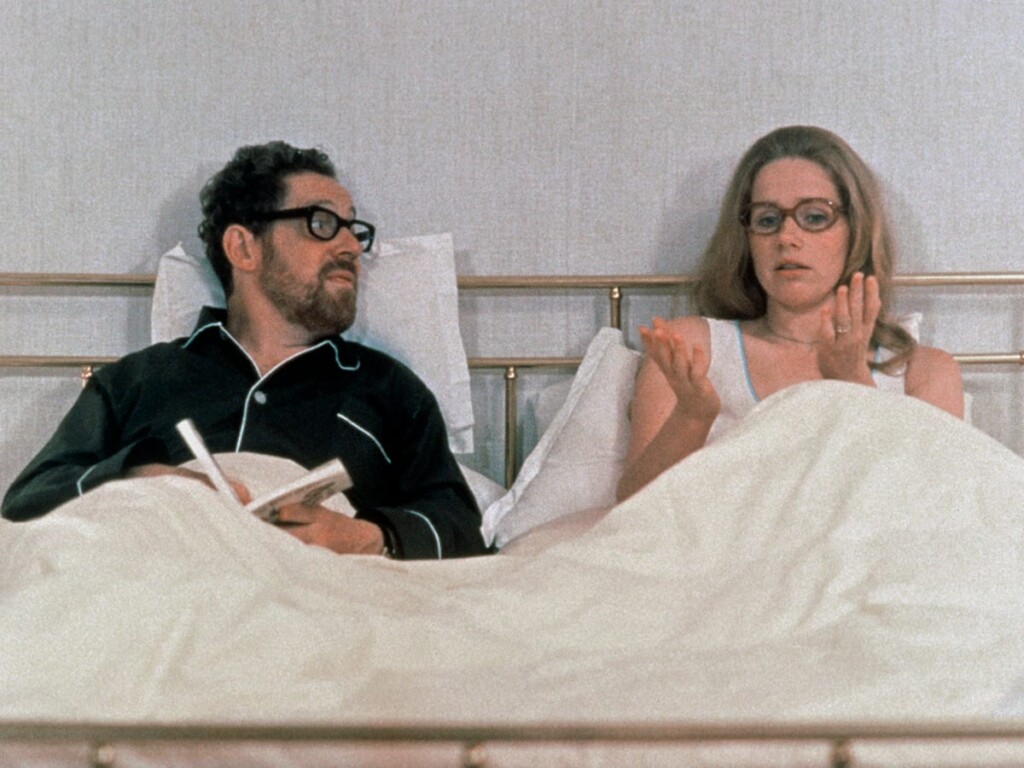
You probably learned, somewhere between your parents’ anniversary dinners and your first viewing of a romantic comedy, that marriage is the natural destination of love — that the two things rhyme, that they belong together the way a key belongs to a lock. That feeling is not ancient. It is, in historical terms, barely older than the steam engine.
Lawrence Stone spent years excavating English domestic life across four centuries, and what he found in The Family, Sex and Marriage in England 1500-1800, published in 1977, was not a timeless institution but a series of radically incompatible projects wearing the same name. The pre-modern household was an economic unit, a labor cell, a mechanism for transmitting property and managing mortality in a world where half of all children died before adolescence. Emotional intimacy between spouses was neither expected nor particularly desired — it was, in fact, mildly suspicious, a sign of dangerous attachment that could distort a man’s obligations to his wider kin network and community. The idea that you might marry someone because you felt incomplete without them would have read, in 1650, as a symptom of mental instability rather than a social ideal.
What the Enlightenment introduced, and what the bourgeoisie of the late eighteenth and early nineteenth century transformed into doctrine, was what Stone called “affective individualism” — the slow, decisive reorientation of emotional life around the private self, its inner needs, its hunger for recognition. Marriage became the theater in which this new interiority was supposed to find its fullest expression. Two people would choose each other freely, would know each other completely, would be to one another what no feudal arrangement, no arranged contract, no economic necessity had ever asked spouses to be: the primary witness to each other’s existence. The weight this placed on a single relationship was unprecedented in human history, and no one stopped to ask whether the architecture was sound.
By the mid-twentieth century, the companionate marriage had become the central load-bearing fiction of Western self-understanding — the proof that modernity had made emotional life more just, more authentic, more fully human than anything that came before. Then the numbers moved. Between 1960 and 1980, divorce rates across Western Europe and North America doubled, in some countries tripled. In the United States, the rate per thousand married women rose from 9.2 in 1960 to 22.6 by 1980. Sweden, where Bergman made his television cycle in 1973, was already among the most statistically candid societies on earth about what was happening inside its households. The juridical and social barriers that had kept unhappy marriages formally intact were dissolving, and what they exposed beneath was not a temporary crisis of values but a structural problem: the emotional contract had always demanded more than any two people could reliably deliver across decades, and the postwar economic expansion had, for the first time, given enough individuals — enough women, specifically — the material independence to walk away from what was not working.
Bergman’s six episodes arrived in Swedish living rooms at the precise hinge of this rupture, not as a diagnosis delivered from outside but as something more unsettling — a mirror held up inside the institution itself, at the moment the institution was failing to recognize its own face. Johan and Marianne are not victims of a bad marriage. They are the marriage that was supposed to work, the marriage that checked every box the culture had told them to check, and the series’ real violence is the slowness with which it makes that visible.

What Intimacy Actually Destroys
You watch two people in a hotel lobby argue over a double-booked reservation. Neither raises their voice. Each concedes small points with grace, each listens while the other speaks, each deploys the soft machinery of social courtesy — the tilted head, the half-smile that signals I am not your enemy — because neither of them has yet decided what the other person is. They are still auditioning for each other’s goodwill, and that audition is producing something that looks, from the outside, almost exactly like respect.
Erving Goffman spent the better part of his career mapping the theatrical scaffolding beneath ordinary social life, and the central argument of The Presentation of Self in Everyday Life, published in 1959, is both obvious and devastating once you actually let it land: human beings are always performing, always managing the impressions they produce, and the stage on which this performance occurs is maintained with enormous, largely unconscious labor. His distinction between front-stage behavior — the curated self presented to audiences — and back-stage behavior — the unguarded self that only emerges when the audience has left — is not a description of inauthenticity. It is a description of how civilization actually holds together. The performance is not fake. It is the mechanism by which two people can share space without becoming unbearable to each other.
What happens inside a long marriage is that the back-stage expands until it swallows almost everything. The couple stops performing for each other not because they have achieved some deeper transparency, but because they have collectively decided the performance is no longer necessary. And this feels, at first, like intimacy. It registers as arrival — as the finally of finally being known. But Goffman’s framework suggests something more unsettling: that what has actually happened is the dismantling of the very structure that made the other person legible, bearable, and interesting. Without the front-stage, there is no curated signal, no edited version, no offered meaning. There is only the raw and unprocessed material of another human being’s interiority, and raw material is not the same as knowledge. It is noise.
The weaponization follows from this logic almost mechanically. Because intimacy grants access to the back-stage, it also grants access to the inventory of vulnerabilities, fears, and failures that a person would never volunteer to a stranger. These are not shared in moments of cruelty — they emerge gradually, trustingly, across thousands of ordinary evenings. They are offered as gifts. And they remain gifts, inert and safe, for exactly as long as the relationship sustains a current of goodwill. The moment that current breaks, the inventory doesn’t disappear. It simply changes ownership. What was shared in tenderness becomes available for use in anger, and the precision of its use is exactly proportional to how deeply it was once known. A stranger can wound you only generally. A spouse can wound you along the exact grain of your specific damage.
This is not a pathology of bad marriages. It is a structural feature of what closeness actually does to information. Sociologist Georg Simmel, writing about secrecy and disclosure in his 1906 essay on the sociology of secrecy, argued that what is concealed between people is never simply private — it is relational currency, and its value shifts entirely depending on the dynamic in which it circulates. What passes between intimates is not neutral data. It is loaded, contextual, and irrevocably altered by the act of having been given. You cannot un-disclose. The couple in any long marriage is therefore not two people who know each other deeply — they are two people who are permanently in possession of each other’s most exposed material, with no guarantee about the conditions under which that material might eventually be deployed.
The Libidinal Economy of Resentment

You have been married long enough to recognize, in the precise pitch of your spouse’s voice when they say your name across a dinner table, not irritation exactly, but something older and more architectural — a structure that was built before either of you understood what you were constructing.
Melanie Klein, working in the 1940s and publishing what would become the theoretical backbone of British object relations in “Envy and Gratitude” in 1957, identified a mechanism she called projective identification: the psychic process by which a person evacuates intolerable aspects of the self into another person, then relates to that person as though those aspects genuinely belong to them. This is not metaphor. It is the actual grammar of sustained intimacy. The partner who is chronically accused of coldness may not be cold at all — they may be the designated container for coldness the accuser cannot afford to locate in themselves. Over years, the container begins to believe in what it holds. The accusation reshapes the accused. What began as a misattribution becomes a shared reality, a co-authored fiction both parties eventually stop being able to distinguish from the truth.
The violence of this is not dramatic. It does not require raised voices or slammed doors. It requires only duration and repetition, the slow sediment of small moments in which one person’s unacknowledged anxiety becomes another person’s defining characteristic. Johan does not understand that what he experiences as Marianne’s emotional dependency is partly a quality he has placed there, a need he projected because his own need was professionally and socially inadmissible. He is a man in a culture that rewards male autonomy as a moral virtue, and so his longing becomes her pathology.
Simone de Beauvoir, in “The Second Sex” published in 1949, made a structural argument that cuts deeper than any individual relationship: the institution of marriage, as historically designed, does not just limit women’s external freedoms — it reroutes their intellectual and erotic energy inward, back toward the couple itself, making the relationship the primary site where a woman’s capacity for self-definition gets spent. She becomes the guardian of the emotional interior while he remains free to define himself against the world beyond it. The asymmetry is not incidental. It is the load-bearing wall of the arrangement. What looks like a woman’s greater emotional investment is often the predictable result of having had all other investments systematically foreclosed.
This is why resentment in long partnerships so often flows in contradictory directions simultaneously — she resents the smallness of the world she has been assigned, he resents her resentment because it indicts him, and neither can name the source without implicating the entire structure that sustains them both. The couple becomes the site not of mutual recognition, as its romantic mythology promises, but of mutual distortion — two people who have spent so long serving as screens for each other’s disowned material that direct perception has become structurally impossible. What they see across the table is not the other person. It is the accumulated residue of everything they needed the other person to be.
The erotic economy of this deserves particular attention. Desire does not survive being managed. When one partner’s intellectual and sexual aliveness has been administratively contained — channeled into domesticity, social performance, the maintenance of appearances — what resurfaces is not desire but its ghost, and the ghost is angry. The woman who finds herself, at forty-three, having an affair that surprises even her is not simply escaping a bad marriage. She is reclaiming an energy that was never supposed to go anywhere it couldn’t be supervised, and the transgression is not incidental to the pleasure — it is inseparable from it, because the pleasure was always partly the pleasure of existing outside the frame that was built around her.
The Violence of Staying and the Myth of Departure
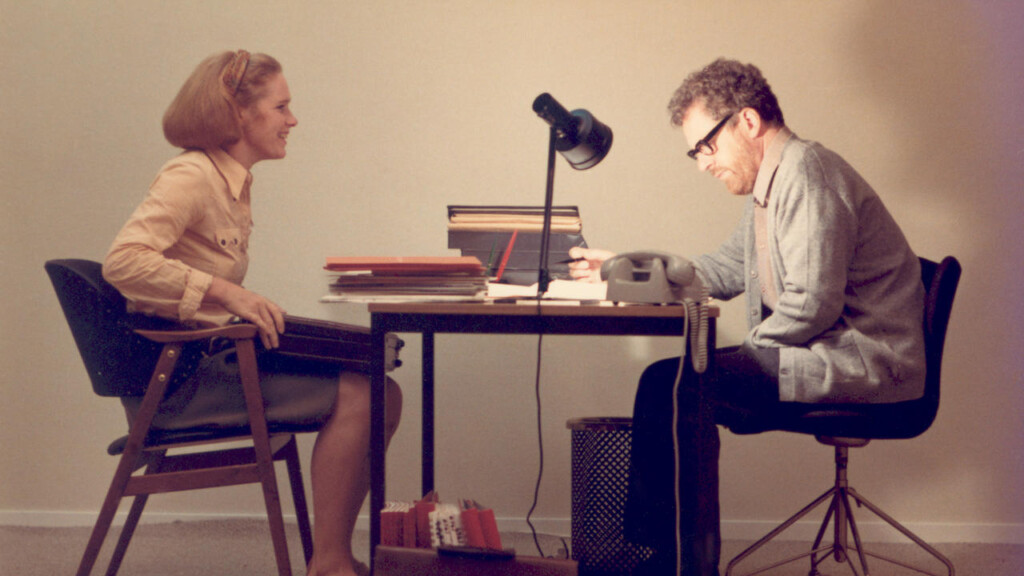
You pack a bag one Tuesday morning while your partner is at work, and the act feels like breathing for the first time in years. The clarity is chemical, almost physical. You stand in the hallway with your coat on and experience something you will later describe to a therapist as freedom.
That feeling is real. Their interpretation is not.
Longitudinal research tracking divorced individuals across fifteen to twenty years — including the landmark studies assembled by E. Mavis Hetherington in her 2002 work “For Better or For Worse” — consistently shows that roughly a third of people who leave marriages report substantially lower psychological wellbeing a decade later than they reported during the marriage itself, even marriages they described at the time as intolerable. The departure delivered something, certainly. It did not deliver the self they were expecting to find on the other side of the door. That self, it turned out, had not been imprisoned by the relationship. It had been produced by it, shaped against it, visible only through the friction of sustained proximity to another person who refused to see you the way you preferred to see yourself.
Adam Phillips understood something crucial about this when he wrote that boredom in a child is not an absence of stimulation but a search for a desire not yet known — a threshold state in which the self hovers at the edge of wanting without knowing what it wants. The adults who leave marriages are often doing something structurally identical: they have named their suffering as the marriage when what they are actually experiencing is the unbearable suspense of a self mid-formation. The partner becomes the explanation for a restlessness that preceded them and will survive them. Divorce, in this reading, is sometimes less a solution than a very expensive way of changing the subject.
What makes this especially difficult to see is that Western culture has spent roughly two centuries building a mythology of departure as moral clarity. The nineteenth-century novel standardized it: you leave the suffocating house, you step into the open road, you become. The political languages of emancipation borrowed the same grammar. To stay began to connote weakness, compromise, the failure of self-respect. Separation became aesthetically coded as awakening, and marriage — particularly long marriage, particularly difficult marriage — began to look like the place where the interesting part of a person goes to die. This is a story cultures tell about themselves, not a fact about human psychology.
The cruelty built into long-term intimacy is precisely this: the other person accumulates you. They store versions of you that you have abandoned, outgrown, or actively tried to destroy. They remember who you were when you were frightened in ways you no longer admit. They have watched you fail at things you now pretend you never attempted. You cannot perform the edited version of yourself convincingly in front of someone who was in the room for the original. This is not a pathology of bad relationships. It is the basic phenomenology of being known, and it is almost physically unbearable, which is why so many people flee it wearing the language of personal growth.
There is a genuine question buried under all of this, and it does not resolve. Whether the hunger to be truly known by another person — not managed, not impressed, not seduced, but actually seen at the level where you are least coherent — represents the deepest form of human courage, or whether it is a demand so total that placing it on a single relationship is its own kind of violence, committed quietly over years against both the person asking and the person being asked to hold that weight.
A vision curated by a filmmaker, not an algorithm
In this video I explain our vision
💑 When Love Becomes a Labyrinth of the Soul
Bergman’s Scenes from a Marriage dissects the intimate battlefield of couplehood with surgical honesty, revealing how love, resentment, desire, and dependency intertwine in ways that defy easy resolution. To fully inhabit the world of this masterpiece, one must explore the philosophical, psychological, and literary currents that flow beneath its surface — from the architecture of desire to the prison of the self.
Love in Philosophy: From Plato to Fromm
From Plato’s notion of the soul searching for its other half to Fromm’s radical distinction between having and being in love, philosophy has long grappled with what it means to truly love another person. Bergman’s couple in crisis embodies this tension perfectly, caught between possessive attachment and the terrifying freedom of genuine encounter. Understanding these philosophical frameworks illuminates why Johan and Marianne cannot simply choose to love each other well.
GO TO THE SELECTION: Love in Philosophy: From Plato to Fromm
Fromm’s The Art of Loving: Analysis
Erich Fromm’s The Art of Loving argues that love is not a feeling to be fallen into but a discipline to be practiced, requiring self-knowledge, courage, and the willingness to encounter the other as a truly separate being. This insight strikes at the heart of Bergman’s drama, where both partners repeatedly confuse need with love and control with intimacy. Reading Fromm alongside Bergman transforms the film from a portrait of failure into a meditation on the near-impossible demands of authentic union.
GO TO THE SELECTION: Fromm’s The Art of Loving: Analysis
Masculinity and the Inability to Express Emotions
Bergman’s male protagonist, Johan, exemplifies a particular form of masculine emotional paralysis — the inability to name, share, or even recognize the inner life that drives his choices and his flight. This culturally conditioned silence around men’s emotional worlds is not merely a personal failing but a structural wound passed down through generations of learned stoicism. Bergman stages this incapacity not as weakness but as tragedy, making Johan one of cinema’s most honest portraits of the emotionally armored man.
GO TO THE SELECTION: Masculinity and the Inability to Express Emotions
Gaslighting: Psychology and Culture
Gaslighting — the subtle manipulation that makes one partner question their own perception of reality — is one of the most insidious dynamics that can corrode a long-term relationship, and Bergman traces its mechanisms with almost clinical precision. The film shows how power shifts within a couple can weaponize intimacy itself, turning shared memory into a tool of domination. Understanding the psychology behind gaslighting helps viewers decode the more disturbing layers of Marianne and Johan’s prolonged entanglement.
GO TO THE SELECTION: Gaslighting: Psychology and Culture
Discover the Cinema That Asks the Hard Questions
If Bergman’s unflinching gaze into the heart of human relationships moves you, Indiecinema is the streaming platform where this spirit lives on — a curated space dedicated to independent and auteur cinema that refuses easy answers and trusts the intelligence of its audience. Explore films that, like Scenes from a Marriage, dare to sit inside discomfort and find there something true.
👉 EXPLORE THE CATALOG: Watch Indie Films in Streaming
A vision curated by a filmmaker, not an algorithm
In this video I explain our vision

