
The Illusion of Falling
You remember the exact moment it happened — not because it was beautiful, but because something in you stopped working the way it always had. You were mid-sentence, or maybe mid-silence, and the room rearranged itself around another person’s presence. The walls held differently. Your own name, if someone had said it just then, would have sounded foreign. This is what people call falling, and they call it that with a kind of reverence, as though the loss of ground beneath your feet were the truest thing that has ever happened to you. You did not question it. Nobody does. The vertigo itself felt like evidence.

What Erich Fromm understood, writing in 1956 in a slender and quietly devastating book, was that this sensation — the one you have been trained since adolescence to recognize as love — is among the most sophisticated traps a human being can walk into with eyes wide open. The Art of Loving begins not with a celebration but with a diagnosis: most people do not believe love requires effort because they have confused the intensity of a beginning with the substance of a practice. The initial collapse of ego boundaries, that dizzying moment when two separate selves suddenly feel permeable to each other, is real enough as an experience. But Fromm’s argument cuts beneath the experience to its structure, and what he finds there is not romance — it is a problem of existence that most people would rather aestheticize than solve.
His provocation lands harder the longer you sit with it. Love, he insists, is not a noun describing something you find or receive or fall into. It is a verb describing something you do, repeatedly, imperfectly, against the grain of your own conditioning. It is a capacity, not a sensation, and like any capacity it either develops through disciplined practice or it atrophies. The tragedy he identifies is not that love fails, but that most people never attempt it — they attempt its simulation, which is far more comfortable because it requires nothing except the right circumstances and a temporary suspension of loneliness.
Western culture in the twentieth century had constructed an entire mythology to protect people from this realization. The mythology runs something like this: there is one person, somewhere, who will fit the particular shape of your need; the encounter with this person will feel unmistakable; the feeling itself will carry you forward. Fromm watched a whole civilization organize its emotional life around this narrative and produce, systematically, people who were expert at searching and helpless at sustaining. By the mid-1950s, American popular culture had turned romantic love into its central secular religion, with Hollywood as its cathedral and the wedding as its eucharist — after which, curiously, the doctrine had nothing further to say.
What the doctrine could not accommodate was duration. It had no theology of the ordinary Tuesday, no liturgy for the moment when familiarity has dissolved the initial vertigo and what remains is just another person with their own darkness and their own noise. Fromm saw this not as love’s failure but as its actual beginning — the point at which the real work either starts or doesn’t. Most people, confronted with that threshold, conclude they must have chosen wrong, and go looking again for the sensation that preceded it. The search restarts. The pattern repeats. The industry built around both the search and its consolations continues to expand.
He was not interested in being cynical about this. Cynicism would have been easier and far less demanding. Instead he made the more unsettling claim: that love in its genuine form is one of the hardest disciplines a human being can undertake, comparable in its rigor to the mastery of any serious art, and that the reason so few people practice it has less to do with circumstance than with the fact that its demands go directly against the ways a modern self has been taught to protect itself.
A Better Life
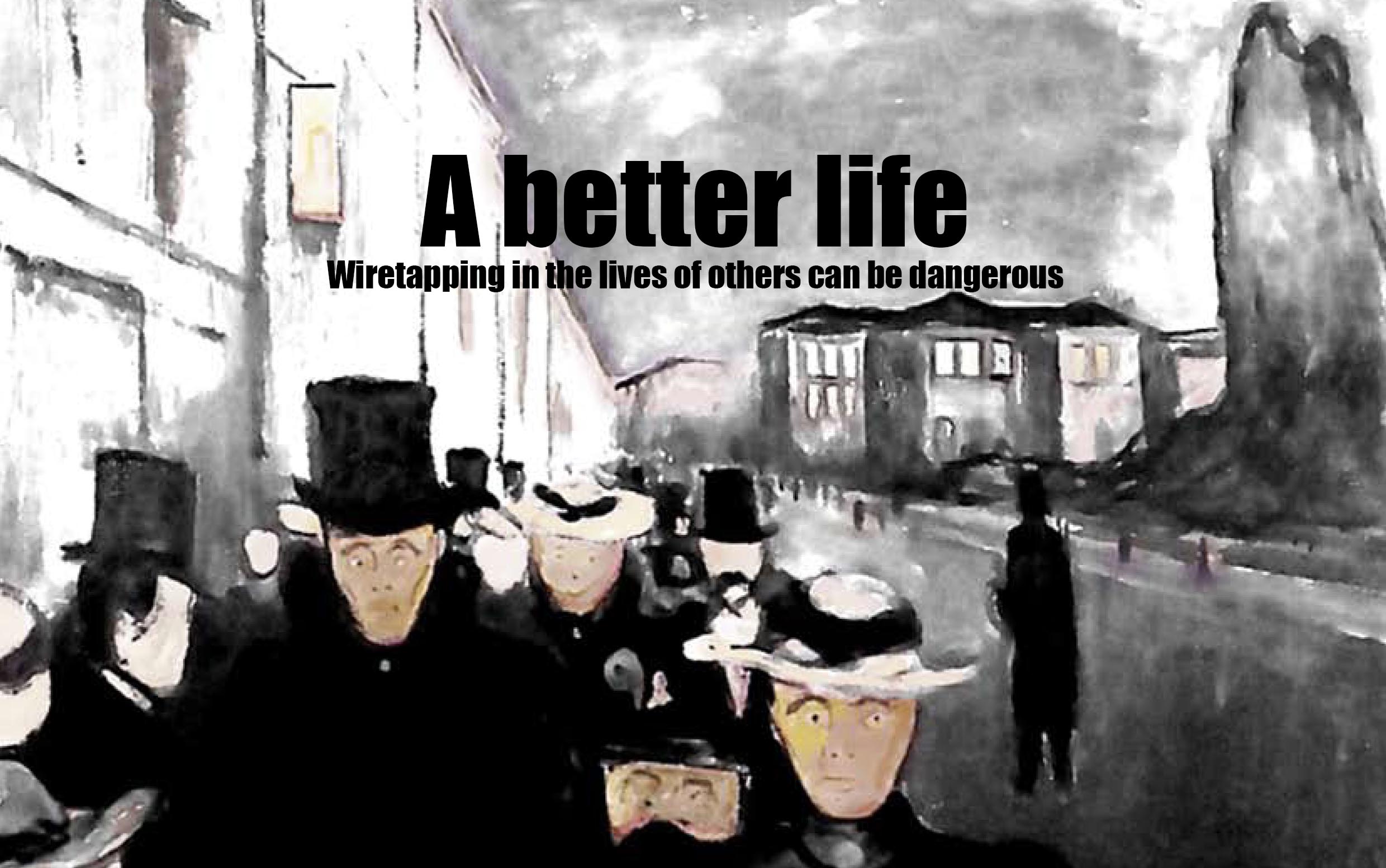
Drama, thriller, by Fabio Del Greco, Italy, 2007.
Rome: Andrea Casadei is a young investigator specializing in audio wiretapping who conducts investigations commissioned by husbands betrayed by their wives, or by parents worried about what their children are doing outside the home. But what interests him most is understanding the human soul, listening to casual conversations in the streets, knowing what people think. He often meets in Piazza Navona with his friend Gigi, a frustrated street artist obsessed with success at all costs, with whom he shares a passion for wiretapping. Shocked by the mystery of the disappearance of Ciccio Simpatia, another street artist common friend, Andrea decides to abandon the commissioned works to seek a better life and reflect on his own and others' existence. He will meet the actress Marina and with a bug he will slowly enter her life until he discovers her most unthinkable secrets. The film deals with an important theme of contemporary Western society: the lack of love. The mysterious and tormented figure of Marina is reflected in a gloomy and soulless Rome.
Director Fabio Del Greco declared about his film: "Perhaps this film is a reflection on the art of observing, of listening, in short, of what one does when one leaves the real world to tell about it. Perhaps he wants to talk about the subtle relationship between the mirages of success touted by today's society, power and the most authentic human relationships.A 'dark cloud' hangs over the city: it is engulfing everyone in a sort of indistinct, uniform mass, where everyone thinks the same things, where everyone they are more alone. Where is the truest part that makes us unique? Maybe you can try to intercept it only secretly."
LANGUAGE: Italian
SUBTITLES: English, Spanish, French, German, Portuguese, Dutch.
Love as Capitalism’s Mirror
You are standing in a room at a party, and you are calculating. Not consciously, not cruelly, but with the precision of someone who has spent years learning to assess worth. You look across the room and you do not see a person — you see a package of attributes, and somewhere in the back of your mind, a quiet accountant is running numbers, comparing what is on offer against what you yourself bring to the table. This is not a character flaw. This is a cultural education, absorbed so thoroughly that it has come to feel like instinct.
Erich Fromm saw this with extraordinary clarity in 1956, when he published The Art of Loving, and what disturbed him most was not that people were failing at love but that they were succeeding at something else entirely and calling it love. The something else was the logic of the marketplace — a logic so totalizing by the middle of the twentieth century that it had ceased to feel like a logic at all and had begun to feel like human nature. Fromm understood that this did not happen overnight. In Escape from Freedom, fifteen years earlier, he had already traced the psychological consequences of the historical transition from feudal embeddedness to modern capitalist individuality — the way that freedom from traditional bonds produced not liberation but a vertiginous aloneness that people desperately needed to fill. Love became one of the primary structures through which that aloneness was managed, which meant love became functional, which meant love became economic.
The postwar American context made this dynamic almost grotesquely visible. By the early 1950s, the United States had built the most aggressively consumption-oriented society in human history. Gross domestic product had nearly doubled between 1940 and 1955. Advertising expenditure reached six billion dollars annually by 1950. The citizen and the consumer had become the same person, and the habits of mind required to navigate a market — assess, compare, invest, expect return, upgrade — quietly colonized the most intimate decisions of private life. Fromm watched people bring their shopping behavior to their romantic choices and saw in this not cynicism but genuine confusion, a genuine belief that this was what choosing a partner meant.
What the marketplace model of love produces, Fromm argued, is a fundamental misorientation of the question. The person trained by consumer society asks: am I getting the best available deal given my own market position? This means the entire enterprise begins with a calculation of one’s own exchange value — one’s looks, income, social status, personality presentation — and proceeds to identify a partner of roughly equivalent worth. Compatibility becomes a form of price-matching. The relationship, once contracted, is then maintained or dissolved according to whether it continues to deliver adequate returns. This is not a metaphor Fromm is employing for rhetorical effect. He means it as a structural description of how modern intimacy actually operates in practice, conducted by people who would be horrified to hear it described this way.
The horror, in fact, is part of the mechanism. Because the marketplace logic operates beneath the threshold of conscious acknowledgment, it is protected from scrutiny. People experience their calculations as feelings — as chemistry, as compatibility, as the inexplicable sense that someone is or is not right for them — and because feelings are granted an automatic authenticity that reasoning is not, the economic substrate remains invisible. Fromm’s deeper provocation is that what you experience as the most private and instinctive dimension of yourself — who you are drawn to, what you feel, what you call love — may be the place where the social order has penetrated most completely. Not through coercion but through vocabulary, through the colonization of the very categories you use to understand what you want and why you want it.
What remains, then, is not the question of whether the market has shaped your relationships, but whether there is any part of how you love that it has not.

The Productive Character and Its Enemies
You are sitting across from someone you have known for years, and you realize, with a cold clarity that arrives without warning, that you have never once asked them what they actually want from life — not because you forgot, but because their wanting was never quite real to you. Their desires functioned, in your interior economy, as variables to be managed rather than realities to be encountered. You called this love. You believed it entirely.
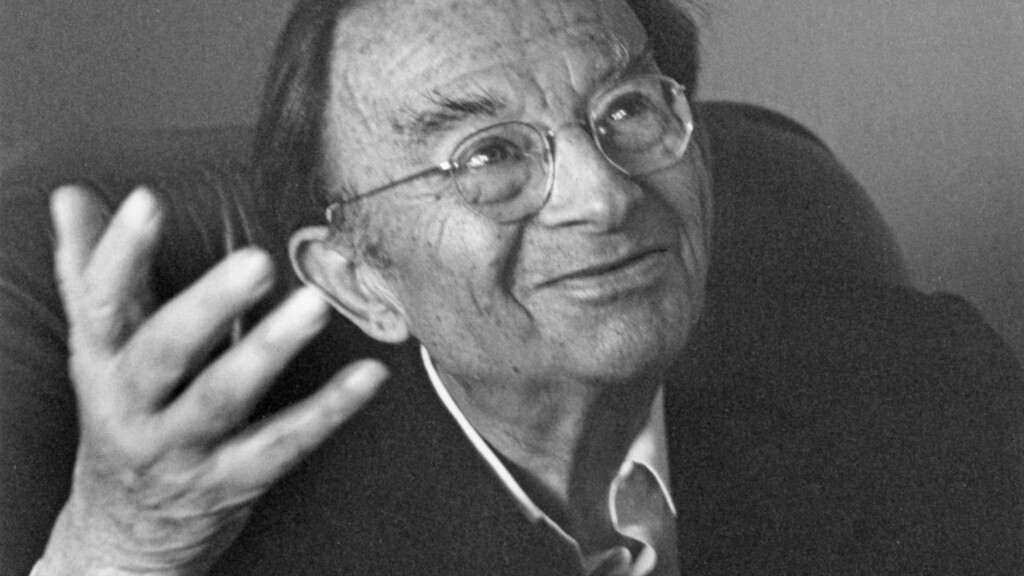
Erich Fromm spent much of his 1947 work Man for Himself mapping the psychological orientations that make this kind of confusion not only possible but statistically normal. He argued that character is not a fixed essence but a structured way of relating to the world — specifically, a pattern governing how a person acquires what they need, whether material, emotional, or existential. Most of these patterns, he found, are fundamentally passive or predatory, and yet they produce in their bearers the sincere conviction of full aliveness.
The receptive character believes that all good things originate outside the self. Love, knowledge, security — these are substances to be received from sources held as superior. The person structured this way is not lazy in any simple sense; they can be intensely active in the service of attracting what they need. But the direction of energy is always inward and acquisitive. They do not create intimacy; they harvest it. When the source dries up, they do not grieve a relationship — they grieve a supply.
The exploitative type operates on the same fundamental premise with the addition of aggression. What cannot be freely given must be taken. Fromm observed this orientation with clinical precision: the exploiter does not actually value what they take once they have it, because desire, for them, is structurally tied to extraction rather than possession. A person who is pursued is electrifying; a person who is won becomes immediately less interesting. This is not cruelty by intention. It is a character architecture that has quietly hijacked the vocabulary of love.
The hoarding character mistakes accumulation for security and emotional enclosure for commitment. Their relationships are warehouses. The person who loves by hoarding does not let you grow because growth is, for them, a form of leakage. Every change you undergo is experienced as a small theft. What looks like devotion from outside is, from inside, a controlled inventory. Fromm was writing this in the aftermath of a civilization that had just demonstrated what hoarding logic produces at historical scale — the 1947 publication date is not incidental.
The marketing character is perhaps the most legible today, because the culture has since organized itself entirely around its logic. The person with a marketing orientation experiences themselves as a commodity: their value is entirely a function of how successfully they package and present what they have to offer. They do not love; they perform lovability and evaluate the returns. Relationships become branding exercises. Authenticity becomes a strategy. When two marketing characters meet and mistake the transaction for intimacy, the result is a functional arrangement that neither can identify as hollow, because hollowness requires a contrast that neither has experienced.
Against all of these, Fromm placed what he called the productive orientation — a character structure capable of genuine creation rather than mere exchange. The productive person does not relate to others as sources, targets, storage sites, or markets. They relate to them as realities. This sounds simple, and it is, in the way that breathing is simple — until you realize how many people have spent decades in rooms with insufficient oxygen without identifying the deprivation as a structural condition rather than a personal failing.
The productive orientation is not a personality type you are born with. It is an achievement, and a fragile one, subject to constant erosion by the social forms that reward its opposites. Most institutions do not cultivate it. Most relationships do not require it. The counterfeit moves through the world with far greater efficiency, and efficiency, in the end, is what gets selected for.
What Freud Got Wrong About Desire
You are standing in a room you have furnished entirely from borrowed ideas, and it takes years before you notice the walls are not yours. The borrowed furniture in question, for most of the twentieth century, was the Freudian account of desire: that love is drive dressed in social clothing, that tenderness is aim-inhibited sexuality, that the warmth between a mother and child or between two adults who have grown old together is, at its metabolic root, a diverted wish to discharge tension. Freud said it plainly in his 1921 work on group psychology and in the later metapsychological papers — libido is the energy of the sexual instinct, and everything that looks like love is this energy rerouted, blocked, or sublimated into something the civilization finds more acceptable. It was a powerful and genuinely disturbing idea, and it explained a great deal. It also, Erich Fromm argued, explained the wrong thing entirely.
The rupture Fromm initiated was not temperamental squeamishness about sex. His critique was structural. If love is fundamentally a hydraulic problem — pressure building, seeking release, finding or not finding an outlet — then the object of love is ultimately interchangeable, a convenient vessel for a force that precedes it. The beloved, in strict Freudian terms, matters less than the libidinal charge attached to them. Fromm found this not merely reductive but descriptively false: it could not account for the terror of aloneness that precedes desire, the specifically human panic at existing as a separate, mortal, self-aware creature with no guaranteed connection to anyone or anything. That panic, he insisted in The Art of Loving in 1956, is the actual engine. The sexual drive is one answer to it, not its source.
What Fromm was doing, clinically and philosophically, was relocating the center of gravity from biology to ontology. The fundamental human problem is not tension-discharge but existential separation — the condition of being thrown into consciousness without consent, aware of your own finitude, unable to fully merge with another person no matter how desperately or skillfully you try. This is not a neurosis. It is the structure of being human, and it generates a need for union that is categorically different from the need to release accumulated sexual tension. One is a rhythm. The other is a permanent wound that every culture, every religion, every form of intimacy has been trying to address since the first recorded myths of human origin.
This is what cost him the consulting room. Orthodox psychoanalytic circles in mid-century America had largely institutionalized the drive model, and Fromm’s insistence on existential categories sounded to many clinicians less like depth psychology and more like philosophy wearing a lab coat. He had already been expelled from the New York Psychoanalytic Society by the early 1950s, his training and his clinical work notwithstanding. The charge, never quite stated so baldly, was that he had gone soft — that in rejecting libido theory he had abandoned the hard biological substrate that gave psychoanalysis its claim to scientific seriousness. The irony is almost architectural: the man who wanted to make love a rigorous subject of study was dismissed for taking it too seriously as something other than sex.
But outside those rooms, something else was happening. Readers who had never set foot in an analyst’s office found in Fromm’s argument the first language adequate to something they had lived and could not name — the particular loneliness that persists even inside a relationship, the hunger that is not for pleasure but for witness, for contact that goes all the way down. Biological drive theory has never been able to explain why people remain devastated by the death of someone they were no longer sleeping with, or why solitary confinement is experienced as torture rather than simply as deprivation. The body’s needs are finite and can be catalogued.
Separateness as the Wound at the Center
You wake at three in the morning and the room is exactly as you left it — the glass on the nightstand, the sound of someone else breathing — and yet something is wrong in a way that has no name and no cure. Not sadness, not fear of anything specific. Just the sudden, intolerable clarity that you are encased inside your own skull, that no other human being has ever been where you are right now, that the warmth beside you in the bed, however real and however loved, cannot reach the place that is aching. You have been in that room. You know what it costs to lie still and wait for morning to dissolve the feeling back into the noise of the day.
Erich Fromm, writing in 1956 in what would become one of the most widely read works of social psychology of the twentieth century, identified this not as a symptom of neurosis or a failure of intimacy but as the irreducible ground condition of being human at all. Consciousness, he argued, is the original catastrophe. The moment a creature becomes aware of itself as a self — separated from nature, separated from instinct, separated from the undifferentiated belonging of pre-human life — it inherits a wound that no social arrangement can fully heal. This is not a poetic metaphor. It is the structural diagnosis from which everything else in his thinking follows. Separateness is not something that happens to you when a relationship ends. It is what you are before any relationship begins.
What makes this genuinely unsettling is that Fromm refuses the consolation of framing it as a problem awaiting a solution. Every civilization, in his reading, has been essentially a technology for managing this awareness — through tribal fusion, through religious ecstasy, through nationalist identification, through the orgiastic release of crowds and war and intoxication. The anthropological record from the Dionysian mysteries of ancient Greece to the mass rallies of twentieth-century totalitarianism reads, under his analysis, as variations on the same desperate maneuver: the temporary annihilation of the boundary between self and world, the relief of dissolving back into something larger than the isolated ego can bear to be. The tragedy is not that these strategies fail entirely. It is that they work just enough to keep people reaching for them across millennia without ever addressing what they are actually fleeing.
It is here that Fromm turns, with unexpected seriousness, toward the medieval German mystic Meister Eckhart, whose sermons in the early fourteenth century described a mode of being he called Gelassenheit — a complete releasement of the defended, grasping self into something he understood as the divine ground of existence. What Fromm lifts from this tradition is not the theology but the phenomenology: the recognition that the ego’s terror of separateness is inseparable from its compulsive effort to own, control, and possess. To be fused with another person through romantic possession is, in this light, not a remedy for aloneness but its most sophisticated reproduction — two people using each other as walls against the very openness that genuine contact would require.
The distinction Fromm draws is between union achieved through self-dissolution, which removes the self that would do the loving, and union achieved through what he calls mature love — where two complete and separate beings meet precisely because they have stopped fleeing their separateness. The capacity to love, in this framing, is predicated on the capacity to be alone without panic. Not the performative solitude of the self-improvement retreat, but a real confrontation with the structural fact that no one is coming to rescue you from inside your own consciousness.
Which means that the culture of romantic love, built almost entirely on the promise of rescue, may be producing people progressively less equipped for what it advertises.
A vision curated by a filmmaker, not an algorithm
In this video I explain our vision
The Second Scene: A Different Kind of Failure

She has done everything correctly. The apartment is clean, the relationship is functional, the arguments are rare and resolved quickly. On paper — and in conversation, at dinner parties, in the approving eyes of her mother — she is a success. He is kind. He is present. They have built something together, and it holds. And yet she wakes at three in the morning with a feeling she cannot name, a hollowness that has no origin she can point to, no wound she can dress. She has not been betrayed. She has not been abandoned. She has simply disappeared, slowly and without drama, into the shape of a life that fits perfectly and belongs to someone she is no longer sure she recognizes.
Erich Fromm would not have been surprised. In The Art of Loving, published in 1956 at a moment when Western consumer culture was aggressively marketing couplehood as the solution to the human condition, he identified precisely this phenomenon: the person who achieves union by dissolving rather than connecting. He called it symbiotic fusion, and he was careful to distinguish it from love in any meaningful sense. Symbiotic union — whether through submission or domination — eliminates the separateness that makes genuine encounter possible. You cannot truly meet another person if you have ceased to exist as a distinct self. The merging feels like closeness. It functions, for a time, like relief. But it is structurally closer to disappearance than to love.
What makes Fromm’s analysis uncomfortable is that he locates the problem not in bad relationships but in culturally endorsed ones. The couple that presents as a seamless unit, that finishes each other’s sentences, that has no visible friction — this is frequently held up as the ideal. Two becoming one. The romance literature, the wedding vows, the social scripts all push toward fusion as the destination. Fromm argued the opposite: that the preservation of individual selfhood is not a threat to love but its very precondition. Love between two people is only possible when there are, in fact, two people. The moment one submerges entirely into the other’s orbit, what remains is dependency performing the gestures of intimacy.
The sociologist Anthony Giddens, writing in The Transformation of Intimacy in 1992, introduced the concept of the “pure relationship” — one maintained not by external obligation or institutional pressure but by the ongoing satisfaction it provides to both parties. It sounds liberating. But Giddens also noted something troubling embedded in this model: when a relationship exists only insofar as it serves the self, it becomes indistinguishable from a consumer transaction. The self it serves must remain coherent and active for the relationship to function. A self that has dissolved into the relationship has nothing left to evaluate it from the outside. Fromm and Giddens arrive at the same problem from different directions: a person who has relinquished their own ground cannot freely choose to stay.
This is the quiet devastation at three in the morning. It is not grief. It is not anger. It is the sensation of having traded one’s own perspective for a shared one, and only noticing the exchange years after the fact, when the shared perspective no longer feels like it fits either. The relationship has not failed in any of the ways culture teaches us to recognize failure. There has been no infidelity, no cruelty, no catastrophic breach. The failure is subtler and in some ways more total: the self that was supposed to be present for this love went missing somewhere along the way, and the love — whatever it was — continued without her.
Fromm insisted that mature love demands what he called the paradox of union and autonomy simultaneously. Not independence as distance. Not closeness as merger. Something harder than either: remaining genuinely oneself while genuinely opening toward another.
Brotherhood, God, and the Politics of Agape
You are sitting across from someone you claim to love, and you notice, with a small private shock, that what you feel most strongly in this moment is the fear of losing them. Not joy at their presence. Fear of their absence. The distinction is not subtle, but you have spent years treating it as one.
Erich Fromm published The Art of Loving in 1956, and what made it quietly scandalous was not its treatment of erotic love but its insistence that most people never arrive there because they have skipped an earlier and more demanding form entirely. Brotherly love, what the Greek tradition called agape, was for Fromm not a warm abstraction or a Sunday obligation but the structural foundation without which all other love remains a transaction dressed in feeling. It is the love of equals recognizing each other’s shared fragility, the love that does not require the beloved to be extraordinary or irreplaceable. In a culture organized around the idea that love must be earned, that it flows toward merit and achievement, this proposition lands like a quiet accusation.
Fromm’s taxonomy of love forms was not a ranking but a diagnosis. Motherly love, unconditional by its nature, creates the original emotional grammar through which a child first understands that existence itself can be affirmed without conditions. But Fromm was precise about its danger: the mother who cannot allow her child to separate does not love the child, she consumes it. She mistakes the intensity of her attachment for the depth of her love, when in fact intensity and depth are often inversely related, the former a symptom of the need she cannot name.
The argument that destabilized mid-century Protestant ethics most severely was the one about self-love. Fromm drew directly on Spinoza’s Ethics, published in 1677, in which the conatus — the drive toward self-preservation and self-expression — is not a moral failure but the very ground of being. To Fromm, the biblical injunction to love your neighbor as yourself was routinely misread as a subordination of self, when its actual architecture is a parallelism: you cannot give what you do not possess. The person who denies themselves love in the name of self-sacrifice does not become more loving; they become more resentful, more controlling, more dependent on the performance of suffering as proof of their virtue. The fetish of self-sacrifice is not generosity. It is a form of emotional debt collection.
This position was not merely philosophical for Fromm. It grew from a specific intellectual and spiritual lineage — the Jewish humanist tradition that ran through Maimonides and into the Reform movements of nineteenth-century Germany, a tradition that located the sacred not in institutional hierarchy but in the full realization of human potential. Fromm had trained under the Frankfurt School, had been analyzed within the Freudian tradition, but his relationship to institutional religion of any kind was one of fundamental suspicion. The love of God, in his reading, was not submission to an authority but the cultivation of an attitude, an orientation toward existence characterized by what he called the mystical experience of unity, something closer to Meister Eckhart‘s gelassenheit than to any catechism. He saw in the authoritarian God of institutional Christianity the same psychological structure he saw in authoritarian politics: a figure whose love must be earned, whose approval is conditional, and whose primary function is to generate in the believer a permanent condition of inadequacy.
The political implications of this were not lost on Fromm’s critics, nor on him. If self-love is the precondition for all genuine love of others, then every social system that demands self-abnegation as a civic virtue — whether in the name of God, the nation, or the family — is not producing loving citizens. It is producing people who have learned to confuse their own diminishment with moral worth, and who will defend that confusion with extraordinary ferocity because to release it would mean confronting what they gave up and why.
The Practice Nobody Wants to Practice
You have read three books this week, answered forty messages, optimized your morning routine, and spent eleven minutes deciding which meditation app best fits your schedule. At no point did you sit in silence long enough to feel the full weight of another person’s existence pressing against your own.
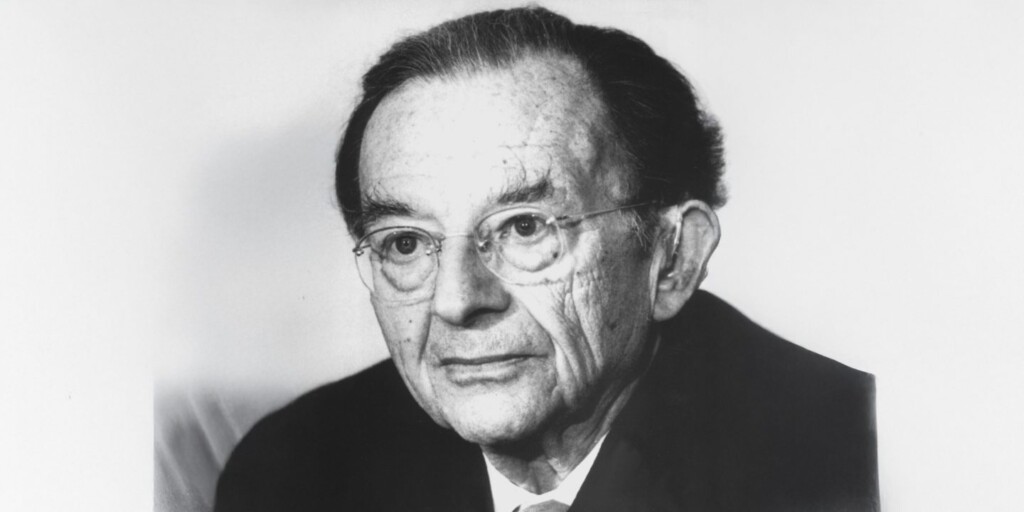
Erich Fromm identified this evasion with surgical precision in 1956, though the evasion itself is ancient. The Art of Loving is not, despite its title, a romantic manual. It is a diagnostic text, and its diagnosis is brutal: most people do not lack the capacity to love, they lack the willingness to become the kind of person love requires. Fromm drew a direct structural parallel to the mastery of any serious art — music, medicine, carpentry — insisting that each demands discipline, concentration, patience, and what he called “supreme concern.” The student of counterpoint does not practice when inspired. The surgeon does not concentrate selectively. The lover who waits for the right feeling before showing up has already misunderstood the entire enterprise.
What makes this destabilizing is not the demand itself but where it locates the problem. Western culture has spent considerable energy developing a psychology of emotional trauma, of wounds received in childhood, of attachment disorders and nervous systems shaped by neglect. This framework is not wrong — it has real explanatory power, and its clinical literature since John Bowlby’s attachment theory in the 1950s has illuminated genuine suffering. But it has also provided an extraordinarily comfortable alibi. If the obstacle to love is what was done to you, the transformation required is essentially therapeutic: you heal, you process, you arrive eventually at readiness. Fromm’s argument cuts across this entirely. He is not interested in readiness. He is interested in practice, which is a different category of demand because it never resolves into a stable state of completion.
Discipline, in Fromm’s sense, is not the suppression of feeling but the refusal to let mood govern action. The person who is loving only when they feel like it is not practicing love — they are performing it during its easy intervals. Concentration, which he considered even more rare, means the capacity to be fully present with another person rather than managing them from behind the glass of your own anxiety and self-narrative. In a culture where attention has become the most contested and commodified resource in human history — where the average adult in 2023 checked their phone 144 times per day according to data from app usage research firms — concentration is not a spiritual nicety but a radical act of structural defiance.
The patience Fromm demanded is equally unfashionable. Not the patience of waiting for something to improve, but the patience of tolerating not-knowing, tolerating incompleteness, tolerating the irreducible foreignness of another consciousness without rushing to resolve it into something manageable. This is where most relationships quietly collapse — not in crisis but in the slow, undramatic retreat from genuine encounter into coordinated coexistence. Two people who have learned to stop being surprising to each other.
And then there is the transformation of character, which is the claim that cannot be absorbed without cost. Fromm argued that narcissism — by which he meant the pervasive tendency to experience reality primarily as a mirror of one’s own needs, fears, and interpretations — is the fundamental obstacle to love, and that overcoming it requires not insight but sustained practice against one’s own grain. This is not a weekend project. It is not a relationship goal to be tracked in a journal. It is a reorientation of the entire person, undertaken without guarantee of outcome.
The unanswered question buried in Fromm’s own text is the one he never quite confronts directly: whether a society structurally organized around competition, consumption, and individual self-maximization can produce people willing to undergo that transformation at all, or whether it systematically generates the precise character type for whom real love remains permanently, productively out of reach.
🌀 Love, Identity & the Labyrinthine Self
Erich Fromm‘s ‘The Art of Loving’ explores love not as a passive feeling but as an active practice rooted in self-knowledge, freedom, and connection. Its themes resonate deeply with literature’s most enduring explorations of identity, time, longing, and the search for meaning. The following articles trace the invisible threads that bind Fromm’s philosophy to some of the greatest works of human imagination.
Jorge Luis Borges and the Labyrinth of Identity
Borges conceived identity as a labyrinth without exit, a hall of mirrors in which the self perpetually escapes its own grasp. Fromm similarly argued that the inability to know oneself is the deepest obstacle to genuine love, making both thinkers fellow travelers through the same existential maze. Together, they illuminate why loving another begins with the terrifying courage to confront who we truly are.
GO TO THE SELECTION: Jorge Luis Borges and the Labyrinth of Identity
In Search of Lost Time by Proust: Analysis
Proust’s monumental novel is, at its core, an anatomy of love—its illusions, its obsessions, and its transformative power over memory and selfhood. Like Fromm, Proust understood that love is inseparable from the search for lost time and the desire to possess what forever eludes us. Reading both works together reveals how love shapes not only relationships but the very architecture of our inner lives.
GO TO THE SELECTION: In Search of Lost Time by Proust: Analysis
Homer and The Odyssey: Nostos and the Archetype of Return
Homer’s Odyssey frames the return journey as an act of love made possible only through endurance, identity, and unwavering intention—qualities Fromm would later codify as central to the art of loving. Odysseus’s nostos is not merely a homecoming but a re-earning of connection after years of fragmentation and trial. Fromm’s reader cannot help but see in Odysseus a model of the disciplined, active lover striving to reunite with what matters most.
GO TO THE SELECTION: Homer and The Odyssey: Nostos and the Archetype of Return
Jorge Luis Borges: Life and Works
Borges’s life and works constitute a sustained meditation on infinity, mirroring, and the self’s fundamental solitude—themes that resonate powerfully with Fromm’s diagnosis of modern alienation as the root of humanity’s need for love. For Borges, literature was itself a labyrinth designed to dissolve the boundaries of individual ego, much as Fromm described mature love as a transcendence of narcissistic isolation. Both men, in their different disciplines, sought the same hidden door in the maze of human consciousness.
GO TO THE SELECTION: Jorge Luis Borges: Life and Works
Discover More on Indiecinema
The questions Fromm raises—about love, identity, freedom, and connection—find vivid, unexpected answers in independent cinema. On Indiecinema, a curated streaming platform dedicated to bold and visionary filmmaking, you will find films that explore the human heart with the same depth and courage as the greatest works of literature. Join Indiecinema today and let the art of loving guide your next cinematic journey.
👉 EXPLORE THE CATALOG: Watch Indie Films in Streaming
A vision curated by a filmmaker, not an algorithm
In this video I explain our vision

