
The Architecture of Family Silence
You already know the shape of it. You are sitting at a table where the food is plentiful and the conversation is controlled, where someone makes a joke at exactly the right moment to redirect attention, where a name goes unspoken for an entire evening with the precision of a choreographed performance. Nobody agreed to this beforehand. Nobody issued instructions. And yet everyone plays their part without missing a cue.

Families do not fall into silence by accident. They engineer it, collectively and often unconsciously, with a sophistication that would impress any institutional architect. The sociologist Erving Goffman, writing in 1959 in The Presentation of Self in Everyday Life, described social life as a continuous theatrical performance in which individuals manage the impressions they project onto others. The family is where this performance is rehearsed first and most violently — where the child learns not only what to say but what categories of reality are permitted to exist out loud. The silence is not empty. It has weight, texture, and function. It holds the structure upright.
What makes family silence structurally different from ordinary discretion is precisely its load-bearing quality. Evan Imber-Black, the family therapist who spent decades mapping the psychology of secrets, argued in her 1993 work The Secret Life of Families that secrets are not simply information withheld — they are organizing principles. They determine who speaks to whom, who is trusted, who is subtly punished for asking the wrong question. A family built around a hidden bankruptcy, an undisclosed illness, a pregnancy erased from the official record, does not merely contain a secret. It is shaped by it, the way a building is shaped by the walls you cannot remove without everything collapsing. The secret becomes the grammar through which all other communication is parsed.
Children absorb this grammar before they have language for it. There is robust evidence from developmental psychology, including work drawn from the attachment research of John Bowlby and later expanded by Mary Main’s studies on disorganized attachment in the 1980s, that infants and young children are acutely sensitive to the affective gaps in parental communication — the moments where the face goes neutral, where the voice loses its warmth, where a question is answered with a question. These are not experienced as evasions. They are experienced as instructions. The child does not think: there is something hidden here. The child thinks: this territory is dangerous. The map is drawn in their nervous system long before the conscious mind has any say in the matter.
What is remarkable is how stable this architecture tends to be across generations. The sociologist Karl Mannheim, writing in the 1920s, observed that each generation does not simply inherit the knowledge of the previous one — it inherits its epistemological limits, its designated ignorances. In families, this transmission is rarely explicit. It operates through affect, through the subtle social cost of curiosity, through the modeling of strategic forgetting. A grandmother who never mentions her first marriage produces a mother who has a vague, unexamined conviction that certain questions are impolite, who produces a child who feels a shapeless anxiety whenever intimacy approaches a particular depth. The original secret has long since dissolved into ambient atmosphere. The silence has detached from its source and become free-floating, self-sustaining, a cultural inheritance without a visible origin.
This is the mechanism that makes family silence so difficult to identify from the inside. It does not feel like suppression. It feels like normalcy. The gap in the story has been there so long that it no longer reads as a gap. It reads as the story itself.
Loyalty as a Form of Captivity
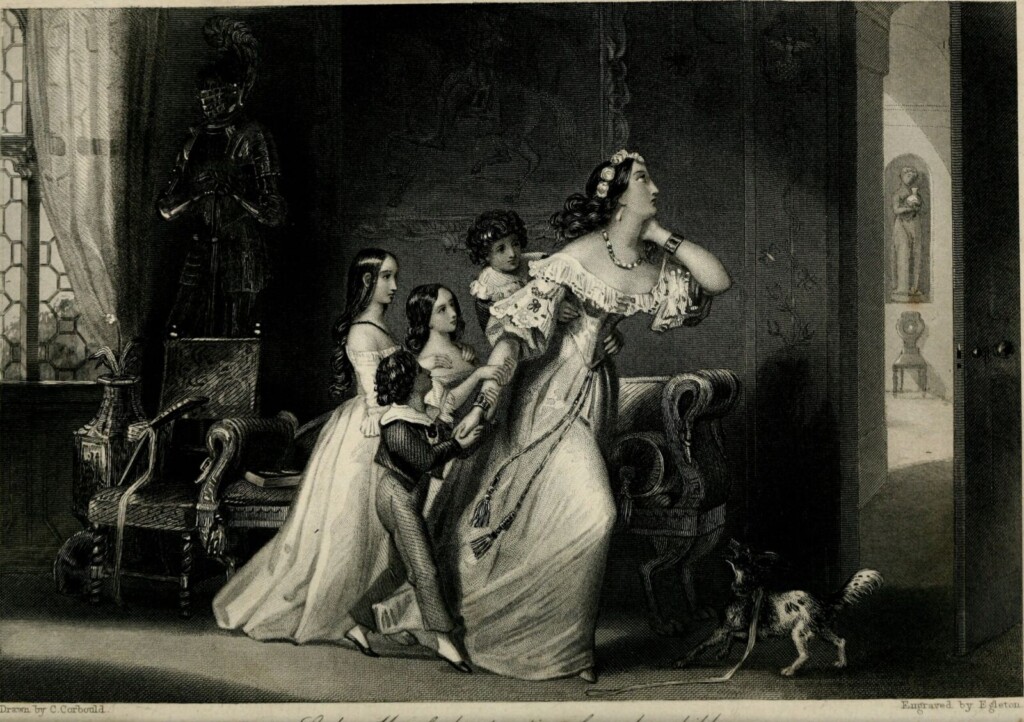
You already know what it cost you the last time you told the truth at a family dinner. The silence that followed was not neutral. It had weight, temperature, a specific texture — the kind that tells you, without a single word being spoken, that you have violated something older and more binding than any law you can name. What you violated was not a rule. It was a covenant. And covenants, unlike rules, do not get written down precisely because they do not need to be.
The psychologist John Bowlby spent decades mapping the architecture of early attachment, and what his 1969 work established was not merely that children need closeness — it was that they will reorganize their entire perception of reality in order to preserve it. A child who depends on a caregiver for survival does not have the luxury of perceiving that caregiver accurately. The mind performs a kind of protective distortion, casting the source of fear as the source of safety, because the alternative — recognizing that the person you need most is also the person who harms you — is a cognitive catastrophe too large to survive at age four. What Bowlby named as anxious attachment is, in practice, a masterpiece of involuntary loyalty. The organism learns to protect the relationship above all else, including above itself.
This is the mechanism that toxic family systems do not invent but inherit and then amplify across generations. The sociologist Karl Mannheim, writing on generational transmission in the 1920s, observed that social groups perpetuate not just their beliefs but the emotional grammar through which those beliefs feel self-evident. Inside a family, that grammar becomes the definition of love itself. Loyalty stops being a choice you make and becomes the shape of the air you breathe. When it is demanded of you in a context where your needs were structurally subordinated to the family’s image, loyalty is not a virtue. It is a hostage arrangement dressed in the vocabulary of devotion.
Research on intergenerational trauma — most rigorously advanced through the work of Bessel van der Kolk in his 2014 clinical synthesis of trauma and embodiment — demonstrates that the nervous system of a child raised in chronic emotional unpredictability does not simply learn to be careful. It learns to be permanently braced. The body encodes the logic of the household as the logic of the world, which means that when you grow up and leave, you do not leave the dynamic behind. You carry the threat-response system with you, and it activates not in response to actual danger but in response to anything that resembles the original pattern — including being asked to prioritize your own judgment over the family’s narrative.
What makes this particular trap so durable is that it wears the face of love with genuine conviction on both sides. The parent who calls at midnight to remind you what you owe them is not, in most cases, performing cruelty consciously. They are expressing what they themselves were taught love requires: total visibility into the other, total claim over the other’s choices, total confirmation that the relationship is the highest value in any hierarchy. The Italian cultural theorist Elena Ferrante, across her Neapolitan cycle published between 2011 and 2014, rendered this dynamic with a precision that clinical language rarely achieves — two women bound together not by affection alone but by a shared terror of disappearance, each using the other as proof of her own existence, loyalty functioning as both lifeline and slow erasure.
What no one tells you when you are inside it is that the feeling of loyalty and the feeling of captivity can share an identical physiological signature — the elevated heart rate, the hypervigilance about tone, the constant internal auditing of whether you have said too much.

The Inherited Wound and Its Disguises
You inherit more than eye color. There is a particular kind of flinching that runs in families — a startle response to raised voices, a tightening in the chest when someone leaves a room without explanation — and nobody teaches it. It arrives already installed, like a subroutine written into the body before the mind had the vocabulary to ask questions. You grew up in a house where a name was never spoken, where a photograph was turned face-down in a drawer, where a whole decade of a grandparent’s life went unmentioned, and you simply adapted. You assumed the silence was atmosphere. You were wrong — it was instruction.
Rachel Yehuda’s longitudinal research on Holocaust survivors and their children, published across several studies between the 1990s and 2010s, demonstrated something that the therapeutic community was slow to metabolize: descendants of severely traumatized individuals show measurable alterations in cortisol regulation and stress-response hormones, even when they have no personal trauma history and no direct knowledge of their ancestors’ experiences. The body of the child has already read the transcript of the parent’s suffering, encoded not in memory but in the methylation patterns of specific gene sequences. This is not metaphor. The field of epigenetics has mapped it. What your grandmother could not say to anyone, your nervous system received as operating instructions.
The psychoanalytic tradition arrived at this territory from a different direction. Nicolas Abraham and Maria Torok, working in Paris in the 1970s, developed the concept of the “transgenerational phantom” — a fragment of another person’s secret that lodges in a descendant’s unconscious not as a memory but as a foreign body, generating behaviors and compulsions whose origin the host cannot locate. They called it a “haunting,” but stripped of any supernatural implication: the phantom is simply the unmetabolized shame or secret of a prior generation, passed down not through conversation but through the behavioral gaps, the inexplicable prohibitions, the topics that produced sudden flatness in a parent’s eyes. The child does not inherit the story. The child inherits the hole where the story should have been.
What is extraordinary about this mechanism is how perfectly it disguises itself as personality. The grandson of a man who committed an act of violence that was never named grows up believing he is simply someone who cannot tolerate conflict, who abandons rooms before arguments escalate, who feels an inexplicable guilt after minor disputes. He will pathologize this as anxiety, will find explanations in his own biography, will perhaps spend years in therapy examining incidents that are real but insufficient to account for the weight. The secret does not announce itself. It presents as character.
Sociologist Marianne Hirsch coined the term “postmemory” in her 1997 work on children of Holocaust survivors to describe the relationship a second generation holds with experiences that preceded their birth — experiences so massive and formative that they are transmitted as deeply as memory, yet remain fundamentally not one’s own. The crucial detail she uncovered was not simply the transmission of pain but the transmission of incompleteness: the child receives the shape of something without its content, the emotional signature of an event without the event itself, and then spends a life unconsciously trying to reverse-engineer the cause from the effect.
The body keeps the account even when the family burns the ledger. And the most corrosive version of this inheritance is not the wound itself but the prohibition against naming it — because that prohibition is what transforms a historical event into a permanent psychological structure, sealing it from the scrutiny that might, eventually, render it inert.
The Social Contract of Domestic Fiction

You have been taught to protect something that was never entirely yours. The family you were born into arrived pre-loaded with a set of instructions — who speaks first at dinner, which losses are named and which are swallowed, what the neighbors must never know — and you absorbed these instructions so early that they now feel like personality. This is the precise mechanism that makes the domestic sphere so ideologically efficient: it disguises transmission as love.
The anthropologist David Schneider spent decades dismantling the assumption that kinship is a biological fact dressed in cultural clothes. His 1984 work A Critique of the Study of Kinship argued that Western scholars had been projecting their own folk model — blood as the substance of relatedness — onto every human society they encountered, forcing radically different arrangements into a single normative frame. What Schneider exposed was not merely an academic error. It was the revelation that the family, as most people in the industrialized West understand it, is a specific historical construction that has been universalized into nature. The emotional weight people carry when they say “family is everything” is not evidence of a biological imperative. It is evidence of how thoroughly a cultural script can colonize the body.
That script has a precise institutional history. In France, between the sixteenth and eighteenth centuries, the state and the Church collaborated systematically to restructure household arrangements, pushing authority toward the male head and formalizing the nuclear unit as the basic cell of social order. Philippe Ariès documented in Centuries of Childhood, published in 1960, how the very concept of childhood as a protected, emotionally weighted phase of life was largely invented during this period — not discovered. Before that consolidation, children moved fluidly through adult spaces, working alongside them, sleeping in shared rooms with strangers, entering economic life almost immediately. The sentimental family did not emerge from human nature. It emerged from a particular alignment of property law, religious doctrine, and political convenience.
What survives from that alignment is the mythology of the home as refuge — a place categorically different from the cruelty of the world outside. This mythology performs specific work. It privatizes suffering. A man who beats his wife in 1850 is not a social problem; he is a domestic matter, contained behind a threshold that the state, by its own ideological design, declines to cross. The separation of public and private is never neutral. It is always a decision about whose pain counts as political. Catharine MacKinnon made this precise in 1989 in Toward a Feminist Theory of the State — the private sphere is not a space of freedom but a space of unaccountable power, and the insistence on its sanctity is itself a political act.
What makes this structure so difficult to perceive from inside it is that it produces genuine experience. The warmth at a table during a winter evening is real. The grief at a parent’s death is real. The intimacy between siblings who shared a childhood language is real. None of that is fabricated. But the ideological function of the family does not require that the experiences be false — it requires only that they be interpreted as proof of something natural, something prior to history, something that justifies the entire arrangement. The real feelings become the alibi for the institution.
Every culture that has ever existed has organized reproduction and care in some way, but the specific emotional grammar of the bourgeois nuclear family — its silences, its hierarchies, its fierce insistence on presenting a unified face to the outside world — is a technology, not an inheritance.
Exposure, Rupture, and the Cost of Clarity
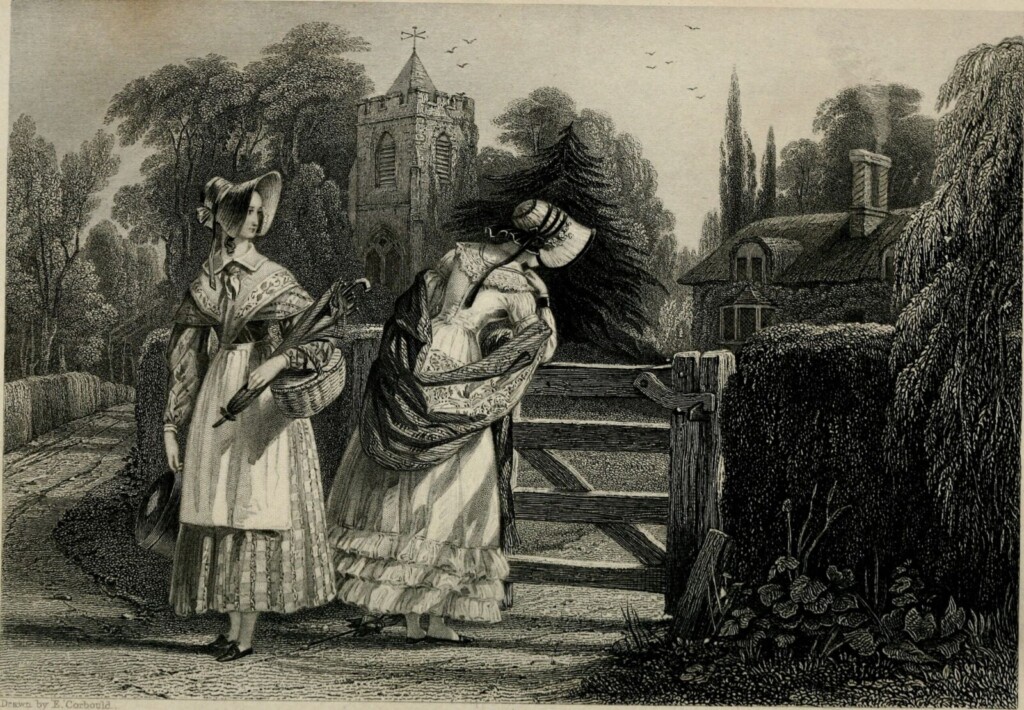
You tell the truth at Thanksgiving dinner — not dramatically, not with rehearsed words, but simply by refusing to pretend one more time — and the room does not exhale with relief. It hardens. Forks are set down with the precise quietness of people suppressing something larger than anger.
What cultural mythology around family reconciliation systematically omits is that truth inside a closed system does not function as oxygen. It functions as a foreign body. The family organism has spent years, sometimes generations, developing tissue around a wound, and the person who names the wound is not received as a healer. They are received as the new wound. Ivan Boszormenyi-Nagy, whose foundational work in contextual family therapy through the 1970s and 1980s traced the invisible loyalties binding family members across decades, observed that what families call love is often a sophisticated form of mutual protection from accountability. When one member exits that arrangement unilaterally, the others do not experience liberation. They experience betrayal.
The clinical literature on family estrangement is considerably less romantic than popular psychology suggests. Karl Pillemer’s 2020 research at Cornell, drawing on a sample of over 1,300 Americans, found that family estrangement affected approximately 27 percent of the population, with adult children initiating the cut most frequently — and yet the dominant emotional tone reported was not freedom but persistent ambivalence, social stigma, and a grief that did not resolve on any predictable timeline. Clarity, in other words, extracted a price that no one had listed in advance.
This is where the philosophical inheritance of existentialism becomes not a comfort but a diagnosis. Sartre’s formulation in Being and Nothingness — that bad faith is the refusal to confront one’s radical freedom — locates the problem squarely in the individual. But families are not philosophical seminars. They are institutions with economies, and the person who achieves lucidity about the family’s organizing myth does not simply become free. They become expensive. Their clarity costs everyone else the maintenance of a world that was working, however poisonously, and people rarely forgive you for the renovation bill they never agreed to pay.
There is also a less discussed dimension: what happens to identity when the secret that organized it is removed. Erik Erikson‘s work on psychosocial development established that identity is not constructed in isolation but in negotiation with a social environment that provides mirrors. When the family has functioned as the primary mirror, and the image in that mirror was always slightly falsified, removing the falsification does not produce an accurate reflection. It produces, initially, no reflection at all. The person who exposes the secret often finds themselves in a strange epistemological vertigo — knowing more than they did while feeling less anchored than they ever have.
Psychiatrist Judith Herman, in her landmark 1992 study of trauma and recovery, drew a sharp distinction between acknowledgment and healing, noting that social recognition of a truth is a necessary but insufficient condition for repair. Inside family systems, acknowledgment is rarely granted by the people whose acknowledgment would matter most. The one who speaks is often met with denial, counter-accusation, or the particular cruelty of being told that their version of events is a symptom rather than a testimony. The mechanism is not stupidity or even conscious cruelty. It is the system defending its coherence at the expense of one member’s reality.
What no cultural script adequately prepares a person for is that surviving a family secret is one ordeal, and surviving its exposure is a different and often longer one — because truth, inside a structure built against it, does not set you free so much as it sets you apart, at a distance from the warmth you were promised, holding something real that no one else in the room will touch.
A vision curated by a filmmaker, not an algorithm
In this video I explain our vision
🕯️ Behind Closed Doors: Family, Secrets & Toxic Bonds
Family is often the first place where love and harm become indistinguishable. The articles below explore the psychological, relational, and social mechanisms that turn domestic life into a labyrinth of hidden truths, suppressed pain, and inherited wounds. From toxic dynamics to betrayal, these readings illuminate what happens when secrets define a family’s identity.
Toxic relationships: the mechanisms behind the destruction of a bond
Toxic relationships do not collapse overnight — they erode slowly, through patterns of control, silence, and emotional manipulation that can feel entirely normal to those inside them. This article dissects the psychological mechanisms that corrode intimate bonds from within, revealing how destruction is often disguised as love. Understanding these dynamics is the first step toward recognizing them within family structures where they are most deeply rooted.
GO TO THE SELECTION: Toxic relationships: the mechanisms behind the destruction of a bond
The betrayal and couple secrets
Betrayal within a couple rarely exists in isolation — it almost always generates a web of secrets that ripples outward into the entire family system, reshaping trust and identity for everyone involved. This article explores how concealed truths between partners create a double reality that children and relatives unconsciously absorb and carry forward. The hidden architecture of couple secrets is one of the most persistent engines of intergenerational family dysfunction.
GO TO THE SELECTION: The betrayal and couple secrets
Intergenerational Transmission: What We Leave to Our Children
What parents pass on to their children goes far beyond genetics or conscious lessons — it includes unspoken traumas, unresolved conflicts, and the emotional residue of secrets never named. This article examines how psychological and cultural legacies travel across generations, often becoming the invisible scripts that shape adult behavior and relationships. Recognizing intergenerational transmission is essential for breaking cycles of toxic family dynamics.
GO TO THE SELECTION: Intergenerational Transmission: What We Leave to Our Children
Unresolved Conflicts: When Resentment Becomes a Prison
Resentment that is never addressed does not simply fade — it calcifies into invisible walls that isolate family members from one another even as they share the same roof. This article investigates how unresolved conflicts become chronic emotional prisons, preventing healing and perpetuating cycles of harm within close relationships. The silence around family wounds is often more damaging than the original conflict itself.
GO TO THE SELECTION: Unresolved Conflicts: When Resentment Becomes a Prison
Discover the Cinema That Dares to Tell the Truth
If these themes resonate with you, independent cinema has long been the space where family secrets, toxic dynamics, and hidden truths are explored with unflinching honesty and artistic depth. On Indiecinema, you’ll find films that go where mainstream cinema rarely ventures — into the uncomfortable, the unspoken, and the profoundly human. Start exploring today and let independent cinema illuminate what hides behind closed doors.
👉 EXPLORE THE CATALOG: Watch Indie Films in Streaming
A vision curated by a filmmaker, not an algorithm
In this video I explain our vision

