
The Founding Lie of Intimacy
You find the message not because you were looking, but because the phone was there and the name was familiar and your hand moved before your mind could negotiate the ethics of it. Three seconds. That is all it takes for the architecture of a shared life to reveal its hidden load-bearing walls — the ones that were never shown on any blueprint you were given.

The cultural story we inherit about romantic partnership is organized around a fantasy of total transparency, the idea that love is the condition under which two people finally stop performing and simply become legible to each other. We absorb this through every medium available to us, from the marriage vow that promises to forsake all others to the therapy industry’s relentless promotion of radical honesty as the metric of relational health. What we almost never examine is whether this transparency was ever the actual operating system of intimate life, or whether it was always the cover story — the ideology that made the real arrangement socially palatable.
Erving Goffman, in his 1959 work The Presentation of Self in Everyday Life, demonstrated with sociological precision that every human encounter is a managed performance, structured by what he called front-stage and back-stage behavior. His argument was not cynical. It was descriptive. People regulate what they disclose based on context, audience, and the stakes involved — and this regulation is not a failure of authenticity but the very mechanism through which social life becomes navigable. What Goffman could not have anticipated, or perhaps chose not to follow into its most uncomfortable territory, is the degree to which the couple itself becomes the primary theater of self-management, the most demanding and consequential audience a person will ever face.
Historians of marriage have documented this with uncomfortable clarity. Lawrence Stone’s 1977 study The Family, Sex and Marriage in England 1500–1800 traces how the companionate ideal — the notion that spouses should be each other’s primary emotional confidants — only became a widespread expectation in the eighteenth century, and even then applied almost exclusively to bourgeois households where such sentiment was economically sustainable. Before that reorganization of domestic life, the couple was understood as a legal and reproductive contract, not a confessional relationship. Secrets between spouses were not pathological. They were structural. The idea that your partner should know everything about you — your past, your doubts, your desires, your money — is historically so recent that treating it as a natural law is itself a kind of cultural amnesia.
What replaced the contract was something more demanding and paradoxically more fragile: the intimate witness. The person who is supposed to see you completely, and in seeing you completely, confirm that you are worth seeing. This is not a small ask. It is, in fact, an impossible one, because the self that presents itself for witnessing is always already a selected version, edited in real time by fear, by shame, by the accurate assessment that certain truths will cost more than they reveal. Every couple, without exception, runs on a set of managed omissions — facts withheld not out of cruelty but out of the entirely rational calculation that some knowledge is corrosive to the specific bond it would enter.
The dangerous part is not the withholding itself. Human beings have always withheld. The dangerous part is the contract that says they should not, because that contract transforms every omission into a betrayal, every private thought into a small act of treason against the union. What gets called dishonesty in a relationship is often simply the collision between the impossible standard and the ordinary human need to remain partially sovereign over one’s own interior life — and the violence of that collision is not evenly distributed, because it falls hardest on whoever had the most faith in the fiction.
Redemption

Drama, by Maria Martinelli, Italy, 2023.
Hanna meets her lover in an isolated place, a refuge in the mountains. The present and the past intertwine in search of a possible redemption, while the choices to be made, such as that of a child on the way, can no longer wait. In that place, together and isolated, shreds of their past life appear in the room and seem to dance with their present life. An enigmatic mirror of their lives lived with other people, at other ages. In those fragments we see missed appointments, broken hopes, pieces of life like a cell phone ringing and no one answering and like in a puzzle, which slowly comes together, we sense something that unites their lives.
Is there a truth that we tell ourselves to others? Redemption is the story of a woman, of the complex life that she finds herself facing, of the moral choices that follow one another in her life. In romantic encounters we don't always talk about our experiences and perhaps loving each other refers exactly to this instinctive peculiarity, to the attempt to reconstruct an existence beyond our own past, which sometimes we even hide ourselves. But the past is often a threshold that we must cross if we want to start living in the present again.
LANGUAGE: Italian
SUBTITLES: English, Spanish, French, German, Portuguese
Secrecy as Structural Architecture
You have rehearsed the version of your relationship you show at dinner parties — the edited highlights, the compatible-sounding disagreements, the way you describe how you met with just enough friction to seem authentic. What you have never examined is what that performance costs, or more precisely, what it builds.
Erving Goffman argued in The Presentation of Self in Everyday Life, published in 1959, that social life operates across two permanent zones: the frontstage, where performances are staged for audiences, and the backstage, where the props are stored, the costumes adjusted, and the mask briefly lifted. What he noticed, with the precision of a man who had spent years studying patients in a Scottish island asylum and high-society Washington in the same career, is that the backstage is not the absence of performance but a different and more intimate one. Couples occupy that space together. They see each other dropping the tone, scratching, sighing, contradicting in private what was just affirmed in public. The backstage is not where the real self hides. It is where a second, shared self is constructed — collaborative, fragile, and entirely dependent on mutual discretion.
Georg Simmel had already traced the deeper architecture of this in 1906, in his essay “The Sociology of Secrecy and of Secret Societies,” where he observed that the secret is not merely something hidden but a positive social form — a structure that actively shapes relationships by determining who is inside and who is excluded. Simmel was not describing espionage or shame. He was describing the fundamental grammar of intimacy: that to be close to someone is to be incorporated into a selective concealment, to become co-author of a version of reality that others cannot fully read. The secret, for Simmel, produces solidarity through exclusion. The couple who shares a private language, a running reference no outsider can decode, a knowledge of the other’s undisclosed past — that couple is not being evasive. It is performing the essential act of pair-bonding at its most structural level.
What follows from this is uncomfortable: the couple is a secret society of two, and like all secret societies, its coherence depends not on transparency but on the management of information. Freemasonry grew to over six million members globally by the early twentieth century not despite its rituals of concealment but because of them — the secret was the society. Remove the confidentiality and the network dissolves into ordinary acquaintance. Couples are no different. The specific weight of what two people know about each other — the failures, the fears spoken only at 3am, the version of a parent’s cruelty that has never been said aloud to anyone else — that accumulation is not incidental to the relationship. It is the relationship’s load-bearing wall.
This means that the compulsive contemporary drive toward radical transparency in partnerships, the cultural fantasy of the couple who has “no secrets,” is not an evolution beyond older forms of intimacy. It is a misunderstanding of what intimacy structurally requires. When a couple announces they tell each other everything, what they are actually announcing is either that they have very little worth concealing, or that they have agreed to perform a particular kind of openness that is itself a carefully managed frontstage presentation — a shared fiction they offer to the world, and perhaps to themselves, about the nature of their bond.
The backstage does not disappear when you insist it doesn’t exist. It migrates. Secrets that are denied formal status become informal, unnamed, ambient — felt in silences and deflections rather than acknowledged in the explicit grammar of disclosure. Simmel’s point was never that secrets are dangerous anomalies requiring management. His point was that the capacity to share a secret at all is itself a measure of the closeness between two people, and that intimacy is always, at some irreducible level, a joint act of withholding from the rest of the world.

Betrayal’s Historical Mutation
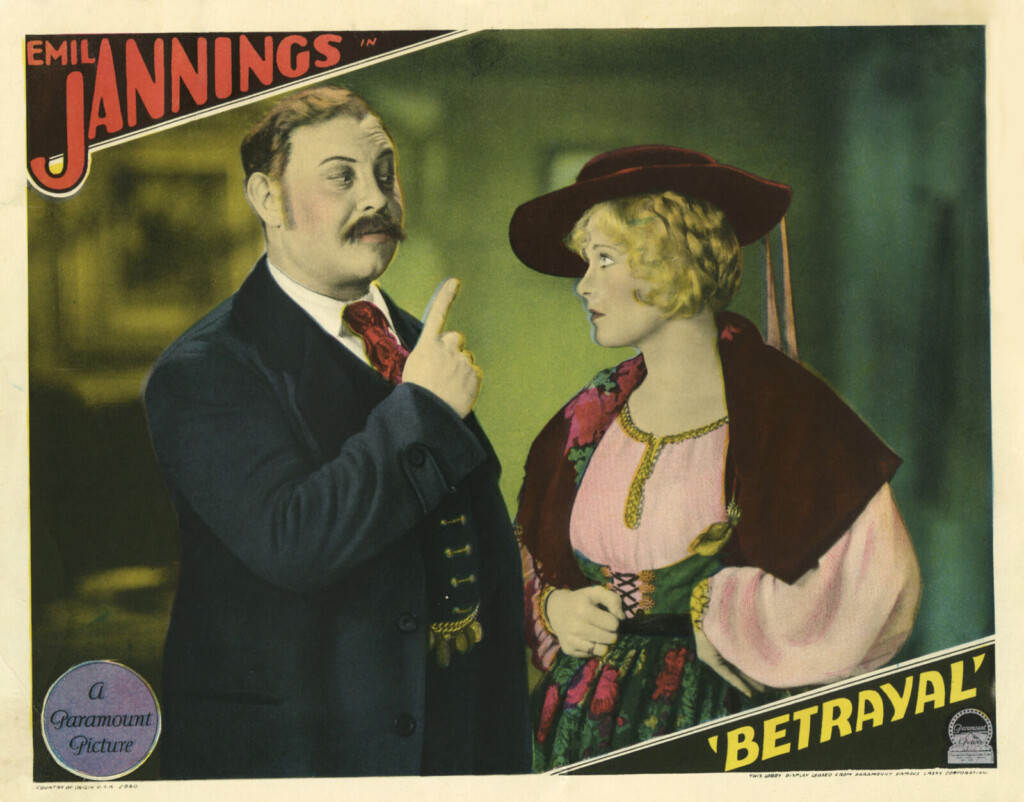
You sign the lease on an apartment together and somewhere in that bureaucratic gesture, invisible to both of you, a contract older than either of your names gets countersigned too — one written not by lawyers but by centuries of property law, inheritance anxiety, and the church’s need to regulate who owned whose body and whose children.
The word betrayal, when applied to intimate relationships before the twentieth century, had almost nothing to do with emotional injury. In Roman law, adultery was classified under the same legal category as theft. The Latin adulterium carried explicit connotations of contamination applied to bloodlines, not broken trust between two feeling people. A husband who discovered his wife’s infidelity in ancient Rome was not recognized by law as a wronged partner — he was recognized as a man whose property had been tampered with by another man. The wife herself barely figured as a subject in that equation. She was the medium through which the violation passed, not its primary victim.
This framing held with remarkable durability. When Henry VIII dismantled the English Catholic ecclesiastical court system between 1532 and 1534, the underlying logic governing marital betrayal did not shift — only the institutional machinery changed. Divorce remained functionally inaccessible to ordinary people across England for three more centuries, until the Matrimonial Causes Act of 1857 transferred jurisdiction from church courts to a new civil Divorce Court. Even then, adultery carried asymmetrical weight: a wife could petition on grounds of adultery only if it was compounded by cruelty, bigamy, or incest, while a husband needed adultery alone. The law was not protecting a relationship. It was managing the transmission of property and legitimate heirs. Betrayal was a disruption of legal order, not an emotional rupture between two people who had expected something of each other.
What dismantled that architecture was not a philosophical revolution but a professional one. After the Second World War, a new clinical infrastructure quietly colonized the language of marriage. The first dedicated marital therapy organizations in the United States emerged in the late 1940s; by 1955, the American Association of Marriage Counselors had codified practices that reframed the couple as a psychological unit rather than a legal or reproductive one. This was a genuine epistemic shift: suddenly, the interior life of a relationship became something that could be examined, diagnosed, and repaired. The concept of emotional needs entered the vocabulary of ordinary couples. And with it, the definition of betrayal expanded to fill whatever space emotional expectation had claimed.
By the 1970s, sociologists were documenting what researchers like Jessie Bernard in her 1972 work The Future of Marriage had begun to make visible: that men and women often inhabited structurally different marriages even when living inside the same one. Bernard’s data showed that married women reported dramatically higher rates of psychological distress than unmarried women, while married men showed the inverse pattern. The asymmetry wasn’t incidental — it was structural, baked into the distribution of emotional labor and the expectation that intimacy was primarily a woman’s domain to maintain. What this means for betrayal’s history is precise and discomforting: the moment emotional intimacy became the core of what marriage was supposed to provide, women became the primary custodians of a currency they had not invented, and men retained the inherited privilege of defining when that currency had been spent wrongly.
The therapeutic culture of the second half of the twentieth century did not liberate the concept of betrayal from power — it relocated power’s address. A violation that had once been measured in acres and legitimate offspring now got measured in attachment wounds and unmet needs. The stakes looked softer. They were not. When the vocabulary of injury shifts from property to psychology, the person who controls the psychological narrative inherits the leverage that property owners once held.
Hope in Vein
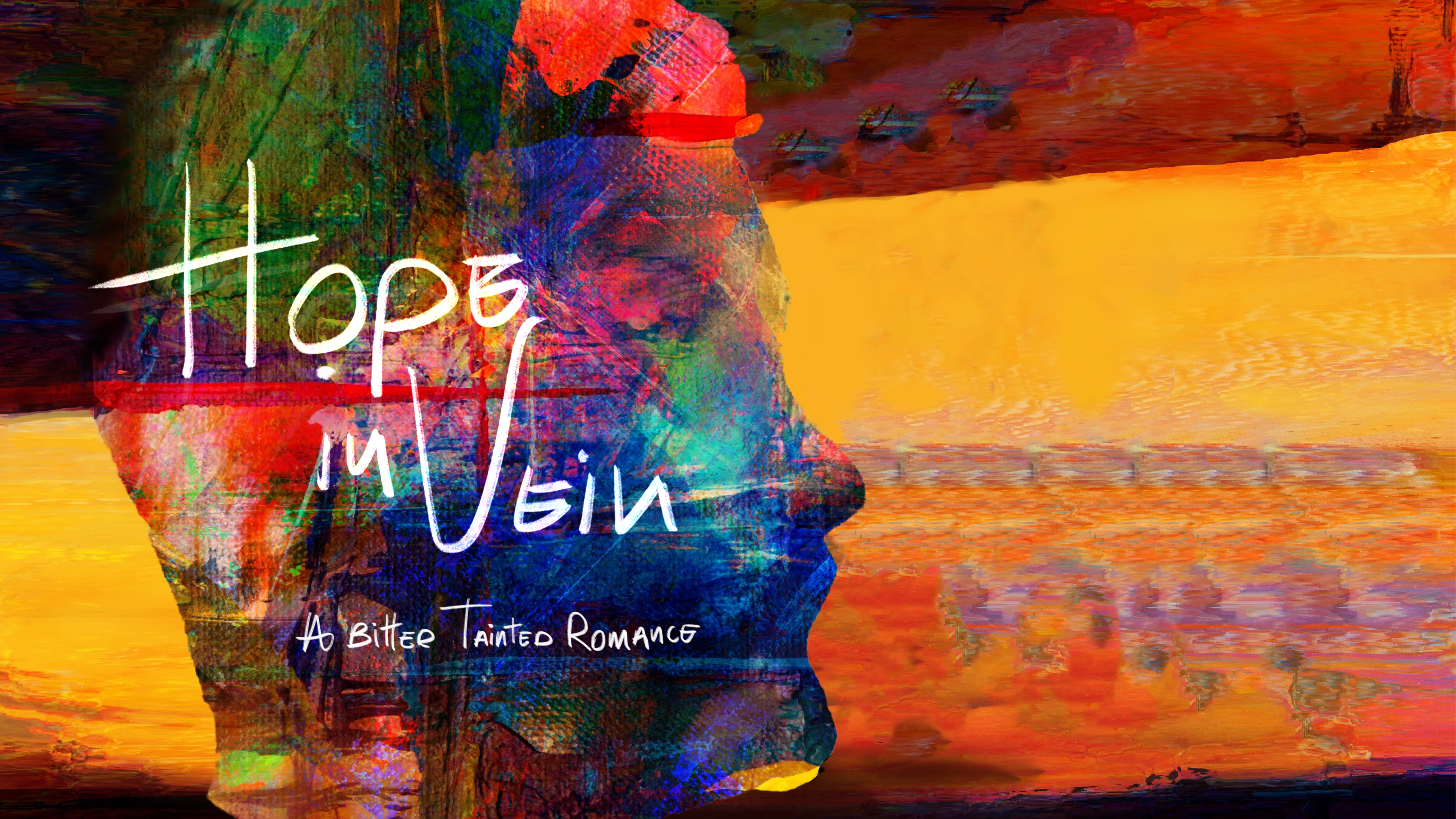
Drama, romantic, by Marc-Antoine Turcotte, Canada, 2022.
The film follows the journey of Matt Davis (Joshua Bilbao), a young man dealing with the profound stigma associated with living with HIV after contracting the virus from his longtime partner. “Hope in Vein” delves into the layers of emotions and challenges that emerge following Matt's diagnosis, highlighting the social and physical repercussions he encounters as he navigates his new condition. Seamlessly weaving together the complexities of Matt's experiences, the film offers viewers an intimate and touching perspective.
“I had heard about it; distant stories of anguish. It seemed that medical discoveries had faded the discussion. You will soon find that stigma continues to affect progress. Every experience is different, yet we can all feel the same contamination," says director Turcotte. "I approached this film with the desire to open up the conversation and lighten it up a little." Through the disparate obstacles that constantly remind Matt of stigma she faces, Hope in Vein explores the theme of forgiveness as a powerful channel for rekindling hope. With a talented cast and a heartfelt script, the film presents a compelling narrative that will leave audiences captivated and inspired.
LANGUAGE: English
SUBTITLES: Spanish, French, German, Portuguese
The Weaponization of Vulnerability
You told them about the summer you were seventeen, the thing you had never said out loud to anyone, the shame that sat in your chest for two decades like a stone someone forgot to remove. And they listened with the exact expression you needed — open, still, without flinching. You felt something release. You called it intimacy. You were right, and you were also walking into something you did not yet have the vocabulary to name.
Brené Brown’s research, spanning more than a decade of qualitative interviews and culminating in her 2010 work on shame and vulnerability, made a compelling and necessary case that the willingness to be seen in one’s most unguarded state is not weakness but the precise mechanism through which genuine human connection becomes possible. That argument is true. It is also incomplete in a way that becomes dangerous when imported directly into romantic relationships without further examination. Brown was mapping the general architecture of human courage. She was not mapping the specific gravitational field that forms between two people who share a bed, a bank account, a future, and a fear of abandonment.
John Bowlby, working in the 1960s and 1970s on the developmental roots of attachment, demonstrated that the strategies children develop to maintain proximity to caregivers — whether anxious clinging, compulsive self-sufficiency, or the disorganized oscillation between both — do not dissolve at adulthood. They migrate. They find new hosts. By the time a person sits across from a partner and confesses something they have never confessed before, they are not simply an adult choosing emotional honesty. They are also a child re-enacting the oldest gamble they know: the wager that exposure will produce closeness rather than abandonment. The confession is never only what it says it is.
What gets deposited into a relationship through disclosure does not simply sit there as shared history. It becomes available. Not necessarily through conscious malice — that is the more comfortable narrative, the villain who deliberately weaponizes what was given in trust. The subtler and more common mechanism is almost structural: the person who holds knowledge of your most protected wound is also the person best positioned to press it, often without fully realizing they are doing so. A comment delivered in the middle of an argument that happens to land precisely on the exposed nerve of the story you told. A joke that carries the coordinates of your old humiliation. The wound does not need to be targeted intentionally to be struck accurately. Proximity to the map is enough.
This repositioning is not a corruption of intimacy. It is, in a profound and uncomfortable sense, what intimacy produces. Psychoanalytic object relations theory, developed through the work of Melanie Klein and later elaborated by Donald Winnicott in the 1950s, holds that to become real to another person is to become vulnerable to their aggression as well as their love — that the same psychic space which allows for genuine care also permits genuine harm. The romantic ideal insists these are separable. The clinical record suggests otherwise. What you gave freely in disclosure, the other person received not just as a gift but as a form of structural advantage, whether or not either of you registered it as such at the time.
The asymmetry is rarely equal. In most relationships, one person tends to disclose more, earlier, and at greater depth than the other. Research on self-disclosure patterns, including studies published in the Journal of Social and Personal Relationships through the 1990s, consistently found that the person who disclosed more also reported higher anxiety about the relationship’s stability, greater fear of rejection, and a measurable tendency to interpret the partner’s silences as evidence of disapproval. The confession, intended as an act of trust, had also quietly reconfigured who held more to lose.
What Fidelity Actually Protects
You are sitting across from someone who has just told you they would never cheat. Not because they are devoted to their partner — though they believe that too — but because they cannot imagine who they would be on the other side of that act. The confession is quiet, almost unconscious, and it reveals something that most conversations about fidelity never reach: the person being protected is not the one sleeping in the other room.
Esther Perel spent over two decades in clinical practice watching couples dismantle themselves in her office, and what she documented in Mating in Captivity and later in The State of Affairs is not primarily a story about desire or betrayal. It is a story about identity. The faithful partner, she observed repeatedly, often experiences a discovered affair not as the loss of a relationship but as the destruction of a self-concept — the collapse of a carefully maintained story about who they are and what their life means. The wound is real, but its location is misdiagnosed almost every time.
This displacement matters enormously, because when you believe fidelity is a gift you give to another person, you construct it as a form of generosity. And generosity, as any anthropologist studying reciprocal exchange systems will tell you, creates debt. David Graeber’s 2011 work on debt and obligation demonstrated that gifts within intimate economies are never neutral transfers — they accumulate as moral leverage, quietly reshaping the power topology of a relationship. A loyalty framed as sacrifice becomes a claim. The faithful partner begins to own the story of their own restraint, and that ownership grows heavier and more possessive with every year it goes unrewarded in the specific way it expects.
Pair-bonding data complicates this further. Cross-cultural anthropological surveys, including Helen Fisher‘s extensive research across 58 societies documented in Anatomy of Love, show that strict sexual exclusivity as a normative expectation is neither universal nor ancient. What is consistent across cultures is the marking of a primary bond — through ritual, narrative, or public declaration. What varies enormously is what that marking is understood to protect. In societies where the primary bond is fundamentally economic and reproductive, infidelity threatens resource allocation. In late-modern Western cultures, where the couple has become the primary unit of emotional meaning-making, the threat is existential rather than material. The body that strays is not stealing food from the table — it is revising a document the other person believed was finished.
There is a particular kind of person who stays in a relationship they have long since emotionally vacated, who performs fidelity with the discipline of a monk while feeling nothing, and who describes this performance as love. The clinical literature on attachment, particularly the work on avoidant bonding styles from Bartholomew and Horowitz’s 1991 typology studies, suggests that for this person, loyalty functions as a defense against the terrifying openness of genuine presence. To stay, even emptily, is to retain a fixed coordinate in the social world. To leave would require becoming someone not yet named.
What this reveals is that fidelity can be, and often is, a profoundly narcissistic act — not in the vulgar sense of vanity, but in the precise psychoanalytic sense of an act performed in service of one’s own ego coherence. The partner is less a beloved person than a mirror held steady. Jealousy, in this light, is not the fear of losing the other — it is the fear of losing the reflection. Sociologist Francesco Alberoni wrote in Falling in Love that the nascent state of love dissolves the self before reconstituting it with the beloved at its center, and what people call commitment is often the refusal to undergo that dissolution a second time, with someone else.
Jupiter Landing

Comedy, by Stacy Dymalski, United States, 2005.
Six roommates must overcome their personal issues and come together to avoid eviction from their beloved Victorian house called "Jupiter Landing." The eclectic group, led by reporter Nicki, devises a plan to retaliate against their annoying landlord, but the struggle to save their home will plunge them into a spiral of emotional and moral confrontation for which they are unprepared. While each tenant has a secret they can't afford to reveal, the house itself conceals a mystery that ties them together in a way none of them ever expected.
An American indie comedy filled with quirky characters, each harboring their own dark secrets, slowly unveiled throughout the film. Well-written and amusing, with excellent performances: Tod Huntington is riotous as Catfish, the anarchic and dissolute guy, and Naomi West and Monique Lanier are both charming in their roles as the worldly Nicki and fragile Amber.
LANGUAGE: English
SUBTITLES: Spanish, French, German, Portuguese
A vision curated by a filmmaker, not an algorithm
In this video I explain our vision
The Social Enforcement of Couple Mythology

You sign the lease together, and somewhere in the notary’s office, beneath the fluorescent hum and the smell of photocopied documents, something shifts — not between you and your partner, but between both of you and the state. The institution has just acquired an interest in your continuity.
This is not incidental. The legal, religious, and therapeutic architectures surrounding the modern couple were not designed to serve love. They were designed to manage it — to transform a volatile, ungovernable attachment into something predictable, taxable, inheritable, and reproducible. What we experience as social support for our relationship is, in structural terms, a system of surveillance dressed in the language of celebration.
The bourgeois marriage ideology that crystallized across Western Europe in the nineteenth century did not emerge from some deepened cultural appreciation for romantic union. It emerged from the convergence of property law, inheritance anxieties, and a newly prosperous middle class that needed the household as its primary economic unit. Historians like Stephanie Coontz, in her 2005 work Marriage, a History, have documented how the Victorian ideal of the couple as an emotionally complete, self-sufficient dyad was largely an ideological confection — one that served capital accumulation more reliably than it served human intimacy. The sentimental elevation of marriage into a near-sacred institution happened precisely when marriage became most commercially entangled.
What Michel Foucault traced in The History of Sexuality, published in its first volume in 1976, was the mechanism by which confession became a technology of social normalization. The Catholic confessional did not merely receive transgression — it produced the categories through which transgression became legible, and in doing so, it produced the subject who would perpetually need to confess. The modern couple’s therapy session, the marriage counselor’s office, the pastoral consultation after infidelity — these are structurally continuous with that confessional logic. The couple is invited to narrate its failures so that the institution processing those failures can reinforce the framework within which the failure occurred. Betrayal, in this architecture, does not challenge the couple form. It deepens the couple’s investment in it.
Religious institutions have been particularly sophisticated in this operation. By encoding monogamous coupling as spiritually ordained — and deviation as morally catastrophic — they ensured that the emotional devastation of infidelity would be experienced not merely as personal wound but as metaphysical failure. The guilt is not incidental to the theology; it is the theology’s primary instrument. A person who experiences betrayal as a fall from grace is a person who will work harder to restore what the institution recognizes as grace — which is always, without exception, the original unit intact.
Therapeutic culture has inherited this logic while laundering its metaphysics. The discourse of attachment theory, of repair, of rebuilding trust, of the couple as a project requiring professional maintenance — all of this positions the relationship’s survival as the self-evident goal. The question asked in most couples therapy is not whether this arrangement is producing flourishing for the people inside it. The question is how to preserve the arrangement. The therapist’s neutrality is formal, not structural. The structure itself is the bias.
What this means for secrets is precise and largely unacknowledged: the pressure to disclose — to confess the affair, to reveal the debt, to surface the doubt — is not primarily a pressure toward honesty. It is a pressure toward reinscription. The confession returns the couple to the institutional gaze, which can then process the breach and reaffirm the framework. The secret that is never told is, from the institution’s perspective, the genuinely dangerous one — not because it harms the individuals, but because it lives entirely outside the system of management, beyond the reach of counselors, clergy, and clerks of court.
There are things that happen between two people that no institution has ever touched, and the authorities of coupledom have always known that this is where the real threat lives.
Silence as a Shared Decision
You have been sitting across from this person for eleven years, and there is a room in your shared life that neither of you enters. Not because you forgot where the door is. Not because the subject is too painful to approach. But because somewhere, in the wordless negotiation that couples conduct below the threshold of language, you both agreed that what happened that summer would remain unhappened. You pass it every morning with your coffee. You skirt its edges at dinner when certain names come up. The agreement was never signed, never spoken, never even acknowledged as an agreement — and that is precisely what makes it so structurally complete.
Bernard Williams, in his 1981 collection Moral Luck, introduced the idea of moral residue: the notion that when we make a moral choice — even the right one, even the necessary one — something is left behind that does not simply dissolve. The residue is not guilt in the clinical sense. It is closer to what he called agent-regret, the specific ache that belongs to a person who was the author of a harm, even if that harm was unavoidable, even if no other path was truly open. What Williams saw, and what most ethical frameworks systematically refused to see, is that clean moral conclusions are a bureaucratic fiction. You can do the correct thing and still carry the remainder of the road not taken in your body for decades.
What happens between two people who have sealed a shared silence is something Williams did not fully map, because he was largely concerned with the individual moral agent. But his logic extends outward with uncomfortable precision. When two people agree — tacitly, structurally, through the sheer choreography of avoidance — to leave something unnamed, they do not suppress it together. They co-author something. The silence is not a void they both stare into separately. It is a collaborative text, written in negative space, maintained through the daily performance of its non-existence. This is not repression. Repression is what one person does alone, pushing something below the surface of consciousness. What couples build is more like a mutual mythology, a shared narrative with a deliberate lacuna at its center, held in place by the consent of both parties.
The philosopher’s tool that becomes useful here is not ethics but phenomenology. Maurice Merleau-Ponty‘s work on intersubjectivity, particularly in the Phenomenology of Perception published in 1945, argues that two bodies in close proximity begin to share a perceptual world — that consciousness is not sealed inside the skull but bleeds outward into shared space. Applied to the architecture of a long-term couple, this means the silence they maintain is not two separate silences running parallel. It is one silence, jointly inhabited, with a texture and weight that neither person could sustain alone. The unspoken thing becomes a third presence in the relationship, not a ghost in the Gothic sense but something more like structural load-bearing material — the thing the whole edifice has learned to distribute its weight around.
What makes this particularly difficult to examine is that it looks, from the outside and often from the inside, like health. Two people who have reached an understanding. Two people who have the maturity not to pick at every wound. The couple that never fights about that thing, that has moved past it, that demonstrates — to friends, to family, to their own internal narrative — a kind of seasoned equanimity. But equanimity and avoidance share a surface. The difference lives in whether the thing was ever truly processed or whether it was simply architecturally contained, bricked into the wall with such care that the plaster appears smooth to every hand that runs across it.
And there is a specific intimacy in that containment, which is what makes the whole arrangement so resistant to dismantling — because the secret, and the silence around it, has become one of the primary things they share.
The Asymmetry of Knowing
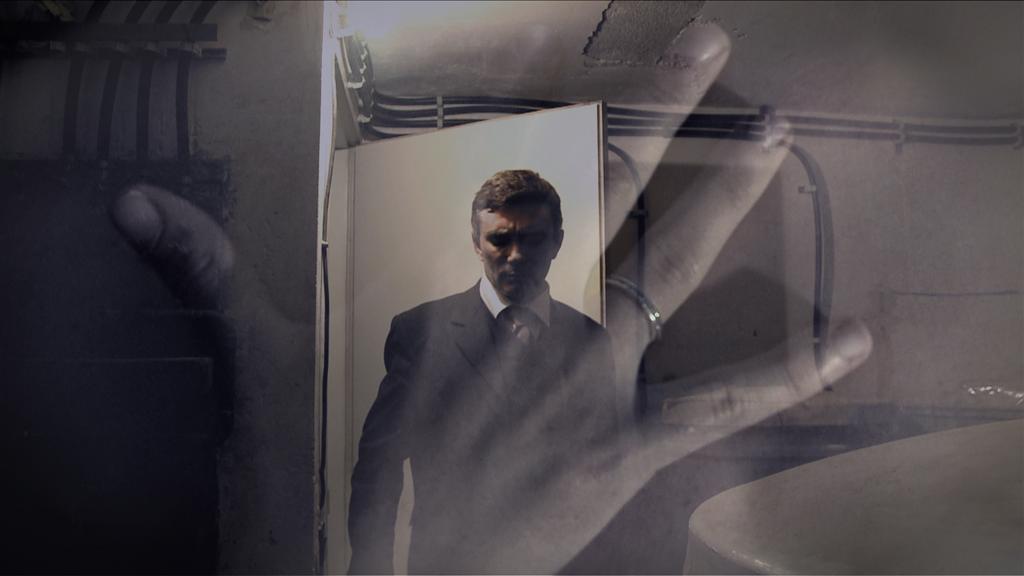
You have known the answer for weeks. You have felt it in the specific silence that falls after certain questions, in the way a hand withdraws a half-second too early, in the micro-hesitation before a name is spoken. You have not said anything, not because you lack the evidence, but because naming it would force you to act on it, and action would end something you are not yet ready to lose. So you live inside the knowledge, folding it smaller each day, storing it somewhere between your sternum and your stomach, and you tell yourself this is patience when it is actually a decision already made in the dark.
Every couple contains this asymmetry. It is not a malfunction, not a failure of communication that therapy could repair. It is structural. One person is always, at any given moment, further along the internal arc than the other — further along in doubt, in certainty, in departure, in attachment. The two people in a bed on any given Tuesday night are never symmetrically located inside the same relationship. One of them knows something the other does not yet know they know. This is not about betrayal specifically; it predates betrayal. It is the basic epistemological condition of intimacy, the gap that makes closeness both possible and permanently incomplete.
Simone de Beauvoir, writing in “The Ethics of Ambiguity” in 1947, diagnosed what she called bad faith not merely as self-deception but as the abdication of one’s own freedom in order to escape the anxiety of choosing. In intimate relationships, bad faith takes a specific form: you allow yourself to be known only partially, and you construct that partiality not out of malice but out of survival. The image your partner holds of you becomes a kind of shelter. To correct that image — to say, “I am not the person you think you are loving,” — would require dismantling the protection it offers. So the incomplete image persists, maintained by both parties, each quietly aware that full illumination would cost something neither is willing to pay.
What couples call trust is often, in practice, a negotiated and mutual tolerance of partial knowledge. The sociologist Anthony Giddens, in “The Transformation of Intimacy” published in 1992, argued that modern relationships are built on what he termed the “pure relationship” — sustained not by external obligation but by the continuous, renewable choice of each partner to stay. The brutality of that model, which Giddens celebrated, is that it demands a transparency neither person can actually deliver. You cannot fully account for the person you were before this relationship, the desires that have not disappeared but merely gone underground, the evaluations you are quietly running in the background of every argument about dishes or holidays or who remembered what.
The philosopher Thomas Nagel, in his 1998 essay “Concealment and Exposure,” drew a distinction between privacy that protects the self and concealment that distorts the relationship. The line between them is not fixed. What begins as necessary privacy — the interior space every person requires in order to exist as a subject rather than an object of another’s knowledge — gradually, imperceptibly, becomes something else. The kept thing calcifies. The silence around it thickens. The relationship continues above it like a house built on a floor that no one has checked in years.
The disturbing question is not whether couples hide things from each other. They do. The disturbing question is what would remain if they did not — whether the bond would deepen into something unprecedented, or whether it would simply dissolve, having lost the productive tension that partial blindness creates, revealing that some relationships are held together not despite the gaps in mutual knowledge but precisely because of them.
💔 When Trust Shatters: Secrets, Lies and Hidden Lives
Betrayal and couple secrets are among the most ancient and devastating forces in human experience, tearing apart the fabric of intimacy and identity. From literature to psychology, the hidden life within a relationship reveals the deepest contradictions of the self. These articles explore the cultural, psychological, and social dimensions of concealment, desire, and broken trust.
Impossible Desire: Adultery as Rebellion
Adultery in literature has long functioned not merely as moral transgression but as a form of rebellion against suffocating social norms. This article explores how impossible desire and the secrets couples keep become acts of defiance against the world that surrounds them. From colonial India to Victorian drawing rooms, the hidden affair exposes the violence of conformity.
GO TO THE SELECTION: Impossible Desire: Adultery as Rebellion
Betrayal as a Theme in World Literature
Betrayal is one of the most enduring and structurally complex themes in world literature, appearing from Greek tragedy to contemporary fiction. This article traces how authors across centuries have mapped the psychology of treachery, exploring the gulf between what lovers promise and what they ultimately do. The secret at the heart of a couple is often the secret at the heart of a civilization.
GO TO THE SELECTION: Betrayal as a Theme in World Literature
Gaslighting: Psychology and Culture
Gaslighting is one of the most insidious forms of psychological manipulation that can emerge within intimate relationships, eroding the victim’s sense of reality from within. This article examines the cultural and clinical dimensions of a phenomenon that transforms the couple’s private world into a theatre of deception and control. Understanding gaslighting means understanding how betrayal can be disguised as love.
GO TO THE SELECTION: Gaslighting: Psychology and Culture
Social Hypocrisy: The Double Face of Respectability
Social hypocrisy and the double face of respectability create the perfect breeding ground for the secrets couples keep hidden from the world. This article investigates how the pressure to appear virtuous and stable forces individuals into lives of concealment, where public image and private truth become irreconcilable opposites. The couple’s secret is often society’s secret reflected in miniature.
GO TO THE SELECTION: Social Hypocrisy: The Double Face of Respectability
Discover Cinema That Dares to Tell the Truth
If these themes of betrayal, hidden desire, and fractured intimacy resonate with you, independent cinema offers some of the most honest and uncompromising explorations of the human heart. On Indiecinema streaming you will find a carefully curated selection of films that go where mainstream cinema rarely dares to look. Come and discover stories that hold nothing back.
👉 EXPLORE THE CATALOG: Watch Indie Films in Streaming
A vision curated by a filmmaker, not an algorithm
In this video I explain our vision

