
The Familiar Weight
You rehearse it again. Not because you want to — or that is what you tell yourself — but because the mind slides there the way a tongue finds a broken tooth, compulsively, almost tenderly. The conversation plays out in the kitchen of your memory: what they said, what you should have said, what you will say if the moment ever returns. You are precise in these rehearsals. You remember the exact inflection, the dismissive pause, the way their eyes moved to something across the room while you were still speaking. And in the imagined rematch you are finally clear, finally devastating, finally heard. The strange thing is how warm that feels. How almost comfortable.

This is the part nobody names honestly. Resentment is not primarily painful. It is, at its structural core, a form of shelter. It gives you a coherent story about who wounded you and who you are in relation to that wound. It supplies the mind with a project — the ongoing case being built, revised, and fortified — and a project, any project, wards off the more vertiginous feeling of not knowing what happened to you or why it still matters. The wound stays open because an open wound is a wound you are still managing. Close it, and you have to figure out what to do next.
Psychoanalysts noticed this logic early. In 1917, Sigmund Freud described mourning as the slow, painful work of withdrawing libidinal investment from a lost object — energy untethered from what it loved, floating without anchor until it found somewhere else to land. What he observed in his clinical rooms in Vienna was that some patients refused this withdrawal. Not out of weakness, but because the attachment to loss was itself a form of relation. To grieve fully was to let the person, the relationship, the version of yourself that existed before — go. And going meant absence, which was sometimes more unbearable than pain. Resentment, understood through this lens, is not the failure to move on. It is the decision, usually unconscious, to keep the other person present through the medium of grievance.
The philosopher Friedrich Nietzsche had already named something adjacent to this in 1887, in “On the Genealogy of Morality,” using a French word he refused to translate: ressentiment. He was writing about moral systems, about how the powerless construct value by inverting the values of those who dominate them, but the psychological anatomy he described cuts closer to the personal than his argument admits. The man of ressentiment, Nietzsche wrote, does not react — he broods. His revenge is imaginary, endlessly rehearsed, never consummated. And the brooding itself becomes the substance of his inner life. There is a strange dignity in it, a sense of being the one who truly sees the injustice that others ignore. The wound becomes a credential.
What makes this so difficult to examine is that the credential is often legitimate. The injury was real. The dismissal happened. The betrayal was not imagined. Resentment rarely begins as a distortion — it begins as an accurate record of something that should not have occurred. The problem is not that it started. The problem is what it gradually replaces. Because the rehearsal of the wound, repeated across months and then years, starts to function less like memory and more like identity. You become the person to whom that thing happened, which means the person who did it retains a permanent room in your interior life, rent-free, influential, conjured at will by a particular tone of voice or a certain quality of light on an afternoon when you are already tired.
And you have decorated that room. You have arranged the furniture of the argument. You know where everything sits.
Along For The Ride

Drama, Comedy, by Bryan Simon, USA, 2001.
Two brothers, Terry (Randy Batinkoff) and Vance (Dylan Haggerty), embark on a journey into the desert with the body of their recently deceased father. Their goal is to find a burial site for him, but along the way unresolved family conflicts resurface. Terry, a successful former baseball player, has always exerted a dominant influence on the younger Vance, a humble mailman. Both carry within themselves the burden of a complicated relationship with their father, Jake (J.E. Freeman), a former professional player obsessed with sports. Even after his death, Jake appears to his children in dream sequences, but instead of offering wise advice, he continues to be distant and authoritarian. The journey thus becomes not only a physical but an emotional journey, in which the two brothers confront their mutual grudges and the emotional legacy of their father.
The film, directed by Bryan Simon with a budget of 150,000 dollars, was shot in extreme weather conditions, with a screenplay adapted by Jim Moores from a work by Randall Wheatley. The film also explores the role of sport as a vehicle for communication between father and son. For many men, expressing feelings is difficult, while talking about sport is a natural and shared language. "Along for the Ride" addresses these issues with sensitivity and realism, resulting in a touching work for those who have experienced similar family dynamics. An indie not to be missed for lovers of quality independent cinema.
LANGUAGE: English
SUBTITLES: Spanish, French, German, Portuguese
The Architecture of Grievance
You have rehearsed the argument so many times that it no longer feels like an argument — it feels like memory, like fact, like the shape of what actually happened. The person who wronged you is fixed in your mind with a specificity that the living, breathing version of them could never match. You know exactly what they meant by that pause before they spoke. You know the real motive behind the apology they never gave. You have presided over this case for months, perhaps years, and the evidence has only ever moved in one direction.
This is not a failure of reason. It is reason doing precisely what it was recruited to do. Friedrich Nietzsche, writing in “On the Genealogy of Morality” in 1887, identified a particular psychological architecture he called ressentiment — a French word he deliberately refused to translate, because he wanted the concept to carry a foreign weight, to feel like something imported into the self from outside. Ressentiment is not simply resentment. It is the process by which the wound becomes a worldview. The person who cannot act against the source of their suffering turns inward, and in that inward turn begins constructing something elaborate: a moral universe in which their own suffering is proof of their superiority, and the one who caused it is condemned not just for the specific act, but for what they fundamentally are. Nietzsche saw this as the defining psychological move of slave morality — not a surrender, but a covert reversal of power, where the powerless win by redefining what winning means.
What makes this architecture so durable is that it is genuinely coherent. Inside the private courtroom, the logic holds. Every new piece of evidence — a mutual friend’s offhand comment, a social media post, a dream — gets routed through the existing verdict and confirms it. The psychological term for this is motivated reasoning, but that framing misses something essential: the person inside this system is not being irrational by their own standards. They are being extraordinarily consistent. The problem is that the system was built to confirm, never to question. It has no mechanism for acquittal.
Sociologist Randall Collins, in his 2004 work “Interaction Ritual Chains,” described how emotional energy becomes self-reinforcing through repeated internal rehearsal, building what he called emotional entrenchment — a state where the feeling and the story that justifies it become mutually sustaining. The grievance feeds the emotion, the emotion validates the grievance, and the whole structure grows more load-bearing with each cycle. By the time someone has spent two years inside this system, dismantling it does not feel like healing. It feels like losing.
That sensation of potential loss is not trivial. The grievance has, by this point, organized significant portions of identity. Who you are includes being the person to whom this was done. Your sense of moral clarity, your explanation for certain failures, your bonds with people who witnessed or validated your pain — all of it is threaded through the narrative. Cognitive psychologist Dan McAdams, whose research on narrative identity across several decades established that human beings construct the self as an ongoing story, found that the most psychologically resistant stories are those in which suffering has been given redemptive meaning. But ressentiment produces a crueler variant: suffering that has been given accusatory meaning. The story does not redeem you by showing what you overcame. It sustains you by showing what was done to you — which requires the perpetrator to remain guilty, permanently, because the moment their guilt softens, the scaffolding of your self-understanding begins to shift.
This is the precise point at which resentment stops being a response to an event and becomes a structural feature of a life, and why the people most imprisoned by it are often the ones with the strongest case.

When Memory Becomes Prosecution

You are sitting across from someone you used to love, and you realize with a quiet shock that the story you have been telling yourself about them for three years is airtight. Every piece of evidence fits. Every memory confirms the conclusion. There is not a single moment you can retrieve that complicates the verdict — and that, precisely, is how you know something has gone wrong.
The mind in the grip of prolonged resentment does not operate as an archive. It operates as a prosecutor’s office. It does not collect; it builds a case. Frederic Bartlett, the British psychologist whose 1932 work Remembering dismantled the then-dominant idea that memory functions like a recording device, demonstrated through his now-canonical experiments with unfamiliar folk narratives that subjects did not reproduce what they had read — they reconstructed it, smoothing out inconsistencies, importing familiar cultural schemas, and quietly erasing whatever failed to cohere with what they already understood. Memory, Bartlett argued, is not retrieval. It is re-creation shaped by prior attitude. What this means for the person nursing an old wound is almost too uncomfortable to sit with: the version of events they are replaying with such conviction is not what happened. It is what they needed to have happened in order for the pain to make sense.
This is not a defect confined to the psychologically fragile. The reconstruction happens automatically, below the threshold of intention, which is precisely why the person doing it experiences their memory as fact rather than as narrative. The sharpness of a recalled detail — the exact tone of a voice, the specific phrase that was used, the way a door closed — feels like evidence of accuracy. But Bartlett’s research revealed that emotional salience, rather than preventing distortion, actually amplifies it. The more charged the original experience, the more aggressively the mind reshapes it toward internal consistency. Pain does not preserve memory. Pain edits it.
What gets edited out is the counter-evidence. The moments when the person you resent was also generous, also frightened, also trying. The moments when you yourself were difficult or absent or cruel in smaller ways you have since reclassified as justified. The resentful mind performs a continuous act of archival suppression, and it does so not because the person is dishonest but because coherence is more bearable than ambiguity. A story with a clear villain requires less cognitive labor than the genuine chaos of two people failing each other in overlapping and partially understandable ways.
There is a particular cognitive maneuver that locks this structure in place — what social psychologist Ziva Kunda described in her 1990 research on motivated reasoning as the tendency to accept evidence that confirms what we already believe while subjecting contradictory evidence to far more rigorous scrutiny. The person who trusts you will accept your good intentions at face value. The person who has already decided you are unreliable will require extraordinary proof of any exception. The resentful mind applies this asymmetry not only to future behavior but retroactively, re-examining the past through a filter that lets certain textures through and catches others entirely. Each pass through the memory consolidates the verdict a little further. The case becomes, with time, irrefutable — not because the evidence is overwhelming but because the rules of evidence have been quietly rewritten.
What is most disorienting about this process is that it feels like clarity. The person who has prosecuted an old relationship into a clean conviction often describes the experience as finally seeing things as they really were. The confusion of the original experience, the uncertainty, the moments when love and betrayal occupied the same hour — all of that has been resolved into a legible narrative. But resolution achieved by subtraction is not understanding. It is a form of forgetting dressed up as insight, and the prison it builds is one whose walls look, from the inside, exactly like the truth.
The Social Permission to Hold Grudges
You were taught, before you could name the feeling, that certain people deserve your anger forever. Not as a personal failing — as a form of love.
The transmission of resentment through family systems operates with a precision that individual psychology rarely achieves on its own. Murray Bowen, whose family systems theory took shape across decades of clinical work in the mid-twentieth century, identified what he called the undifferentiated family ego mass — the way unresolved emotional material passes between generations not as explicit instruction but as atmospheric pressure. Children do not learn whom to resent; they absorb it through the texture of silence at certain names, the particular tightening around particular subjects. By the time a person is old enough to question why they hold a grievance, it has already been load-bearing in their identity for years. To release it would feel less like healing and more like structural collapse.
What Bowen described clinically, historians of southern European and Appalachian honor cultures documented ethnographically. J.D. Vance’s account of Scots-Irish honor norms in America points toward a much older framework that anthropologists like Bertram Wyatt-Brown traced back through the antebellum South in his 1982 work Southern Honor: Ethics and Behavior in the Old South — a culture in which reputation was property, and any offense against it required a proportionate, public, lasting response. The grudge was not a failure of character management. It was the currency of social standing. A man who forgave quickly was a man who could be taken advantage of. The resentment was the proof of worth, and communities reinforced this at every level, from duel protocols to land disputes to the memory of which family had wronged which at a wedding forty years prior.
This is not ancient history worn smooth by distance. Social psychologist Richard Nisbett and Dov Cohen’s 1996 experimental research, published as Culture of Honor, demonstrated measurable hormonal and behavioral differences between young men from honor-culture backgrounds and those without when exposed to interpersonal insults. Cortisol and testosterone spiked differently. The body had learned the cultural script so thoroughly that it responded biochemically before any conscious decision could intervene. The grudge was already written into the stress response.
What makes this harder to see clearly is that loyalty narratives actively glamorize the mechanism. Entire cinematic and literary traditions — from Corsican vendetta stories to Irish Republican mythology to the long grief of Indigenous communities forced to carry historical wounds because no institutional acknowledgment ever arrived — frame sustained resentment as moral endurance. To keep hating is to keep faith. To stop is to betray the dead. The group identity coheres precisely around the shared object of resentment, which means that individual psychological release threatens collective belonging. A person who lets go of the family wound risks becoming, in the eyes of the group, the person who let the wound-maker win.
This dynamic appears with particular clarity in what sociologist Norbert Elias tracked across European court societies in The Civilizing Process — the way emotional restraint became a class marker while, simultaneously, entire communities below the aristocratic threshold maintained elaborate codes of lasting offense as the only dignity available to them. Resentment was not irrational for those people. It was the one register in which they could assert that they had been wronged and that it mattered. The psychiatrist and philosopher Frantz Fanon understood this when writing in 1961’s The Wretched of the Earth that the accumulated rage of colonized people was not pathology to be therapeutically dissolved but the rational remainder of systematic dehumanization that had never been named, tried, or repaired.
Which means the question is never simply whether a person can let go. It is whether the social structure surrounding them has ever given them a reason to believe that letting go would mean anything other than disappearing.
The Paradox of the Injured Self
You meet someone at a dinner party who, within four minutes of sitting down, has told you about the colleague who stole their idea in 2019, the partner who left without explanation, the friend who never apologized. They are not complaining, exactly. They are presenting credentials.
There is a logic buried inside this behavior that most psychological frameworks misread as dysfunction. They call it rumination, avoidance, failure to process. But those labels miss the architecture beneath, the way the injury is not simply being preserved despite the pain it causes, but precisely because of what it silently proves. Karen Horney, writing in 1950 in “Neurosis and Human Growth,” described what she called neurotic pride — a compensatory structure in which the idealized self, unable to sustain itself through genuine accomplishment or connection, turns to its own suffering as evidence of distinction. The logic runs something like this: if I was wronged this severely, I must have been worth wronging. The depth of the wound becomes an inverse measure of the self’s significance.
This is not a fringe pathology. It is one of the most quietly common operations of the human psyche, and it runs on a fuel that is almost impossible to admit to yourself in real time. Humiliation, when it is freshly experienced, is annihilating — it collapses the self, strips rank, removes the floor. But humiliation that has been survived, catalogued, and enshrined undergoes a strange alchemical reversal. It becomes a form of superiority. The person who was humiliated and endured now occupies a moral altitude that the person who did the humiliating cannot reach. There is a quiet throne built from old wounds, and sitting on it feels remarkably like dignity.
What makes this mechanism so adhesive is that it is not entirely false. Real injuries are real. The betrayal happened. The dismissal was unjust. The cruelty was cruelty. The wound is not invented, and that factual accuracy gives the entire structure its plausibility. You cannot argue someone out of a memory that is accurate. What shifts, almost imperceptibly, is the relationship to that memory — not whether it happened, but what function it is now serving. At some unannounced moment, the injury migrated from something that was done to you into something that defines you, and the migration was never announced because announcing it would require admitting the compensation it provides.
Horney was precise about what neurotic pride costs. Because the idealized self is a construction, any evidence that contradicts it — a new failure, a fresh slight, a moment of ordinary human inadequacy — becomes catastrophically threatening. The person who has built their self-worth around the wound must protect the wound with the same vigilance they would protect any other cornerstone. This means they cannot afford to heal. Healing would dissolve the evidence. Healing would return them to the unbearable ordinary condition of being simply a person, unmeasured by suffering, unverified by anyone else’s cruelty.
There is also a relational dimension that Horney did not fully excavate but that later object-relations theorists began to trace. The resentment is never purely internal — it is always addressed to someone, even when that someone is absent, dead, or entirely unaware. The person carrying the wound is in continuous implicit conversation with the one who inflicted it, arguing a case before a tribunal that will never convene. This perpetual internal litigation keeps the offender alive inside the self, a paradox so complete it borders on the grotesque: the person you cannot forgive is the person you cannot stop thinking about, and not thinking about them would require a grief that the pride structure is specifically designed to prevent.
The wound, then, is not a failure to move on. It is a solution — an imperfect, costly, quietly exhausting solution to the problem of how to remain someone when the evidence of your value keeps refusing to arrive from the outside world.
A vision curated by a filmmaker, not an algorithm
In this video I explain our vision
Power Asymmetry and the Illusion of Debt

You are waiting for an apology that will never come, and somewhere beneath the waiting you already know this, which is why the waiting has become the point.
The structure of resentment is not psychological in origin — it is economic. It operates through a ledger, and the ledger requires a debtor. When Luc Boltanski mapped the sociology of moral indignation in “De la justification” — co-authored with Laurent Thévenot in 1991 — he identified something that therapists had been circling for decades without naming precisely: the act of raising a grievance is not simply an expression of pain, it is a claim on a shared world. To feel wronged and to articulate that wrong publicly is to assert that you and the person who harmed you belong to the same moral universe, one governed by principles that both parties are obligated to honor. The catastrophe Boltanski never quite said aloud, but which his framework makes unavoidable, is what happens when the other party refuses to enter that universe at all.
Because if they refuse — if the institution, the parent, the former partner simply declines to recognize the framework in which they owe you anything — the injured person faces a choice that is almost never acknowledged as a choice. They can abandon the claim, which feels like abandoning the wound itself, like agreeing that what happened to them did not matter. Or they can maintain the claim indefinitely, which requires keeping the debtor perpetually present in their imagination, powerful, withholding, always on the verge of a reckoning that never arrives. Most people, without realizing it, choose the second option. And this is where power performs its most elegant trick: the person who refused to pay continues to collect interest.
There is a man in his late fifties, sitting at a kitchen table in a house that still belongs, emotionally, to his father. The father has been dead for eleven years. The table is covered in old letters, documents, evidence of decisions made without him, inheritances redirected, affections withheld. He is not grieving. He is prosecuting. The father cannot answer, cannot capitulate, cannot be made to see — and this impossibility has become the architecture of the son’s inner life, every room built around the cavity where the verdict should be.
This is what Boltanski’s later work, “The New Spirit of Capitalism” — written with Ève Chiapello in 1999 — pressed toward from a different angle: that systems of power survive not by suppressing critique but by absorbing it, by making critique itself a feature of the landscape rather than a rupture within it. Grievance, when it is directed at a party that will never grant recognition, functions the same way. The powerful do not need to silence the wounded. They only need to remain indifferent, and the wounded will do the work of containment themselves, endlessly rehearsing the argument, sharpening the evidence, becoming more fluent in the language of a trial that has no courtroom.
What this produces is a peculiar form of subordination that masquerades as defiance. The person who refuses to let go of an unresolved grievance often experiences themselves as the one who is holding on — to truth, to dignity, to a refusal to pretend the harm did not happen. But holding on to the claim against a party that will not respond is not resistance. It is prolonged deference to the other’s power to grant or withhold. Every morning you wake up and return to the case, you are implicitly confirming that their recognition is the only currency that can settle the debt — that without it, you remain, structurally, in deficit.
The fiction is not that you were wronged. The fiction is that being proven right, in the eyes of the one who wronged you, is what repair would feel like.
A Different Kind of Captive
You are sitting across from someone who has just done everything right. They looked you in the eye. They named what they did without softening it. They did not say “I’m sorry you were hurt” — that linguistic cowardice disguised as remorse that leaves the injured party holding the weight of their own wound. They said “I was wrong, and I knew it when I did it.” The apology was complete, structurally sound, morally adequate by any measure a philosopher or a therapist could apply. And something in you closed like a fist.
This is the moment that breaks the standard narrative of resentment, because the standard narrative depends on a villain who never apologizes, never sees, never concedes. It needs the offense to remain active, the wound to stay open, the other person to keep being monstrous so that your holding-on feels justified. When the apology arrives — real, undeniable, witnessed — the script loses its logic, and what remains is not relief but a kind of vertigo. The ground you were standing on, the ground built from accumulated grievance, simply disappears, and you discover there is nothing underneath it.
What collapses in that moment is not just the grudge but the architecture of the self that was organized around it. Philosopher Charles Taylor, in Sources of the Self published in 1989, argued that identity is not a possession but an orientation — we know who we are by knowing where we stand in relation to others and to our own moral history. When resentment becomes load-bearing, when it functions as the wall against which everything else in your life leans, its removal does not liberate you. It destabilizes the entire structure. The person who cannot release a grudge after a genuine apology is not being irrational. They are being architectural.
There is clinical evidence that this kind of paralysis is far more common than popular psychology acknowledges. Studies published in the Journal of Personality and Social Psychology throughout the early 2000s documented what researchers called “forgiveness resistance” — cases where subjects who were presented with sincere, behaviorally verified apologies showed no reduction in resentment levels and, in some cases, showed increases. The researchers initially treated this as anomalous. It is not anomalous. It is the system functioning exactly as it was designed to function, except that the design is not about justice. It never was.
Sociologist Erving Goffman spent decades mapping the performances people stage to maintain what he called “face” — the coherent, socially legible version of the self presented to others and, more critically, to oneself. In The Presentation of Self in Everyday Life, written in 1956, he demonstrated that people will contradict their own stated desires rather than disrupt the performance of a self they have rehearsed too long to abandon. The person who claims to want resolution but cannot accept it when it arrives is not lying. They are protecting a performance that has become indistinguishable from the performer.
What this means is that resolution, framed as the goal of working through resentment, may be the wrong category entirely. If the injury shaped you — if you reorganized your values, your relationships, your self-understanding around the fact of what was done to you — then resolution does not restore you to who you were before. It demands you become someone you have not yet imagined. That is not a therapeutic process. That is an existential one, and it carries a cost that no one in the conversation about forgiveness is honest enough to name: to let go is sometimes to grieve a version of yourself that only existed because of what someone else destroyed.
The prison metaphor, so beloved in the literature of healing, assumes the captive wants to leave.
The Thing That Resentment Is Protecting
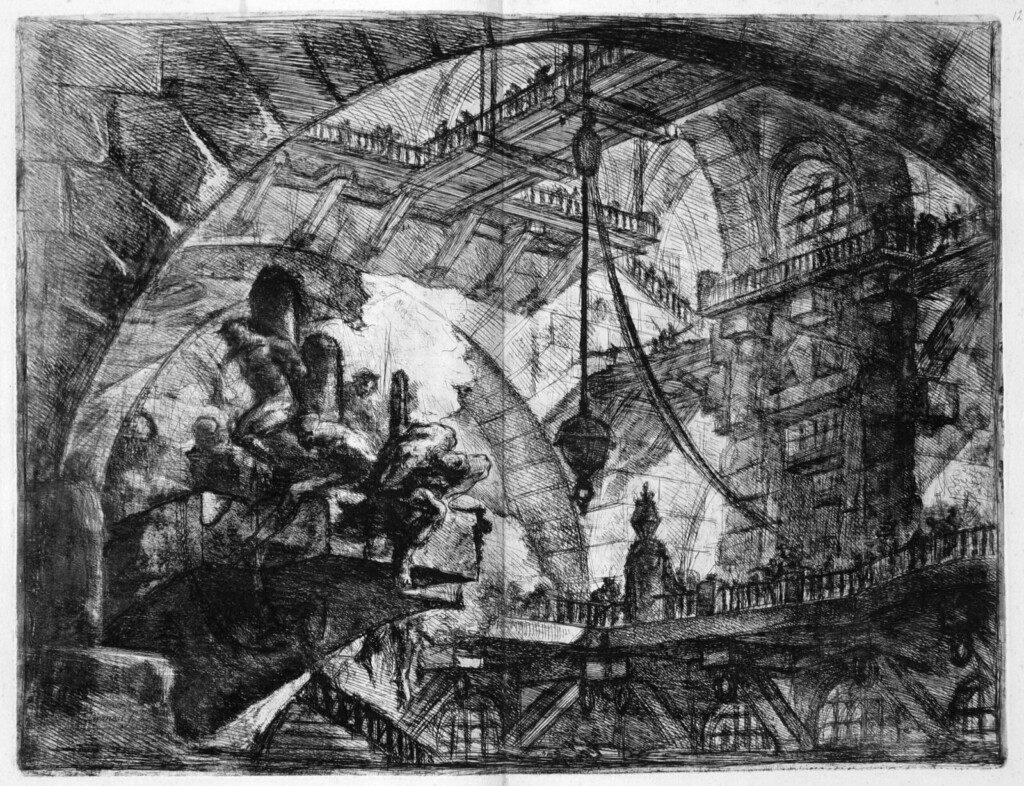
You are standing in a room you have furnished entirely with evidence of what was done to you, and somewhere in the middle of cataloguing the damage, it occurs to you that you have not thought about what you wanted before any of this happened.
That recognition rarely arrives as an insight. It arrives as a vertigo.
The deepest architecture of resentment has almost nothing to do with the person it targets. The grievance functions as a load-bearing wall, and what it bears is the weight of an identity that would otherwise have no clear edges. Donald Winnicott spent decades mapping what he called the false self — the adaptive persona constructed in early life to meet the demands of an environment that could not tolerate authentic expression. In his 1960 paper “Ego Distortion in Terms of True and False Self,” he described a psychological structure where the individual learns to comply, perform, and mirror back what is expected, while the true self retreats into a protected interior silence. The tragedy he identified is not that the false self forms — it almost always does, in some degree — but that over time the person loses confident access to what lies beneath it. The compliance becomes the personality. The performance becomes the face in the mirror.
Resentment enters this architecture not as a corruption of the self but as one of its most reliable scaffolds. To hold a grievance is to have an organizing principle: a cause for one’s unhappiness, a source of one’s limitations, a narrative that explains why the life one is living is not yet the life one was meant to inhabit. The grievance provides what pure selfhood, in many people, cannot — a stable referent. Strip the resentment away, and the question that rises is not “what do I do now?” but something far more destabilizing: “who am I when I am not defined by what was done to me?”
That question carries a genuine terror. Not a metaphorical one. Winnicott understood that the threat of identity dissolution — the sensation of ceasing to cohere as a recognizable self — produces reactions indistinguishable from mortal threat. The psyche does not distinguish cleanly between ego death and biological death. This is why forgiveness, when it is pressured from outside, so often produces not relief but rage: the demand to release the grievance feels, at a pre-rational level, like a demand to disappear. The person holding the resentment is not being irrational. They are defending the only border they can clearly locate.
What makes this particularly difficult to see is that the grievance often arrived at a moment of genuine wounding. The original injury was real. But the self that organized itself around that injury in the aftermath is not the same as the self that was present before the wound. And neither of those is necessarily the self that would emerge if the wound were genuinely metabolized rather than preserved. Most people, if they are honest, do not know who that third person is. They have never had occasion to meet them. The resentment has been standing in the doorway for so long that whatever was in the room behind it has become unverifiable — possibly undeveloped, possibly dormant, possibly something that would require them to make choices they have not yet had to make.
This is the rarely spoken cost of carrying a grievance across years: it is not only a form of suffering but a form of shelter. It protects the person from the open field of their own unstructured becoming. It answers the question of identity before the question can become unbearable. And in a culture that offers very little language for the experience of being a self without a story, without a wound, without a defined position in a narrative of harm and repair, the resentment fills a silence that very few people know how to inhabit any other way.
🔒 When the Mind Becomes Its Own Cage
Unresolved conflicts do not simply fade with time — they calcify into invisible walls, trapping the self in cycles of bitterness and stagnation. These related articles explore the psychological, philosophical, and existential dimensions of being imprisoned by one’s own emotional wounds.
Stefan Zweig and Chess: The Mind as Prison
Stefan Zweig‘s novella uses the game of chess as a devastating metaphor for a mind turned against itself, where obsessive rumination becomes the bars of solitary confinement. The protagonist’s internal conflict, endlessly replayed without resolution, mirrors precisely the psychological prison that unprocessed resentment constructs around the self. Zweig understood that the most suffocating traps are never built by others — they are assembled, move by move, from within.
GO TO THE SELECTION: Stefan Zweig and Chess: The Mind as Prison
Dissociation in Psychology: When the Mind Divides
Dissociation in psychology describes what happens when the mind fractures under the unbearable weight of unintegrated experience, splitting consciousness to survive what it cannot confront. Unresolved resentment often operates along the same fault lines, creating compartmentalized versions of the self that circle the original wound without ever approaching healing. Understanding dissociation illuminates how emotional conflict can become structurally embedded in the psyche, making escape feel not just difficult but impossible.
GO TO THE SELECTION: Dissociation in Psychology: When the Mind Divides
Existential Emptiness: When Life Loses Meaning
Existential emptiness frequently emerges when long-held resentments have consumed so much psychic energy that life itself begins to feel drained of color and purpose. The anger that once felt like fuel slowly becomes the very void it was meant to fill, leaving behind a hollowness that no external circumstance can easily remedy. This article traces the philosophical and psychological contours of that emptiness, asking what it means when the story we keep telling ourselves becomes the only story we know.
GO TO THE SELECTION: Existential Emptiness: When Life Loses Meaning
Professional Burnout: When Work Becomes a Trap
Professional burnout and chronic resentment share a common architecture: both emerge when a person remains too long in a situation that demands more than it returns, eroding the boundary between endurance and entrapment. The workplace becomes a mirror of unresolved inner conflict, amplifying grievances that were never properly named or addressed. Exploring burnout as a psychological phenomenon reveals how institutional and relational resentments intertwine, building a prison whose walls are made of accumulated, unexpressed pain.
GO TO THE SELECTION: Professional Burnout: When Work Becomes a Trap
Explore the Cinema of Inner Conflict on Indiecinema
If these themes resonate with you, independent cinema offers some of the most honest and courageous explorations of the human mind’s capacity to imprison itself. On Indiecinema streaming you will find films that dare to look directly at resentment, entrapment, and the long, difficult road toward inner freedom — stories that don’t flinch from the maze, but walk through it with you.
👉 EXPLORE THE CATALOG: Watch Indie Films in Streaming
A vision curated by a filmmaker, not an algorithm
In this video I explain our vision

