
The Grammar of Slow Erosion
You notice it first in the way you explain yourself to friends. Not what happened — that part is easy enough — but the sheer volume of context you need to provide before the story makes sense. You find yourself saying things like “but you have to understand, that was actually a good week for us,” and you watch their faces absorb that sentence without fully processing what it contains. A good week. You have recalibrated so thoroughly, so quietly, that the coordinates of ordinary life no longer match anyone else’s map.

This is not the story of a blow. It is the story of a millimeter. Of the way a threshold moves so gradually that the nervous system never registers an alarm, because alarms are designed for sudden changes in pressure, not for the slow redistribution of what is considered acceptable. The psychologist Jennifer Freyd, in her 1997 work on betrayal trauma, observed that the mind will suppress awareness of abuse when the abuser is someone on whom the victim depends — not out of stupidity, not out of weakness, but out of a survival logic so elegant it becomes its own trap. The mind protects the attachment by editing the evidence.
What makes the erosion so difficult to name is that it does not announce itself as destruction. It arrives dressed as correction. A raised eyebrow at the way you told a story at dinner. A comment about your laugh being too loud, offered gently, almost tenderly, as though it were a gift of self-awareness. The first time this happens, you experience a faint unease you cannot locate precisely enough to challenge. The second time, you are already compensating. By the fifteenth time, you have stopped laughing that way altogether, and you experience this not as a loss but as a kind of maturity, a refinement of yourself, evidence that the relationship is making you better.
Sociologist Erving Goffman spent much of his career mapping the invisible architecture of social performance — the way individuals manage identity through interaction, constantly reading cues about who they are permitted to be in any given context. His 1959 work “The Presentation of Self in Everyday Life” laid out how identity is not a fixed interior thing but a negotiated surface. In a healthy negotiation, both parties expand each other’s range. In a toxic one, the negotiation is asymmetrical from the start, and the person with less relational power gradually shrinks their performance down to what is tolerated, mistaking constraint for coherence.
The cruelty of incremental redefinition is that it leaves no single moment to point to. This is not an accident. Research published in the journal Psychological Trauma in 2015 confirmed that survivors of coercive control consistently struggled to identify a beginning — not because they lacked intelligence or perception, but because the process was architecturally designed to have no visible seams. Each individual moment, extracted and examined alone, appears defensible. The genius of the method is that it only becomes visible in aggregate, and by the time you can see it in aggregate, you are already deep inside a version of yourself that was built for someone else’s comfort.
There is a particular exhaustion that belongs exclusively to this experience. It is not the exhaustion of conflict. It is the exhaustion of constant low-level translation — of perpetually converting your natural responses into a format the relationship can tolerate. You become fluent in a second language you never chose to learn, and the terrible efficiency of the human brain means that eventually this second language begins to feel native, begins to feel like you, and the original tongue starts to sound foreign even to yourself.
What gets taken is not a single thing. What gets taken is the assumption that your interior life is a reliable source of information about your own experience.
Paradise East
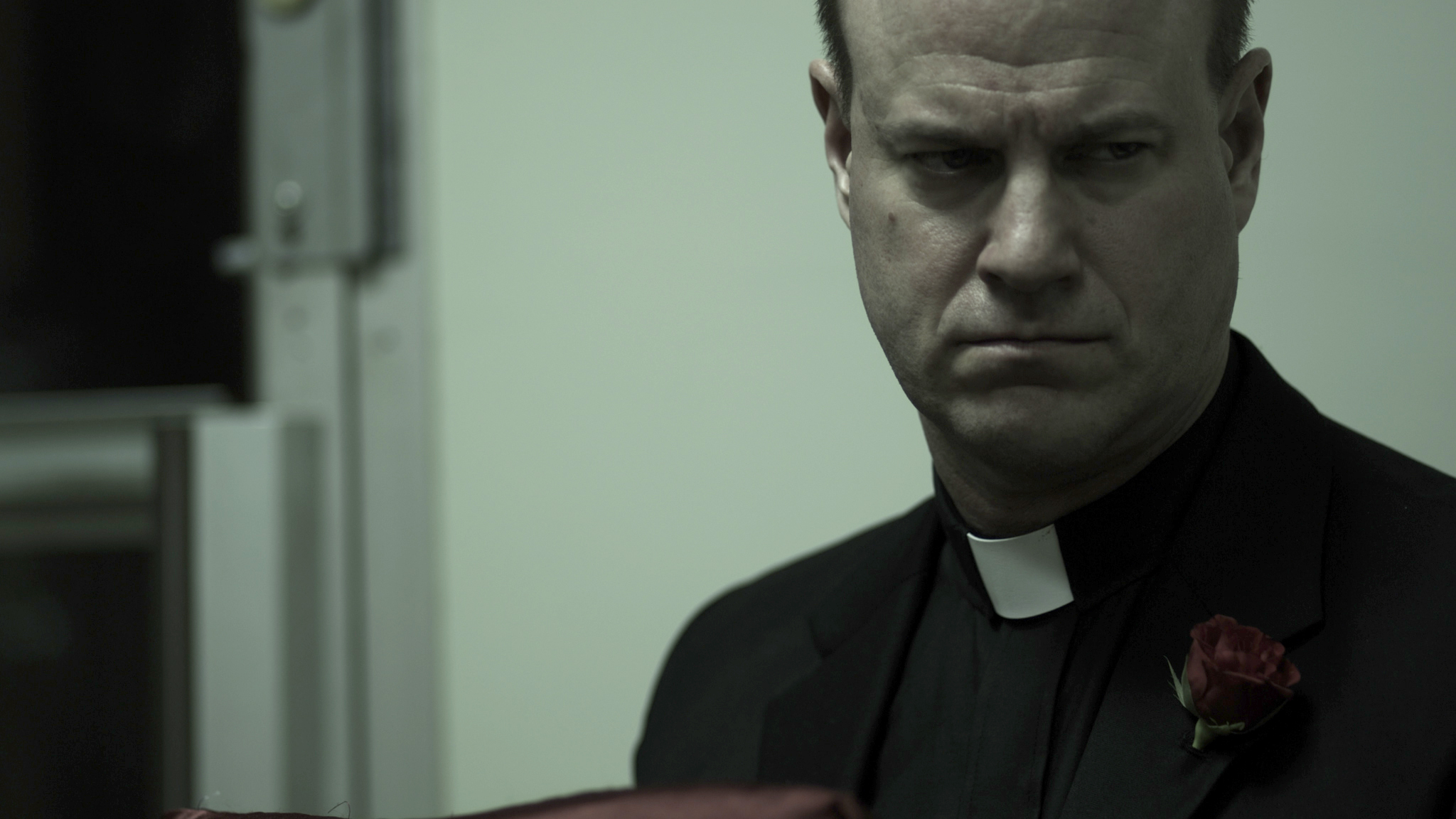
Drama, black comedy, by Nick Taylor, United States, 2010.
Paradise East is a black comedy about a dysfunctional lower-middle-class family. Lucky, not your typical dad, runs a coffee shop and has a hard time dealing with his two children's idiosyncrasies. Ernie is an aspiring pimp and street cheater. Chip is unemployed with a passion for French fries and underage girls. David, Lucky's nephew, is pretty normal and is the Marilyn Munster of the group. Wandering between jobs, he suffers the trauma of his mother who was recently killed. Jane, a sexy woman, rents an apartment from David. Jane is in a relationship with Lisa, a young college student, but she falls in love with David. After numerous efforts, she seduces him, ending his relationship with Gina, a waitress at her uncle's restaurant. This is not accepted by the strange pastor who does his best to get in touch with the members of his parish. 'Faith is a blessed gift', he preaches to him, 'pray to the Holy Spirit for forgiveness. Get away from the snake and swim in the Blood of our Savior. Resist the temptation. ' He seems like a great guide.
Virtually all of the characters in Paradise East come across nasty and terrible scoundrels ready to self-destruct. Writer / director Nick Taylor makes sure that every scene has crisp cinematography, charming lighting, and a suitable atmosphere. When the characters speak directly to the camera, the film switches from color to black and white. In the color scenes, however, the colors are cold and dull, the shots suggest the inner chaos of the characters. The slow-burning thriller originates from an environment of fear and sadness that can cause something terrible at any moment. An indie film with a compelling cast that uses visual experimentation and staging rigor in a drama largely shot in the seedy interiors of a family drifting into existence.
LANGUAGE: English
SUBTITLES: Spanish, French, German, Portuguese
Attachment Theory and the Architecture of Dependency
You meet someone and within weeks you feel you have known them your whole life. That sensation — the one that feels like recognition, like coming home — is not love identifying itself. It is your nervous system pattern-matching at speed, cross-referencing the new person against the oldest emotional data you possess, and reporting back: familiar. The feeling is genuine. The conclusion it leads you to is not.
John Bowlby spent decades trying to understand why children separated from caregivers display not just sadness but a specific, almost clinical sequence of responses: protest, then despair, then a flat emotional withdrawal he called detachment. His 1969 work Attachment and Loss was not, as it is often reduced to, a book about children. It was a book about what the human organism learns to do when the source of safety is also the source of pain — how the system calibrates itself not toward happiness but toward survival, toward predicting what comes next, even when what comes next is harm. Predictability, Bowlby argued, is the deeper biological imperative. The child does not need a good caregiver. The child needs a legible one.
Mary Ainsworth made this disturbing in a different way. In the early 1970s, through the Strange Situation experiments at Johns Hopkins, she placed toddlers in a room with their caregivers, then separated them briefly, then watched what happened when the caregiver returned. What she found was not a simple spectrum between secure and insecure. Anxiously attached children ran to the returning parent and then immediately pushed them away, caught in a loop of wanting comfort from the very body that had made them need comfort in the first place. Avoidantly attached children appeared indifferent, but their cortisol measurements told a different story entirely — internally the stress response was volcanic, while the outward performance was one of calm. The child had learned that displaying need produced nothing, so the display was suppressed while the need itself remained untouched, still burning beneath the surface.
What Ainsworth observed in a university laboratory in Baltimore in 1972 is precisely what adult survivors of toxic relationships describe decades later in therapists’ offices across every continent. The suppressed need. The simultaneous pull toward and recoil from the person causing damage. The physiological spike that the face has learned to hide. These are not character flaws that developed in adulthood. They are architectural features installed early, running quietly in the background of every intimate encounter that follows.
The psychologist Daniel Siegel, drawing on developmental neuroscience in The Developing Mind, published in 1999, demonstrated that early relational experiences do not merely shape personality in some metaphorical sense — they literally wire neural circuits, particularly those governing emotion regulation, threat detection, and social cognition. A child raised in an environment of intermittent reinforcement, where warmth and rejection alternate without predictable pattern, develops a nervous system that reads ambiguity as normal, that interprets emotional inconsistency as the baseline texture of intimacy. When that child becomes an adult and meets someone who is sometimes electric and sometimes cold, sometimes adoring and sometimes contemptuous, the brain does not flag this as danger. It flags it as home.
This is the mechanism that most popular language about toxic relationships refuses to engage directly. People ask why someone would stay with a partner who demeans them, and the implicit assumption is that the answer lies in weakness, in low self-worth, in some failure of clear thinking. But the nervous system is not thinking. It is recognizing. And recognition, at the level of the body, produces relief — a brief, powerful, completely misleading sense of having found the right place. The cruelest trick the architecture of early attachment plays is this: it makes the most familiar danger feel like the first safe thing you have encountered in years.

The Historical Invention of Romantic Suffering

You have probably, at some point in your life, mistaken the pain of a relationship for evidence that the relationship mattered. The sleeplessness, the obsessive rehearsal of what was said and what was meant, the specific gravity of waiting for a message that does not come — these felt like proof. Proof that the feeling was real, that the stakes were high, that you were truly and seriously alive. Nobody told you to interpret suffering that way. Or rather, someone did, and that someone has been dead for two centuries.
The Romantic movement of the early nineteenth century did not simply produce poetry. It produced a template for how interiority should be organized, and it distributed that template so effectively that most people now carry it without recognizing it as a historical artifact. Johann Wolfgang von Goethe published “The Sorrows of Young Werther” in 1774, and the novel — in which a young man destroys himself over an unattainable love — triggered documented waves of imitative suicide across Europe. What is remarkable is not that the book was dangerous, but that what it transmitted was considered beautiful. Suffering for love was reframed, in that cultural moment, as the sign of a soul deep enough to deserve love at all. Shallow people, the logic ran, do not suffer this profoundly.
The Romantic poets formalized what Goethe had introduced. John Keats, writing in the early 1820s while his own body was consuming itself with tuberculosis, collapsed physical dissolution and erotic longing into a single aesthetic gesture. Lord Byron performed anguish as a kind of aristocratic credential. Suffering was not incidental to love in this framework; it was the mechanism by which love proved its own sincerity. The implication, never stated explicitly but deeply operational, was that a love without torment was probably not love at all — it was mere comfort, mere companionship, something suburban and insufficient.
What the nineteenth century built, the twentieth century industrialized. By the time popular music and cinema had scaled these narratives to mass audiences, the equation between love and pain was no longer a literary position but a psychological reflex. Researchers studying attachment patterns in the 1980s and 1990s, including work building on Mary Ainsworth’s strange situation experiments from the late 1960s, began to document something the Romantics had intuited without understanding: that anxious attachment produces a neurological intensity that is genuinely indistinguishable, at the level of felt experience, from passionate love. The racing heart, the hypervigilance, the acute focus on another person — these are stress responses. The Romantic tradition had rebranded them as transcendence.
This creates a trap that is almost perfectly sealed. A relationship that is calm, consistent, and reciprocal produces none of the physiological markers that the inherited script identifies as love. A relationship that is unstable, intermittently cruel, and emotionally unpredictable produces all of them. The person caught inside this script does not simply prefer drama; they are operating with a measurement instrument that was calibrated by Friedrich Schlegel and Percy Bysshe Shelley and a century of novels in which happiness is the thing that exists just before the tragedy begins. Contentment reads as the absence of feeling. Anguish reads as depth.
What makes this particularly difficult to dislodge is that the suffering is real. The pain experienced inside a destructive relationship is not theatrical or invented. The person is genuinely hurting. But genuine pain has never been, on its own, a reliable signal about the value of what caused it. A broken bone hurts more than a slow infection that will eventually kill you. Intensity and significance have always been separate categories that the nervous system does not reliably distinguish, and a cultural tradition two hundred years in the making has been working very hard to convince you otherwise.
Control Disguised as Care
You cancel dinner with a friend because he mentioned, quietly, that she talks too much, and you find yourself nodding along as though the observation were yours, as though you had always felt that slight irritation, as though the preference had been growing in you organically for months before he named it.
This is not jealousy in its crude, declarative form. It does not announce itself. What Lundy Bancroft documented across years of work with abusive men — catalogued with clinical precision in his 2002 study of how controlling partners actually think — is that the most effective domination never presents itself as domination at all. It arrives dressed in the language of devotion. The partner who monitors your phone does so because they worry. The one who dismantles your friendships does so because they see what you cannot. The one who requires you to account for an hour of your afternoon frames the question as concern, and you accept it as such, because what kind of person refuses concern?
Bancroft’s essential insight is not that abusers lie, but that they believe. The controlling partner does not experience themselves as a warden; they experience themselves as uniquely perceptive, as someone who understands the relationship’s dangers better than their partner does. This internal architecture — where surveillance becomes stewardship — is what makes external intervention so difficult and what makes the controlled partner’s own perception so unreliable. You are not being monitored. You are being protected from your own poor judgment.
The mechanism operates through a slow replacement of the self’s reference points. Autonomy, for the controlled partner, does not disappear suddenly; it is reclassified. What was once a reasonable desire — to make a decision alone, to feel competent, to leave a room without explanation — becomes, through the controlling partner’s framing, evidence of selfishness, instability, or a failure to take the relationship seriously. By 2002, researchers in coercive control had already identified this reclassification as distinct from anger or impulsivity; it is a cognitive pattern, stable and deliberate, in which the partner’s independence is genuinely perceived as a threat to the unit rather than as a component of it.
What is particularly corrosive is how this framework recruits the controlled person into its own enforcement. Once someone has internalized the idea that their desires are suspect, they begin to preemptively censor themselves — not because they are told to, but because they have adopted the controlling partner’s lens as their own. They do not need to be stopped from calling the friend; they have already decided the call is not worth the atmosphere it would create. The external constraint has dissolved because it has been metabolized into self-censorship, which is, from the controller’s perspective, the cleanest possible outcome.
Sociologist Evan Stark, working on what he formalized as coercive control across decades of research into domestic abuse, drew a distinction that cuts through most popular misconceptions: the harm in these relationships is not primarily physical, and it is not primarily emotional in the sentimental sense. It is political. It is the systematic removal of a person’s liberty inside the apparent intimacy of a private bond. The care that packages the control is not incidental to the structure — it is the structure. A locked door is visible. A partner who makes you feel that leaving the room is a form of betrayal has constructed something far harder to name.
This is why the question people most often ask — why don’t they just leave — misunderstands the architecture entirely. Leaving requires the perception that one is being held. When the holding has been framed for long enough as safety, the door has not disappeared but the desire to open it has, and the person standing inside is no longer certain they ever wanted anything on the other side of it.
The Sociology of Silence: Why Witnesses Do Not Intervene
You are sitting across from them at a dinner table — your friends, the couple you have known for years — and something is slightly wrong. Not catastrophically wrong, not wrong enough to name. The way he interrupts her mid-sentence and then smiles as though he has done her a favor. The way her shoulders drop a centimeter when he speaks. You register it, somewhere below conscious thought, and then you reach for your wine glass and change the subject.
This is not cowardice, exactly. It is something more structurally embedded than that. Erving Goffman, writing in The Presentation of Self in Everyday Life in 1959, described social interaction as an ongoing theatrical performance in which individuals manage the impressions they produce for specific audiences. What Goffman identified was not mere hypocrisy but a fundamental operating principle of social life: the front stage is where we perform coherence, and the backstage is where coherence collapses. Couples, as a social unit, are extraordinarily skilled front-stage performers. The performance of normalcy is not incidental to their survival — it is architecturally load-bearing.
The problem for witnesses is that intervening means puncturing a performance that everyone present has agreed, implicitly, to applaud. The sociological contract of the dinner table, the birthday party, the family gathering, runs on what Goffman called “tact” — the collective effort by all participants to sustain the definition of the situation that the performers have established. To say something is to become a saboteur of shared reality, and human beings are profoundly motivated to avoid that role. The bystander effect, documented by social psychologists John Darley and Bibb Latané in their landmark 1968 studies on diffusion of responsibility, shows that the more witnesses there are to a crisis, the less likely any single one is to act. In a social setting populated by mutual friends and family, this diffusion becomes total.
There is also the matter of what intervention would actually require the witness to admit. To name what you saw across that dinner table is to confess that you saw it the last time too, and the time before, and said nothing. Silence compounds itself. Each occasion of non-intervention becomes a retrospective endorsement of the previous one, and the accumulated weight of that endorsement makes future speech feel like a betrayal not just of the couple, but of yourself. You would be indicting your own prior failures of attention or courage, and most people will not do that. The relationship survives in part because acknowledging it would destabilize the witness as much as it would destabilize the pair.
Privacy as a cultural value does extraordinary ideological work here. The sanctity of the couple — the idea that what happens between two people is their own sovereign territory — is not a neutral ethical principle but a historically specific construction that intensified dramatically in the nineteenth century alongside the rise of the bourgeois nuclear family. The private household became the unit of social order, which meant that whatever disorder it contained was equally privatized. Frances Power Cobbe wrote in 1878, in her essay Wife Torture in England, that the legal and social systems of her era treated marital violence as a domestic matter precisely because the domestic was defined as beyond public reach. The architecture of privacy was not built to protect intimacy. It was built to protect the institution.
What witnesses absorb, then, is not just social awkwardness but a centuries-old instruction to look away — one so normalized it no longer feels like an instruction at all. It feels like respect. It feels like maturity. It feels like knowing that relationships are complicated and that outsiders cannot understand what goes on between two people, which is, of course, exactly what the institution requires you to feel.
A vision curated by a filmmaker, not an algorithm
In this video I explain our vision
Cognitive Dissonance and the Mind That Defends Its Cage

You have rearranged the apartment three times in two months, each time telling yourself this version feels better, this version makes more sense, this version is finally right. The furniture hasn’t changed. Neither have you. What has changed is the story you tell about why you stayed last night, why you didn’t answer that call from a friend who was beginning to ask the right questions, why a Tuesday that ended in tears still felt, by Wednesday morning, like proof of something worth protecting.
Leon Festinger published A Theory of Cognitive Dissonance in 1957 after observing a doomsday cult whose members, when the predicted apocalypse failed to arrive on schedule, did not abandon their beliefs. They intensified them. They recruited harder. They became more certain, not less, precisely because the evidence against them had become undeniable. Festinger’s insight was surgical: the mind does not update its beliefs in proportion to the evidence. It updates its justifications in proportion to its investment. The more you have paid into something — in time, in sacrifice, in the quiet erosion of boundaries you once considered immovable — the more elaborately the mind constructs the architecture of its own defense.
This is not irrationality in the clinical sense. It is rationality operating at full capacity in the wrong direction. The cognitive work required to maintain a contradictory position — I am not being harmed, what I am experiencing is love, I chose this freely — is genuinely exhausting, and that exhaustion gets misread as depth of feeling. You think you care this much because the relationship means something. You care this much because your mind is running a continuous and invisible repair operation on a structure that keeps collapsing. The effort feels like devotion. It is, in measurable psychological terms, the cost of holding two incompatible truths simultaneously without allowing either to win.
Festinger’s collaborator James Merrill Carlsmith demonstrated in 1959 through the forced compliance experiments that people paid less to lie about an experience rated it as more enjoyable than people paid more. The smaller the external justification, the harder the internal one has to work. Translated into the grammar of a deteriorating relationship: the less obvious the harm — no bruises, no screaming, only the slow withdrawal of warmth, the tiny recalibrations of your own behavior to avoid a mood you have learned to read like weather — the more your mind must generate the justification from within. You become the primary author of your own captivity. The cage is built from your own cognitive material.
What makes this mechanism particularly insidious in the context of intimate bonds is that it recruits memory as a raw material. The brain under dissonance does not simply construct false beliefs about the present. It retroactively edits the past. Psychologist Elizabeth Loftus spent decades demonstrating, from her 1974 studies on eyewitness testimony through her later implanted memory research, that memory is reconstructive rather than reproductive. Under the pressure of emotional investment, you do not remember the relationship as it was. You remember the version of it that makes your continued presence make sense. The good moments expand. The pattern contracts into individual incidents, each one explainable, each one softened by context. You become an unreliable narrator of your own history, not through weakness or stupidity, but through a neurological process that prioritizes coherence over accuracy.
This coherence comes at a price that compounds invisibly. Each justification requires the next. Each piece of evidence absorbed and neutralized leaves the system slightly more committed to neutralizing the next one. By the time the dissonance becomes unmanageable, the person inside it has often spent so long defending the relationship to themselves that they have lost the capacity to imagine who they were before the defense became their primary cognitive occupation, and whether that person still exists somewhere beneath the furniture they keep rearranging.
Second Scene: When Leaving Produces the Deepest Wound
She had packed the last box on a Tuesday morning, while he was at work. She had chosen that hour deliberately — the empty apartment, the sound of tape pulled across cardboard, the relief she had been promised by every person she trusted. What arrived instead was a feeling she had no name for: not grief exactly, not relief exactly, but something that lived underneath both, a groundwater of wrongness that she could not locate or drain.
The paradox of departure in a destructive relationship is that leaving does not end the bond — it activates it at its most extreme register. Judith Herman, in her 1992 work Trauma and Recovery, identified what she called the “coercive control” cycle, noting that the period immediately following separation represents statistically the most dangerous interval in an abusive relationship, not because the relationship is still intact, but precisely because it no longer is. The data confirms what every shelter worker already knows: according to research published by the Department of Justice in 2000, women are seventy times more likely to be killed in the two weeks after leaving an abusive partner than at any point while they remain. The exit is not the end of the danger. In many documented cases, it is the beginning of the worst of it.
But physical danger is only the most legible form of what rupture produces. There is a subtler wound that receives far less clinical attention: the grief of leaving someone you still love, even knowing the love was being used against you. Attachment theory, as Bowlby articulated it across his three-volume work between 1969 and 1980, was never designed to discriminate between healthy and harmful bonds. The attachment system does not evaluate the quality of its object. It registers only presence and absence, proximity and distance. When the person you have organized your nervous system around disappears — even when you are the one who chose the disappearance — the body experiences it as threat, not as liberation.
This is the cruelty that culture refuses to narrate honestly. The story we tell about leaving a toxic relationship is a story of restoration: you get out, you recover, you become yourself again. What that story omits is the extended period in which freedom and devastation are not sequential but simultaneous — in which the person who has caused the most damage is also the person your entire relational architecture was built around, and dismantling them from your interior life feels less like removing a parasite and more like removing a load-bearing wall.
Lundy Bancroft, in his 2002 study of abusive men’s psychology Why Does He Do That?, observed something that has remained underexamined: many people who leave destructive partnerships describe the departure itself as the moment they felt most guilty, not because they were doing something wrong, but because the relationship had systematically trained them to interpret their own needs as acts of aggression against their partner. Leaving, therefore, arrives pre-labeled by the relationship’s own internal logic as betrayal. The departing person carries the accusation inside them before it is even spoken aloud.
What makes this psychological structure so difficult to dismantle is that it does not dissolve upon exit. The dynamic emigrates. It moves from the shared space into the internal monologue, where it continues to operate without an external enforcer, driven now entirely by the person’s own internalized version of the partner’s voice. This is what distinguishes a traumatic bond from ordinary heartbreak: ordinary heartbreak is about missing a person. A traumatic bond is about missing a version of yourself that only existed in relation to that person, a self that was diminished and surveilled and yet felt, perversely, like the most real thing you have ever been — because intensity, no matter what produces it, registers in the body as meaning.
The Residue That Outlives the Relationship

You leave, and then you discover that leaving was only the first thing you had to do.
The silence that follows the end of a toxic relationship is not empty. It is populated — by a voice that sounds unnervingly like your own but carries the cadence, the verdict, the syntax of someone else. You find yourself hesitating before ordering at a restaurant, not because you are indecisive, but because for a long stretch of your life someone made you feel that your preferences were either wrong or burdensome. The neural pathway between desire and expression has been rerouted, and it does not straighten itself simply because the architect of that rerouting is no longer in the room.
Judith Herman, in her 1992 work Trauma and Recovery, introduced a framework that remains one of the most clinically and philosophically honest accounts of what prolonged relational harm actually does to a person. She was writing primarily about survivors of captivity and political terror, but the psychological architecture she identified — what she called “complex post-traumatic stress” — maps with disturbing precision onto those who have spent years inside a relationship defined by cycles of control, degradation, and intermittent relief. The damage she described was not episodic but structural: it altered a person’s capacity to regulate emotion, their sense of their own body, their relationship to the future. The relationship does not end the trauma. In many cases, it inaugurates it.
What makes Herman’s formulation so unsettling is that it refuses the metaphor of a wound that heals. A wound returns you to a prior state. What she was documenting is closer to a renovation — the self is rebuilt around the damage, so that the damage becomes load-bearing. Survivors of prolonged relational trauma frequently report not a sense of having lost themselves but of not being able to locate where the self ends and the harm begins. The internalized critic, the catastrophizing reflex, the tendency to scan every new relationship for the earliest signs of danger — these are not symptoms of weakness. They are adaptations that made survival possible, and adaptations do not dissolve when the threat does.
There is also something that rarely gets named honestly in therapeutic discourse: the grief is not only for what was lost but for what was given. A person does not stay inside a destructive relationship out of stupidity. They stay because they invested — their interpretation of events, their energy, their narrative of who they were becoming inside this bond. When it ends, they lose not just the person but the version of themselves that person was supposed to confirm. Erik Erikson, decades before Herman, understood that identity is not a private achievement but a relational one, assembled between self and other. To have that other systematically corrupt the assembly process is to be left with a structure that must now be dismantled and rebuilt, at an age and in circumstances nobody planned for.
Trust, afterward, operates differently — and this is perhaps the most consequential residue of all. Not the inability to trust, which would be simpler to name and address, but the miscalibration: trusting the wrong signals, distancing from the right ones, reading warmth as a precursor to punishment because that is the sequence the body learned. This is not paranoia. It is pattern recognition applied to a pattern that no longer governs the current environment, and it can persist for years before the nervous system accepts the revision.
What the research reveals, what the lived accounts confirm, is that a toxic relationship does not merely end badly. It embeds itself. It alters the frequency at which a person receives reality. And the work that follows — painstaking, non-linear, frequently lonely — is not the work of getting over something, but of learning to hear your own voice again beneath the interference that was never yours to carry.
💔 When Love Becomes a Battlefield
Toxic relationships do not collapse in a single moment — they erode slowly, through patterns of manipulation, silence, and unspoken resentment. Understanding the psychological and emotional mechanisms behind relational destruction requires exploring the many faces of intimacy gone wrong, from domestic detachment to the quiet theater of conjugal deception.
Emotional detachment and the death of domestic intimacy
Emotional detachment does not announce itself with drama — it creeps into a relationship through silences, avoidance, and the gradual extinction of shared warmth. When intimacy dies in domestic space, what remains is a hollow architecture of cohabitation masquerading as connection. This article explores how two people can inhabit the same home while living in entirely separate emotional worlds.
GO TO THE SELECTION: Emotional detachment and the death of domestic intimacy
The silent signs of an unhappy marriage
The signs of an unhappy marriage are rarely the ones we expect: they hide in routine indifference, in conversations that never go deeper than logistics, in touch that has ceased to mean anything. Recognizing these silent signals is the first step toward understanding whether a bond is merely strained or fundamentally broken. This piece examines the subtle symptoms that accumulate long before a relationship reaches its visible crisis point.
GO TO THE SELECTION: The silent signs of an unhappy marriage
The Conjugal Deception: Where Love Ends and the Performance Begins
The conjugal performance is one of the most insidious forms of relational toxicity, where love is replaced by a scripted role played for the benefit of others — and sometimes for oneself. When two people stop being authentic with each other, the relationship becomes a stage and both partners become actors in a fiction they no longer believe. This article investigates where genuine feeling ends and the exhausting theater of appearances begins.
GO TO THE SELECTION: The Conjugal Deception: Where Love Ends and the Performance Begins
Gaslighting: Psychology and Culture
Gaslighting is among the most destructive psychological mechanisms that can operate within a relationship, systematically dismantling the victim’s sense of reality and self-trust. It is a form of manipulation so subtle that those who experience it often struggle to name it, let alone escape it. This article traces the cultural and psychological dimensions of gaslighting, revealing how power and denial intertwine to corrode a bond from within.
GO TO THE SELECTION: Gaslighting: Psychology and Culture
Discover the Cinema That Tells the Truth About Human Relationships
If these themes resonate with you, independent cinema offers some of the most honest and uncompromising portrayals of love, betrayal, and emotional survival. On Indiecinema, you can explore a curated selection of films that dare to look unflinchingly at the complexity of human bonds — stories that mainstream cinema rarely has the courage to tell.
👉 EXPLORE THE CATALOG: Watch Indie Films in Streaming
A vision curated by a filmmaker, not an algorithm
In this video I explain our vision

