
The Archetype Before the Archive
You have met him before you knew what he was. Not in a book, not yet — in a doorway, or across a table, or standing at the edge of something you were about to do wrong. He did not raise his voice. He may not have spoken at all. But something in the architecture of his stillness rearranged the room, and you felt — not thought, felt — that you were in the presence of a different order of time. You stepped back. You lowered your register. You waited for him to grant the conversation permission to continue.

The question worth asking is not who he was. The question is why you obeyed.
Western literature has been circling this figure for roughly three thousand years without fully answering that question, and the circling itself is suspicious. From the Homeric counselor Nestor, who in the Iliad earns his authority not through combat but through the sheer accumulated weight of having outlived everyone else’s certainties, to Gandalf, who is essentially a glacier with a walking staff, the old man of wisdom appears at the threshold of every major narrative tradition as though he were load-bearing, as though the story could not hold its own roof without him. Carl Jung identified this pattern in 1948 in his essay “The Phenomenology of the Spirit in Fairytales,” naming it the archetype of the Wise Old Man — the senex, the figure who emerges whenever the hero reaches a point of genuine impasse, not merely logistical difficulty but existential paralysis. Jung’s insight was precise: the archetype activates not when the protagonist needs information but when they need meaning, and the two are emphatically not the same thing.
What makes this architecturally interesting is that Nestor, in the Iliad, is frequently wrong. His tactical advice is often ignored, his battlefield suggestions occasionally disastrous, and his authority over the Achaean council rests almost entirely on the number of generations he has personally watched die. Homer gives him the longest speeches and the least decisive outcomes, and yet no one in the text — and no reader outside it — ever experiences Nestor as irrelevant. His wrongness carries a different quality than Agamemnon’s wrongness, which is merely political. Nestor’s wrongness arrives pre-consecrated. It has already been through something.
This is where the social mechanism becomes legible. The compulsion you felt in that doorway was not a response to demonstrated competence. It was a response to the performance of having survived enough to stop performing. Erving Goffman’s entire architecture of social dramaturgy, developed across his 1959 work The Presentation of Self in Everyday Life, depends on the premise that social actors are always managing impressions, always in the labour of appearing. The Wise Old Man’s theatrical genius is that he appears to have resigned from the theatre — and this apparent resignation is the most powerful impression-management move available to a human being. You cannot compete with someone who seems to have stopped competing. The retirement from striving reads, neurologically and culturally, as proof that the striving was completed elsewhere, at a depth you cannot access.
The trap embedded here is elegant and almost invisible. If authority can be produced by the appearance of having transcended authority’s pursuit, then any figure who successfully performs exhaustion, gravitas, and detachment will inherit the epistemic trust we culturally assign to lived experience. Age is not wisdom. Age is duration. But duration, when it arrives in the right costume — the deliberate pace, the economical speech, the refusal to be hurried — reads as depth. Literature did not invent this confusion. Literature inherited it, encoded it, and spent three millennia making it feel inevitable.
And somewhere in that encoding, a real question got buried: what does it cost to need this figure so badly?
Jung, the Collective Unconscious, and the Senex Figure
You are sitting across from someone older than you, someone whose face has been worked over by time in a way yours has not yet been, and without meaning to, you begin to confess. Not because they asked. Not because the moment demanded it. But because something in the architecture of their age seems to promise that they have already survived whatever you are about to say.
Carl Jung spent decades trying to name what happens in that moment, and the closest he came was in his 1954 collection Archetypes and the Collective Unconscious, where he identified a recurring psychic structure he called the Senex — the old man as a universal image lodged not in individual memory but in something older than any single mind. For Jung, this figure was not invented by storytellers. It emerged from the same substrate that produces the shadow, the anima, the hero: a collective unconscious shared across cultures and centuries, a reservoir of inherited forms that the psyche reaches for when it cannot manage experience on its own terms. The Senex appears when the ego is overwhelmed. He appears at thresholds. He appears, crucially, when chaos becomes unbearable and the mind needs to borrow authority it does not yet possess.
This is where the literary tradition and the psychological one fuse in a way neither fully acknowledges. What gets called “wisdom” in these figures is almost never demonstrated through argument or evidence. It is performed through the body — through scars, through slowness, through the visible record of endurance written into posture and silence. The wise old man does not explain why he is right. He looks as though he has already been wrong and returned from it. That is the entire credential, and it is extraordinarily effective precisely because it cannot be falsified. You cannot argue with a wound.
What Jung understood, and what the literary critics who followed him sometimes softened into comfortable mythology, is that the Senex is a psychic defense mechanism operating at the civilizational scale. Societies that feel structurally threatened by entropy — by the collapse of inherited codes, by the erosion of the father’s authority, by historical rupture — produce these figures with remarkable consistency. They are not wise men who happen to appear in stories. They are the stories a culture tells itself when it has lost confidence in its own ability to generate legitimate order and needs to pretend that order was always already there, carried forward in the body of someone who remembers when things made sense.
The anxiety this reveals is more specific than it might first appear. It is not simply a fear of disorder. It is a fear of the absence of precedent — a terror that the present moment may be genuinely unprecedented, that no one has been here before and therefore no one can tell you what it means. The wise old man is the cultural answer to that terror. He represents the fiction of accumulated experience, the idea that someone, somewhere, has already metabolized what you are only now encountering raw. His age is not biographical fact but symbolic claim: that the past is not lost, that it is available, that it is legible, and that it endorses the current arrangement of things.
Jung himself noted that the Senex figure typically arrives in dreams and narratives paired with a young protagonist in crisis, which means the archetype is structurally dependent on a particular kind of helplessness. There is no wise old man without someone young enough to need him, vulnerable enough to believe in him, and culturally primed to mistake authority for knowledge. The pairing is not accidental. It is load-bearing. Remove the inexperience from one side and the supposed wisdom on the other loses its entire reason to exist, which suggests that what literature has been staging for centuries is not the transmission of insight but the performance of a dependency that neither party fully chose.

Homer to Merlin: Authority Worn as Age
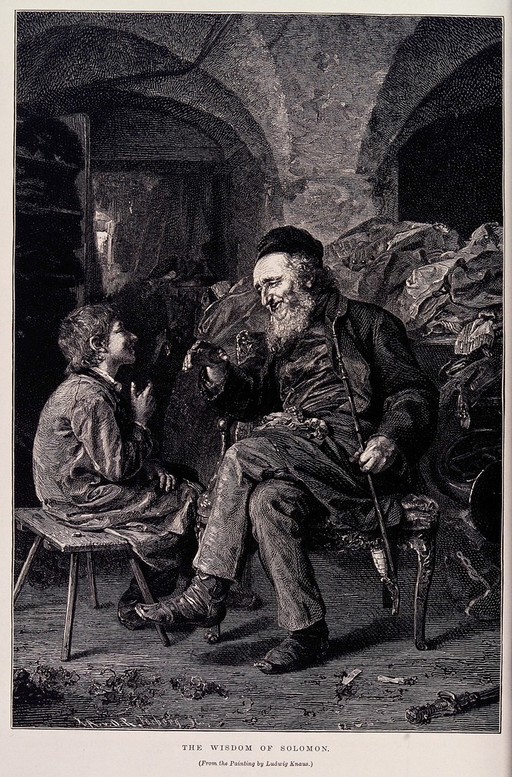
You already know what Nestor sounds like before he opens his mouth. The gray at his temples, the slight forward lean of a man whose spine has learned to bend toward listeners rather than away from them — you have seen this posture your entire life and you have been taught to call it wisdom. In the ninth book of the Iliad, when the Greek camp fractures and Agamemnon’s authority collapses under the weight of Achilles’ withdrawal, it is Nestor who steps forward. He does not offer a solution. He offers a story about himself — about wars he fought before these men were born, enemies he slew when the world was harder and men were greater. Homer gives him the longest speeches of any character in the poem, and almost none of them contain actionable intelligence. What they contain is permission. By the time Nestor finishes speaking, the room has been rearranged emotionally: the audience of warriors, and the audience of readers, has been made to feel that whatever comes next is sanctioned by something older than the present moment.
This is the structural function the figure performs, and it has nothing to do with the content of his speech. The philosopher Giorgio Agamben, in his 1995 work on sovereignty and bare life, describes how certain figures are positioned outside the normal order precisely so they can authorize actions the normal order would prohibit. Nestor occupies that position not through divine mandate but through the semiotic weight of visible age. His wrinkles are not a sign of experience — they are a sign that experience has already been processed, digested, and converted into certainty. The audience does not verify the certainty. They consume its appearance, and the violence that follows acquires a moral cosignature from someone who will not participate in it.
By the time the Arthurian cycle crystallizes in Geoffrey of Monmouth’s Historia Regum Britanniae, written around 1136, the mechanism has been architecturally refined. Merlin does not merely counsel — he engineers. He arranges the circumstances of Arthur’s conception through deception, he designs the sword-in-the-stone as a political filter, he choreographs the formation of a court whose central myth is the equal distribution of honor among men who will spend the next several centuries doing extraordinarily unequal violence to one another. What is remarkable is how completely readers across eight centuries have absorbed Merlin as benevolent, as wise, as the warm intellectual fire at the center of a golden age. The violence he enables — conquest, territorial expansion, the subjugation of rival kings — is laundered through his grandfatherly remove from the sword arm that carries it out.
Thomas Malory, writing Le Morte d’Arthur in 1485 while imprisoned in Newgate, understood this laundering with the instinct of someone who had himself navigated the distance between the man who orders and the man who acts. In Malory’s telling, Merlin disappears from the narrative precisely when Arthur has been fully set in motion — the permission-giver exits once the permission has been absorbed. This is not a coincidence of plotting. A figure whose authority rests entirely on age and mystery cannot survive contact with the ongoing moral consequences of the actions he licenses. He must leave before the bodies accumulate. His departure is not a tragedy within the story. It is a structural requirement for the story’s continued emotional functioning.
What neither Homer nor Malory examines is the reader’s own investment in this arrangement. The wise old man does not only license the hero. He licenses the reader’s desire to see the hero act, to experience the catharsis of directed violence, the satisfaction of a world reordered. The gray-haired counselor hands the sword to the young man and, in the same gesture, hands the reader an absolution they did not know they were seeking.
The Gendered Exclusion Built Into the Archetype
You are sitting with an old man who is explaining the world to you, and something in you relaxes. Not because he is necessarily kind, but because the architecture of every story you have ever absorbed has trained you to receive his voice as orientation. The scene is ancient and deeply grooved: the elder speaks, the younger inherits direction. What that scene has always quietly required is that the elder in question possesses a body that was never subject to the particular suspicion Western culture reserved for aging female flesh.
The asymmetry is not a historical accident that progressive revision might simply correct. It is structural, load-bearing, woven into the archetype’s social function from its inception. Simone de Beauvoir, in The Second Sex published in 1949, identified the mechanism with a precision that still cuts: woman is defined relationally, as Other, and aging dissolves the one currency — reproductive and erotic desirability — through which she was permitted social legibility. The old man accumulates gravity as the years pass. The old woman loses the only gravity she was ever assigned. What remains, once that currency is spent, is something culture has consistently had to manage as dangerous rather than authoritative.
Marina Warner‘s scholarship in From the Beast to the Blonde, published in 1994, follows this management into the actual tissue of fairy tale and folk narrative. The figure of the wise old woman does technically exist in those traditions — she appears at crossroads, she hands the hero a clue, she knows where the enchanted object is hidden. But Warner documents how systematically this figure is doubled and inverted: the helpful crone shades almost immediately into the witch, the hag, the devouring mother. The helpful old man in the same narratives does not carry this shadow twin. Merlin is not haunted by an equally potent evil version of himself embedded in the same storytelling tradition. The Crone is. The asymmetry is not between wisdom and its absence but between wisdom coded as gift and wisdom coded as threat.
What makes this particularly difficult to see is that the threat-coding does not announce itself as misogyny. It announces itself as supernatural danger, as the uncanny, as the dark wood where something old and knowing waits with ambiguous intent. Angela Carter understood this operating logic in the bone — her 1979 collection The Bloody Chamber systematically dismantles it by forcing the reader to inhabit the perspective of the figure who is supposed to be the danger. But the normative tradition runs in the other direction, and it runs deep. When a woman’s knowledge exceeds what can be explained by her social position, by her assigned role inside a legible domestic or erotic structure, that excess has been persistently recoded as transgression. The wise old man’s knowledge exceeds his social position and we call it wisdom. The identical excess in an aged woman produces a witch trial, a burning, an exile to the forest’s edge.
The numbers attached to that burning are not metaphorical. Brian Levack’s The Witch-Hunt in Early Modern Europe estimates between forty and sixty thousand executions across Europe from roughly 1450 to 1750, with women constituting approximately seventy-five to eighty percent of the accused. The profile of the accused was not random: it clustered heavily around post-menopausal women living outside conventional household structures — women who had outlived husbands, who possessed herbal knowledge, who were consulted by neighbors and therefore wielded a form of informal authority that had no sanctioned institutional container. That is almost a sociological definition of the wise elder function, displaced onto a body the culture could not permit to hold it safely.
The archetype of the wise old man is therefore not simply a positive image that happens to have a negative counterpart. It is constituted by the existence of that negative counterpart. Its authority is partially produced by the systematic delegitimization of its female equivalent, the way a figure’s brightness is always partly a function of what surrounds it in shadow.
Gandalf, Dumbledore, and the Industrialization of Wisdom
You already know what he looks like before he opens his mouth. The long beard, the staff, the eyes that suggest they have witnessed catastrophes you will never be asked to survive. He arrives at precisely the moment the young protagonist’s ordinary life has exhausted its capacity to contain the story, and he speaks in the measured cadences of someone for whom urgency is a thing that happens to other people. You have met him a thousand times, and the disturbing truth is that you have never once questioned what it means that he keeps showing up, wearing the same face, performing the same function, dying at exactly the right narrative moment to leave the younger character — and you — properly equipped for the remainder of the journey.
Tolkien published The Lord of the Rings between 1954 and 1955, drawing on decades of philological and mythological scholarship to construct a figure whose apparent spontaneity was in fact the product of enormous deliberate architecture. Gandalf is not simply a wizard; he is a Maia, an angelic being of pre-cosmic origin, whose wisdom is not earned through human suffering but installed by divine fiat before the world’s first sunrise. The philosophical implication is staggering and almost always ignored: the model of wisdom being offered to millions of readers is structurally inaccessible. It cannot be grown into, practiced, or approximated, because it does not belong to time in the way human lives belong to time. When Tolkien’s readers internalized Gandalf as the image of what wisdom looks like, they were not learning to recognize wisdom — they were learning to recognize its permanent, inaccessible otherness.
Rowling’s Dumbledore, arriving in 1997 to an audience that consumed the seven-volume series across a global readership estimated at over 500 million copies sold, performed a subtler and perhaps more corrosive operation. Where Gandalf’s unavailability was metaphysical, Dumbledore’s was psychological: he withheld information, managed revelation strategically, and arranged the emotional education of the protagonist through what amounted to institutional deception. Foucault’s analysis in Discipline and Punish of how knowledge and power are structurally inseparable finds an almost pedagogically clean illustration here — the figure who appears to offer illumination is simultaneously the figure who controls which doors open and when. Readers raised on this model do not learn to seek understanding; they learn to wait for authorized disclosure from a credentialed superior who has already decided how much truth is appropriate for this stage of their development.
The repetition of this figure across the mass-market fantasy genre after 1980 — in Terry Brooks, in Robert Jordan‘s fourteen-volume Wheel of Time series, in George R.R. Martin’s deliberate and lethal inversion of the archetype — produced something that literary criticism has been slow to name: a training regime. Carl Jung identified the Wise Old Man in 1948 as an archetype of the collective unconscious in The Archetypes and the Collective Unconscious, arguing that it emerges from the psyche as a compensatory figure when the individual confronts problems beyond conscious resolution. But Jung understood the archetype as an internal event, a projection from within the self that could eventually be reintegrated. What the fantasy industry accomplished was the externalization and commodification of that internal event — it took a psychological process and sold it back as a character type, ensuring that readers would continue locating the source of orientation always somewhere outside the boundary of their own minds.
The figure always dies usefully. This detail is not incidental. His death is timed to coincide with the protagonist’s threshold of readiness, which means his death is not a loss but a graduation ceremony disguised as grief. What gets buried with him is the reader’s lingering suspicion that they might have needed him to survive — and what gets buried alongside that suspicion is the far more unsettling question of what it means to have structured an entire inner life around the expectation that someone older, wiser, and conveniently mortal would eventually arrive to make the incomprehensible legible.
A vision curated by a filmmaker, not an algorithm
In this video I explain our vision
The Philosopher-King Trap and Its Literary Echo

You have probably, at some point in your life, deferred to someone not because they were right but because they seemed to know more than you — and in that gap between their certainty and your doubt, something was quietly transferred that had nothing to do with knowledge.
Plato’s Republic, written around 375 BCE, is the foundational document of a very specific political hallucination: that those who understand the nature of the Good are entitled, even obligated, to govern those who do not. The philosopher-king is not merely a political proposal — it is a character type, and like all character types, it needed literature to make it emotionally plausible before it could become ideologically operational. Plato understood this, which is why the Republic is itself a literary performance, a staged dialogue in which Socrates does not argue so much as seduce, drawing interlocutors and readers alike into the warm gravitational field of superior understanding. The form enacts the thesis. By the time the philosopher-king is proposed, the reader has already been living inside one.
What literature then did, across centuries of rehearsal, was naturalize the emotional logic that Plato had installed. The wizard who guides the young hero, the elder who holds the tribe’s memory, the mentor whose withdrawal signals the protagonist’s readiness — each of these figures trains the reader’s nervous system to recognize hierarchy as care, and authority as earned rather than seized. Tolkien’s Gandalf, published in The Fellowship of the Ring in 1954, is not incidentally powerful and wise; the wisdom is the justification for the power, and the power is what makes the wisdom legible. Strip the staff and the fireworks, and you have a very old man telling younger people what to do. The staff stays because without it the reader might ask the wrong questions.
Michel Foucault, in Discipline and Punish published in 1975, traced the mechanism by which knowledge and power stopped being two separate things and became a single compound noun. The expert does not merely advise — the expert constitutes the terrain on which decisions are made, defines what counts as a problem, determines which solutions are thinkable. The literary wise man operates by the same grammar. He does not force. He reveals. And in the revelation, the hierarchy is already complete, because whoever reveals has already positioned himself as the one who sees what others cannot. The reader is trained, figure by figure, text by text, to experience this positioning as natural, even beautiful — the right person in the right place, knowing what needs to be known.
What makes the trap so durable is that it is self-sealing. The wise old man who is wrong, who misleads, who protects his authority at the cost of those who trusted him — this figure appears in literature too, but almost always as a corruption, a betrayal of the archetype rather than an exposure of it. The category itself is never indicted. Dumbledore’s strategic silences in J.K. Rowling’s series, the information withheld from Harry for reasons that serve the war effort and perhaps also serve Dumbledore’s need to remain necessary — these are treated within the narrative as tragic flaws in an otherwise noble figure, not as evidence that the structure of benevolent expert-authority is the problem. The scaffolding holds even when the man on it falls.
This is where the political fantasy and the literary fantasy converge most dangerously: in the shared insistence that the problem is always the individual and never the role. Plato did not design a system that could survive bad philosopher-kings; he designed a system that depended on good ones, which is to say he designed a faith, not a politics. And literature, by endlessly populating that role with figures whose goodness feels self-evident, has been conducting the recruitment drive ever since — filling seats in an institution whose legitimacy was decided before the reader arrived.
When the Archetype Fails: Lear, Prospero, and the Unraveling
You are sitting across from someone who has just told you they were wrong their entire life, and the strange thing is they are still trying to be right about being wrong. The admission is sincere but the posture hasn’t shifted. The hands still command the table. The voice still expects silence from the room.
Shakespeare wrote that scene twice, in different keys, and neither version ends where audiences like to believe it does. Lear on the heath is not a king discovering wisdom through suffering — he is a man discovering, catastrophically late, that the architecture of deference he mistook for love was built by him, enforced by him, and ultimately collapsed under the weight of his own need for confirmation. The tragedy is not that he was betrayed. It is that he distributed power according to how well people performed adoration, then called it a test of virtue. The error wasn’t political. It was epistemological. He had confused the world’s compliance with the world’s truth, and eighty years of uncontested authority had made that confusion invisible to him.
Carl Jung, writing in 1951 in Aion, described the senex archetype as the psyche’s encounter with accumulated meaning — but what Jung’s framework did not adequately account for was the degree to which accumulated meaning can calcify into a refusal to receive new information. The wise elder in the Jungian sense is a resource; what Shakespeare kept dramatizing was a resource that had gone toxic at the source, not through malice but through the simple structural fact that wisdom-figures are rarely corrected. Their social function immunizes them from the feedback that would otherwise revise their understanding. By the time the correction arrives — through catastrophe, through loss, through the silence of those who once applauded — it is no longer data. It becomes devastation.
Prospero operates through a different mechanism but reaches the same interior impasse. He controls the island, controls its inhabitants, controls the narrative of his own exile with a precision that should disturb any reader who has ever watched someone frame every injustice they suffered as a cosmic mandate for their own authority. He spent twelve years studying magic and calls it wisdom; he spent twelve years rehearsing grievance and calls it patience. When he finally releases Caliban, stages the reconciliation, and breaks his staff, the theatrical gesture is enormous and legible as magnanimity — but what he releases is not power. He releases the theater of power, which is not the same thing. The island he never understood, Caliban’s inheritance he acknowledged only instrumentally, the labor he extracted without curiosity — none of that is addressed by the spectacle of renunciation. The staff breaks; the knowledge formed in domination does not.
What is striking about both plays is that Western literary culture absorbed their endings as proof of the archetype’s profundity rather than its exposure. Lear died having glimpsed something; Prospero returned to Milan older and perhaps chastened. The tragic frame aestheticized the failure so completely that the failure became the evidence of depth. A figure who collapses so beautifully, whose ruin is so articulate, must have contained something great. But Shakespeare did not write beautiful collapse as endorsement. He wrote it as the only remaining shape available to men who have organized their entire inner life around a role that the world, eventually, stops playing along with.
The mechanism by which a culture converts its warnings into its myths is not cynicism — it is something more automatic, and therefore harder to interrupt. Aristotle’s catharsis in the Poetics was meant to describe emotional purging, but it functions equally well as a description of how unpleasant recognitions are discharged from civic consciousness without being metabolized. The theater provides the feeling of confrontation.
The Reader Who Still Waits for the Old Man to Arrive
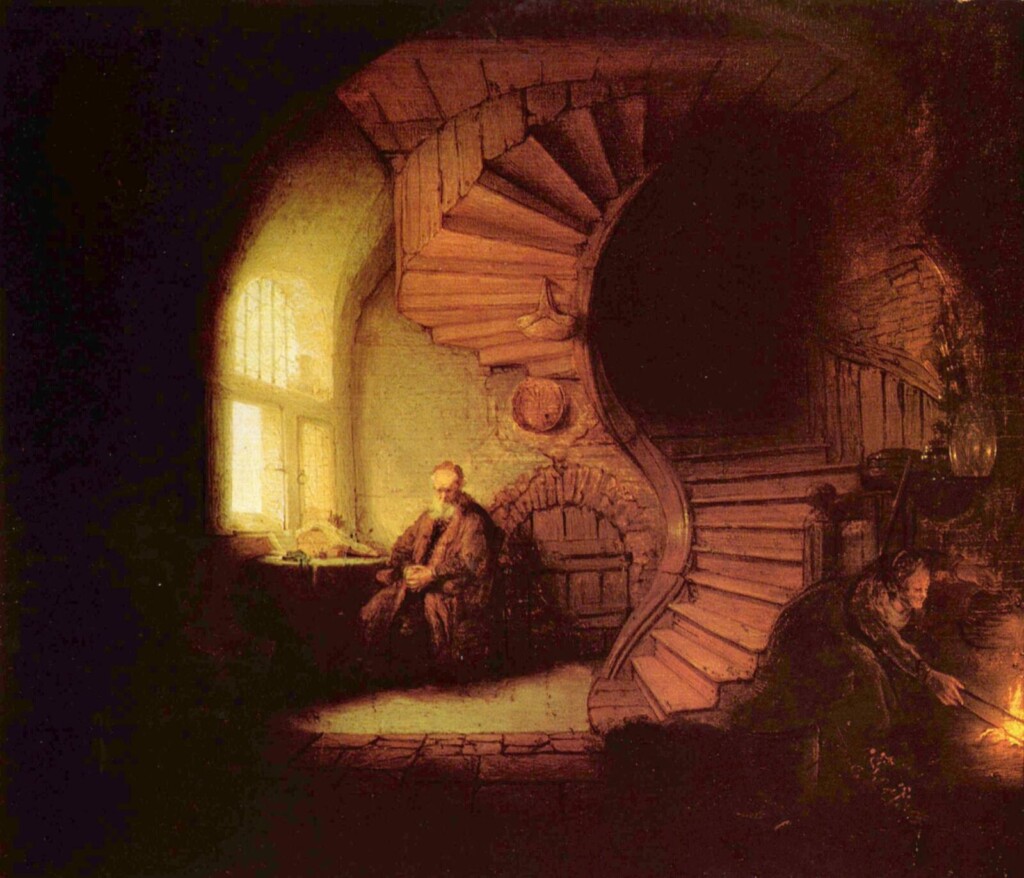
You finish the book and set it down, and for a moment you are waiting — not for the next chapter, but for the figure who did not quite arrive, the one who should have appeared at the threshold of the final act and said the thing that would have made everything cohere. He did not come. Or he came and spoke and you read his words and nodded and still felt, beneath the nod, a residue of incompletion, a faint suspicion that the real transmission had been withheld, that the deepest knowledge was being held just slightly out of reach by someone older and stiller than you.
This is not a failure of the book. It is a structural feature of how you have been trained to receive narrative itself. Philip Rieff published The Triumph of the Therapeutic in 1966, and what he diagnosed there was not merely a cultural shift toward psychological language but the emergence of a new human type: one who relates to the world primarily as a patient to a treatment, perpetually oriented toward curative figures and healing discourses, unable to generate interior authority without first consulting an exterior source. Rieff called this the collapse of the symbolic order that once gave individuals a framework within which to suffer meaningfully, and what replaced it was not freedom but a new kind of managed dependence, more diffuse and therefore harder to name. Western literature’s wise old man is one of the most elegant delivery mechanisms for that dependence: he arrives, confers meaning, and departs, leaving the protagonist — and the reader — confirmed in the belief that meaning is a gift given from above, not a structure built from below.
What makes this so difficult to see is that the archetype presents itself as the opposite of dependence. The old man teaches self-reliance, speaks of inner resources, urges the young hero to trust himself. But the structure of the pedagogy undermines its own content: the lesson about inner strength is delivered by an outer authority, which means the reader absorbs both the message and the medium, and the medium says that genuine knowing requires an authenticating elder. Carl Jung, who did more than anyone to legitimize this figure as a universal psychic necessity in his 1954 essay on the phenomenology of the spirit in fairy tales, was himself describing a compensatory mechanism — the psyche’s way of externalizing what it cannot yet own. That externalizing was supposed to be a transitional stage. In the cultural transmission through centuries of literature, it became a permanent address.
The damage is not dramatic. It operates as a quiet tilt in the reading posture, a slight forward lean toward the page that is really a lean toward a voice you expect to resolve your confusion by being wiser than you. Readers who have spent years inside canonical Western fiction have spent years rehearsing receptivity to vertical authority — intelligence that descends, blesses, clarifies, and withdraws. By the time they close a book, they have practiced, again, the gesture of waiting for someone else’s coherence to organize their own.
What shifts when a reader stops expecting him — not as a resolution, not as a liberation, but simply as a new condition of reading — is the texture of attention itself. The question is no longer where is the one who knows, but what does the text do when no one is coming to redeem it. That reorientation is not comfortable. It does not replace the old man with something warmer. It replaces him with a silence that the reader must learn to inhabit without immediately filling it with the next available sage, the next mentor-shaped voice, the next book that promises, in its opening pages, the presence of someone who has already understood everything you are only beginning to suspect about yourself.
🧙 Guides, Sages, and the Wisdom of Ages
The figure of the wise old man has shaped Western literature from Homer’s Tiresias to Tolkien’s Gandalf, embodying accumulated experience, moral authority, and the transmission of knowledge across generations. These articles explore the philosophical, psychological, and literary roots of this enduring archetype, tracing how wisdom, mentorship, and the passage of time have been imagined and celebrated in Western culture.
Erik Erikson and the Stages of Life: The Age of Wisdom
Erik Erikson’s theory of psychosocial development places wisdom at the final stage of human life, associating old age with the capacity to reflect, integrate, and transmit meaning to future generations. This framework offers a powerful lens through which to understand why Western literature so consistently portrays elder figures as reservoirs of hard-won truth. The wise old man is not merely a narrative device but a psychological necessity, embodying the stage Erikson called integrity versus despair.
GO TO THE SELECTION: Erik Erikson and the Stages of Life: The Age of Wisdom
Homer and the Odyssey: Nostos and the Archetype of Return
Homer’s Odyssey is one of the foundational texts through which the archetype of the wise guide enters Western literary consciousness, with figures like Tiresias and Mentor shaping the hero’s journey through counsel and foresight. The concept of nostos — the return home — is inseparable from the wisdom that makes such a return possible, earned through suffering, patience, and the guidance of those who have seen more. This article explores how Homer’s vision of seasoned knowledge continues to resonate across centuries of Western storytelling.
GO TO THE SELECTION: Homer and the Odyssey: Nostos and the Archetype of Return
Carl Gustav Jung and the Shadow: The Dark Side We Don’t Want to See
Carl Gustav Jung identified the wise old man as one of the most potent archetypes of the collective unconscious, a symbol of spiritual authority, hidden knowledge, and the deeper self that guides the individual toward individuation. In Western literature, this figure appears in countless forms — the sorcerer, the hermit, the prophet — each reflecting the psyche’s need for an inner compass in moments of crisis. Jung’s analysis transforms literary tradition into a map of the human soul’s deepest longings.
GO TO THE SELECTION: Carl Gustav Jung and the Shadow: The Dark Side We Don’t Want to See
The Hero’s Journey as Inner Transformation
The hero’s journey, as theorized by Joseph Campbell and later developed across myth, literature, and psychology, almost invariably features a wise elder who initiates the protagonist into a deeper understanding of life’s challenges. This transformative encounter with a mentor figure — from Merlin to Virgil to Dumbledore — is not incidental but structurally essential, representing the moment when raw potential meets earned wisdom. Understanding this archetype illuminates why Western readers return again and again to stories of guidance, transmission, and inner transformation.
GO TO THE SELECTION: The Hero’s Journey as Inner Transformation
Discover the Cinema of Wisdom and Depth on Indiecinema
If these reflections on wisdom, mentorship, and the passage of time have stirred something in you, Indiecinema is the streaming platform where independent cinema meets the profound questions of human existence. Explore films that dare to portray elder knowledge, initiation, and the quiet power of those who have lived deeply — curated for viewers who believe that true cinema, like true wisdom, changes you forever.
👉 EXPLORE THE CATALOG: Watch Indie Films in Streaming
A vision curated by a filmmaker, not an algorithm
In this video I explain our vision

