
The Smell of Lead and Gold: When Transformation Begins in the Ordinary
You are standing at the bathroom sink at two in the morning, and the face in the mirror does not belong to you. This is not a metaphor. The eyes are yours, the jaw is yours, the particular way the light catches the left side of your face is something you have known since childhood, and yet the recognition fails. Something has happened — a conversation that tore through a long-held certainty, a loss that restructured the floor beneath your feet, a moment so ordinary in its trigger that you cannot even explain it to anyone — and now the face in the mirror is simply a stranger wearing your skin. You stand there. You do not look away. This is where alchemy begins.

Not in laboratories. Not in the illustrated manuscripts of the fourteenth century with their serpents devouring their own tails and their hermaphroditic kings dissolving in mercury baths. The laboratory was always a theater, always a staged displacement of what happens first in the body, in the chest, in the unrecognizable face at two in the morning. The ancient principle of solve et coagula — dissolve and coagulate, break apart and reconstitute — was never primarily a chemical instruction. It was a description of what transformation actually costs. You cannot become something new while remaining intact. The dissolution is not a stage you pass through to reach the interesting part. The dissolution is the work.
Carl Jung understood this with a precision that most of his interpreters have subsequently softened into something more palatable. In his 1944 work Psychology and Alchemy, Jung identified the stages of alchemical process not as symbolic parallels to psychological development but as literal maps of psychic rupture. The nigredo — the blackening, the putrefaction — was not a phase to be managed or abbreviated. It was the necessary destruction of the false unity that the ego had built around itself. Jung’s patient, the physicist Wolfgang Pauli, experienced this as recurring nightmares of geometric precision, as a world where the rational structures he had used to organize reality simply ceased to hold. Pauli and Jung corresponded for decades. The dreams were not symptoms to be resolved. They were the process itself, running.
Cinema arrived in 1895 and immediately began doing something that no one had language for yet. The Lumière brothers pointed their camera at a train arriving at La Ciotat station, and the audience flinched, ducked, moved backward in their seats. What frightened them was not the train. What frightened them was the doubling — the presence of something that was also an absence, the image that was also a void, the screen that showed you reality while being entirely other than reality. Every frame of cinema is already solve et coagula. The image breaks the world apart into light and shadow and reconstitutes it on a flat surface, and what you receive on the other side is not what was put in. Something has changed in the passage. Something always changes in the passage.
This is not an artistic choice that certain directors make when they want to be interesting. It is structural. The medium itself is alchemical before anyone decides to make it so, in exactly the same way that language is metaphorical before anyone decides to write poetry. The question is only whether the filmmaker knows what they are working with, whether they lean into the transformation or resist it, whether they let the lead become gold or insist on keeping everything solid, legible, safe. The ones who have known — and a handful across the twentieth century have known with a terrifying clarity — have made films that do not so much tell stories as perform operations. You go in one person. You do not come out the same. This is not a promise. It is closer to a warning. But first, you have to recognize yourself in the mirror, and then you have to stay there long enough to watch the face begin to change.
Katabasis
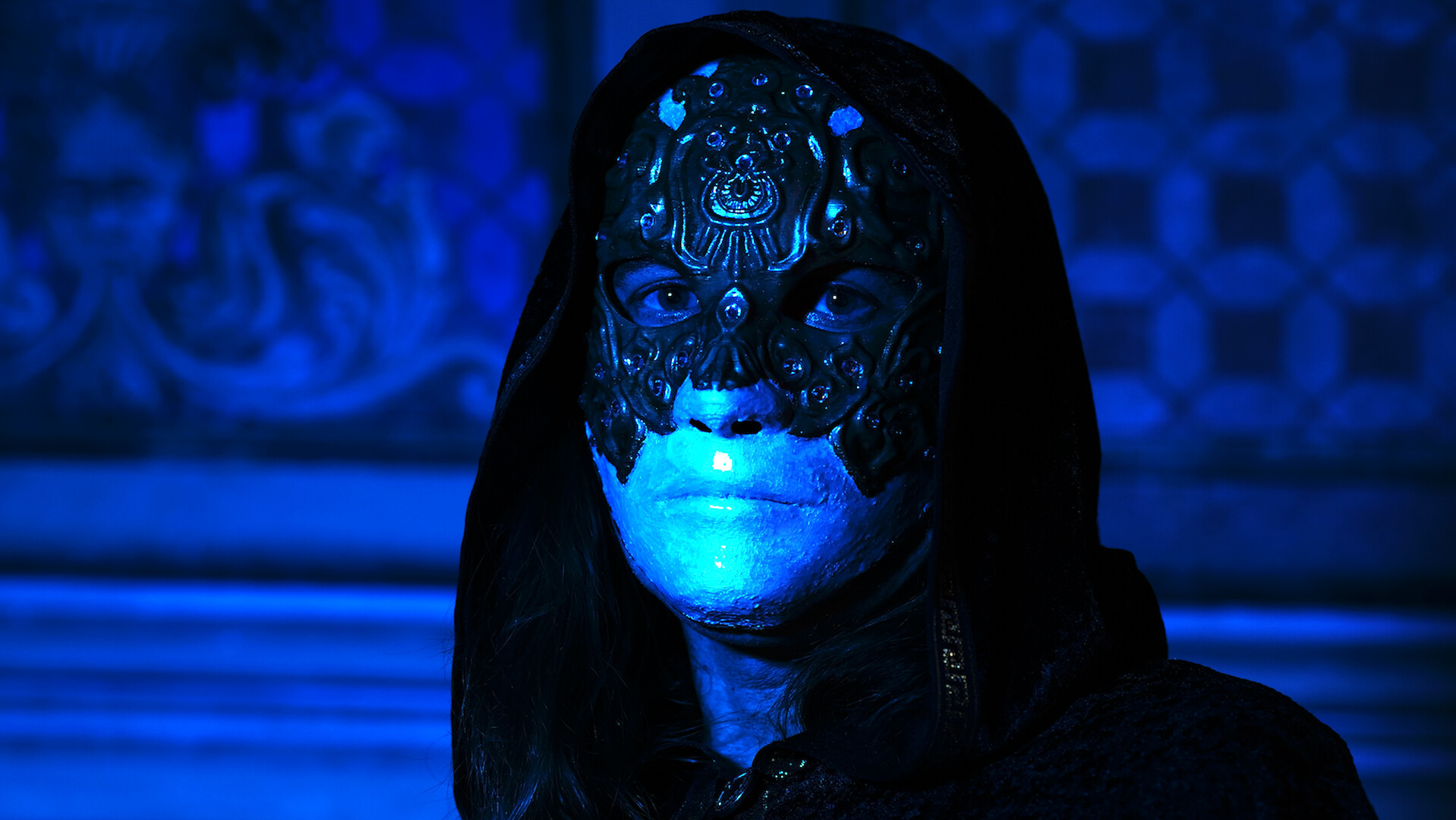
Drama, Mystery, by Samantha Casella, Italy, 2025.
“Katabasis” is a journey into the underworld. Nora experienced that dark realm as a child, when she suffered abuse. This marked her, shaping her into an ambiguous and manipulative woman, dangerous in her inscrutability, constantly seeking disturbing situations to relive the only condition she has profoundly internalized: pain. And the love story between Nora and Aron is tormented, strictly secret. Aron is a young orphan oppressed by the star system which, orchestrated by Jacob, a cynical manager, made him a star and imposes another façade of life on him. In fact, only the people who revolve around the house-prison where the couple lives are aware of Nora's existence. That majestic villa is the stage for secrets, lies, deceit, as well as unsettling episodes, since Nora is able to communicate with the souls from the beyond.
Director Biography – Samantha Casella
Samantha Casella studied various aspects of cinema, including screenwriting, directing, cinematography, and acting, across Turin, Florence, Rome, and Los Angeles. Her directing thesis, the short film "Juliette," won 19 awards, including the "European Massimo Troisi Award." She continued her path directing surreal short films including "Silenzio Interrotto," "Memoria all'Isola dei Morti," and "Agape." In 2019, she directed "I Am Banksy." At the charismatic TCL Chinese Theater in Los Angeles, at the Golden State Film Festival, she won the award for Best International Short Film. In 2020, she directed the short film "A un Dio Sconosciuto." "Santa Guerra" is her feature film debut.
LANGUAGE: Italian
SUBTITLES: English, Spanish, French, German, Portuguese
The Furnace Has Always Been Hidden in Plain Sight
There is a particular kind of room that appears again and again in the stories we tell ourselves — not the room of danger, not the room of comfort, but the room that will not let you leave the same person who entered it. You know this room. It is the interrogation cell with one fluorescent bulb buzzing at the edge of sanity. It is the childhood bedroom you return to as an adult and find somehow smaller, somehow still able to contain you completely. It is the kitchen at three in the morning when something has broken between two people and the walls seem to lean inward. The room does not threaten. It processes.
This is what the alchemists called the athanor — the slow furnace, the tower kiln designed not for explosion but for sustained, patient heat. The fire inside it was never meant to destroy quickly. Its entire genius lay in duration, in the unbearable maintenance of temperature across days, sometimes months, until the material inside surrendered its former shape not through violence but through exhaustion. The alchemist’s greatest skill was not ignition. It was waiting.
Gaston Bachelard, writing in 1938 in The Psychoanalysis of Fire, argued that fire is never merely an element in human experience — it is the first object of reverie, the first occasion for meditation, the phenomenon around which the psyche organized its earliest relationship with transformation. He was not speaking metaphorically when he traced the entire architecture of philosophical thought back to the hearthside. He was making a claim about the body: that we understand change through heat before we understand it through language, that the sensation of warmth working through matter is the prototype of all inner life. The furnace, he insisted, is intimate before it is industrial.
Cinema rediscovered this truth without knowing it had a name. There is a scene — it has the quality of something one barely survives rather than watches — in which a man is confined to a single room for an entire act of story, and the camera does not rescue him with movement. It stays. The walls are the argument. The space does not represent his psychological state; it generates it, the way temperature generates reaction. You watch him become someone else not because of what is said or done but because the room refuses to stop pressing. This is the athanor functioning as narrative architecture rather than metaphor: the enclosed space not as symbol of transformation but as its actual mechanism.
What is remarkable is how consistently filmmakers across traditions have returned to this device without ever conferring about it — from the long-corridor interiors of European art cinema to the claustrophobic apartments of certain East Asian masters, the logic is identical. Seal the character inside something barely large enough to hold them. Apply pressure through duration. Do not cut away before the material begins to change. A woman trapped across a single evening in a house with a man whose nature she is finally, irrevocably reading correctly. The geography of that house becomes her crucible. She is not escaping it. She is being refined by it.
Bachelard understood that fire in the domestic imagination is never simply destruction — it is the fantasy of purification through ordeal, the deep human intuition that something must be held inside heat long enough to become other than it was. What the athanor encoded in lead pipes and brick chambers, cinema encodes in aspect ratio and editing rhythm. The refusal to cut. The room held on screen past the point of comfort. The character who cannot exit, and the audience that cannot look away, both of them suspended inside the same slow furnace, waiting for whatever the heat is going to make of them.
The alchemist knew something the modern viewer has forgotten: transformation is not an event. It is a condition you must be kept inside long enough to stop resisting.

Nigredo: The Black Phase Nobody Wants to Admit They’re In
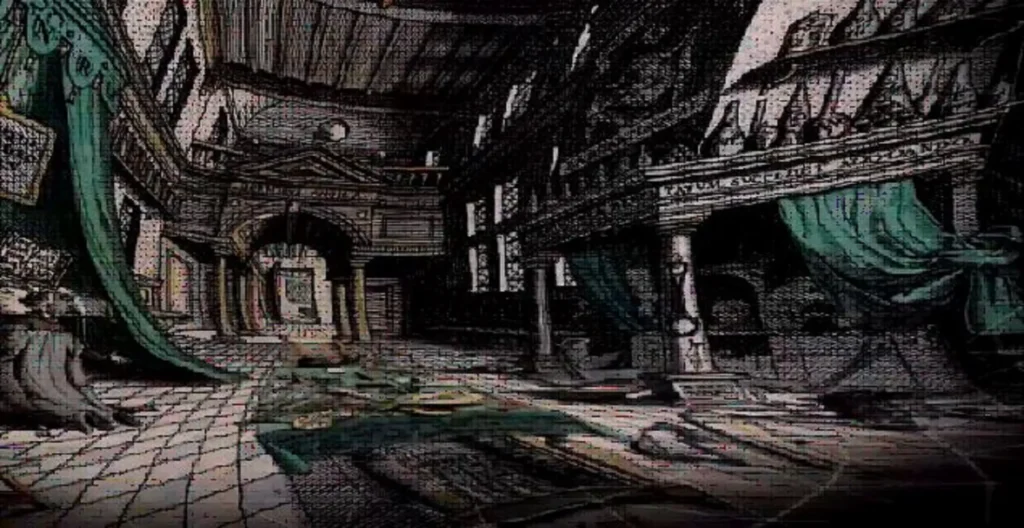
There is a particular kind of morning that arrives without warning. You wake and the ceiling looks different — not the ceiling itself, but your relationship to it. Something has gone out. The coffee tastes the same, the light through the curtains is identical to yesterday’s light, and yet you understand, without words, that a layer of yourself has been burned away during the night, and what remains is something darker and less negotiable.
This is not depression. Carl Jung spent considerable effort distinguishing the two, most systematically in his 1944 work Psychology and Alchemy, where he argued that the alchemical stage known as nigredo — the blackening, the putrefaction, the prima materia reduced to undifferentiated ash — is not pathology but prerequisite. It is the psyche doing what fire does to ore: destroying the form to release what the form was hiding. The difference between nigredo and clinical depression, Jung insisted, is that depression is a refusal of the process, a freezing at the threshold. Nigredo is the process itself, in full violent motion.
A man sits in a room he no longer recognizes as his own. His hands are familiar. The furniture is familiar. The life arranged around him — the evidence of choices made over decades — is technically his. And yet something fundamental has been revoked, some internal permission to continue as he was. He does not cry. He does not rage. He simply sits with the unbearable fact that the person who assembled this room is no longer entirely present, and whatever is left cannot yet be named. The alchemists called this the death of the king. The king must die so the new form can ascend, but there is an interval — unmeasured, unguaranteed — between the death and the ascension. That interval is where most people live without knowing it.
What cinema has understood, in its most honest moments, is that this interval has a texture. It is not dramatic. A woman walks through a city she has memorized, past cafes where she was once happy, and the happiness feels like a photograph of someone else’s holiday. There is no climactic music telling her this is meaningful. The meaning is precisely its refusal of meaning — the flatness, the opacity, the sense that the self has become a material that no longer conducts light. Jung noted that medieval alchemical texts described nigredo as the moment when the substance turns black and begins to rot, and that many practitioners abandoned the work at precisely this stage, convinced they had failed. They had not failed. They had arrived.
A soldier returns to a house that waited for him. The house did not change. He changed, and the mismatch between the unchanged house and the changed man produces a silence so dense it has physical weight. He moves through rooms like a man moving through water. This is not a story about war trauma in the clinical sense — it is a story about the impossibility of wearing a former self when the former self no longer fits. The putrefaction is complete. What has not yet arrived is the albedo, the whitening, the first faint signal that something new is organizing itself from the ruins.
Jung wrote that the unconscious compensates for what consciousness refuses to acknowledge. When we refuse the darkness — when we perform continuity, maintain the surface, insist to ourselves and to anyone watching that we are fine, merely tired, merely going through a phase — the darkness does not dissipate. It deepens its chemistry. It becomes more thorough in its work.
The morning with the different ceiling is not a warning. It is an announcement. The work has already begun, without your consent, while you slept. The only question is whether you will recognize what phase you are in, or spend the next several years calling it something else.
Arte
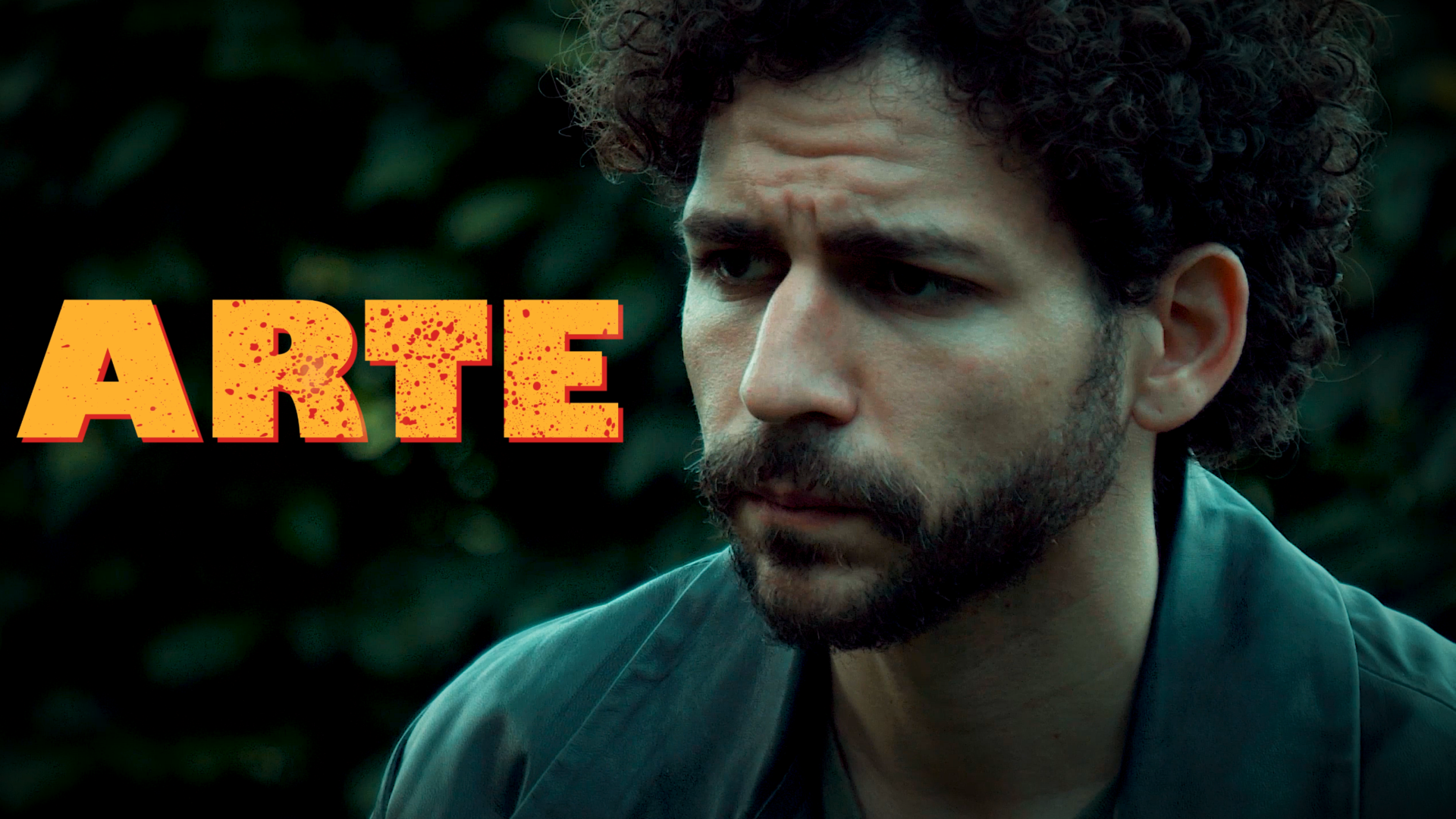
Drama, thriller, by Stefano Scala, Simone Arcidiacono, Italy, 2023.
In a secret and fascinating world, four people meet every week at the mysterious "The Circle" for a gripping game, knowing nothing about each other. However, fate has a different plan for them. As the game progresses, their lives begin to intertwine in unpredictable ways. The boundaries between the game and reality start to blur, revealing buried secrets and creating unthinkable connections. In the heart of "The Circle," the masks fall, and the players' lives will be forever changed.
LANGUAGE: Italian
SUBTITLES: English, Spanish, French, German Portuguese
Mercury, Sulfur, Salt: The Three Primes Hiding in Every Screenplay
There is a particular kind of argument that two people keep having, year after year, that never resolves and never quite destroys them either. You have watched this in someone’s kitchen, or lived it yourself — the one who burns through every room they enter and the one who absorbs, who holds the shape of things, who remains. They exhaust each other. They cannot separate. Most people call this chemistry. They are closer to the truth than they realize.
Paracelsus, writing in the Opus Paramirum in 1531, proposed that all matter — including living matter, including the matter of persons — is constituted by three primes: mercury, sulfur, and salt. Not as substances but as principles. Mercury as the volatile spirit, the capacity for transformation and communication, the thing in a person that cannot be pinned down. Sulfur as the animating soul, the combustible center, will and desire and the heat of wanting. Salt as the body, the fixed, the crystalline resistance of form itself. What Paracelsus described was not a chemistry of rocks and metals but a grammar of existence. And that grammar, as Frances Yates demonstrated in Giordano Bruno and the Hermetic Tradition in 1964, did not disappear when the Renaissance ended. It migrated. It embedded itself in Western ways of thinking about persons, conflict, and change so thoroughly that we stopped noticing it was there.
Watch what happens in a story when a man who has spent decades building a fixed world — a name, a house, a certainty — encounters someone who passes through walls the way light does, who carries no ballast, who is already becoming something else by the time you finish a sentence with them. The salt and the mercury. The collision is not dramatic opposition in the conventional sense. It is not hero against villain. It is one principle of reality grinding against another, and what the friction produces is not a winner but a third thing — the sulfur, the soul-heat that neither of them could generate alone. The screenplay did not plan this. It happened because the writer was dreaming in a language older than cinema.
There is a scene in which a terminally precise man watches someone he cannot categorize eat at his table, sleep in his space, rearrange the molecules of his silence. He is salt. She is mercury. Neither is wrong. Neither is right. The drama lives entirely in the gap between their natures, and the audience recognizes this gap not intellectually but in the body, because they have been one of these people, or both on different afternoons.
Yates argued that Hermetic thought survived not as doctrine but as structure, as a way of organizing the relationship between the fixed and the volatile, the known and the transforming. By the time this structure reached the twentieth century, it had passed through Neoplatonism, through Renaissance natural philosophy, through the Romantic re-enchantment of nature, and arrived in the hands of writers who had never heard of Paracelsus and would have been baffled by the claim that their three-character arc was a diagram of prima materia.
But the combustible one — the sulfur character, the one who wants too much and too openly — is almost never the protagonist in the comfortable sense. They are the catalyst. They appear, they burn, they alter the compound irreversibly, and the story is actually about what salt and mercury become after exposure to that heat. Aristotle gave us the dramatic arc. Paracelsus, without meaning to, gave us the deeper reason why certain character combinations produce transformation while others only produce noise.
The tria prima does not explain stories. It explains why some stories feel like they are showing you something true about the nature of change, while others, equally well-crafted, feel like machinery. One is built from principles. The other is built from parts.
The Peacock’s Tail: Iridescence as Psychological Crisis
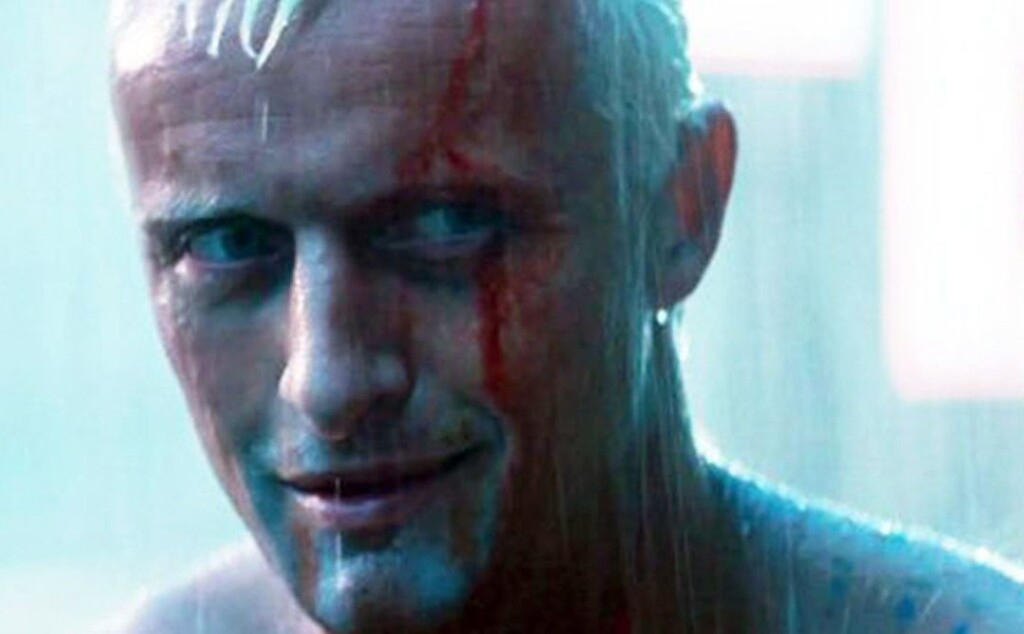
There is a moment that almost everyone has lived through at least once — standing in a room where everything is happening at the same time, where music and voices and light and grief and desire are all present simultaneously, and the body cannot decide which signal to obey first. Not chaos exactly, but something denser than chaos: a kind of violent iridescence, every frequency arriving at once, none canceling the other out.
The alchemists called it the cauda pavonis, the peacock’s tail. It appeared at a specific juncture in the Great Work, after the blackening of nigredo had done its dissolving labor and before the whitening of albedo could begin to organize what remained. In between, for a dangerous interval, all colors erupted simultaneously across the surface of the material in the retort. Not a rainbow’s orderly progression but something more overwhelming, more indiscriminate, every hue insisting on equal urgency. Medieval texts described it with reverence mixed with alarm. It was a sign that the work was proceeding — but it was also the moment most likely to be misread as failure, because nothing about it looked like progress.
James Hillman, writing in Re-Visioning Psychology in 1975, proposed that the psyche is not monotheistic but polytheistic in its structure. It is not governed by a single central intelligence with subordinate faculties, but populated by what he called a multiplicity of figures, voices, drives, each with its own logic, its own claims, none naturally subordinate to the others. The ego’s fantasy of sovereignty — the idea that there is one self sitting at the controls, choosing, directing, deciding — was for Hillman precisely the illusion that psychological suffering comes to shatter. What the peacock’s tail represents is not disorder but the sudden, unbearable visibility of a plurality that was always there.
Film, when it is doing its most honest work, renders this visible. There is a sequence that surfaces in memory with particular force: a woman moves through a crowd and the camera begins to lose its discipline, colors bleeding into each other, sound fragmenting, the editing rhythm accelerating past the point where the mind can process individual images. It no longer feels like watching someone fall apart. It feels like being inside the falling apart, sensation outpacing meaning at every cut. The technique is not expressionism as decoration. It is phenomenological reporting. This is what it looks like from inside the cauda pavonis — not a breakdown of perception but its terrible, unwanted expansion.
The chromatic explosions in film that critics most often dismiss as visual excess — the oversaturated frames, the unnatural color grading that bleeds into psychological register — are frequently the sequences that carry the most precise psychological information. They mark the moment when the character can no longer maintain the fiction of a unified self. Every repressed figure in Hillman’s polytheistic psyche demands simultaneous audience. The lover, the avenger, the frightened child, the one who wants to disappear, the one who refuses to — they are all present at once, none waiting its turn, and the visual field overloads accordingly.
Another figure walks through a house that seems to breathe with accumulated memory, the colors of different eras overlapping, a yellow that belongs to childhood pressing against a blue that belongs to grief that belongs to a future not yet arrived. The scene has no dramatic action. Nothing is happening. But the image is so chromatic, so densely layered in its palette, that it communicates what linear narrative cannot: that time, for this person, does not move sequentially. All of it is present. All of it is insisting.
Hillman argued that the goal was not to resolve the multiplicity into unity, not to silence the chorus down to a single voice. The goal was to learn to live in the house while all the rooms were occupied at once, without the lights going out.
The Lost Poet
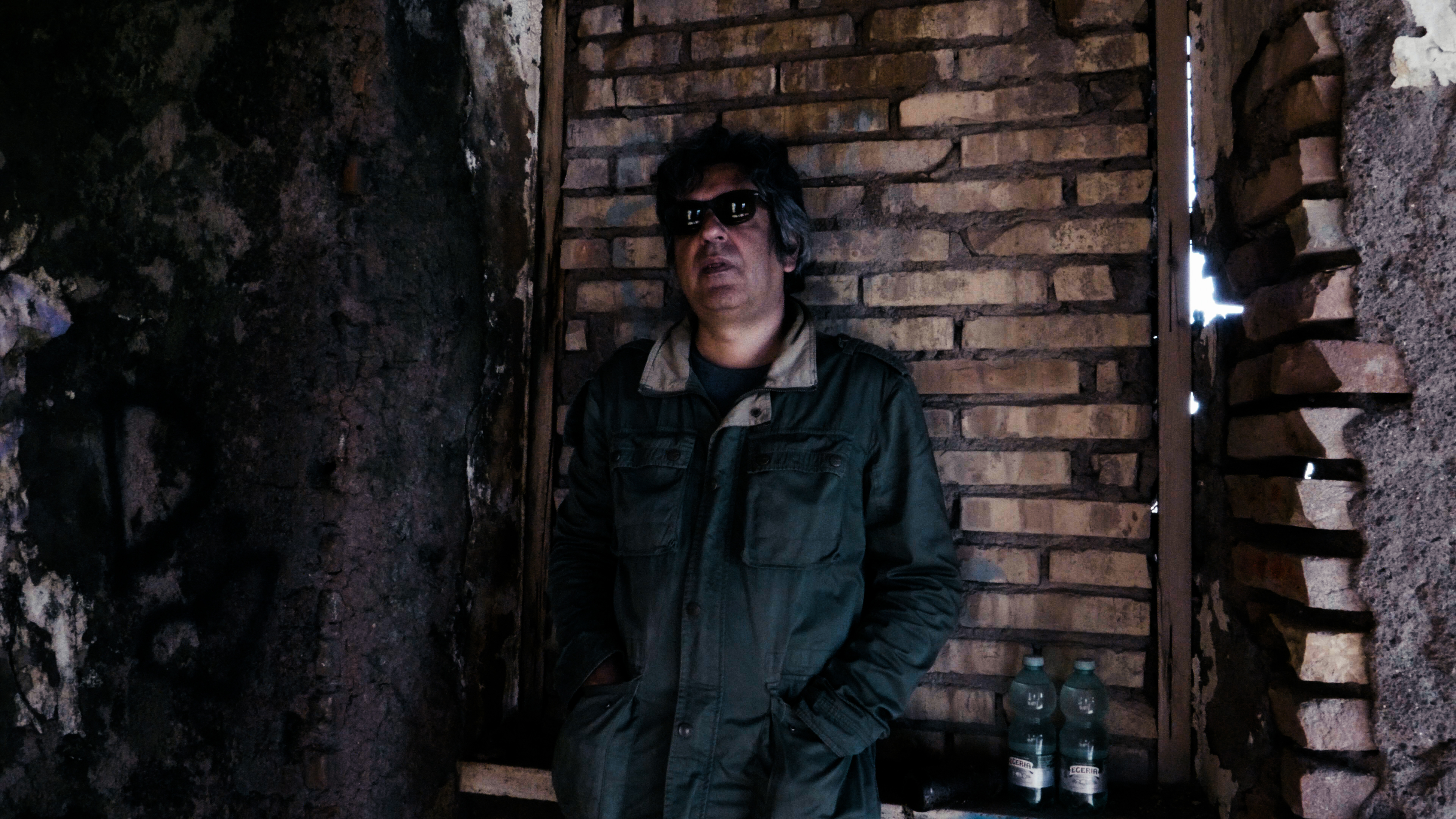
Drama, by Fabio Del Greco, Italy, 2024.
Dante Mezzadri wants to see an old friend, nicknamed the Iguana, whom he has lost sight of for many years, and who has managed to turn their shared youthful passion for poetry into a job, becoming a famous writer and poet. The man escapes from his bourgeois life and his wife to live homeless on the Roman coast, printing and trying to sell his poetry collections. At night he sleeps in a park of old carnival floats, inside a papier-mâché tank, and waits for the opportunity to meet his old friend, who however never shows up for appointments in the places they frequented when they were young, now in ruins. Dante's poetry books do not interest anyone and to support himself he is forced to "change product": he starts selling the infamous "cannibal pill" on behalf of young drug dealers, a new drug that sells like hot cakes and causes sensory and consumerist ecstasy. However, he realizes that this powerful drug is very dangerous for those who take it, he comes into conflict with his ethical conscience and throws all the pills into the sea. However, the dealers want to collect their money.
Shot over a period of 2 years, the film is a reflection on the cultural and artistic rubble of the society in which the protagonist lives, in an increasingly mechanized, consumerist and arid world. Dante Mezzadri is yet another human being who has renounced his inspiration and his creativity, but unlike many he is not willing to give his life to a system that distances him from his true identity. The physical world around him, however, seems constructed in such a way that it seems impossible to escape from this "invisible cage". The enthusiasm of the people he meets is ignited only by sensory gratification, by unreal visions of personal affirmation and success, by "metaverses" that offer an escape into an illusory and destructive reality. The poet's house on the coast, where he met with his friends as a young man, is just a pile of abandoned rubble. What happened to all those who wanted to become poets and ended up becoming something else? Are there internal forces with which that house can be "rebuilt"?
LANGUAGE: Italian
SUBTITLES: English, Spanish, French, German, Portuguese
A vision curated by a filmmaker, not an algorithm
In this video I explain our vision
Albedo and the False Peace: Why the White Phase Is the Most Dangerous Lie
There is a particular kind of morning that feels like proof. You wake up and the old weight is gone. The argument you used to carry in your chest like a stone has dissolved. You are lighter. You drink your coffee slowly, without rushing, and for the first time in months you do not feel the familiar pull of dread. You think: I have done the work. I have arrived.
This is the most dangerous moment in any transformation. Not the darkness, not the chaos, not the descent. This.
The alchemists called it albedo, the whitening, the stage that follows the blackness of nigredo. The matter has been burned, dissolved, purified. It emerges pale and clean. The old form is gone. What remains appears luminous, resolved, complete. Historically, a significant number of practitioners stopped here. They looked at the white substance in the vessel and declared the work finished. They mistook purity for completion, absence of pain for presence of gold. The Great Work was not finished. It had only reached its second threshold, and they had confused the relief of purification with the arrival at truth.
Marie-Louise von Franz, in her 1979 work on alchemical active imagination, was meticulous about this confusion. She traced how the albedo stage produces what she called a dangerous serenity, a psychological state where the ego, having survived its first dissolution, reconstitutes itself in a form that feels spiritually superior to what came before. The person believes they have transcended. They have not. They have simply traded a crude suffering for a refined one, a suffering so clean it no longer announces itself as suffering at all.
A man sits across from his estranged daughter in a diner. Years of distance. He has done his therapy, his twelve steps, his long private reckoning. He arrives at this table certain he is transformed. He speaks carefully. He does not raise his voice. He does not deflect. And yet something in the exchange reveals, quietly and without drama, that his transformation has been about making himself feel resolved rather than about genuinely seeing her. He has purified himself. He has not yet emptied himself. The whiteness was real. The completion was an illusion.
This is albedo in a human life. The form of the wound is gone but the shape of it remains, restructured into something that looks like peace.
Elsewhere, a woman returns to the city where she was unhappy, certain she has processed her past. She walks familiar streets with what she believes is equanimity. But watch her face when she passes a particular café, a particular doorway. The calm she carries is not integration. It is distance. She has not made peace with what happened. She has placed it behind glass, and she is calling the glass healing.
Von Franz was drawing on a precise lineage. Jung himself, in Psychology and Alchemy published in 1944, described the white stone, the lapis candidus, as a state of psychological clarity that remains unstable precisely because it lacks the heat, the sulfur, the final reddening that the rubedo demands. Without that last fire, the white phase produces what he called an inflation of consciousness: the sense of having arrived at wisdom while still standing at its threshold.
The cruelty of albedo is structural. It rewards you for stopping. It feels like the destination because the pain is gone, because you are no longer who you were, because the reflection in the mirror looks cleaner, stiller, more composed. Every signal says: done. Every sensation confirms: arrived. And so you stop. You set down the work. You begin to give advice to others still in their darkness, never suspecting that your own darkness has simply learned to dress in white.
What the work actually requires is the willingness to distrust your own clarity.
The Philosopher’s Stone Does Not Shine: On the Invisibility of Rubedo
There is a moment that anyone who has sat with another person through something irreversible will recognize. The crisis has passed. The room is quieter than it was. You look at them — or they look at you — and you cannot say exactly what is different, only that something is, and that the difference is not a relief. It is more like standing in a house after all the furniture has been removed. The same walls, the same light through the same windows, and yet the space refuses to behave as it did before.
This is where rubedo lives. Not in illumination. Not in triumph. In the slight wrongness of a room you thought you knew.
Mircea Eliade, in his 1956 study of alchemical mythology, argued something that the tradition’s popularizers have consistently managed to ignore: the philosopher’s stone was never about the production of gold. It was about the destruction and reconstitution of the one who sought it. The forge, in his reading, was always a figure for the human interior — the smith, the alchemist, the initiate, all undergoing the same fundamental operation, which was not the transformation of matter but the transformation of the self who stood before matter. The red stage, rubedo, the achieved work, represented not completion in the sense of arrival but completion in the sense of a thing that can no longer be undone. The alchemist who reached it was not rewarded. They were permanently altered.
What cinema has occasionally understood, usually against the grain of its own narrative machinery, is that this kind of alteration reads as almost nothing. A man walks into a kitchen he has walked into ten thousand times. He fills a glass of water. He stands at the window. We are watching him wait for something to happen, and then, slowly, it becomes clear that this is it. This is the thing. He is not the same person who walked into this kitchen before, and nobody in the film has noticed, and nobody will. The revolution is entirely interior, which means it is, by most social definitions, not a revolution at all.
There is something almost punitive about this. Eliade’s alchemist, once transmuted, did not return to the market to sell their knowledge or to be celebrated. The tradition was emphatic on this point: the completed work made you, in most functional senses, less useful to the world as it was organized. The philosopher’s stone does not shine. It does not produce anything visible. It simply ends the restlessness of the one who holds it, and in doing so, it marks them as foreign to every space that had previously organized itself around that restlessness.
A woman leaves a room where a meeting has been happening for hours. She walks down a corridor that is exactly as long as it always was. She does not run. She does not cry. She does not look back. We expect, from everything the narrative has prepared, some signal of resolution — a score that swells, a cut to a new location, something that registers the magnitude of what has just been decided. Instead she simply continues walking, and the corridor ends, and she pushes through a door into ordinary afternoon light, and the film continues for another few minutes as if nothing has changed, because for everyone around her, nothing has.
Jung, who read alchemical literature as a phenomenology of the unconscious, noted in his 1944 work Psychology and Alchemy that individuation — the psychological correlate of rubedo — produces not happiness but authenticity, which he was careful to distinguish. Authenticity, in his framing, is a kind of weight. The person who has undergone it carries something that does not make social life easier, does not make them more legible, does not provide them with a role that others can comfortably recognize.
The camera, when it is honest, shows us this weight. It looks like stillness. It is often indistinguishable from exhaustion.
The Sands

Science fiction, by Noah Paganotto, Argentina, 2022.
In an undetermined location on planet Earth, in an unknown time, Zoilo lives with his family in a wasteland surrounded by ruins. They live uprooted, without mothers, knowing that pregnancy for women is synonymous with death. For them there is only one collective routine; keep the fire alive. Only Zoilo escapes this logic, observing, intrigued, details that others do not see and therefore do not appreciate. Zoilo's personal search for answers will increase the differences with his relatives, increasingly revealing an empty world of interiority.
Avant-garde film that burns slowly in the first part and then reveals in the second the profound conflicts of a family prisoner of archaic beliefs. It is a dystopian and visionary work, with wonderful photography and images of rare power that allow us to grasp the depth of the story and its poetic potential. The faces of the actors, especially the protagonist boy, are perfect. The Sands metaphorically represents the world we live in: an alienated society, where what keeps us alive is demonized and blamed for death. In opposition to the fast pace of the typical mainstream film, The Sands is a meditative journey into the depths of images. The film was shot in natural environments in the city of Necochea, Buenos Aires province, Argentina.
LANGUAGE: Spanish
SUBTITLES: English, Spanish, French, German, Portuguese
What the Projectionist Knew and Never Said
There is a man who arrives before anyone else. He climbs the narrow stairs at the back of the building, unlocks a small booth that smells of oil and something older than oil, and threads a strip of chemically treated celluloid through a mechanism that has not fundamentally changed in over a century. He does this without ceremony. He does this the way a baker kneads dough or a glassblower breathes into a pipe — not because he understands what he is doing at a cosmic level, but because his hands know the sequence. The audience below does not think about him. They never do.
But consider what is actually happening in that booth. The silver that coats every frame of that film stock does not arrive from nowhere. It descends, chemically and historically, from alchemical metallurgy — from the medieval obsession with argentum vivum, living silver, the substance that alchemists believed stood closest to the threshold between matter and spirit. Silver nitrate, the compound that made photography possible when William Henry Fox Talbot and Louis Daguerre independently crystallized the process in the late 1830s, was not a discovery that broke cleanly from the occult tradition. It was a continuation of it under a different name. The darkroom, with its red light and its trays of developing fluid, its patient waiting for an image to emerge from apparent blankness, reproduces almost gesture for gesture the alchemical laboratory’s core ritual: the nigredo, the blackening, followed by the slow revelation of form.
What the projectionist handles, then, is not merely a recording medium. It is a substrate prepared through processes that alchemists would have recognized as sacred work, now automated, now mundane, now operated by a man who thinks about nothing more metaphysical than whether the next reel is properly cued.
Walter Benjamin, writing in 1935, understood that mechanical reproduction had transformed the relationship between artwork and audience. He argued for the decay of the aura, the collapse of the unique ritual presence of the original object under the pressure of infinite copies. He was not wrong, but he stopped one step too early. What he missed — and it is a significant omission for so careful a thinker — is that reproduction itself might function as the philosopher’s stone. The alchemical dream was never simply to make gold from lead. It was to find a process, a repeatable process, that could be applied universally, that could transform any base material into something luminous. The film projector does exactly this. It takes silver and light and shadow and a darkened room full of strangers and it produces, reliably, the feeling of transcendence. Not for one person, not once, but for thousands, simultaneously, night after night, in every city on earth.
The audience sitting in the dark believes it is receiving something. Believes it is being elevated, illuminated, changed. A woman watches a man stand at the edge of a decision that will cost him everything, and she feels the weight of her own unmade choices settle across her shoulders like a coat. A man watches a face shatter with grief and finds, without understanding why, that his own chest loosens, that something he had locked behind his sternum for years shifts slightly. They leave the theatre believing they have been transformed. They tell friends the film moved them. They carry it for weeks.
But Benjamin’s real argument, stripped of its political optimism, points somewhere colder. The audience is always the raw material in this transaction. The light passes through the silver. The image lands on the wall. The emotions are real, the recognitions are real, the feeling of having been touched by something larger than daily life is entirely real. And yet what has actually changed? The reel is rewound. The projectionist descends his narrow stairs. The silver remains silver, and the audience walks back out into the same street they left an hour before, carrying the persistent, beautiful, and largely mistaken impression that they have become something more than what they were.
🜁 The Hidden Language of Symbols in Film and Alchemy
Alchemy is not merely a medieval proto-science — it is a living symbolic language that has quietly infiltrated the grammar of cinema for decades. From the transmutation of the self to the coded imagery of the Philosopher’s Stone, filmmakers have long embedded esoteric knowledge into their visual narratives. These articles will deepen your understanding of the hidden currents flowing beneath the surface of alchemical thought.
Spiritual Alchemy: Inner Transformation and Symbolism
Spiritual alchemy reframes the ancient practice not as a literal search for gold, but as a profound inner journey toward wholeness and self-transcendence. Cinema has repeatedly borrowed this symbolic vocabulary — the descent into darkness, the purification, the luminous emergence — to tell stories of radical human transformation. Understanding these stages unlocks an entirely new dimension of meaning in films that seem, on the surface, to be about something else entirely.
GO TO THE SELECTION: Spiritual Alchemy: Inner Transformation and Symbolism
Jungian Alchemy: Jung and Alchemical Psychology
Carl Jung‘s encounter with alchemical texts was one of the most consequential moments in the history of depth psychology, revealing that the alchemist’s laboratory was always also a theater of the psyche. Jungian alchemy offers a precise interpretive lens for reading cinema’s most haunting symbols — the shadow, the anima, the coniunctio — as stages in the individuation process. Many of the most psychologically rich films in world cinema unconsciously mirror the alchemical map Jung spent decades decoding.
GO TO THE SELECTION: Jungian Alchemy: Jung and Alchemical Psychology
The Philosopher’s Stone: Esoteric Meaning
The Philosopher’s Stone stands as alchemy’s supreme symbol, representing not only material transmutation but the attainment of spiritual perfection and immortal wisdom. Its presence in cinema — often disguised as a magical object, a sacred goal, or an impossible quest — speaks to humanity’s oldest longing for transformation beyond the limits of the mortal condition. Recognizing this symbol when it appears on screen transforms the act of watching into an act of initiation.
GO TO THE SELECTION: The Philosopher’s Stone: Esoteric Meaning
Tabula Smaragdina: Text Meaning and Interpretation
The Tabula Smaragdina, or Emerald Tablet, is the foundational text of the Western alchemical and Hermetic tradition, condensing a complete cosmological vision into a few enigmatic lines. Its central axiom — ‘As above, so below’ — has become one of the most potent structural principles in esoteric cinema, where macrocosm and microcosm mirror each other across every frame. Filmmakers steeped in Hermetic philosophy have used this principle to construct narratives where the personal and the cosmic are revealed as one and the same.
GO TO THE SELECTION: Tabula Smaragdina: Text Meaning and Interpretation
Discover the Cinema That Dares to Go Deeper
If these symbolic currents fascinate you, Indiecinema is the streaming platform where independent cinema becomes a true initiatory experience. From esoteric documentaries to visionary art films, every title in our catalog is chosen to challenge perception, expand consciousness, and reveal what mainstream cinema keeps hidden. Join us and let the real journey begin.
👉 EXPLORE THE CATALOG: Watch Indie Films in Streaming
A vision curated by a filmmaker, not an algorithm
In this video I explain our vision
Mystery of an Employee
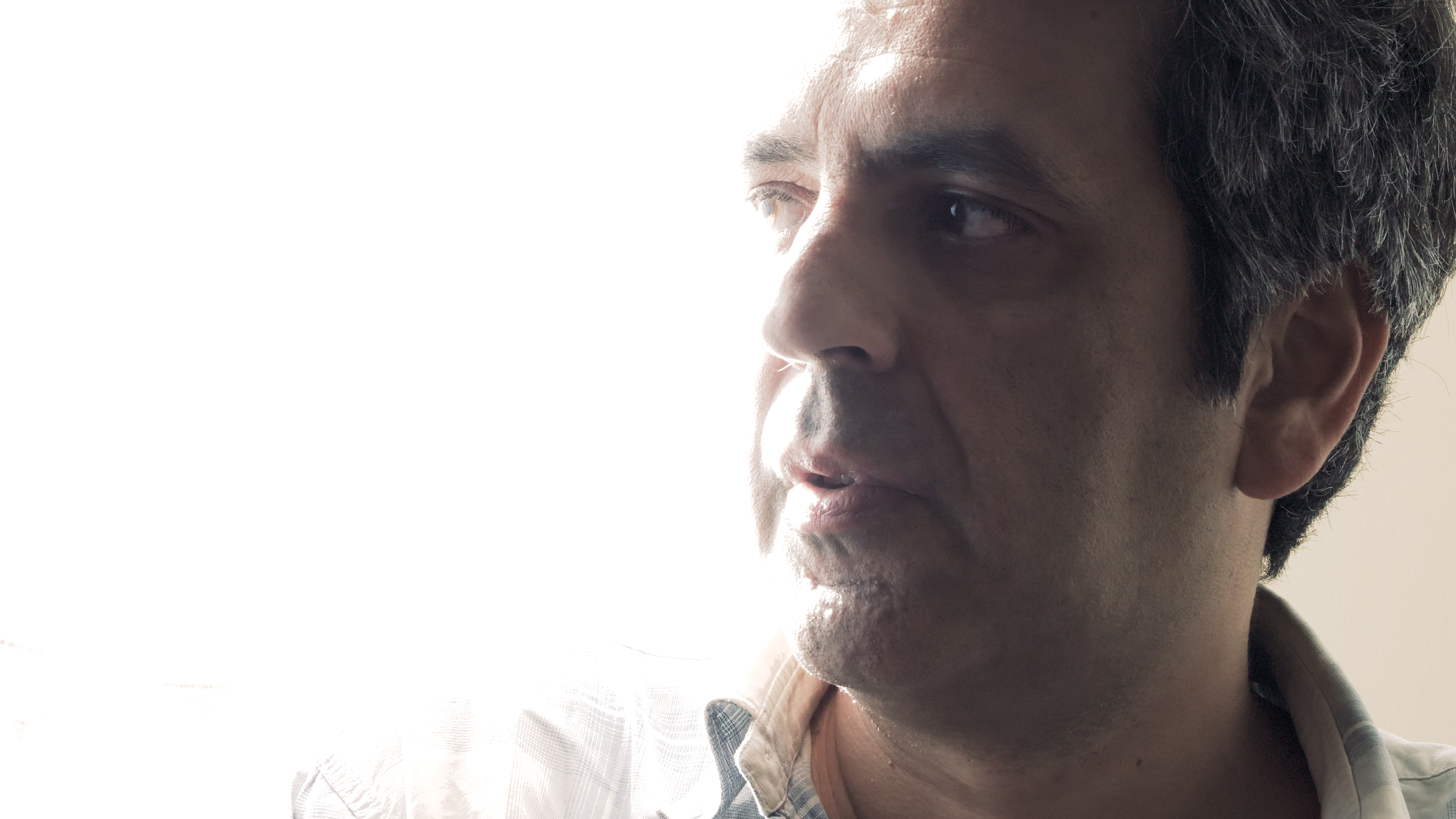
Drama, thriller, by Fabio Del Greco, Italy, 2019.
Someone wants to control the life of the employee Giuseppe Russo: the products he buys, his political and religious faith, his private life, even his dreams. But he will do anything to escape control and find his true self. Giuseppe is a man of around 45, married, with a stable job and a home of his own. His life flows seemingly peacefully when he meets a mysterious tramp who gives him some old VHS video cassettes. Giuseppe begins to see video tapes in which he is filmed in some moments of his life since he was a child, then as a teenager and as a young man. Who shot those videos that he remembers nothing about? Giuseppe has the strange sensation of being constantly observed and begins to investigate what is happening. Through his investigation of him, he begins to rediscover his true identity and become aware of who he truly is.
Employee's Mystery is a film that highlights the danger of social control and shows a society where everyone is constantly monitored and conditioned in their deepest selves. The film is also an analysis of human nature and identity. Fabio Del Greco, who plays Giuseppe, gives an engaging performance. Equally good is Chiara Pavoni, in the role of Giada Rubin and Roberto Pensa in the role of the tramp. Employee's Mystery is a film that addresses important themes in an original way, a psychological thriller that keeps the viewer glued to the screen until the end: a metaphor for contemporary society, in which people are increasingly monitored and conditioned by the media and technologies . It is a courageous and provocative work, which addresses important themes in an original way.
LANGUAGE: Italian
SUBTITLES: English, Spanish, French, German, Portuguese

