
The Ruins That Became a Dance Floor
You arrive at a door that has no sign. The building looks abandoned — and in a meaningful sense it was, for decades, left to rot in the no-man’s land between two political systems that no longer exist. A man with no expression examines you with the slow certainty of someone who has seen ten thousand faces try to perform coolness and fail. You pass. Inside, the darkness is not decorative: it is structural, almost ethical, a refusal to let you see yourself as others see you. The music does not begin so much as reveal itself, a frequency you realize has been present since you stepped off the train, vibrating in the fillings of your teeth. Your body adjusts. Your biographical self — your job, your nationality, your carefully constructed social identity — begins to dissolve at the edges, the way sugar dissolves in water that is just barely warm enough.

What happened in Berlin after November 9, 1989 was not a celebration in the way that word is normally used. It was a rupture in the fabric of administered reality so sudden and so total that the institutions designed to manage human experience — the state, the market, the cultural apparatus — were briefly, structurally unable to respond. When the Wall came down, it left behind approximately one hundred and fifty kilometers of border strip running through the center of a major European city, along with thousands of square meters of vacant industrial buildings, former Stasi facilities, warehouses that had served a command economy now dissolved overnight. The bureaucratic machinery required to claim, zone, permit, and monetize these spaces needed time — months, sometimes years. Techno needed only a generator and a weekend.
This is not a metaphor. The Tresor club opened in March 1991 in the vaults of a former department store on Leipziger Strasse, in a building that had been sealed and untouched since the Second World War. The vaults still contained the rusted safety deposit boxes of a civilian population that had ceased to exist as a political category. Dmitri Hegemann, who had been running events in the West Berlin underground since the mid-1980s, did not transform the space — he activated it. The rust stayed. The boxes stayed. The music played in rooms that smelled of decades of sealed air, and the people who danced there were East Berliners who had, seventy-two hours before, lived inside a different civilization, and West Berliners who had spent their entire lives defining themselves in opposition to a wall that no longer stood.
The sociologist Henri Lefebvre argued in 1974, in “The Production of Space,” that space is never neutral — that it is always already a political product, shaped by the economic and ideological forces that built it. What made the Berlin of 1991 so historically strange is that the forces which had produced its eastern spaces had catastrophically withdrawn before new forces could move in to replace them. The result was something Lefebvre’s framework did not fully anticipate: a genuine interregnum of space, a window in which built environments existed outside the logic of any productive system. Techno did not fill a vacuum in the way a commodity fills a market gap. It occupied the interregnum the way water occupies a cracked foundation — not by design, but by the pure physics of where pressure is absent.
What the dancers in those early East Berlin spaces were processing was not joy in any simple register. The historian Timothy Garton Ash, who had watched the Wall fall from close range and wrote about it with the precision of a man trying to hold something that kept changing shape, understood that the East German population had lived inside a system designed to make interiority legible to the state. Every conversation, every relationship, every interior space had been potentially permeable to observation. The darkness of the club, the anonymity, the physical overwhelm of the bass — these were not aesthetic choices so much as physiological corrections, a nervous system recalibrating after forty years of enforced transparency.
Frequency as Political Fact
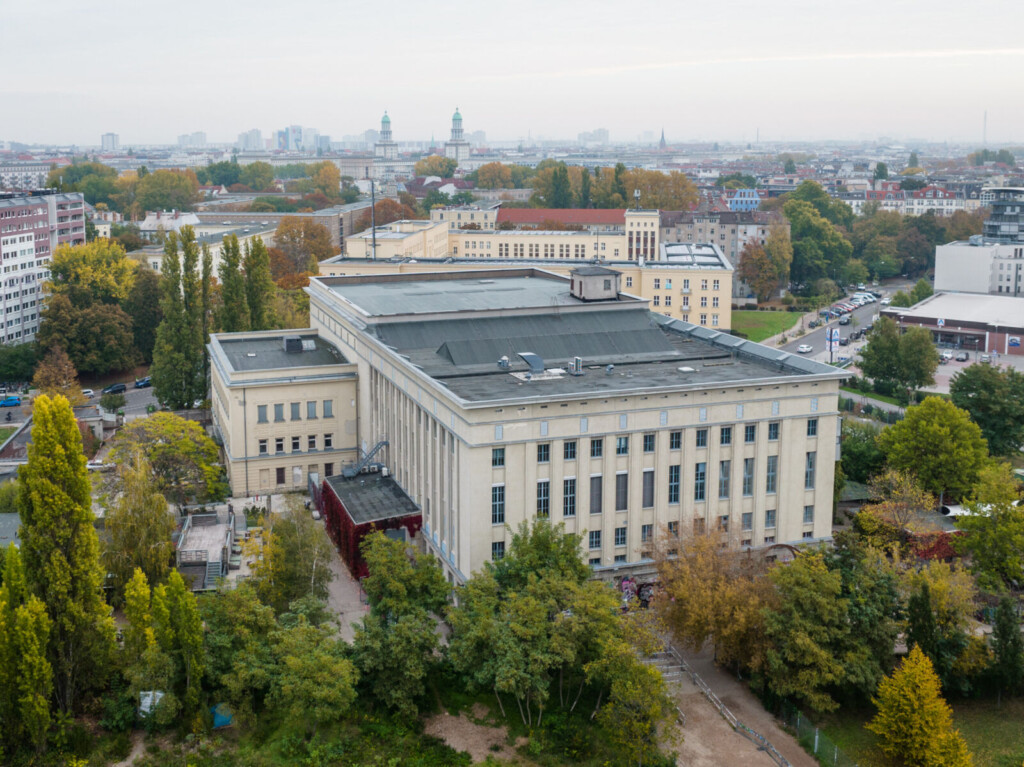
You are standing in a room where the kick drum arrives every 130 milliseconds, reliably, without negotiation, and something in your chest begins to synchronize with it before your mind has had time to consent. This is not metaphor. Entrainment — the neurological process by which an external periodic stimulus captures the body’s own oscillatory systems — operates below the threshold of decision. The beat does not ask permission. It reorganizes you, and in a room of several hundred people, it reorganizes everyone simultaneously, producing a temporary collective body that shares a pulse no individual chose.
Jacques Attali argued in 1977, in Noise: The Political Economy of Music, that music is never merely aesthetic. It is, in his formulation, a herald — it announces social structures before those structures have crystallized into law, institution, or consensus. Music does not reflect the world; it prefigures it. The dominant frequencies of any era, he insisted, encode the political economy of that era: who controls the production of sound controls the production of social meaning. What this implies, and what Attali himself did not fully pursue, is the inverse — that when a society fractures, the music that emerges from the fracture is not noise in the dismissive sense but signal, broadcasting the shape of a world that has not yet been named.
Berlin in 1990 was a city that had structurally ceased to exist before it had time to become something else. The administrative apparatus of reunification moved at the speed of bureaucracy; the psychological reality of four decades of partition moved at no speed at all — it simply remained, embedded in the muscle memory of how people navigated space, whom they trusted, which streets felt like someone else’s country. Politicians offered frameworks. Economists offered projections. Neither offered anything a body could actually inhabit. Into that vacancy, warehouses opened. Power was restored to abandoned buildings not by municipal decree but by extension cords run through broken windows.
What happened in those spaces was not the refusal of politics. It was politics conducted at a frequency politics could not reach. Repetitive electronic music — specifically the strain developed in Detroit by producers like Juan Atkins and Kevin Saunderson, itself born from the gutted industrial landscape of a city abandoned by capital — arrived in Berlin carrying a structural logic that matched the ruins it now inhabited. The four-on-the-floor pattern is, among other things, a democracy of pulse: no instrument dominates, no melody claims precedence, the rhythm is shared property that no single body owns. To dance to it is to practice, without theorizing it, a form of social organization based on horizontal coordination rather than hierarchical command.
The significance of this is not symbolic. Rehearsal is a real cognitive and social process. Sociologist Randall Collins, in Interaction Ritual Chains published in 2004, documented how shared bodily rhythms produce what he called emotional energy — a tangible resource of solidarity and collective confidence that participants carry out of the ritual space and into ordinary life. The dancefloor was not an escape from the problem of post-Wall identity. It was one of the few sites where that identity was being actively, physically constructed, week after week, in the dark, without a name for what was being built.
The absence of a name mattered. Language, in 1990 Berlin, was already colonized — by reunification rhetoric, by Cold War residue, by the competing nostalgias of East and West. Sound operated in a register that syntax could not yet occupy. The 909 kick drum and the 303 bassline carried no semantic content that could be argued with, co-opted by a party platform, or printed on a campaign poster. They were, in Attali’s sense, ahead of the discourse — rehearsing a social body that the discourse would spend the next decade trying to catch up to.

The Mythology of the Underground and Who It Actually Serves
You pay forty euros at the door, wait three hours in a line curated by a bouncer who decides your face fits the correct version of rebellion, and somewhere inside your chest there is the genuine belief that you have accessed something real — something outside the machinery of commerce, something that resists. That feeling is the product. The resistance is the commodity. You did not escape the market; you purchased a more expensive ticket into it.
Sharon Zukin traced this mechanism with uncomfortable precision in Loft Living, published in 1982, watching how artists colonized derelict industrial spaces in lower Manhattan not as a failure of capitalism but as its avant-garde. The aesthetic of abandonment — raw concrete, exposed pipes, the beautiful wreckage of de-industrialization — became a signal of cultural capital, which became a signal of real estate value, which became the engine that evicted the very people whose presence had made the neighborhood legible as authentic in the first place. Zukin called this the symbolic economy: the process by which meaning, style, and cultural identity are manufactured into economic value, usually at the expense of those who generated the meaning without intending to sell it.
Berlin after 1989 was not an exception to this dynamic. It was its purest laboratory. The city had three hundred thousand vacant apartments, entire industrial corridors stripped of function, a population psychologically and economically dislocated, and an almost complete absence of municipal oversight in the eastern districts. The first raves happened in genuinely marginal spaces because there was nowhere else — not because marginality was a philosophical choice, but because it was a structural condition. The Turkish and Vietnamese communities who had settled in Kreuzberg and Mitte during decades of guest-worker programs and Cold War geopolitics had built neighborhood economies, social fabrics, informal networks of survival. They did not build them as a backdrop for cultural tourism. They built them because they needed to live.
By the mid-2000s, Berlin’s Senate Department for Economics and Technology was explicitly marketing the city’s underground scene as a competitive advantage. A 2018 report by the Berlin Club Commission estimated that club culture generated approximately 1.5 billion euros annually for the city’s economy and that the sector employed over nine thousand people directly. The language of resistance had been translated without remainder into the language of municipal branding. What had been a temporary occupation of ruins became a permanent feature of the city’s identity product, and the ruins themselves became too valuable to leave to the people who had inhabited them.
The displacement was not metaphorical. Between 2011 and 2019, average rents in Mitte and Friedrichshain — the historic centers of the scene — increased by over sixty percent, a rate that structural economists at the German Institute for Economic Research documented as directly correlated with cultural-economy investment rather than organic demand. The families who had paid low rents in formerly divided Berlin did not benefit from the symbolic capital that their presence helped create. They absorbed the cost of it. A working-class Turkish grandmother in Kreuzberg has no equity stake in the mythology that her neighborhood’s survival generated for international real estate developers.
What the underground actually produced, in Zukin’s framework, was a new frontier — not geographic but semiotic. The aesthetic of danger, transgression, and anti-commercialism functioned as a land-use instrument, softening neighborhoods for capital investment by making them desirable to a class of highly mobile, highly educated, relatively wealthy consumers who then commanded rents that restructured the social composition of entire districts. The bouncer at the door is not keeping out the uncool. The bouncer is enforcing a property line dressed in the costume of taste.
The Body as the Last Uncolonized Territory

You arrive at the door without your name. Not metaphorically — the phone goes face-down into a locker, the coat disappears behind a numbered tag, and what remains standing in the dark is something prior to biography, prior to the accumulating social debt of being a recognizable person. The darkness is not decorative. It is structural. It removes the face, which is the primary surface on which society reads, judges, and files you.
Maurice Merleau-Ponty argued in his 1945 Phenomenology of Perception that consciousness is not housed in the mind and then projected outward into a body — the body is itself the site of perception, the ground from which any experience of the world becomes possible. He was writing against Descartes, against the centuries-long fiction that the thinking self floats above the flesh like a pilot in a vessel. What the techno floor does, whether its architects read phenomenology or not, is engineer exactly the conditions Merleau-Ponty was describing: it forces you back into the body by overwhelming every cognitive shortcut you normally use to stay above it. The volume is not loud in the way a concert is loud. It is pressure. It reorganizes your sense of where your edges are. At 130 beats per minute sustained over four hours, the repetition is not monotonous — it is erosive. It wears down the interior monologue, the running commentary that modern life has trained you to maintain at all times as proof of your own coherent selfhood.
What gets suspended in that erasure is not consciousness but category. Gender, class, professional identity, nationality — these are not natural properties of a human being. They are enforced through continuous social repetition, through the thousand daily interactions that confirm and reinforce which box you occupy. Erving Goffman mapped this in 1959 in The Presentation of Self in Everyday Life, showing that identity is fundamentally performative, a negotiation conducted in real time with every audience present. Remove the audience, remove the light, submerge the individual in bass frequencies that bypass language and hit the nervous system directly, and the performance has nothing to perform against. This is not freedom in any grand political sense. It is something more disturbing and more interesting: a temporary structural failure of the machinery that makes you legible to others and, eventually, to yourself.
The duration matters in ways that short-term pleasure cannot account for. A set that runs from midnight to nine in the morning is not simply a longer version of a two-hour concert. Something qualitatively different happens past the fourth hour, documented in neurological research on prolonged rhythmic entrainment — the brain’s default mode network, responsible for self-referential thought, begins to quiet. What some traditions reached through meditation or fasting or ritual isolation, the post-reunification Berlin club circuit arrived at through engineering: concrete walls, controlled air, artificial dark, and a DJ who understands that tension and release across an eight-hour arc is a different art form entirely from a song.
None of this should be mistaken for utopia. The people on that floor carry their histories into the room and retrieve them at the coat check. The experiment is controlled precisely because it ends — because the light outside will eventually be real, the phone will vibrate with obligations, and the body will reassemble its social coordinates with startling speed. What the experiment reveals is not that identity is optional but that it is constructed, and construction always implies that something was built on top of something else that was already there, something older and less nameable, something that was apparently patient enough to wait.
When the Archive Kills the Living Thing
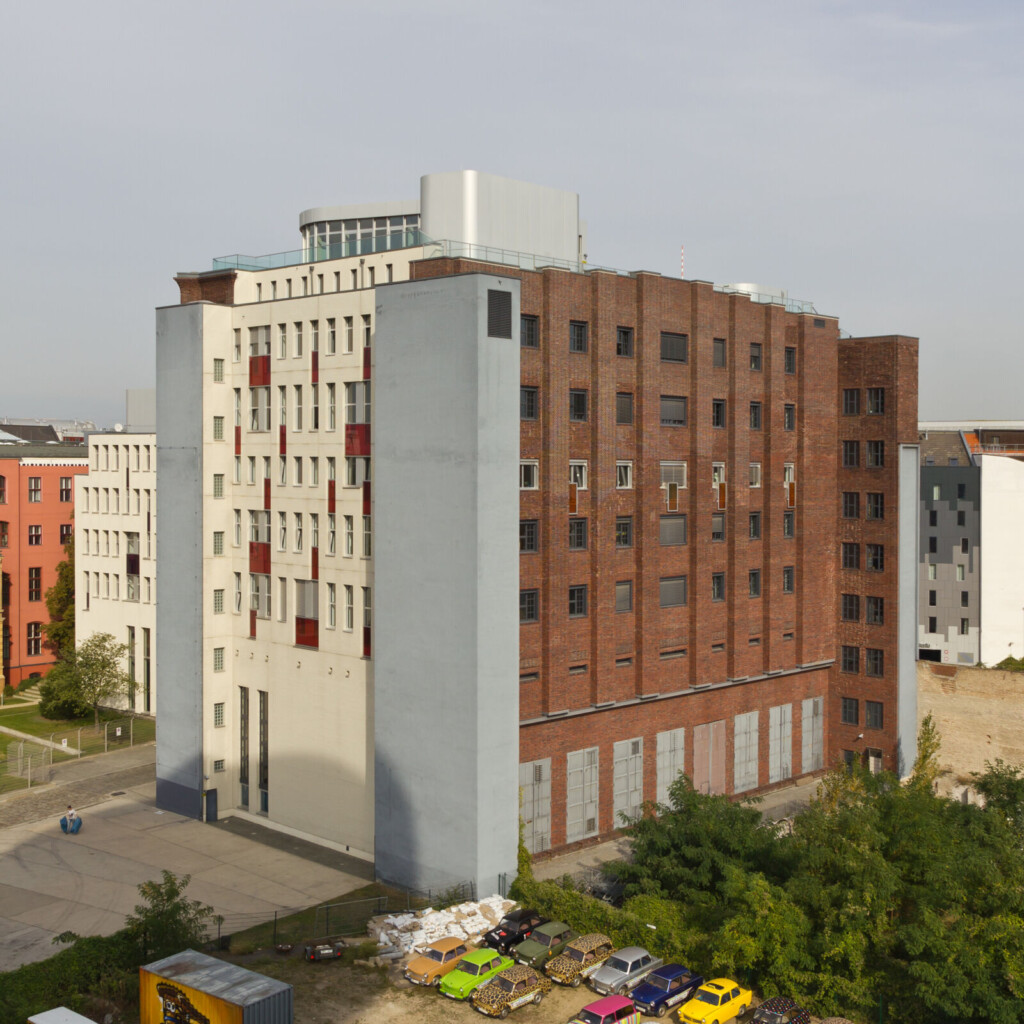
You are standing in a museum vitrine somewhere in the middle of Berlin, looking at a Roland TR-909 drum machine mounted behind glass, and the placard beside it uses the word “heritage.”
The object is real. The machine is real. The sound it made in 1992 in a warehouse on the Spree was real in a way that involved sweat and darkness and the specific trembling of a body that did not know what time it was and did not care. What is behind that glass is not that sound. It is the corpse of the conditions that made the sound necessary.
UNESCO’s ongoing debate about whether Berlin techno qualifies as intangible cultural heritage — a designation process that gained serious institutional traction in Germany around 2021 — is not a celebration. It is a diagnosis. When a living practice enters the vocabulary of heritage administration, it means the culture that produced it has already begun to calcify, or that someone has decided its survival now depends on the intervention of institutions rather than on the urgency of the people who practice it. The French ethnomusicologist Jean During, writing on the preservation of Persian classical music, identified this exact mechanism: the moment a tradition becomes the object of a state-sponsored rescue operation, the rescue itself begins to determine what gets rescued, which means it determines what gets quietly discarded. You do not preserve everything. You preserve what is legible to the archive, what photographs cleanly, what fits into a three-hundred-word description on a grant application.
Academic musicology discovered techno late and arrived with the same instruments it always carries. Hillegonda Rietveld’s work on repetition and trance, Lawrence Grossberg’s frameworks for affect and popular music, Simon Reynolds‘ 1998 Energy Flash — these were serious attempts to articulate something that resisted articulation precisely because its power depended on being present inside it, not outside looking in. The analysis is not wrong. But the act of analytical framing performs a closure. Once you have explained why the kick drum at 138 BPM produces a dissociative state that temporarily suspends the ego-boundary, you have turned an experience into a fact, and facts can be stored, filed, taught in seminars, and eventually displayed beside a TR-909 behind glass.
What techno understood about time — and this is not a metaphor — was that the present tense is not a point on a line but a physical condition you either inhabit or you don’t. The entire architecture of a twelve-hour set is designed to make yesterday and tomorrow structurally irrelevant. This is not escapism. It is a disciplined refusal of the narrative logic that culture ordinarily uses to assign meaning: origins, development, conclusion. Techno had no interest in being remembered because memory is exactly the operation it was built to suspend.
The cruelty of canonization is that it does not destroy this. It does something worse. It converts the refusal of memory into a memory of refusal, which can then be consumed by precisely the forces the refusal was aimed at. A rebellion that becomes a museum exhibit has not been defeated. It has been made to perform its own defeat on a loop, for the benefit of visitors who were never there, who buy the tote bag on the way out and feel that they have understood something.
The city that built a culture on disappearing is now being asked to make that culture permanent, and the question that no heritage commission can answer is whether permanence and vitality have ever, in any historical case, managed to occupy the same room without one of them quietly leaving.
A vision curated by a filmmaker, not an algorithm
In this video I explain our vision
🎛️ Sound, City, and the Underground Spirit
Berlin’s techno scene is more than a music genre — it is a philosophy of urban space, collective identity, and sonic liberation. These articles explore the cultural, psychological, and artistic forces that converge beneath the surface of the city, where sound becomes a form of resistance and self-discovery.
Music as an Awakening of the Unconscious
Music has long been understood as a force that bypasses rational consciousness and speaks directly to the deeper layers of the psyche. In Berlin’s underground clubs, the relentless pulse of techno functions exactly this way — dissolving ego boundaries and inducing states of collective trance. This article explores how sound becomes a gateway to the unconscious, making it essential reading for anyone seeking to understand what happens on a dancefloor at 4am.
GO TO THE SELECTION: Music as an Awakening of the Unconscious
Situationist Psychogeography: The City as Lived Space
The Situationist concept of psychogeography treats the city as a lived, emotional landscape shaped by drift and desire rather than function and order. Berlin’s underground scene inherited this spirit, transforming abandoned warehouses and Cold War ruins into territories of radical freedom. This article traces how urban space becomes a stage for alternative experience, directly illuminating the geography of techno culture.
GO TO THE SELECTION: Situationist Psychogeography: The City as Lived Space
New York Underground of the 1980s: Art and Culture
New York’s underground art scene of the 1980s offers a powerful parallel to Berlin’s techno revolution — both emerged from economic devastation, political marginalization, and the creative energy of outsiders. Basquiat, Haring, and their contemporaries turned neglected urban spaces into laboratories of radical self-expression, much as Berlin’s DJs and promoters would do in the years following reunification. Understanding this New York moment is key to grasping the broader cultural logic of underground movements.
GO TO THE SELECTION: New York Underground of the 1980s: Art and Culture
Michel Foucault and Drugs: Pleasure and Power
Foucault’s analysis of drugs, pleasure, and power offers a provocative lens through which to examine the chemical and somatic dimensions of techno culture. The underground club is not simply a place of entertainment but a site where bodies, altered states, and institutional limits collide. This article provides the philosophical vocabulary to think seriously about why pleasure and transgression remain so politically charged in spaces like Berghain.
GO TO THE SELECTION: Michel Foucault and Drugs: Pleasure and Power
Discover the Music of Independent Cinema on Indiecinema
If Berlin’s underground spirit resonates with you, Indiecinema is the streaming platform where that same energy lives on screen — in films that challenge, disorient, and transform. Explore our catalog of independent and avant-garde cinema and let the rhythm of a different kind of storytelling move you.
👉 EXPLORE THE CATALOG: Watch Indie Films in Streaming
A vision curated by a filmmaker, not an algorithm
In this video I explain our vision

