
Cinema, in its purest form, is a mirror. But some mirrors are distorting, dark, capable of reflecting not what we are, but what we could become under pressure. The thriller is this kind of mirror. Far from the reassuring formulas of Hollywood, this film genre has evolved from a tale of external crimes to a detailed map of our internal landscapes. It is a cinema that does not fear exploring the gray areas of the human experience, using suspense and tension not as an end, but as a tool for psychological investigation.

Here is a curated selection that perfectly embodies this philosophy. It is not a simple list, but a path that unites the pillars… from the most famous arthouse films to the most unknown independent cinema. These films show us that personal growth is not always a luminous path towards improvement. It is often a brutal process, an ambiguous or even destructive transformation. It is the confrontation with trauma, the descent into obsession, the reckoning with one’s own capacity for violence.
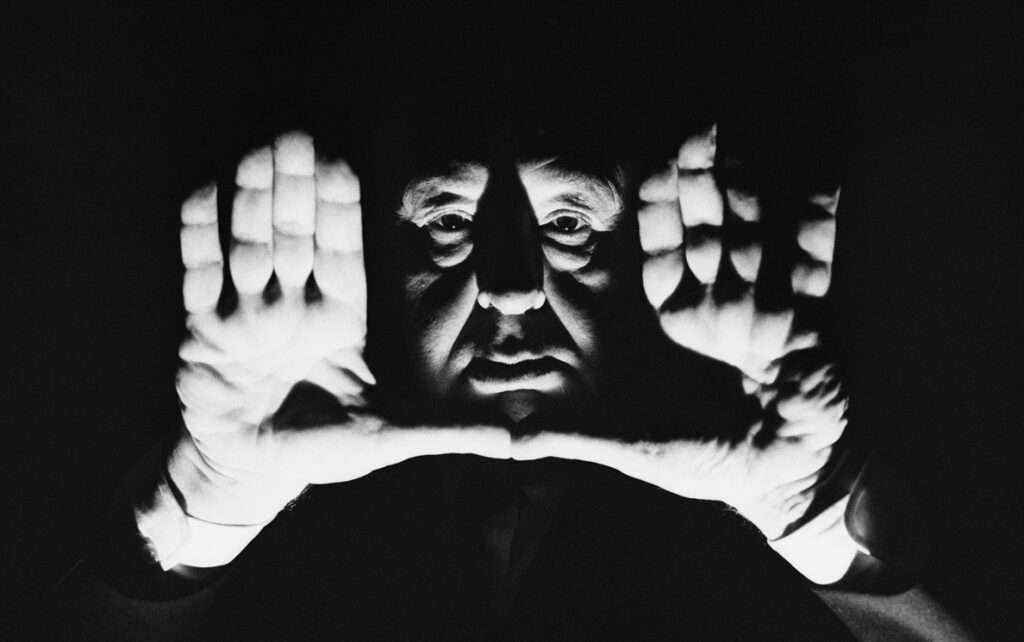
The term “thriller” is a vast container, a labyrinth in which it is easy to get lost without the right map. Under this label, in fact, profoundly different souls coexist: from the frenetic pacing of pure action to the anguish-laden silences of psychological drama, from rigorous deductive investigations to the bleak fatalism of noir.
The thriller genre encompasses a wide array of sub-genres, with new variations continuously emerging from the film industry. Notable sub-genres of thrillers include legal thrillers, spy thrillers, action or adventure thrillers, medical thrillers, crime thrillers, romantic thrillers, historical thrillers, political thrillers, religious thrillers, high-tech thrillers, and military thrillers.
There is no single way to experience cinematic tension. For this reason, navigating the selection process does not merely mean choosing a quality title, but identifying the exact emotional frequency you wish to tune into. Are you seeking an intellectual challenge, a puzzle to solve alongside the protagonist, or a visceral experience that leaves you breathless? Do you wish to explore the machinations of power or the unfathomable abysses of the human mind? Below, we have analyzed the genre’s vital currents to guide you toward the specific kind of thrill you are seeking.
🆕 Best Recent Thrillers
Love Lies Bleeding (2024)

Lou (Kristen Stewart), a reclusive gym manager in New Mexico, falls hard for Jackie, an ambitious bodybuilder headed to Las Vegas for a competition. Their passionate romance quickly turns into a violent descent into crime when they get entangled in the dirty business of Lou’s family, led by her psychopathic criminal father (Ed Harris).
Produced by A24, this is an electric, sweaty, and pulpy neo-noir thriller. Director Rose Glass blends romance with brutal violence in a style reminiscent of the Coen brothers on steroids. It is a film about physical obsession and revenge, visually hallucinatory and with a pace that offers no escape.

Anatomy of a Fall (2023)

Sandra, a German writer, lives with her husband Samuel and their visually impaired son Daniel in an isolated chalet in the French Alps. When Samuel is found dead in the snow below their house, the police begin treating the case as a “suspicious death,” presuming murder. Sandra is indicted, and the ensuing trial becomes a surgical and painful dissection not only of the crime but of their marital life.
Winner of the Palme d’Or and the Oscar for Best Screenplay, this is the definitive legal thriller of the last decade. There are no car chases, but the tension in the courtroom is unbearable. Director Justine Triet constructs a puzzle where truth is elusive and every word can be a weapon. A writing masterpiece that forces you to become judge and jury.
Red Rooms (Les Chambres Rouges) (2023)

Kelly-Anne is a model obsessed with the high-profile trial of Ludovic Chevalier, a serial killer accused of torturing and murdering three teenage girls on a dark web livestream. Kelly-Anne sleeps outside the courthouse to never miss a hearing and develops a morbid fixation on the case, desperately searching for the missing video of the final murder to prove the man’s guilt (or innocence?).
Forget the usual serial killer movies. This Canadian thriller is an icy, disturbing work about our voyeuristic obsession with evil. It is a film about technology, digital isolation, and the descent into madness. The tension is entirely psychological and technological, built on glances, screens, and silence. An underground cult classic for those seeking a cerebral and dark thriller.
The Teachers’ Lounge (2023)

Carla Nowak is a young, idealistic teacher at a German middle school. When a series of thefts strikes the institution, and one of her Turkish students is unjustly accused, Carla decides to investigate on her own by leaving her laptop webcam on in the teachers’ lounge. Discovering the culprit, instead of solving the problem, triggers a chain reaction of lies, paranoia, and rebellion that causes the school order to collapse.
Who said thrillers need guns? This German film (Oscar-nominated) proves that a school can be as stressful as a war zone. It is a taut social thriller, shot in a claustrophobic format (4:3) with an anxiety-inducing score. It explores themes of justice, prejudice, and how “good intentions” can lead to total disaster.
A vision curated by a filmmaker, not an algorithm
In this video I explain our vision
How to Blow Up a Pipeline (2023)

A diverse group of young climate activists, each with a personal reason to hate the oil industry, gathers in Texas to commit an act of extreme sabotage: blowing up a pipeline. The film meticulously follows the technical preparation of the plan, the construction of the explosives, and the group dynamics, as time ticks inexorably toward the explosion.
Built with the tight pacing of a Heist Movie like Ocean’s Eleven, but with real political stakes. It is not a documentary; it is an action thriller taut as a violin string. Without morally judging the protagonists, the film drags you into the logistics of terrorism (or resistance?), creating pure suspense through chemistry and timers.
A Better Life
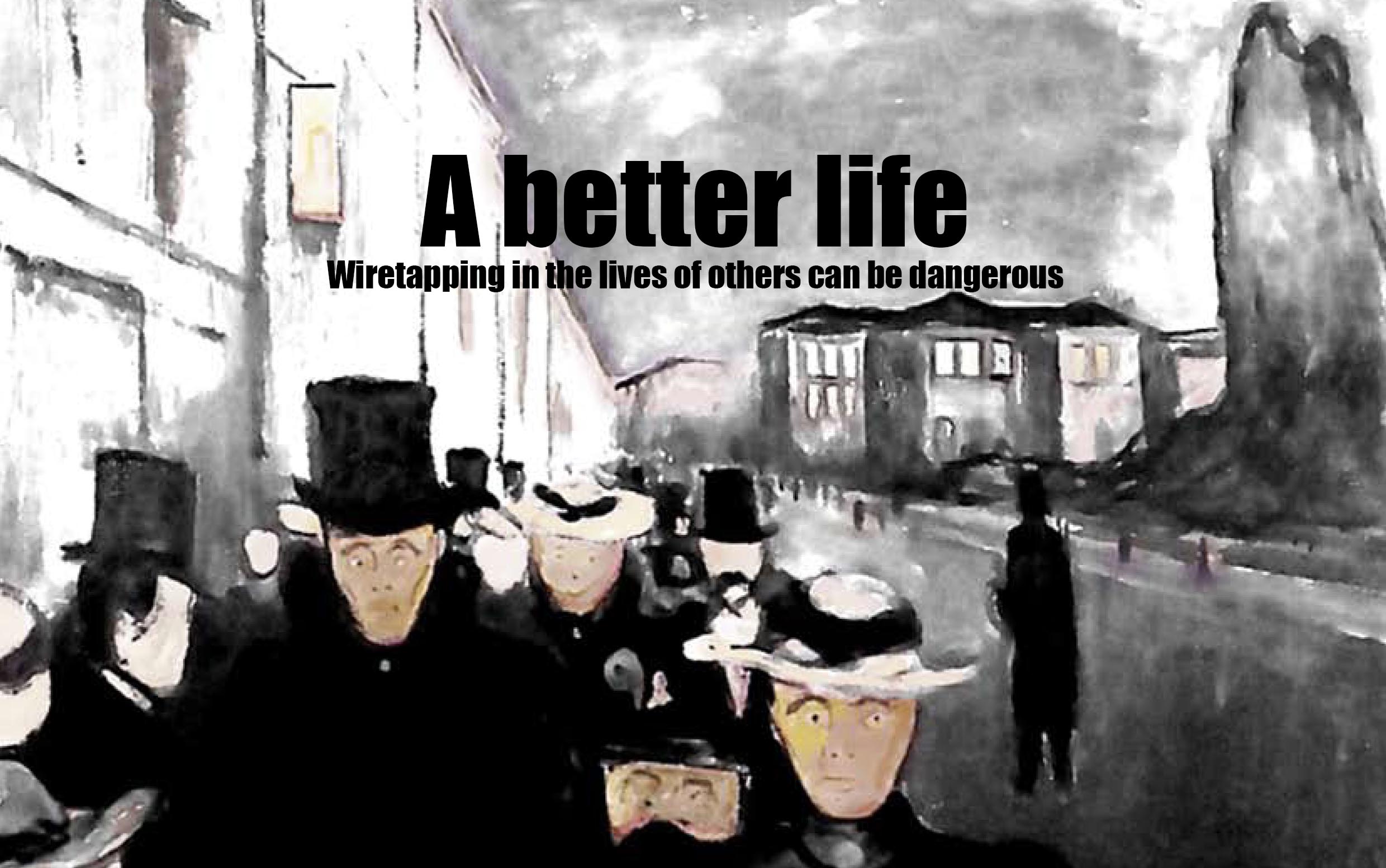
Drama, thriller, by Fabio Del Greco, Italy, 2007.
Rome: Andrea Casadei is a young investigator specializing in audio wiretapping who conducts investigations commissioned by husbands betrayed by their wives, or by parents worried about what their children are doing outside the home. But what interests him most is understanding the human soul, listening to casual conversations in the streets, knowing what people think. He often meets in Piazza Navona with his friend Gigi, a frustrated street artist obsessed with success at all costs, with whom he shares a passion for wiretapping. Shocked by the mystery of the disappearance of Ciccio Simpatia, another street artist common friend, Andrea decides to abandon the commissioned works to seek a better life and reflect on his own and others' existence. He will meet the actress Marina and with a bug he will slowly enter her life until he discovers her most unthinkable secrets. The film deals with an important theme of contemporary Western society: the lack of love. The mysterious and tormented figure of Marina is reflected in a gloomy and soulless Rome.
Director Fabio Del Greco declared about his film: "Perhaps this film is a reflection on the art of observing, of listening, in short, of what one does when one leaves the real world to tell about it. Perhaps he wants to talk about the subtle relationship between the mirages of success touted by today's society, power and the most authentic human relationships.A 'dark cloud' hangs over the city: it is engulfing everyone in a sort of indistinct, uniform mass, where everyone thinks the same things, where everyone they are more alone. Where is the truest part that makes us unique? Maybe you can try to intercept it only secretly."
LANGUAGE: Italian
SUBTITLES: English, Spanish, French, German, Portuguese, Dutch.
The Indie and Arthouse Thriller
Free from the constraints of major studios, the independent thriller can afford to dare, to be politically incorrect, to subvert the narrative clichés that the mainstream audience expects. Here you will find films that use the codes of tension to talk about social unease, identity, or politics, often with experimental and bold visual languages.
👉 GO TO THE LIST: The Best Indie Thrillers
The Psychological Thriller and Mind Games
In this subgenre, the true prison is not physical, but mental. The psychological thriller shifts the battlefield from the outside to the interior of the protagonist’s psyche. Here, reality becomes brittle, unreliable, subject to paranoid distortions. It is not about discovering “who the killer is,” but understanding if what we are seeing is real or the product of a collapsing mind.
This is the hunting ground favored by auteurs like David Fincher or David Lynch, where the “doppelgänger,” memory loss, and obsession become metaphors for our deepest fears. These are films that require an active viewer, willing to question their own perception until the very last frame, often remaining with unsettling questions even after the end credits roll.
👉 GO TO THE LIST: Must-Watch Psychological Thrillers
Noir: Shadows and Ambition
Noir is not just a genre; it is a state of mind. It is the cinema of fatalism, where weary detectives and disillusioned anti-heroes move through corrupt cities that seem to swallow every hope. Here, the line between good and evil does not exist: there are only shades of moral gray. The tension arises from the inevitability of fate and the basest human passions: greed, lust, betrayal.
In this section, you will find both the great classics of Hardboiled, made of sharp contrasts and cutting dialogue, and modern evolutions of the genre (Neo-Noir), where the aesthetic updates but the underlying pessimism remains intact. These are stories of imperfect crimes and inevitable punishments, where the protagonist is often destined for defeat from the very first scene.
👉 GO TO THE LIST: Noir Films
The Mystery Movies: The Art of the Enigma
If the psychological thriller works on emotion, the Mystery works on the intellect. It is a direct challenge between the director and the viewer. The structure is the classic “Whodunit” (who did it?), but the best films in this category elevate the game, transforming the investigation into a social dissection. Every clue is important; every dialogue hides a double meaning.
Here, suspense is generated by the anticipation of the revelation. Whether it is a private investigator à la Agatha Christie or a journalist obsessed with a cold case, the engine of the narrative is the search for truth in a world that lies. These films are perfect for those who love to gather pieces of the puzzle and attempt to anticipate the solution before it is served on screen.
👉 GO TO THE LIST: Mystery Movies

Altin in the City
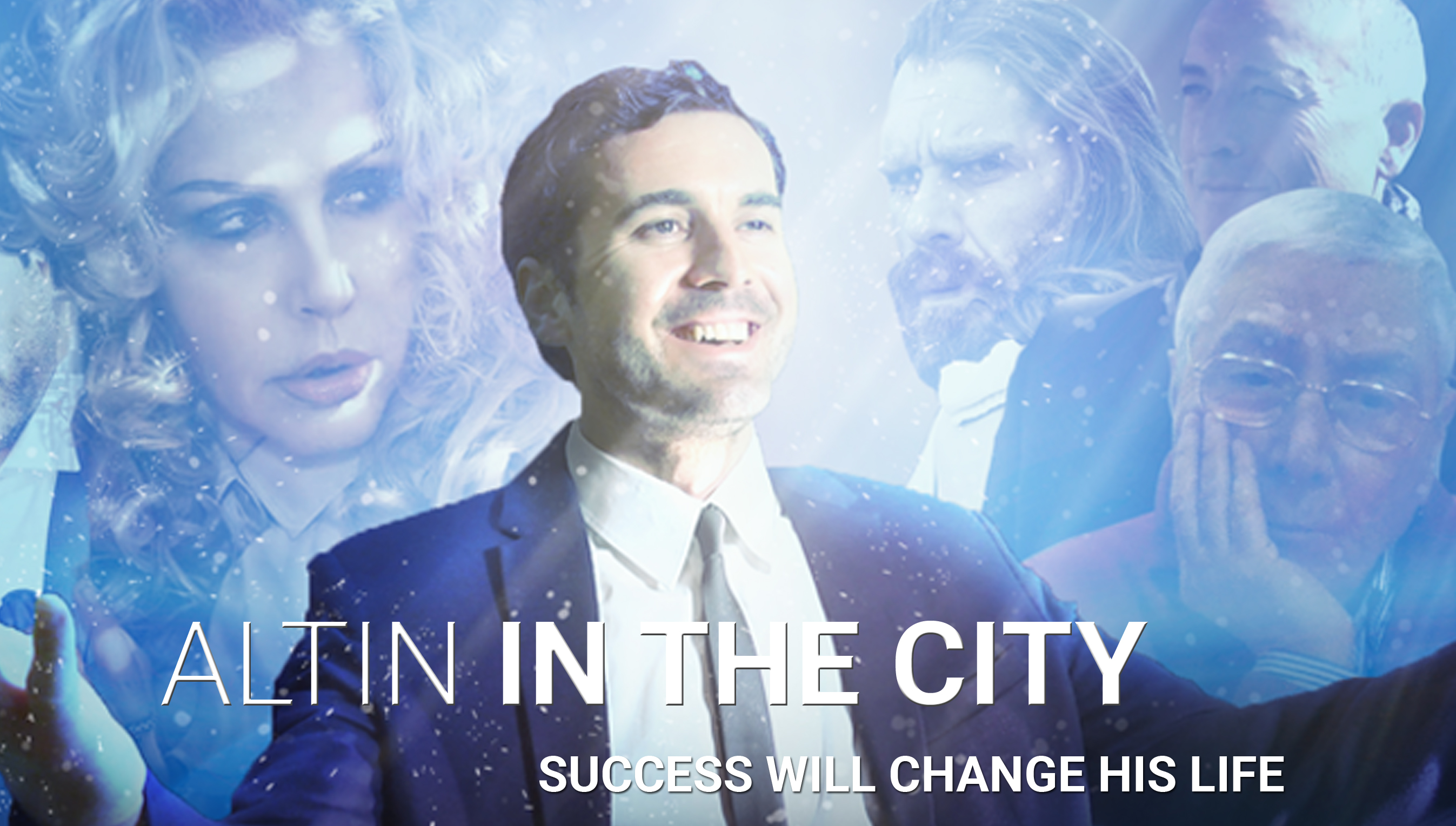
Drama, thriller, by Fabio Del Greco, Italy 2017.
Altin, aspiring Albanian writer arrived in Italy aboard a large ferry in the 90‘s, works in a butcher shop when he’s selected to audition for a reality of writers and finally sees a chance to be successful with his book “the journey of Ismail.” Unfortunately, this is the begin of the adventures which will lead him to learn about revenge, loneliness and extreme poverty, to the dark side of wealth and success.
The theme of Altin in the City should not lead to the assumption that it is merely the story of a young immigrant trying to integrate. In reality, it is a tale where greed, thirst for power and success, cynicism, and ambition intertwine, creating a sort of modern-day Faust and a new "pact with the devil" belonging to the 22nd century, which we could summarize as: show business. The reality show becomes the Mecca, the keystone, and the springboard for those who wish to achieve success without effort. Del Greco presents this world with subtle irony, characterized by kitsch nuances and parodic tones. However, success without effort comes at a price: Altin has sold his soul to the devil and, from being an easy prey of television showbiz, will soon become a victim of himself.
LANGUAGE: Italian
SUBTITLES: English, French, Spanish, German.
Suspense Films
Suspense is not merely an ingredient; it is the very essence of cinematic anticipation. In these films, tension does not stem from frenetic action, but from the dilation of time. It is Hitchcock’s “bomb under the table” theory: the viewer knows that danger is imminent, while the characters remain oblivious. Here, the director plays with the audience’s nerves, transforming every silence and every shadow into a potential threat.
👉 GO TO THE LIST: Suspense Films
The Giallo
The Giallo is a unique genre, where investigation is tinged with aesthetic obsession. Often characterized by faceless killers, black gloves, and an aestheticization of violence that borders on art, this subgenre has rewritten the rules of fear. It is not merely a search for the culprit, but a visual journey into saturated-color nightmares, where logic often yields to visual suggestion and dreamlike tension.
👉 GO TO THE LIST: Giallo Films
Action Thrillers
When psychological tension explodes into kinetic movement, we enter the territory of the Action Thriller and espionage. Here the stakes are raised: one risks not only sanity, but physical survival or even the world order. It is the cinema of political paranoia, government conspiracies, and global surveillance—themes that resonate powerfully in our era.
However, the films we have selected are not simple sequences of explosions. The best action thrillers maintain a rigorous construction of suspense (in the Hitchcockian sense) even during the most spectacular scenes. These are works where the pacing is tight, time is an inexorable enemy, and the protagonist is often a lone man against an omnipotent system.
👉 GO TO THE LIST: Best Action Thrillers

Crime Thriller: The Mechanics of Justice
While the Mystery genre asks “who,” the Police Procedural asks “how.” This subgenre strips away the romanticism of the amateur sleuth to focus on the gritty, often exhausting reality of professional investigation. It is the cinema of methodology: stakeouts, wiretaps, forensic analysis, and the eternal friction between the pursuit of truth and the bureaucratic constraints of the law. Here, the adrenaline does not come from a twist ending, but from the hunt itself—a chess game played on the asphalt of sprawling metropolises.
👉 GO TO THE LIST: Crime Thrillers
Beyond the Mist
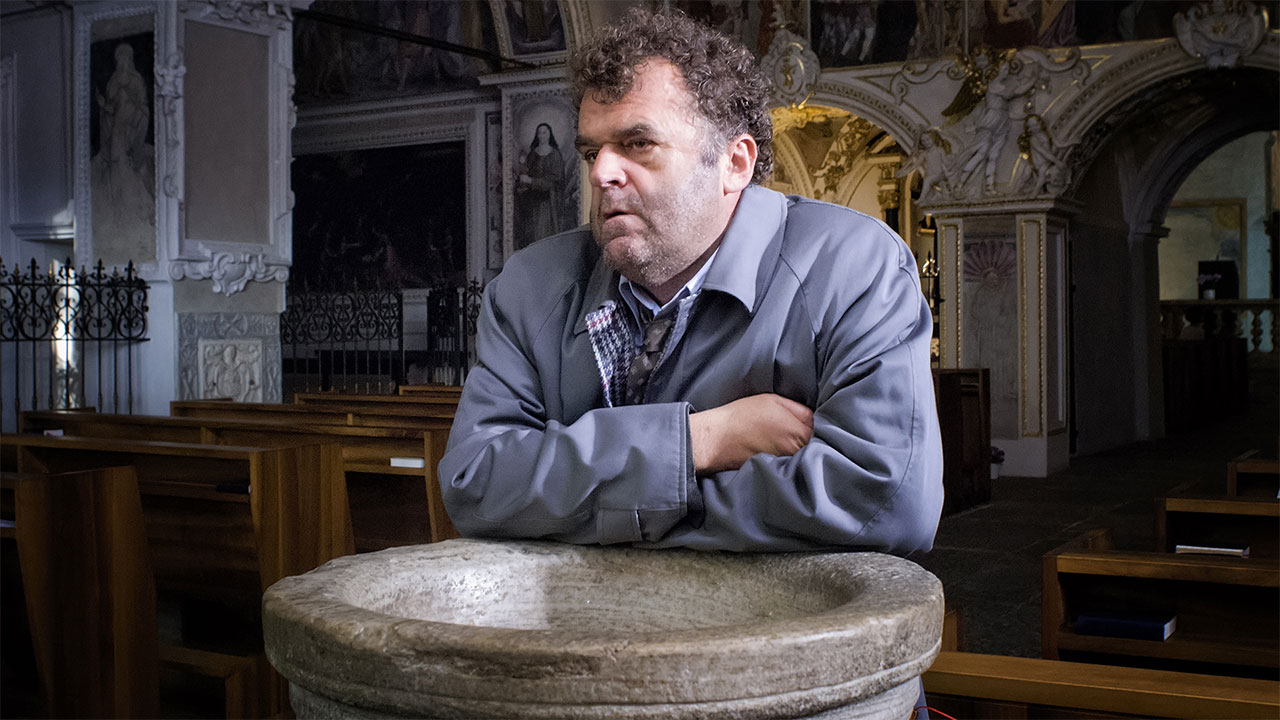
Thriller, mystery, by Giuseppe Varlotta, Italy 2018.
A week before Easter a great actor disappears from the set where he shoots a historical film. A private investigator is discreetly in charge of the fact. From the beginning he feels the disturbing perception of being somehow involved in the past events of the deceased. The places, including a former chocolate factory, where a girl had died in mysterious circumstances years before, are full of esoteric signs.
LANGUAGE: Italian
SUBTITLES: English
The Espionage Thriller (Spy Story)
The world of espionage is made of double-crosses, paranoia, and geographical borders that become moral boundaries. From the icy atmospheres of the Cold War to modern cybernetic conspiracies, this genre explores the dark side of politics and power. Explosions are not always necessary: the best Spy Thrillers play out through a glance, a stolen document, and the constant sensation that no one can be trusted.
👉 GO TO THE LIST: Spy Movies
The Legal Thriller: The Theater of Law
In the Legal Thrillers to Watch, action shifts from the streets to the courtroom, turning the penal code into a weapon and rhetoric into a combat sport. Here, tension does not stem from physical chases, but from the tight verbal duel between prosecution and defense, where a single word or a technicality can decide the fate of a life. It is a genre that explores the subtle, and often painful, gap between written “law” and moral “justice.”
👉 GO TO THE LIST: Top Legal Thrillers
The 1920s: The Roots of Cinematic Suspense
In the 1920s, the thriller began to take shape as an autonomous genre, while still heavily tied to silent cinema and theatrical atmospheres. In this pioneering decade, directors such as Fritz Lang, F.W. Murnau, and Josef von Sternberg experimented with tension, chases, and mysteries through striking visuals, expressive lighting, and rhythmic editing. Post-war collective fears and the rise of urban cinema helped create stories of deception, crime, and psychological obsessions, laying the foundations for the modern thriller.
The Hands of Orlac (1924)

The Hands of Orlac (1924) is a silent horror film directed by Robert Wiene, based on the 1921 French novel The Hands of Orlac by Maurice Renard.
Orlac, a well-known pianist, is on a train that crashes and loses his precious hands. A severe cure is attempted: a transplant of 2 new hands. They belong to a murderer. Orlac enters a conflicted relationship with them and refuses to use them as soon as he learns who his new hands are. To make the circumstance complex is the murder of his father, to whom his partner had turned for a cash loan.
The Hands of Orlac is one suspense movie among the last works of art of the expressionist cinema of which Robert Wiene had actually made the manifesto film, The Cabinet of Dr. Caligari. The film is set in a dark and oppressive atmosphere, typical of German Expressionism. The use of light and shadow, distorted camera angles, and the characters’ facial expressions contribute to create an atmosphere of suspense and dread.
The Hands of Orlac is considered a classic of horror cinema. It has been praised for its original story, its unsettling atmosphere, and the performance of Conrad Veidt, who portrays Orlac with great intensity. The film has been remade several times, including in 1935, 1960, and 1986.
Dementia
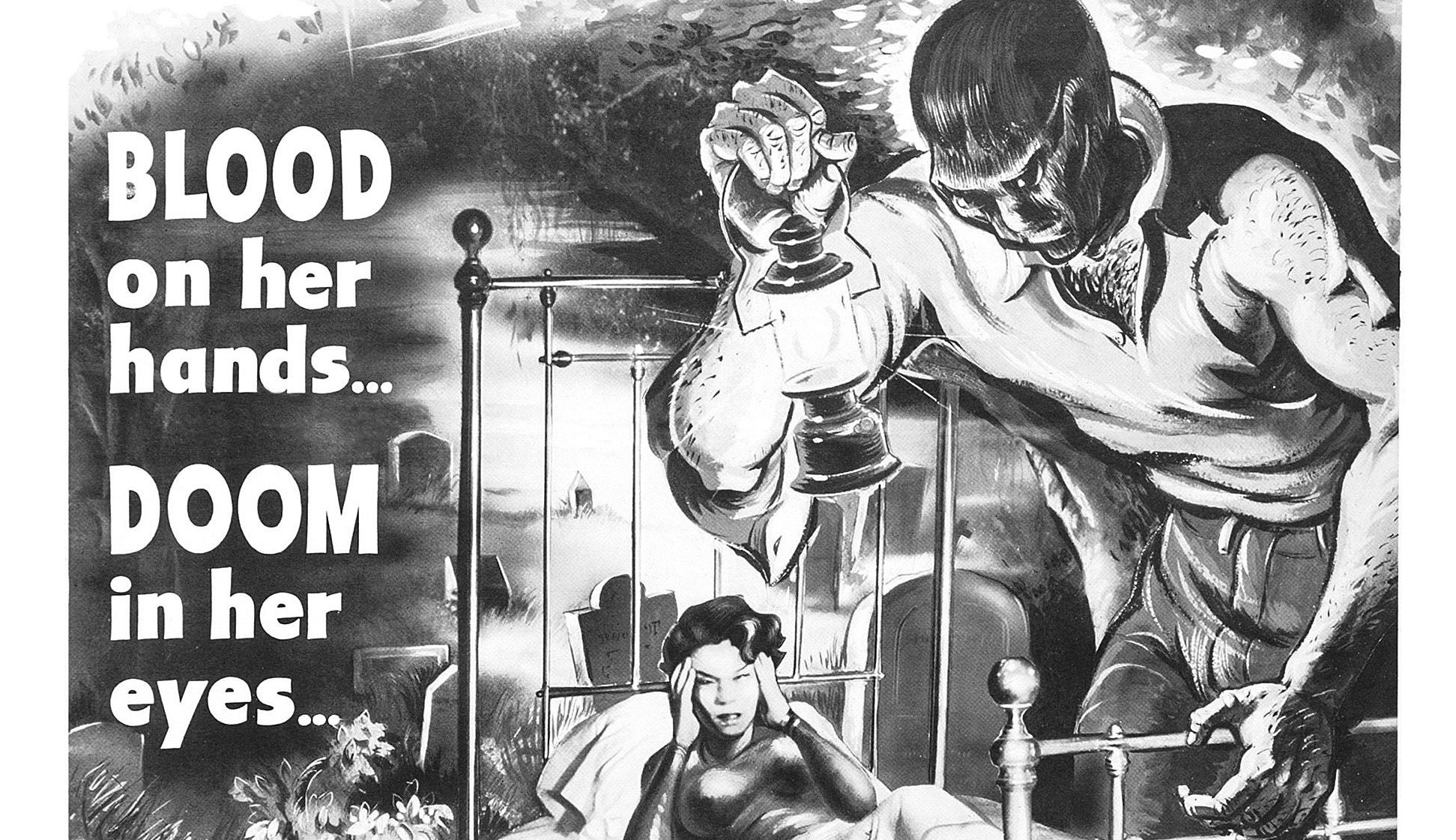
Horror, noir, by John Parker, United States, 1955.
It's night. A woman suddenly wakes up from a nightmare in a seedy hotel in the Los Angeles suburbs. She leaves the room and wanders the neighborhood. She meets a dwarf who sells newspapers with the title "Mysterious Stabbing". In a dark alley, a drunkard harasses her and a policeman rescues her. She then she meets a smartly dressed man with a thin mustache. The man gives her a flower and convinces her to get into the limo with a rich fat guy. As they drive through the city, the man thinks back to his childhood trauma and the violent father who stabbed him with a knife after he shot his unfaithful mother. The rich man takes her to have fun in several nightclubs and then to her apartment. He first ignores the woman while she gorges herself with a big meal. She seduces him, and he approaches her excitedly.
A visionary and hallucinatory nightmare, without dialogue, during a night of a lonely woman in Los Angeles. Between horror, film noir and expressionist film, initially conceived as a short film by Parker based on a dream told him by his secretary, Barrett, who also became the film's interpreter. The film was blocked by the New York State Film Board before being released in theaters in 1955. Later Jack H. Harris bought it and created a new version, with a different cut of editing, also adding a voiceover. and changing the title. This is the original version.
Without dialogue
Thriller in the 1930s: The Origins of Modern Suspense
The 1930s represent the birth of the thriller as an autonomous film genre, a period in which the language of suspense began to separate from its theatrical and literary roots to find more visual, nervous, and dynamic forms. It is the decade in which Alfred Hitchcock codifies the fundamental mechanisms of cinematic tension — psychological editing, the use of space as a trap, identity confusion — and in which Europe exports to the United States a taste for moral ambiguity that will influence the noir of the following decade. It is a thriller still elegant, often veiled by melodramatic atmospheres, but already capable of suggesting the modernity of invisible danger and inner obsessions.
M (1931)
![M (1931) Original Trailer [HD]](https://blog.indiecinema.co/wp-content/plugins/wp-youtube-lyte/lyteCache.php?origThumbUrl=https%3A%2F%2Fi.ytimg.com%2Fvi%2FDdR07aN3uoc%2F0.jpg)
M (1931) is a German noir film directed by Fritz Lang. The film is considered one of the masterpieces of film noir and one of the most important films in cinema history.
The city is terrorized by a murderer of little girls, and the police can find no trace. The criminal organizations have constant problems with police raids and decide to hunt down the monster on their own, managing to discover a clue: the “monster” whistles a macabre tune as he approaches his victims.
The film is set in a dark and oppressive Berlin. The use of light and shadow, angular shots, and the characters’ facial expressions contribute to creating an atmosphere of suspense and dread.
M – The Monster of Düsseldorf is a complex and meaningful film. It is a film about the nature of evil, justice, and social responsibility. It is also a film about the fear and horror that a serial killer can generate.
The film was starred by Peter Lorre in the role of Hans Beckert. Lorre gave an exceptional performance, which helped make the film a classic.
Masterpiece by Fritz Lang considered one of the progenitors of the noir genre that was successful in Hollywood in the 1940s, he is inspired by the heinous crimes committed in Germany in the 1920s by Fritz Haarmann and Peter Kürten. Unmissable movie for every cinephile.
Thriller in the 1940s: Postwar Darkness and the Dominance of Noir
In the 1940s, the thriller establishes itself in the public imagination as a territory of shadows, paranoia, and unspoken guilt. With World War II and its moral scars, cinema absorbs collective disillusionment and reflects it through oblique lighting, ambiguous characters, and labyrinthine cities. Noir becomes the most powerful expression of the thriller, a genre that confronts the darkest sides of the human psyche and stages weary detectives, elusive femme fatales, and intellectual criminals. It is a decade where tension arises less from action than from the sense of tragic inevitability weighing on the protagonists.
The Maltese Falcon (1941)

Private detective Sam Spade in San Francisco accepts an apparently simple case that quickly turns into a complex search for an invaluable statuette: the Maltese Falcon. Spade finds himself caught in a web of lies, murder, and ambiguous characters, including the seductive and deceitful Brigid O’Shaughnessy and the eccentric Kasper Gutman. This film is essential for having codified many of the visual and narrative styles that define Film Noir.
This masterpiece by John Huston is not just a solved mystery, but a foundational text of noir, based on hard-boiled literature. It establishes the cynical, disillusioned anti-hero as the central protagonist. The tension arises not so much from the action as from the dense atmosphere of corruption and Spade’s necessity to navigate a world where every character lies to survive. The conclusion, where Spade must sacrifice personal desire for a rigid, albeit cynical, moral code, fixes fatalism as a distinguishing trait of the genre, where justice is achieved at a high cost, if not impossible. It is the first great projection of American urban paranoia.
Detour
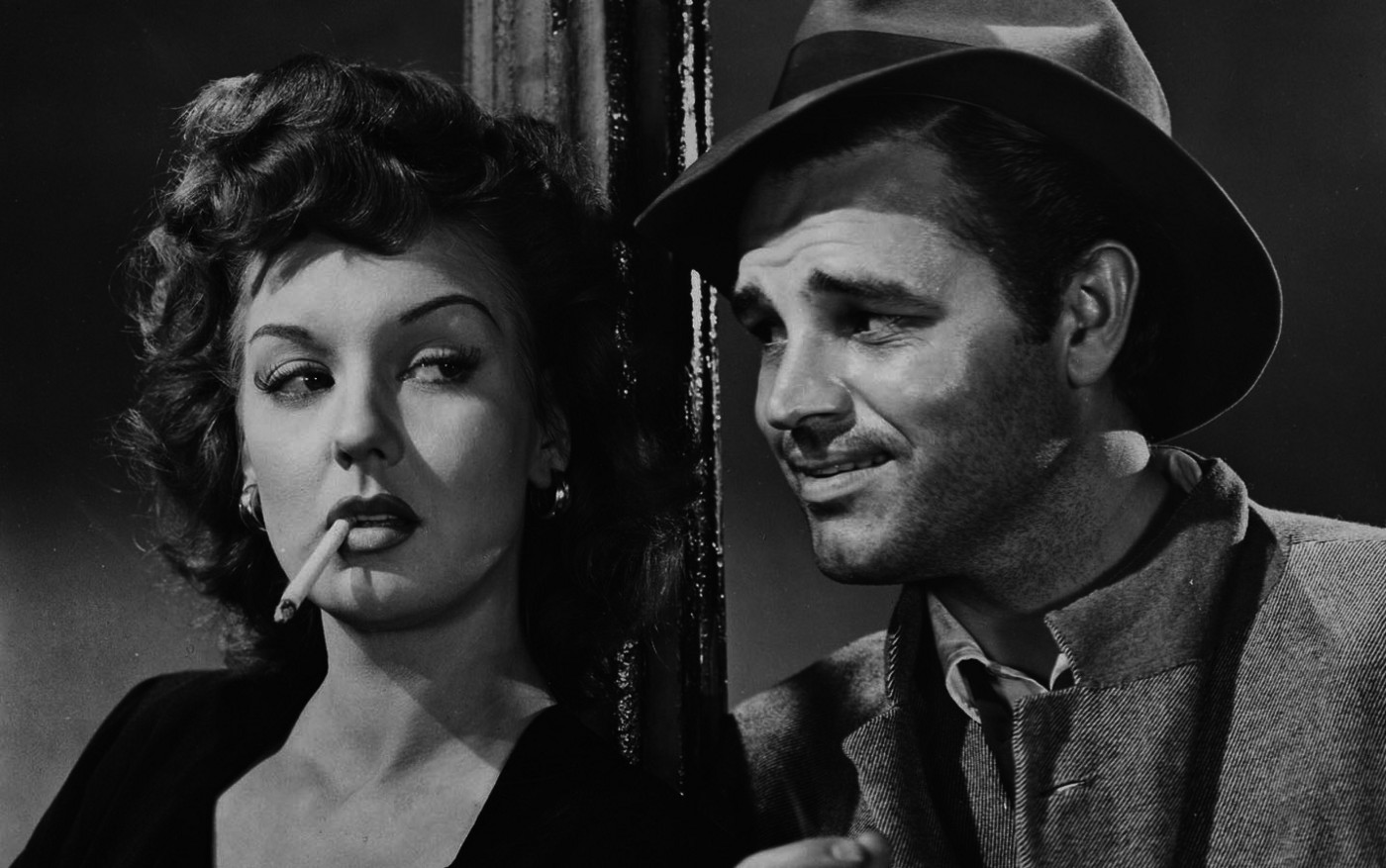
Thriller, noir, by Edgar G. Ulmer, United States, 1945.
Al Roberts, an unemployed pianist, hitchhikes. After getting a ride, he arrives at a restaurant in Reno, Nevada. Another restaurant customer plays a tune on the jukebox: Al is upset because it reminds him of his life in New York City. He remembers a time there when he was bitter about his lack of success as a musician, forced to play in a poor club. One day her partner, Sue Harvey, who is a singer in the same club, seeing no prospects in their relationship, goes to seek her fortune in Hollywood. Al ends up being depressed. After some misadventures he decides to take a trip to California to see her again and marry her. For little money, however, he is forced to hitchhike across the nation. In Arizona, bookmaker Charles Haskell Jr. offers Al a ride to Los Angeles. That night, Al drives while Haskell sleeps. When a storm forces Al to stop to raise the convertible top, he can't wake Haskell. Al opens the passenger door and Haskell falls to the ground: he's dead.
Low-budget independent film made by Edgar G. Ulmer, assistant director of the great Murnau in "The Last Laugh" and "Aurora", Detour is a noir inspired by German expressionism. The protagonist Al Roberts tells the story of him speaking directly to the audience, but several clues suggest that maybe we are not listening to what really happened but what Al Roberts wants us to think happened. Sometimes terrible experiences can be remodeled into fantasies that are less complicated to deal with, sometimes we have to build an alibi: perhaps this is the ambiguous charm of "Detour". Ann Savage's portrayal is phenomenal: there isn't an ounce of humanity in her portrayal of Vera. "Detour" is a perfect example of a low-budget film that transforms its limitations into a strong and consistent style. A cult film where the darkness of noir captures the viewer without the need for technical virtuosity, famous actors or special effects.
LANGUAGE: English
SUBTITLES: Spanish, French, German, Portuguese
Laura (1944)
![Laura (1944) ORIGINAL TRAILER [HD 1080p]](https://blog.indiecinema.co/wp-content/plugins/wp-youtube-lyte/lyteCache.php?origThumbUrl=https%3A%2F%2Fi.ytimg.com%2Fvi%2FKgGtRJY516E%2F0.jpg)
Police detective Mark McPherson investigates the murder of Laura Hunt, a beautiful and fascinating advertising executive. As McPherson interviews Laura’s friends and colleagues, and delves into her world through portraits and diaries, he develops a deep obsession with the dead woman, complicating the investigation. The film interweaves the crime investigation with a profound exploration of psychological fixation and identity.
Directed by Otto Preminger, Laura is a psychological thriller disguised as Noir. The real tension does not lie in the “whodunit,” but in the protagonist’s gradual loss of objectivity. McPherson falls in love with a ghost, an idealized image, a trait that anticipates the amorous and psychic obsessions of future thrillers. The film uses narration and flashbacks to paint a picture of illusions, where the femme fatale—or her memory—wields a destructive power even beyond death. Its formal elegance masks the emotional turmoil and the twisted nature of human relationships hidden beneath apparent normalcy, a trope that will be endlessly revisited.
Double Indemnity (1944)

Insurance agent Walter Neff is seduced by the femme fatale Phyllis Dietrichson, who convinces him to devise a plan to murder her husband and cash in a hefty insurance policy. The seemingly perfect plan begins to unravel under pressure from the insurance company’s head investigator, Barton Keyes, who immediately suspects foul play.
Directed by Billy Wilder, this film is often cited as the archetype of Film Noir. Its flashback structure (the protagonist recording his confession) creates an inevitable tension: we know Neff is doomed, but we are forced to watch how he arrived there. The film’s strength lies in the lethal chemistry between Neff and Phyllis, the supreme embodiment of the femme fatale who exploits male desire and greed for her own gain. The setting is a melting pot of intentions and traps, whose ultimate meaning remains remote. Double Indemnity establishes a fundamental principle: in the noir thriller, the only way out for corrupted characters is destruction.
Notorious (1946)

Alicia Huberman, the daughter of a convicted Nazi spy, is recruited by government agent T.R. Devlin to infiltrate an organization of former Nazis in Rio de Janeiro. To complete her mission, she must marry the group’s leader, Alexander Sebastian, putting a severe strain on her growing and tumultuous relationship with Devlin.
In this spy thriller, Alfred Hitchcock perfectly fuses geopolitical suspense with psychological drama. The tension is created not only by the secret of the uranium vials hidden in the cellar but by Alicia’s emotional and moral conflict. Hitchcock uses the claustrophobic environment and constant paranoia to explore themes of sacrifice, trust, and emotional sadism. Notorious demonstrates that love, in the world of the thriller, is a double-edged sword, a risk factor that makes the protagonist vulnerable both to her enemies and to the man who loves her. The anticipation and danger are skillfully dosed in every scene.
The Big Sleep (1946)
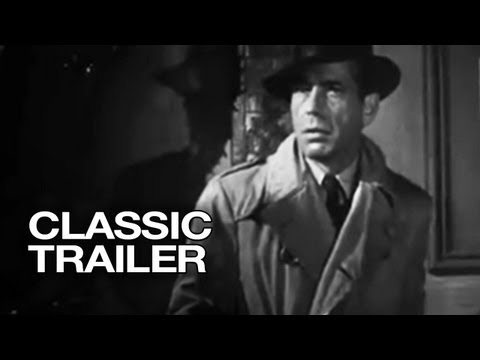
Private detective Phillip Marlowe is hired by General Sternwood to resolve a gambling debt issue involving his youngest daughter, Carmen. The investigation quickly expands into a labyrinth of blackmail, murder, and a complex criminal network revolving around Carmen’s older sister, Vivian Rutledge, a shrewd and seductive woman.
Directed by Howard Hawks and based on the novel by Raymond Chandler, The Big Sleep is the purest example of Noir as a descent into incomprehensible chaos. The plot is notoriously intricate and obscure, so much so that even the screenwriters struggled to follow all the threads of the story. This detail, far from being a flaw, becomes the strength: the film conveys the authentic feeling of the hard-boiled protagonist of being trapped, caught in an urban web. The tension arises from the awareness that Marlowe, even while seeking the truth, can never fully restore order, but only navigate moral disorder with his stoic code.
Scarlet Street
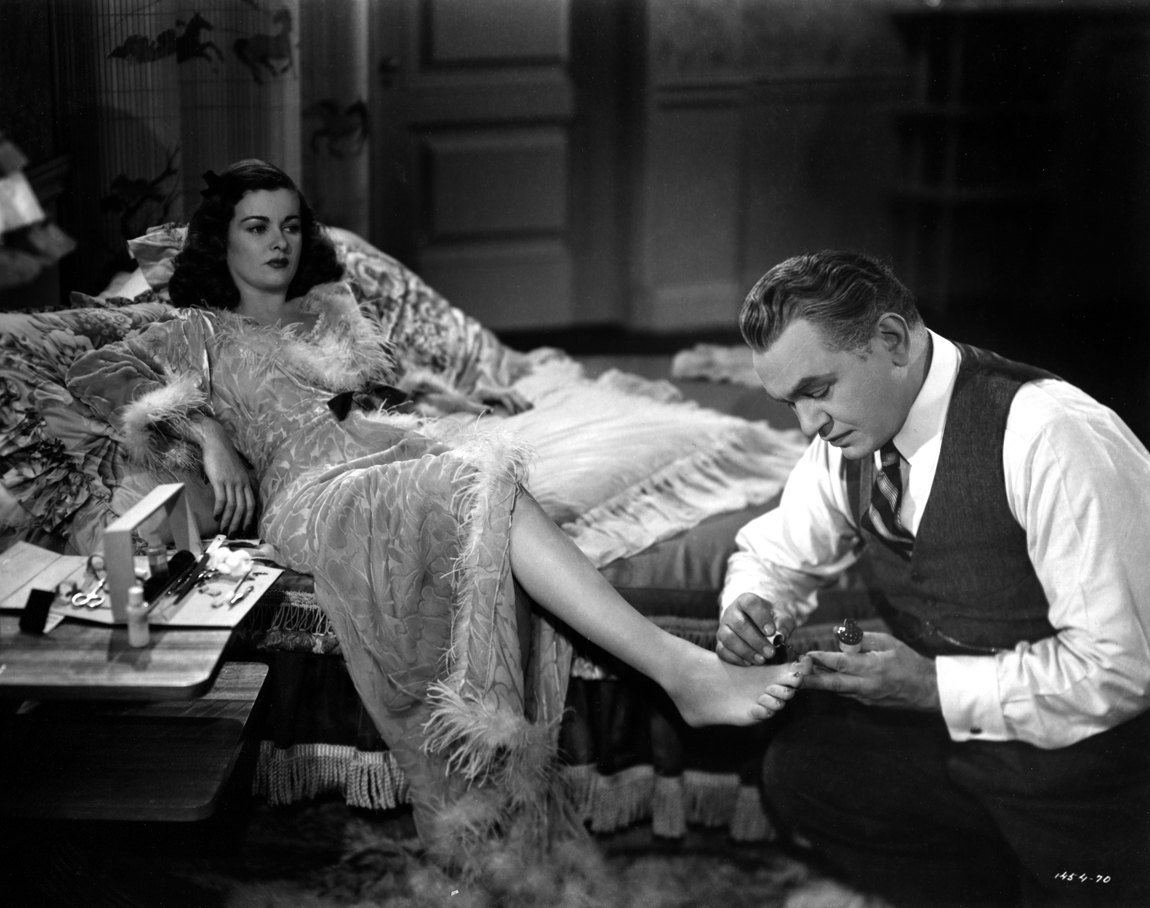
Thriller, by Fritz Lang, United States, 1945.
Lang reprises the cast and the ambiguous triangle from "The Woman in the Portrait" and makes one of his best films, telling a story of guilt and degradation. A senior bank employee, Christopher Cross, has an insufferable wife and only one pastime: painting. One day he meets a woman, Kitty, who begins to exploit him discovering that the paintings the cashier paints can be sold at a good price.
LANGUAGE: italian
SUBTITLES: english
The Lady from Shanghai (1947)
![The Lady from Shanghai (1947) Original Trailer [FHD]](https://blog.indiecinema.co/wp-content/plugins/wp-youtube-lyte/lyteCache.php?origThumbUrl=https%3A%2F%2Fi.ytimg.com%2Fvi%2FC_FTmZ0Y_hw%2F0.jpg)
The Lady from Shanghai is a 1947 American film noir directed by Orson Welles, who also stars in the film alongside his ex-wife Rita Hayworth and Everett Sloane. The movie is based on the novel If I Die Before I Wake by Sherwood King.
The film tells the story of Michael O’Hara, a sailor who rescues a beautiful woman named Elsa Bannister at sea. Elsa invites Michael to work as a crew member on her husband’s yacht, and he soon finds himself entangled in a web of intrigue and murder.
The Lady from Shanghai is an elegant and suspenseful film regarded as one of Welles’s finest works. It is known for its striking use of mirrors, which creates a sense of disorientation and unease. The film also features a memorable performance by Hayworth, who is both alluring and dangerous.
When The Lady from Shanghai was first released, it was not a commercial success, but it was later reappraised and is now considered a classic of film noir.
Hollow Triumph (1948)

Hollow Triumph (1948) is a film noir directed by Steve Sekely, starring Paul Henreid, Joan Bennett, and Eduard Franz. It is an adaptation of the novel The Scar by Cornell Woolrich.
Fresh out of prison, John Muller (Paul Henreid) organizes a robbery of a forbidden gambling den run by Rocky Stansyck (Thomas Browne Henry). The raid goes badly and they capture several of Muller’s men, then force them to identify the rest before eliminating them.
Stanwyck has the credibility to track down and kill his enemies no matter how long it takes, so Muller decides to go into hiding. He takes an office job recommended by his brother, Frederick (Eduard Franz), however, he quickly realizes that working for a living is not for him.
This is among the movies on gangsters more popular. The film was directed by Paul Henreid (Casablanca). Henreid went uncredited as director of Hollow Triumph, which was basically his directorial debut. He would go on to direct Live Fast, Die Young and 28 Episodes of Alfred Hitchcock Presents.
Force of Evil (1948)

Force of Evil (1948) is a film noir directed by Abraham Polonsky, starring John Garfield and Thomas Gomez. It is a social drama film that explores the theme of corruption and the power of organized crime.
The film tells the story of Joe Morse, a lawyer who works for Ben Tucker, a mob boss. Joe is an ambitious and determined man who wants to make money and climb the social ladder.
However, Joe is also a man with a sense of justice and morality. When he discovers that Tucker is involved in a series of criminal activities, Joe is forced to make a choice.
Joe can continue to work for Tucker and become an accomplice to his crimes, or he can report Tucker to the authorities. Joe chooses to report Tucker, but this choice will have devastating consequences for his life.
One of Martin Scorsese’s favorite thriller movies. Like T-Men, the film makes fantastic use of capturing images on location. At times, the film’s familiar themes and stylized writing help elevate the conflict to almost Shakespearean (or Biblical, considering how often it alludes to the story of Cain and Abel) levels. Though quite small in scale, Force of Evil finds success in its goal of communicating grand, large-scale ideas.
Silent night, bloody night
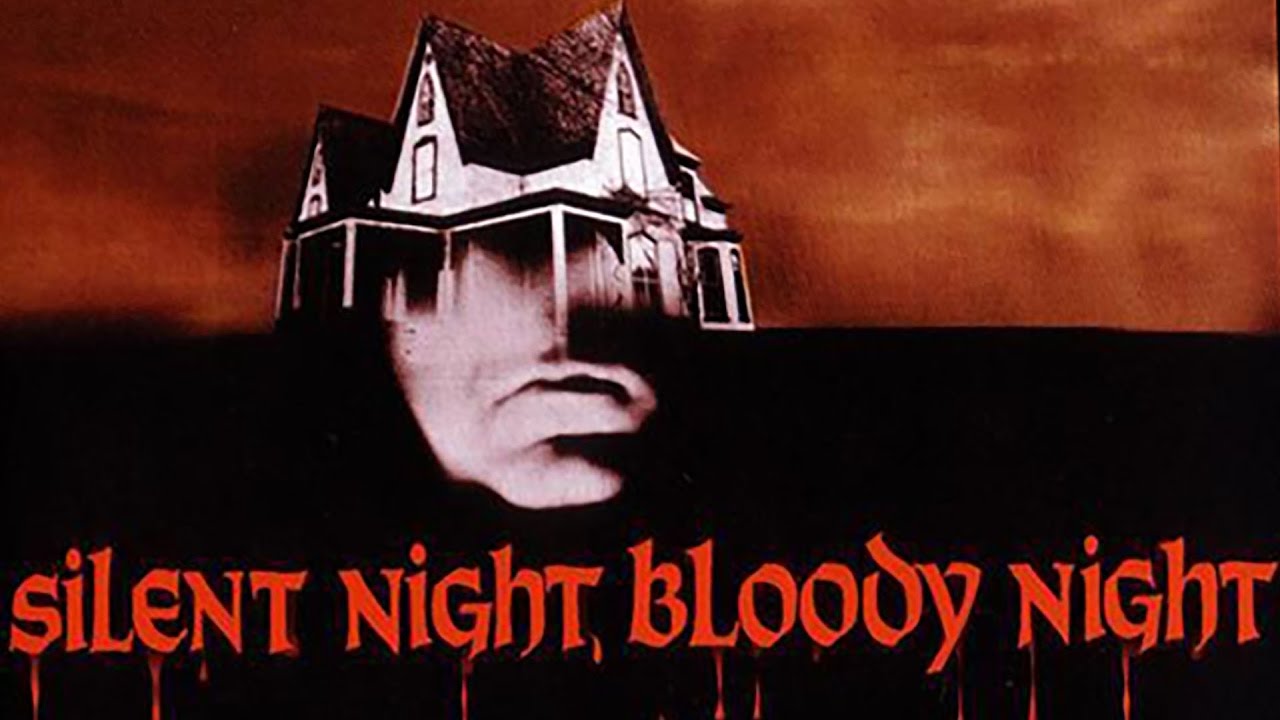
Horror, by Theodore Gershuny, United States, 1972.
1972 American Slasher, is a forerunner horror genre several years before Carpenter's Halloween, with a complex script and first person shooting of the killer, which inspired many subsequent films. Its originality and its narration are what manage to make it a small and little known pearl of the genre. A series of murders in a small New England town on Christmas Eve after a man inherits a family estate that was once a madhouse. Many of the cast and crew members were former Warhol superstars: Mary Woronov, Ondine, Candy Darling, Kristen Steen, Tally Brown, Lewis Love, director Jack Smith, and graduate Susan Rothenberg.
LANGUAGE: english
SUBTITLES: italian, french, spanish
The Third Man (1949)

It is a 1949 British thriller movie, directed by Carol Reed and written by Graham Greene. The film is considered a classic of the noir genre and an example of British cinematography and culture.
The plot follows Holly Martins, an American writer who arrives in Vienna shortly after the end of World War II, invited by his old friend Harry Lime. Martins learns that Lime died in a car accident and finds himself immersed in a mystery when he discovers the circumstances of his death is not as told to him.
Martins meets several people connected to Lime, including her ex-boyfriend and a British police officer, who give him conflicting information about Lime’s death and her past. Martins begins to investigate on his own and discovers that Lime was involved in an illicit penicillin trade, selling the medicine at exorbitant prices to wounded soldiers during the war.
The film was a huge success upon its release and continues to be enjoyed by audiences and critics alike for its intense screenplay, extraordinary performances from the cast and majestic direction by Reed. In particular, Orson Welles’ performance as Harry Lime was hailed as one of the best of his career.
The film was hailed as a cinematic masterpiece and influenced many subsequent works, both in terms of plot and style. The soundtrack to the film, composed by Anton Karas, became a classic and the film was listed as one of the 100 best films of all time by the British Film Institute.
Stray Dog (1949)
![Stray Dog (1949) Original Trailer [4K]](https://blog.indiecinema.co/wp-content/plugins/wp-youtube-lyte/lyteCache.php?origThumbUrl=https%3A%2F%2Fi.ytimg.com%2Fvi%2FafA0M0rO72I%2F0.jpg)
Stray Dog (野良犬, Nora inu) is a 1949 Japanese neo-noir crime drama film directed by Akira Kurosawa and starring Toshiro Mifune and Takashi Shimura. It was Kurosawa’s second film of 1949, produced by the Film Art Association and released by Shintoho.
The film follows the story of Murakami (Toshiro Mifune), a young detective in the Tokyo Metropolitan Police Department, who loses his service revolver during a struggle with a suspect. Desperate to find the gun before it is used in a crime, Murakami embarks on a relentless search that takes him through the back alleys and neon-lit streets of post-war Tokyo.
Along the way, Murakami encounters a variety of characters, including a sympathetic prostitute, a hardened gangster, and a mysterious woman who may hold the key to the missing revolver. As the clock ticks, Murakami’s obsession with finding the gun grows, threatening to consume him entirely.
Stray Dog is a film about obsession, guilt, and the struggle to find justice in a chaotic world. It is also a portrait of post-war Tokyo, a city still reeling from the effects of the war and grappling with the challenges of modernization.
Thriller in the 1950s: Paranoia, Identity, and the Cold War
The 1950s transform the thriller into a terrain of political and psychological anxiety. The shadows of noir merge with Cold War paranoia, generating stories centered on suspicion, doubles, and silent conspiracies. Hitchcock reinvents the genre by focusing on the ordinary citizen pursued by invisible forces, while other filmmakers explore domestic unease and the dissolution of identity in an increasingly surveilled world. It is a more cerebral thriller, sometimes claustrophobic, where the threat is not always visible but palpable.
Sunset Boulevard (1950)

Joe Gillis, a struggling screenwriter, accidentally seeks refuge in the decaying mansion of Norma Desmond, a former silent film star living reclusively in her glorious past. Norma hires Joe to revise the screenplay for her comeback, but the man finds himself trapped in a gilded yet suffocating existence, a victim of the diva’s growing madness and obsession.
Billy Wilder directs a psychological thriller about the dark side of Hollywood. The film opens with Joe’s corpse floating in the pool, and the story is narrated post-mortem, creating an atmosphere of tragic inevitability from the outset. The tension is not driven by the hunt, but by the slow implosion of Norma’s sanity, played magnificently by Gloria Swanson, who utters the iconic line: “I am big. It’s the pictures that got small.” Sunset Boulevard is a ruthless analysis of loneliness, illusion, and the way the entertainment industry devours its idols, projecting a feeling of being trapped, typical of noir.
Slow life
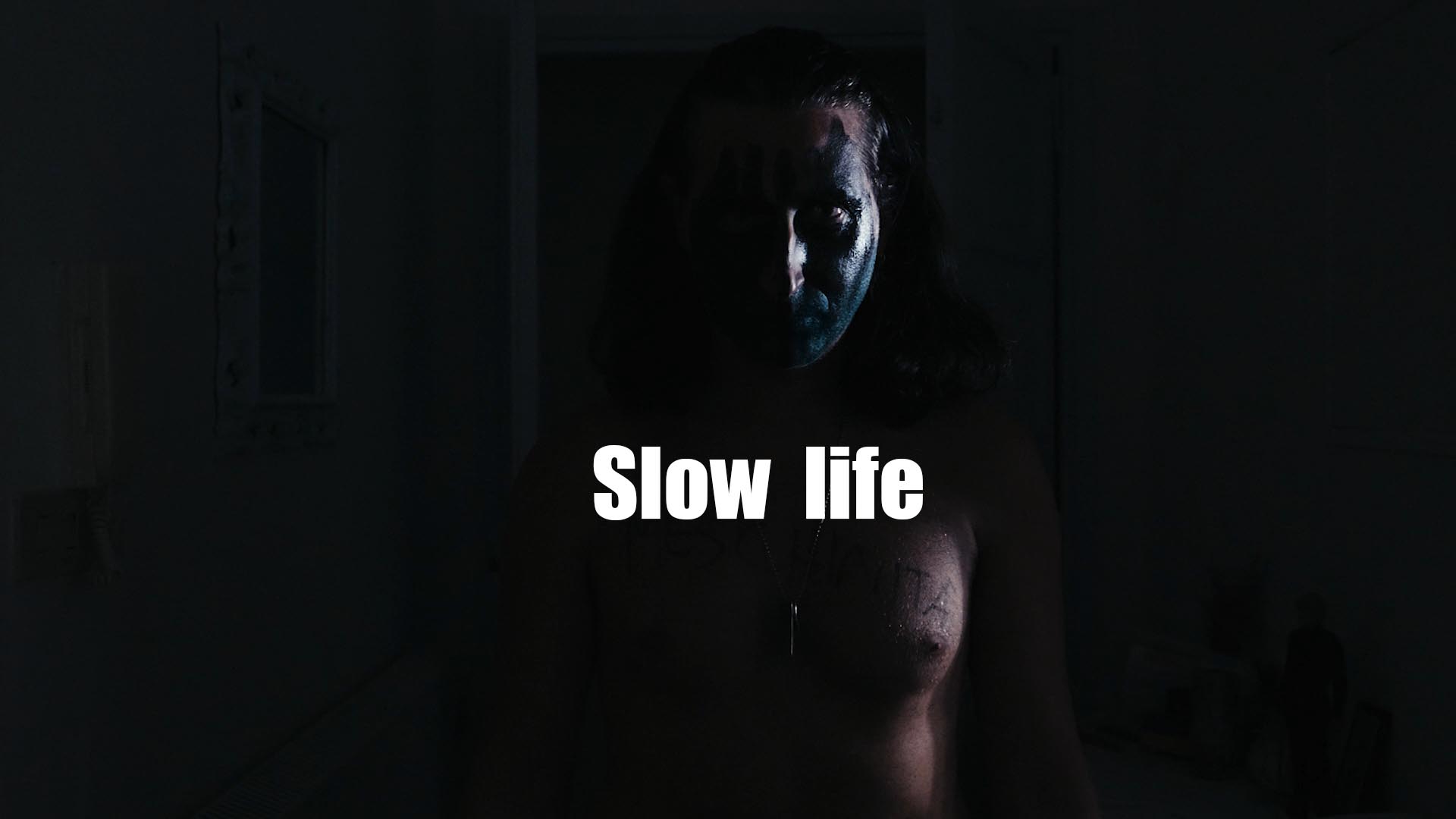
Drama, comedy, thriller, by Fabio Del Greco, Italy, 2021.
Lino Stella takes a period of vacation from his alienating job to devote himself to relaxation and his passion: drawing comics. But he did not foresee certain disturbing elements: the intrusive administrator of the building where he lives, the postman who delivers crazy fines and tax bills, an overbearing security guard, a very enterprising real estate agent, the old lady downstairs who raises the feline colony of the condominium. These characters will make his vacation hell.
Food for thought
The larger a social group is, the more rules and bureaucracy are needed, which often do not respect the individual. You have to learn to live with annoying people, but sometimes the social pressure and arrogance can become intolerable. The only laws that always come to our aid are the laws of Nature.
LANGUAGE: Italian
SUBTITLES: English, Spanish, French, German, Portuguese
The Man Who Cheated Himself (1950)
![The Man Who Cheated Himself (1950) ORIGINAL TRAILER [HD 1080p]](https://blog.indiecinema.co/wp-content/plugins/wp-youtube-lyte/lyteCache.php?origThumbUrl=https%3A%2F%2Fi.ytimg.com%2Fvi%2FhxcLsOJFjUQ%2F0.jpg)
The Man Who Cheated Himself (1950) is a classic film noir directed by Felix E. Feist, starring Lee J. Cobb, Jane Wyatt, and John Dall. The film explores the themes of deception and corruption.
The film tells the story of John Cullen, a corrupt detective who tries to frame an innocent young man for a murder that he committed. Cullen is an ambitious and unscrupulous man who is willing to do anything to get what he wants.
However, Cullen finds himself trapped in his own web of lies. As the case progresses, Cullen becomes increasingly paranoid and loses control. In the end, Cullen is exposed and arrested.
This is among the best-reviewed titles at the time of its release. Lee J. Cobb (12 Angry Men, The Exorcist) plays the detective trying to right a dastardly crime. At the time, studio executives were unsure of this distribution due to his previous portrayal of Willy Loman in Death of a Salesman on Broadway.
Pickup on South Street (1953)

Pickup on South Street (1953) is a film noir directed by Samuel Fuller, starring Richard Widmark, Jean Peters, and Thelma Ritter. It is a spy film that explores the themes of morality and corruption.
The film tells the story of Skip McCoy, a pickpocket who steals the purse of Candy, a woman who works for a Soviet agent. Unknown to Skip and Candy, the purse contains a microfilm that contains secret information about the Manhattan Project. Skip is approached by an FBI agent who offers him $5,000 for the microfilm. Skip accepts the offer, but he is soon contacted by the Soviet agent as well. Skip finds himself trapped between two opposing forces: the FBI and the Soviet Union. Skip must choose which side to stand on, but whatever choice he makes will have dramatic consequences.
Pickup on South Street is a dark and pessimistic film that explores the themes of morality and corruption. The film has been praised for its direction, cinematography, and performances. Richard Widmark plays Skip McCoy, a cynical and opportunistic man. Jean Peters plays Candy, an innocent and naive woman. Thelma Ritter plays Moe Williams, a gruff and determined FBI agent. The film was a critical and commercial success, and it helped to solidify Samuel Fuller’s reputation as one of the great directors of film noir.
The Wages of Fear (1953)
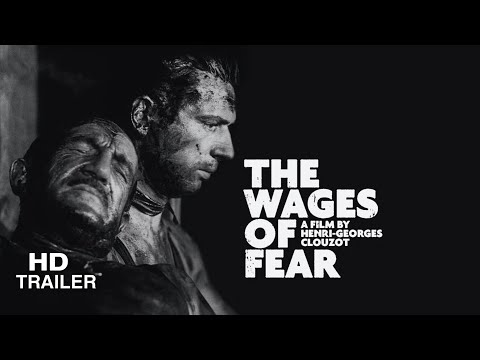
The Wages of Fear (1953), also known as Le Salaire de la peur in French, is a French action thriller film directed by Henri-Georges Clouzot and starring Yves Montand, Véra Clouzot, Gert Fröbe, and Peter van Eyck. The film is based on the novel Clean Break by Pierre Boule.
The film tells the story of four desperate men who take on a dangerous mission to transport nitroglycerin over treacherous roads in South America. The film is known for its suspenseful plot, its realistic portrayal of danger, and its nihilistic themes. The Wages of Fear was a critical and commercial success, and it is considered to be one of the greatest films of all time. It was nominated for two Academy Awards, including Best Foreign Language Film.
In Las Piedras, a small, isolated town in South America, four men are desperate to leave. They are Mario (Yves Montand), a Corsican playboy; Jo (Peter van Eyck), an aging ex-gangster; Luigi (Gert Fröbe), a strong but simple man; and Bimba (Folco Lulli), a quiet and introspective Dutchman. When an oil well fire breaks out at a nearby refinery, the oil company offers 2,000 pesos to the first man who can transport nitroglycerin to the fire. The four men decide to take on the mission, knowing that it is likely to be fatal.
The Wages of Fear is a dark and nihilistic film that explores themes of greed, desperation, and the futility of life. The film’s characters are all flawed and self-motivated, and they are ultimately undone by their own actions. The film’s ending is particularly bleak, as it suggests that there is no escape from the consequences of one’s crimes.
Les Diaboliques (1954)

Christina, the frail wife of the cruel and tyrannical headmaster of a boarding school, Michel Delassalle, conspires with his mistress, teacher Nicole Horner, to plan Michel’s murder. After committing the act and hiding the body in the school’s empty swimming pool, the two women are tormented by paranoia and the growing fear that the body may have disappeared, or that Michel is not dead at all.
This French film by Henri-Georges Clouzot is considered the progenitor of the modern psychological thriller and a direct influence on Hitchcock. The work is a triumph of narrative manipulation. The terror is generated not by monsters or explicit violence, but by deceit and the emotional destabilization of the protagonists. The perverse relationship between wife and mistress, united against their tormentor , generates a unique tension. The film’s final twist, which demands a complete reconsideration of everything that has been seen, set the standard for the plot twist in the thriller and made Les Diaboliques an essential reference point in European cinema.
The Dark Web
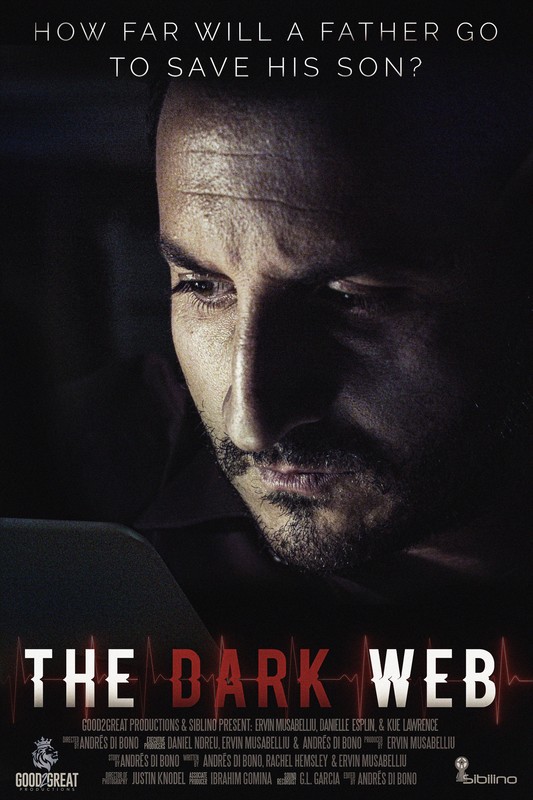
Thriller, drama, by Andres Di Bono, USA, 2022.
A desperate father delves into the depths of the infamous Dark Web to find a new heart for his ailing son whose days seem to be numbered. Facing the loss of his family and perhaps more, he must answer the question: "How far is he willing to go?" A tight thriller condensed into a short film that tells a story that seriously tests the protagonist, a father left alone to deal with his own inner resources and who receives no help from the "legal" world around him . To what extent is it possible to rely on the illegal world of the dark web? What happens when we are faced with a crossroads that can mean life or death? There is a point where you are called to bet all you have, and even more, on a single spin of roulette, and to do so requires enormous courage.
LANGUAGE: English
SUBTITLES: Spanish, French, German, Portuguese
The Night of the Hunter (1955)

Reverend Harry Powell, a false preacher and serial killer with “LOVE” and “HATE” tattooed on his knuckles, marries the widow Willa Harper to discover where her deceased husband hid $10,000 stolen dollars. Willa’s children, the only ones who know the money’s hiding spot, flee down the river, relentlessly pursued by the fanatical and violent Powell.
The only film directed by actor Charles Laughton, The Night of the Hunter is an unsettling hybrid of Gothic noir and dark fairy tale. The expressionistic aesthetic creates a nightmare world, where the children’s innocence clashes with the absolute malevolence of the preacher. Unlike traditional thrillers, where mystery is key, here the threat is immediately clear. The suspense derives from the children’s helplessness against a devilish adult figure and the dreamlike beauty of the river escape sequences. It is a work that transcends the genre, exploring radical evil and the fragility of family protection.
Mr. Arkadin (1955)

“Mr. Arkadin” is a 1955 film written, directed, and starred by Orson Welles, one of the most influential directors in the history of cinema. The film is also known as “Confidential Report” and is a noir thriller revolving around the enigmatic figure of Gregory Arkadin, a billionaire with a mysterious past.
The plot of “Mr. Arkadin” follows the adventures of Guy Van Stratten, a private investigator played by Robert Arden, who is hired by a mysterious man named Jakob Zouk to uncover Arkadin’s past. The story unfolds through a series of flashbacks and testimonies from characters who have had dealings with Arkadin, each revealing a piece of his dark past.
Arkadin is an extremely powerful businessman, but his origins and previous activities are shrouded in mystery. During the investigation, Van Stratten encounters a series of eccentric and dangerous individuals, including a mysterious woman named Mily, played by Paola Mori, and a former associate of Arkadin named Bracco, played by Akim Tamiroff. Each character offers a different version of Arkadin’s life, leaving Van Stratten confused about the truth.
The film is renowned for its distinctive visual style, with the use of suggestive lighting and shadows characteristic of film noir. Orson Welles, as the director, creates an atmosphere of suspense and tension as the protagonist seeks to uncover the truth behind Arkadin. The intricate plot and high-quality performances contribute to making “Mr. Arkadin” an engaging and captivating film.
However, it is important to note that “Mr. Arkadin” has undergone several edits and versions over the years. Welles initially delivered a version of the film to producer Louis Dolivet in 1955, but the film was later reworked and re-edited without Welles’ direct involvement. As a result, there are different versions of the film in circulation, each with slight variations in the plot and narrative structure.
Despite the controversies surrounding the various versions of the film, “Mr. Arkadin” remains a significant work in Orson Welles’ filmography. It is an example of auteur cinema that explores themes such as identity, power, and a mysterious past. Although the film did not achieve great commercial success upon its release, it has been reevaluated over the years and is considered a milestone in film noir and Welles’ body of work.
Diabolique (1955)

The Diabolique (1955) is a French psychological thriller film co-written and directed by Henri-Georges Clouzot, starring Simone Signoret, Véra Clouzot, Paul Meurisse, and Charles Vanel. It is based on the 1952 novel She Who Was No More (Celle qui n’était plus) by Pierre Boileau and Thomas Narcejac.
The film tells the story of Nicole Horner, a teacher at a boarding school for boys, and Christina Delassalle, her husband and the headmaster of the school. They are tired of Michel’s despotism, and they decide to kill him.
Together, Nicole and Christina devise a perfect plan: they make Michel believe he is going on a business trip, and then they poison him. However, Michel’s body disappears, and the two women find themselves trapped in a spiral of lies and paranoia.
Nicole sees in the paper that the police have found the body. When Christina goes to the morgue, she discovers that it’s not actually Michel’s body. This stunning psychological thriller is based on the original She Who Was No More (Celle qui n’était plus) by Pierre Boileau and Thomas Narcejac. The film was the tenth highest-grossing film of the year in France, and was also awarded the Louis Delluc Prize in 1954.
Henry George Clouzot, after completing The Wages of Fear, optioned the rights to the film’s screenplay, preventing Alfred Hitchcock from making the film. This film helped motivate the making of Hitchcock’s Psycho. Robert Bloch, author of Psycho, mentioned in a meeting that his favorite horror film of all time was Les Diaboliques.
Kiss Me Deadly (1955)

Kiss Me Deadly (1955) is a film noir neo-noir crime film directed by Robert Aldrich and starring Ralph Meeker, Albert Dekker, Paul Stewart, Juano Hernandez, and Wesley Addy.
Based on Mickey Spillane’s novel of the same name, the film follows Mike Hammer, a tough and cynical private investigator who becomes involved in a search for a mysterious suitcase containing a powerful weapon. The film is known for its dark and violent atmosphere, its nihilistic themes, and its shocking ending.
Kiss Me Deadly is considered to be one of the most important films of the film noir genre. It is praised for its gritty realism, its cynical view of humanity, and its innovative use of camera angles and lighting. The film has also been praised for its performances, particularly that of Ralph Meeker as Mike Hammer.
Kiss Me Deadly is a classic film noir that is still relevant today. It is a powerful and disturbing film that explores the dark underbelly of American society.
The Hitch-Hiker
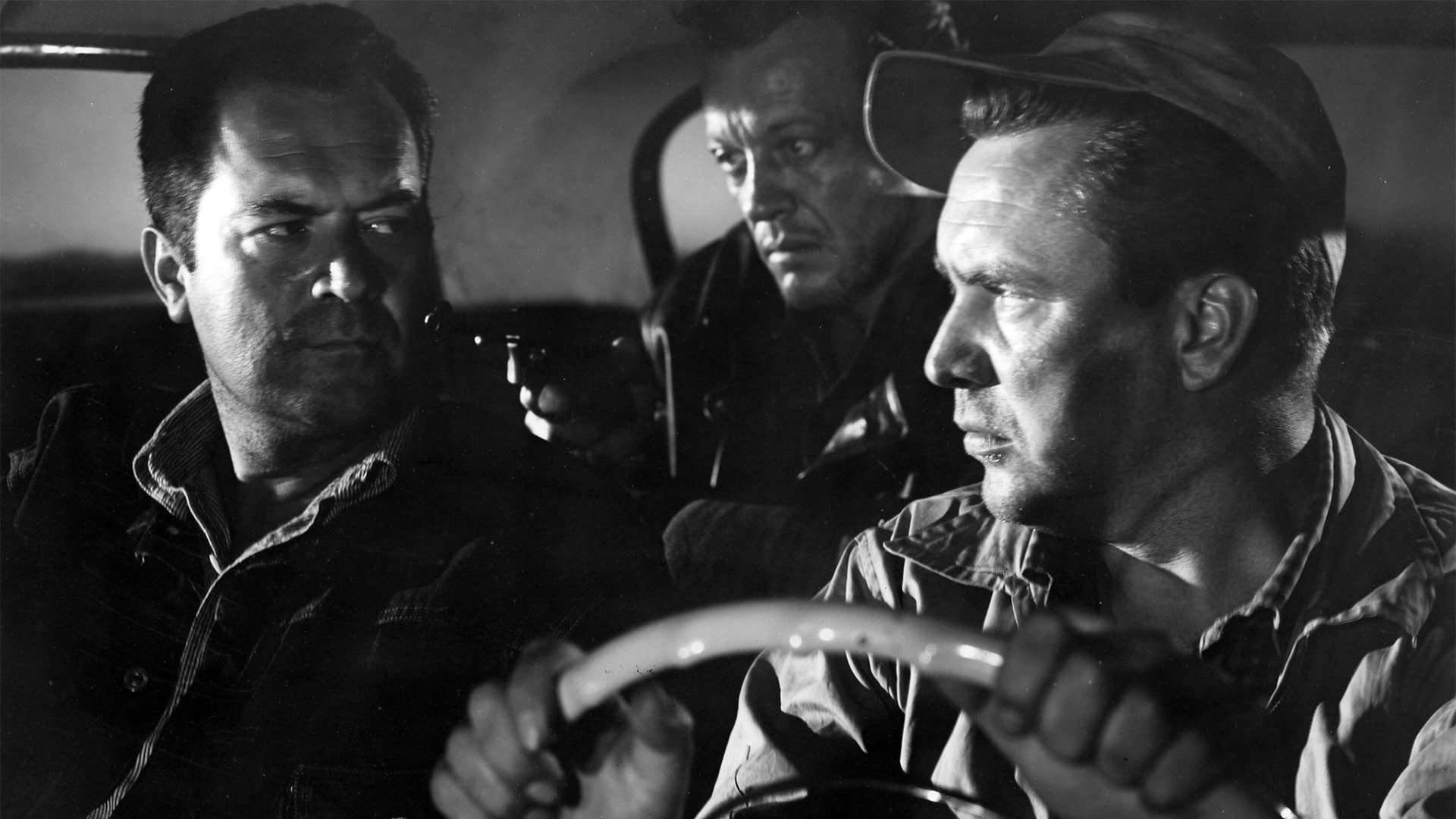
Thriller, Noir, by Ida Lupino, United States, 1953.
Two friends, Roy Collins (O'Brien) and Gilbert Bowen (Lovejoy) are driving to go fishing in the Mexican Gulf of California city of San Felipe. Just south of Mexicali, they give a ride to a hitchhiker, Myers, who draws a weapon and takes them hostage. Myers forces them to travel for days on dirt roads to the Baja California peninsula to Santa Rosalía, where he intends to take a ferry across the Gulf of California to Guaymas to lose track of him. The criminal terrifies and humiliates the two men. One night during their only attempt to escape, Collins injured his ankle. Meanwhile, authorities in the United States and Mexico are hunting Myers.
Shot in the desert of the southwestern United States, between wild places and small towns, the film is based on a true story: the murderous madness of Billy Cook, who in 1950 killed a family of five and a traveling salesman. Ida Lupino was a famous actress and had the opportunity to direct the film when director Elmer Clifton fell ill. The production company founded by Ida Lupino and her husband Collier Young "The Filmmakers" was created to make low-budget independent films. The director spoke to the two men that Billy Cook had imprisoned and received insights from both them and Cook himself, so that she could integrate real parts of Cook's life into the script. An exemplary film for the economy of means: three skilled actors, harsh landscapes, the talent of producers, screenwriters and director. A typically "masculine" film directed with audacity by a woman, very successful in its raw and noir atmosphere, in which the director never relaxes the tension for a minute. His level of psychological sensitivity towards the characters is ahead of its time. Tense, demanding and completely devoid of masculine glorifications, it is a jewel, with splendid interpretations of its 3 protagonists.
LANGUAGE: English
SUBTITLES: Spanish, French, German, Portuguese
Rififi (1955)
![Rififi (1955) ORIGINAL TRAILER [HD]](https://blog.indiecinema.co/wp-content/plugins/wp-youtube-lyte/lyteCache.php?origThumbUrl=https%3A%2F%2Fi.ytimg.com%2Fvi%2FfJXgBZeFgNk%2F0.jpg)
Rififi (1955) is a French film directed by Jules Dassin and starring Jean Servais, Carl Möhner, Jules Dassin, Robert Manuel, Marie Sabouret, Janine Darcey, Claude Sylvain, Dominique Maurin.
The film is based on the 1954 novel of the same name by Auguste Le Breton. It tells the story of four men who plan and execute a daring robbery of a jewelry store in Paris.
Rififi is known for its long, silent sequence of the robbery itself, which was shot in one take throughout five nights. The sequence is praised for its realism and tension, and it has been imitated many times since.
The film was a critical and commercial success, and it is considered to be one of the greatest heist films of all time. It was nominated for the Palme d’Or at the 1955 Cannes Film Festival, and it won the Academy Award for Best Foreign Language Film in 1957.
Rififi is a dark and suspenseful film that explores themes of greed, betrayal, and the corrupting power of money. It is a gritty and realistic portrayal of the criminal underworld, and it is often cited as an influence on the French New Wave.
The Killing (1956)

The Killing is a 1956 American crime film directed by Stanley Kubrick and written by Jim Thompson, based on the novel Clean Break by Lionel White. The film stars Sterling Hayden, Coleen Gray, Timothy Carey, Elisha Cook Jr., and Marie Windsor.
The film tells the story of Johnny Clay, a career criminal who plans one last heist before retiring. He assembles a team of five men, each with their own unique skills, to rob a racetrack. However, the heist goes awry, and the men are forced to improvise to escape.
The Killing is a classic noir film that is known for its suspenseful plot, its innovative use of non-linear storytelling, and its nihilistic themes. The film was a critical and commercial success, and it is considered to be one of Kubrick’s best films.
Kubrick’s direction in The Killing is masterfully suspenseful. He uses a variety of techniques to create a sense of unease and dread, including close-ups, low-angle shots, and sudden cuts. The film’s non-linear storytelling also adds to the suspense, as the audience is not always sure what is happening or who is to be trusted.
The Killing is a dark and nihilistic film that explores themes of fate, greed, and betrayal. The characters are all flawed and self-motivated, and they are ultimately undone by their own actions. The film’s ending is particularly bleak, as it suggests that there is no escape from the consequences of one’s crimes.
Touch of Evil (1958)

It is a 1958 film directed by Orson Welles. It is considered one of the great classics of the film noir genre and a masterpiece of 20th-century American cinema.
The plot focuses on the relationship between Mike Vargas and Hank Quinlan. Mike is an American deputy sheriff who is in town to marry Susan, the daughter of a wealthy Mexican industrialist. Shortly after their arrival, a bomb is detonated in a car with some prominent members of the city aboard, and Mike and Quinlan team up to investigate the case.
Quinlan is a local police officer who has a long history of corruption and is known for his ability to solve cases with questionable methods. However, his manner becomes increasingly suspicious to Mike, who begins to suspect that Quinlan is hiding something. The tension between the two characters builds as their investigation progresses and they learn shocking information about the city and its organized crime.
Meanwhile, Susan is kidnapped by some criminals who are trying to blackmail her father and who want to stop Mike and Quinlan from continuing their investigation. The plot becomes even more complicated when other characters, including a crime boss, a drug dealer and a private detective, come into play and make the case more and more complex and dangerous.
Welles directed and starred in the film, and also wrote the screenplay and did the cinematography. His direction is noted for its long one-take sequences, use of innovative editing techniques, and a strong emphasis on dark and complex characters and atmospheres.
The film was critically well received upon its release but was not commercially successful. However, in the following years, it became a cult film and gained a reputation as one of the best film noirs of all time.
Elevator to the Gallows (1958)

Elevator to the Gallows (1958) is a French crime thriller film directed by Louis Malle and starring Jeanne Moreau, Maurice Ronet, and Lino Ventura. The film is based on the 1954 novel of the same name by Noël Calef.
Julien Tavernier, a businessman, kills his wife Corinne for the insurance money. To create an alibi, he traps himself in an elevator. However, his plans go awry when the elevator mechanic is injured and cannot repair it. Julien is forced to fend for himself in the confined space, while his wife’s body lies undiscovered in their apartment.
Elevator to the Gallows explores themes such as paranoia, isolation, and guilt. Julien finds himself trapped in a desperate situation, from which he cannot escape. The elevator becomes a symbol of his mental and physical imprisonment. The film also highlights Julien’s guilt for killing his wife.
Elevator to the Gallows was a critical and commercial success upon its release. The film was praised for its claustrophobic and suspenseful atmosphere, its performance by Jeanne Moreau, and its innovative direction by Louis Malle.
The Red House
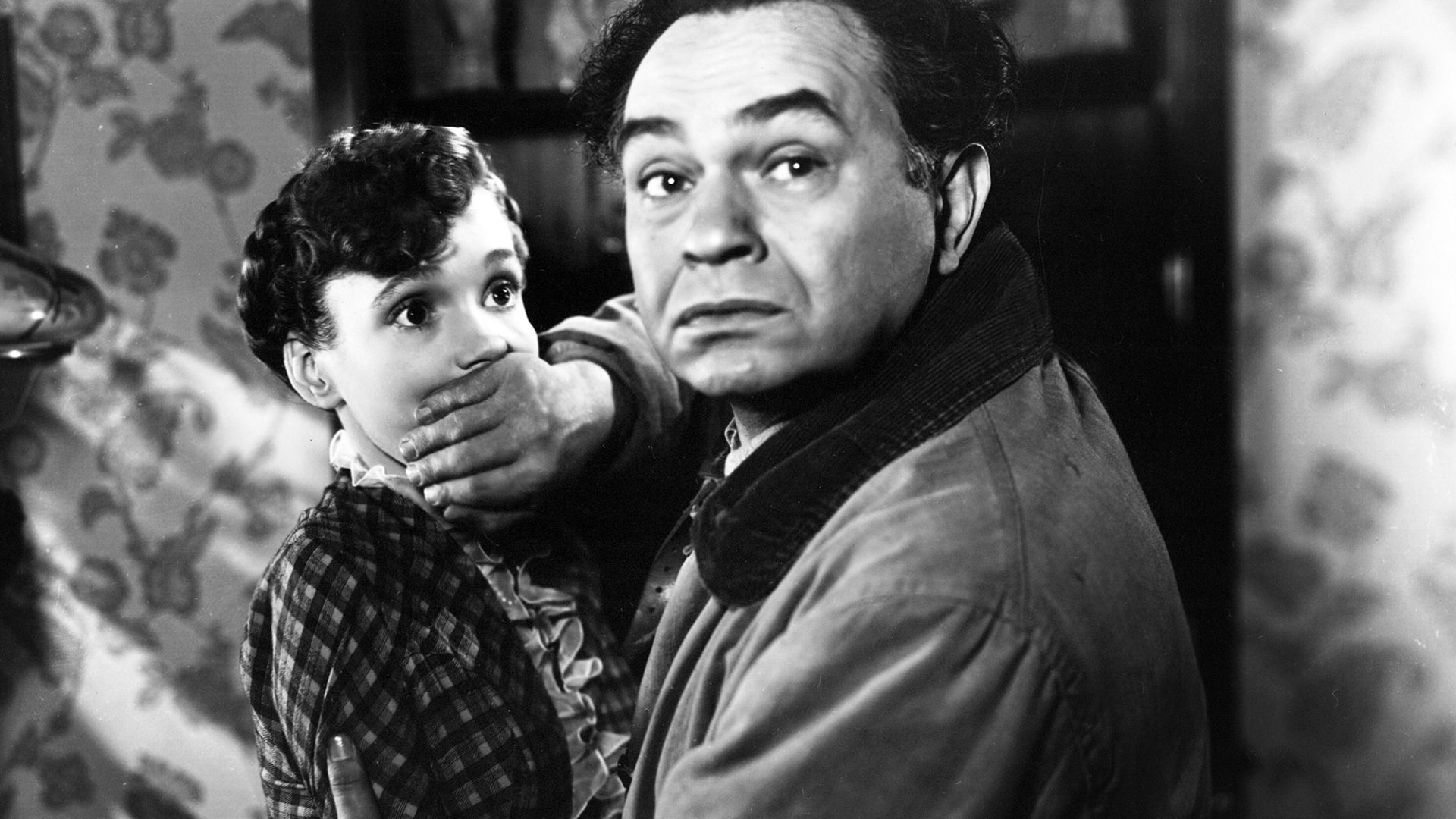
Thriller, noir, by Delmer Daves, United States, 1947.
A young girl named Meg lives with her adoptive brother Pete and her elderly father on an isolated farm. The house is surrounded by woodland and seemingly inaccessible land known as 'The Red House'. The house is shrouded in mystery and local legends, and her presence casts an ominous shadow over the lives of Meg and her family. When Meg starts attending school, she falls in love with Nath, one of her classmates. Tensions mount when Nath decides to explore the grounds of the Red House and tries to uncover the secrets hidden within. This provokes the worried and intimidating reaction of Meg's father and Pete, who seem to want to hide something obscure related to the Red House.
The Red House is a psychological thriller that explores the buried secrets of the family's past and their impact on the present. The gloomy and claustrophobic atmosphere of the story creates a feeling of suspense and mystery. As the story unfolds, the secrets of the Red House and its connections to the family emerge, leading to shocking revelations and a tense climax. The film that mixes elements of noir and suspense with elements of family drama. It is known for its evocative cinematography and the intense performances of the cast and explores themes such as guilt, secrecy and redemption, with a psychological look at complex family dynamics. It is a lesser-known work of the psychological thriller genre that has become a cult movie over the years for its gripping storyline and intense performances.
LANGUAGE: English
SUBTITLES: Spanish, French, German, Portuguese
Thriller in the 1960s: Modernization, Eroticism, and Moral Ambiguity
In the 1960s, the thriller opens up to new visual languages and unprecedented formal freedom. The genre becomes more sensual, violent, and psychological. Directors like Antonioni, Clouzot, Polanski, Frankenheimer, and Lumet experiment with fractured narrative structures, alienated protagonists, and open endings, reflecting the social and cultural climate of change. The thriller becomes fertile ground for exploring desire, neurosis, technological invasiveness, and the instability of human relationships. It is the decade in which the thriller ceases to be merely entertainment and becomes uneasy art.
Psycho (1960)

Marion Crane, a dissatisfied secretary, steals $40,000 and flees. During her escape, she stops at the Bates Motel, managed by the shy, introverted Norman Bates, who is obsessed with his mother. A shocking murder abruptly interrupts the narrative, forcing the viewer to completely reconsider the protagonist and the nature of the threat.
Alfred Hitchcock revolutionized the thriller with Psycho, creating a narrative “break” that deliberately disorients the audience. By eliminating the protagonist halfway through the film, Hitchcock demonstrates that suspense is a strategy of involvement where viewer identification can be betrayed. The film definitively shifts the genre towards the psychological thriller, where the source of terror is psychic pathology, not external conspiracy. The final revelation of Norman Bates’s dual personality, and the way radical evil is masked by “normalcy” , had a lasting impact on the cinematic representation of madness.
The Manchurian Candidate (1962)
![The Manchurian Candidate (1962) ORIGINAL TRAILER [HD 1080p]](https://blog.indiecinema.co/wp-content/plugins/wp-youtube-lyte/lyteCache.php?origThumbUrl=https%3A%2F%2Fi.ytimg.com%2Fvi%2FOc8LpuM5Bhs%2F0.jpg)
The Manchurian Candidate is a 1962 American psychological thriller film directed by John Frankenheimer, written by George Axelrod, and based on the 1959 novel of the same name by Richard Condon. The film stars Laurence Harvey as Sergeant Raymond Shaw, a Korean War hero who has been brainwashed by the Soviets to become a Communist assassin, and Frank Sinatra as Major Bennett Marco, a fellow soldier who suspects something is wrong with Shaw.
During the Korean War, Sergeant Raymond Shaw and his platoon are captured by the Chinese and taken to Manchuria. There, they are subjected to brainwashing techniques and programmed to kill on command. Shaw is chosen as the perfect sleeper agent because he is a war hero and the son of a prominent political figure.
The Manchurian Candidate is a suspenseful and disturbing film that explores themes of brainwashing, political manipulation, and the Cold War. The film is also a commentary on the dangers of unchecked power and the corruption of the American political system.
The Manchurian Candidate was a critical and commercial success, and it is considered to be one of the best films of the 1960s. The film was nominated for seven Academy Awards, including Best Picture, Best Director, and Best Actor for Laurence Harvey.
Knife in the Water (1962)

Knife in the Water (Polish: Nóż w wodzie) is a 1962 Polish psychological thriller film co-written and directed by Roman Polanski in his feature debut, and starring Leon Niemczyk, Jolanta Umecka, and Zygmunt Malanowicz.
A couple, Andrzej and Krystyna, take a day trip on their yacht, accompanied by a hitchhiker they picked up along the way. As the day progresses, tensions rise between the three men, and Andrzej becomes increasingly suspicious of the hitchhiker’s intentions.
Knife in the Water explores themes such as power, masculinity, and jealousy. The film is a study of the dynamics of power and control between men, and it also examines the destructive nature of jealousy.
Knife in the Water was a critical and commercial success upon its release. The film was praised for its sharp writing, psychological insight, and performances. It has since been recognized as a landmark film in Polish cinema.
The stranger
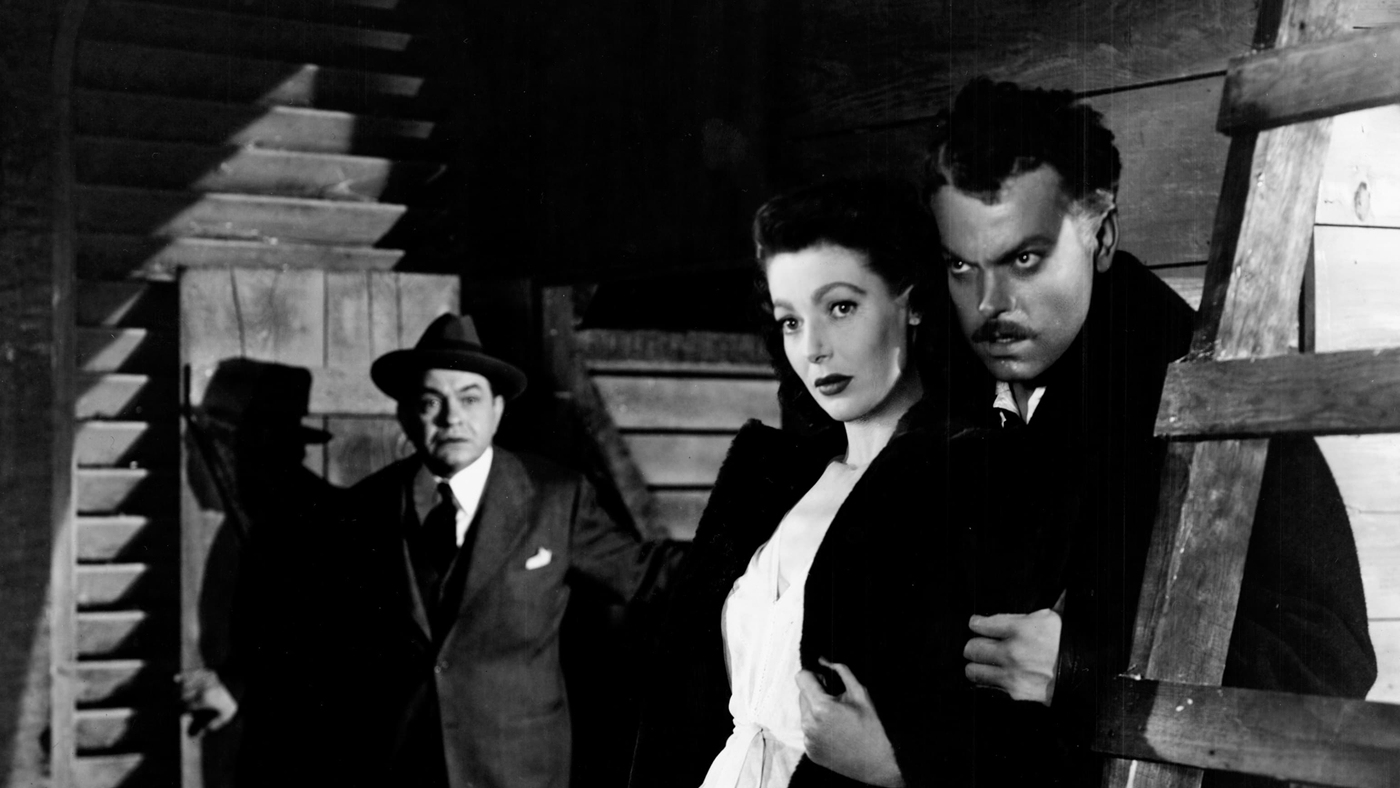
Thriller, by Orson Welles, United States, 1946.
Orson Welles, a filmmaker who has always been against the Hollywood system, did not like this film made inside the studios, but strangely he managed to create a commercial product beyond his own expectations, managing to insert his unmistakable style into it, leaving us an amazing movie. In the small town of Harper, lives Charles Rankin, who is about to marry the daughter of an important judge. But Charles Rankin is actually Frank Kindle, a Third Reich criminal who has created a new identity for himself. However, Inspector Wilson is on the trail of him.
Food for thought
Forget the untruths. For a while, you may feel a certain boredom, fear or lack of motivation: while what is false disappears, it takes time for what is real to assert itself. There will be a transition period. Let it happen, and hold on. Sooner or later your masks will fall, the falsehoods will dissolve, and your true face will appear.
LANGUAGE: english
SUBTITLES: Spanish, French, Germa, Italian, Portuguese
Cape Fear (1962)

Cape Fear (1962) is a taut, suspenseful psychological thriller film directed by J. Lee Thompson and starring Gregory Peck, Robert Mitchum, and Polly Bergen. It was adapted by James R. Webb from the 1957 novel The Executioners by John D. MacDonald.
Sam Bowden (Gregory Peck) is a small-town lawyer in North Carolina. He has a successful law practice, a loving wife and daughter, and a comfortable home. However, his idyllic life is shattered when Max Cady (Robert Mitchum), a recently released convict, arrives in town.
Max Cady is a psychopath who is obsessed with revenge. He believes that Sam is responsible for his eight-year prison sentence and he is determined to make Sam pay. Max begins to stalk and harass Sam’s family, and Sam is forced to take desperate measures to protect them.
Cape Fear explores themes of fear, paranoia, and the nature of evil. It is a dark and disturbing film that examines the lengths to which people will go to protect their loved ones.
The Birds (1963)

Melanie Daniels, a wealthy San Francisco socialite, follows lawyer Mitch Brenner to a small coastal town, Bodega Bay. Melanie’s arrival coincides with the beginning of a series of inexplicable and increasingly violent attacks by all the local birds, transforming the quiet community into a nightmare of primordial terror.
If Psycho explores the diseased psyche, The Birds embodies existential and catastrophic fear. The suspense is generated not by the mystery of the “who,” but by the unknown of the “why.” The lack of a logical motivation for the bird attacks reflects the era’s anxiety in the face of uncontrollable environmental or cosmic threats. Hitchcock demonstrates that suspense can be created even in the absence of a human villain, focusing on the gradual intensity and inexorability of the danger. The anticipation of the next attack and the sense of total helplessness make The Birds a masterpiece of the survival thriller.
The Girl Who Knew Too Much (1963)

The Girl Who Knew Too Much (1963) is a thriller film directed by the Italian director Mario Bava, it’s a Giallo film that stars John Saxon as Dr. Marcello Bassi and Letícia Román as Nora Davis. The Girl Who Knew Too Much is considered the first crime film ever, a category of films with a mix of sensuality, horror and thriller.
On vacation, Nora Davis (Letícia Román) arrives by plane in Rome to visit her sick elderly aunt. Nora’s aunt is cared for by Dr. Marcello Bassi (John Saxon). Nora’s aunt dies on the evening of Nora’s arrival and she goes to the nearby health facility to inform Dr. Bassi.
During the journey, she is robbed in the Spanish Steps. She sees the body of a dead woman lying on the ground next to her; a bearded male pulls a knife from the woman’s back. Nora reports him to the authorities who however discover no evidence and believe that he is hallucinating.
Repulsion (1965)
![Repulsion (1965) Original Trailer [FHD]](https://blog.indiecinema.co/wp-content/plugins/wp-youtube-lyte/lyteCache.php?origThumbUrl=https%3A%2F%2Fi.ytimg.com%2Fvi%2F-jdUAZ-tstk%2F0.jpg)
Repulsion (1965) is a psychological horror film directed by Roman Polanski, starring Catherine Deneuve, Yvonne Furneaux, Ian Hendry, John Fraser, and Patrick Wymark. It is considered one of Polanski’s greatest works and a landmark film in the genre of psychological horror.
The film explores the themes of isolation, alienation, and sexual repression, and tells the story of Carol Ledoux, a young woman who becomes increasingly withdrawn and paranoid after her sister leaves her alone in their London apartment.
A man, Colin, loves Carol and makes passionate efforts to charm her, but Carol seems indifferent. Carol is annoyed by Helen’s relationship with a boy named Michael, who Carol doesn’t seem to like. When Carol gets home from work, she is bothered by road construction under her house.
Colin meets her, strolls through her house and attempts to kiss her numerous times, but she refuses, running upstairs and brushing her teeth before sobbing. That night Helen interrogates Carol for flushing Michael’s toothbrush and electric razor down the toilet.
Based on a short story written by Roman Polanski and Gérard Brach, the plot follows Carol, a woman who undergoes a series of terrible experiences. It is a suspense film that focuses on Carol’s perspective and her hallucinations as she comes into contact with men. Ian Hendry, John Fraser, Patrick Wymark and Yvonne Furneaux appear in supporting roles.
Thriller in the 1970s: Trauma, Realism, and Antiheroes
The 1970s completely redefine the thriller, turning it into a raw, political, and deeply disenchanted genre. The shadows of the Vietnam War, the Watergate scandal, and the erosion of trust in institutions shape a cinema that views reality almost documentarily. The protagonists are tormented antiheroes, often powerless against a hostile world. The thriller becomes a laboratory of paranoid tension, where the state, intelligence agencies, or even the neighbor next door can be the threat. It is a revolutionary decade, in which the genre reaches maturity and philosophical depth.
The Bird with the Crystal Plumage (1970)

It is a 1970 crime film directed by Dario Argento in his directorial debut. The film is the progenitor of the yellow Italian category. Upon its release, the film was a notable success earning 1,650,000,000 Italian lire. It was also a success outside of Italy.
Sam Dalmas is an American author on holiday in Rome with his English girlfriend, Julia, is experiencing writer’s block and is on the verge of returning to America, however, he witnesses the attack of a lady in an art gallery by a strange fellow in black gloves wearing a raincoat.
Trying to reach him, Sam is trapped between 2 mechanically operated glass doors and can simply watch the man escape. The lady, Monica Ranieri, was attacked and the police confiscated Sam’s passport to prevent him from leaving the country. The attacker is thought to be a serial killer who is killing girls all over town and Sam is a crucial witness.
The Red Circle (1970)

The Red Circle (1970) is a French crime film directed by Jean-Pierre Melville. The film stars Alain Delon as Corey, a recently released prisoner who teams up with two other criminals to plan a major heist.
The film begins with Corey being released from prison. He is determined to go straight, but he is soon tempted back into a life of crime by an old associate named Vogel. Vogel is a notorious escapee who is planning a major heist. Corey reluctantly agrees to help Vogel, and they soon recruit another criminal named Jansen.
The three criminals plan to rob a jewelry store, but their heist is complicated by the presence of a determined police inspector named Mattei. Mattei is determined to stop the heist, and he is willing to go to any lengths to do so.
The film culminates in a tense standoff between the criminals and the police. The Red Circle is a stylish and suspenseful crime film that is considered to be a classic of the genre.
The film explores themes of fate, free will, and the nature of crime. It also examines the relationship between the individual and society.
A Bay of Blood (1971)

A Bay of Blood is a 1971 Italian mystery/thriller movie directed by Mario Bava. Bava wrote the screenplay for the film with Giuseppe Zaccariello, Filippo Ottoni, and Sergio Canevari. The film stars Claudine Auger, Luigi Pistilli, Brigitte Skay, Nicoletta Elmi and Laura Betti.
Carlo Rambaldi produced the gruesome special effects. The story shows a series of ritual killings taking place around a bay. It is a film that influenced the slasher films that would follow years later, considered among the 50 greatest mystery/horror films ever.
While staying overnight at her bayside estate, the wheelchair-bound Countess Federica Donati is attacked and strangled to death by her companion, Filippo Donati. A few minutes later, Philip himself is stabbed to death by an assailant, and his remains are then dragged into the bay. Upon examination, the policemen discover what they think is a farewell note written by the Countess, however Philip’s murder is not discovered.
Real estate agent Frank Ventura and his girlfriend Laura plot to take over the bay. After the countess refused to offer them the house, the couple hatched a plan with Philip to kill her husband. To complete their strategy, Ventura requests Filippo’s signature on several legal files. They have no idea, however, that Philip himself was actually killed.
Mean Streets (1973)

Mean Streets (1973) is an American crime film co-written and directed by Martin Scorsese, and produced by Irwin Winkler and Robert Chartoff. The film stars Harvey Keitel and Robert De Niro as two young men involved in the underground world of Little Italy, New York City, during the early 1970s.
Charlie “Chazz” Palantine (Keitel) is a young man who is trying to make a living in the tough streets of Little Italy. He is caught between his loyalty to his friend and fellow small-time hoodlum, Johnny Boy (De Niro), and his desire to live a straight life.
Johnny Boy is a wild and unpredictable character who is constantly getting into trouble. He owes money to a loan shark and is constantly being chased by the police. Charlie tries to help Johnny Boy out, but Johnny Boy’s reckless behavior always seems to land them both in hot water.
The third film directed by Martin Scorsese Mean Streets is among the most important in his filmography. Scorsese said he was attracted to the idea of making a film about him and his friends. He even challenged De Niro’s character Johnny Boy, the film’s reckless lunatic.
The film takes place in the location of Little Italy, New York, in addition to telling the experiences of Scorsese, there is the mafia, the corruption of the cops, and crime. The packaging is still the same as an indie movie low budget, shot in 16mm: this makes this mafia film even more realistic and fascinating.
The Conversation (1974)
![The Conversation (1974) ORIGINAL TRAILER [HD 1080p]](https://blog.indiecinema.co/wp-content/plugins/wp-youtube-lyte/lyteCache.php?origThumbUrl=https%3A%2F%2Fi.ytimg.com%2Fvi%2FelJL5D6HTvA%2F0.jpg)
Harry Caul is a surveillance and eavesdropping expert, obsessed with privacy and the fear of being spied upon. He is hired to record a conversation between a young couple in a crowded park, but analyzing the tape leads him to believe he is involved in a potential murder. His paranoia grows as he tries to decipher the recording’s hidden meaning.
Directed by Francis Ford Coppola, this film is the culmination of the 1970s political thriller, deeply influenced by the Watergate scandal and widespread distrust in institutions. The tension is almost entirely psychological: Caul does not fight a visible enemy, but his own paranoia and the ghost of responsibility. The film’s brilliance lies in making us feel Caul’s same escalating anxiety. Sound becomes the main weapon of suspense. The ambiguity of the ending, where Caul dismantles his apartment searching for listening devices, is a powerful image of self-imposed solitude and the destruction caused by the fear of surveillance.
Jaws (1975)

During the summer, the peaceful coastal town of Amity Island is terrorized by the deadly attacks of a great white shark. Local police chief, Martin Brody, clashes with the mayor, who is worried about tourism, and joins a marine ichthyologist and an expert hunter to track down the creature on the open sea.
Steven Spielberg’s Jaws is a template for the catastrophic thriller and suspense based on the principle of the invisible object. The film cunningly delays the full revelation of the shark, forcing the viewer’s imagination to fill the void and intensifying the fear. This approach is pure Hitchcockian school, where the threat is more terrifying when suggested than when shown. Beyond the hunt, the film addresses themes of corruption and political negligence (the mayor refusing to close the beaches for economic reasons), adding a layer of social critique to the visceral suspense.
Deep Red (1975)

Deep Red (1975) is an Italian Giallo film directed by Dario Argento and starring David Hemmings, Clara Calamai, Macha Méril, Eros Pagni, and Giuliana Calandra. The film tells the story of Marcus Daly, a jazz pianist who witnesses the brutal murder of a psychic. The young man decides to investigate on his own, but he soon realizes that everyone who can help him solve the mystery is being killed.
Marcus Daly is an English jazz pianist living in Rome. One day, while walking down the street, he witnesses the murder of a psychic, Helga Ulmann. The woman was killed by a masked man wearing a pair of black gloves. Marcus is shaken by the event and decides to start investigating on his own.
Deep Red is a film that explores themes such as violence, mystery, and paranoia. The film is characterized by a strong atmosphere of suspense and unease, which is created by several elements, including the eerie soundtrack by Goblin, the dark and claustrophobic cinematography by Vittorio Storaro, and Dario Argento’s nervous and tense direction.
All the President’s Men (1976)

Washington Post reporters Bob Woodward and Carl Bernstein investigate an apparently minor break-in at the Democratic Party headquarters in the Watergate complex. As the two journalists dig deeper, they uncover a vast conspiracy involving the government and the Nixon administration, risking their careers and their lives.
This is the pinnacle of the real-life political thriller, a genre that thrives on post-Vietnam and post-Watergate distrust. The suspense is not entrusted to car chases or shootouts, but to the patient and meticulous reconstruction of the truth. Tension arises from the awareness that the most dangerous weapon is manipulated or suppressed information. The film illustrates the power of the invisible “system” that the protagonists must fight. It is a thriller that transforms the act of writing and making phone calls into an extremely high-risk exercise, solidifying the role of the journalist as a modern anti-hero fighting against corrupted power.
The American Friend (1977)

The American Friend (German: Der amerikanische Freund) is a 1977 neo-noir film directed by Wim Wenders and adapted from the 1974 novel Ripley’s Game by Patricia Highsmith. It stars Bruno Ganz, Dennis Hopper, Gérard Blain, Nicholas Ray, Samuel Fuller, Jean Eustache, and Roger Cox.
The film follows the story of Jonathan Zimmermann (Bruno Ganz), a terminally ill picture framer in Hamburg, Germany, who is approached by Tom Ripley (Dennis Hopper), a wealthy and amoral American art dealer. Ripley proposes that Zimmermann act as a courier for a series of art forgeries, promising him a large sum of money in exchange for his help.
Zimmermann is initially hesitant, but he eventually agrees to Ripley’s plan to provide for his family after his death. However, as Zimmermann becomes more involved in the forgeries, he begins to question the morality of his actions and the true nature of his relationship with Ripley.
The American Friend explores themes of guilt, morality, and the nature of evil. It is also a film about the relationship between art and crime, and how people can be manipulated for personal gain.
Thriller in the 1980s: Stylization, Technology, and Private Obsessions
The 1980s introduce a new aesthetic to the thriller: neon colors, vertical metropolises, electronic music, and a growing fascination with technology. The genre takes on a more stylized dimension, often elegant yet ruthless, with particular interest in psychopathy, obsession, and the double lives of protagonists. It is the era of financial thrillers, power games, and fractured identities. Dominant individualism is reflected in stories where danger often arises from repressed desires and the dark corners of personal success.
Dressed to Kill (1980)

It is a 1980 American sensual thriller movie written and directed by Brian DePalma. Starring Michael Caine, Angie Dickinson, Nancy Allen and Keith Gordon, the film illustrates the events leading up to the murder of a New York City housewife (Dickinson) before meeting a prostitute (Allen) who witnesses the murder. It includes numerous references to Alfred Hitchcock’s 1960 film Psycho.
Released in July 1980, Dressed to Kill was a box office hit in the United States, earning over $30 million. It garnered mostly positive ratings and has been called the first wonderful American film of the 1980s. Dickinson won the Saturn Award for Best Actress for her performance. Allen garnered both a Golden Globe Award election for New Star of the Year and a Golden Raspberry Award for Worst Actress.
Sexually frustrated housewife Kate Miller is on her way to treatment sessions with New York City psychoanalyst Dr. Robert Elliott. During a consultation, Kate tries to seduce him, but Elliott refuses, saying it would endanger his happy marital relationship. Kate goes alone to the Metropolitan Museum of Art where she suddenly flirts with a strange unknown person. Kate and the stranger follow each other into the tunnel until they finally end up outside, where Kate joins him in a taxi. Most likely they go to his house and make love.
Blow Out (1981)

Blow Out (1981) is an American neo-noir thriller film written and directed by Brian De Palma and starring John Travolta, Nancy Allen, Dennis Franz, and John Lithgow. The film follows Jack Terry, a sound effects man who believes he has recorded evidence of a political assassination.
Jack Terry, a sound effects man for low-budget films, accidentally records a strange noise while working late one night. The noise turns out to be a gunshot that has killed presidential candidate Governor Burke. Terry believes that the assassination was covered up and sets out to uncover the truth.
Blow Out explores themes such as paranoia, obsession, and the power of sound. The film is a dark and gritty look at the underside of American politics, and it is unflinching in its portrayal of violence and corruption.
Blow Out was a critical and commercial success upon its release. The film was praised for its sharp writing, suspenseful direction, and performances. It has since been recognized as a landmark film in the neo-noir genre.
Blade Runner (1982)

In the dystopian Los Angeles of 2019, Rick Deckard, a former police officer specializing as a “Blade Runner,” is forced back into service to hunt down and “retire” four highly evolved replicants (androids) who have escaped and returned to Earth. His hunt leads him to question the nature of humanity and memory.
Although classified as science fiction, Blade Runner by Ridley Scott is a cornerstone of Neo-Noir par excellence. It adopts the classic noir motifs: the rainy, urban setting, the solitary and disillusioned detective, the femme fatale (Rachael) hiding a secret. The tension is not created by an evil plan, but by existential searching. The film uses the oppressive atmosphere to reflect Deckard’s inner state, an anti-hero in a world of corruption and shadow. It is a film that, though slow, generates philosophical and metaphysical suspense.
Videodrome (1983)

Videodrome is a 1983 Canadian science fiction horror-mystery film written and directed by David Cronenberg and starring James Woods, Sonja Smits and Debbie Harry. Max Renn is the head of CIVIC-TV, a mysterious television station in Toronto.
CIVIC-TV’s motorist Harlan introduces Max to Videodrome, a plotless program broadcast from Malaysia that shows people seriously injured and even killed. Believing this to be the future of television, Max orders Harlan to start using the program without a license.
Videodrome was Cronenberg’s first film to gain support from a Hollywood studio. With the higher budget of his previous films, the film was a box office bust, recouping just $2.1 million from a $5.9 million budget plan. It is currently considered a cult classic, listed as one of Cronenberg’s best, as well as a crucial example of body horror and science fiction.
Body Double (1984)

It’s a erotic thriller movie 1984 American directed, co-written and produced by Brian DePalma. In the cast Craig Wasson, Gregg Henry, Melanie Griffith and Deborah Shelton. The film is a tribute to Alfred Hitchcock’s 1950s films, especially Rear Window, Vertigo and Dial M for Murder, taking on storylines and themes such as voyeurism.
Upon its release, the film garnered warm box office success and mixed reviews, and the role of Melanie Griffith gained appreciation and brought her a Golden Globe election. It is currently considered a film cult.
The star of b movie Jake Scully recently walked away from his role as a vampire in a low-budget scary movie after his claustrophobia hampered his performance. After returning home he discovers that his wife is cheating on him, he separates from her and also remains homeless.
During an acting technique course, where she meets Sam Bouchard, to whom Scully reveals her worries and childhood years, the source of her claustrophobia. Scully finds a place to stay: Sam’s wealthy friend has traveled to Europe and also needs a caretaker for his ultra-modern home in the Hollywood Hills.
Blood Simple (1984)

Blood Simple (1984) is a neo-noir crime thriller film written, directed, and co-produced by the Coen brothers, and starring Frances McDormand, John Getz, Dan Hedaya, M. Emmet Walsh, Deborah Neumann, Raquel Gavia, and Samm-Art Williams. The film is based on the 1981 novel of the same name by James M. Cain.
A sleazy nightclub owner hires two private detectives to kill his unfaithful wife. However, the plan goes awry, and everyone involved finds themselves entangled in a web of deceit and murder.
Blood Simple explores themes such as violence, betrayal, and obsession. The film is a dark and gritty look at the underside of human nature, and it is unflinching in its portrayal of violence and corruption.
Blood Simple was a critical and commercial success upon its release. The film was praised for its sharp writing, taut direction, and performances. It has since been recognized as a landmark film in the neo-noir genre.
Blood Simple had a profound influence on neo-noir cinema. The film helped to define the genre’s style, which is characterized by its dark and gritty atmosphere, its focus on moral ambiguity, and its use of violence. The film has also been praised for its influence on the Coen brothers’ later films, such as Miller’s Crossing (1990) and No Country for Old Men (2007).
Blue Velvet (1986)

Blue Velvet is a mystery movie and 1986 American thriller movie written and directed by David Lynch. The film stars Kyle MacLachlan, Isabella Rossellini, Dennis Hopper and Laura Dern, and takes its name from the 1951 song of the same name.
The film tells the story of Jeffrey Beaumont (Kyle MacLachlan), a young college student who, returning home after eye surgery, finds a severed ear in a field. Jeffrey begins to investigate the ear and finds himself involved in an underground world of violence, sex, and corruption.
Blue Velvet explores the themes of good and evil, the duality of man, and the nature of reality. The film is an investigation into the dark side of the human soul and man’s capacity for violence and depravity.
Blue Velvet was a critical and commercial success. The film was praised for its direction, performances, cinematography, and soundtrack. The film was also praised for its exploration of complex and controversial themes.
The Untouchables (1987)

During Prohibition in Chicago, Treasury agent Eliot Ness struggles in vain to counter the criminal reign of mob boss Al Capone. Ness, frustrated by police corruption, assembles a small team of incorruptible agents, nicknamed “The Untouchables,” determined to bring down Capone through tax evidence.
Brian De Palma stages a high-tension crime thriller, an epic tale of justice against corruption. The film is less focused on psychology and more on action and procedural intrigue. Tension is created by the escalating risk Ness and his team face in breaking the organized crime monopoly. The shootout sequence at the station, a slow-motion homage to the Soviet masterpiece Battleship Potemkin, demonstrates how De Palma can use editing and staging to enhance visual suspense, transforming a heroic act into a scene of controlled terror.
The Vanishing (1988)

The Vanishing (1988), also known as Spoorloos in Dutch, is a Dutch thriller film directed by George Sluizer and starring Bernard-Pierre Donnadieu, Geneviève Bujold, and François Berléand. The film is based on the 1983 novel The Golden Egg by Tim Krabbé.
The film tells the story of Rex Hofman, a man who goes on a desperate search for his girlfriend Saskia after she disappears during a stop at a remote service station. The film is known for its suspenseful plot, its bleak and nihilistic atmosphere, and its shocking ending.
Rex Hofman is a man who is traveling with his girlfriend Saskia through France. They stop at a remote service station, and Saskia disappears without a trace. Rex is left to search for her, but he is met with nothing but silence and denial. As he delves deeper into the mystery, he uncovers a web of deceit and violence.
The Vanishing is a bleak and nihilistic film that explores themes of loss, obsession, and the futility of hope. The film’s protagonist, Rex Hofman, is a man who is consumed by his search for his missing girlfriend, and he eventually loses himself in the process. The film’s ending is particularly shocking, as it suggests that there is no justice or closure for those who have been wronged.
Thriller in the 1990s: Realism, Serial Killers, and Psychological Maturity
The 1990s are the golden age of psychological thrillers and serial killer narratives. Thanks to a perfect balance between narrative rigor and psychological depth, the genre experiences a moment of near-pure refinement. Thrillers like Se7en, The Silence of the Lambs, or Heat bring realism and exploration of the criminal mind to unprecedented levels. It is a decade dominated by rainy atmospheres, tormented detectives, intelligent criminals, and sophisticated narratives. Attention shifts to detail, the rituality of crime, and the mind as a battlefield.
Reservoir Dogs (1992)

After a jewelry heist goes wrong, the surviving criminals, who know each other only by code names (Mr. White, Mr. Orange, Mr. Blonde, etc.), gather in an abandoned warehouse. With the police on their heels and a seriously wounded comrade, tension rises as they try to figure out what went wrong and who among them is a traitor. Loyalty and professionalism clash in a bloodbath.
The film that launched Quentin Tarantino is a fundamental classic of independent cinema. Although a heist film, it shifts the focus from external action to internal conflict, concentrating on dialogue, characterization, and the psychological tension that builds among the trapped characters. It set a new standard for the crime thriller, influencing countless films to come.
The warehouse becomes a microcosm where the underworld’s codes of honor are put to the test. Growth, in this context, is impossible; instead, we witness a regression into paranoia and primal violence. The film explores what happens to identity and morality when structures of trust collapse. It is a brutal lesson on how, under pressure, even the most “professional” criminals are governed by fear and the survival instinct.
Pulp Fiction (1994)

The lives of two hitmen (John Travolta, Samuel L. Jackson), a boxer on the run (Bruce Willis), a boss’s wife (Uma Thurman), and two robbers intertwine in a series of violent, ironic, and surreal events in Los Angeles. Directed by Quentin Tarantino.
The film that redefined independent cinema and the 1990s. With its non-linear structure, iconic dialogue that turns the mundane into the epic, and its unique blend of violence, irony, and pop culture, Pulp Fiction is the quintessential post-modern work. It is simply a must-see because it changed the rules, proving how fun, irreverent, and brilliant cinema could be.
The Last Seduction (1994)

Bridget Gregory, a ruthless and calculating woman, flees with the money from her doctor husband’s illegal drug sales. She settles in a small town and seduces the innocent Mike Swale, manipulating him with the goal of getting him to commit murder and secure her freedom and fortune.
This independent Neo-Noir, directed by John Dahl, is notable for presenting one of the most cynical and remorse-free femme fatales in modern cinema. Bridget’s lack of redemption or moral ambiguity is refreshing and terrifying. The suspense derives from the anticipation of seeing how far her manipulation will go and how deeply Mike will fall into her web. The film returns noir to its thematic roots: a person trapped in a situation, whose only way out is betrayal or violence.
Seven (Se7en) (1995)

Se7en (1995) is a bleak and gripping psychological thriller that follows two detectives hunting a serial killer who stages his murders around the seven deadly sins. With its oppressive atmosphere and unforgettable finale, it remains one of the defining films of ’90s noir.
Two detectives, the veteran and disillusioned William Somerset (Morgan Freeman) and the impulsive young David Mills (Brad Pitt), hunt a methodical and brilliant serial killer. The murderer, known as John Doe, bases his murders on a grotesque representation of the seven deadly sins. Directed by David Fincher.
This film redefined the aesthetics and atmosphere of the psychological thriller in the ’90s. It is a nihilistic, visually flawless work, set in a nameless city oppressed by constant rain. It’s a must-see because the tension stems not from action, but from the philosophical investigation into the nature of evil, culminating in one of the most shocking and memorable endings in cinema history.
The Usual Suspects (1995)

After a shootout on a ship in the port of Los Angeles, a detective interrogates Roger “Verbal” Kint, a small, limping con artist and one of the two survivors. Verbal recounts the convoluted story of how he and four other criminals were forced to work for the mysterious and almost mythological crime boss, Keyser Söze.
This crime thriller is an exercise in narrative manipulation and deception. The suspense is entirely based on the narrator’s unreliability and the anticipation of the final plot twist. The film constantly plays with the audience’s perception, forcing us to trust and, ultimately, to doubt what we see and hear. The tension mechanism is not linked to immediate physical danger, but to the posthumous revelation of the truth. It is a film that celebrates criminal cunning and demonstrates the power of a well-constructed story in masking reality, a hallmark of high-engineering thrillers.
Fargo (1996)

Fargo (1996) is a 1996 American black comedy crime film written, produced, and directed by Joel and Ethan Coen. Frances McDormand stars as Marge Gunderson, a pregnant Minnesota police chief investigating a triple homicide that takes place after a desperate car salesman (William H. Macy) stages the kidnapping of his own wife for the ransom money.
Jerry Lundegaard (William H. Macy), a car salesman in Minneapolis, has gotten himself into debt and is so desperate for money that he hires two thugs (Steve Buscemi, and Peter Stormare) to kidnap his own wife, Jean (Kristin Rudrud). Jerry plans to collect the ransom from her wealthy father (Harve Presnell), paying the thugs a small portion and keeping the rest to satisfy his debts. However, the scheme quickly falls apart when one of the thugs accidentally shoots and kills a state trooper.
Fargo explores the themes of greed, desperation, and the consequences of bad decisions. The film is also a study of the contrast between the urban and rural Midwest, with the city of Minneapolis representing the sophistication and ambition of Jerry Lundegaard, while the rural towns of Brainerd and Fargo represent the simplicity and honesty of Marge Gunderson.
Fargo was a critical and commercial success. The film won five Academy Awards, including Best Picture, Best Director, Best Actress for McDormand, Best Original Screenplay, and Best Cinematography.
L.A. Confidential (1997)

In the corrupt and glamorous Los Angeles of the 1950s, three detectives with very different moral approaches and methods—the idealist Ed Exley, the violent Bud White, and the celebrity detective Jack Vincennes—investigate a massacre at a cafe. The investigation leads them into a whirlwind of high-class prostitution, police corruption, and dark conspiracies.
Based on the novel by James Ellroy, this film is another excellent Neo-Noir work. It revives the cynical atmosphere and morally compromised characters of classic noir but amplifies them with a more brutal and complex vision of institutional corruption. The tension is created by the internal conflict between the three police officers and the external danger posed by the criminal system lurking beneath Hollywood’s surface. L.A. Confidential is widely praised for its ability to maintain narrative coherence in a story rich in characters and intrigue, with a masterful use of chiaroscuro reflecting moral ambiguity.
Fight Club (1999)

An unnamed, insomniac, and dissatisfied office worker meets the charismatic and anarchic soap salesman, Tyler Durden. Together, they found a clandestine fight club that rapidly evolves into a nihilistic anti-capitalist organization called Project Mayhem. Their friendship and movement lead the protagonist to the brink of collapse and the discovery of a shocking truth about his identity.
Once again directed by David Fincher, Fight Club is a post-modern psychological thriller that uses violence and intrigue to comment on social disillusionment. The suspense is not generated by the action (though intense), but by the enigma of the characters’ psychology and their relationship. The film is a fierce critique of consumerism and an exploration of schizophrenia and the denial of reality. The major final revelation about Tyler Durden’s identity forces the audience to re-evaluate the entire narrative, making it a groundbreaking work for the thriller of the new millennium.
Thriller in the 2000s: Globalization, Conspiracies, and Intimate Nightmares
With the new millennium, the thriller expands to a global stage: terrorism, international conspiracies, pervasive technologies, and fear of the unknown become recurring themes. Alongside grand global plots, intimate, domestic thrillers focused on personal trauma and emotional fragility also emerge. Directors experiment with non-linear timelines, structural twists, and increasingly dark atmospheres. It is a decade that mixes political tension with pure psychological suspense.
Mulholland Drive (2001)
![Mulholland Drive (2001) Official HD Trailer [1080p]](https://blog.indiecinema.co/wp-content/plugins/wp-youtube-lyte/lyteCache.php?origThumbUrl=https%3A%2F%2Fi.ytimg.com%2Fvi%2FXQ5Q0CHQ0EU%2F0.jpg)
Mulholland Drive is a 2001 film directed by David Lynch. It is a neo-noir film that develops around two main characters, Betty Elms (played by Naomi Watts) and Rita (played by Laura Harring), who meet following a car accident on Mulholland Drive in Los Angeles.
The plot of “Mulholland Drive” is complex and dreamlike, and can be difficult to sum up in a few words. The story begins with the meeting between Betty Elms, a young actress who comes to Los Angeles to fulfill her dream of becoming a movie star, and Rita, a woman who has lost her memory following a car accident on Mulholland Drive. Together, the two women begin to investigate Rita’s past, revealing a series of mysteries and intrigues involving some bizarre and dangerous characters.
Throughout the film, we witness numerous dreamlike and surreal scenes that question the reality and logic of the plot. For example, there are scenes where characters suddenly change their appearance or behavior, or where seemingly normal situations suddenly become disturbing and inexplicable.
“Mulholland Drive” has been critically acclaimed for its direction, cast, cinematography, and soundtrack, and is considered a classic of contemporary cinema. However, it is also known to be a difficult film to decipher and interpret, and its meaning and plot have been the subject of many different interpretations and theories.
Classified as a psychological thriller, Mulholland Drive won Lynch the Best Director Award at the 2001 Cannes Film Festival, sharing the award with Joel Coen for The Man Who Wasn’t There. Lynch also had an Academy Award nomination for Best Director.
The film greatly enhanced Watts’ Hollywood career and was also the last feature film to star actress Ann Miller. Mulholland Drive is commonly regarded as one of Lynch’s best works and also one of the best films ever.
Donnie Darko (2001)

Donnie Darko, a troubled, sleepwalking teenager, begins receiving visits from a giant rabbit named Frank, who predicts the end of the world and instigates him to commit acts of vandalism. As a plane engine mysteriously crashes into his room, Donnie plunges into a world of time travel, philosophy, and fatal inevitability.
Although it incorporates elements of science fiction and adolescent drama, Donnie Darko is structurally a psychological thriller based on the ambiguity between mental illness and metaphysical reality. The tension is created by the constant sense of unease and the apocalyptic countdown. The film, often loved by Jake Gyllenhaal fans , uses its complex mythology to explore philosophical themes, questioning the human role in the universe. Its success as a cult movie demonstrates the enduring appeal of thrillers that challenge narrative conventions and sensory perception.
Memories of Murder (2003)

In 1986, in a small rural province of South Korea, two detectives with diametrically opposed methods—one based on brutal intuition, the other on scientific procedure—struggle to solve a series of unsolved rapes and murders. The case, based on real events, proves frustrating and devastating for all involved.
Before conquering the world with Parasite, Bong Joon-ho directed this acclaimed crime thriller that skillfully blends dark humor and heartbreaking seriousness. Memories of Murder does not focus on the “who,” but on the systemic failure to find an answer. The tension is generated by procedural frustration and the sense of helplessness in the face of an evil that escapes justice. The film is an exceptional slow-burn praised by users for its haunting story and staging , offering a social critique of the government and police of the time, who were incapable of protecting the most vulnerable citizens.
Oldboy (2003)
![Oldboy - Trailer [HD]](https://blog.indiecinema.co/wp-content/plugins/wp-youtube-lyte/lyteCache.php?origThumbUrl=https%3A%2F%2Fi.ytimg.com%2Fvi%2F2HkjrJ6IK5E%2F0.jpg)
Oh Dae-su, an ordinary businessman, is kidnapped and imprisoned in a hotel room without any explanation. For fifteen years, his only company is a television. Suddenly and inexplicably released, he is given a cell phone, money, and an ultimatum: discover the identity of his captor and the reason for his imprisonment in five days. His quest for revenge drags him into a spiral of violence and shocking revelations.
Park Chan-wook’s masterpiece is a modern Greek tragedy about the all-consuming and self-destructive nature of revenge. The film argues, with brutal force, that the pursuit of revenge not only brings no catharsis but ends up annihilating the soul of the avenger as much as that of his target. The shocking final revelations show that the past cannot be buried and that the consequences of our actions, even forgotten ones, come back to haunt us.
Personal growth, in this ruthless universe, would lie in forgiveness and understanding, a path that the characters tragically fail to take, condemning themselves to absolute ruin. Oldboy forces us to question our own desire for summary justice, showing us that true strength lies not in returning the blow, but in breaking the cycle of violence.
Primer (2004)

Four engineers work in their garage on tech projects, hoping to achieve a revolutionary invention. By chance, two of them, Aaron and Abe, discover they have created a time machine. Initially, they use it for financial gain, but soon their ambition drags them into a labyrinth of temporal paradoxes, doubles, and paranoia, severely testing their friendship and their very perception of reality.
Primer is a chilling analysis of ambition and the corrupting nature of power, even on a small scale. The film demonstrates how the pursuit of absolute control inevitably leads to chaos. Its narrative complexity and dense, technical dialogue are not a whim, but a thematic tool: the viewer feels lost in the details just as the protagonists get lost in the consequences of their actions.
The lesson on personal growth is as brilliant as it is ruthless. The film warns us against the self-destructive consequences of unbridled ambition devoid of ethics. Aaron and Abe, blinded by the possibility of manipulating reality for their own benefit, lose sight not only of their friendship but also of their own identities. It is a warning about the responsibility that comes with knowledge and the fact that true progress is not about dominating the world, but about mastering oneself.
Hard Candy (2005)

Hayley, an intelligent and precocious fourteen-year-old, meets Jeff, a thirty-two-year-old photographer, after flirting with him online. She lures him to his apartment with the promise of a photoshoot, but the situation takes a shocking turn. Hayley drugs Jeff and ties him up, revealing that she suspects he is a pedophile. Thus begins a tense and claustrophobic psychological game of power and control.
Hard Candy is a provocative and uncomfortable thriller that flips the Little Red Riding Hood fairy tale, turning the supposed victim into a calculating tormentor. The film explores complex themes of justice, revenge, and the morality of torture, without ever offering easy answers or taking a clear side. It puts the viewer in a difficult position, forcing them to question their own reactions and biases.
The film can be seen as an extreme exploration of forced growth. Hayley takes on the role of a vigilante, an adult role, to confront an evil that society often fails to punish. Her coldness and determination are both admirable and terrifying. It is a work that questions the limits of vigilante justice and the psychological scars that violence, even when perpetrated in the name of a just cause, leaves on those who commit it.
The Departed (2006)

In South Boston, the police wage war on Irish organized crime. Officer Billy Costigan (Leonardo DiCaprio) goes undercover to infiltrate the gang of boss Frank Costello (Jack Nicholson). Simultaneously, Colin Sullivan (Matt Damon), a mole for the same gang, rises through the police ranks. Directed by Martin Scorsese.
This is the film that finally earned Scorsese his Oscars (Best Picture and Director). It is a ruthless crime thriller, a high-tension cat-and-mouse game where the concepts of identity and loyalty are torn to shreds. It is a must-see for its relentless pace, sharp dialogue, and an all-star cast in top form, orchestrating a modern tragedy about betrayal.
No Country for Old Men (2007)

Llewelyn Moss, a welder, discovers a briefcase containing two million dollars at the scene of a botched drug deal in Texas. By taking the money, he triggers a brutal and relentless hunt by Anton Chigurh, a psychopath with a singular moral code and a compressed air weapon, while local Sheriff Ed Tom Bell helplessly watches the mounting violence.
Directed by the Coen brothers, this film is a Neo-Western thriller that explores the inevitability of evil and the randomness of violence. Chigurh is the incarnation of radical evil, devoid of recognizable psychological motivations. The suspense is an exercise in fatalism: the audience knows Moss’s fate is sealed. The film is a pessimistic commentary on the evolution of modern violence that no longer has meaning or boundary. The narrative, with its long silences, is an exercise in pure tension, where noise or the lack thereof signals imminent catastrophe.
In Bruges (2008)

After a hit gone tragically wrong in London, two hitmen, Ray and Ken, are sent by their boss Harry to hide out in the picturesque medieval city of Bruges, Belgium. While Ken, the older and more reflective of the two, is fascinated by the beauty of the place, the young and impulsive Ray is consumed by guilt and boredom. Their forced wait turns into a surreal adventure among tourists, dwarf actors, and a dark code of honor.
Beneath the surface of a brilliant and irreverent black comedy, In Bruges is a profound meditation on guilt, redemption, and the search for a moral code in a violent world. Bruges is not just a location, but a veritable Purgatory, a place suspended between sin and the possibility of atonement. Ray is a tormented soul, a man who has committed a terrible act and cannot forgive himself.
His path of growth is a bumpy journey towards accepting his own humanity. The film explores the idea that even people who have done unforgivable things can have principles and seek a form of redemption. It is a story about conscience, suggesting that the real punishment is not death, but having to live with the weight of one’s actions, and that perhaps, even in the darkest of sins, there is still room for a glimmer of grace.
Moon (2009)
!["Moon" - Official Trailer [HQ]](https://blog.indiecinema.co/wp-content/plugins/wp-youtube-lyte/lyteCache.php?origThumbUrl=https%3A%2F%2Fi.ytimg.com%2Fvi%2FtwuScTcDP_Q%2F0.jpg)
Sam Bell is the sole astronaut on a lunar base overseeing the extraction of helium-3, the solution to Earth’s energy crisis. With his three-year contract almost up, Sam can’t wait to return to his family. But an accident leads him to a shocking discovery: he is not alone. His existence is a lie orchestrated by a ruthless corporation, and his very identity is called into question.
Moon is a deep and moving meditation on what it means to be human in a world that treats us as disposable resources. By forcing Sam to confront a younger version of himself, a clone, the film compels him to question the nature of his memories, his love, and his purpose. His struggle is not against an alien monster, but against corporate dehumanization.
Sam’s personal growth manifests through an act of extraordinary empathy: empathy towards himself. Instead of seeing the clone as a threat, he learns to see him as a brother, a victim of the same system. His final choice to sacrifice himself to allow the “new” Sam to escape is a powerful affirmation of individuality and humanity. The film teaches us that growing up means recognizing the intrinsic value of life, even when the world tries to convince us that we are replaceable.
Thriller in the 2010s: Identity, Trauma, and Metanarration
The 2010s represent a phase of aesthetic and conceptual maturity. The thriller becomes a field to experiment with sophisticated languages, explore fluid identities, narrate unresolved traumas, and play with audience perception. Narratives become more ambiguous, layered, and intellectual. Identity thrillers, social thrillers, minimalist thrillers, and works that openly reflect on the spectator’s role emerge. It is cinema that speaks of control, surveillance, perceptual disorders, and emotional manipulation.
Passion (2010)

It is a 2012 erotic thriller movie written and directed by Brian De Palma, with Rachel McAdams and Noomi Rapace. It is an English-language remake of Alain Corneau’s 2010 thriller movie Love Crime, with the story significantly changed.
The film was chosen for the competition for the Golden Lion at the 69th Venice International Film Festival. Christine, an American marketing executive based in Germany, is collaborating with her protégé Isabelle on a marketing campaign for a new cell phone. Isabelle, who is secretly meeting Dirk, Christine’s boyfriend, has a great advertising idea.
Isabelle is jealous but makes peace with Christine when she shares the story of how her brother died when Christine claims him as her own. At the urging of her aide Dani, Isabelle posts a version of her ad on the Internet, where it goes viral. Christine vows revenge, teasing her with a sex tape Isabelle had made with Dirk. After a distraught Isabelle crashes her car in the company parking lot, Christine shares the safety video with the rest of the company, embarrassing Isabelle and she falls into clinical depression.
Black Swan (2010)

Black Swan (2010) is a 2010 American psychological thriller film directed by Darren Aronofsky and starring Natalie Portman, Mila Kunis, Vincent Cassel, Barbara Hershey, Winona Ryder, and Sebastian Stan. The film is set in the world of ballet and tells the story of Nina Sayers, a young ballerina who is chosen to play the role of the White Swan and the Black Swan in the Bolshoi Theatre production of Swan Lake.
Nina Sayers is a young woman who lives with her overprotective mother, Erica, a former dancer, and dances with a New York City troupe. Nina auditions for the roles and performs flawlessly as Odette, but fails to play Odile. Nina asks Thomas to reevaluate his role. When he forcefully kisses her, she bites him and runs away from her workplace.
Later that day, Nina sees the cast checklist and is surprised to find that she has been given the lead role. At a gala celebrating the new show, a drunken Beth accuses her of providing Thomas sexual favors in exchange for the role. Thomas believes Beth was attempting suicide. Nina sees Beth after an accident in the hospital and also sees that her legs have been badly injured, implying that she will surely no longer have the ability to perform as a dancer.
The screenplay was written by Mark Heyman, John McLaughlin and Andres Heinz, based on an early story by Heinz. The film stars Natalie Portman, Vincent Cassel, Mila Kunis, Barbara Hershey and also Winona Ryder. The director considered Black Swan a companion piece to his 2008 film The Wrestler, with both films chronicling challenging performances for different types of art. Portman and Kunis trained in ballet for several months before filming began.
Shutter Island (2010)
!["Shutter Island" - Official Trailer [HD]](https://blog.indiecinema.co/wp-content/plugins/wp-youtube-lyte/lyteCache.php?origThumbUrl=https%3A%2F%2Fi.ytimg.com%2Fvi%2F5iaYLCiq5RM%2F0.jpg)
In 1954, U.S. Marshals Teddy Daniels (Leonardo DiCaprio) and Chuck Aule (Mark Ruffalo) land on the fortress-like Shutter Island, home to a psychiatric hospital for the criminally insane. They are there to investigate the mysterious disappearance of a patient, but the island and its secrets begin to erode Teddy’s certainties. Directed by Martin Scorsese.
Scorsese orchestrates a Gothic and labyrinthine neo-noir, a masterful exercise in style and paranoia. It’s a film that traps the viewer along with the protagonist in a visual nightmare where nothing is as it seems. While famous for its plot twist, it’s a must-see for its oppressive atmosphere and how every frame is loaded with a sense of foreboding that makes the descent into madness feel inevitable.
Inception (2010)

Dom Cobb (Leonardo DiCaprio) is a thief specialized in the art of extraction: stealing secrets from deep within the subconscious during the dream state. He is offered one last, impossible mission: not to steal an idea, but to plant one (“inception“). Directed by Christopher Nolan.
This is the ultimate arthouse blockbuster. Nolan took a complex philosophical concept (the architecture of dreams) and turned it into a spectacular, intelligent, and visually stunning action film. It is an unmissable work because it proves that mainstream cinema can be original, emotionally complex, and capable of challenging the viewer’s intelligence, all with revolutionary visual impact.
Drive (2011)

A nameless man, known only as Driver, works as a mechanic and movie stuntman by day, and a flawless getaway driver for robberies by night. His solitary and controlled existence is shaken when he falls for his neighbor, Irene, and her son. When Irene’s husband gets out of prison and becomes entangled with dangerous criminals, Driver decides to help him, getting dragged into a world of violence from which he can no longer escape.
Drive is an existential neo-noir that explores the duality of human nature. The protagonist is a modern knight, a man of few words governed by a strict moral code. He lives in a world of quiet and control, but beneath the surface stirs a capacity for brutal and primal violence. The encounter with Irene awakens in him a desire for normalcy and connection, but at the same time forces him to unleash his darkest side to protect her.
The film is a reflection on the mask we wear and the true nature hidden behind it. Driver’s growth is a tragic acceptance of who he truly is. He realizes he cannot be both the romantic hero and the violent protector. His final choice to walk away, leaving the money and the chance for a normal life, is an act of sacrifice. He recognizes that his violence, even if used to protect, would ultimately contaminate the world of innocence he desired.
The Place Beyond the Pines (2012)

Luke, a motorcycle stuntman, discovers he has a son with his ex, Romina. Determined to provide for them, he abandons his nomadic life and starts robbing banks. His actions put him on a collision course with Avery Cross, a rookie and ambitious police officer. The consequences of this fatal encounter will extend over fifteen years, affecting the lives of their sons, Jason and AJ.
This epic film is a profound reflection on legacy, destiny, and the sins of the fathers being visited upon the sons. Structured in three distinct acts, the film explores how the choices of one generation create an almost inescapable cycle for the next. Luke and Avery, despite coming from different worlds, are both men struggling with their masculinity and the desire to leave a mark.
Personal growth is a central theme, but it is seen as a struggle against determinism. The sons, Jason and AJ, are haunted by the ghosts of their fathers, trapped in a legacy of violence and corruption. The question the film poses is whether it is possible to break this cycle. Growth, therefore, is not just an individual journey, but a battle to rewrite one’s own destiny, to find one’s identity beyond the looming shadows of the past.
Prisoners (2013)

Keller Dover (Hugh Jackman) faces a parent’s worst nightmare: his daughter and her friend disappear. When Detective Loki (Jake Gyllenhaal) is forced to release the only suspect due to lack of evidence, Dover decides to take justice into his own hands. Directed by Denis Villeneuve.
This is a dark, cold, and agonizing moral thriller. Villeneuve (with masterful cinematography by Roger Deakins) creates an oppressive atmosphere that mirrors the protagonist’s ethical dilemma. It is an unmissable film because it asks a terrible question – how far is it acceptable to go to protect one’s family? – and refuses to give easy answers, maintaining almost unbearable tension.
Blue Ruin (2013)

Dwight is a homeless man living on the fringes of society in his old, rusty blue Pontiac. His apathetic existence is shattered when a police officer informs him that the man who killed his parents is about to be released. Armed with a desire for revenge as intense as his inexperience, Dwight embarks on a clumsy punitive mission that triggers a bloody feud with a violent, entrenched family.
Blue Ruin is a masterful work that demolishes any romanticism associated with violence and revenge. Dwight is not an action hero, not a skilled assassin; he is an ordinary man, scared and tragically unprepared for the chain consequences of his actions. The film is a stark reminder of how violence only begets more violence, trapping everyone involved in a senseless cycle of retaliation.
The lesson on personal growth is a humbling one. It shows us the futility of revenge as a tool for healing. True maturity lies not in settling scores, but in understanding the need to break the chains of hatred. Dwight’s journey is not a glorious ride towards justice, but a clumsy and sad descent into a hell he helped create, a powerful warning about the real consequences of violence.
Gone Girl (2014)
![Gone Girl | Official Trailer [HD] | 20th Century FOX](https://blog.indiecinema.co/wp-content/plugins/wp-youtube-lyte/lyteCache.php?origThumbUrl=https%3A%2F%2Fi.ytimg.com%2Fvi%2F2-_-1nJf8Vg%2F0.jpg)
On their fifth wedding anniversary, Nick Dunne (Ben Affleck) reports his wife, Amy (Rosamund Pike), missing. Under pressure from the media and an increasingly intense investigation, the image of the perfect husband begins to crumble, revealing a baffling truth. Directed by David Fincher.
Fincher deconstructs the thriller and bourgeois marriage with surgical precision. It is a glacial, satirical film full of twists that continuously upend the viewer’s perception. It is unmissable for its fierce critique of the media circus, Rosamund Pike’s hypnotic performance, and how it dismantles the performative nature of modern relationships.
Nightcrawler (2014)

Lou Bloom is an unemployed petty thief desperately trying to find his place in the world. One night, he stumbles upon a group of “nightcrawlers,” freelance journalists who film accidents and crime scenes to sell to local news stations. Seeing an opportunity, Lou throws himself into this ruthless world, demonstrating a natural talent for capturing raw and shocking images, pushing himself further and further, beyond all ethical and legal limits.
Nightcrawler is a scathing and chilling satire of the American dream and the “hustle culture” mentality. Lou Bloom is the embodiment of personal growth stripped of any moral compass. He learns, adapts, succeeds, and builds a business from scratch. His path, however, is a linear descent into sociopathy. He exploits, manipulates, and ultimately destroys anyone who gets in his way, all in the name of success.
The film forces us to an examination of conscience. In a world that rewards results above all else, where do we draw the line? Lou’s story questions our definitions of success and the ethical compromises we are willing to make, or tolerate in others, to achieve it. It is a disturbing portrait of how ambition, without empathy, can create monsters.
It Follows (2014)

After a seemingly innocent sexual encounter, nineteen-year-old Jay discovers she has become the target of a curse. A supernatural force, which can take the form of anyone, will follow her relentlessly and at a slow pace, wherever she goes. The only way to get rid of it is to pass the curse on to someone else through sexual intercourse. If the entity reaches her, it will kill her.
Beneath the surface of an ingenious and terrifying horror film, It Follows is a powerful metaphor for anxiety, trauma, and the inevitable consequences of intimacy. The entity is not just a physical threat; it represents the emotional baggage we inherit and pass on in our relationships, the fear of sexually transmitted diseases, and more generally, the inescapable awareness of our own mortality.
The characters’ personal growth consists not in finding a way to destroy the “monster,” but in learning to live with it. Jay and her friends choose not to simply pass the curse on, but to face it together, creating a supportive community. The film suggests that we cannot escape our fears and traumas, but we can choose not to face them alone. Growth is finding strength in connection and mutual responsibility.
Green Room (2015)

“The Ain’t Rights,” a young punk rock band, are short on cash during a tour. They reluctantly accept a gig at an isolated venue in the Oregon woods, only to discover it’s a den of neo-Nazi skinheads. After their performance, they witness a murder and barricade themselves in the backstage area, the “green room.” What follows is a brutal siege and a desperate fight for survival against the club’s owner and his ruthless followers.
Green Room is an exercise in pure tension, a siege thriller that strips its characters of any ideological or cultural superstructure to reduce them to their most primal instincts. In this furnace of violence, there is no room for art or politics, only the will to survive. The growth that occurs in this context is brutal and instinctive.
The protagonists are forced to confront their own capacity for inflicting violence when pushed to the absolute limit. They discover a resilience they didn’t know they possessed and a ferocity that emerges only in the face of annihilation. It is a terrifying form of growth, one that leads not to greater wisdom, but to a raw awareness of one’s own animality and the fragility of civilization in the face of horror.
The Invitation (2015)

Will and his new partner Kira accept a dinner invitation to the home of his ex-wife, Eden, and her new husband, David. The house is the same one where Will and Eden lived and where they tragically lost their son. As the evening progresses, Will is tormented by memories and a growing paranoia, sensing a strange and sinister atmosphere in the attitudes of the hosts and their new, enigmatic friends.
The Invitation is a masterful psychological thriller that uses pain and grief as engines for almost unbearable tension. The film constantly plays with the viewer’s perception: is Will’s paranoia the result of his unresolved trauma, or is he sensing a real danger that the others, eager to “move on,” refuse to see?
The film is a chilling critique of the culture of forced positivity and easy solutions for complex pain. The “growth” offered by the cult Eden and David have joined is a denial of pain, a dangerous shortcut that leads to violence. True growth, the film suggests, lies in Will’s ability to trust his instincts, not to suppress his pain, and to face the uncomfortable truth, even when everyone around him accuses him of being crazy. It is a film about the validity of our pain and the dangers of those who try to erase it.
Victoria (2015)

Victoria, a young Spanish woman living in Berlin, leaves a club and meets four local guys. Attracted by their charisma, she joins them for a night walk. But what starts as a carefree adventure and a potential flirtation quickly turns into a nightmare when Victoria gets involved in a bank robbery. The entire event is told in a single, breathtaking long take.
Victoria is a technical tour de force and an immersive thriller that drags the viewer into an escalation of tension in real time. The use of the long take is not mere virtuosity, but a tool to create an unprecedented experience of realism and immediacy. There are no cuts, no breaks: we are trapped with Victoria as her choices lead her deeper and deeper into a no-win situation.
The film explores the nature of chance and the irreversible consequences of decisions made in an instant. Victoria’s growth is a brutal and accelerated transformation. In a few hours, she goes from a carefree tourist to an accomplice in a violent crime, forced to discover a strength and resolve she didn’t know she had. It is a powerful reflection on how life can change in a moment and how, in the face of danger, our true nature emerges.
The Stanford Prison Experiment (2015)

In 1971, psychology professor Philip Zimbardo conducts an experiment at Stanford University to study the psychological impact of power and social roles. Twenty student volunteers are randomly divided into “guards” and “prisoners” and locked in a simulated prison in the university’s basement. The experiment, planned for two weeks, quickly degenerates into an orgy of power abuse and sadism.
This film is the faithful dramatization of one of the most famous and controversial psychological experiments in history. It is a terrifying thriller because it is real. It shows with chilling clarity how good people, placed in an evil system, can quickly become perpetrators of cruelty. The guards, invested with arbitrary power, become sadistic, while the prisoners become passive and desperate.
The film denies the idea of positive personal growth under these conditions. On the contrary, it documents a moral disintegration. It is a powerful warning about the fragility of our ethics and how situations and social roles can shape our behavior more than our intrinsic personality. The most important lesson is the one learned by Dr. Zimbardo himself: the need to recognize when a system is corrupting humanity and have the courage to stop it.
The Lobster (2015)

In a dystopian future, single people, according to the laws of the City, are arrested and transferred to a Hotel. There, they are obliged to find a partner in forty-five days. If they fail, they are transformed into an animal of their choice and released into the Woods. David, a man whose wife has left him, finds himself in this situation and desperately tries to find love to avoid transformation.
Yorgos Lanthimos’s film is a surreal and darkly comic satire on the social pressures related to relationships and coupledom. Using an absurd premise, the film exposes the rigid and often ridiculous rules that govern our way of seeking and maintaining love. The Hotel represents the tyranny of the couple, while the Loners in the woods represent the opposite tyranny of forced individualism.
David’s growth is a journey to find authenticity in a world that represses it. He flees one system only to find another equally oppressive one. The film is a critique of conformism, whether in a couple or as an individual. It suggests that true freedom and true connection are found outside of imposed structures, in a space where love is not defined by external rules, but by a personal choice, even if that choice requires an extreme sacrifice.
The Handmaiden (2016)

The Handmaiden (2016) is a South Korean psychological thriller film written and directed by Park Chan-wook, based on the novel Fingersmith (2005) by Sarah Waters. The film stars Kim Min-hee, Ha Jung-woo, Cho Jin-woong, and Kim Tae-ri.
Set in the 1930s during the Japanese occupation of Korea, The Handmaiden tells the story of a young woman named Sookee who is trained to be a handmaiden to a Japanese heiress named Lady Hideko. Sookee is tasked with seducing Lady Hideko and eventually marrying her. However, Sookee is actually part of a plot devised by a con man named Fujiwara to swindle Lady Hideko out of her fortune.
The Handmaiden explores themes of desire, betrayal, and the power of storytelling. The film is also a commentary on the social and political climate of Korea during the Japanese occupation.
Hell or High Water (2016)

Two Texas brothers, Toby, a divorced father, and Tanner, a trigger-happy ex-convict, reunite to carry out a series of bank robberies. Their goal is not enrichment, but to save the family ranch from imminent foreclosure. On their trail are two Texas Rangers, the aging and sardonic Marcus Hamilton, nearing retirement, and his partner of Comanche and Mexican descent, Alberto Parker.
Hell or High Water is a modern neo-western that uses the structure of a heist film to tell a powerful story about economic crisis, desperation, and family ties. The Howard brothers are not criminals by nature, but ordinary men pushed to extreme measures by a financial system that has cornered them. Theirs is not greed, but a struggle for survival and to leave a legacy for their children.
The film explores a moral gray area, where illegal actions are motivated by noble intentions. The characters’ personal growth is tied to sacrifice. Toby must become a criminal to be a good father, accepting the moral consequences of his actions to secure a future for his family. It is a bitter reflection on how, sometimes, doing the right thing requires breaking the law, and on the heavy burden such choices entail.
Raw (Grave) (2016)

Justine, a brilliant and introverted vegetarian, begins her studies at a veterinary school, entering a decadent and ruthless world. During the hazing rituals, she is forced to eat raw meat for the first time, unleashing an atavistic hunger and a disturbing, cannibalistic transformation within her.
This independent Franco-Belgian thriller by Julia Ducournau is a striking example of how the genre can hybridize with body horror to explore themes of identity, sexuality, and coming-of-age. The tension is created by Justine’s physical and psychological metamorphosis. The work is a distorted coming-of-age story that uses medical suspense and visceral repulsion to explore the breaking of moral boundaries. It is a film that demonstrates the ability of the European thriller to tell bold stories, enriching the cinematic experience with a deep look into the abysses of the psyche.
Good Time (2017)

After a bank robbery goes wrong, Connie Nikas manages to escape, but his mentally disabled brother Nick is captured and sent to Rikers Island. Consumed by guilt and a distorted brotherly loyalty, Connie embarks on a desperate and chaotic nocturnal odyssey through the New York underworld to raise the bail money and get his brother out before something terrible happens to him.
The Safdie brothers’ film is an adrenaline-fueled and fast-paced thriller, an immersion into the pulsating and dirty heart of the city. The narrative is a succession of bad decisions and increasingly disastrous consequences, which drag the viewer into a vortex of anxiety and desperation. Robert Pattinson’s performance is electric, a mix of toxic charisma and panic.
The film explores the destructive nature of a sick love. Connie’s loyalty to his brother is his only moral compass, but it is this very loyalty that causes the ruin of both. There is no growth for Connie; he is a character trapped in a cycle of impulsivity and self-sabotage. The film is a powerful portrait of desperation and how good intentions, when guided by panic and poor judgment, can lead to total disaster.
You Were Never Really Here (2017)

Joe is a traumatized war veteran who now makes a living rescuing girls kidnapped from prostitution rings. Armed with a hammer and tormented by fragmented flashbacks of his abusive childhood and military experiences, Joe moves like a ghost on the fringes of society. His latest assignment, to save a senator’s daughter, drags him into a conspiracy that forces him to confront his deepest demons.
Lynne Ramsay’s film transcends the “revenge thriller” genre to become a poetic and brutal meditation on shared trauma. Joe’s violent crusade is not driven by revenge, but by a desperate attempt to save a younger version of himself, to offer another lost soul the protection he was denied. The film’s fragmented and impressionistic visual style perfectly mirrors his post-traumatic stress disorder.
The most significant moment of growth comes not from a final, cathartic explosion of violence, but from an instant of quiet connection with the girl he saved. In that silence, two wounded souls recognize each other. The film suggests that healing from trauma is not found in violence, but in empathy and mutual understanding. They don’t save themselves alone; they save each other.
Uncut Gems (2019)

Howard Ratner is a charismatic jeweler in New York’s Diamond District, but he’s also a man on the brink, crushed by gambling debts. When he comes into possession of a rare, uncut black opal from Ethiopia, he believes he has found the solution to all his problems. Instead, he triggers a frantic and chaotic series of events, bets, and dangerous encounters in a race against time to save his life.
This film by the Safdie brothers is a two-hour-long panic attack, a visceral immersion into self-destruction. Howard is not growing; he is plummeting in an unstoppable spiral. The film serves as a powerful negative example of personal growth: it is the portrait of a man who refuses to learn, reflect, or change. Every opportunity for salvation is turned into another bet, every relationship is sacrificed on the altar of the next, illusory, big win.
Uncut Gems is a masterful analysis of addiction, not just to gambling, but to chaos itself. Howard thrives on tension, feeling alive only when he is one step away from disaster. It is a terrifying warning about the human capacity to sabotage one’s own happiness and the tragic illusion that the next bet, and not an inner change, can solve everything.
Sound of Metal (2019)

Ruben is the drummer of a heavy metal duo, perpetually on tour with his girlfriend and singer, Lou. His nomadic and loud life is turned upside down when he suddenly begins to lose his hearing. Faced with a silent future and the threat of a relapse into drug addiction, Ruben is convinced to enter a rural community for deaf people, where he will have to confront a new identity and a new way of being.
Sound of Metal is a profound and moving story about acceptance. Ruben’s initial obsession is to “fix” his hearing, to return to his old life. His true personal growth begins only when he surrenders to this struggle and starts to learn that deafness is not a handicap to be corrected, but an identity to be embraced, a culture to be discovered.
The film’s revolutionary sound design catapults us into his head, making us experience firsthand the frustration, confusion, and, finally, the peace of silence. The lesson is powerful: growth is not about restoring what we have lost, but about finding new meaning in what we have become. It’s about discovering inner stillness in the face of irreversible change and understanding that happiness lies not in the noise of the world, but in peace with oneself.
Parasite (2019)

The Kim family, consisting of a father, mother, son, and daughter, lives in a squalid semi-basement and makes ends meet with precarious jobs. Their fortune changes when the son, Ki-woo, through a friend, gets hired as an English tutor for the daughter of the wealthy Park family. With a cunning plan, the Kims manage to infiltrate the luxurious villa one by one, becoming parasites in an ecosystem that had not anticipated them.
Bong Joon-ho’s masterpiece is a black comedy that transforms into a tense and violent social thriller. The film is a powerful and layered metaphor for social inequality and class struggle. There are no true “villains”; both the Kims and the Parks are products of their environment, trapped in a capitalist system that creates an unbridgeable distance between rich and poor.
The film denies the possibility of true personal growth within this system. The Kims do not seek to improve their condition through honest work, but through deception, imitating the rich without ever being able to become like them. The tension explodes when they realize they are not the only parasites. It is a ruthless critique of the illusion of social mobility, suggesting that as long as such disparity exists, anger and violence will always lurk beneath the glossy surface of society.
Thriller in the 2020s: Contemporary Anxiety, Technology, and New Forms of Fear
Contemporary thrillers reflect our fragmented and hyperconnected times: anxiety, isolation, polarization, invasive digital ecosystems. Films explore the increasingly blurred boundaries between real and virtual, public and private identity, perceived security and actual vulnerability. Contemporary directors adopt hybrid languages, often halfway between arthouse and genre, experimenting with dead time, subtle tension, and invisible threats. It is a thriller that no longer needs to explode: it only needs to insinuate, unsettle, and disturb.
Promising Young Woman (2020)
![PROMISING YOUNG WOMAN - Official Trailer [HD] - This Christmas](https://blog.indiecinema.co/wp-content/plugins/wp-youtube-lyte/lyteCache.php?origThumbUrl=https%3A%2F%2Fi.ytimg.com%2Fvi%2F7i5kiFDunk8%2F0.jpg)
Cassie was a promising medical student, but she dropped out after her best friend, Nina, committed suicide following a rape that went unpunished. Now, Cassie lives a double life: by day she works in a coffee shop, by night she frequents bars, pretending to be drunk to unmask and terrorize the “nice guys” who try to take advantage of her. Her mission of revenge takes an unexpected turn when a former classmate re-enters her life.
Beneath its sparkling, pastel-colored surface, Promising Young Woman is a psychological thriller that uses the structure of revenge to launch a fierce and necessary critique of rape culture and the social complicity that fuels it. Cassie’s journey is fueled by unresolved grief and righteous anger. Her “growth” consists in refusing to “move on” in a world that would rather forget and forgive aggressors.
The film courageously explores the psychological cost of trauma and the complex moral ambiguities of revenge. It offers no easy answers but forces the viewer to confront their own biases and question the true meaning of justice. Growth, here, is an act of resistance: the determination not to let injustice be erased by time.
The Father (2020)

Anthony is an eighty-year-old man, proud and independent, who lives alone in his London apartment and refuses all the caregivers his daughter Anne tries to hire for him. But his perception of reality is beginning to falter. As he tries to make sense of his changing circumstances, he begins to doubt his loved ones, his own mind, and even the fabric of his reality, with people and places changing without warning.
The Father is a brilliant and heartbreaking work that doesn’t just tell the story of dementia, but makes the viewer experience it. Using a non-linear and subjective narrative structure, the film traps us in Anthony’s confused and frightened mind. Like him, we are never sure what is real, who the people coming and going are, or what the timeline of events is.
This psychological thriller about identity and loss offers no lessons of growth for its protagonist, whose mind is dissolving. Instead, growth is an experience imposed on the viewer. The film forces us into a radical exercise of empathy, making us feel the fear, frustration, and vulnerability of someone losing control of their own mind. It is an unforgettable exploration of the human condition and the pain of losing oneself.
Pig (2021)

Rob is a former star chef living as a recluse in the Oregon forests, his only companion his beloved truffle pig. When the pig is kidnapped, Rob is forced to return to Portland, the city he abandoned, and confront his past to find her. His journey takes him into the city’s culinary underworld, revealing an unexpected story about loss, love, and what truly has value in life.
Pig brilliantly subverts the expectations of the “revenge thriller” genre. It is not a story of violence and revenge, but a melancholic and profound meditation on grief and the search for meaning in a world obsessed with appearances and success. The pig is not just an animal; it is a living link to Rob’s past, a symbol of the love and passion he has lost.
Rob’s growth is not about punishing the culprits, but about reconnecting with his humanity. Every encounter on his journey becomes an opportunity to remind others, and himself, of the importance of authenticity and passion. The film teaches us that the things we truly love, whether it’s a person, an animal, or a craft, define us. And that facing loss does not mean forgetting, but honoring the memory of what made us happy.
The Banshees of Inisherin (2022)

On the remote island of Inisherin, off the coast of Ireland, in 1923, life flows slowly and immutably. One day, without any explanation, the musician Colm Doherty abruptly decides to end his lifelong friendship with the simple and kind Pádraic Súilleabháin. Baffled and hurt, Pádraic refuses to accept the situation, triggering an escalation of ultimatums and increasingly tragic consequences.
Martin McDonagh’s tragicomedy is a powerful and melancholic allegory about conflict, loneliness, and existential despair. The sudden end of the friendship between Colm and Pádraic is a small, personal event that mirrors the larger conflict taking place on the mainland: the Irish Civil War. The film explores how pride, stubbornness, and an inability to communicate can turn a disagreement into a destructive war.
Colm is obsessed with the idea of leaving a legacy, of creating something that will last beyond his life, while Pádraic represents the value of kindness and companionship. The film takes no sides but shows the tragedy of two irreconcilable worldviews. Growth, here, is impossible. It is a tale about the loss of innocence and the sadness of realizing that some fractures cannot be healed and that loneliness, sometimes, is a choice from which there is no return.
Decision to Leave (2022)

Detective Hae-jun investigates the suspicious death of a man who fell from a mountain. The investigation becomes complicated when he meets the victim’s Chinese widow, Seo-rae, an enigmatic and detached woman who immediately fascinates him. What begins as a crime investigation transforms into an emotional detection, where the detective is torn between suspicion and attraction.
Park Chan-wook, a master of Korean cinema, returns to an elegant and refined Neo-Noir that draws directly from the genre’s roots, particularly Vertigo and classic noir. The suspense is created not by explicit action, but by Hae-jun’s growing obsession with Seo-rae. The film uses sophisticated visual techniques (such as surveillance and editing effects) to explore the elusive nature of truth and the characters’ psychology. It is a thriller that demonstrates that, even in contemporary cinema, the enigma of psychology and love/hate relationships remain the most compelling and enduring elements.
Anatomy of a Fall (2023)

Sandra, a German writer, lives in an isolated chalet in the French Alps with her husband Samuel and their visually impaired son, Daniel. When Samuel is found dead at the foot of the house, his death is considered suspicious and Sandra becomes the main suspect. The ensuing trial is not just an investigation into a death, but a ruthless dissection of their relationship, where every memory and every word is analyzed, distorted, and used as a weapon.
Justine Triet’s masterpiece is a legal thriller that transcends the genre to become a profound exploration of truth, perception, and the elusive nature of a relationship. The film is not interested in giving a definitive answer about Sandra’s guilt or innocence. Instead, it shows us how “truth” is a construction, a narrative we choose to believe based on fragments of evidence and our own biases.
The trial forces every character, including young Daniel, on a painful path of growth. Daniel must choose which version of his parents’ story to accept in order to survive. The film teaches us that in human relationships, there is no objective truth, only conflicting perspectives. Growth consists in accepting this ambiguity, in recognizing that we can never fully know another person, and in finding a way to live with doubt.
I Saw the TV Glow (2024)

Owen is a shy and lonely teenager living in a boring suburb. His life changes when an older classmate, Maddy, introduces him to “The Pink Opaque,” an obscure young adult TV show about two young heroines fighting supernatural monsters. The obsession with the show becomes a deep bond between them, but when Maddy mysteriously disappears, the line between television fiction and reality begins to blur dangerously.
This film is a surreal and melancholic work that uses the aesthetics of ’90s nostalgia to tell a powerful allegory about transgender identity and dysphoria. The Pink Opaque” is not just a TV show; it is an inner world, an alternate reality where the protagonists can be who they truly feel they are. The horror of the film derives not from traditional monsters, but from the fear of being trapped in a life that does not belong to us.
Personal growth is the central theme: it is the painful and terrifying journey to accept one’s true identity. Owen represents the fear of change, the choice to remain in the safe but false “reality,” a decision that leads him to an adult life of emptiness and regret. The film is a moving and unsettling reminder that true growth requires the courage to break the screen of the reality imposed on us and to embrace our true selves, no matter how scary it may seem.
Civil War (2024)

In the near future, the United States is on the brink of collapse, torn apart by a civil war. A group of war journalists, including veteran Lee and reporter Joel, undertake a dangerous journey from New York to Washington D.C. to interview the President before the capital falls to the “Western Forces.” Along the way, they document the horrors of an America that has turned its weapons against itself.
Civil War is an immersive and terrifying war thriller, not so much for its action scenes, but for its chilling plausibility. Alex Garland’s film wisely avoids explaining the political causes of the conflict, focusing instead on the human and psychological impact of social collapse. Its perspective is that of the journalists, observers trying to maintain professional objectivity while the world around them loses all semblance of logic and humanity.
The film explores desensitization to violence. The growth of the young photographer Jessie is a process of hardening, where she learns to look at horror through the lens, detaching emotionally to survive and do her job. In contrast, the veteran Lee is reaching her breaking point, tormented by the images she has captured. It is a powerful reflection on the role of journalism in times of crisis and the psychological price paid for being a witness to history.
Love Lies Bleeding (2024)

In 1989, in a small New Mexico town, Lou, the lonely manager of a gym, falls in love with Jackie, an ambitious bodybuilder passing through on her way to a competition in Las Vegas. Their electric and overwhelming passion, however, drags them into a vortex of violence, tying them to the criminal network of Lou’s family, led by her sinister father. Love, lies, and blood intertwine in an unstoppable spiral.
This neo-noir romantic thriller is a hyperbolic and steroid-fueled exploration of ambition and obsession. Jackie’s body, which transforms and grows disproportionately through steroid use, becomes the visual metaphor for their passion and unbridled ambition. The film mixes raw realism with bursts of surrealism, creating a unique atmosphere where desire and violence are two sides of the same coin.
The characters’ growth is a physical and moral transformation. Jackie pursues her dream of physical perfection, but this ambition makes her an instrument of violence. Lou, on the other hand, is forced to confront her family’s criminal legacy, which she has always tried to reject. The film is an extreme tale about how love can be both a saving force and a push towards self-destruction, and how the pursuit of one’s dreams can have a terrible cost.
A vision curated by a filmmaker, not an algorithm
In this video I explain our vision

