
The Village as Philosophical Object
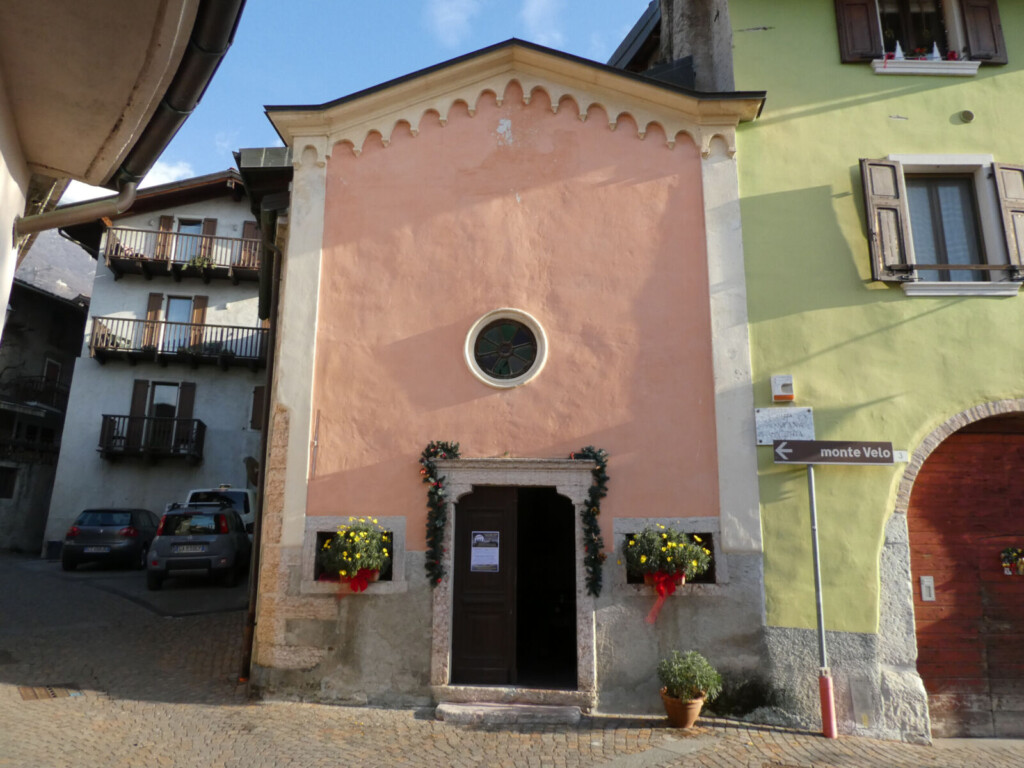
You arrive in Bolognano and the first thing the place does is remove something from you. Not dramatically — no revelation, no sudden stillness of the mind — but quietly, the way a hand lifts a weight you had stopped noticing you were carrying. The stone of the houses holds a colour that is neither grey nor beige but something older than either, a pigment the Majella limestone has been mixing for millennia, and the streets do not so much lead somewhere as simply continue, as if destination were a concept the village had considered and declined. There is a temporality here that does not correspond to any clock you own. This is not peace. It is something more unsettling: the sensation that the scale of meaning you brought with you is the wrong instrument for this place.

The educated traveller, arriving with good intentions and perhaps a guidebook, will reach almost automatically for the vocabulary of the marginal. Small. Remote. Peripheral. A village of fewer than four hundred inhabitants in the Pescara hinterland of Abruzzo, perched above the Orta river valley at roughly three hundred and fifty metres, administratively unremarkable, economically fragile — the entire descriptive apparatus of modernity slots it immediately into the category of places that exist in relation to somewhere else, as satellites of a centre that alone generates significance. This is not laziness. It is the structural consequence of how Western thought since the Industrial Revolution has organised the geography of meaning, concentrating it in density, in speed, in the accumulation of people and events, and exiling everything that resists those conditions to the status of remainder.
Martin Heidegger, in the 1951 lecture that became the essay “Building Dwelling Thinking,” argued that dwelling is not something human beings do after they have built a shelter — it is the fundamental condition from which all genuine building originates, the relationship of being in which a person does not merely occupy space but belongs to it, guards it, lets it be what it is. For Heidegger, the catastrophe of modernity was precisely the homelessness that results when this relationship is severed, when space becomes real estate and location becomes coordinate. What he was pointing toward was the difference between a place that has been inhabited and a place that has merely been used. Bolognano, with its Roman-era origins, its medieval consolidation, its unbroken thread of agricultural life running through centuries without the interruption of industrial transformation, is a place that has been inhabited in this deeper sense — not preserved, not frozen, but continuously lived into, the way a hand wears the handle of a tool.
Gaston Bachelard, writing in 1958 in “The Poetics of Space,” made a complementary move from a different direction entirely: he argued that intimate space — the corner, the attic, the drawer, the nest — is not a diminished version of grand space but its most concentrated form, the site where imagination and reality negotiate most honestly. The small place does not lack meaning; it compresses it. The chest in the corner of a room contains, for Bachelard, more psychological depth than a cathedral nave, precisely because the intimacy of scale forces a different quality of attention. A village of four hundred people on a hillside in central Italy is, in this framework, not a reduction of the city but its inversion: a space where the layers are vertical rather than horizontal, where history is deposited in geological strata rather than spread across districts, where a single crumbling wall may contain more temporal density than an entire modern boulevard.
The mistake is to arrive looking for what the village lacks rather than reading what it has concentrated.
Art Embedded in Landscape: The Pietro Cascella Sculpture Park
You are standing at the edge of a grove of olive trees in a village of four hundred people, and in front of you is a massive form in travertine marble, neither decorative nor commemorative, that simply exists in the earth the way a root does — not placed upon the landscape but grown into it, as if the stone had always been there and the human hand had only uncovered what the hill already intended.
Pietro Cascella moved to Bolognano in 1984, not as a retreat from serious work but as the condition for continuing it. He was already a figure of considerable weight in European sculpture — he had contributed to the monumental Auschwitz Memorial unveiled in 1967, a project of such moral gravity that it rendered his subsequent aesthetic choices permanently legible as ethical ones, never purely formal. What he brought to this Abruzzese hillside was not a portfolio of transportable objects but an entirely different proposition about what sculpture is for and where it belongs. Over the following decades he installed works directly into the terrain surrounding the village, creating what became known as the Sculpture Park of Bolognano, a permanent collection embedded in the agricultural and geological texture of the place — not a white-cube annex relocated outdoors, but something categorically different.
Rosalind Krauss identified the epistemological rupture that makes this difference legible. In her 1979 essay “Sculpture in the Expanded Field,” published in October, she demonstrated that the post-war dissolution of sculpture’s traditional conditions — pedestal, monument, figure — had not produced a crisis but a structural transformation, a new logical field in which the relationship between architecture and landscape generates positions that earlier vocabularies simply could not name. The expanded field she mapped is not a permissive widening of taste; it is a description of how meaning migrates when an object refuses the neutralizing container of the institution. What the museum or gallery performs, above all, is the evacuation of context — the suspension of geographic, historical, and material specificity in favor of universal contemplative availability. Cascella’s work in Bolognano refuses that suspension entirely. The travertine responds to the limestone of the surrounding Majella massif. The placement of forms follows the inclination of terraces that have been managed by human agriculture for two thousand years. The scale of each piece has been calibrated not against gallery proportions but against the horizon.
This is not romanticism about nature. It is something colder and more demanding. When serious art has been institutionally housed in cities — in the Tate, the MOMA, the Centre Pompidou — the implicit argument is that cultural legitimacy flows from metropolitan density, from the density of educated bodies capable of receiving it. The village, in this framework, is picturesque backdrop, raw material for urban imagination, the place from which the artist escapes in order to become significant. Cascella inverts this without announcing it. He arrives in Bolognano already significant and then allows the significance to become inseparable from the specific gravity of the place — its altitude, its light in October, the particular silence that follows the wind through the Pescara valley. The works cannot be moved without becoming different objects, which means they are not objects in the portable, marketable, museological sense at all.
What accumulates here, across roughly thirty years of sustained production in a single landscape, is a body of work that makes the question of audience genuinely strange. The visitor who arrives must travel to Bolognano specifically, must accept the terms of distance and specificity, must encounter the sculptures in weather, in changing light, alongside the material evidence of human settlement stretching back centuries — and that mandatory specificity is not an obstacle to meaning but its precise mechanism.

Nature as Archive, Not Backdrop
You stand at the edge of the Orta river gorge and realize, with something close to physical discomfort, that the rock beneath your feet is roughly 65 million years old. The Majella massif — the great limestone cathedral that dominates the eastern Apennines of Abruzzo — began forming in the Mesozoic, its karst architecture shaped by marine sediments laid down when this entire region was submerged beneath a shallow sea. The mountain reaches 2,793 meters at its highest point, Monte Amaro, and its surface holds over 1,800 plant species, including 35 endemic to the massif alone. These are not decorative facts. They establish a temporal register so vast that human settlement, human art, human grief and aspiration become something very close to atmospheric noise.
The Majella National Park was formally established in 1991, protecting approximately 74,000 hectares of terrain that includes wolf corridors, Marsican brown bear pathways, and one of the highest concentrations of raptors in peninsular Italy. The golden eagle nests here. The Apennine chamois, nearly extinct by the mid-twentieth century, has recovered under managed protection to a population exceeding 800 individuals. But the bureaucratic act of declaring something a protected zone does not transform it into wilderness — it transforms it into a category, which is a different and more suspicious thing. What the park designation actually did was draw a legal boundary around a landscape that had been operating according to its own logic for geological epochs, completely indifferent to the administrative anxieties of the Italian Republic.
Tim Ingold, in his 2000 collection The Perception of the Environment, makes a distinction that cuts directly into the question of what it means to inhabit a place like this. He argues against the idea of landscape as backdrop or container — the passive theater against which human activity performs itself — and insists instead on what he calls the “dwelling perspective”: the understanding that organisms, including humans, do not exist in environments but are constituted by their movement through them. The body that walks the Orta gorge daily for forty years is not the same cognitive apparatus as the body that photographs it once from a scenic overlook. Perception is not a reception of data. It is a skill developed through immersive, repetitive, physically demanding engagement with terrain.
What this means for the Abruzzese interior is something that most visitors to the region — and certainly most Italians from Rome or Milan or Bologna — are structurally prevented from grasping on a first or second encounter. The people who have worked this landscape for generations developed forms of spatial awareness, ecological attentiveness, and social organization that were direct responses to the demands of the terrain. The transhumance routes — the tratturi, some of them legally protected as cultural heritage — were not merely economic pathways for moving livestock between summer and winter pastures. They were mnemonic structures, carrying embedded knowledge about water sources, weather patterns, predator behavior, and social obligation across communities separated by dozens of kilometers of mountain. The knowledge did not live in books. It lived in the body moving through specific terrain under specific seasonal pressures.
Urban Italy inherited the Renaissance prejudice that the countryside exists to be looked at, idealized, painted, theorized. The pastoral tradition in Italian literature from Virgil’s Eclogues forward treats rural landscape as a screen onto which educated anxiety projects its fantasies of simplicity. What this tradition systematically cannot see is that the simplicity was never there — that the cognitive complexity required to survive in the Majella’s shadow across centuries of precarious agriculture, isolated winters, and unpredictable hydrology produced minds shaped by pressures that no amount of cultural tourism can retrospectively access, because the pressures themselves have largely dissolved, leaving only their residue in stone walls, in the grain of certain silences, in the particular way an old farmer reads clouds forming over Monte Morrone before anyone else in the valley has looked up.
The Abruzzese Social Contract: Isolation as Resistance

You have driven through villages like this before, certain you understood their silence — the shuttered storefronts, the single bar where four old men occupy the same chairs at the same hour every morning, the feeling that time here failed to keep its appointments. You read it as poverty, or passivity, or the residue of some historical misfortune. You were wrong about what you were looking at.
Abruzzo occupies a peculiar coordinates in Italian political geography that has never been adequately described by the nation-state it nominally belongs to. Sandwiched between the Adriatic coast and the central Apennine spine, it was never comfortably absorbed by the Papal States to the northwest nor by the Bourbon Kingdom of Naples to the south, functioning instead as a kind of strategic inconvenience to both — too mountainous to administer efficiently, too internally coherent to dissolve. This was not an accident of terrain. The populations of these valleys practiced what could only be called a deliberate illegibility, keeping their governance local, their allegiances opaque, their economic arrangements invisible to any external accounting. When the unified Italian state arrived after 1861 with its census takers and tax collectors, it found communities that had spent centuries perfecting the art of not being fully found.
Fernand Braudel, writing in The Mediterranean and the Mediterranean World in the Age of Philip II, documented the transhumance routes — the tratturi — that connected Abruzzese highland pastures to Apulian lowland plains with a regularity and organizational complexity that rivaled any urban commercial system of the sixteenth century. Hundreds of thousands of sheep moved along fixed corridors spanning hundreds of kilometers, governed by customary law, seasonal contracts, and a veterinary and logistical knowledge entirely oral and entirely functional. This economy produced no cathedrals, no merchant banking dynasties, no art patronage visible to the Renaissance. It produced instead an extraordinary capacity for autonomous coordination across vast distances — a horizontal social architecture that left almost no monuments precisely because its intelligence was distributed into practice rather than concentrated into institutions.
The twentieth century administered a different kind of violence to this arrangement. Between 1900 and 1970, Abruzzo lost approximately one third of its population to emigration — first to the Americas, then to the industrial north of Italy itself. Villages that had held two thousand people contracted to four hundred. The tratturi fell silent. What Braudel had documented as a living system became archaeology. Italian economists and planners catalogued Abruzzo among the regions requiring development intervention, which meant road infrastructure, light industry incentives, tourism promotion — the standard prescription written for every place whose form of intelligence had become unreadable to the diagnostic instruments of modernization.
What those instruments could not measure was that the contraction itself functioned as a kind of immune response. The communities that survived did so by consolidating around precisely what could not be scaled, exported, or franchised: proximity, reciprocity, the specific knowledge of specific land accumulated across generations. Bolognano, with its few hundred remaining inhabitants, its terraced olive groves, its festivals calibrated to the agricultural calendar, did not fail to become something larger. It declined the invitation. The smallness is not the aftermath of loss — it is the shape that remained when everything expendable was shed.
This is where contemporary art enters the equation in a way that is neither decorative nor ironic. When Pescara-based artists and later the Panza di Biumo collection brought contemporary works into permanent dialogue with this landscape beginning in the 1990s, they were not rescuing an abandoned village with cultural prestige. They were recognizing something already structurally present — a community that had organized itself around duration rather than growth, around the irreplaceable rather than the replicable, and that therefore offered the only social condition in which certain kinds of art can actually breathe.
The Trap of Authenticity and the Visitor's Complicity
She has done her research. Three tabs open on her phone during the train ride from Pescara: a travel blog describing Bolognano as “a living artwork suspended between stone and sky,” a brief interview with someone who once spoke to Pescali, and a photograph of the apple orchards that she has already half-decided will be the background for something she intends to feel. She arrives not empty but pre-loaded, carrying a narrative that needs only a landscape to confirm it.
This is the precise mechanism Dean MacCannell identified in 1976 in “The Tourist,” where he argued that modern tourism is not the pursuit of the real but the pursuit of markers that signal the real — a distinction that quietly dismantles the entire premise of cultural travel. The tourist does not encounter a place; she encounters the evidence that the place is what she was told it would be. What MacCannell called staged authenticity is not a conspiracy of locals performing for outsiders — it is a structure that the visitor herself erects, unconsciously, before she has even crossed the threshold. The village does not deceive her. She arrives already deceived, and the village’s only function in that economy is to either confirm or refuse her projection.
Marc Augé built his concept of non-places around transit zones — airports, motorways, supermarkets — spaces defined by anonymity and the absence of relational history. What rarely gets examined is the inversion: what happens when a place is so densely relational, so saturated with specific and irreducible history, that it refuses to become the smooth surface a visitor needs it to be. Bolognano is not a non-place. It is almost aggressively the opposite. The Pescali orchards were not designed as aesthetic objects for contemplation but as a decades-long argument between one man’s vision and a specific hillside’s resistance. The land has its own grammar, accumulated through the particular stubbornness of a particular family across generations. That specificity does not perform. It simply is, and it has no obligation to be legible on a first visit.
The cognitive risk that emerges here is not disappointment — disappointment is manageable, even comfortable, because it leaves the visitor’s self-image intact. She simply concludes the place was overhyped and moves on. The genuine risk is something more structurally threatening: the possibility that the place is more coherent than she is, that its layers of meaning require a slower and more humble form of attention than the one she budgeted for the afternoon. Places like Bolognano do not punish the careless visitor with boredom. They simply remain indifferent to her interpretive framework, and that indifference, if she is paying any attention at all, reflects something back at her that she did not expect to see.
The contemporary cultural tourist has been trained by decades of curatorial language — the artist statement, the heritage plaque, the guided narrative — to believe that meaning is a service delivered to her rather than a capacity she must develop. When a place refuses to deliver, when it offers instead only the raw materials of experience without instructions for assembly, the discomfort is not aesthetic but existential. She must either do the harder work of genuine encounter or retreat into the comfortable verdict that the place was charming but not quite what she hoped. Most choose the retreat without recognizing it as a choice at all.
What Bolognano asks of the visitor — without asking, without performing the ask, simply by being itself — is whether she is capable of being somewhere without already knowing what it means, whether she can stand inside a landscape that will not confirm her prior self, and whether the art she came to find might turn out to be less interesting than the person she discovers she is not.
A vision curated by a filmmaker, not an algorithm
In this video I explain our vision
🌿 Art, Land, and the Spirit of Place
Bolognano is a village where art does not hang on museum walls but grows wild among ancient stones and olive trees. To understand a place like this, one must explore the deeper connections between creativity, nature, craftsmanship, and the communities that breathe life into landscapes. These articles open the paths that lead there.
Contemporary Sculpture: History and Protagonists
Contemporary sculpture has increasingly abandoned the white cube of the gallery to inhabit public and natural spaces, entering into dialogue with the environment around it. In villages like Bolognano, sculpture becomes a living presence that transforms how we perceive a place and its history. This article traces the evolution of sculptural practice from modernism to land art and site-specific installations.
GO TO THE SELECTION: Contemporary Sculpture: History and Protagonists
Genius Loci: When Places Have a Soul
The concept of genius loci — the spirit of a place — is essential to understanding why certain villages, valleys, and landscapes feel charged with invisible meaning. Philosophers, architects, and artists have long explored how places carry memory, identity, and emotional resonance that shape those who inhabit them. This article delves into the cultural and philosophical history of this fascinating idea.
GO TO THE SELECTION: Genius Loci: When Places Have a Soul
Craftsmanship as Art Form: History and Philosophy
Craftsmanship as an art form sits at the heart of many Italian village cultures, where the making of objects by hand is inseparable from community identity and the transmission of knowledge across generations. Richard Sennett and others have argued that manual skill is not merely technical but deeply human, connecting body, mind, and material world. This article explores the philosophy and history behind the dignity of making things well.
GO TO THE SELECTION: Craftsmanship as Art Form: History and Philosophy
The Artistic Community: History and Sociology of Collective Creativity
Artistic communities have always sought places apart from the noise of cities — villages, rural retreats, and natural landscapes where collective creativity can breathe and experiment freely. The sociology of these communities reveals how shared spaces and shared visions produce art that no single individual could achieve alone. This article examines the history of collective artistic practices and the cultures they generate.
GO TO THE SELECTION: The Artistic Community: History and Sociology of Collective Creativity
Discover More on Indiecinema
If these themes of art, nature, and the spirit of hidden places resonate with you, Indiecinema streaming is where you will find the films that bring them to life. Explore independent cinema that dares to look at the world with curiosity, depth, and beauty — the kind of gaze that villages like Bolognano deserve.
👉 EXPLORE THE CATALOG: Watch Indie Films in Streaming
A vision curated by a filmmaker, not an algorithm
In this video I explain our vision

