
The Seduction Beneath the Symptom
You notice her before you understand what noticing means in this context. She appears at the edge of your life the way certain people do — not loudly, not with demand, but with a quality of attention so concentrated it feels like being chosen. She watches you with something that resembles tenderness so closely that your nervous system cannot tell the difference. Within weeks you are sleeping longer, dreaming harder, waking exhausted in ways that no amount of rest repairs. You assume this is love. You assume this because nobody told you that love and slow erasure can wear the same face for a remarkably long time.

Joseph Sheridan Le Fanu published Carmilla in 1872, three years before his death, tucked inside a collection called In a Glass Darkly — a title borrowed from Paul’s first letter to the Corinthians, that famous verse about seeing reality only as a dim and distorted reflection. The choice was not decorative. Le Fanu understood that his novella was precisely about the opacity of what we see when we look at intimacy. His narrator, Laura, lives in an isolated Styrian castle and encounters a beautiful young woman named Carmilla who arrives under circumstances of convenient mystery and installs herself into Laura’s daily life with a patience that reads, in the early pages, as genuine warmth. The predation is invisible because it is expressed through the language of devotion.
What Le Fanu constructed was not simply a horror story but a clinical portrait of a psychological structure that the nineteenth century had no stable vocabulary for. Sigmund Freud would not publish Studies on Hysteria until 1895, and it would take decades more before theorists like Melanie Klein, working in the 1940s on object relations, would name what happens when a person structures their desire around absorbing another rather than encountering them. Klein’s concept of the paranoid-schizoid position describes a mode of relating to others not as full subjects but as objects to be taken in or expelled — sources of nourishment or threat, never independent beings. Carmilla does not love Laura. She consumes her, and the tragedy is that the consumption is delivered in the register of love so fluently that Laura experiences the draining as intimacy.
This confusion is not a Gothic fantasy. It operates in ordinary life with ordinary people in relationships where the asymmetry of need is masked by the performance of closeness. The person who calls every day, who needs you always available, who becomes wounded when you show signs of separate existence — this person is often genuinely convinced they are loving you. The mechanism is the same one Le Fanu renders visible by pushing it to its physical extreme: the vampire doesn’t feel like a predator from the inside. From the inside, it feels like profound connection, like finally having found someone who understands completely. That feeling of being utterly known is one of the most powerful human experiences available, and it is precisely what makes it so effective as a vector for dissolution.
Laura describes Carmilla’s declarations in language that nineteenth-century readers would have recognized as the vocabulary of Romantic love — all breathless intensity and singular devotion. “You are mine, you shall be mine,” Carmilla tells her, “and you and I are one for ever.” Le Fanu writes this not as menace but as tenderness, and Laura receives it as such. The horror of the novella is not that Carmilla is a monster. The horror is that by the time the monstrousness becomes legible, Laura is already changed — quieter, thinner, unable to fully account for the hours she has lost, certain only that the loss felt, while it was happening, like warmth.
The Ecstasy of Isabel Mann

Horror, thriller, by Jason Figgis, United States, 2016.
Set in Ireland, the film tells the story of Isabel Mann, an introverted and lonely teenager who is drawn into a dark and seductive world of blood, violence, and vampirism. As the story unfolds, Isabel undergoes a disturbing transformation—from a vulnerable young girl to a ruthless creature—guided by a group of vampires who pull her into a spiral of murder and ritual. At the same time, a team of detectives attempts to shed light on a series of brutal killings that seem to be connected. However, their investigation leads them toward a truth far more unsettling than they could have anticipated.
The film stands out for its cold, disturbing atmosphere and a slow, reflective narrative that favors psychological depth over action. Vampirism here is not just a genre element, but takes on a symbolic meaning tied to adolescent alienation, the search for identity, and the longing to belong. *The Ecstasy of Isabel Mann* embraces an auteur style and carries the emotional intensity of Ellen Mullen’s lead performance. It’s a different kind of horror film—intimate and melancholic—capable of blending teenage tragedy with the vampire myth in a modern, introspective way.
LANGUAGE: English
SUBTITLES: Spanish, French, German, Portuguese
Le Fanu's Gothic as Social Autopsy
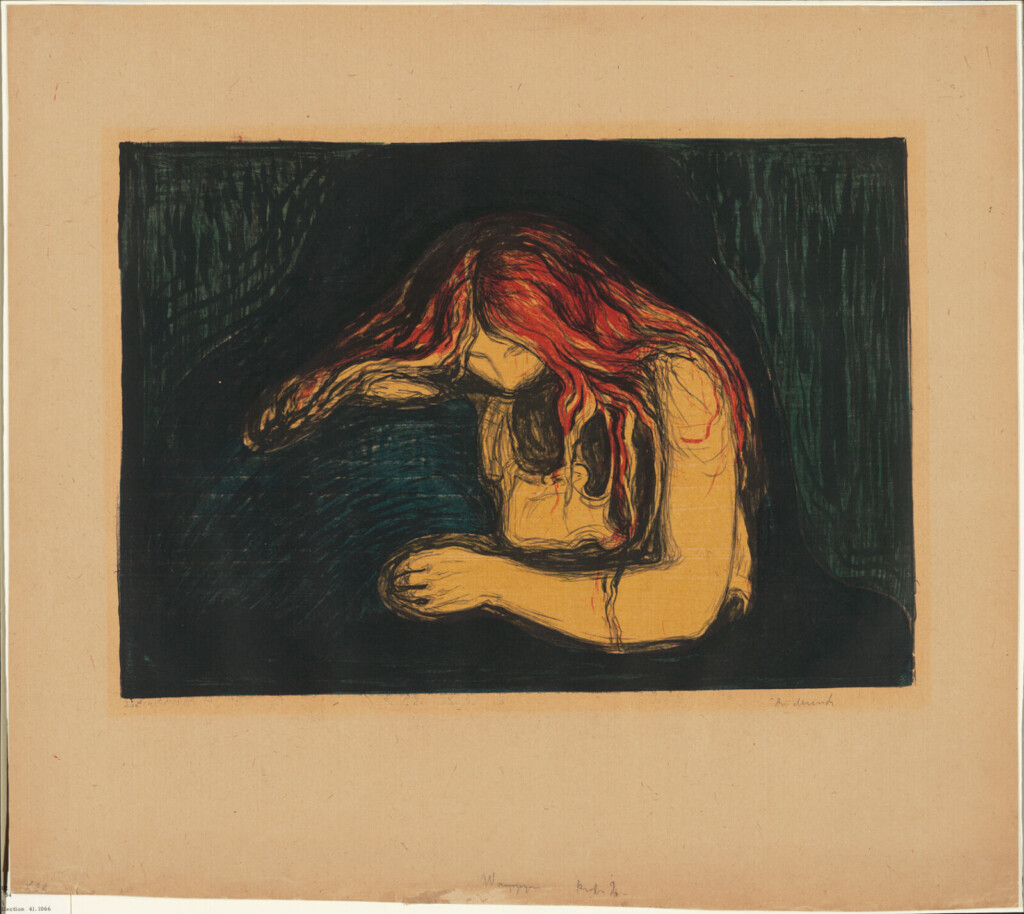
You are reading a story about a sick girl, and you already know she is not sick. Laura, the narrator of Le Fanu’s 1872 novella, describes her nocturnal visitor with the vocabulary of illness — languor, pallor, a strange exhaustion that settles over the household like weather — and yet every sentence hums with a recognition the prose officially refuses to make. The reader feels the gap between what is described and what is meant, and that gap is not a literary accident. It is the whole architecture of the text.
Victorian England had developed, by the 1870s, an extraordinarily sophisticated apparatus for not saying things directly while ensuring they were understood. Michel Foucault, in The History of Sexuality published in 1976, dismantled the myth that the nineteenth century was an era of sexual repression in the sense of silence. What actually occurred was an explosion of discourse — medical, legal, confessional, novelistic — that proliferated categories of deviant sexuality precisely in order to manage them. The hysteric, the masturbating child, the Malthusian couple, the perverse adult: these figures were produced by institutional language, not discovered by it. Le Fanu was writing inside this production. Carmilla is not a novel that smuggles transgression past the censors. It is a novel that uses the censors’ own grammar.
Richard von Krafft-Ebing published Psychopathia Sexualis in 1886, fourteen years after Carmilla appeared, and yet the conceptual world his taxonomies describe was already fully operational in Le Fanu’s text. Krafft-Ebing’s clinical catalogue — 238 case histories organized around inversion, masochism, fetishism, and what he called contrary sexual feeling — treated female same-sex desire as a pathological deviation from reproductive femininity, a species of moral insanity legible in the body itself. The female body, in this framework, became a surface on which disorder could be read: the pallid complexion, the disordered appetite, the refusal of correct femininity were symptoms, not choices. Carmilla’s victims exhibit every one of these signs, and the novel’s physician-characters respond with exactly the diagnostic authority Krafft-Ebing would later codify. The medical gaze and the Gothic gaze turn out to be the same gaze wearing different costumes.
What Le Fanu understood, perhaps more intuitively than programmatically, is that the female body in Victorian culture was always already pathologized — that the distance between a healthy woman and a sick one was maintained by behavioral compliance, not by biology. A woman who desired other women, who refused domestic enclosure, who moved across class and national boundaries with seductive ease, was by definition unwell. Carmilla is all of these things, and the novel’s horror depends on the reader sharing enough of the period’s medical assumptions to find her threatening rather than simply free. She is not monstrous because she drinks blood. She is monstrous because she makes Laura want her.
The geography of the text encodes this anxiety with precision. Le Fanu sets the novella in Styria, in a landscape of forests, ruined chapels, and aristocratic isolation that places the action safely outside England while importing every English social fear. The decayed nobility of Carmilla’s bloodline mirrors a specific Victorian terror about class dissolution — the old European aristocracy, unmoored from Protestant productive virtue, represented sexuality uncoupled from consequence, pleasure without the redemptive machinery of reproduction and social utility. Laura’s father is a retired English civil servant living in the Austro-Hungarian empire, and this detail is not decorative: he is a man of administration and order living at the edge of a world that administrative order has not yet fully colonized.
The vampire, in Le Fanu’s construction, is what resists the census, the diagnosis, the marriage register.

The Monster as the Unassimilated Woman
You are standing at the window of a house that is not yours, watching a woman walk alone at night, and the thing you feel is not quite fear.
There is a structure to that feeling that predates you by centuries. The woman who moves without permission, who desires without apology, who takes up space in the dark — she has always been assigned a name that doubles as a verdict. Sheridan Le Fanu published Carmilla in 1872, and the creature at the center of his novella is terrifying in ways that have nothing to do with the supernatural machinery of fangs and coffins. What Carmilla actually does is refuse. She refuses the domestic arc, refuses the marriage plot, refuses the slow conversion of appetite into duty that Victorian society required of women as the price of their social legibility. Her vampirism is the metaphysical costume worn by something far more threatening: a female desire that has no interest in serving anyone else’s narrative.
Simone de Beauvoir argued in The Second Sex, published in 1949, that the category of Woman is constructed not from within but from without — she is defined as the Other against which Man confirms his own subjectivity. What de Beauvoir maps philosophically, Le Fanu’s text performs viscerally. Carmilla is never quite human in the reader’s eyes because she has been stripped of the relational identity that makes a woman legible to the nineteenth-century gaze: she has no father present to authorize her, no marriage to anchor her movement, no productive domesticity to justify her existence. She arrives, she feeds, she desires, she refuses to explain herself. In the logic of the period, this is not merely transgressive — it is categorically monstrous, because the monster is simply the name given to whatever exceeds the frame of acceptable social function.
The historical mechanics of that naming are not metaphorical. Between 1450 and 1750, an estimated forty thousand to sixty thousand people were executed across Europe on charges of witchcraft, and the overwhelming majority were women. The prosecutorial logic encoded in the Malleus Maleficarum of 1487, written by Heinrich Kramer, identified women as uniquely susceptible to demonic seduction precisely because of the supposed insatiability of their carnal appetites. The witch was not punished for worshipping Satan — she was punished for having desires the community could not metabolize, for refusing the diminishment that kept the social order intact. What changes between 1487 and 1872 is only the costume. The vampire replaces the witch, the Gothic novella replaces the trial record, but the underlying prosecution remains: she wanted too much, she moved too freely, she could not be owned.
Laura, the narrator of Carmilla, describes her companion’s love as something that made her feel simultaneously cherished and consumed, a tenderness indistinguishable from predation. This is not a failure of Le Fanu’s moral imagination — it is the most honest thing in the text. The culture that produced it had no language for female desire that was not also a language of danger, because desire unmoored from reproduction and domesticity had no sanctioned form. To feel it was already to participate in something illicit. Laura cannot name what Carmilla makes her feel without reaching for the vocabulary of illness, of wrongness, of something entering her from outside — because that is the only grammar available to her, the only one her world had built.
What the text cannot quite suppress is the seductiveness of Carmilla’s refusal. She is beautiful and she is free and she is destroyed for it by men who arrive with medical credentials and wooden stakes and the full institutional authority of a civilization that has always known how to dress its fear in the language of cure.
Desire, Contagion, and the Quarantine of Feeling

You wake beside someone who frightens you, and the fear is indistinguishable from the pull you feel toward them. This is not confusion. This is the architecture of a desire that has been taught to disguise itself as its own opposite.
Laura’s account of Carmilla never stabilizes into a single emotional register, and that instability is the text’s most precise psychological achievement. Le Fanu published the novella in 1872 as part of the collection In a Glass Darkly, and what he constructed in Laura’s narration is not ambivalence in the loose, colloquial sense — it is something far more structurally coercive. Laura describes Carmilla’s touch as producing “a sensation of mingled pleasure and fear,” and then, with the reflexive vigilance of a woman who has been trained to correct herself, immediately reframes the experience as illness, as visitation, as something that happened to her rather than something she moved toward. The distinction matters enormously, because the reframing is not incidental to the story — it is the story.
Freud’s 1919 essay “The Uncanny” identified the unheimlich not as mere strangeness but as the return of something familiar that has been repressed — the domestic made monstrous precisely because it was once intimate. Carmilla is uncanny in this exact clinical sense: she is what Laura might have been, or wanted, or feared wanting. She appears at the castle not as an alien intrusion but as a doubling, arriving with a face Laura recognizes from a childhood dream, collapsing the temporal distance between innocence and knowledge. When the familiar returns in the shape of threat, the psyche’s first defensive maneuver is to insist on the threat and suppress the familiarity. Laura performs this maneuver across every chapter, and Le Fanu is ruthless enough to let the reader watch the mechanism operate in real time without ever having Laura acknowledge it.
René Girard’s model of mimetic desire, developed most fully in Deceit, Desire, and the Novel published in 1961, describes how human longing is never spontaneous but always triangulated — we desire what we perceive another to desire or to embody. Carmilla does not simply attract Laura; she mediates Laura’s access to a version of herself that exists outside the permission structures of her father’s household, her education, her future marriage. The desire is mimetic in the precise Girardian sense: Carmilla moves through the world with a bodily sovereignty Laura has never been granted, and Laura’s fascination is inseparable from that theft. To want Carmilla is also to want what Carmilla has — which means to want the dissolution of the very social coordinates that make Laura legible as a respectable young woman. The horror Laura periodically performs is therefore not irrational. It is the surveillance mechanism of a self that understands, without being able to say so, that the desire itself is the contagion.
This is where Le Fanu’s gothic operates differently from the masculine tradition of vampire literature that precedes it. The threat in Carmilla is not penetration from outside but recognition from within, and the quarantine of feeling Laura maintains — the constant reclassification of longing as dread, intimacy as infection — is the psychological labor that patriarchal domesticity requires of women not once, but continuously, as a condition of their social existence. The physician who eventually arrives to diagnose and destroy Carmilla carries his instruments with the calm authority of someone restoring a correct order, and the horror of that scene is not the vampire but the ease with which the entire apparatus of male expertise assembles itself around the project of ending something that two women, left alone, had not yet finished naming.
The Stake as Cultural Verdict
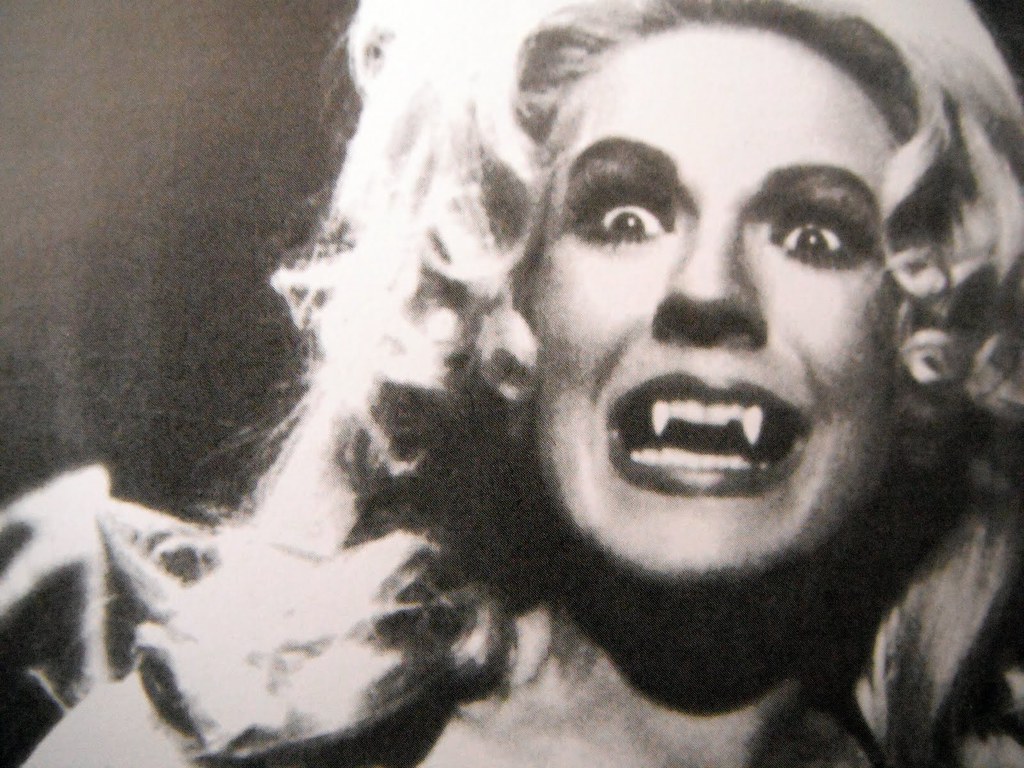
You are standing at the edge of a grave that has already been opened once before, and you understand, without anyone explaining it, that what is about to happen is not justice but housekeeping.
The men who descend on Carmilla in Le Fanu’s final chapters are not heroes in any meaningful moral sense. General Spielsdorf, the Baron Vordenburg, the unnamed imperial medical officer — they constitute a tribunal, a panel of credentialed masculine authority converging on a body that has refused to behave. Their methods are precise: the head severed, the stake driven, the body burned and the ashes scattered over a running river. This is not the improvised violence of fear. It is procedure. And procedure, as Michel Foucault documented across the history of European institutions in Discipline and Punish (1975), is how power makes itself invisible — it hides the verdict inside the method so that what is really a judgment appears to be merely a technical solution.
The timing of Le Fanu’s novella matters here with uncomfortable specificity. Carmilla was published in 1872, the same decade in which the British Contagious Diseases Acts of 1864 and 1869 were being fiercely contested. Those acts authorized plainclothes police to apprehend any woman suspected of prostitution and compel her to submit to internal medical examination. The examining physicians were exclusively male. Refusal to comply meant imprisonment. What the law had invented was a mechanism for enforcing female sexual passivity under the language of public health — the state’s right to enter and assess the female body whenever that body was suspected of autonomous erotic agency. The doctors in Carmilla’s destruction carry this cultural DNA. They do not ask what Carmilla wants. They open the coffin, verify the evidence, and proceed.
What makes this more than historical footnote is the way Laura, the narrator and Carmilla’s beloved, is rendered entirely absent from the execution scene. She hears about it afterward, reported to her by her father. The desire between the two women is the living center of the narrative, yet when the cultural machine reaches its verdict, that desire has no standing, no voice, no witness of its own. Richard von Krafft-Ebing, whose Psychopathia Sexualis appeared in 1886, would spend several hundred pages constructing a clinical taxonomy in which female same-sex desire was simultaneously defined, pathologized, and handed over to male medical authority for management. Le Fanu’s narrative prefigures this transfer precisely: the feeling belongs to Laura, but the verdict belongs to the men.
What the story’s survival tells us is not comfortable. Carmilla has never been out of print in the English-speaking world. She has been adapted for film more than a dozen times across the twentieth and twenty-first centuries, translated, reimagined, and reclaimed. Part of this appetite is genuine transgressive pleasure — readers and viewers finding in her what the culture still systematically withholds. But part of it is something darker and more honest: the ritual destruction remains. In almost every retelling, she dies. The desire is permitted to exist for the duration of the narrative, gorgeous and terrifying, and then the stake arrives, and the story ends with the coffin empty and the men standing over it satisfied. Audiences return to this pattern not only because Carmilla survives in cultural memory but because her destruction is always re-performed, which suggests that the need to witness that destruction has not been exhausted by history.
The grave is never fully closed. But it is always, in the end, covered over again.
A vision curated by a filmmaker, not an algorithm
In this video I explain our vision
🧛 Blood, Desire and the Gothic Feminine
Sheridan Le Fanu‘s Carmilla weaves together forbidden desire, feminine monstrosity, and the uncanny power of the undead into one of literature’s most haunting vampire tales. To fully appreciate its depths, it helps to explore the broader currents of Irish Gothic tradition, Victorian supernatural aesthetics, and the psychology of repressed longing that animated the era.
Sheridan Le Fanu: Irish Gothic and Domestic Horror
Sheridan Le Fanu stands as the undisputed master of Irish Gothic, transforming the domestic space into a theater of terror where the supernatural intrudes upon the everyday. His fiction, steeped in psychological dread and moral ambiguity, laid the groundwork for everything from Bram Stoker‘s Dracula to modern horror literature. Understanding Le Fanu’s literary world is essential to grasping what makes Carmilla so unsettling and so enduring.
GO TO THE SELECTION: Sheridan Le Fanu: Irish Gothic and Domestic Horror
Repressed Desire: When Society Stifles Feelings
Victorian society constructed elaborate codes to suppress desire, particularly the desires of women, which were deemed dangerous and morally corrupting. Carmilla thrives precisely in this climate of repression, embodying the erotic charge that polite society refused to name or acknowledge. This article explores how the stifling of feeling generates its own dark counter-energy, one that Gothic fiction channels with remarkable psychological precision.
GO TO THE SELECTION: Repressed Desire: When Society Stifles Feelings
The Aesthetics of Decadentism: When Beauty Became Illness
The Decadent movement elevated illness, excess, and transgression into aesthetic ideals, finding beauty in decay, languor, and the dissolution of bourgeois norms. Carmilla is a quintessentially Decadent figure, her seductive pallor and aristocratic menace embodying the movement’s fascination with corrupted beauty and fatal femininity. This article traces the philosophical and artistic roots of an aesthetic that turned the morbid into the magnificent.
GO TO THE SELECTION: The Aesthetics of Decadentism: When Beauty Became Illness
The Strange Case of Dr Jekyll and Mr Hyde: Analysis
Stevenson’s Strange Case of Dr Jekyll and Mr Hyde shares with Carmilla a deep preoccupation with the double life, the hidden self that Victorian respectability could not contain. Both works use the supernatural as a lens through which to examine identity, desire, and the terrifying porousness of the self. This analysis illuminates the Gothic tradition’s recurring obsession with what lies beneath the civilized surface of the human personality.
GO TO THE SELECTION: The Strange Case of Dr Jekyll and Mr Hyde: Analysis
Discover Gothic Cinema and Dark Visions on Indiecinema
If Carmilla’s world of shadows, forbidden desire, and Gothic dread speaks to you, Indiecinema is your gateway to independent films that explore the same dark territories with fearless originality. From psychological horror to literary adaptations that refuse easy answers, our streaming platform gathers the most compelling voices in world cinema outside the mainstream. Join us and let the darkness take you somewhere truly unforgettable.
👉 EXPLORE THE CATALOG: Watch Indie Films in Streaming
A vision curated by a filmmaker, not an algorithm
In this video I explain our vision

