
The Dopamine Architecture of the Modern Headline
You open the app without deciding to. That is the first fact worth sitting with — not the content you consume, not the headlines you click, but the prior moment of zero intention, the thumb that moves before the mind has issued any instruction. Behavioral economists call this an automatic behavior, a response pattern so deeply grooved into the architecture of daily life that it has effectively migrated out of conscious decision-making entirely. But the groove did not form by accident, and it did not form quickly. It was engineered, iteratively, over roughly two decades, by people who understood something fundamental about the human nervous system that most journalists either ignored or chose not to confront.

The science underneath this is not new or disputed. In 1954, James Olds and Peter Milner published findings from McGill University demonstrating that rats with electrodes implanted in the nucleus accumbens would stimulate themselves compulsively, forgoing food and water, because the stimulation mimicked the anticipation of reward rather than reward itself. The crucial distinction is anticipation. Dopamine, the neurochemical at the center of this circuitry, is not released when you receive something satisfying — it spikes at the moment you believe you might. The unresolved promise, the gap between question and answer, the half-open door: these are the structural conditions that keep the circuit firing. A headline that tells you everything closes the loop. A headline engineered to suggest without delivering holds the loop open indefinitely, and the brain, caught in that suspension, experiences it as urgency.
Digital media editors discovered this empirically before neuroscientists had fully articulated it in accessible language. Upworthy, founded in 2012, became the laboratory where this understanding was formalized into practice. Their internal methodology involved writing twenty-five different headlines for a single piece of content, testing them against each other, and publishing only the one that produced the highest click-through rate. By 2013, Upworthy posts were being shared millions of times weekly, and the architecture of their headlines — the withheld subject, the emotional intensifier, the phrase “you won’t believe” as a near-literal neurological instruction — had been reverse-engineered and replicated across the industry. What had once been a craft judgment made by a copy editor became an optimization function run against real-time behavioral data from millions of users.
The word “curiosity” sounds benign, even virtuous, which is part of what made this transformation so difficult to name as a problem. George Loewenstein at Carnegie Mellon had described in 1994 what he called the information-gap theory of curiosity: humans experience curiosity as a perceived gap between what they know and what they want to know, and the discomfort of that gap motivates information-seeking behavior. This was academic psychology. What the digital media industry did with it was closer to what a cigarette manufacturer does with nicotine research — not reject it, but operationalize it, scaling the mechanism of discomfort into an industrial delivery system. The gap was no longer something that arose organically in a reader encountering a genuinely novel idea. It was manufactured in the headline, artificially widened, and resolved — or more precisely, not resolved — in content that frequently delivered nothing the headline had gestured toward.
The scroll replaced the read not because readers became lazier or less intellectually serious, but because the interface was redesigned to reward scanning over sustained engagement. Tristan Harris, a former design ethicist at Google, estimated in congressional testimony in 2019 that a single smartphone generates roughly 2,617 touch interactions per day from its average user. Almost none of those interactions involve reading a complete text. They involve headlines, fragments, reaction thumbnails, the first sentence before the fold. The newspaper reader of 1975 received perhaps a dozen headline impressions over a morning; the smartphone user of 2024 receives that number in under ninety seconds, each headline calibrated to a reward circuit that the reader did not know was being targeted and did not consent to having mapped.
Yellow Journalism's Forgotten Legitimacy
You are reading this wrong. You have always been reading this wrong. The story you inherited about the corruption of journalism — the one where the internet arrived and turned noble reporters into desperate attention merchants — begins with a convenient amnesia about what the press actually was before anyone had ever heard the word “digital.”
In the autumn of 1896, William Randolph Hearst acquired the New York Journal and immediately launched a campaign against Joseph Pulitzer’s New York World that had nothing to do with truth and everything to do with dominance. The two men drove their circulations into a war so ferocious that by 1898 the Journal was printing nearly one million copies a day, a figure that had no precedent in American publishing. They accomplished this not through superior reporting but through a calculated escalation of horror, sentiment, and manufactured crisis. Stories were stretched, illustrations exaggerated, and in at least one documented case — the sinking of the USS Maine in Havana Harbor on February 15, 1898 — the press ran declarations of Spanish sabotage before any investigation had taken place. Hearst’s Journal printed the headline “The Warship Maine Was Split In Two By An Enemy’s Secret Infernal Machine” within days of the explosion, with no evidence whatsoever. The Spanish-American War followed months later. Historians still debate the extent of press influence on that military engagement, but the debate itself confirms something more uncomfortable: the boundary between reporting events and manufacturing them had already been crossed, commercially, profitably, and with full editorial intent, more than a century before the first algorithm learned to rank content by engagement.
What the myth of yellow journalism conveniently omits is that it worked. Pulitzer’s World reached a circulation of 600,000 at its peak. These were not passive, duped readers dragged into sensationalism against their will. They bought the paper. They returned the next morning. The emotional architecture of outrage, fear, and righteous indignation was not imposed on the public — it was met by a public that had already developed the appetite. When critics in the early twentieth century coined the term “yellow journalism” as a condemnation, they were simultaneously performing a gesture of class anxiety: the scandal was not just that stories were exaggerated, but that so many ordinary people preferred them.
Michael Schudson, in his 1978 study Discovering the News, traces how the ideology of journalistic objectivity was itself a historical construction, a professional response to the chaos of the Hearst-Pulitzer era rather than a recovered virtue. Objectivity was invented as a discipline precisely because it had never been the natural condition of the press. The norm came after the violation, which means the violation was the baseline. Every subsequent invocation of “responsible journalism” as a golden standard to which the internet ought to return is invoking a standard that was designed in reaction to a press that was already doing what clickbait does now — monetizing the reader’s most volatile emotional states at industrial scale.
The truly unsettling implication is not that digital media corrupted something pure. It is that the commercial logic of emotional capture is the structural condition of mass media under market pressure, regardless of the technology carrying it. Steam-powered printing presses and social media recommendation engines are different instruments playing the same score. Hearst did not need a notification badge or an A/B tested headline to understand that a reader trembling with indignation was more likely to buy tomorrow’s edition than a reader who felt adequately informed. He understood it intuitively, with the confidence of someone who had never been told it was wrong, because in 1896 no one had yet agreed on a vocabulary to say so.
What changes with each new technology is not the appetite but the precision with which it can be located and fed.

The Objectivity Myth and Its Ideological Function
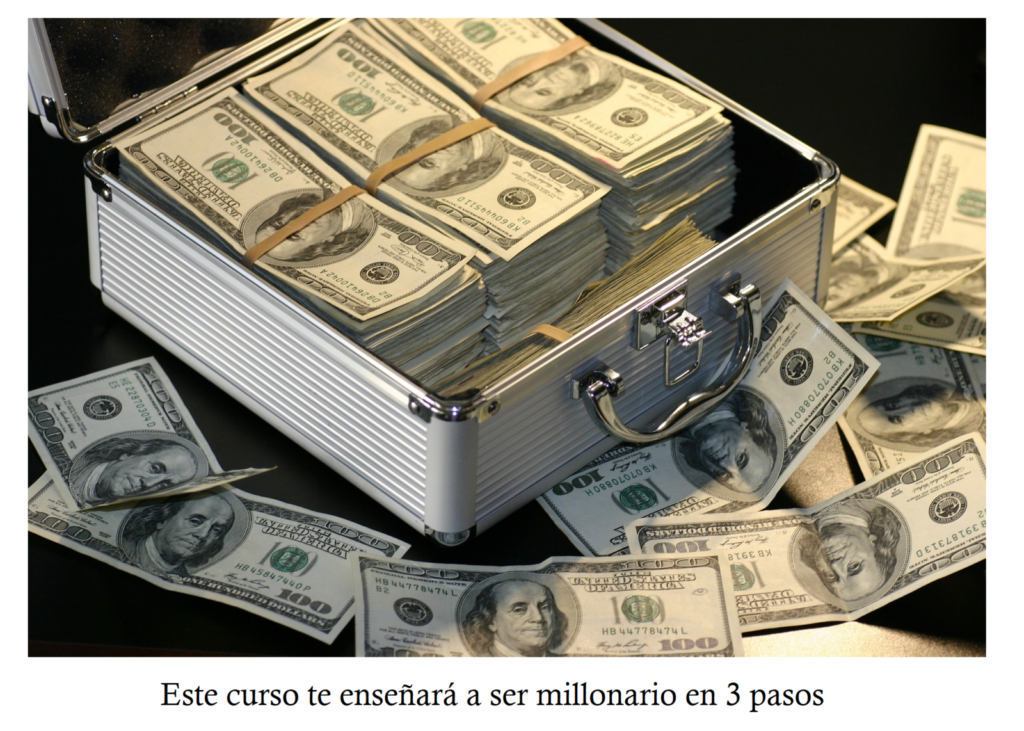
You are reading a newspaper and something in the layout itself is already telling you what to think before a single sentence has entered your mind. The columns are even, the font is authoritative, the byline carries the name of an institution older than most democracies. None of this is neutral. All of it is argument dressed as architecture.
The professional norm of journalistic objectivity did not emerge from some ancient covenant between the press and the public. Michael Schudson’s 1978 work Discovering the News traces the genealogy of this norm with surgical precision, locating its consolidation not in the Enlightenment or even in the penny press era of the 1830s, but in a very specific postwar anxiety — the anxiety of institutions that had watched propaganda industrialize itself across Europe and needed, urgently, a language of procedural innocence. Objectivity became that language. It was a defensive posture that, over decades, acquired the status of a natural law.
What makes this particularly consequential is that the norm arrived precisely as American news organizations were becoming large-scale commercial enterprises with significant ties to advertising markets and corporate ownership. The claim to neutrality was not made in spite of these pressures — it was made because of them. A news product that positioned itself as objective could serve audiences across the political spectrum without alienating advertisers, could occupy the center without defending it, could report on power without appearing to challenge it. The appearance of detachment was itself a business strategy, and the business strategy was itself a form of politics.
Schudson identified something that most journalism schools still have not fully absorbed: that objectivity is not a method but a rhetoric. It is a way of presenting information that signals trustworthiness through form rather than content — through the passive voice, the anonymous source, the balanced quote, the careful attribution of every claim to someone else. The journalist who writes “officials say” has not abdicated judgment; they have hidden it inside a grammatical construction. The reader is invited to conclude that no one is responsible for the assertion, which is precisely the conclusion that protects the outlet from accountability while keeping the assertion in circulation.
This is where the ideological function becomes most visible. Sociologist Herbert Gans, in his 1979 study Deciding What’s News, documented how American newsrooms systematically centered the perspectives of government officials, institutional spokespersons, and credentialed experts while treating the perspectives of ordinary citizens, dissidents, or minority communities as requiring special justification. The norms of balance and objectivity, in practice, meant that two sides were constructed from within an existing consensus — which meant that the consensus itself was never subjected to the same scrutiny as the positions at its edges. The Overton window was not just a political phenomenon; it was a newsroom production schedule.
There is a specific violence in this arrangement that gets almost no attention. When a community watches its reality rendered invisible by a procedure that calls itself neutral, the injury is not merely epistemic. It produces a particular kind of disorientation — the sense that one is failing to perceive correctly, that one’s experience is somehow unempirical, that the burden of proof for one’s own suffering is higher than the standard applied to the claims of those in power. The objectivity norm, in these cases, functions less like a journalistic standard and more like a gaslight with a press credential.
The emergence of digital platforms did not shatter this norm — it exposed how hollow it had always been. When the economic infrastructure that had sustained large institutional newsrooms began to collapse after 2008, and when the advertising revenue that funded the performance of neutrality migrated toward attention-maximizing algorithms, what was left behind was not a corrupted version of a previously honorable standard. It was the standard itself, finally stripped of the material conditions that had allowed it to pass as something other than what it was.
Engagement Metrics as Editorial Policy
You open a news website and the first thing the page does, before you have read a single word, is measure you. It records how long your cursor hovered, whether your eyes — tracked through probabilistic scroll-depth models — paused on a headline about a missing child or a collapsing government. The architecture of the page is not designed to inform you. It is designed to learn what kind of fear, or rage, or prurient curiosity makes you stay one second longer than you otherwise would.
After 2012, when Facebook restructured its News Feed algorithm to prioritize what it called “meaningful engagement,” the word meaningful quietly underwent a corporate redefinition. It no longer described journalistic significance or civic relevance. It described emotional friction — the comment left in anger, the share triggered by indignation, the click motivated by something that felt almost like dread. What the algorithm rewarded, newsrooms began to produce. This was not conspiracy. It was adaptation, the same way organisms adapt to changed environments, except the environment here was engineered by a handful of product managers in Menlo Park who had no training in editorial judgment and no accountability to the public record.
The sociologist Nikki Usher, in her ethnographic study of newsroom culture published in 2014, documented how metrics dashboards — screens displaying real-time click data — had been physically installed in open-plan newsrooms, visible to every reporter at their desk. The psychological effect was immediate and largely unremarked upon: writers began to internalize the numbers before they began to write. The dashboard was not a tool for reflection. It was a scoreboard, and it produced the behavioral changes scoreboards always produce — short-term optimization at the expense of the thing being measured.
What got lost in this transaction was the editor as a figure of institutional resistance. The traditional editor, at their least romantic, functioned as a friction mechanism — someone who could say that a story mattered even if no one was clicking on it yet, someone whose judgment was not a calculation but a bet on what the public needed to understand. When engagement data became the primary editorial signal, that friction disappeared. Not because editors were fired, though many were, but because the criteria for their decisions had been silently replaced. An editor overruling a viral story on grounds of proportion or context now looked like someone fighting a river with their hands.
The concept of “dwell time” crystallized this transformation with particular cruelty. Dwell time — the duration a user spends on a page before leaving — became a proxy for quality, a metric platforms used to distinguish substantive content from shallow bait. But dwell time measures psychological captivity, not comprehension. A reader paralyzed by an anxious headline, re-reading the same alarming paragraph, generates excellent dwell time. A reader who absorbs a well-constructed explanation and moves forward with new understanding generates the same number. The algorithm cannot tell the difference, and so neither, eventually, could the newsrooms feeding it.
By 2016, internal research at major digital publishers including BuzzFeed and The Atlantic showed that content optimized for sharing consistently outperformed content optimized for accuracy in raw distribution numbers, with ratios in some categories exceeding four to one. The implication was structural, not moral: individual journalists making individual ethical choices could not overcome a system in which the unit of currency was emotional activation rather than informational value. Anxiety, it turned out, was not a byproduct of the new media economy. It was the raw material, harvested from readers and fed back to them in refined form, producing more anxiety, which produced more clicks, which confirmed the editorial model that had generated the content in the first place.
The reader who feels perpetually unmoored, who consumes news obsessively without feeling more informed, is not failing to use the medium correctly.
The Manufactured Urgency of the Infinite Feed
You open your phone before you are fully conscious. The screen lights your face in the dark and before your eyes have adjusted to the room, you already know something terrible has happened somewhere. Not because you have read anything yet — but because the feed was designed to make you feel that way the moment you arrive.
Guy Debord argued in 1967, in “The Society of the Spectacle,” that modern life had replaced direct experience with its representation — that what we live is not events but images of events, arranged to produce the sensation of participation without its substance. What he could not have predicted was the specific engineering of that condition into a scrollable, personalized, algorithmically curated torrent that refreshes every three seconds and never, structurally speaking, allows silence. The spectacle he described was broadcast, passive, one-directional. What replaced it is interactive in the most cynical sense: it demands your constant micro-responses — your taps, your pauses, your lingering seconds on a headline — and uses those responses to calibrate the next dose.
The psychological grammar of breaking news culture is distinct from ordinary alarming information. Research published in the journal “Health Psychology” in 2017, tracking responses to media coverage of the Boston Marathon bombing, found that consuming six or more hours of news coverage per day about that single event produced higher rates of acute stress than being physically present in the vicinity of the attack. The mechanism is not empathy and not information-processing — it is the specific architecture of the unresolved. Breaking news, by definition, cannot conclude. It is formatted as perpetual threshold: something is happening, the situation is developing, stay with us. The reader is placed at the edge of a door that never opens, held in a neurological holding pattern that the nervous system interprets not as waiting but as threat.
Infinite scroll, introduced as a design feature by Aza Raskin in 2006 and publicly regretted by him in 2018, removed the natural pagination that had previously given readers an unconscious signal to stop. The bottom of a page is a breath. Its absence is not neutral — it eliminates the moment of voluntary re-engagement, the small decision that restored agency. Without it, consumption becomes less a series of choices and more a single unbroken gesture, indistinguishable metabolically from the compulsive behaviors studied in addiction medicine.
What this produces at the collective level is something more insidious than distraction. It manufactures a population maintained in low-grade crisis — alert enough to feel that the world is unstable, but too saturated to form the specific attention required to understand why. Byung-Chul Han, in “The Burnout Society” published in 2010, described the contemporary subject not as repressed but as exhausted — not a subject forbidden from acting but one so overwhelmed with stimulation that the capacity for sustained thought collapses inward. The news industry did not cause this condition, but it has become one of its primary delivery systems, and the financial logic of digital advertising — which rewards time-on-site, scroll depth, and return visits above all other metrics — makes it structurally impossible to correct from within.
There is a particular cruelty in how this system treats political events. A massacre, an election fraud allegation, a famine, a corporate scandal — each arrives in the feed at the same velocity, the same visual weight, the same notification chime. The equalizing pressure of the format strips each event of the contextual gravity it requires to be understood, not because journalists are careless but because the structure of delivery has already decided that no story can demand more attention than the one immediately beneath it. The slot is more powerful than the content placed inside it.
The reader trained on this architecture eventually loses not just concentration but something harder to name — the felt sense that events have weight proportional to their actual consequence in the world.
A vision curated by a filmmaker, not an algorithm
In this video I explain our vision
When Entertainment Colonizes the Factual

You are watching the news and something feels slightly off, the way a room feels wrong when a piece of furniture has been moved two inches and nobody tells you which piece.
The anchor’s cadence has a rhythm that belongs to a different kind of broadcast entirely, and the graphics behind her pulse with the same chromatic urgency as a trailer for a film about the end of the world. Nothing she says is technically false. That is the precise nature of the trap.
Neil Postman identified the structural mechanism in 1985 with a clarity that the subsequent four decades have only sharpened into embarrassment. In Amusing Ourselves to Death, he argued that television did not simply change what people knew, it changed what knowing meant. The medium imposed its own epistemology: fragmented, image-dependent, hostile to sustained argument, structurally incapable of tolerating complexity that could not be rendered visually compelling within ninety seconds. His target was not tabloid television, not sensationalism in the obvious sense. His target was the serious news broadcast, the one that believed itself exempt. The danger, he wrote, was not that television would show us lies but that it would make truth entertaining, and that we would lose the ability to distinguish between the cognitive act of understanding and the emotional act of being stimulated.
What Postman could not fully anticipate was the institutional machinery that would choose, deliberately and with full awareness of the consequences, to accelerate precisely this dissolution when the economics of attention became measurable in real time. When editors could see, by the second, which headline was generating engagement and which was not, the old professional heuristic of news judgment — an imperfect thing, ideologically compromised, never neutral, but still oriented toward some residual idea of civic necessity — was replaced by a feedback loop that had no civic orientation whatsoever. It was not that journalists became lazy or cynical, though some did. It was that the infrastructure of their work was rewired to reward the neurological response rather than the informational one. The click, the share, the watch-time metric: none of these measure comprehension. They measure arousal.
The figures are not ambiguous. A Reuters Institute Digital News Report from 2023 found that active news avoidance had risen significantly across multiple countries, with many respondents explicitly citing emotional exhaustion and the feeling that news had become performative rather than useful. This is not apathy. It is a rational withdrawal from a system that has trained its audience to experience information as a form of stress without resolution. The audience did not drift toward entertainment passively. They were escorted there by platforms that A/B tested headlines until emotional provocation reliably outperformed factual precision, and by newsrooms that adopted the same logic because the alternative was financial extinction.
What makes this particular historical moment structurally different from earlier periods of sensationalist journalism — the yellow press of Hearst and Pulitzer in the 1890s, the tabloid wars of interwar Britain — is that those earlier systems still operated within a media environment where competing epistemologies existed in parallel. A reader who consumed the New York Journal could also encounter, within the same cultural ecosystem, forms of discourse that modeled different relationships to evidence. The networked media environment does not merely produce entertainment-inflected journalism alongside other kinds. It tends to colonize the cognitive space in which other kinds could be received, because the attention economy functions totalizingly: what wins the metric wins the time, and what wins the time wins the neural habit.
There is a man in a production meeting somewhere right now, looking at a performance dashboard, and he is not asking whether the story is important.
The Reader as Product, the Citizen as Residue
You have clicked on something today that you did not choose. The algorithm chose it for you, surfaced it from a reservoir of your previous hesitations, your half-finished scrolls, your two-second pauses over headlines about disasters in countries you could not locate on a map. The click felt like curiosity. It was, in Shoshana Zuboff‘s precise and damning terminology, a behavioral surplus — raw material extracted from your attention and fed into prediction markets you will never see, never audit, never consent to in any meaningful sense. Zuboff’s 2019 work The Age of Surveillance Capitalism is not primarily a book about privacy. It is a book about ownership: the question of who owns the record of your inner life when that inner life has been rendered legible by the platforms that host it.
What journalism absorbed from this economy was not incidental contamination. It was structural. When newsrooms migrated onto platforms optimized for engagement metrics, they did not simply distribute their journalism through new channels — they submitted their editorial logic to an alien valuation system. A story about municipal water contamination affecting forty thousand people in a mid-sized American city generates less behavioral data of commercial value than a story about a celebrity’s visible distress at an airport. The platform does not punish the former because it is trivial. The platform is indifferent to triviality as a category. It rewards whatever produces the signals — clicks, shares, return visits, emotional escalation — that feed the prediction apparatus. The newsroom that wants to survive learns the grammar of that reward system, and in learning it, begins to write in a language that is not journalism’s.
The reader who emerges from this environment is not simply misinformed. Misinformation implies a correctable error, a gap between what someone believes and what is true. The deeper consequence Zuboff’s framework reveals is the production of a particular kind of subject: someone whose relationship to information has been trained toward reaction rather than comprehension, toward the feeling of being informed rather than the slower, less satisfying work of actually understanding something. By 2018, the Reuters Institute for the Study of Journalism found that news avoidance was rising sharply across Western democracies, not because people lacked access to information but because exposure to the news cycle was producing anxiety without agency — a sense of being perpetually updated and perpetually helpless. That is not a psychological accident. It is the predictable output of a system designed to maximize arousal, not orientation.
What gets lost in this transaction is what political theorists since John Dewey have called the democratic public: a citizenry capable of forming collective judgment on shared problems. Dewey argued in The Public and Its Problems, published in 1927, that democracy’s deepest crisis was not the failure of institutions but the failure of communication — the inability of citizens to recognize their own situation as shared, to see their private troubles as public issues requiring collective response. He wrote this before the television, before the cable news cycle, before the architecture of personalized outrage. He was describing something he sensed in the fragmentation of the industrial press, and what he sensed has since been engineered into precision.
The citizen who survives this system as a residue — the word is not accidental, it names what remains after the valuable behavioral data has been extracted — retains certain appearances of political engagement. They share articles. They have opinions that feel urgent. They experience something that resembles civic passion several times a day, in short bursts, each burst peaking and dissolving before it can accumulate into durable understanding or collective action. The engagement was real. The extraction was real. What did not survive the transaction was the connective tissue between knowing something and being able to act on it alongside other people who know the same thing.
Complicity and the Voluntary Attention Economy
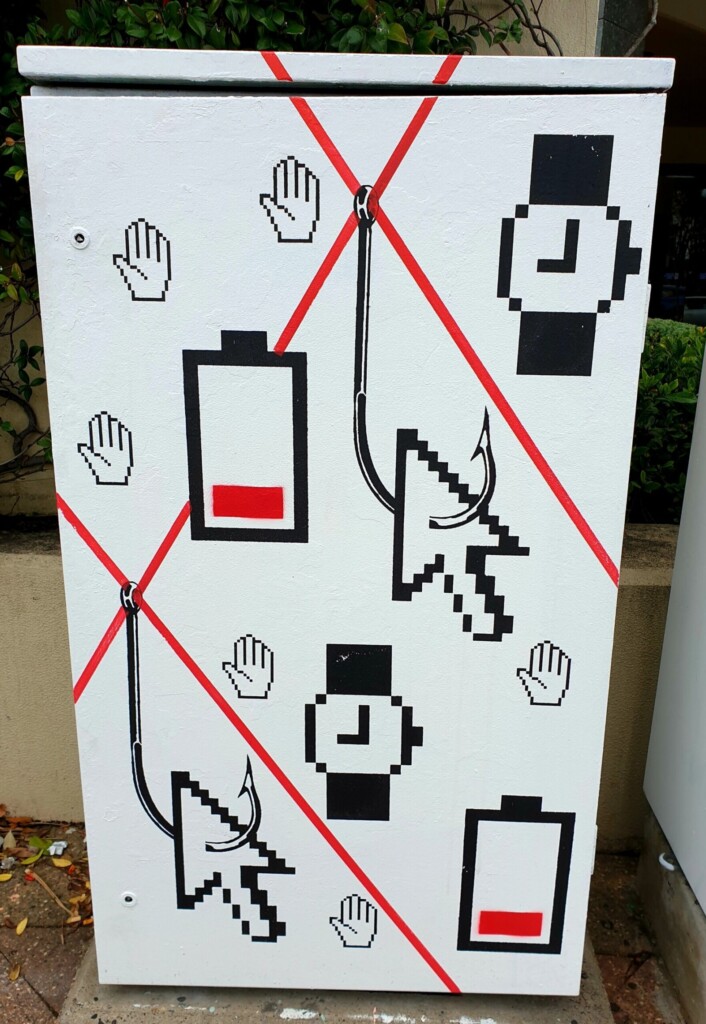
You have read the study. You know the headline was designed to trigger you before you finished the first sentence, and you clicked it anyway, and then you shared it because the outrage was real even if the framing was dishonest, and the distinction felt too small to matter in the moment.
That gap between knowing and doing is not a personal failure. It is the operating condition of contemporary media consumption, and it reveals something that media literacy campaigns have spent two decades refusing to admit: critical consciousness does not automatically translate into altered behavior, especially when the environment has been engineered to exploit the lag between recognition and reaction. Daniel Kahneman’s work on the two systems of cognition, formalized in Thinking, Fast and Slow in 2011, established that the brain’s rapid associative processing precedes deliberate analysis by enough milliseconds to make the click instinctive before the judgment arrives. Platform designers understood this before most readers did. The architecture of infinite scroll, the red notification badge, the ambiguous headline that withholds just enough to feel like an unanswered question — these are not accidents of interface design but the deliberate application of behavioral economics to attention capture. The result is an environment where media literacy functions less as a shield and more as a retrospective commentary on what you have already done.
What makes this particularly difficult to examine honestly is that media literacy has become its own form of cultural capital. The person who can identify a dark pattern, name a cognitive bias, or explain the business model of outrage journalism gains a kind of social credibility that does not require any change in their browsing behavior. Knowing the mechanism becomes a substitute for resisting it. Pierre Bourdieu observed in Distinction, published in 1979, that cultural knowledge functions as a marker of class position precisely because it can be deployed symbolically without requiring the sacrifice it seems to represent. Understanding how you are manipulated has, in the attention economy, become a way of feeling superior to manipulation while remaining fully subject to it.
There is also the question of what individuals are actually being asked to resist. The suggestion that readers bear primary responsibility for the degradation of journalism places a structural problem onto personal conscience in a way that conveniently exonerates the platforms that monetize the behavior and the investors who demanded growth metrics incompatible with slow, expensive, accountable reporting. When the Pew Research Center documented in 2020 that digital advertising revenue had become the overwhelming dependency of most online news outlets, what that number described was not an audience choosing entertainment over information — it described a financial architecture in which the incentive to inform and the incentive to capture attention had been decisively separated, with capital flowing toward the latter. Asking readers to click more responsibly inside that system is approximately as productive as asking workers to unionize by purchasing ethically.
The real discomfort is not that readers are complicit, but that complicity is not the most accurate word for what is happening. Complicity implies a conscious agreement, a knowing participation in something acknowledged as harmful. What the attention economy produces instead is something closer to coercion through normalization: a media environment so thoroughly saturated with stimulation-optimized content that disengagement requires not discipline but a kind of social and informational exile that most people cannot afford practically or psychologically. The reader who limits their news consumption to long-form journalism from subscription outlets is also the reader who is slower, less informed about the immediate conversation, less legible in the social spaces where that conversation happens. The cost of refusal is not just personal — it is relational, and it accrues daily.
What this means for journalism as an institution is that the boundary between information and entertainment was never really a boundary at all, but a pressure gradient, and the pressure has only moved in one direction since the first algorithm learned that fear travels faster than evidence.
📰 Truth, Spectacle & the Media Machine
The line between informing and entertaining has never been thinner. As journalism bends to the logic of clicks and algorithms, understanding the cultural and psychological forces that shape the media landscape becomes essential. These articles explore the systems of persuasion, image-making, and public opinion that underpin modern information culture.
Lippmann’s Public Opinion: Analysis
Walter Lippmann‘s landmark work Public Opinion dissected how journalism and mass media construct a ‘pseudo-environment’ that shapes public perception far more than reality itself. His analysis of stereotypes, gatekeeping, and the manufacture of consent remains a foundational text for anyone questioning the neutrality of news. Reading Lippmann today feels less like history and more like a diagnostic manual for the digital age.
GO TO THE SELECTION: Lippmann’s Public Opinion: Analysis
Bernays’s Propaganda: Analysis
Edward Bernays translated the psychological theories of his uncle Sigmund Freud into a ruthless toolkit for shaping public opinion and consumer behavior. His book Propaganda openly celebrated the power of those who manipulate the masses, framing it as a necessary feature of democratic society. Understanding Bernays is indispensable for decoding the blurred boundary between journalism, advertising, and political communication.
GO TO THE SELECTION: Bernays’s Propaganda: Analysis
Boorstin’s The Image: Analysis
Daniel Boorstin's The Image introduced the devastating concept of the ‘pseudo-event’: a happening staged not because it is newsworthy, but because it will be reported. Boorstin argued that modern media had replaced authentic experience with a fabricated spectacle designed purely for consumption, anticipating the clickbait era by decades. His work forces us to ask whether what we call news is ever truly spontaneous or always already a performance.
GO TO THE SELECTION: Boorstin’s The Image: Analysis
Postman’s Amusing Ourselves to Death: Analysis
Neil Postman’s Amusing Ourselves to Death argued that television — and by extension all entertainment-driven media — was fundamentally incompatible with serious public discourse. By transforming every subject, from politics to tragedy, into a form of show business, the media erodes the cognitive habits necessary for genuine democratic participation. Postman’s critique is more urgent than ever in an age where virality determines which truths get told.
GO TO THE SELECTION: Postman’s Amusing Ourselves to Death: Analysis
Explore the Cinema That Questions the World
If these themes have sharpened your gaze, Indiecinema’s streaming catalog offers a wealth of independent documentaries and films that probe the machinery of media, power, and representation with the depth that mainstream channels rarely allow. Discover filmmakers who refuse to reduce reality to a headline — stream on Indiecinema today.
👉 EXPLORE THE CATALOG: Watch Indie Films in Streaming
A vision curated by a filmmaker, not an algorithm
In this video I explain our vision

