
The Intimate Architecture of Shared Space
You are standing in the kitchen at 7 a.m. when you notice it: a single dirty mug left on the counter, directly above the dishwasher, as if placed there by someone who understood the concept of cleaning in theory but rejected its practice on principle. It is not the mug that unsettles you. It is the slow, creeping realization that you are sharing a life — not a friendship, not a choice, but the raw biological intimacy of morning breath and bathroom schedules — with someone whose internal logic of the world is entirely foreign to yours, and that no lease agreement prepared you for this particular species of exposure.

Shared apartments are not neutral containers. The moment two strangers are placed inside one, the architecture begins to speak a language neither of them wrote. The kitchen becomes a border zone, the hallway a corridor of avoidance, the living room a stage on which two incompatible performances are scheduled simultaneously. Robert Gifford, in his 1987 work on environmental psychology, documented how spatial arrangements in shared dwellings directly shape the psychological states of their inhabitants — not gradually, but immediately, from the first night. The placement of furniture, the allocation of shelf space, the unspoken assignment of which burner belongs to whom: these are not trivial domestic negotiations. They are the physical grammar of a social contract that was never signed.
What makes this grammar so difficult to read is that it arrives pre-loaded. The apartment existed before you. Someone else lived inside it, arranged it, left invisible residue in the walls and the layout. Urban housing stock in cities like Paris, New York, or Tokyo was largely designed in eras when domestic space encoded specific social hierarchies — a main bedroom for the head of household, a smaller room for the subordinate, a kitchen positioned to be invisible from the living area. Haussmann’s renovation of Paris between 1853 and 1870 did not merely reshape boulevards; it standardized a bourgeois floor plan that assumed a particular distribution of bodies, roles, and authorities. When two strangers of equal legal standing move into that plan today, they inherit its assumptions without knowing it. The apartment tells them who should dominate, who should defer, and it tells them in the language of square footage and natural light.
Erving Goffman spent most of his career studying how people manage the boundary between the performance of self and the raw, unguarded backstage of existence. In 1959, “The Presentation of Self in Everyday Life” argued that social life is a continuous act of impression management — but the argument assumed you could retreat. The backstage was yours. Cohabitation with a stranger collapses that retreat. There is no backstage when someone else is always potentially in the wings. Every habit you thought was private — the way you eat standing over the sink, the sound you make when you open the refrigerator at midnight, the particular chaos of your desk — becomes a performance whether you intend it to be or not. The apartment does not permit you to be unwitnessed.
This is where the psychology of cohabitation becomes something more than a study in inconvenience. The stranger’s mug on the counter is not just an irritant; it is evidence that another consciousness is actively organizing reality according to rules you were never given access to. And the more unsettling truth, the one you feel in your chest before you have the language for it, is that your own mug, left somewhere equally inexplicable by their logic, is doing exactly the same thing to them. You are each other’s intrusion into a private order that neither of you fully understands yet — and the apartment is the only mediator available, indifferent, structural, and already decided.
Privacy as a Modern Invention, Not a Natural Right
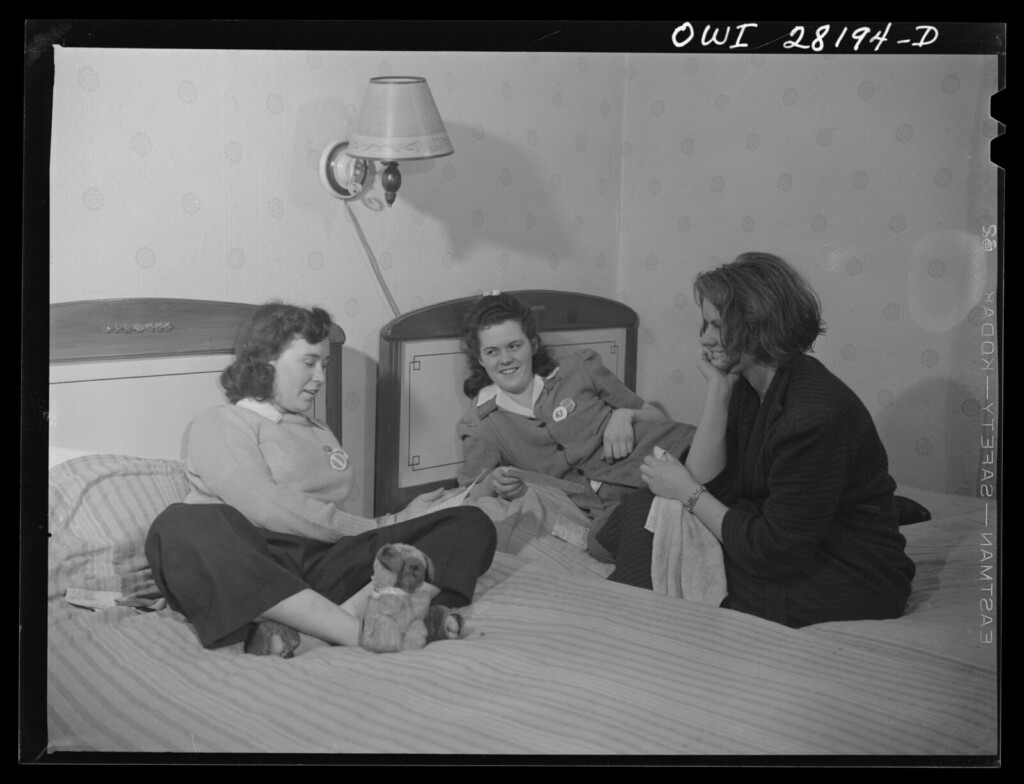
You share a bathroom with someone whose name you barely knew three weeks ago, and the discomfort you feel — that low, persistent friction when their toothbrush appears on what you silently designated as your side of the shelf — is not a signal from your nervous system that something has gone wrong. It is a signal from the eighteenth century.
The idea that intimate domestic space belongs to one person, or one nuclear unit, sealed off from the eyes and bodies of strangers, is not a discovery about human nature. It is a construction, assembled over roughly three hundred years of economic reorganization, architectural redesign, and what Norbert Elias, in his 1939 work “The Civilizing Process,” described as the slow interiorization of shame. Elias traced how behaviors that were once performed openly and collectively — eating, defecating, sleeping, dying — were progressively pushed behind closed doors and laden with embarrassment. This was not because human beings became more sensitive. It was because a particular class of Europeans needed a physical language to distinguish themselves from those below them, and the private room became that language.
Medieval households, including wealthy ones, were radically porous by the standards we have inherited. The great hall of a nobleman’s estate was a shared dormitory, a dining room, a court of justice, and a place of commerce simultaneously. Servants slept at the foot of the master’s bed not out of degradation but out of structural normalcy. Walls did not divide people; they divided the building from the weather. The architecture of separation — the corridor, the private bedroom, the locked study — arrived with the bourgeoisie, and it arrived precisely because the bourgeoisie needed a spatial grammar of interiority to assert a self that was bounded, coherent, and ownable. Privacy and private property were not two separate ideas. They were the same idea expressed in two different registers.
By the mid-nineteenth century, the domestic floor plan of European middle-class homes had reorganized itself around a new moral logic: servants accessed rooms through separate staircases, guests were received in designated parlors, bodily functions were confined to rooms that did not communicate directly with the social spaces of the house. Philippe Ariès, in his collaborative work with Georges Duby on the history of private life, documented how this architectural segregation was not merely aesthetic — it was the material enforcement of a psychological fiction, the fiction that the self had a clean inside that could be protected from contamination by proximity to others. What changed was not human psychology but the social cost of being seen.
The person who grew up in a studio apartment with four family members does not carry the same threshold of spatial violation as someone raised in a suburban house where each child had a separate room. This is not a personality difference. It is a class inheritance, encoded in the body before any roommate agreement was ever signed. When two people with different spatial biographies share a kitchen, they are not simply navigating personal quirks — they are colliding in slow motion between two different historical experiences of what a body is entitled to claim.
What makes this collision so difficult to name is that the discomfort arrives wrapped in the language of psychology rather than history. You feel anxious, invaded, disrespected — and those feelings are real. But the framework you use to interpret them, the one that tells you there is a correct and natural amount of space a person requires to feel whole, was handed to you by an economic arrangement that needed you to believe exactly that in order to keep functioning.

The Psychological Machinery of Projection and Territorial Anxiety
You notice it first in the kitchen. Someone has moved your mug — not thrown it away, not broken it, just shifted it two inches to the left — and something in your chest contracts with a force entirely disproportionate to the event. You stand there for a moment, mug in hand, feeling a low, unreasonable fury that you will spend the next hour trying to explain to yourself as something else entirely.
What just happened has almost nothing to do with the mug. D.W. Winnicott, working in London through the mid-twentieth century on the emotional lives of infants, described how the developing self learns to tolerate the existence of other minds by first projecting onto them what is intolerable in itself — aggression, neediness, the terrifying fact of dependence. The mechanism never goes away. It simply migrates into the furniture of adult life, and shared living is one of the more efficient surfaces it finds. Your roommate, a person you selected from a list of strangers based on income verification and a brief conversation, has become something the psychoanalytic tradition would call an object — not in the dismissive sense, but in the precise technical sense of a relational target onto which interior states are cast and then perceived as originating externally. When they leave dishes in the sink, you are not only registering a practical inconvenience. You are reading, without knowing it, a projection of your own ambivalence about care, reciprocity, and whether you deserve to live in order.
The territorial dimension runs even deeper than the affective one. The sociologist Erving Goffman argued in The Presentation of Self in Everyday Life, published in 1959, that social existence is structured around a constant negotiation between front-stage performance and backstage retreat — and that what makes backstage spaces psychologically essential is precisely their impermeability to the audience. Your home was supposed to be that backstage. The place where the performance collapses, where you stop managing impressions, where the self is permitted to be incoherent. A roommate destroys this geography structurally, not through malice. Their mere presence means the performance never fully ends. The bathroom becomes an anteroom, the living room a stage. And because you cannot stop performing without disappearing into your own bedroom and closing the door, the boundary enforcement that follows — the unspoken rules about noise, schedules, guests, the temperature of common spaces — is not petty domestic politics. It is a form of psychological survival, the attempt to reconstruct a backstage within a shared set.
What makes this machinery so difficult to see is that its output looks like interpersonal conflict when its source is entirely internal. Splitting — the binary categorization of experience into idealized or demonized poles, which Melanie Klein traced to the earliest phases of infant cognition — resurfaces with astonishing regularity in shared housing. The roommate who seemed refreshingly laid-back during the viewing becomes, within three weeks, irresponsible. The one who seemed organized reveals themselves as controlling. These are not simply revised first impressions. They are the collapse of an idealization that was never based on knowledge of the other person but on the temporary relief of finding someone who did not yet threaten anything. The moment they do — the moment real cohabitation begins and actual difference becomes visible — the binary kicks in, and what was projected benevolence becomes projected menace.
There is a specific anguish in discovering that you are the difficult one, that the friction you attributed to their habits can be mapped just as precisely onto yours, that the person standing on the other side of the uneasy silence in the hallway is running the exact same internal accusation in reverse, each of you a perfect mirror for the other’s least examined self.
Cohabitation as Socioeconomic Compulsion Dressed as Choice

You told your friends you were looking for a roommate because you liked the energy of a shared space, the spontaneity of another life running parallel to yours. That sentence cost you nothing to say and it cost you everything to believe, because the rent in your city had increased by forty-three percent in the decade following 2008 and your real wages had not moved in any direction that mattered.
The financial crisis did not merely destroy wealth. It redistributed the conditions under which ordinary people could imagine their futures, and one of the most durable consequences was the permanent restructuring of urban rental markets. Between 2010 and 2023, median rent in major American cities roughly doubled in real terms — New York, San Francisco, Austin, and Miami each becoming laboratories for what economists politely call “affordability stress” and what tenants experience as the slow removal of options. The Harvard Joint Center for Housing Studies reported in 2022 that half of all renters in the United States were cost-burdened, meaning they spent more than thirty percent of their income on housing. Half. That is not a marginal demographic phenomenon. That is the baseline condition of adult life for an entire generation.
What ideology does in this context is not propaganda in the crude sense. It operates more subtly, converting structural compulsion into the language of preference. The sociologist Pierre Bourdieu spent much of his career tracing exactly this mechanism — the way economic necessity becomes internalized as taste, as personal style, as something you chose rather than something that was chosen for you. His concept of the habitus, developed across “Distinction” in 1979 and “The Logic of Practice” in 1990, describes how class conditions are worn on the body and expressed through the apparent freedoms of everyday life. The person who cannot afford to live alone does not experience their situation as deprivation, precisely because the culture has already prepared a narrative in which shared living is modern, flexible, socially rich. The cage has been painted to look like a patio.
The generational wealth gap sharpens this into something closer to cruelty. Research by the Federal Reserve has consistently shown that millennials, the generation most concentrated in urban rental markets during the post-crisis period, accumulated wealth at roughly half the rate of baby boomers at comparable ages. The absence of inherited property, the weight of student debt, and the entry into a labor market structurally hostile to wage growth created a specific form of economic precarity that had no name because naming it would have required admitting that the social contract had been quietly renegotiated without consent. Shared housing became not a phase but a permanent condition for millions of people well into their thirties, and the wellness industry, the media, and the real estate sector all converged on rebranding this condition as intentional community.
What makes this particularly difficult to resist is that the experience of cohabitation can genuinely contain moments of warmth, connection, and mutual recognition. The ideology is not lying when it points to those moments. It is lying about their cause. It takes what people manage to build inside constraint and presents it as evidence that the constraint was freedom all along. This is the deepest function of the lifestyle framing: not to deny suffering, but to attribute its occasional relief to the architecture of the cage rather than to the resilience of the people trapped inside it. The roommate who becomes your closest friend did not become so because the housing market curated your compatibility. They became so because humans are extraordinarily adaptive, and adaptation in conditions of scarcity has always been mistaken by those who benefit from that scarcity for proof that the scarcity was never a problem.
The Ethics of Proximity Without Consent to Intimacy

You hear them before you see them — the particular drag of feet across cheap laminate at 6:47 in the morning, the throat-clearing that carries through walls thin enough to be a courtesy rather than a boundary. You did not agree to know this person’s body. You agreed to split utilities.
What makes this arrangement morally strange is not the inconvenience. Inconvenience is negotiable. What neither party signed for is the involuntary intimacy that accumulates in the spaces between the lease clauses — the knowledge that arrives unbidden, the exposure that was never offered and cannot be refused. Emmanuel Levinas spent much of his philosophical career arguing that ethical obligation begins the moment another face appears before us, that proximity itself generates responsibility. But he was imagining a chosen encounter. He was not imagining the moment you learn, through a wall you cannot thicken, that your roommate cries on Tuesday evenings, and you must decide, alone, what to do with that.
The sociologist Erving Goffman, writing in 1959 in “The Presentation of Self in Everyday Life,” described how human beings manage their identities through the careful control of what audiences witness. He called this impression management — the performance of a coherent self for a specific social stage. Shared housing destroys the backstage entirely. There is no region left where the performance can be dropped, no offstage where the costume comes off and the actor breathes. Instead, two people find themselves trapped in each other’s backstages simultaneously, watching the unscripted version of someone they never cast.
What follows is not necessarily hostility. It is something more insidious: surveillance without intention. You notice things you would prefer not to notice. You track patterns — when they eat, when they sleep, when someone stays the night — not because you are controlling but because you cannot stop your nervous system from mapping a shared territory. This involuntary attention produces a secondary guilt, a shame about knowing what was never disclosed, and that guilt curdles into resentment directed not at yourself but at the person whose life keeps leaking into your awareness.
The loneliness that emerges here is categorically unlike solitude. Solitude is a room of one's own — Virginia Woolf understood it as a condition of creative and psychological sovereignty, available only to those with money and a door that locks from the inside. What shared housing produces instead is a crowded isolation: the presence of another person who is simultaneously too close and entirely unreachable, someone whose life grazes yours without ever touching it at a depth that would make the grazing meaningful. You are not alone enough to rest and not connected enough to belong.
This is where the ethics become genuinely difficult, because the standard moral vocabulary fails. You cannot speak of violation when nothing was taken by force. You cannot speak of consent when the framework was economic from the beginning — two people who needed a roof more than they needed privacy, which is to say most people, most of the time. In the United States alone, surveys conducted in 2022 found that nearly one in three adults between the ages of eighteen and thirty-four lives with a non-romantic, non-familial roommate, a figure that has climbed steadily since the 2008 financial collapse. The architecture of financial pressure has quietly abolished the idea that privacy is a default condition rather than a luxury purchased by those who can afford to live alone.
What no one articulates, because the language does not quite exist yet, is that proximity without chosen intimacy creates a specific moral debt — not owed to each other, but accumulated inside each person separately, a register of everything witnessed that will never be acknowledged, every Tuesday of crying that passes in silence because the alternative is a conversation neither party has the right to begin.
A vision curated by a filmmaker, not an algorithm
In this video I explain our vision
🏠 When Walls Don't Separate: Life Between Strangers
Living with a stranger means navigating unwritten rules, invisible boundaries, and unexpected intimacies. The psychology of shared space reveals much about how humans negotiate identity, conflict, and belonging. These articles explore the many dimensions of cohabitation, community, and the inner life shaped by proximity to others.
Cohabitation and conflict: psychology of communal living
Cohabitation is rarely just a practical arrangement — it is a living laboratory of human psychology, where personal habits, emotional histories, and unspoken expectations collide daily. This article examines how communal living generates both profound conflict and unexpected solidarity, tracing the psychological mechanisms that govern shared domestic space. Understanding these dynamics is essential for anyone who has ever had to share a kitchen, a bathroom, or a silence with a stranger.
GO TO THE SELECTION: Cohabitation and conflict: psychology of communal living
Urban Loneliness in the Contemporary World
Urban life has made loneliness one of the defining paradoxes of modernity: we live stacked upon one another and yet feel profoundly isolated. This article explores how the density of contemporary cities can paradoxically deepen feelings of disconnection, even within shared households. The tension between physical proximity and emotional distance is at the heart of the roommate experience.
GO TO THE SELECTION: Urban Loneliness in the Contemporary World
Feeling lonely in a relationship and the loneliness of couples
Feeling alone while technically sharing your life with another person is one of the most disorienting emotional conditions a human can experience. This article investigates the psychology of relational loneliness, the kind that flourishes not in empty rooms but in the silences between two people living side by side. It offers a rich framework for understanding how cohabitation can become a theatre of invisible distance.
GO TO THE SELECTION: Feeling lonely in a relationship and the loneliness of couples
Community and Belonging: The Need to Be Part of Something
The need to feel part of something larger than oneself is a fundamental human drive, and shared living spaces are one of the most immediate arenas in which this need is tested. This article explores how community and belonging are forged — or broken — through everyday acts of coexistence, negotiation, and mutual recognition. Living with a roommate is, at its core, a daily experiment in the possibility of belonging.
GO TO THE SELECTION: Community and Belonging: The Need to Be Part of Something
Discover the Cinema of Intimacy and Human Space
The tensions, silences, and unexpected connections of shared life have inspired some of the most powerful works in independent cinema. On Indiecinema, you can explore films that look unflinchingly at the way humans inhabit space together — stories of strangers becoming witnesses to each other’s lives. Stream independent cinema that dares to find drama in the everyday geometry of cohabitation.
👉 EXPLORE THE CATALOG: Watch Indie Films in Streaming
A vision curated by a filmmaker, not an algorithm
In this video I explain our vision

