
The Girl Before the Threshold
You are seven years old and someone has oiled your hair so thoroughly that the smell of coconut has become indistinguishable from the smell of ceremony itself. The courtyard is full of people who love you, which is how you know this is important, and the priest’s hands move over the brass lamp with a familiarity that suggests the gods have been watching this particular motion for longer than any of the adults around you have been alive. A yellow thread is tied at your wrist. Flowers are pressed into your hair. You do not fully understand what is being promised, only that the promising is enormous, and that your mother is crying in the particular way that means she is proud rather than sad, though you are not yet old enough to know the difference is sometimes a story adults tell themselves.

The tali placed around your neck is not a marriage necklace in the way you will later understand marriage. It belongs to the deity of this temple, which means it belongs to the temple, which means it belongs to a structure of obligation and sacred economy so old that no one in the courtyard can remember its origin. What you are becoming has a name — devadasi, servant of god, wife of god, woman of god — and the name carries within it a complexity that the ritual does not explain and the adults around you have largely ceased to examine. You are being consecrated. You are being protected, in a sense. You are also being given away, in a sense. These two things are not contradictory in the world that built this threshold. That is the first thing the world outside this courtyard will never quite believe.
The devadasi tradition is not an aberration in Indian cultural history. It is a load-bearing wall. Inscriptions from the tenth and eleventh centuries in Tamil Nadu and Karnataka record land grants, gold allocations, and hereditary rights assigned to women attached to major temple complexes — the Brihadeeswara at Thanjavur, consecrated under the Chola emperor Rajaraja I around 1010 CE, employed hundreds of such women, whose labor was liturgical, artistic, economic, and social simultaneously. These were not marginal figures. They were the custodians of Bharatanatyam, of Carnatic vocal tradition, of ritual forms that structured the daily and seasonal life of the temple as an institution. The anthropologist Frederique Apffel Marglin, in her 1985 study of the devadasis of the Jagannath temple at Puri, documented how these women occupied a specific ritual category — auspicious, fertile, permanently married to a deity who could never die and therefore could never make them widows — that gave them a social standing unavailable to ordinary wives, who became inauspicious the moment their husbands preceded them in death.
To encounter that fact without the reflex of Western liberal discomfort requires a deliberate stillness most readers will find uncomfortable. The category of the permanently auspicious woman, the nitya sumangali, was not a euphemism. It was a theological position with material consequences. These women inherited property. They signed documents. In certain periods and regions they held more legal and economic autonomy than the high-caste wives who were nominally their social superiors. The sociologist Amrit Srinivasan, writing in 1985 in the journal Economic and Political Weekly, argued that the colonial and nationalist reformers who campaigned to abolish the devadasi system were not simply liberating oppressed women. They were, in part, dismantling a competing female economy that threatened the consolidation of bourgeois domesticity as the only acceptable form of womanhood.
Back in the courtyard, the lamp is still burning. The priest’s invocation continues. You do not know yet what Srinivasan will write, what the Madras Legislative Assembly will pass in 1947, what will be taken from women who look like you under the legal language of protection.
Thirsty
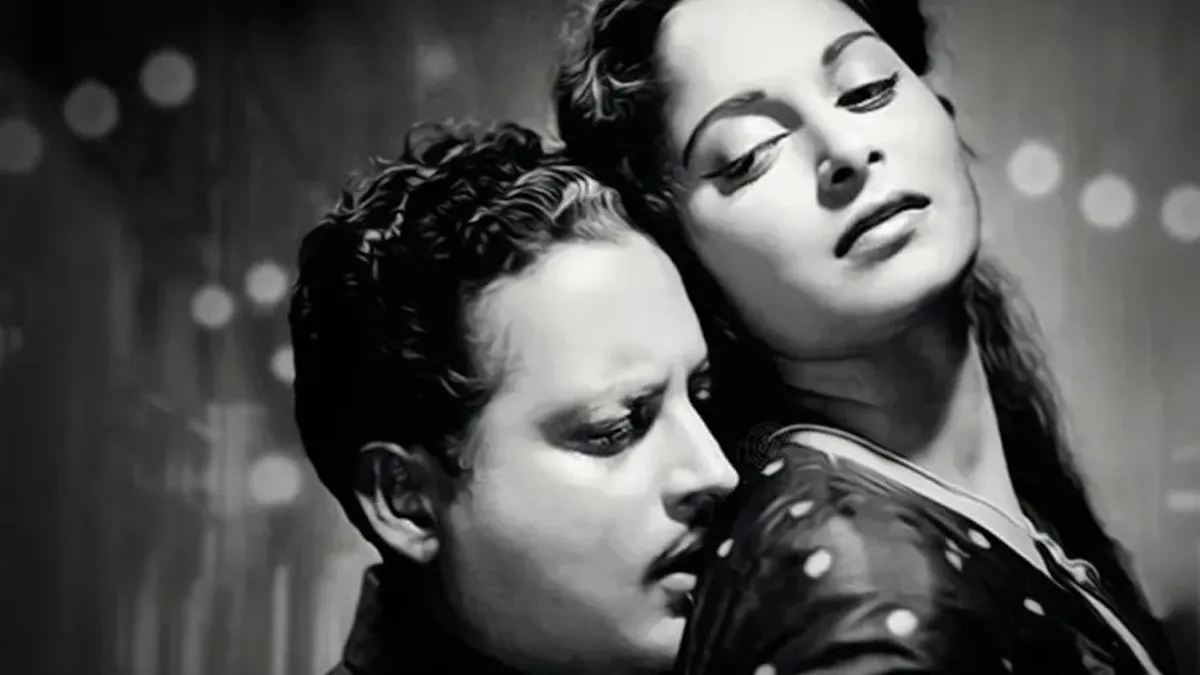
Drama, musical, by Guru Dutt, India, 1957
Thirsty is the heartbreaking story of Vijay, a young poet living in Calcutta who dreams of giving voice to the suffering and injustice of the world through his verses. Idealistic and sensitive, Vijay clashes with a society that despises his art because it is not profitable and does not cater to the tastes of the public. His brothers consider him a failure, the woman he loves leaves him for a marriage of convenience, and his poems are ignored by publishers. Only Gulabo, a prostitute with a pure heart, recognizes the beauty and truth of his words. When a misunderstanding leads everyone to believe Vijay is dead, his name and poetry suddenly become famous, exposing the hypocrisy of those who had previously rejected him.
Watching Thirsty means immersing oneself in a work that goes beyond melodrama, blending poetry, music, and imagery into a profound reflection on the human soul and the value of art. Guru Dutt, director and protagonist, creates one of the most intense and poetic films in world cinema, where black-and-white cinematography, expressive framing, and evocative lyrics produce an atmosphere of poignant melancholy. It is a film about the misunderstanding of the artist, pure love, and society’s hypocrisy, but also a universal critique of materialism and opportunism. Even today, Thirsty moves and provokes thought because it sincerely tells the story of the need to remain true to oneself in a world that measures people’s worth solely by their success.
LANGUAGE: Hindi
SUBTITLES: English, Spanish, French, German, Portuguese
What the Temple Owned Before the State Did
You walk into a Chola-period temple and what you are looking at is not a building. It is a balance sheet.
The granite corridors of Thanjavur’s Brihadeeswara temple, consecrated in 1010 CE under Rajaraja I, housed not only the divine but an entire administrative civilization. Copper plate inscriptions and stone epigraphs from across the Tamil-speaking south — catalogued painstakingly by epigraphers like T.V. Mahalingam in his work on land grants and temple records — document a world in which devadasis were not marginal figures but named institutional stakeholders. They received land. They held title. Their endowments were recorded alongside those of Brahmin priests and royal donors in the same stone registers that governed water rights, harvest shares, and lamp-oil allocations. To remove them from this context and read them through a later moral lens is to perform a kind of deliberate historical illiteracy.
Medieval South Indian temples operated as what the economic historian Burton Stein, in his 1980 work Peasant State and Society in Medieval South India, described as nucleated redistributive centers — nodes around which agrarian surplus flowed, was ritually consecrated, and then redistributed outward. Land grants made to temples by Chola kings and local chieftains were not philanthropy. They were fiscal instruments, ensuring that a portion of agricultural production remained in permanent, non-alienable institutional custody. Devadasis were embedded in this structure not as ornaments but as functional participants whose ritual labor — the singing, the dancing, the maintenance of perpetual liturgical presence — was understood as the economic equivalent of irrigation work or priestly recitation. It kept the divine engine running, which kept the land productive, which kept the state solvent. The theology and the accounting were inseparable.
The inscriptional record is specific enough to be uncomfortable for those who prefer the myth of passive victimhood. A 10th-century Tamil inscription from the Nataraja temple at Chidambaram lists by name the devadasis attached to various shrines, alongside the plots of land assigned to each. These were not token gifts. They were productive agricultural holdings, yielding rice, coconut, and betel, the proceeds of which sustained the individual woman’s livelihood and her professional obligations simultaneously. The Sanskrit term used in some of these records — dasi marga, the path of the servant — carried none of the degradation later colonial translators would load onto it. It described a vocation with legal standing.
What the temple owned before the modern state existed was, in a real sense, the capacity to constitute personhood through institutional belonging. A devadasi’s identity was not incidental to the temple; it was produced by it, verified by it, and protected — within the constraints of caste hierarchy — by its economic weight. Philosopher Charles Taylor, writing in Sources of the Self in 1989, argued that identity requires a moral framework within which one can orient oneself, a sense of where one stands. For women whose families had maintained this association across generations, the temple was precisely that framework: spatial, legal, cosmological. To call this oppression without qualification is not analysis. It is anachronism wearing the costume of compassion.
The Chola administrative apparatus, between the 9th and 13th centuries, produced one of the densest concentrations of temple-related epigraphy in the ancient world. Over thirty thousand inscriptions survive, and a significant proportion concern the management of temple property, including the rights and duties attached to devadasi lineages. This density is not incidental. It reflects a society in which the temple was the most stable institutional actor — more durable than dynasties, more liquid than agrarian contracts, more legible than oral custom. The women whose names appear in those stones were not footnotes to a religious tradition. They were load-bearing columns in an economy that the modern nation-state would spend two centuries dismantling without ever quite understanding what it had replaced.

Sacred Labor and the Grammar of Touch
You have learned, at some point in your life, that certain kinds of touching are sacred and certain kinds are transactional, and that the difference between them is obvious, self-evident, written into the nature of things. You have never questioned this because the categories arrived before you did.
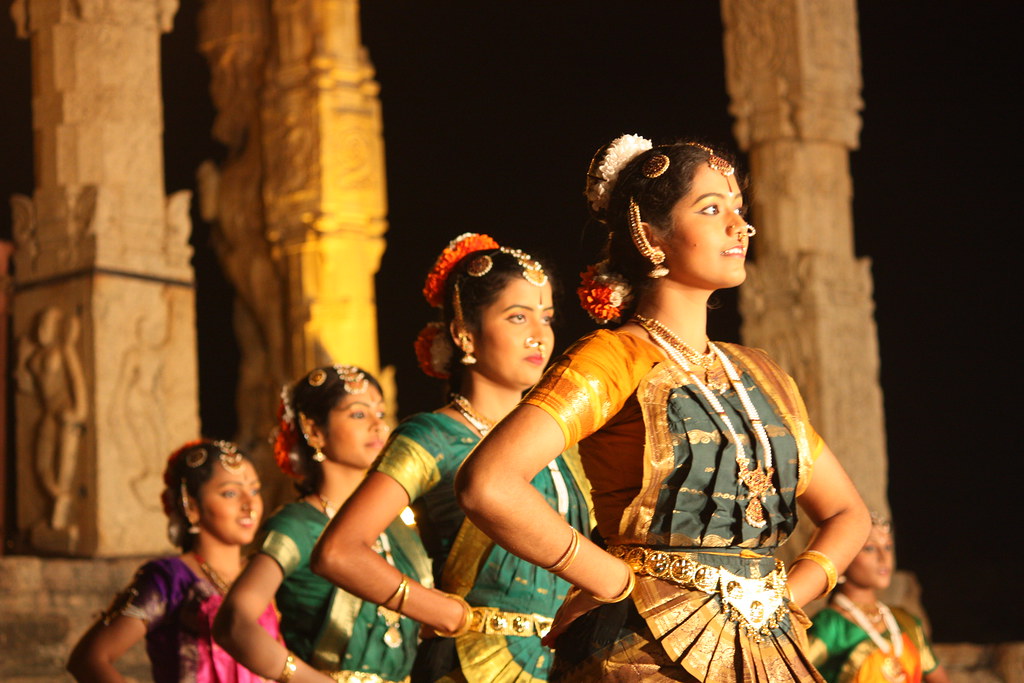
The devadasi system operated precisely at the collapse of that distinction. A woman dedicated to a temple deity in South India, particularly within the Sadir performance tradition that flowered under Vijayanagara patronage between the fourteenth and sixteenth centuries, existed inside a paradox that the society surrounding her could not afford to resolve. Her body was consecrated — genuinely, not metaphorically — to the deity, which meant it was, in theological terms, already occupied. And yet the same body was expected to perform, to serve, to entertain, to be available in ways that no consecrated object in any other category of sacred life was expected to be. A temple idol is not asked to dance for a visiting dignitary and then sleep in his chambers. The devadasi was.
Lata Mani’s 1989 work Contentious Traditions examined the legislative debates surrounding sati in colonial India and exposed something that reaches far beyond the specific practice she analyzed: that colonial reformers were not, in fact, trying to save women. They were using women’s bodies as the terrain on which to fight a battle about what counted as authentic Hindu tradition. The woman herself was largely absent from that debate as a subject. She was its object, its evidence, its rhetorical battlefield. When this same analytical lens is turned toward the anti-nautch campaigns of the 1890s and the eventual Madras Devadasis Prevention of Dedication Act of 1947, the same structure appears with almost disturbing clarity. The question being debated was never whether devadasis were suffering. The question was whether the practice was truly ancient, truly religious, truly Indian — or a degeneration, a corruption, something that could be excised without amputating the body of tradition itself.
What the reformers required, and what the colonial administration provided the vocabulary for, was a clean line between sacred and profane that the devadasi institution had never actually contained. The British legal imagination, shaped by Protestant assumptions about the separation of spiritual and bodily life, encountered a system in which a woman’s erotic availability and her ritual function were not in contradiction but were structurally fused. Census data from 1891 recorded approximately 60,000 women identified as devadasis across Madras Presidency alone. The administrative impulse was immediate: classify, legislate, rescue. The category of prostitution was imported wholesale from Victorian urban sociology and applied to a system whose internal logic it could not accommodate and did not try to.
What collapsed in that administrative act was not a corrupt practice but an entire grammar — a way of organizing the relationship between labor, the body, divinity, and social reproduction that had no equivalent in European institutional life. The devadasi’s training began in childhood and encompassed Bharatanatyam, Carnatic music, Sanskrit and Tamil literary traditions, and the complex ritual choreography of temple worship. By the time the British were framing her as a prostitute in need of rescue, she was often the most educated woman in her district. Not educated in the colonial sense, not educated toward employment or domesticity, but educated into a form of knowledge that the state had already decided did not count.
The social surplus she generated — her performances at weddings, her presence at royal courts, the cultural transmission she carried across generations — was extracted without being named as labor, which is the oldest mechanism by which certain kinds of work are made invisible. When work is sacred, it cannot be compensated. When it cannot be compensated, the person performing it has no claim. The theological frame that elevated her also made her economically illegible, which was not an accident of doctrine but its function.
The Reformer's Gaze and What It Erased
You are sitting in a government building in Madras, the year is 1934, and a man with a pen is deciding what you are. Not what you do, not what you know, not what lineage of embodied knowledge you carry in your hands and hips and breath — what you are. That distinction, between being and doing, is precisely what the Devadasi Abolition Act collapsed, and the collapse was not accidental.
The reformers who pushed that legislation through the Madras Legislative Council were not cynics. Many were genuinely horrified by what they witnessed: women passed between patrons, economically dependent on temple authorities, sometimes initiated into the system as children with no ability to refuse. Muthulakshmi Reddi, the physician and activist who became the first woman legislator in British India and campaigned most visibly for abolition, believed she was liberating the oppressed. Her framework, shaped by a Western medical education and the moral architecture of Protestant-inflected nationalism, gave her no vocabulary for what she was simultaneously destroying. She could see the exploitation. She could not see the epistemology.
What the devadasi tradition had preserved, across centuries and across regional variants from the Devadasis of Tamil Nadu to the Maharis of Odisha, was a complete knowledge system: Bharatanatyam in one lineage, Odissi in another, both transmitted through direct embodied pedagogy that existed entirely outside the Sanskrit textual monopoly held by male Brahmin scholars. The women who carried this knowledge were not supplementary to the religious ritual — they were, in many temples, the living archive of it. The abhinaya they practiced, the precise grammar of gesture and facial expression theorized in Bharata Muni’s Natyashastra around the second century CE, had survived not through manuscripts but through bodies. When the system was criminalized, that transmission chain was severed in a single legislative stroke.
What filled the vacuum is its own indictment. Within decades of abolition, Bharatanatyam was revived — but revived by upper-caste women trained in academies, performing on proscenium stages for nationalist audiences who needed a respectable classical art to represent Indian civilization to the colonial gaze. Rukmini Devi Arundale, a Brahmin theosophist, essentially laundered the form. She cleaned it, elevated it, extracted it from the social body that had sustained it, and repackaged it as high culture. The devadasi lineages were erased from the attribution. The knowledge was kept; the knowers were discarded.
This is not a rhetorical point about cultural theft, though it is that. It is a point about how reform movements systematically require a simplified victim in order to function. The category “prostitute” was not a neutral description applied to devadasis — it was a translation, and translations always serve the translator. Historians like Amrit Srinivasan, writing in the 1980s, documented how the very associations that made the devadasi socially powerful — her ritual autonomy, her non-marital status, her economic independence from a single husband — were precisely the qualities that Victorian moral taxonomy could only read as deviance. A woman who was not someone’s wife and was intimate with multiple men had, in that framework, exactly one available category.
What is harder to see, and what the reform narrative absolutely required invisibility about, is that the caste Hindu women who championed abolition were simultaneously advancing their own social mobility. Entering public life, claiming artistic practice, asserting national cultural identity — all of this required that the space previously occupied by devadasis be vacated and sanitized first. Liberation movements have a tendency to need someone to be liberated from themselves, someone whose erasure creates the ground on which the liberators can stand and speak about freedom.
The devadasi who lost her ritual role in 1934 did not enter a world that recognized her complexity. She entered poverty, stigma, and erasure — dispossessed of her vocation, her status, and the tradition she had embodied.
Bharatanatyam’s Laundered Origins
You have probably seen a photograph of a woman mid-performance, arms angled in precise geometry, fingers articulating a language older than the stage she stands on, and you assumed, reasonably, that what you were watching was ancient. That assumption was manufactured in the 1930s, in Madras, by a woman who had never been trained in the tradition she decided to save.
Rukmini Devi Arundale was a Brahmin theosophist who encountered Anna Pavlova on a ship in 1928 and returned to India with a conviction that her country needed a respectable classical dance form. What she found was sadir, a performance tradition practiced exclusively by devadasis and transmitted through the Isai Vellalar community — hereditary musicians and dancers whose bodies, knowledge, and social identity were fused with the art across generations. What she created, by 1936 at Kalakshetra in Adyar, was something designed to look identical to what she had taken while making the original carriers invisible.
The operation required two simultaneous moves. The first was aesthetic laundering: Rukmini Devi stripped sadir of its erotic registers, its abhinaya sequences involving longing and consummation, its frankly embodied devotional vocabulary. She elevated what she called its spiritual dimension and suppressed what she coded as its sensual contamination. The second move was sociological: by opening the practice to Brahmin and upper-caste girls through institutional training at Kalakshetra, she transferred cultural ownership at the precise moment when the Anti-Nautch movement and the 1947 Madras Devadasi Prevention of Dedication Act had already criminalized the social structure that had sustained the art. The devadasi was made illegal just as her knowledge was being repackaged for respectable consumption.
Scholars like Avanthi Meduri and Davesh Soneji have documented with considerable precision how this laundering worked through documentation itself. Bharatanatyam — the name was effectively a twentieth-century coinage, attributed to the musicologist E. Krishna Iyer who used it in the early 1930s to grant the form a Sanskritic legitimacy it had never historically claimed — arrived in the cultural record already dressed in the costume of antiquity. The Natyashastra, Bharata Muni’s treatise dated anywhere between 200 BCE and 200 CE, was retroactively invoked as the form’s originating text, lending it a scriptural authority that conveniently bypassed the specific women and specific communities who had actually kept it alive in temples and courts through the nineteenth century.
The Isai Vellalar community did not disappear quietly. Some of its members, women like Balasaraswati — who began performing publicly in the 1930s and would eventually receive the Sangita Natak Akademi award in 1955 and perform at major international festivals through the 1960s and 1970s — continued to insist on the difference between what she had inherited and what Kalakshetra was producing. Balasaraswati gave lectures that were barely disguised acts of resistance, arguing that Bharatanatyam’s abhinaya could not be separated from its erotic-devotional core without destroying the actual intelligence of the form. She was acknowledged, celebrated in certain circles, and structurally ignored. Her lineage did not found institutions. It did not receive state infrastructure. It trained its own children in the knowledge, but the knowledge was not the kind that survives without the social body that carries it.
What consolidates here is a pattern that has nothing culturally specific about it: the extraction of a form from the community that generated it, its sanitation according to the dominant caste’s anxiety about the body, and its reinsertion into the culture as a purified national heritage. India did not invent this mechanism. But what makes the Bharatanatyam case particularly instructive is the speed and completeness with which the erasure was aestheticized — made beautiful, made educational, made the thing that upper-caste families send their daughters to learn on Saturday mornings as a mark of civilized upbringing, entirely unaware that the woman who first taught their great-grandmothers the mudras was being prevented by law from practicing the same gestures in the context that had always given them meaning.
A vision curated by a filmmaker, not an algorithm
In this video I explain our vision
A Woman in a Government File

She fills out the form with the careful handwriting of someone who learned letters late, pressing the pen harder than necessary, as if the paper might resist her. The box asking for “occupation” sits blank for a long time. She is not a prostitute, though the policeman who directed her here used that word without hesitation. She is not unemployed, though she has no employer. She is not a widow, though she has never had a husband. The welfare officer across the desk watches her pause and offers, with practiced neutrality, “just write ‘other.'”
What happened between the sacred and the administrative was not a revolution but a reclassification. The Madras Devadasi (Prevention of Dedication) Act passed in 1947, just weeks before independence, and its language is a masterwork of categorical violence. The word “dedication” — borrowed from temple idiom, carrying centuries of ritual weight — is placed inside a legal sentence that transforms it into a crime. The woman performing the dedication is a victim. The institution performing it is an offence. The woman who has already been dedicated, who has already lived decades inside this role, becomes, retroactively, a problem to be solved.
Veena Das, writing in Critical Events in 1995, observed that the Indian state after partition developed an extraordinary habit of absorbing women’s bodies into national narratives of rescue — and that the act of rescue itself required the woman to become passive, legible, classifiable. The devadasi did not fit this structure cleanly, which made her more dangerous to the bureaucratic imagination than the woman who fit a recognized category of victimhood. She had property rights in some regions, earned income, held social standing within her community, and in many cases had refused offers of conventional marriage. Her autonomy was not liberation by the state’s definition; it was a symptom of a system the state needed to abolish. So the rescue had to come first, and the question of whether she wanted it could come later — or not at all.
The irony that cuts deepest is that the rehabilitation programs designed for devadasis in the 1950s and 1960s often pushed them toward exactly the economic vulnerability the tradition had, for all its contradictions, insulated them against. Livelihoods built around performance, ritual knowledge, and community ties were declared illegitimate. What replaced them, when anything replaced them at all, were sewing cooperatives and domestic service training. The embodied inheritance of a tradition that had produced the foundations of Bharatanatyam — formalized as a concert art in the 1930s by upper-caste reformers who extracted its technique while expelling its practitioners — was now to be exchanged for the ability to hem a sari blouse.
Kalpana Ram’s ethnographic work among low-caste women in Tamil Nadu traces the specific texture of this dispossession: the way that legal protection and economic ruin arrived together, dressed in the same language of uplift. A woman who had been a devadasi held a complex position within a local sacred geography — she was attached to a deity, to a temple, to a community’s ritual calendar. When the attachment was severed by law, she did not become free. She became detached, which is not the same thing. The grid of belonging that had organized her existence disappeared, and no equivalent structure was built to replace it.
What the government file could not process was the category of person who had been neither enslaved nor free in any sense the modern state recognized. The form’s boxes assumed a biography that moved from family to marriage to household to death. The devadasi’s biography moved through entirely different coordinates — sacred attachment, artistic transmission, economic autonomy, ritual function — and when these were stripped away by legal decree, the form could only record their absence as a kind of blankness, the “other” that the welfare officer had offered so helpfully, meaning: we do not have language for what you were, and we have decided that matters less than processing what you will become.
Deviance Manufactured on Schedule
You are sitting in a government archive in Madras, sometime in the 1890s, turning pages of a register that did not exist thirty years earlier. The column heading reads “prostitute.” The women listed beneath it had not changed. The column had.
The category preceded the crime. This is the detail that colonial legal history tends to bury under procedural language, but Judith Walkowitz made it irreversible in her 1980 study Prostitution and Victorian Society, demonstrating that the Contagious Diseases Acts of 1864, 1866, and 1869 in Britain did not regulate an existing population of professional prostitutes so much as manufacture one. By compelling any woman accused of solicitation to submit to medical examination and register with police, the law took fluid, situational, economically desperate behavior and crystallized it into a fixed identity. The woman who sold sex once during a famine year and the woman who had done so for a decade became the same administrative entity. The register made them equivalent. What the register made equivalent, the culture subsequently treated as natural.
The parallel application to India was not accidental. The Cantonment Acts and the subsequent Criminal Tribes Act of 1871 operated on identical logic, creating hereditary categories of criminality that fused economic behavior with biological destiny. Devadasis, once they entered missionary and reformist discourse after roughly 1860, were not being described as they were — they were being sorted into a taxonomy that had been imported wholesale from Victorian moral geography. The missionary reports circulating through organizations like the Zenana Mission and the Church Missionary Society were not ethnographic documents. They were classification engines, and what they classified as deviance was, in every case, the absence of the bourgeois Christian household as the organizing unit of female life.
There is something worth sitting with in the speed of the transformation. The Madras Devadasi Prevention of Dedication Act was not passed until 1947, but the discursive work — the work of making dedication self-evidently monstrous — was essentially complete by 1910. That is roughly fifty years to dismantle a ceremonial and economic system that had organized temple life across South India for at least a millennium. The mechanism was not violence, primarily, though violence was present. The mechanism was the gradual withdrawal of legitimacy from every institution that gave devadasi practice meaning: the matrilineal property rights that sustained it, the temple endowments that funded it, the aesthetic tradition that elevated it. Once those supports were legally and economically severed, what remained looked, to an outside observer and eventually to the women themselves, exactly like prostitution.
Erving Goffman’s work on stigma from 1963 identifies the process by which a spoiled identity becomes retrospectively total — the stigmatized person is not simply assigned a new label but finds their entire past reinterpreted through it. This is precisely what happened to devadasi genealogies in colonial court records. Women who had held land, litigated property disputes, and been recognized as ritual specialists in temple inscriptions dating back to the Chola period were reclassified, in the same courts, as members of a prostitute caste. The legal fiction became the historical record. The historical record became common knowledge.
What makes this particular manufacturing process so durable is that it enrolled its subjects. The nationalist reform movement, which genuinely believed it was liberating women from exploitation, required devadasis to narrate themselves as victims in order to access the protections being offered. Some were victims. Some were not. The reform framework had no grammatical structure for the distinction. A woman who experienced dedication as coercion and a woman who experienced it as vocation were required to produce the same confession, because the law being written had already decided which of the two existed.
The confession became the only available language, and once a language is the only one available, it becomes very difficult to remember that it was ever chosen.
The Art That Survived Without Its Body
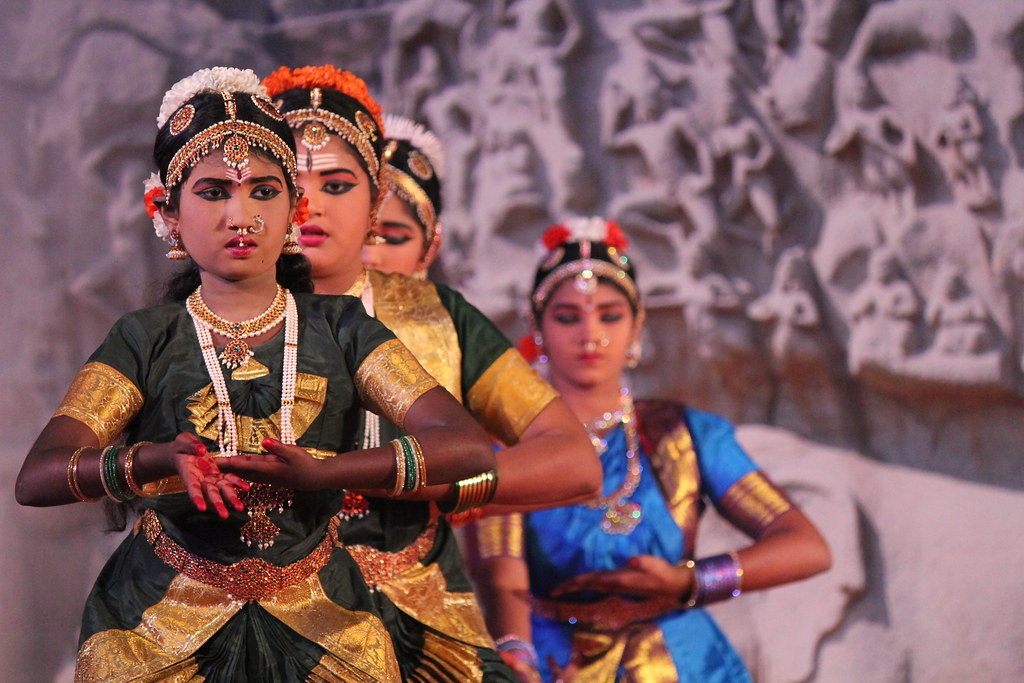
You have learned the mudra. Your teacher corrected your wrist angle for three years until the gesture looked right, felt right, carried the weight of something older than your own body. What no one told you — what perhaps no one living fully knows — is that the gesture was once inseparable from a specific breath, a specific hour before dawn, a specific deity’s gaze. The knowledge transferred. The container did not.
What Bharatanatyam carries today is the residue of a system that was simultaneously astronomical, physiological, theological, and erotic in the precise sense that eros once meant: a force that binds the human to the cosmic. The devadasi tradition was not a performance art with spiritual decorations added afterward. It was a liturgical technology, and the body of the practitioner was the instrument calibrated over years of initiation to function within a temple’s ritual ecology. When Rukmini Devi Arundale brought this form to the proscenium stage in 1935, she did not simply change the venue. She extracted the instrument from the ecology and asked it to produce the same music in a concert hall.
The loss is not sentimental. It is epistemological. What gets severed when a knowledge system loses its original practitioners is not merely context but the very mechanism by which the knowledge corrects itself over time. A devadasi who misread a raga’s seasonal prescription would have been corrected by the ritual calendar itself, by the monsoon that arrived or did not, by the deity’s silence. These feedback loops were not mysticism; they were the distributed cognitive system within which the art existed as a living practice rather than a fixed repertoire. When ethnomusicologist Amanda Weidman documented the recording industry’s codification of Carnatic music in the early twentieth century, she found that the act of recording did not preserve a tradition so much as freeze one moment of it and declare that moment canonical, eliminating the variation and improvisation that had been the tradition’s actual life.
The body that generated this knowledge was also a body that was coerced, constrained, and in many documented cases exploited by temple economies and colonial tax structures simultaneously. This is not a contradiction that allows easy resolution. The fact that a woman’s confinement produced knowledge of extraordinary sophistication does not redeem the confinement, but neither does the injustice of the confinement make the knowledge less real or less precise. What it does is make inheritance morally complex in a way that no nationalist reclamation project has been willing to hold honestly. The 1947 consolidation of Bharatanatyam as India’s classical dance form required the art to be simultaneously elevated and cleansed, which meant praising the form while erasing the women who developed it, a gesture that reproduces the original logic of devadasi erasure rather than dismantling it.
There is a specific kind of loss that occurs not when knowledge disappears but when it is preserved so selectively that the preservation becomes its own distortion. The ragas associated with specific ritual hours, the mudras tied to particular theological narratives that are no longer taught, the relationship between eye movement and internal visualization that older practitioners described and younger ones perform without — these absences do not announce themselves. The dance looks complete. It is designed to look complete. Its incompleteness lives in the gap between the gesture and the state the gesture was designed to induce, a gap that has been filled with aesthetic appreciation, national pride, and competitive examination, all of which are ways of not noticing what is missing.
What survives is beautiful and real. What was lost does not haunt it obviously. It haunts it in the precision that exceeds explanation, in the moments when a dancer’s body does something her training cannot fully account for, brushing against a knowledge that was almost entirely burned away before she was born.
🕌 Sacred Bodies, Devotion, and the Soul of India
The history of the Devadasi is inseparable from the spiritual, artistic, and social fabric of Indian civilization. To fully understand it, one must explore the philosophical and religious currents that shaped the subcontinent’s relationship with the body, the sacred, and the feminine.
Karma in Indian and Buddhist Philosophy
The concept of karma is central to understanding how Indian society assigned roles, duties, and destinies to individuals across lifetimes. For Devadasis, whose lives were often framed within a cosmic logic of service and spiritual merit, karma provided both justification and a metaphysical context for their sacred vocation. Exploring karma reveals how Indian culture wove together ethics, cosmology, and social structure into a unified vision of existence.
GO TO THE SELECTION: Karma in Indian and Buddhist Philosophy
Swami Vivekananda: Life and Works
Swami Vivekananda was among the first to bring Indian spiritual culture to the Western world, articulating the depth of Vedantic philosophy and the complexity of Hindu religious life. His thought helps contextualize how sacred traditions — including those involving temple arts and ritual service — were interpreted and defended in the face of colonial critique. Understanding Vivekananda is essential for grasping how modern India negotiated its own spiritual identity.
GO TO THE SELECTION: Swami Vivekananda: Life and Works
Rabindranath Tagore: Life and Works
Rabindranath Tagore explored the intersection of spirituality, art, and womanhood in Indian culture with extraordinary sensitivity and intellectual depth. His work sheds light on the cultural environment in which the Devadasi tradition was both celebrated and contested, particularly as colonial modernity reshaped traditional artistic and religious practices. Tagore’s vision of the sacred feminine offers a poetic counterpoint to the more sociological readings of the Devadasi’s role.
GO TO THE SELECTION: Rabindranath Tagore: Life and Works
Sri Aurobindo: Life and Works
Sri Aurobindo developed a profound synthesis of Indian spirituality, political thought, and evolutionary philosophy that transformed how the subcontinent understood its own heritage. His reflections on the body as a vessel of the divine, and on Indian culture as a living spiritual force, offer a compelling framework for understanding the sacred dimensions of the Devadasi tradition. Aurobindo’s work invites readers to see Indian culture not as static custom but as a dynamic, evolving dialogue between matter and spirit.
GO TO THE SELECTION: Sri Aurobindo: Life and Works
Discover the Sacred and the Human on Indiecinema
If these explorations of devotion, culture, and the sacred feminine have moved you, Indiecinema is the streaming platform where independent cinema gives voice to the stories the mainstream forgets. Discover documentary and fiction films that travel deep into the spiritual and cultural landscapes of the world, far from the noise of the ordinary.
👉 EXPLORE THE CATALOG: Watch Indie Films in Streaming
A vision curated by a filmmaker, not an algorithm
In this video I explain our vision

