
The Body as Site of Captivity
You wake before the alarm, before the light, before any thought has had time to form — and already your body has an opinion. It is not pain exactly, not yet, though pain is coming. It is something prior to pain: a wrongness distributed across every surface, a humming insistence that begins in the marrow and radiates outward until the skin itself feels like a badly fitted garment. You have not done anything. You have simply continued to exist, and existence has registered its complaint.

This is not a metaphor. The body, which philosophy has long treated as the passive substrate of consciousness — the vehicle, the instrument, the house the self inhabits — turns out under certain conditions to be something far more aggressive. It becomes a negotiator with leverage. It becomes the party in the room that holds all the exits. What the Western philosophical tradition from Descartes onward spent considerable energy separating — the thinking subject and the biological machine — collapses here into a single humiliating fact: the machine has preferences, and it will enforce them.
The neuroscience that began to map this enforcement seriously in the 1980s and 1990s revealed something that disrupted centuries of moral intuition in a single decade. When George Koob and Michel Le Moal published their allostatic model of addiction in Neuropsychopharmacology in 2001, they described not a failure of willpower but a hijacking of the brain’s reward circuitry so thorough that the baseline of what feels normal shifts downward permanently. The dopaminergic pathways that evolved to signal survival — food, warmth, proximity to other humans — get conscripted into a different economy entirely, one governed by tolerance and deficit. The body does not want pleasure anymore. It wants the specific chemical that taught it what pleasure was, and it wants it with the tenacity of a creditor who has already been patient far too long.
There is a cruelty in this mechanism that has nothing to do with intention. The body does not punish the person for weakness; it simply applies the logic of adaptation, which is the only logic biology has ever known. Claude Bernard, the nineteenth-century physiologist who first articulated the concept of the milieu intérieur, understood that the organism’s deepest drive is the maintenance of internal equilibrium. What he could not have fully anticipated is that this drive is blind to the source of equilibrium — that if a foreign substance becomes the condition of homeostasis, the body will defend that substance with the same devotion it once gave to oxygen.
This is where the concept of captivity stops being figurative and becomes architectural. A prison functions not through constant active restraint but through the arrangement of space — walls that do not need to chase you because you are already inside them. Dependency restructures the interior landscape of the body in precisely this way. The craving is not an external force pressing inward; it is the new geometry of the interior itself. The self does not struggle against the body from outside; it finds itself already enclosed within a body that has reorganized around a single governing necessity.
Nora Volkow, the director of the National Institute on Drug Abuse whose neuroimaging work through the 2000s documented the prefrontal cortical deficits in addicted individuals, put it in terms that should have changed public discourse permanently but largely did not: the very brain regions responsible for inhibition, for the capacity to say no, are the regions most damaged by the process of addiction. The warden, in other words, dismantles the lock before installing the cell. What remains is a person who experiences their own compulsion as alien — as something happening to them rather than chosen by them — while simultaneously being held entirely responsible for it by a culture that has never been comfortable with the idea that agency can be structurally compromised from the inside.
The Pharmacological Lie of Free Will
You are sitting across from someone who has just told you they could stop anytime they wanted to. They said it with complete conviction — the kind of certainty that belongs to people who have never had their neurology colonized by a foreign chemical and mistaken the occupation for a personal failing.
The architecture of that conviction is exactly what Nora Volkow, director of the National Institute on Drug Abuse, spent decades methodically dismantling. Her neuroimaging research, published across a body of work from the early 2000s onward including her landmark 2004 paper in the New England Journal of Medicine, demonstrated something that Western moral culture had been structurally motivated to ignore: chronic substance exposure does not merely alter mood or behavior, it physically degrades the prefrontal cortex — the region responsible for impulse control, long-term planning, and the neurological substrate of what we casually call willpower. The addict is not choosing weakness. The organ they would need to choose otherwise has been compromised by the very substance they are being told to simply resist.
Dopamine, in its natural function, is a signal of anticipated reward — not pleasure itself, but the neural announcement that pleasure is incoming. What drugs of abuse accomplish, across all pharmacological categories, is a hijacking of this signal at extraordinary amplitudes. Cocaine, for instance, floods the nucleus accumbens with dopamine concentrations up to three times the natural ceiling the brain ever reaches during ordinary experience. The brain responds the way any overtaxed system responds to chronic overload: it downregulates its own receptors. It becomes structurally less capable of registering ordinary satisfaction. What was once the baseline of livable existence now registers as deprivation, because the biochemical goalposts have been moved by the drug’s repeated interference.
This is the mechanism Volkow’s team captured in PET scans that showed dramatically reduced D2 receptor availability in people with cocaine, heroin, and alcohol dependency compared to non-dependent subjects. The brain is not broken from weakness. It has adapted, involuntarily, to a chemical environment it did not design and cannot easily exit. When libertarian philosophers like Robert Nozick built their ethics of self-ownership on the foundational premise that individuals possess sovereign agency over their own choices, they were operating with a conception of the self that neuroscience has since shown to be physiologically contingent rather than universal. Self-ownership requires a self that owns itself coherently — and that coherence depends on prefrontal integrity that dependency actively erodes.
What makes this cultural delusion so durable is that it arrives wearing the costume of dignity. The narrative of choice flatters both the observer and, perversely, sometimes even the person suffering. If addiction is a moral failure, then moral recovery is theoretically available — the story has a redemption arc built in. If addiction is a neurological restructuring, then the arc becomes far more complicated, the timeline extends, and the social systems required to support recovery grow inconveniently expensive and structurally demanding. The lie of free will in this context is not merely philosophical — it is economically useful to a culture that prefers punishment over treatment because punishment is cheaper and confirms existing hierarchies.
In the United States alone, the criminal justice response to substance use disorders consumes an estimated 80 billion dollars annually, while evidence-based treatment reaches fewer than 20 percent of people who meet clinical criteria for a substance use disorder, according to data from the Substance Abuse and Mental Health Services Administration’s 2020 National Survey on Drug Use and Health. These numbers do not reflect a policy that has misunderstood the science. They reflect a policy that has chosen to keep misunderstanding it, because the alternative would require dismantling a moral framework that organizes far more than just drug enforcement — it organizes poverty, productivity, punishment, and the entire social grammar of who deserves help and who deserves consequences.

Prohibition as a Technology of Control

You are handed a pamphlet at a county health fair, and on the cover it says “Fighting Addiction Since 1914,” and somewhere inside your chest something tightens — not from the information, but from the framing, from the implicit assurance that all of this has always been about your welfare.
The Harrison Narcotics Tax Act of 1914 arrived dressed as bureaucracy. It imposed registration requirements and taxes on the distribution of opiates and cocaine, and its architects spoke in the familiar language of public safety. What it actually accomplished was the criminalization of a medical relationship — physicians who prescribed maintenance doses to dependent patients found themselves prosecuted, and within a decade the Supreme Court had confirmed in Webb v. United States that treating addiction as a condition worth managing rather than punishing was itself illegal. The machinery was not built to heal. It was built to classify, and classification is always a political act.
The people most immediately swept into that classification in 1914 were not abstractions. Anti-Chinese sentiment had already spent decades portraying opium as a racial contamination, a foreign contagion spreading through dens where white women supposedly went to be corrupted. Cocaine prohibition carried its own demographic targeting — Southern newspapers had run headlines about “cocaine-crazed Negroes” impervious to bullets, a hysteria so transparently manufactured that the historian David Musto documented it in The American Disease in 1973, tracing how pharmacological panic has functioned as a projection screen for social anxieties that dare not speak their actual object. The drug is never simply the drug. It is the vessel into which a society pours the fears it cannot legislate directly.
By 1971, that vessel had been refilled. Richard Nixon declared a War on Drugs in June of that year, identifying drug abuse as “public enemy number one” and requesting from Congress an emergency allocation that would grow into the machinery of mass incarceration. The language was medical. The architecture was punitive. Federal spending on enforcement dwarfed spending on treatment throughout the following decade, and the scheduling system created by the Controlled Substances Act placed heroin and cannabis in Schedule I — defined as having no accepted medical use and high potential for abuse — alongside no serious scientific review, because the schedule was never meant to be a scientific instrument.
What it was meant to be, John Ehrlichman explained in 1994 — though the admission did not reach wide publication until journalist Dan Baum reported it in Harper’s Magazine in 2016 — was a weapon. Ehrlichman, who had served as Nixon’s domestic policy chief and spent time in federal prison for his role in Watergate, told Baum with a directness that still reads like a door swinging open onto something you suspected but could not prove: the Nixon White House had two enemies, the antiwar left and Black people, and by associating the left with marijuana and Black people with heroin, then criminalizing both heavily, they could disrupt those communities, arrest their leaders, raid their homes, break up their meetings, and vilify them night after night on the evening news. He said, and these are the recorded words: “Did we know we were lying about the drugs? Of course we did.”
The confession is useful not because it reveals a conspiracy that was otherwise invisible, but because it names a mechanism that has always operated in plain sight. Michel Foucault, writing in Discipline and Punish in 1975, described how modern states govern not through spectacular violence but through the production of categories — the delinquent, the deviant, the addict — that render certain populations permanently manageable, permanently suspect, permanently available for intervention. The addict, within this architecture, is never a citizen experiencing a medical condition. The addict is a subject whose disorder authorizes the state’s presence in their body, their home, their bloodstream, their future.
What is almost unbearable to hold is that the people inside those categories frequently internalize the terms of their own classification, arriving at treatment centers already fluent in a language of moral failure that was handed to them by the same political apparatus that ensured their neighborhood had more liquor stores than hospitals.
The Colonial Chemistry of Desire
You are standing in a port city in 1839, watching crates move. Not contraband — licensed cargo, stamped with the seal of the most powerful trading corporation in human history. The British East India Company had by that point spent decades perfecting a triangular logic: grow opium in Bengal, ship it to Canton, extract silver, fund the broader imperial machine. It was not a side operation. It was the architecture.
By the late 1830s, somewhere between two and twelve million Chinese subjects had become dependent on imported opium — estimates vary because empire rarely counts what it deliberately obscures. What is not disputed is the mechanism. The Company subsidized Bengali farmers to cultivate poppy, processed the resin into standardized chests, and flooded Chinese coastal markets at prices engineered to undercut local resistance. When the Qing government attempted prohibition, Britain launched two wars to protect the trade route. The treaties that followed — Nanking in 1842, Tientsin in 1858 — were signed at gunpoint and included provisions ensuring continued opium access. A nation’s addiction was litigated into international law.
What this history dismantles is the foundational myth of the addict as a person who made a catastrophic private choice. The Chinese opium user of the nineteenth century did not fall into weakness through moral deficiency. They were inserted into a dependency that had been engineered upstream, at the level of agricultural policy, shipping logistics, and military enforcement. The body that craved the drug was the endpoint of a supply chain that began in colonial administration. The craving was real, neurological, visceral — and it had been deliberately induced by people who would never meet the person suffering it.
This is not ancient history quarantined by distance. The pharmacological logic of manufactured dependency was refined and exported. When German pharmaceutical company Bayer introduced diacetylmorphine to the commercial market in 1898 under the brand name Heroin, it was marketed explicitly as a non-addictive substitute for morphine — suitable for children’s cough syrup, recommended for respiratory ailments. The word “heroin” came from the German heroisch, heroic, a descriptor of how the drug made patients feel. By the time its dependency profile became undeniable, the distribution infrastructure was already global. Bayer had shipped it to twenty-three countries. The molecule had preceded any honest reckoning with what it did.
What accumulates across these episodes is a pattern in which the production of need precedes the arrival of the person who will be blamed for having it. Michel Foucault’s 1975 work Discipline and Punish described the modern body as a site of inscription — not simply a biological object but a surface on which power writes its instructions. The opium trade literalized this. Power did not merely discipline the body from outside; it entered the bloodstream, rewired the neurochemistry, and then stepped back to call the result a personal failing. The addict was manufactured and then prosecuted for the manufacturing.
Addiction science itself has not been innocent of this displacement. Until the late twentieth century, the dominant clinical framing treated dependence as an index of character — a weakness, a deficiency of will. The Diagnostic and Statistical Manual did not meaningfully distinguish between the neurological mechanics of physical dependency and the moral language of self-destruction. It took decades of neuroimaging research, including the landmark work coming out of the National Institute on Drug Abuse through the 1990s, to formally reframe addiction as a chronic brain disorder — a change in dopaminergic and glutamatergic circuitry that persists long after the substance is removed. The brain, once restructured by sustained chemical exposure, does not simply return to a prior state because the person decides it should. The wanting outlasts the decision to stop wanting.
And still, in courts, in emergency rooms, in the quiet contempt of families watching someone deteriorate, the colonial attribution persists: you did this to yourself.
Shame as the Second Addiction
You are sitting in a waiting room that does not look like a waiting room. It looks like a judgment hall. The plastic chairs are bolted to the floor in a row, the fluorescent light makes everyone’s skin the same color of guilt, and the intake form asks you to describe your substance use history in a box approximately two centimeters wide. You fill it out anyway, in letters so small they are almost secret. The nurse calls your name and does not smile. You have not yet received a single molecule of help, and you already feel like evidence of your own failure.
Gabor Maté spent years working in Vancouver’s Downtown Eastside, one of the most concentrated pockets of hard drug use in North America, and what he documented in his 2008 clinical account was not primarily a pharmacological story. It was an emotional one. The people he treated had not become addicted because a substance hijacked a neutral brain. They had become addicted because their brains had been shaped, years before any drug arrived, by environments of chronic stress, abandonment, and unprocessed pain. The drug was not the beginning of the problem. It was the first solution that actually worked. Maté’s central clinical observation is brutal in its simplicity: the question is never why the addiction, but why the pain. And every institutional response that ignores this question does not treat the condition — it extends it.
Shame operates as a neurological event, not merely a moral feeling. When a person experiences sustained social rejection, the brain’s stress-response systems activate in patterns functionally identical to physical threat. Cortisol floods the system. The prefrontal cortex, which governs impulse regulation and long-term planning, loses executive function under this load. The dopaminergic circuits, already dysregulated in people with addiction histories, become more reactive, not less, under chronic social stress. What this means practically is that the stigma applied to a person using substances does not create distance from compulsive behavior — it creates the precise neurochemical conditions under which compulsive behavior becomes more probable. The social cure is a biological accelerant.
This is not a marginal effect. A 2017 analysis published in Substance Abuse Treatment, Prevention, and Policy found that anticipated stigma was among the strongest predictors of treatment avoidance in opioid-dependent populations, more predictive than cost, geography, or prior negative treatment experiences. People were not staying away from help because help was unavailable. They were staying away because seeking help meant being seen, catalogued, and permanently marked. The shame of the label was a higher immediate cost than the drug itself, because the drug, at minimum, had never looked at them with contempt.
The concept of stigma as social isolation is well-mapped, but what is less examined is how isolation reconstructs the self over time. When a person’s primary social feedback consists of rejection and moral condemnation, the narrative they construct about their own interiority changes. They begin to inhabit the identity the stigma provides. This is not a metaphor. Erving Goffman, in his 1963 study of social identity, described how stigmatized individuals absorb the spoiled identity assigned to them by the dominant social order and begin to manage their lives around it — not resisting it, but organizing around its terms. A person who has been told often enough that they are a junkie, a failure, a waste of public resources, does not become more motivated to disprove it. They become more exhausted, more isolated, and more dependent on the only relationship that has never moralized at them.
That relationship is with the substance itself. The drug does not flinch. It does not record anything. It does not call family services or report to a parole officer or write notes in a file that will follow a person for a decade. It simply delivers what it has always delivered — a temporary dissolution of the unbearable — and the more thoroughly society communicates that the person using it is beyond dignity, the more irreplaceable that delivery becomes.
A vision curated by a filmmaker, not an algorithm
In this video I explain our vision
The Sober World's Investment in the Addict's Guilt

Picture a man at a company Christmas party, drink in hand, watching a former colleague through a glass door — the one who didn’t make it back after rehab, who now works in the mailroom if he works at all. The watching man is not cruel. He raises his glass slightly, a private toast to no one, and feels something warm move through his chest that he will never name out loud. It is not pity, though he will call it that later. It is relief with a face on it.
This is the economy that Émile Durkheim mapped with unsettling precision in The Rules of Sociological Method, published in 1895. Durkheim’s counterintuitive argument was that deviance is not a social malfunction — it is a social service. Crime, transgression, and visible failure do not threaten the moral order; they produce it. A community that cannot point to its transgressors cannot locate its own boundaries. Without the boundary, the interior dissolves. The addict, in this framework, is not a problem the community is failing to solve. The addict is doing structural labor, marking the edge where the acceptable ends. Remove addiction as a legible category of failure, and an entire architecture of collective self-definition trembles.
What makes this more than sociological theory is the specific emotional dividend it pays to ordinary people. Shame, as the sociologist Thomas Scheff argued across decades of work on social bonds, is not merely a private affect — it is the primary mechanism through which social hierarchies maintain themselves without force. When the addict is publicly shamed, every observer absorbs a portion of the transaction. They feel themselves, by contrast, as people who have held on, endured, refused. The addict’s visible collapse is the evidence they needed that their own restraint was worth something. Forty years of neurological research on dopamine tells us that reward can come from comparison as readily as from achievement. The sober world gets a hit.
What this means is that recovery is, in a precise sociological sense, a threat. A person who was addicted and is now functional, lucid, employed, and present disrupts the moral taxonomy that organized the community’s self-image. He can no longer be the warning. He cannot be pointed to. Several studies of reintegration, including longitudinal work published in the journal Addiction in the early 2010s tracking recovering users over five years, documented a phenomenon that researchers found difficult to name cleanly: people who had successfully exited dependency reported that their social environments often subtly resisted their recovery — not through hostility but through a persistent, low-grade withdrawal of the roles that had been waiting for them. The world had, unconsciously, filled in their absence. There was no slot marked “recovered person.” There was only the old slot, still warm, labeled “the one we worried about.”
The moralization of addiction — the cultural insistence that dependency reflects character weakness rather than neurological capture — is therefore not simply ignorance. It is a useful architecture. Michel Foucault’s work on the clinic showed that medicine, when applied to social bodies, has always organized populations as much as it has treated individuals. The addict categorized as morally deficient rather than physiologically altered is an addict who remains interpretable, manageable, and positioned below. A medical framing that fully destigmatized addiction would dissolve this utility, and there are documented lobbying efforts across the United States throughout the 1980s and 1990s, particularly around mandatory minimum sentencing legislation, in which the rhetoric of moral failure was strategically amplified precisely when neurological evidence was becoming harder to ignore. The evidence was not unknown. It was inconvenient.
And so the addict remains, in the cultural imagination, someone who chose this, who keeps choosing it, whose suffering is self-authored — because a suffering that is self-authored can be observed without obligation, and observation without obligation is one of the quietest privileges a stable life provides.
Medicalization as a New Cage
You are handed a diagnosis the way you are handed a sentence, and the strange thing is how grateful you feel, how the clinical language settles over you like something that was always yours, finally named. The neuroimaging slides confirm it: your prefrontal cortex is compromised, your dopaminergic pathways rewired, your brain a demonstrably broken machine. The relief is genuine. Nobody asks you anymore what you were running from.
The National Institute on Drug Abuse formalized this framework in the 1990s under Alan Leshner, whose 1997 Science article declared addiction categorically a brain disease — chronic, relapsing, biologically determined. The political intention was compassionate: strip the moral stigma from the addict, move the conversation from courtroom to clinic. What it produced instead was a different architecture of helplessness. The moral model told you that you were weak and sinful. The brain disease model tells you that you are broken and permanent. Both conclusions arrive at the same practical destination: you are not the author of your own life.
Carl Hart spent two decades as a neuropharmacologist at Columbia University watching this framework calcify into unexamined dogma, and in his 2021 book Drug Use for Grown-Ups he documented what the model systematically erases. The foundational animal studies — rats pressing levers compulsively for cocaine until they died — turned out to depend entirely on conditions of radical deprivation and isolation. When Rat Park researcher Bruce Alexander gave the same animals enriched environments with social contact and stimulation in the early 1980s, compulsive use collapsed. The brain disease model was not wrong about neuroscience; it was wrong about causality. It mistook the biology of suffering for its source.
What Hart identifies, underneath the clinical language, is a profoundly political operation. When you declare that addiction lives primarily in compromised neural circuitry, you exempt from scrutiny the conditions that produced the suffering the substance was mediating. Decades of deindustrialization in American rust belt cities, the systematic defunding of mental health infrastructure after Reagan’s 1981 Omnibus Budget Reconciliation Act, the concentration of poverty into racially segregated neighborhoods without viable economic futures — none of this appears in a brain scan. The fMRI image is a frame that cuts the person out of their history and their city and their political abandonment, and presents the remainder as a medical problem requiring pharmaceutical management.
This is not an abstract critique. The chronic patient status that follows from the brain disease model installs a specific relationship to time and possibility. Addiction medicine, as currently practiced, frequently positions recovery not as the restoration of agency but as the indefinite management of a condition that will never fully resolve. Maintenance pharmacotherapy — buprenorphine, methadone — can be genuinely life-saving, and nothing here argues otherwise. What matters is the narrative infrastructure surrounding it: the patient who is told, in effect, that the best available future is a supervised one, that autonomous decision-making about their own neurochemistry is precisely what they cannot be trusted with. The cage has been renovated, the bars replaced with prescription pads and urine monitoring schedules, but the fundamental proposition remains that someone else must govern your body because your body has betrayed its own governance.
Hart’s deeper provocation is that the majority of people who use drugs — including drugs classified as highly addictive — do not become dependent. The 2020 National Survey on Drug Use and Health found that approximately 14.5 percent of Americans who had used cocaine in the past year met criteria for cocaine use disorder. The number is not trivial, but it demolishes the narrative architecture that treats exposure as destiny. The brain disease model requires a vulnerable brain as its protagonist, a passive organ overwhelmed by chemical invasion. The actual data requires a question the model was designed to make unspeakable: what are the specific social conditions under which some people’s use escalates into compulsion while others’ does not, and who benefits from never asking it that way?
The Self That Remains Inside the Dependency
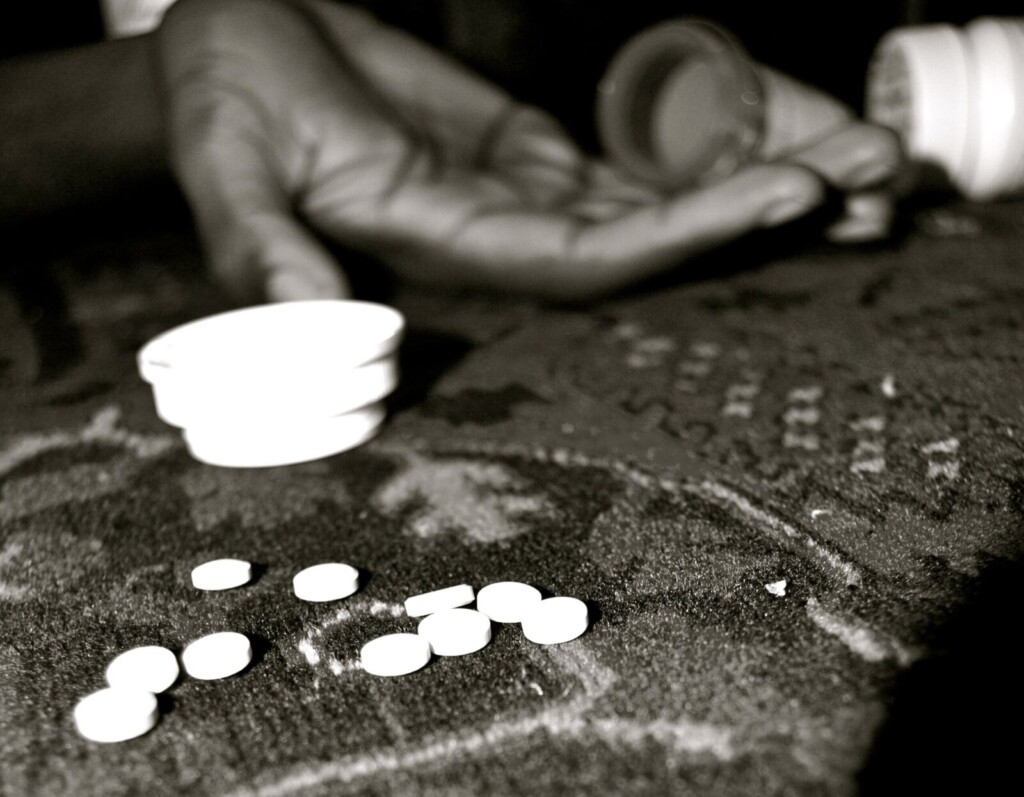
You are sitting across from someone who has not slept in three days, whose hands move without instruction, whose eyes track something just behind your left shoulder — and the instinct that rises in you is not grief but impatience, a quiet categorization, a file closing somewhere in the bureaucratic architecture of your concern.
That instinct deserves examination, because it rests on a philosophical assumption almost no one states out loud: that the person in front of you has, through some combination of choices and chemistry, vacated themselves. That the self capable of meaning, of suffering in the full moral weight of that word, has been displaced by appetite. This assumption is not just clinically imprecise. It is a profound act of convenience.
Viktor Frankl, writing in 1946 from the residue of Auschwitz in “Man's Search for Meaning,” argued that the one freedom no external condition could fully confiscate was the orientation of the self toward meaning — what he called the will to meaning, the irreducible human motion toward purpose even inside conditions designed to annihilate it. Logotherapy was not optimism. It was the clinical observation that suffering which cannot find a frame of meaning becomes unbearable in a way that pure pain does not, and that the drive to find that frame persists even in the most structurally degraded states. Frankl watched men in camps choose, within the slimmest possible margins, how they carried themselves toward death. He was not romanticizing survival. He was documenting a residue that refused to dissolve entirely.
Addiction creates conditions that are in certain structural ways analogous — not in their cause, not in their moral valence, but in what they do to the space available for selfhood. The neurological literature is unambiguous that chronic substance dependence, particularly involving dopaminergic dysregulation, narrows the cone of experienced possibility. A 2010 study in “Nature Reviews Neuroscience” by Nora Volkow and colleagues mapped precisely how prefrontal inhibitory control degrades under sustained substance exposure, shrinking the behavioral repertoire available to the individual not through weakness of character but through measurable cortical attrition. The margin in which a person can exercise what Frankl called orientation toward meaning becomes genuinely, physically smaller. And yet it does not reach zero. The person continues to suffer, which is itself the evidence.
Suffering is not a passive state. It is the signal that something is being registered, evaluated, found insufficient against some interior standard that still exists. A body that had truly evacuated its self would not suffer — it would simply process. The suffering visible in addiction, the shame that operates beneath the compulsion, the grief that surfaces in the brief intervals between use, the way people in dependency describe the experience of watching themselves from a distance with something close to horror — all of this is not incidental. It is the preserved kernel making itself legible through the only channel still partially open.
What this demands of the people outside that body is not sympathy as a feeling but a recalibration of what they are actually looking at. The dominant social response to addiction has historically oscillated between criminalization and medicalization, between the 1971 Nixon declaration that positioned drug use as an enemy to be defeated and the later harm-reduction models that emerged from the 1980s AIDS crisis out of practical necessity rather than philosophical conviction. Both frameworks have in common a tendency to address the condition while quietly setting aside the person — the first by punishing them, the second by managing them. Neither is fully prepared to sit with the more destabilizing proposition that inside the dependency, something is still watching, still evaluating, still registering the distance between who it is and who it might have been.
The question that leaves no comfortable exit is not whether we can fix addiction, but whether we are willing to remain in contact with the consciousness that persists inside it long enough to treat that consciousness as something whose suffering makes a genuine claim on us.
🔗 Chains of the Self: When the Body Becomes a Cage
Drug addiction is one of the most devastating forms of imprisonment a human being can experience — not imposed by walls, but by the body’s own desperate chemistry. To understand this condition fully, we must explore the psychology of dependency, the paths toward recovery, and the social structures that trap or liberate those who suffer. These related articles deepen the journey into addiction, healing, and the fragile architecture of the self.
Addiction and recovery: stories of redemption from drug addiction
Stories of recovery from drug addiction illuminate the harrowing gap between the life addiction promises and the wreckage it delivers. Yet they also reveal something extraordinary: the tenacious human capacity to rebuild identity from ruin. These narratives of redemption are not fairy tales but hard-won testimonies of psychological and spiritual reconstruction.
GO TO THE SELECTION: Addiction and recovery: stories of redemption from drug addiction
Alcohol and addiction: psychology and recovery paths
Alcohol addiction shares with drug dependency the same cruel mechanics of neurological capture and identity erosion, making it a vital parallel case for understanding substance abuse at large. The psychology of craving, withdrawal, and relapse reveals how deeply addiction rewires the emotional brain. Examining recovery paths from alcoholism offers crucial insights into what liberation from chemical dependency truly demands.
GO TO THE SELECTION: Alcohol and addiction: psychology and recovery paths
Therapeutic communities: history and recovery models
Therapeutic communities represent one of the most historically significant and humanly complex responses to addiction ever developed. Rooted in peer solidarity and structured daily living, these environments challenge the isolation that feeds dependency by rebuilding trust and social belonging. Their history and evolving models illuminate the profound link between community and healing.
GO TO THE SELECTION: Therapeutic communities: history and recovery models
Mental health and psychological distress: history and treatments
Mental health and psychological distress are almost inseparable companions to substance addiction, forming a vicious cycle that standard medical approaches often struggle to break. Understanding the history of psychiatric treatment and its evolving relationship with addiction reframes how we think about vulnerability and care. This broader psychological context is essential for anyone seeking to grasp the full human cost of living inside dependency.
GO TO THE SELECTION: Mental health and psychological distress: history and treatments
Discover the Cinema That Dares to Tell These Stories
Independent cinema has always been the space where stories like these — raw, uncomfortable, and profoundly human — find their truest voice. On Indiecinema, you can explore films that confront addiction, identity, and the desperate search for freedom with honesty that mainstream cinema rarely allows. Come and discover a streaming platform dedicated to the cinema that changes the way you see the world.
👉 EXPLORE THE CATALOG: Watch Indie Films in Streaming
A vision curated by a filmmaker, not an algorithm
In this video I explain our vision

