
The Woman Who Wrote Childhood From the Outside
You pick up the book again decades after the first time, and something is different. The story hasn’t changed — the children still find the sand-fairy, still wish badly, still suffer the precise consequences of their own carelessness — but you are reading it now with the eyes of someone who has lived enough to recognize the texture of adult exhaustion hiding behind the prose. The narrator keeps interrupting the children’s adventures to make dry, world-weary asides, little muttered complaints about how grown-ups never believe anything wonderful, how the world is mostly disappointing, how magic, if it existed, would probably be bureaucratic and ungrateful. You realize you are not reading a book written for children. You are reading a book written by someone who could not stop being a child long enough to leave them alone.

Edith Nesbit was born in 1858 into a family that immediately began disintegrating around her. Her father died when she was three years old, which is the age at which the self is just beginning to believe it has a stable home in the world. What followed was not a single loss but a prolonged sequence of uprootings: households in England, periods in France and Germany, a sister with tuberculosis whose treatment required constant migration, schools that didn’t last. By the time Nesbit was old enough to have memories she could consciously examine, she had already learned that places end, that the ground shifts, that the people who are supposed to be permanent are the first to disappear. This is not a metaphor for her fiction. It is the literal biographical architecture from which her fiction was built.
The Romantic tradition had long sentimentalized childhood as the period of authentic vision — Wordsworth’s “Immortality Ode” in 1807 constructed the child as a being trailing clouds of glory, a creature closer to divine perception than any adult could ever be again. But Wordsworth was writing about a lost childhood from the comfortable distance of recollection, from a self that had landed somewhere stable enough to look back. Nesbit never fully landed. She arrived in adulthood with the psychic disorientation of someone who had been in transit for too long, and she brought that disorientation directly into her work, not as a wound she was processing but as the organizing logic of her imagination.
This is why the children in her books are never quite safe. E. Nesbit published “Five Children and It” in 1902, “The Phoenix and the Carpet” in 1904, and “The Story of the Amulet” in 1906 — a trilogy that, read in sequence, reveals a peculiar obsession: the children always want to go somewhere else, and getting there is always more dangerous and more complicated than they anticipated, and the world they return to is always, somehow, the same world they were trying to escape. The magic doesn’t solve anything. It intensifies the problem of being small in a world designed by and for larger people who are not paying sufficient attention.
The biographical record shows a woman of remarkable external energy — she co-founded the Fabian Society in 1884, wrote prolifically across multiple genres, managed a chaotic household, conducted difficult romantic relationships with conspicuous stubbornness — but beneath that productivity was someone who had never been given a stable enough foundation in childhood to build the ordinary kind of adult interiority that lets a person feel securely located in time. She wrote about children not because she understood them from above, from the pedagogical altitude of the responsible adult, but because she was still partially living at their altitude, still looking up at the ceiling of the adult world and finding it strange, arbitrary, and not entirely earned.
What makes her books uncomfortable to reread as an adult is not nostalgia. It is recognition.
Children Of A Darker Dawn
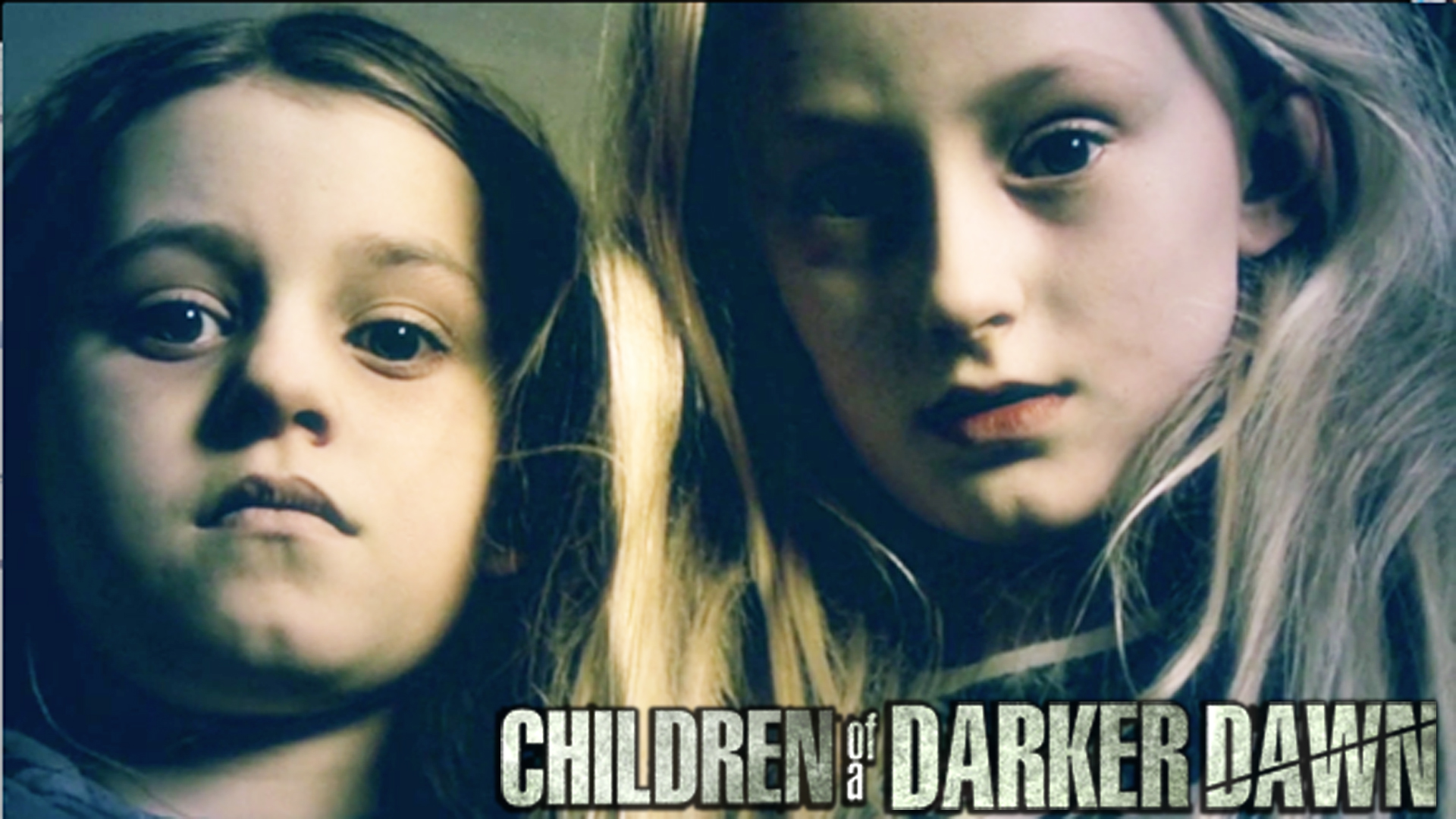
Drama, horror, sci-fi, by Jason Figgis, United States, 2012.
In a post-apocalyptic Ireland, a pandemic has wiped out the adult population, struck down by a mutant strain of flu that turns them paranoid and violent before killing them. Nine months later, the surviving children wander through abandoned buildings in search of food and shelter. Among them are Evie and her younger sister Fran, trying to survive while avoiding potentially dangerous groups of kids. Their only comfort is The Railway Children, the book their mother used to read to them. The arrival of Alice, a girl who has escaped from a gang led by her sister Kate, changes their path. After being betrayed by the gang, Evie decides to confront them, triggering a series of events that will lead to tensions and conflicts within the group.
The film, directed by Jason Figgis with limited resources but great sensitivity, is a post-apocalyptic drama that goes beyond horror, focusing on grief and the emotional fragility of its characters. The tone is somber, marked by melancholy, disturbing flashbacks, and unstable relationships. Though it recalls films like 28 Days Later, The Road, or Lord of the Flies, Children of a Darker Dawn finds its own voice through strong character development and powerful performances from its young cast.
LANGUAGE: English
SUBTITLES: Spanish, French, German, Portuguese
Born Into the Wrong Century’s Expectations
You are seven years old and your family has moved again. Not because of adventure or opportunity, but because illness follows you like a creditor, and the house you are in is never quite the right house for what your family needs next. The furniture is never fully unpacked. You learn early that stability is not a condition of life but a rumor other people’s families seem to live inside.
Edith Nesbit arrived in the world in 1858, in London, into an England that had already decided what she was before she drew breath. Victorian society operated less like a culture and more like a filing system, and girl-children born to precarious middle-class families occupied a category that offered the appearance of respectability while delivering almost none of its protections. Her father, John Collis Nesbit, ran an agricultural college and died when she was four years old, leaving behind a widow, a household, and the particular kind of financial fragility that Victorian England reserved exclusively for families who had once been comfortable enough that destitution now carried the additional weight of shame.
What followed was not a childhood so much as a series of enforced relocations, driven almost entirely by her sister Mary’s tuberculosis. The family moved through France, Spain, and the English countryside, chasing climates that doctors believed might slow the disease, and the effect on a young child was the systematic dismantling of any coherent sense of home. Erving Goffman, writing in Stigma in 1963, argued that certain social attributes do not merely disadvantage their carriers but render them fundamentally unreadable to the dominant culture — their identities become, in his precise and devastating phrase, spoiled. What Nesbit absorbed in those years of displacement was not simply the inconvenience of poverty but the grammar of illegibility. To be a girl was already to occupy a subordinate grammatical case in Victorian English. To be a girl whose family moved constantly, whose household smelled faintly of medical necessity rather than domestic comfort, was to become a kind of social non-sentence.
Victorian femininity demanded performance of a very specific kind of stillness. The idealized woman of Coventry Patmore’s 1854 poem “The Angel in the House” — a work that sold edition after edition and shaped middle-class aspiration with the persistence of propaganda — existed in one place, served one household, and derived her entire moral meaning from her proximity to a man who anchored her in the world. Nesbit grew up with no such anchor available. Her mother was heroic in the most invisible way possible: managing, relocating, surviving. But heroism of that kind was not legible as heroism in 1860s England. It was legible only as inadequacy, the visible evidence of a family that had failed to maintain its proper form.
The damage done to children by that kind of ambient cultural verdict is not dramatic. It does not announce itself. The psychoanalyst D.W. Winnicott, describing in 1960 what he called the “false self,” traced its origins not to catastrophic trauma but to the accumulated pressure of environments that demand a child perform a version of themselves acceptable to the world before they have had the chance to discover what version they actually are. Nesbit became, in those years of movement and medical crisis and financial anxiety, extraordinarily good at reading what any given situation required from her — which is a skill that looks like adaptability and functions like self-erasure.
That skill would later fuel her fiction in ways neither she nor her readers fully registered. The children in her novels move through worlds that do not quite hold still, through houses that transform, through social rules that dissolve and reconstitute without warning, through adults whose authority turns out to be provisional at best. She did not invent those conditions. She had been taking notes on them since before she was old enough to understand she was doing it.

Marriage as a Financial Instrument
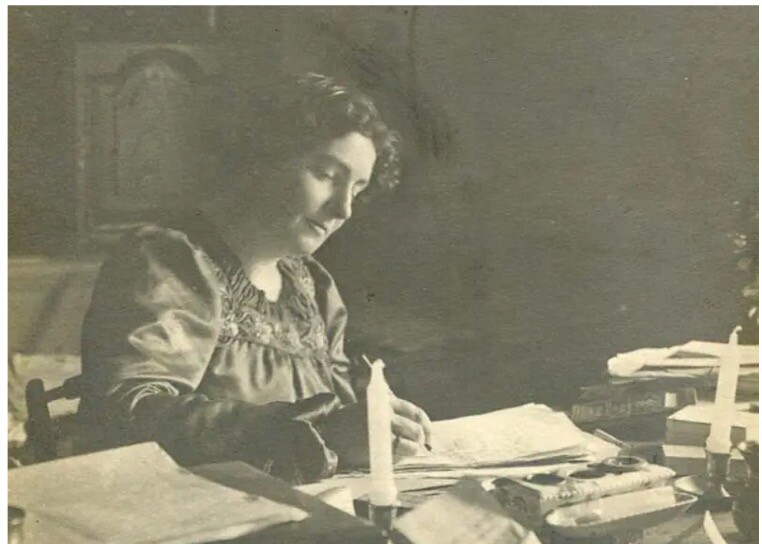
You are standing at a register, signing a document that will determine the next thirty years of your life, and the ink is barely dry before you understand that the signature was never really yours to give freely.
Edith Nesbit married Hubert Bland in April 1880, seven months pregnant, in a ceremony that had less to do with the architecture of romantic feeling than with the architecture of financial survival. The language available to a woman in that position was narrow: you could call it love, or you could call it what it was. Nesbit called it love, at least publicly, and spent the following decades quietly funding the fiction.
Bland brought to the marriage a habitual dishonesty that operated on multiple registers simultaneously. He was a brush salesman whose business collapsed almost immediately after the wedding, leaving Nesbit to generate income through journalism, hand-painted greetings cards, and whatever prose she could produce quickly enough to keep the household solvent. He was also, without interruption and without particular concealment, unfaithful — not in the episodic way that Victorian fiction occasionally permits its male characters as a kind of dramatic relief, but structurally, as a feature rather than a flaw. Nesbit eventually raised two of his illegitimate children inside the family home, absorbing them into a domestic arrangement that required her to perform the emotional labor of pretending the situation was unconventional rather than brutal.
Simone de Beauvoir argued in The Second Sex, published in 1949, that marriage does not simply organize a woman’s life — it reorganizes her ontology. The married woman becomes, in de Beauvoir’s formulation, a relative being: she exists as wife, as mother, as household, never as the independent subject of her own trajectory. What makes this diagnosis so difficult to argue with is not its abstraction but its precision. Every legal and economic structure of the Victorian period confirmed it. A married woman’s earnings, under the terms that preceded the Married Women’s Property Acts of 1870 and 1882, belonged formally to her husband. Even after those reforms, the cultural grammar of marriage retained its original syntax. The money Nesbit generated through writing was, in practical terms, the household’s primary income for long stretches of their marriage — and yet the household remained organized around Bland’s appetites, Bland’s political performances, Bland’s illegitimate children.
The cruelty embedded in this arrangement is not simply interpersonal. Bland was a founding member of the Fabian Society alongside Nesbit, a man who argued publicly for social reform and the redistribution of economic power while privately operating as a minor domestic tyrant sustained by a woman’s unacknowledged productivity. George Bernard Shaw, who knew both of them through the Fabian circles of the 1880s and 1890s, reportedly described Bland as a man who wore his conventionality like a costume over his actual behavior — a performance of respectability financed entirely by someone else’s labor.
Nesbit wrote through it. She wrote The Story of the Treasure Seekers in 1899, The Would-Be-Goods in 1901, Five Children and It in 1902, The Railway Children in 1906 — a sequence of books so structurally consistent and emotionally coherent that they read like the output of someone with an unusually stable inner life, which is precisely the opposite of what her domestic circumstances permitted. The children in these books are frequently without adequate parental protection, frequently required to solve adult problems with juvenile resources, frequently navigating a world in which the adults responsible for them have either disappeared or proven unreliable. It does not require an aggressive biographical reading to notice that this is also a fairly accurate description of Nesbit’s household.
What writing gave her was not escape — she remained in the marriage, remained responsible for Bland’s debts, remained the financial engine of a machine she had not designed. What it gave her was a category of selfhood that the marriage could not entirely absorb, a jurisdiction over her own imagination that existed just beyond the reach of an arrangement that had claimed almost everything else.
Fabian Socialism and the Contradiction She Lived Inside
You sit across from someone at dinner who speaks fluently about inequality, who knows the Gini coefficient by heart, who can explain in precise terms why inherited wealth is a form of ongoing theft — and then they describe, with undisguised longing, the house they grew up in, the garden, the cook who knew their name. You do not call them a hypocrite, because that word is too easy and explains nothing. What you are watching is something more structurally interesting: a mind that has arrived at correct conclusions and an imagination that simply refuses to follow.
Edith Nesbit and her husband Hubert Bland were among the founding members of the Fabian Society in January 1884, gathering alongside George Bernard Shaw and Sidney and Beatrice Webb to build what they imagined as a patient, gradualist dismantling of capitalist hierarchy. The Fabians believed in collective ownership, in the redistribution of land and capital, in the idea that the English class system was not natural order but manufactured catastrophe. Nesbit signed the documents, attended the meetings, wrote the pamphlets. She believed it. There is no reason to doubt the sincerity of her political convictions, and that is precisely what makes the problem interesting, because sincerity is not the same as coherence, and coherence is not the same as freedom.
Her children’s fiction, produced in the decade and a half following the Society’s founding, is saturated with the aesthetic grammar of the very world the Fabians were organized to dismantle. The country house in “The Wouldbegoods,” published in 1901, is not a site of critique — it is a site of desire. The children who move through it are at ease with servants, with grounds, with the rhythms of a propertied life, and Nesbit renders this ease warmly, without irony, without the slight chill that political awareness might be expected to introduce. The Railway Children, appearing in 1906, stages a temporary decline in family fortune as something approaching tragedy, and the restoration of the father — and implicitly of the family’s social position — as the novel’s emotional resolution. The reader is not invited to question whether the position was worth restoring. The question does not arise.
Antonio Gramsci, writing from a fascist prison in the 1930s and eventually producing what would become the Prison Notebooks, described cultural hegemony as the process by which the dominant class makes its values feel like nature itself — not imposed from outside but discovered from within, felt as preference, as taste, as the obvious shape of a good life. The colonization Gramsci identified is not primarily coercive. It works through desire. It works through the image of the well-kept garden that feels like home even to the person who understands, intellectually, that the garden was built on extraction.
Nesbit’s imagination had been formed before her politics, and the formation of an imagination is not reversible by argument. She grew up moving between England and the Continent after her father’s early death in 1862, a childhood marked by financial instability and social uncertainty, and what the literature she consumed offered her — what the culture offered every aspirational child — was the country house as the image of safety, of arrival, of belonging. By the time she sat in Fabian meetings arguing for the abolition of the conditions that produced such houses, the longing had already taken root at a depth that political reasoning could not reach. This is not weakness. It is the ordinary condition of anyone who has ever tried to think their way out of a structure they were raised inside.
What Nesbit’s fiction reveals, without meaning to, is that the imagination is not a neutral instrument waiting to be aimed. It arrives pre-loaded, already loyal to certain images, already committed to certain shapes of happiness — and the most rigorous political education may change what a person argues for without touching what they dream about when the argument is over.
The Bastard Children of Literature: Her Major Works
You are nine years old and your family has just become poor. Not the romantic kind of poor that smells like woodsmoke and simple pleasures, but the specific, humiliating kind that means you notice which rooms have stopped being heated, that means the adults speak in lowered voices near closed doors, that means something has been taken from you that no one will name directly. This is the opening condition of the Bastable children in The Story of the Treasure Seekers, published in 1898, and Nesbit does not soften it. The father is present but diminished, a figure who has lost the plot of his own life. The children must save the family, and the comedy of their attempts — journalism, digging for buried gold, moneylending, all conducted with absolute seriousness — is funny precisely because it is not a game. Children playing at capitalism because the adults have failed at it is a joke with no punchline.
The architecture of anxiety that Nesbit built across these books was not metaphorical. Between 1900 and 1910, the rate of middle-class bankruptcy in England was climbing in ways that the Victorian ideology of respectability had no honest language for. Hubert Bland spent money Nesbit earned and accumulated debts she paid. She understood financial precarity not as a plot device but as a climate — something you breathe, something that changes the texture of every domestic surface. In Five Children and It, published in 1902, she gave this climate a creature: the Psammead, a sand fairy of ancient and irritable power, who grants wishes with perfect literalism and devastating consequence. The children wish to be beautiful, and no one recognizes them. They wish for money, and the coins are so archaic that shopkeepers call the police. They wish their baby brother were grown up, and he becomes a cold, superior stranger who has forgotten how to love them.
What Slavoj Žižek argues, drawing on Lacan’s structural account of desire in works like The Sublime Object of Ideology, is that fantasy does not exist to be fulfilled — it exists to organize the space in which desire can persist. The object of desire is structurally required to remain just out of reach, because its actual possession would collapse the entire field of wanting that gives the subject its coherence. The Psammead is, in this sense, not a magical device but a philosophical machine. Every wish granted exposes the wish as a mistake, not because the children wanted the wrong thing, but because wanting itself was the point — the achieved object is always a corpse. Nesbit understood this in her bones, which is why her sand fairy is ancient and exhausted and barely tolerates the children. It has watched desire destroy itself for longer than human civilization has existed.
The Railway Children, appearing in 1906, reorganizes the same catastrophe around a different absence. Here the father is not failed but stolen — arrested on false charges, erased from the family by institutional violence, replaced by a void the mother fills with writing and the children fill with purpose. The railway becomes the channel through which the outside world occasionally delivers grace, and the children’s project is essentially liturgical: they perform goodness with enough consistency that the universe is eventually compelled to return what was taken. Nesbit knew this was fiction. She also knew that the alternative — that goodness performs nothing, that fathers do not come back, that the membrane between security and ruin tears without warning and stays torn — was the truth her readers were already living and could not afford to read plainly stated.
The Enchanted Castle, published in 1907, pushes further into the uncanny. The magic here is darker, less pedagogical, more genuinely strange — statues that animate in the dark, wishes that produce consequences no moral lesson can contain, a sense that the enchanted world is not parallel to the real one but underneath it, pressing upward through the floorboards of every ordinary afternoon.
A vision curated by a filmmaker, not an algorithm
In this video I explain our vision
The Railway Children as a Document of Class Grief

The morning her father leaves, Bobbie watches from the top of the stairs. There is no scene of violence, no raised voice, no dramatic confrontation she can later point to and say: there, that is when everything broke. Two men arrive at the door wearing the particular blankness of official authority, and her father goes with them in a way that is almost polite, almost ordinary, as if the air itself had decided to absorb him. He does not look back up the stairs. She does not call out. The door closes, and the family’s life — the house, the cook, the lessons, the small certainties of bourgeois London in 1905 — begins its quiet dissolution into something that will require an entirely different vocabulary to describe.
Edith Nesbit published The Railway Children in 1906, serialized first in the London Magazine, and the novel has been misread as pastoral comfort ever since — as a story about children who love trains and a mother who writes poetry and a countryside that heals. But what the text actually performs is the cold mechanics of state power dismantling a household, and the cost that dismantling extracts from one specific child who is not permitted to pay it openly. Bobbie’s father has been falsely accused of selling state secrets, arrested under the weight of an accusation he cannot immediately disprove, and imprisoned. The mother tells the children almost nothing. They move to a small house in Yorkshire. They learn to be poor in the particular way that formerly comfortable people learn it — with a residual dignity that is itself a form of labor, a second job performed on top of surviving.
What Nesbit captures, without ever announcing it as her subject, is how the state’s violence against a family does not arrive as spectacle but as administrative silence. There is no trial the children witness, no judgment they can argue against, no face to the force that has taken their father. There is only absence, bureaucratic and total, the kind that leaves children with nowhere to direct their grief and so they redirect it inward, into function. Bobbie becomes the family’s emotional infrastructure. She negotiates with the railway stationmaster, she writes letters to a wealthy stranger on a train, she holds her younger siblings inside a story in which the situation is temporary and the father will return and cheerfulness is both possible and required. She performs recovery so convincingly that the text itself sometimes mistakes her performance for the real condition.
Erik Erikson, writing in Identity: Youth and Crisis in 1968, described a process he called identity foreclosure — the arrest of self-development at the moment a crisis demands premature resolution. The adolescent who is forced to become a particular kind of person before the developmental work of becoming is complete does not grow through that role; they freeze inside it. Bobbie is approximately twelve when the novel begins, and she exits the story at approximately the same psychological age she entered it, not because Nesbit lacks skill but because the character has used every available resource to maintain the family’s survival rather than to construct herself. The cheerfulness is real in the sense that she genuinely produces it, but it forecloses something — the right to know what she actually feels, the right to collapse, the right to be the child rather than the structure that holds the children together.
Nesbit knew this territory from the inside. She had spent years being the productive one, the earning one, the one whose output subsidized the household while Hubert Bland conducted a social and romantic life that cost more than money. The daughter watching the door close was not entirely invented, and the particular combination of competence and interior erasure that Bobbie embodies carries the specific weight of a grief that has already been rehearsed.
What the Fantasy Genre Permitted Her to Say Plainly
You are nine years old, and the thing you wished for has arrived exactly as you asked — and it is ruining everything. The Psammead grants wishes with the precision of a contract lawyer and the indifference of weather. The children wanted to be beautiful, and so they were, and nobody recognized them, and night fell, and they were locked out of their own home by their own nurse. The wish worked perfectly. That is the problem.
Fredric Jameson, writing in “The Political Unconscious” in 1981, argued that narrative form is never innocent — that the stories a culture permits itself to tell in displaced or fantastical registers are precisely the stories it cannot afford to tell directly. The fantasy genre, on this account, is not escapism but a pressure valve, a formal technology for processing what realism would render too scandalous or too litigious to name. Nesbit understood this intuitively, perhaps before she understood it consciously, and she built her entire fictional machinery around the gap between what a child perceives and what an adult is willing to confirm.
What she could not say in a domestic realist novel — that parents are absent when they matter most, that adults construct systems of authority that serve adults and call it protection, that the social contract between a generation in power and a generation in formation is routinely, casually violated — she could say through sand-fairies and enchanted amulets and houses that eat time. The magic does not resolve these problems. It illuminates them with the cold light of a demonstration.
Her contemporaries used magic differently. J. M. Barrie’s Neverland is a place where adulthood is refused, where the wound of growing up is aestheticized into adventure. Kenneth Grahame‘s riverbank in “The Wind in the Willows,” published in 1908, is a pastoral retreat from industrial modernity, populated by gentlemen animals who need never work and never age. The fantasy in both cases is fundamentally consolatory — it offers the reader a world arranged more pleasingly than the one they inhabit. Nesbit’s magic refuses consolation as a structural principle. Her enchantments do not offer a better world. They offer the existing world with its mechanisms made visible.
The Amulet in her 1906 novel sends the children into historical time — into Babylon, into ancient Egypt, into a future London that is quietly socialist and organized around children’s welfare. That future England, depicted with the earnest specificity of someone who had sat in Fabian Society meetings and argued policy with George Bernard Shaw, is not a utopia of magic. It is a utopia of political will. The contrast with the Edwardian present is not softened. Children in that imagined future are not afterthoughts in the economy of adult life. The juxtaposition lands like an accusation.
Her magic is also, and this is rarely noted, morally neutral in a way that unsettled readers accustomed to Victorian providential fiction, where supernatural intervention aligned reliably with divine or at least bourgeois virtue. The Psammead does not care whether your wish is wise. The enchanted carpet does not evaluate your character before it flies. The universe in Nesbit’s books does not organize itself around the moral development of the child protagonist — it simply operates, indifferently, according to its own rules, which are arbitrary and occasionally catastrophic. This was a theological position disguised as whimsy. A generation raised on the assumption that the cosmos was supervised and just was being quietly handed a different model, one in which outcomes depend not on goodness but on precision, on attention, on the willingness to read the terms of what you have agreed to.
The child who learns this does not become cynical. She becomes careful in a way that no adult has thought to teach her, because the adults in these books are, almost without exception, the last people who understand how anything actually works.
The Inheritance She Left and the Distortion It Underwent
You have read the story before, even if you have never opened one of her books. A child discovers that the world adults built is flimsier than advertised, that the rules governing who gets fed and who gets punished are arbitrary rather than ordained, and that magic — when it arrives — does not rescue the child from that knowledge but deepens it, makes it stranger and more vertiginous.
That is Edith Nesbit’s actual inheritance, and it is almost entirely absent from the tradition that claims her name.
C.S. Lewis acknowledged her directly, tracing the texture of his Narnian landscapes back to her sense of a threshold world pressing against the mundane one. J.K. Rowling has cited her in interviews as a formative presence, the ancestor of the child who steps sideways out of ordinary life into a register where different laws apply. Both acknowledgments are genuine, and both are also, in a precise sense, a misreading — not a careless one, but a motivated one, the kind of misreading that transforms a provocation into a permission slip.
What Nesbit’s magic actually does is remove protection. When the children in Five Children and It encounter the Psammead in 1902, their wishes are granted and immediately made grotesque — beauty renders a sister unrecognizable, gold renders the family unable to buy bread, the mechanisms of desire are shown to be self-defeating at the structural level. The supernatural in Nesbit does not confirm that the children are special; it confirms that the world is broken in ways that cannot be wished away. The enchantment is diagnostic.
The orphan figure is where the divergence becomes impossible to ignore. In Nesbit, the children separated from parents or left financially exposed by a father’s disgrace — as in The Railway Children, published in 1906 — are not secretly royal. They are not chosen. They are middle-class children who discover, with genuine shock, that the buffer between comfort and destitution is thinner than a single legal verdict. Their recovery, when it comes, is contingent and partial, dependent on the kindness of strangers who are themselves operating within a class system that the novel never pretends to have resolved. Bobbie does not inherit a magical destiny. She learns that her father was a scapegoat, which is a political lesson, not a metaphysical reward.
The orphan who arrives in the fantasy tradition that follows — and the archetype calcifies quickly across the twentieth century — carries a secret weight of election. The cruelty suffered in the cupboard or the unheated room is retrospectively meaningful because it was always temporary, always a misallocation that the plot will correct by revealing the child’s true nature. Suffering, in that structure, becomes evidence of distinction. The orphan was never really abandoned by a system; the system simply hadn’t recognized them yet. This is not a darker vision of Nesbit’s world. It is a fundamentally more conservative one, because it transforms systemic critique into personal vindication.
Giorgio Agamben wrote about the way sovereign exception — the capacity to designate who falls outside ordinary protection — defines the structure of power more nakedly than any law. The chosen orphan of post-Nesbit fantasy is interesting precisely because they are the inverse of this: the child who was inside the exception and gets restored to inclusion. The story ends when the hierarchy correctly identifies its members. Nesbit’s children never get that ending, because Nesbit did not believe the hierarchy was capable of correct identification — she believed it was structurally indifferent to the question.
She had been a Fabian socialist, a close associate of H.G. Wells and George Bernard Shaw in the 1890s, a woman who raised other people’s children alongside her own because her husband’s infidelities left her no cleaner option. She did not write from a position of theoretical critique. She wrote from the position of someone who had already tested the system’s promises and found the fine print.
What her successors inherited was her atmosphere without her argument, her doorways without her destinations, and the result is a body of work that uses the grammar of subversion to deliver the content of reassurance — which is perhaps the most durable magic trick the twentieth century learned to perform.
🌿 Worlds of Wonder: Victorian Imagination and Beyond
Edith Nesbit’s work blossoms at the crossroads of childhood fantasy, social conscience, and the uncanny power of storytelling. Her enchanted worlds invite us to explore the deeper currents of Victorian and Edwardian literature, where magic and reality intertwine. The following articles illuminate the broader landscape of ideas, authors, and themes that resonate most deeply with her life and legacy.
Robert Louis Stevenson: Life and Works
Robert Louis Stevenson, like Nesbit, stands as a master of imaginative literature who blurred the boundaries between adventure, morality, and the hidden recesses of the human psyche. His works captivated both young and adult readers, weaving thrilling narratives with unsettling undercurrents that challenged Victorian certainties. Exploring Stevenson’s life and works offers a vital companion lens through which to appreciate Nesbit’s own literary craftsmanship and her era.
GO TO THE SELECTION: Robert Louis Stevenson: Life and Works
Virginia Woolf: Life and Works
Virginia Woolf, a near-contemporary of Nesbit, navigated the treacherous waters of a literary world dominated by men, carving out a space for feminine vision and experimental storytelling. Like Nesbit, she understood that the domestic and the fantastical are never truly separate realms. Woolf’s life and works reveal the broader struggle of women writers to claim artistic authority in a society that perpetually questioned their intellectual legitimacy.
GO TO THE SELECTION: Virginia Woolf: Life and Works
M.R. James: Ghosts and the Terror of the Everyday
M.R. James represents the quintessentially British tradition of supernatural fiction that flourished alongside Nesbit’s own forays into ghost stories and eerie tales. His ghosts haunt the ordinary world of libraries, country houses, and seaside towns — the same comfortable domestic spaces that Nesbit’s children adventurers inhabit and subvert. Understanding James helps illuminate how the late Victorian and Edwardian imagination transformed everyday settings into thresholds of the uncanny.
GO TO THE SELECTION: M.R. James: Ghosts and the Terror of the Everyday
Carlo Collodi: Life and Works
Carlo Collodi‘s creation of Pinocchio, like Nesbit’s magical children’s narratives, explores what it truly means to grow up, to desire freedom, and to navigate a world full of moral ambiguity and wonder. Both authors used the framework of children’s fantasy to encode deeper anxieties and aspirations of their respective societies. Examining Collodi’s life and works deepens our understanding of how nineteenth-century literature constructed childhood as a space of both innocence and transformation.
GO TO THE SELECTION: Carlo Collodi: Life and Works
Discover the Magic of Independent Cinema on Indiecinema
If Edith Nesbit’s worlds of enchantment and imagination have stirred something in you, independent cinema offers the same boundless spirit of wonder and creative freedom. On Indiecinema streaming you will find films that dare to dream differently, telling stories that mainstream culture too often overlooks. Step through the threshold and let independent cinema take you somewhere truly extraordinary.
👉 EXPLORE THE CATALOG: Watch Indie Films in Streaming
A vision curated by a filmmaker, not an algorithm
In this video I explain our vision

