
The Eye That Does Not Believe What It Sees
You are walking down a street you have known for twenty years, and for a fraction of a second you mistake a stranger’s silhouette for someone you love. The error lasts perhaps half a heartbeat before your brain corrects itself, before the familiar gait resolves into the wrong person and the mirage dissolves. But in that half a heartbeat something important happened, something that most of us dismiss as a trivial glitch in the machinery. Ernst Gombrich spent the better part of six decades insisting it was not a glitch at all. It was the whole story.

The same thing happens when you enter a room at dusk and the coat hanging on the door becomes, for one terrible instant, a figure standing in the dark. Your pulse responds before your reason does. And then the light shifts, or your eyes adjust, and the coat is just a coat again. You laugh at yourself, perhaps. You move on. What you do not do, almost never do, is pause to ask why the error was possible in the first place — why your eye needed to be corrected by your mind rather than simply seeing what was there from the beginning.
Gombrich asked exactly that question, and the answer he arrived at in 1960, in Art and Illusion: A Study in the Psychology of Pictorial Representation, was among the most unsettling propositions ever put forward about human perception. There is no innocent eye. The phrase sounds almost casual, a throwaway aphorism, until you follow it to its conclusion. What it means is that you have never, not once in your entire life, seen the world directly. Every act of seeing is an act of interpretation, shaped by expectation, prior knowledge, cultural schema, and the particular cognitive habits your history has built into you. The image does not arrive in your mind pure and unmediated. It arrives already processed, already half-constructed by everything you bring to the act of looking.
This was not merely a philosophical provocation. Gombrich grounded it in the psychology of perception, drawing heavily on the work of Karl Popper’s epistemological framework — the idea that all knowledge, including perceptual knowledge, proceeds not from observation to theory but from hypothesis to test. We do not first see and then interpret. We first hypothesize and then check. The eye, in Gombrich’s account, is not a passive receptor but an active agent, perpetually projecting expectations onto the visual field and perpetually being confirmed or confounded by what it finds. The coat in the dark confirms the hypothesis of a figure until enough evidence accumulates to overturn it. The stranger’s silhouette confirms the hypothesis of the loved one until the gait betrays the mistake.
What makes Art and Illusion such a permanently destabilizing book is that it refuses to let this insight remain comfortable. If you accept that seeing is always already interpretation, you must accept that the world as you perceive it is, in a precise and non-metaphorical sense, a world you have partly made. Not invented from nothing, not hallucinated — Gombrich was too scrupulous a thinker to collapse the distinction between perception and delusion — but constructed through a continuous negotiation between the data your senses receive and the schemas your mind supplies. The schemas come from somewhere. They come from culture, from training, from the images you have already seen, from the visual conventions of the particular tradition you were born into and educated within.
This is the paradox at the heart of Gombrich’s life’s work, and it is a paradox that cuts in two directions simultaneously. It humbles the eye, stripping it of its pretension to pure access to reality. And it elevates the image, revealing that pictures are not simple reproductions of what is there but complex negotiations between artist, convention, and beholder. The coat was never just a coat. The stranger was never just a stranger.
Trench
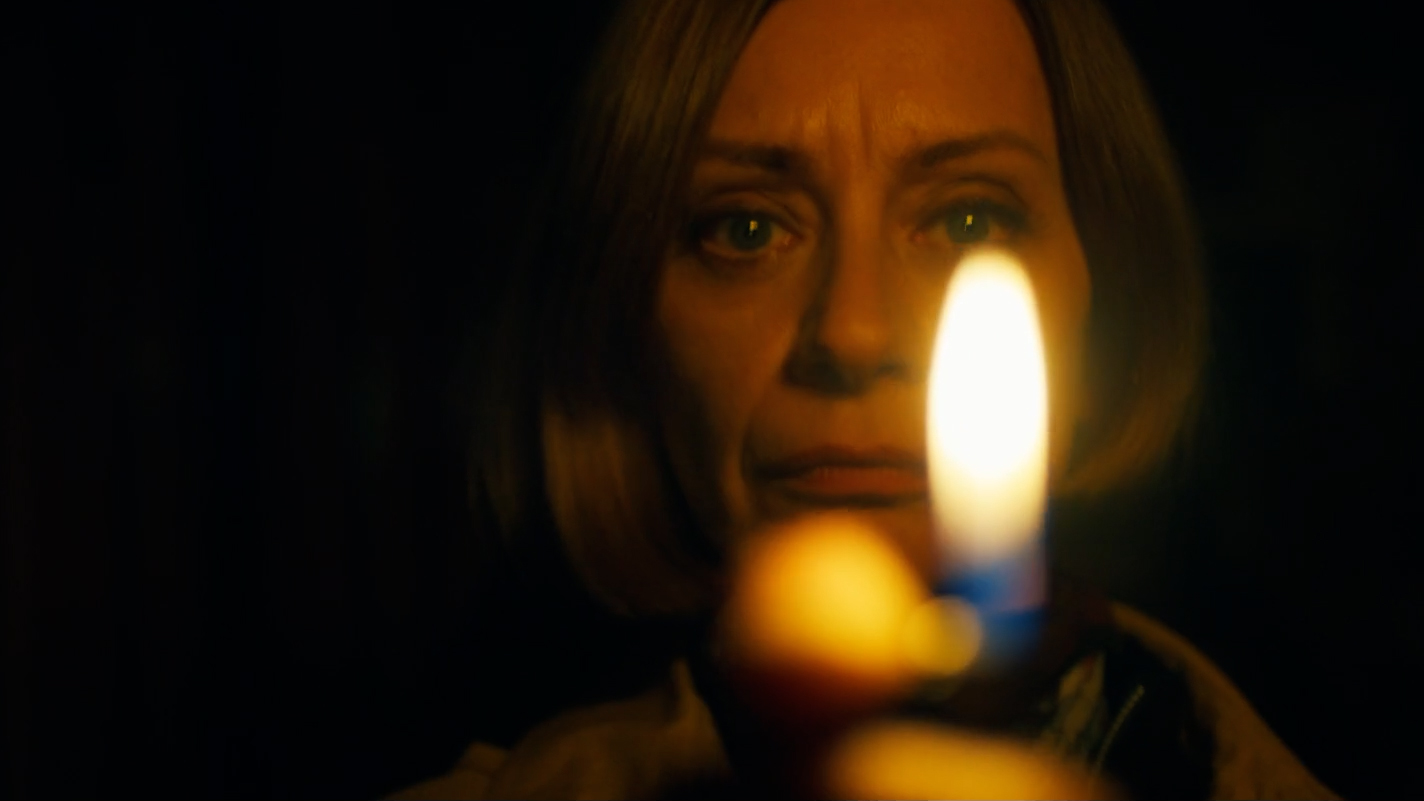
Thriller, Mystery, by Serge Turgeon, Italy, 2023.
In Venice, an art historian realizes that her brilliant mind will not be enough to solve the mystery surrounding the disappearance of an unknown woman. In addition to regaining trust in her intuition and her heart, she will need the help of a series of colorful characters from her community.
The idea behind Trench is to tell, through a detective story, the journey of an intellectual woman who suffered while growing up in a working-class district of Venice, where she never felt truly valued. In order to solve a mystery, she must face danger and rely on the help of the “non-intellectual” members of her community, rediscovering along the way her resourcefulness, her Venetian identity, and her true self.
LANGUAGE: Italian
SUBTITLES: English, Spanish, French, German, Portuguese
Vienna Before the Fall
There is a particular kind of clarity that only arrives when everything around you is beginning to crack. Vienna in the first decades of the twentieth century had that quality — not the clarity of certainty, but of a city that had been forced, by its own contradictions, to begin questioning the foundations of what it thought it knew. You could feel it in the coffeehouses, in the arguments that spilled past midnight over lukewarm coffee and newspapers from four different countries, in the way intellectuals of that generation carried a permanent low-grade suspicion toward any system that promised too much.
Ernst Gombrich was born into this atmosphere in 1909, the son of a lawyer and a pianist, raised in a household where Brahms was played in the drawing room and ideas were taken seriously as a form of daily nourishment. The city he grew up in was not the gilt-and-waltz Vienna of tourist mythology. It was a city in the process of dismantling its own certainties. Freud had been publishing his major works since the turn of the century, and what he had introduced into the Viennese air was not merely a theory of the unconscious but something more corrosive: the suggestion that you do not see the world as it is. You see it as you need it to be. Perception itself was revealed as motivated, shaped by desires and fears operating below the threshold of conscious awareness. The technical term for this mechanism — projection — points to something almost embarrassingly simple once you have named it: you cast your own interior onto the exterior world and then mistake the reflection for reality.
This was not an abstract proposition for anyone growing up in Vienna in those years. It was a description of the city itself, a city of empires and ideologies that had organized entire civilizations around projected certainties — racial purity, historical destiny, cultural superiority — and were beginning to see those projections exposed as fantasies with consequences. The collapse of the Austro-Hungarian Empire in 1918, when Gombrich was nine years old, was not just a political event. It was a catastrophic demonstration that the stories a civilization tells about itself can simply stop working, and that when they stop working, the wreckage is real.
Karl Popper, who was only seven years older than Gombrich and moved in overlapping intellectual circles, was drawing a related lesson from a different angle. His central insight, which would eventually crystallize into the principle of falsificationism, was that a theory which cannot be proven wrong cannot truly be proven right. The willingness to be refuted — to hold your propositions open to the possibility of their own defeat — was, for Popper, not a weakness but the only honest form of knowledge. Gombrich absorbed this not as a philosopher absorbs a doctrine but as a young man absorbs the mood of his generation: as a felt orientation toward the world, a permanent wariness toward systems that claimed to explain everything and therefore explained nothing.
Wittgenstein was somewhere in that same compressed intellectual space, having published the Tractatus Logico-Philosophicus in 1921 and then fallen largely silent, as though he had followed language to its limits and found the edge. The Vienna Circle was meeting through the late 1920s, systematically dismantling metaphysical certainty with the tools of logic and linguistic analysis. What all of these projects shared — psychoanalysis, falsificationism, logical positivism, the various modernisms erupting simultaneously in music and architecture and painting — was a profound distrust of the given. Nothing was simply there. Everything was constructed, interpreted, mediated by a mind that brought its own history to every act of seeing.
For Gombrich, this would become the central question of a life’s work: not what art is, but what happens inside the person looking at it. The eye, he would spend decades demonstrating, is never innocent.

The Refugee Who Rewrote History
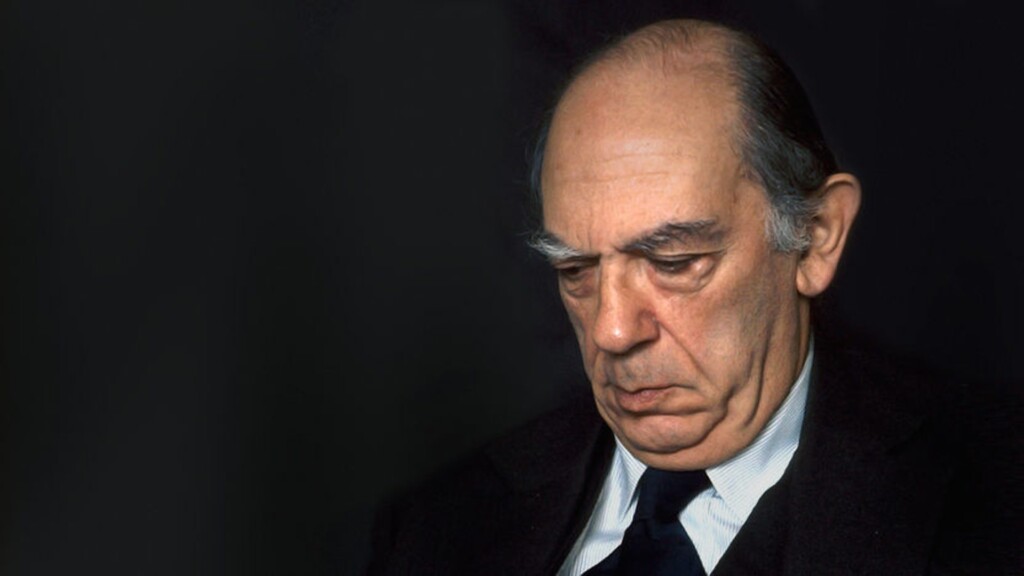
He left Vienna with what a man can carry when he knows he is not coming back. Not the furniture, not the library built over years, not the particular quality of afternoon light that falls through the windows of a city you have memorized without meaning to. He carried the contents of a mind formed inside one of the densest intellectual atmospheres Europe had ever produced — the Vienna of Freud, of Popper, of the Vienna Circle, of a musicology and art history that believed culture could be understood as a total system, a breathing organism with its own logic and its own destiny. He carried all of that into exile, and exile, as it always does, began immediately to change what he had carried.
London in the late 1930s received its refugees with a particular kind of politeness that is also a form of distance. You find yourself in a city that functions, that has its routines and its fog and its absolute certainty of its own coherence, and you realize that you are legible to no one. The language you are learning is not the problem. The problem is that the invisible architecture of references, of shared assumptions, of the unspoken — that entire scaffolding has been removed, and you must construct a new one from scratch while also pretending, for the sake of survival, that you are not doing so. There is a moment in this condition — and anyone who has lived it recognizes it immediately — when you are sitting in a room that is not yours, in a city that does not yet know your name, and you understand that the world you came from is not waiting for you. It has already been replaced by something you were not consulted about.
Ernst Gombrich arrived in London in 1936 and eventually found his way to the Warburg Institute, which was itself a displaced institution — Aby Warburg‘s extraordinary Hamburg library, with its forty thousand volumes organized according to a system that reflected an entire philosophy of cultural memory, had been moved to London in 1933, two steps ahead of the Nazis. Gombrich would work there for the better part of his career, eventually becoming its director, and the peculiar irony is that this institution of exile became the ground from which he launched his most sustained intellectual rebellion: against the idea that culture moves according to forces larger than any individual, against the Hegelian notion of the Zeitgeist as the true author of history.
Karl Popper, his compatriot and friend, had already articulated the philosophical case against historicism in “The Poverty of Historicism” and “The Open Society and Its Enemies,” arguing that the belief in large historical forces and inevitable trajectories was not merely intellectually wrong but politically dangerous — it was, Popper wrote, the theoretical infrastructure of totalitarianism. Gombrich arrived at the same conclusion through the specific texture of art history. The Hegelian tradition, developed through figures like Alois Riegl and his concept of Kunstwollen — the collective artistic will of an age — treated individual artists as symptoms of their period rather than as agents of their own choices. A Baroque painter did not decide to paint in a certain way; he was painted through by the spirit of his time.
Gombrich found this not only philosophically untenable but personally recognizable as a mechanism of erasure. He had watched an entire civilization explain its own catastrophe as historical destiny, as the irresistible unfolding of impersonal forces. He knew what that kind of thinking permitted. When he insisted, against the grain of his entire discipline, that history is made by individuals making specific choices in specific circumstances, he was not articulating a methodology. He was bearing witness to what he had seen ideology do when individuals are dissolved into the currents of an age.
The Story of Art and the Lie of the Canon
There is a moment, familiar to anyone who has ever entered a room where they did not quite belong, when you realize that the books on the shelf are not decoration. They are credentials. The spines face outward not to be read but to be seen, and what they announce is not knowledge but membership. You recognize the feeling before you understand its mechanism: the slight contraction in the chest, the recalibration of your own voice before you speak.
In 1950, Ernst Gombrich published a book that claimed to speak to everyone who had ever felt that contraction. The Story of Art opened with a declaration of intent that was almost aggressive in its modesty: there is no such thing as Art, only artists. The sentence was a small demolition charge placed beneath the marble columns of art historical authority. And the book delivered on its promise in ways that no academic survey had before — lucid, warm, stripped of jargon, structured not as a catalogue of masterpieces but as a narrative of human problem-solving across centuries. It sold more than eight million copies. It was translated into more than thirty languages. It never went out of print. By any measure, it succeeded in doing what it set out to do.
And yet. The book that dismantled the canon became the canon. The text that was supposed to open the door became, in Pierre Bourdieu‘s precise language, a form of cultural capital — a commodity whose possession signals not curiosity but cultivation, not access but arrival. Bourdieu, in Distinction published in 1979, demonstrated with the rigor of a sociologist and the cold clarity of a diagnostician that taste is never neutral. It is a classification system disguised as a personal preference, and what it classifies, above all, is people. When The Story of Art migrated from the hands of the genuinely curious to the coffee tables of the aspirationally cultured, it completed a transformation Gombrich himself could not have intended and perhaps never acknowledged.
Think of the scene that plays out in a thousand dining rooms and a thousand universities: someone who grew up without art speaks haltingly about a painting, using the wrong words, making the wrong comparisons, and the room — without cruelty, almost without intention — adjusts its temperature. Across a table in a cramped apartment, a young man mentions something he noticed in a Flemish interior, in a painting of a woman reading a letter by a window, and the older man opposite him — established, tenured, comfortable in his cultural skin — nods with the particular patience of someone who already knows. The knowledge has not been shared. It has been confirmed. The hierarchy has been reproduced in the very act of transmission.
This is the paradox that no act of democratization fully escapes. The moment knowledge is made accessible, its accessibility becomes a new form of distinction. You have read Gombrich, or you have not. And if you have not, the book’s very ubiquity makes your ignorance more visible, not less. Bourdieu called this the misrecognition at the heart of cultural reproduction: we believe we are participating in a leveling when we are in fact constructing a new floor.
Gombrich was not naive about power. His work on the psychology of pictorial representation, developed across decades in studies like Art and Illusion from 1960, was precisely about how perception is conditioned by schema, by expectation, by what we have already been taught to see. He knew that the innocent eye is a myth. But the sociology of his own most famous book is something he seems to have left unexamined — or perhaps trusted to the reader to work out, which is itself a form of optimism that history has not entirely rewarded.
The book sits on the shelf. The spine faces outward. Somewhere, someone is deciding whether or not to admit they have never read it.
Schemas, Corrections and the Myth of Originality
There is a moment — you have lived it, even if you have never named it — when you catch yourself making a gesture that belongs to someone else. A way of tilting your head when you are skeptical, a particular pause before you answer a difficult question, and then the sudden recognition: that is not yours. You learned it, absorbed it, wore it so long it calcified into what you thought was your own character. The gesture was always a borrowed schema.
This is precisely what Gombrich spent the better part of his intellectual life demonstrating about art, and the demonstration is far more unsettling than it first appears. In Art and Illusion, published in 1960 and still one of the most rigorous attacks on naive theories of visual representation ever written, he dismantled the Romantic fantasy that the artist stands before nature and simply transcribes what the eye receives. The eye, Gombrich argued, never receives anything neutrally. Every painter, every draughtsman, every sculptor begins not from perception but from a schema — an inherited visual formula, a received convention — and then corrects it, adjusts it against the resistance of what they actually see. The movement of art history is not a procession of original visions but a long, cumulative process of schema and correction, trial and error, hypothesis and revision.
The language here is deliberate, and it belongs to a friendship. Gombrich’s intellectual bond with Karl Popper, forged in the particular crucible of Viennese émigré culture and sustained across decades in London, runs beneath Art and Illusion like a subterranean current. Popper’s epistemology — the idea that knowledge does not grow by accumulation but by the falsification of hypotheses, that we begin with conjectures and submit them to the pressure of reality — gave Gombrich the conceptual architecture he needed. The artist’s schema is a conjecture about the world. Correction is falsification. What looks like creative vision is, at its structural core, a cognitive procedure available to every human organism that has ever tried to match an internal model against an external resistance. Popper laid this out most rigorously in The Logic of Scientific Discovery, first published in German in 1934 and in English in 1959, one year before Art and Illusion appeared. The timing is not coincidental.
Richard Gregory, the perceptual psychologist whose work on visual illusions and hypothesis-driven perception Gombrich read carefully, provided the neurological scaffolding. Gregory argued, particularly in Eye and Brain published in 1966, that perception itself is a process of inference, that the brain is always constructing a most-probable interpretation of incomplete sensory data. Seeing, in Gregory’s framework, is guessing. Gombrich absorbed this and folded it back into art history: if even raw perception is hypothesis-driven, then the Romantic notion of the artist who sees more truly, more directly, more innocently than the rest of us is not elevated — it is simply wrong.
Think of a man who has spent years perfecting what he believes is his entirely personal approach to a craft, and then discovers, late, that every move he thought he had invented had been demonstrated to him long before, by someone whose influence he had entirely forgotten or perhaps never consciously registered. The discovery does not diminish the craft. But it does something irreversible to the story he had been telling himself about where it came from. Gombrich would say this is not a pathology. This is the structure of all human making. The schema was there first. The correction is real, the individual adjustment is real, but the blank origin, the zero point of pure creation — that was always a narrative constructed retrospectively, a myth assembled to give coherence to what was in fact a conversation with the dead.
Originality, Gombrich understood, is not a starting point. It is a direction of travel, measured only against inherited ground.
A vision curated by a filmmaker, not an algorithm
In this video I explain our vision
The Politics of Seeing: What Gombrich Refused

There is a particular kind of man who, standing in a room where everyone has agreed on the new vocabulary, refuses to learn it. Not out of laziness. Not out of ignorance. Out of something more complicated — a principled suspicion that the vocabulary is doing work its users have not examined, that the words are carrying ideological freight disguised as analytical precision. You have probably met this man. You may have found him infuriating. You may also, in your more honest moments, have suspected he was right about something, even if he was wrong about almost everything else.
Gombrich was that man, repeatedly, and at great cost to his reputation in the last decades of his career. When semiotics arrived in art history — when Roland Barthes‘s Mythologies and later Image-Music-Text began circulating through the discipline, when Erwin Panofsky‘s iconological method was being extended into something approaching a total theory of cultural meaning — Gombrich resisted. Not politely. He resisted with the specific irritability of someone who had watched ideas he considered half-formed harden into orthodoxy simply because they gave younger scholars a system to operate. His critique of Panofsky was surgical: iconology, he argued, risked becoming a machine for finding intended meaning everywhere, transforming the contingent and the accidental into the programmatic, making every visual detail a coded message from a unified cultural mind that never actually existed. His 1972 essay collection Symbolic Images laid this out with patient ferocity, insisting that the Renaissance painter was not a philosopher encoding Neoplatonic doctrine but a craftsman solving visual problems within constraints that were as often economic and technical as intellectual.
Karl Popper had given Gombrich the framework he needed to feel certain about this. The Open Society and Its Enemies, published in 1945, the year the war ended and Gombrich was still working at the BBC monitoring German broadcasts, had established a distinction that Gombrich carried for the rest of his life: between piecemeal social engineering and utopian social engineering, between modest falsifiable claims and grand unfalsifiable systems. When Marxist art historians — T.J. Clark foremost among them, with his 1973 work on Courbet and his later The Painting of Modern Life — argued that art could only be understood through its relationship to class structure and the contradictions of capital, Gombrich heard not analysis but prophecy. He heard a system immune to counterexample. And he said so.
Think of a man watching his closest friend walk into a courtroom and deliver testimony that is technically accurate but shaped by a theory so total that it cannot imagine being wrong. The testimony is not false. But it is not quite true either. The man in the gallery says nothing, because what he would have to say cannot be said in that room without sounding like a defense of the indefensible. That silence costs him. It gets misread as complicity, then as cowardice, then as something worse.
Gombrich’s silence on feminist art history was read exactly this way. His failure to engage seriously with Griselda Pollock’s challenges, with the systematic recovery of women artists whose exclusion from the canon was not accidental but structural, looked from outside like the incuriosity of a man too comfortable to question the walls of his own house. And perhaps it was. Popperian liberalism, for all its genuine courage, has a characteristic blind spot: it is extraordinarily good at identifying the overreach of systems it opposes, and extraordinarily poor at acknowledging the structural conditions that made those systems feel necessary to those who built them. The open society, as Popper imagined it, was populated by free individuals exchanging falsifiable claims. It did not ask who had been permitted to enter the room where the exchange was taking place.
Intellectual courage and intellectual limitation, in Gombrich, were not opposites. They were the same gesture, made with the same hand, in the same direction.
Order, Ornament and the Deep Grammar of Beauty
There is a particular kind of person who, in old age, begins arranging things. Books aligned by height, tiles counted on the bathroom floor, the same walk taken at the same hour for reasons that resist articulation. You recognize the impulse without quite naming it. It is not madness. It is the opposite of madness — it is the mind insisting on a grammar the world keeps refusing to confirm.
Gombrich published The Sense of Order in 1979, when he was seventy years old. He had watched Vienna dissolve into ideology, watched the civilized consensus of European humanism buckle under fascism, watched colleagues disappear and institutions fail the tests that history set for them. And now, in his seventies, he turned to wallpaper. To lattice patterns. To the interlace of Celtic manuscripts and the repeating geometries of Islamic tilework. The book is, on its surface, an investigation into decorative art — the kind of art that fills the margins and the borders, that exists not to tell a story but simply to organize a surface. But no intellectual of Gombrich’s density turns to borders without a reason.
His central argument draws on the same perceptual psychology that animated Art and Illusion, but pushes further, into territory that feels almost biological. The eye, he proposes, does not simply receive pattern — it craves it. There is a deep neural preference for rhythm, symmetry, and regularity that precedes culture and operates beneath conscious aesthetic judgment. He reaches toward ethology and toward the early work of researchers like Desmond Morris, finding in animal behavior and infant response something like a universal grammar of visual comfort. The sense of order, in his account, is not an acquisition of civilization. It is closer to a survival mechanism, the organism’s way of distinguishing the legible from the threatening, the structured from the chaotic.
And yet. The book is haunted by something that the argument cannot fully contain. Think of a man who has spent decades building an interior architecture so precise, so defended, that every object has its designated place and every thought its designated frame — and who then finds, one afternoon, that the architecture has been holding him rather than protecting him. The structures we build against chaos begin, eventually, to resemble the chaos they were meant to exclude. The obsession with pattern is already a confession that pattern might not hold.
René Thom, the mathematician who developed catastrophe theory in the 1970s, argued that biological systems seek stability not as an ideal state but as a dynamic equilibrium always under threat. Gombrich, who was not a mathematician, arrived at something structurally similar through entirely different means. What The Sense of Order actually describes, beneath its scholarly surface, is the permanent tension between the eye’s desire for completion and the world’s refusal to provide it. The arabesque fascinates precisely because it continues. It never resolves. It promises a closure that the next curve always defers.
This is, of course, a philosophical problem dressed in the language of neuroscience. Gombrich wanted the biological grounding to do what philosophy had failed to do — to provide a foundation that did not depend on cultural consensus, on shared tradition, on the fragile agreements that history had proven so easy to destroy. If beauty had roots in the nervous system, then beauty might survive the collapse of the contexts that had always framed it. The search for order was also a search for something that could not be unbuilt.
What he found, or what the book enacts without quite admitting, is that the deepest patterns are not the ones on the surface of the tile. They are the ones the mind imposes on experience in the act of trying to survive it. The decorative impulse and the philosophical impulse turn out to be the same impulse, running at different speeds.
The Inheritance Nobody Asked For

You are standing in front of something right now. A screen, probably. Maybe a painting if you are lucky, or an advertisement on the wall of a subway car, or a photograph on your phone that someone sent you three minutes ago. You are looking at it and you believe, with a confidence so deep it never announces itself, that you are simply seeing what is there. This is the inheritance nobody asked for and nobody can refuse.
Gombrich spent the better part of the twentieth century trying to explain why that confidence is a construction. Not a lie, not a delusion, but a learned fluency so thoroughly absorbed that it has become indistinguishable from perception itself. The schema, the making before the matching, the eye that arrives at every image already holding a hypothesis — these were not abstract propositions in his work. They were descriptions of something happening inside you, continuously, without your consent or awareness.
The digital image environment has not complicated this problem. It has detonated it. When a face appears on your screen today — composed, lit, moving, speaking — there is a nonzero probability that no such face has ever existed. Deepfake technology, which reached genuine photographic plausibility around 2017 and has accelerated beyond meaningful detection thresholds since, did not create a new epistemological problem. It revealed that the old one was always structural. The innocent eye that Roger Fry and John Ruskin dreamed of, the eye that would receive the world without prejudice, was already impossible before the first pixel was ever rendered. What the algorithm did was remove the last comfortable illusion that images had some organic connection to the real.
Walter Lippmann wrote in 1922 that we do not first see and then define, we define first and then see. He was describing journalism and public opinion, but he was also, without knowing it, writing the opening sentence of everything Gombrich would argue three decades later. The schema comes first. The image confirms or disrupts it. And when an entire industry — advertising, social media, political communication — is built on feeding your schemas exactly what they expect, the disruption almost never comes.
Algorithmic aesthetics has made this industrial. The recommendation engine does not show you what exists. It shows you what your past looking predicts you will look at next. You are not browsing a world. You are walking through a mirror that has learned your face better than you have. Nelson Goodman argued in Ways of Worldmaking in 1978 that there is no single ready-made world waiting to be discovered, only versions of worlds constructed through symbolic systems. The algorithm is now the most powerful symbolic system in human history, and it constructs your version without ever asking your permission or revealing its grammar.
This is where Gombrich’s questions stop being historical curiosities and start being daily survival equipment. If every image is a schema, if the eye has already been taught what to see before it opens, if art history is the record of one teaching system replacing another — then what is happening when the teaching system is no longer a tradition passed between human beings across centuries, but a feedback loop optimized for engagement metrics and running at a speed no human tradition ever achieved?
The question he left open in The Story of Art, in Art and Illusion, in the long patient labor of his entire intellectual life, was never really about painting. It was about the relationship between the mind that receives an image and the world that image claims to represent. He showed us that this relationship is never innocent, never direct, never free of history. What he could not have known, writing in his study in London in the middle of the last century, was that the history which shapes every eye would one day be written not by artists or critics or civilizations, but by systems that learned from us — and who taught those systems everything they know about what a human being is willing to see.
🎨 Art, Perception, and the Meaning of Form
Ernst Gombrich dedicated his life to understanding how human beings perceive, interpret, and create images. His thought intersects with the philosophy of art, the history of symbolism, and the great debate over what images truly communicate. These related articles trace the intellectual landscape surrounding his legacy.
Erwin Panofsky: Life and Iconology
Erwin Panofsky developed iconology as a systematic method for interpreting the layered meanings embedded in works of art, moving from surface description to deeper symbolic content. Like Gombrich, he was deeply concerned with how cultural context shapes visual meaning and how images carry ideas across centuries. Together, Gombrich and Panofsky represent the twin pillars of twentieth-century art-historical interpretation.
GO TO THE SELECTION: Erwin Panofsky: Life and Iconology
Ernst Cassirer and Myth: Philosophy of Symbolic Forms
Ernst Cassirer argued that myth, language, and art are all symbolic forms through which human beings construct their understanding of reality, a thesis that resonates strongly with Gombrich’s own interest in the psychology of pictorial representation. His philosophy of symbolic forms provides a broader philosophical framework within which Gombrich’s empirical observations about image-making find their theoretical grounding. Both thinkers share a conviction that human culture is fundamentally shaped by the symbols we create and inherit.
GO TO THE SELECTION: Ernst Cassirer and Myth: Philosophy of Symbolic Forms
Alois Riegl: Life and Theory of Conservation
Alois Riegl transformed art history by introducing the concept of Kunstwollen, the inner artistic will that drives each epoch’s aesthetic choices, anticipating later debates about perception and style that Gombrich would engage with critically. His theories on the evolution of decorative forms and the beholder’s active role in completing the artwork prefigure many of Gombrich’s own inquiries. Understanding Riegl is essential for grasping the intellectual tradition from which Gombrich both drew and diverged.
GO TO THE SELECTION: Alois Riegl: Life and Theory of Conservation
Umberto Eco: Life and Works
Umberto Eco approached art and culture as systems of signs, exploring how meaning is produced, transmitted, and interpreted through complex networks of codes and conventions. His work on semiotics and the openness of the artwork offers a fascinating counterpoint to Gombrich’s psychologically grounded account of visual perception and pictorial illusion. Both Eco and Gombrich were deeply engaged with the question of how images and symbols generate meaning in the minds of their audiences.
GO TO THE SELECTION: Umberto Eco: Life and Works
Discover the Cinema of Ideas on Indiecinema
If the thought of Gombrich and the history of art’s deepest questions captivate you, Indiecinema is the streaming platform where ideas come alive on screen. Explore independent and auteur films that challenge perception, reinterpret tradition, and illuminate the hidden meaning of images. Join us and let cinema become your next great intellectual adventure.
👉 EXPLORE THE CATALOG: Watch Indie Films in Streaming
A vision curated by a filmmaker, not an algorithm
In this video I explain our vision

