
The Warehouse and the Body
You are standing in a building that has no business being occupied. The windows are boarded. The floor is concrete. Someone has run a cable from a generator parked three streets away, and the sound system it feeds is producing frequencies your ribcage registers before your ears do. It is 1989, or 1991, or somewhere in that corridor of time when Western Europe collectively forgot, for a few hours at a time, what it had agreed to be. There are four hundred people in this space and none of them know your name and this, improbably, feels like the safest you have ever been.

What was actually happening in that room is a question that took decades to answer badly. The immediate cultural reflex was to frame it as escapism — the young fleeing the pressure of Thatcherite austerity, or reunified Germany’s identity vertigo, or the particular bleakness of post-industrial English cities where the factories had closed and nothing had replaced them except the fact of their absence. This reading is not wrong, but it is lazy in the way that all reductive explanations are lazy: it identifies the wound without asking what the wound was a response to.
Michel Foucault, writing in the late 1970s in Discipline and Punish, described the modern body as a site of governance — a surface on which institutions inscribe their requirements for productivity, legibility, and docility. The school, the barracks, the factory floor: each of these spaces trained the body to occupy a specific position, to move in sanctioned ways, to present itself as identifiable and therefore manageable. What the warehouse undid, even briefly, was precisely this inscription. The darkness was not incidental. The volume was not incidental. You could not be read in that room. You could not be assessed. The dissolution of self that ravers reported was not a psychological accident; it was the body briefly escaping its administrative history.
This is where the question of authorization becomes genuinely unsettling, because the freedom of the rave was never simply claimed — it was tolerated, then prosecuted, then eventually absorbed. In Britain, the Criminal Justice and Public Order Act of 1994 defined illegal raves with a specificity that would be darkly comic if it were not also targeted: music characterized by the emission of a succession of repetitive beats. Parliament had written a law against a rhythm. The fact that this was possible — that the state had the vocabulary and the will to criminalize a tempo — tells you something about what was actually threatening in the warehouse, and it was not the drugs or the noise complaints. It was the gathering itself, the refusal of legibility, the bodies that had temporarily stopped performing their assigned roles.
Germany experienced a different version of the same rupture. When the Berlin Wall fell in November 1989, the eastern districts of the city contained entire blocks of abandoned industrial infrastructure — the detritus of a command economy that had simply stopped commanding. Techno moved into that vacuum within months, and what emerged in spaces like Tresor, which opened in a former bank vault in 1991, was not a subculture in any conventional sense. It was a spontaneous reorganization of urban geography by people who had just watched a political order dissolve in real time and were perhaps more willing than most to believe that the rules about which spaces could be used, by whom, and for what purposes, were not eternal truths but administrative fictions.
The body on the dancefloor was, among other things, a body that had briefly stopped believing the fictions. Whether that constitutes freedom, or merely a rehearsal of freedom whose script was already written by something else entirely, is the question the subsequent decades kept refusing to answer cleanly.
Acid House, Thatcher, and the Politics of Escape
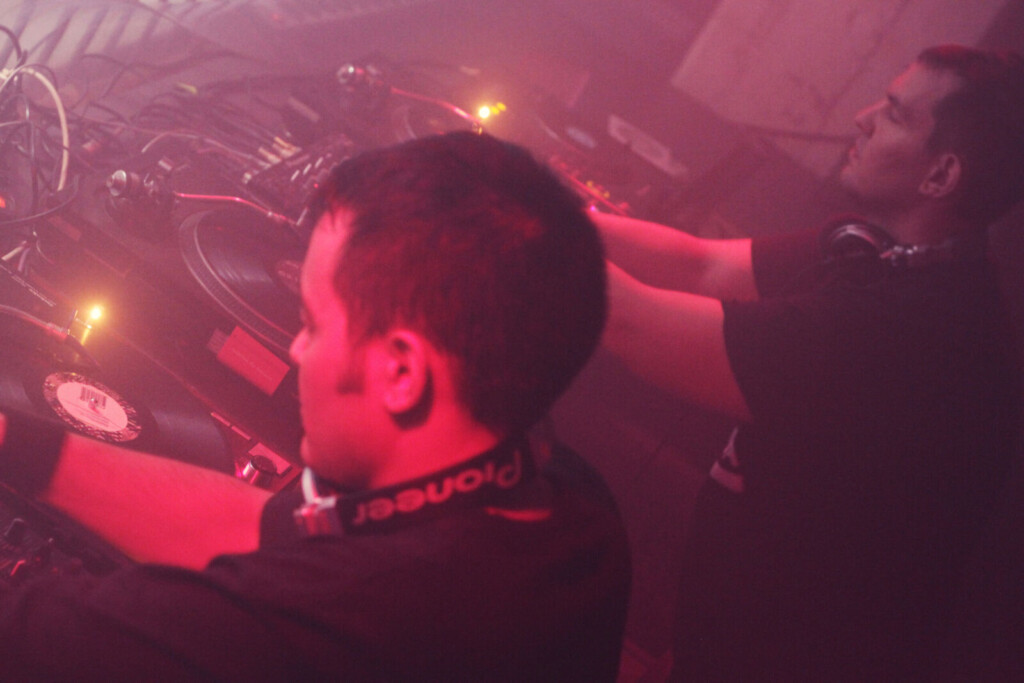
You are standing in a field somewhere off the M25 in 1988, surrounded by twenty thousand people who have no legal right to be there, and the bass is so low it lives in your sternum rather than your ears. No one asked permission. No one sold tickets through an official channel. The police are outside the fence, and for reasons that still resist clean explanation, they have not yet moved in. Something is happening that feels, in the bones of everyone present, like a different kind of world.
What acid house arrived into was not a cultural vacuum but an open wound. The years between 1979 and 1987 had systematically dismantled the industrial scaffolding around which entire communities in the north of England, in Wales, in Scotland, in the post-dockland stretches of east London, had organized their social existence. Thatcher’s government did not simply close factories and mines; it severed the collective imaginaries that grew around them. The miners’ strike of 1984 to 1985, which ended in the union’s defeat after almost exactly a year of extraordinary resistance, did not only represent an economic failure — it was a demonstration to an entire generation that organized collective opposition could be neutralized, its meaning retroactively rewritten as romantic stubbornness. What followed was not grief but a peculiar numbness, a generation that had watched solidarity lose and drawn the private conclusion that solidarity was a trap.
Into that numbness came a sound imported from Chicago and Detroit through Ibiza, mutated in the warehouses of Manchester and the orbital motorway corridors around London. The music itself was structurally significant: it had no verse, no chorus, no narrative arc toward a resolved ending. It did not tell you a story about yourself. MDMA, which moved through these gatherings with a velocity that pharmacological novelty often lends to substances before prohibition hardens their cultural meaning, chemically dissolved the precise psychological boundary — between self and stranger, between suspicion and trust — that Thatcherite individualism had been politically invested in reinforcing. The combination was not accidental in its effect even if it was accidental in its assembly.
Michel Foucault described heterotopias in a 1967 lecture, “Des espaces autres,” as real spaces that function like counter-sites, locations where the normal ordering of social relations is simultaneously represented, contested, and inverted. A rave in a disused aircraft hangar in Berkshire in 1989 fulfills this definition with uncomfortable precision: it occupied space capitalism had abandoned, it operated on temporal rhythms — dawn rather than midnight, duration rather than schedule — that inverted the logic of productive time, and it created, briefly, a social interior with its own rules of hospitality and proximity. People who would have crossed the street to avoid each other in daylight embraced in darkness without irony.
The trap buried inside that ecstasy is that heterotopias, as Foucault was careful to note, do not exist outside power — they exist within its gaps, which is an entirely different condition. A gap is not a rupture. The warehouse could be temporarily occupied precisely because no one with capital had yet decided it was worth defending. When the Criminal Justice and Public Order Act passed in 1994 — specifically criminalizing gatherings where music with “repetitive beats” was played, a formulation that remains genuinely astonishing as a piece of legislative language — it did not require enormous force to suppress what the scene had become, because the scene had never built the institutional infrastructure that would have made suppression costly. The freedom had been real. The freedom had also been, structurally, a permission slip issued by neglect rather than a right extracted by force.

Berlin After the Wall: Techno as Ontological Claim
You are standing in a building that has no legal owner. The walls are still scarred from mortar fire, the floors uneven, the windows either bricked up or absent entirely. There is no heating. The year is 1991, and this structure exists in a bureaucratic void created when two legal systems collided and cancelled each other out — East German property law against West German property law, neither side able to process the contradiction fast enough to act. Into that void walked a generation carrying record crates and secondhand turntables, and what they built inside those contested shells was not a party in any prior sense of the word.
The fall of the Berlin Wall on November 9, 1989, did not produce immediate prosperity or clarity. It produced a landscape of abandonment — former Stasi headquarters, decommissioned power stations, warehouses along the death strip that had served as buffer zones between worlds. These buildings were simultaneously everywhere and owned by no one, and for a period of roughly three to five years before the reunified German state could bureaucratically reassert itself, they became available to whoever had the nerve to occupy them. Techno moved into that vacuum not because it was looking for cheap real estate but because the music itself, structurally, was built for exactly this kind of space: repetitive, hypnotic, architecturally responsive to concrete and reverb, demanding nothing of its listener except physical presence and duration.
Richard Sennett, in The Fall of Public Man published in 1977, had already diagnosed the slow death of the European city as a space of genuine encounter between strangers — a place where bodies in proximity were forced to negotiate, to develop what he called a civic grammar, a set of unspoken protocols for coexistence that required no shared biography. What happened in Berlin’s Tresor, which opened in March 1991 in the vaults beneath a former department store on Leipziger Strasse, or in the early editions of Berghain’s predecessor Ostgut, was structurally identical to what Sennett had mourned the loss of: a space where East Germans who had grown up under surveillance and West Germans who had grown up under consumer abundance were placed in absolute physical equality by darkness, volume, and duration. You could not perform your class markers on a dancefloor at four in the morning when the only legible currency was stamina and the willingness to remain.
This is where the distinction between escapism and rehearsal becomes forensic. Escapism leaves no residue — you exit the experience and return to the structure that was already there. What happened in Berlin left residue in bodies, in habits of relating, in a generation’s understanding of what public space could demand of a person. The sociologist Émile Durkheim, writing in The Elementary Forms of Religious Life in 1912, described what he called collective effervescence — the moment when a group assembled in shared ritual generates an energy that temporarily dissolves the boundaries between individual identities, producing not numbness but a heightened sense of social reality. Berlin techno in the early nineties was this, without the theological scaffolding and without the authority of any institution authorizing the gathering.
The culture industry recognized the structure before it understood the content. By 1994, Love Parade, which had begun in 1989 as a political demonstration with exactly 150 participants, had become a licensed commercial event drawing hundreds of thousands. The logic of monetization required a product, and a product required edges — a brand, an identity, a mythology that could be sold back to the people who had generated it without mythology ever being their intention. What had been a grammar became a logo, and logos can be applied to anything.
The Repetition Machine and the Illusion of Transgression

You are standing on a dancefloor at four in the morning, and the track has been building for what feels like eleven minutes, and when the drop finally arrives you feel it as liberation — but the drop was always coming, the structure was always there, the producer encoded your catharsis before you ever arrived.
Gilles Deleuze argued in Difference and Repetition, published in 1968, that genuine repetition is never the return of the same — it is the return of difference, a spiraling force that produces novelty through recurrence. He was describing something deeper than music, but his framework cuts directly into what rave promised and what rave ultimately delivered. The four-four kick pattern, cycling at approximately 130 beats per minute, was understood by participants as dissolution — of ego, of hierarchy, of the working week’s accumulated humiliation. What Deleuze’s philosophy reveals is that dissolution can itself become a structure, that the mechanism of escape can be precisely the thing that prevents departure. Every climax anticipated, every drop choreographed, every moment of collective surrender following the same neurochemical and architectural blueprint: this is not rupture but the most elegant form of enclosure, one in which the walls feel like open sky.
What made this enclosure invisible for so long was its genuine physiological power. MDMA, synthesized in 1912 by Anton Köllisch at Merck but rediscovered and distributed through American therapeutic and then recreational networks in the early 1980s, produces measurable surges in serotonin, dopamine, and norepinephrine that generate authentic feelings of connection and boundary dissolution. The body does not lie about what it experiences. The political question is not whether the experience was real but what work that experience was doing — who it served, what it forestalled, what it made unnecessary to change because it had been temporarily and chemically alleviated.
The British government, operating through a specific Conservative paranoia about collective assembly and uncontrolled space, handed rave culture its most potent mythology when it passed the Criminal Justice and Public Order Act in 1994. Section 63 of that legislation defined rave music, in one of the stranger moments of parliamentary prose, as music characterized by “the emission of a succession of repetitive beats” — granting the state the power to disperse gatherings of one hundred or more people where such music was anticipated. The effect intended was suppression. The effect achieved was canonization. A subculture that had been groping toward its own meaning was handed an external enemy, and external enemies are the fastest mechanism for converting ambiguous social practice into coherent identity. Before 1994, rave was many things simultaneously — hedonist, spiritual, politically incoherent, economically diverse. After 1994, it was resistance, and resistance is a product that markets beautifully.
The commodification that followed was not a betrayal of an original purity; it was the completion of a logic that was always present. By 1997, the Ministry of Sound in London had released compilation albums generating millions in revenue, operating a brand built entirely on the aesthetic vocabulary of illegality and collective transgression without any of the legal risk. The Criminal Justice Act did not destroy rave culture — it laundered it, converting subcultural capital into actual capital with remarkable efficiency, in the same way that every counterculture from jazz to punk had been absorbed the moment it became legible enough to replicate. What the state criminalizes, the market indexes. What the market indexes, it eventually owns.
The deeper problem is what gets lost in that transaction — not authenticity, which was always a partially constructed claim, but the specific kind of social knowledge that exists only in unregulated space, in gatherings without ticketing systems or liability waivers, in rooms where the people present chose to be there through effort and risk rather than purchase.
Who Gets to Dissolve

You are already inside the club before you understand what it has cost someone else to build it. The sound wrapping around you — that particular compression of bass, that cycling four-four pulse, that sense of architecture dissolving into pure frequency — did not emerge from a European industrial landscape or the Berlin Wall’s rubble. It was carried across the Atlantic in a different kind of vessel, forged in the South Side of Chicago by Black gay men who had no access to mainstream culture and so built their own, and in Detroit by the children of the Great Migration who understood automation as a personal threat before theorists gave it a name.
Paul Gilroy argued in The Black Atlantic, published in 1993, that Black cultural production operates through a logic of circulation rather than origin — that music, style, and identity move across the ocean in both directions, hybridizing and transforming rather than settling into any single national container. What he could not have fully anticipated was how thoroughly Europe would receive that circulating gift and then quietly erase the return address. House music arrived in the United Kingdom in the mid-1980s through records imported by DJs who knew exactly where they were coming from. Techno crossed over through clubs in Manchester, London, and eventually the reopened cities of reunified Germany. The knowledge of origin traveled with the vinyl. The credit did not survive the journey.
By the early 1990s, the vocabulary of press coverage, festival curation, and cultural export had already begun performing a quiet substitution. German techno became a national brand. British rave culture was framed as an indigenous countercultural eruption. The Afrodiasporic architecture underneath — the gospel-rooted emotionalism of house, the Afrofuturist conceptualism of Detroit’s Belleville Three — became a historical footnote, something acknowledged in one sentence before the narrative moved to Düsseldorf, to Sheffield, to the M25 orbital raves. What Gilroy called the process of ethnic absolutism worked in reverse here: rather than policing Black identity as fixed and bounded, it made Blackness disappear from a cultural form the moment that form became economically legible to white European audiences.
The economics were never incidental. The early rave economy ran on informal labor: the people loading sound systems into vans at two in the morning, the women managing doors for cash-in-hand, the communities of color in cities like Rotterdam, Paris, and London who populated warehouse parties that white journalists rarely attended and therefore rarely archived. When the scene institutionalized — when Berghain became a cultural landmark receiving indirect public subsidy, when European festivals began selling hundred-euro day tickets — the financial gains concentrated in structures that reproduced existing hierarchies. The dissolving of the self that rave culture promised was, in practice, more available to those who could afford the train ticket, the entry fee, the lost workday, and the social cost of altered states without legal consequence.
There is a particular cruelty in the fact that the promise was genuine. The experiences were real, the communities that formed were sometimes genuinely porous across racial and class lines, and the utopian imagination embedded in the music — its insistence on collectivity, on the body as a site of freedom rather than labor — was not false advertising. But a cultural form that promises dissolution while selectively permitting entry does not dismantle power; it launders it, giving the structure of exclusion the aesthetic of openness, charging admission to a freedom that was built on extraction and then presented as a European gift to the world.
A vision curated by a filmmaker, not an algorithm
In this video I explain our vision
🎶 Sound, Ritual, and the Underground Spirit
The European rave scene is far more than a musical phenomenon — it is a ritual space where bodies, sound, and collective identity converge. These related articles explore the deeper cultural, psychological, and philosophical currents that run beneath the dance floor, from altered states of consciousness to the sociology of subcultural belonging.
Music as an Awakening of the Unconscious
Music has long been understood as a gateway to layers of experience that rational thought cannot easily reach. This article examines how sound functions as a trigger for unconscious processes, drawing on depth psychology to illuminate why certain rhythms and frequencies provoke transformation. The connection to rave culture is immediate: the repetitive pulse of techno operates as a modern shamanic drum.
GO TO THE SELECTION: Music as an Awakening of the Unconscious
The Rite of Initiation in Psychology and Anthropology
Rites of initiation mark the threshold between one identity and another, and the rave experience carries unmistakable initiatory qualities — darkness, physical exhaustion, collective dissolution, and symbolic rebirth. This article explores how anthropology and psychology have theorized the rite of passage, from tribal ceremonies to contemporary urban rituals. Understanding initiation helps decode why the dancefloor feels, for many participants, like a genuine transformation.
GO TO THE SELECTION: The Rite of Initiation in Psychology and Anthropology
Michel Foucault and Drugs: Pleasure and Power
Michel Foucault‘s thinking on drugs, pleasure, and the technologies of the self offers a provocative lens through which to read the pharmacological dimension of rave culture. This article unpacks how power structures have historically regulated altered states and why the pursuit of chemical experience carries deeply political overtones. The intersection of bodies, pleasure, and institutional control is nowhere more visible than in the history of MDMA and the warehouse party.
GO TO THE SELECTION: Michel Foucault and Drugs: Pleasure and Power
Masterpieces of Rebellion and Counterculture Cinema
Rave culture has always shared DNA with the spirit of rebellion and counterculture cinema — both reject mainstream aesthetics in favor of raw, collective, and often transgressive experience. This curated selection of films explores the cinematic tradition of resistance, from underground movements to subcultural manifestos captured on screen. Watching these works alongside the history of European raves reveals a shared hunger for spaces outside official culture.
GO TO THE SELECTION: Masterpieces of Rebellion and Counterculture Cinema
Discover Independent Cinema on Indiecinema
If these cultural explorations have stirred something in you, Indiecinema is the streaming platform where independent and underground cinema lives and breathes. From documentaries on subcultures to avant-garde films that challenge every boundary, Indiecinema offers a curated space for those who want cinema that truly matters. Step beyond the mainstream — your next transformative viewing experience is waiting.
👉 EXPLORE THE CATALOG: Watch Indie Films in Streaming
A vision curated by a filmmaker, not an algorithm
In this video I explain our vision

