
The Threshold as Wound
You are standing in a corridor that has no name, and something in you already knows you will not leave it the same way you entered. The ordeal has begun — you felt it the moment the familiar structure of your days collapsed without warning, when the role you had inhabited like a second skin was stripped from you, when grief or failure or the sheer brute force of a threshold event left you suspended in a space that had no social coordinates, no protocol, no instructions for what you were supposed to do with your hands. Everyone around you continued moving. You stood still in the middle of the current. You told yourself you were lost. You were not. You were being made.

Arnold van Gennep, a Dutch-German ethnographer working from comparative fieldwork across dozens of cultures, published Les Rites de Passage in 1909 as an attempt to identify a universal grammar beneath the staggering variety of initiation ceremonies, marriage rituals, funerary rites, and seasonal transitions he had catalogued. What he found was not diversity but repetition — a three-phase structure so consistent across cultures separated by geography, language, and belief systems that it suggested something less like cultural invention and more like a biological necessity wearing cultural clothes. The first phase is separation, the severing of the individual from their prior social identity and the structures that sustained it. The second phase, which van Gennep named the liminal period from the Latin limen, meaning threshold, is the zone of suspension — the individual is neither what they were nor what they will become, stripped of the markers that once located them in the social world. The third phase is reincorporation, the return to the community in a transformed status that the community itself must recognize for the transition to be complete.
The clinical precision of this schema would matter less if it did not describe something almost everyone reading it has already lived through without any vocabulary to contain it. The teenager who leaves home and spends months in a state of formless, directionless suspension before a new sense of self coheres — that suspension was not a failure of development but the liminal phase operating exactly as designed. The professional who loses a career that had fused with their identity and spends years in a kind of psychological fog before discovering who they are without the job — that fog was not depression in the simple clinical sense, though it could become so when the culture around them refused to recognize the ordeal as meaningful. Van Gennep’s contribution was not to describe ritual in exotic societies but to reveal that every significant human transition follows this wound-shaped arc, and that the wound is structural, not accidental.
What makes this architecture uncomfortable is its implication: the disintegration is not an obstacle to the transformation, it is the transformation. The dissolution of the prior self is not something that happens before the initiation properly begins — it is the initiation. Western modernity, with its pharmaceutical urgency to resolve psychological discomfort, its productivity culture that frames suspension and uncertainty as pathological states requiring correction, has systematically stripped the liminal phase of its meaning without eliminating its presence. The threshold still arrives. The corridor still opens. But without a cultural container to hold the ordeal as purposeful, the individual who enters it has no map, no elder who has crossed it before them, no community waiting to receive them on the other side with a new name. They experience the wound without the rite. The three-phase structure does not disappear when the ritual scaffolding around it is removed. It proceeds anyway, underground, unwitnessed, and for that reason, often arrested at the threshold rather than completed.
The Ecstasy of Isabel Mann

Horror, thriller, by Jason Figgis, United States, 2016.
Set in Ireland, the film tells the story of Isabel Mann, an introverted and lonely teenager who is drawn into a dark and seductive world of blood, violence, and vampirism. As the story unfolds, Isabel undergoes a disturbing transformation—from a vulnerable young girl to a ruthless creature—guided by a group of vampires who pull her into a spiral of murder and ritual. At the same time, a team of detectives attempts to shed light on a series of brutal killings that seem to be connected. However, their investigation leads them toward a truth far more unsettling than they could have anticipated.
The film stands out for its cold, disturbing atmosphere and a slow, reflective narrative that favors psychological depth over action. Vampirism here is not just a genre element, but takes on a symbolic meaning tied to adolescent alienation, the search for identity, and the longing to belong. *The Ecstasy of Isabel Mann* embraces an auteur style and carries the emotional intensity of Ellen Mullen’s lead performance. It’s a different kind of horror film—intimate and melancholic—capable of blending teenage tragedy with the vampire myth in a modern, introspective way.
LANGUAGE: English
SUBTITLES: Spanish, French, German, Portuguese
Dissolution Before Identity
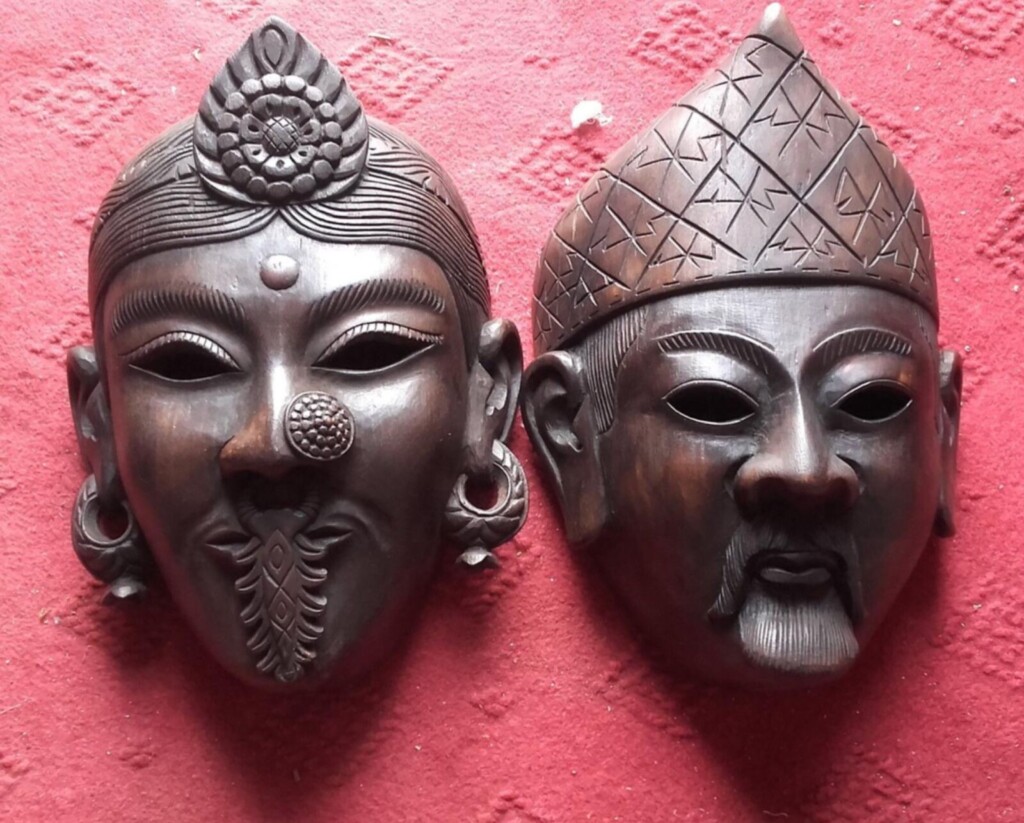
You are handed a white garment before they take everything else. Not metaphorically — literally. The clothes you arrived in are removed, your name is not used, the markers by which you have organized your sense of continuity are systematically withheld. What follows is not punishment. It is architecture.
Victor Turner spent years embedded in the ritual life of the Ndembu people of Zambia before publishing The Ritual Process in 1969, and what he identified there was not a curiosity of tribal custom but a structural constant across cultures separated by oceans and centuries. He called the transitional phase liminality — from the Latin limen, threshold — and within that threshold he located something he termed communitas: a state of radical social undifferentiation in which the initiate is neither what they were nor what they will become. The initiated person exists in a kind of social vacuum. Their prior rank, their family position, their accumulated social credit — all of it is ceremonially suspended. Turner was careful to insist this was not merely symbolic. The suspension had to be experienced as real, felt as a genuine erasure, for the reconstitution that followed to carry any binding force.
What neurobiology has since confirmed is that the experience is not merely felt as real. It is real in the most biochemically measurable sense. Research published across the 1990s and 2000s on cortisol responses in hazing rituals, military initiation sequences, and extreme endurance ceremonies documents acute stress-hormone surges that neurologically mirror the profile of genuine trauma. The hippocampus, which encodes autobiographical continuity — the sense that the person who woke up this morning is the same person who went to sleep last night — becomes functionally disrupted under sustained cortisol elevation. The self does not merely feel unstable. Its neural substrate for stability is temporarily compromised. Ancient ritual designers had no vocabulary for glucocorticoids. They had something more reliable: ten thousand years of empirical observation about what breaks a person open far enough to receive a new structure.
Sensory deprivation accelerates this process with terrifying efficiency. Isolation chambers, blindfolding, enforced silence, sleep restriction — these are not features unique to any single cultural tradition but appear with remarkable consistency from Apache coming-of-age ceremonies to the initiatory trials documented in ancient Eleusinian mystery rites in Greece, whose participants were legally prohibited from describing what occurred inside. Within forty-eight to seventy-two hours of significant sensory reduction, the brain begins generating its own content, filling the silence with hallucination, with ancestral imagery, with what participants across traditions have consistently described as an encounter with death. This is not poetry. The default mode network, ordinarily stabilized by external sensory input, begins producing internal narrative with the same neurological weight it assigns to perceived reality. The boundary between the self and what lies beyond it becomes genuinely porous.
What this means is that the manufactured collapse of prior identity in initiatory ritual is not symbolic violence performed on behalf of society’s desire to mark a transition. It is a deliberate neurological intervention that renders the initiate temporarily incapable of defending the psychological architecture they arrived with. The person who emerges is not the person who entered — not as metaphor but as a description of measurable changes in stress-hormone baseline, social attachment pattern, and autobiographical self-concept. Bronisław Malinowski, working a generation before Turner in the Trobriand Islands, understood that ritual created obligation through shared ordeal. What he could not yet name was the mechanism: that the ordeal functions precisely because it bypasses the cognitive defenses that make ordinary social instruction so fragile and so easily discarded.
The question no one in the literature asks directly is what happens when a society loses the technology of legitimate dissolution — when there is no sanctioned threshold, no controlled collapse, and the need for transformation does not disappear but simply loses its architecture.

The Psyche's Manufactured Rupture
You are sitting across from someone who is paid to help you feel better, and the room is quiet, and the diplomas on the wall are straight, and nothing in this encounter has been designed to break you.
That absence of breakage is the problem. Jung’s work on the collective unconscious, assembled most systematically in the 1959 volume that drew together his studies of archetypes across cultures, arrives at a disturbing conclusion that contemporary therapy has largely refused to metabolize: the psyche does not malfunction when it collapses. It performs. What clinical language classifies as decompensation, dissociation, or acute crisis maps with uncomfortable precision onto what every premodern initiatory structure deliberately engineered — the controlled annihilation of a self that had outlived its container.
Jung called the broader process individuation, and what is rarely emphasized is how violent he believed the early stages to be. The encounter with the Shadow — not a metaphor, but the full experiential confrontation with everything the ego has spent decades refusing to acknowledge about itself — was not, in his framework, a gentle expansion of self-awareness. It was supposed to feel like dying. The Welsh mythological figure of Gwion Bach, boiled down in a cauldron and reborn with impossible knowledge, was not a symbol Jung chose for its warmth. He chose it because it described annihilation as prerequisite. The cauldron does not nourish. It destroys, and what emerges is not the same entity that entered.
What the therapeutic hour systematically prevents is the full temperature of that cauldron. This is not an accusation of bad faith. The infrastructure of modern psychological care was constructed inside a medical paradigm that inherited from nineteenth-century psychiatry a horror of anything resembling religious experience, altered states, or what Emil Kraepelin’s 1899 classification system had already begun sorting into diagnostic bins. When William James, in 1902, wrote in “The Varieties of Religious Experience” about the twice-born soul — the person who has undergone genuine psychological dissolution and emerged reorganized — he was describing something his contemporaries in the emerging psychiatric profession were simultaneously learning to suppress with bromides, isolation, and eventually electroconvulsive intervention. The twice-born soul, to the nascent clinic, looked indistinguishable from a psychiatric admission.
The consequence is a strange inversion. Cultures that possessed no pharmacology, no hospital infrastructure, and no DSM-equivalent nonetheless produced individuals capable of tolerating extraordinary psychological disintegration and reconstituting into functional, often socially vital, adult identities. The anthropologist Victor Turner, working among the Ndembu of Zambia and publishing his findings in 1967, documented how the liminal subject during initiation was stripped of every social marker, name, and relational role — rendered, in Turner’s own word, “structurally invisible.” This invisibility was not cruelty. It was architecture. The dismantling of social identity created the psychic conditions under which a deeper layer of self could be exposed and, critically, reorganized.
Modern therapeutic culture does not make people structurally invisible. It makes them legible. It names what is happening to them, places it inside a nosological category, and thereby offers the ego exactly the handhold it needs to avoid genuine dissolution. A diagnosis is a form of orientation, and orientation is precisely what the initiatory chamber withdraws. When a person in crisis is told they have a condition with a name and a treatment protocol, they are handed a map of a territory that initiation insists must be traversed without one. The name itself becomes the rescue that forecloses the passage.
This is where the rupture between ancient and modern frameworks becomes something more than academic. The question is not whether suffering should be treated. It is whether what contemporary culture calls treatment has quietly become a sophisticated mechanism for interrupting a process the psyche was attempting to complete on its own — and whether the incomplete passage leaves behind something worse than the wound it was meant to close.
Institutions as Initiatory Machines

You signed the forms before you understood what you were signing. The orientation packet had your name pre-printed on the cover, which should have felt welcoming but instead felt like a summons. Someone explained the hierarchy using a diagram that looked like a family tree, except no one on it loved you.
Mircea Eliade spent years cataloguing what he called the morphology of initiation across dozens of cultures, and the conclusion embedded in his 1958 “Rites and Symbols of Initiation” is structurally simple and existentially devastating: the initiate must die as a child and be reborn as something else. The ritual violence — the scarification, the isolation, the deliberate humiliation — was never the point in itself. It was the delivery mechanism for a cosmological narrative that told the candidate precisely what they were becoming and why their suffering had a name. The wound was a word in a sentence the entire community had already agreed to speak.
What happens when you keep the wound and discard the sentence is not a minor revision of the ritual. It is the production of a fundamentally different kind of person. Military hazing, documented extensively in psychological studies from the 1990s onward, replicates the physical and psychological architecture of tribal initiation with disturbing fidelity — the sleep deprivation, the enforced helplessness, the sudden arbitrary violence from figures of authority — but it operates inside an institution whose official ideology disavows the very process it is running. The United States military has formally prohibited hazing since 1992 while simultaneously producing unit cultures where it functions as the primary bonding mechanism. The prohibition and the practice coexist not because of hypocrisy but because the institution genuinely does not know what it is doing. It has inherited a technology without inheriting the manual.
Academic credentialing performs the same dissociation with more social prestige and less visible bruising. The doctoral candidate who spends seven years in a state of enforced intellectual dependency, whose work is perpetually provisional, whose identity is structured around the approval of a committee that holds the power of symbolic rebirth — this person is passing through something that shares its bones with every liminal ordeal Eliade documented. Arnold van Gennep, whose 1909 “The Rites of Passage” established the tripartite structure of separation, transition, and incorporation that Eliade later expanded, would recognize the ABD student — all but dissertation, the official name for the purgatorial middle stage — as a textbook example of a liminal subject stuck in transition with no guaranteed passage to incorporation. The difference is that the tribal initiate knew the elders would eventually let them through. The doctoral candidate is not certain of this, and the institution has made a structural virtue of that uncertainty.
Corporate onboarding is perhaps the most honest of these three precisely because it makes no claims to transforming the soul. And yet the ninety-day probationary period, the deliberate information asymmetry where new employees are kept ignorant of informal power structures, the performance reviews framed as developmental feedback — these are not administrative conveniences. They are mechanisms for producing a specific kind of compliance that cannot be achieved through contractual agreement alone. You cannot sign a contract that makes you genuinely uncertain about your own competence. Initiation can. The sociologist Erving Goffman, writing about total institutions in his 1961 “Asylums,” described a process he called the mortification of self — the systematic stripping of prior identity markers that institutions deploy to make subjects available for reinscription. The corporation does not call it that. It calls it culture fit.
What Eliade’s framework exposes is not that these institutions are secretly ritualistic, but that they are structurally initiatory while being symbolically bankrupt — running the machinery of death and rebirth without any coherent account of what the reborn subject is supposed to become, or why the dying was worth it.
The Uninitiated Society

You have been to a ceremony. Perhaps a graduation, a wedding, a confirmation — something with robes or candles or applause — and you left it feeling nothing had actually changed, that you were still the same person who had walked in, slightly hungry, hoping the reception would have decent wine.
This is not a personal failure of imagination. It is the structural outcome of a civilization that learned to copy the outer garment of initiation while discarding the body it was meant to clothe. Robert Bly, writing in Iron John in 1990, argued that industrial modernity had severed the vertical transmission between generations — that fathers had physically disappeared into factories and offices, taking with them the initiation knowledge that had previously been passed wound to wound, scar to scar. What remained was the ceremony without the elder, the threshold without the guide, the symbol without the mythology capable of making it metabolically real. Bly was writing specifically about men, but his diagnosis reaches further: a whole civilization learning to perform transformation as theater while the actual mechanism — the genuine dissolution of the prior self — was quietly removed from the production.
Psychoanalytic literature on prolonged adolescence began accumulating in the second half of the twentieth century with a kind of alarm that was not always acknowledged as such. Erik Erikson had already mapped in 1968, in Identity: Youth and Crisis, how the moratorium of adolescence was becoming extended, structurally institutionalized, stretched across decades rather than seasons. What he saw as a developmental pause was quietly becoming a permanent address. By the early 2000s, developmental psychologists like Jeffrey Arnett were naming this new zone — emerging adulthood, spanning roughly eighteen to twenty-five — as if naming it could contain what it described: a generation suspended between childhood dependency and adult commitment, neither here nor there, inhabiting a threshold that refused to resolve into a room.
What no taxonomy quite said plainly is that the threshold is only bearable if it moves. Traditional rites understood this physically — you were not permitted to remain in the liminal state indefinitely, because the community could not absorb the cost of your unresolved becoming. The contemporary arrangement inverts this: it is profitable to keep people in perpetual liminality, consuming experiences designed to feel transformative, purchasing identities at the speed of a season, rotating through crisis and reinvention without ever arriving anywhere that would require them to be finished. The market did not destroy initiation; it franchised it, monetized the hunger without ever feeding it, and called the resulting restlessness self-discovery.
What Bly sensed, and what the clinical literature confirms through decades of case material, is that the uninitiated do not simply remain soft. They find their own exits. Not metaphorical ones — real ones, often violent in their structure: addictions that replicate the ordeal’s logic of annihilation and return, radicalization that offers the clarity of an enemy and a brotherhood, physical risk-taking that substitutes adrenaline for meaning. These are not pathologies in the ordinary sense. They are initiatory structures running on whatever raw material the culture left lying around. The hunger is not invented; it is inherited, biological, ancient. When the container is absent, it builds one from wreckage.
What this implies about the nature of the hunger itself — whether it is fundamentally social, something that can be redesigned and satisfied through new institutions, or whether it is more obstinate than that, wired into the architecture of a psyche that was shaped across hundreds of thousands of years by the expectation of exactly this kind of rupture — is a question that neither the anthropologists nor the clinicians have resolved, and perhaps cannot, because answering it would require knowing whether the human animal can truly be remade by the civilization it created, or whether it remains, underneath all of it, a creature still waiting at the edge of the forest for an elder who is no longer coming.
A vision curated by a filmmaker, not an algorithm
In this video I explain our vision
🔮 Threshold Crossings: Initiation, Transformation, and the Self
The rite of initiation is one of humanity’s oldest and most universal structures, bridging psychology and anthropology in a shared inquiry into transformation. Whether understood through Jungian archetypes or cross-cultural ritual studies, initiation marks the threshold between one identity and another. These related articles explore the forces — symbolic, psychological, and mythological — that govern how human beings undergo profound inner change.
The Secret and the Rite: Initiation, Transformation and Jungian Psychology
This article explores the deep connection between secrecy, ritual, and the transformation of the psyche as described in Jungian psychology. Initiation rites are examined not merely as social ceremonies but as symbolic enactments of death and rebirth within the unconscious. The piece offers an essential foundation for understanding how ancient ritual structures mirror the individuation process.
GO TO THE SELECTION: The Secret and the Rite: Initiation, Transformation and Jungian Psychology
The Hero’s Journey as Inner Transformation
Campbell’s concept of the hero’s journey maps the universal stages of initiation across mythology, literature, and lived experience. This article examines how the call to adventure, the ordeal, and the return constitute a psychological template for inner transformation. It reveals how initiation is not an external event but a movement through the depths of the self.
GO TO THE SELECTION: The Hero’s Journey as Inner Transformation
Jungian Individuation and the Great Work
Jungian individuation is here examined through the lens of alchemical symbolism, where the Great Work mirrors the psychological stages of initiation. The opus of transformation — nigredo, albedo, and rubedo — corresponds to the dissolution and reintegration of identity that initiation rites perform on a ritual plane. This article illuminates the hidden psychological architecture beneath alchemical metaphor.
GO TO THE SELECTION: Jungian Individuation and the Great Work
Eliade’s The Myth of the Eternal Return: Analysis
Eliade’s concept of the eternal return provides a foundational anthropological framework for understanding how ritual, including initiation, restores contact with sacred time and primordial origins. Through cyclical repetition, initiatory rites collapse linear time and reconnect the individual to mythological archetypes. This analysis deepens the cultural and religious dimensions of transformation as a universal human experience.
GO TO THE SELECTION: Eliade’s The Myth of the Eternal Return: Analysis
Discover the Cinema of Transformation on Indiecinema
If these themes of passage, identity, and inner metamorphosis resonate with you, Indiecinema streaming is where you will find films that dare to explore them with depth and courage. Our catalog gathers independent works that treat initiation, the unconscious, and human transformation not as spectacle but as lived experience. Step through the threshold and let independent cinema take you somewhere few mainstream films ever go.
👉 EXPLORE THE CATALOG: Watch Indie Films in Streaming
A vision curated by a filmmaker, not an algorithm
In this video I explain our vision

