
The Herbalist at the Door
You are standing in your kitchen when they knock. Not a polite knock — the kind that arrives with a clipboard, a badge clipped to a lanyard, and the particular bureaucratic patience of someone who has done this before and expects to do it again. On your counter there are glass jars: dried chamomile, valerian root, a tincture of elderberry you made in September. You have been helping your neighbors with these things for eleven years. An elderly woman down the street with arthritis. A young mother whose infant wouldn’t sleep. You charged nothing, or almost nothing — a few dollars for the cost of the herbs, sometimes just a jar of jam in return. Now a man with a government seal on his jacket is asking you to explain the difference between what you do and the practice of medicine. The question is a trap and you both know it, but only one of you is allowed to show it.

This scene is not hypothetical. Between 2010 and 2020, health authorities in the United States, the United Kingdom, France, and Germany opened thousands of administrative investigations into individuals practicing what regulatory agencies variously label “unlicensed medical practice,” “unauthorized therapeutic claims,” or simply “fraud.” Many of these cases involved herbalists, midwives, traditional healers, and community practitioners — people operating within centuries-old traditions of plant knowledge that predate the modern nation-state by millennia. The herbalist Theresa Engstrom was fined $30,000 by the State of Minnesota in 2013 for advising clients on herbal supplements without a medical license. She had been doing this work for over two decades. The state did not allege that anyone had been harmed. The allegation was structural: that she had occupied a role that belongs, by law, to someone else.
What makes this legible as criminality rather than as culture is a historical decision so normalized that most people cannot see it as a decision at all. In 1910, Abraham Flexner published a report commissioned by the Carnegie Foundation — “Medical Education in the United States and Canada” — that effectively redesigned who would be permitted to heal and on what institutional basis. The Flexner Report closed 120 of the 155 existing medical schools that it evaluated, eliminating those teaching homeopathy, eclectic medicine, and botanical traditions. What remained were institutions modeled on the German research university, emphasizing laboratory science and pharmaceutical intervention. The body of knowledge that survived was not the most ancient or the most widely used — it was the most compatible with industrial capital. And the licensing systems that followed did not merely regulate medicine; they made alternative knowing illegal.
What is suppressed in that regulatory genealogy is the word “epistemicide” — the killing of ways of knowing. The sociologist Boaventura de Sousa Santos used this term to describe how Western modernity systematically dismantled non-European knowledge systems by reclassifying them as superstition, ignorance, or fraud. His 2014 work “Epistemologies of the South” documents how this process operated not through brute censorship but through the gentler violence of credentialing: the demand that a knowledge system prove itself inside the language and institutions of the very system that displaced it. An herbalist who cannot produce a randomized controlled trial is not considered to have knowledge. She is considered to have beliefs. The distinction carries criminal weight.
The particular cruelty of this arrangement is that it does not declare itself as an arrangement at all. It presents itself as protection — of the public, of the vulnerable, of the very people who have historically relied on folk medicine because they had no access to anything else. And so the state arrives at the door of the woman with the chamomile jars not as an enforcer of power but as a safeguard, clipboard in hand, entirely convinced of its own benevolence.
The Witches of Mount Sciliar
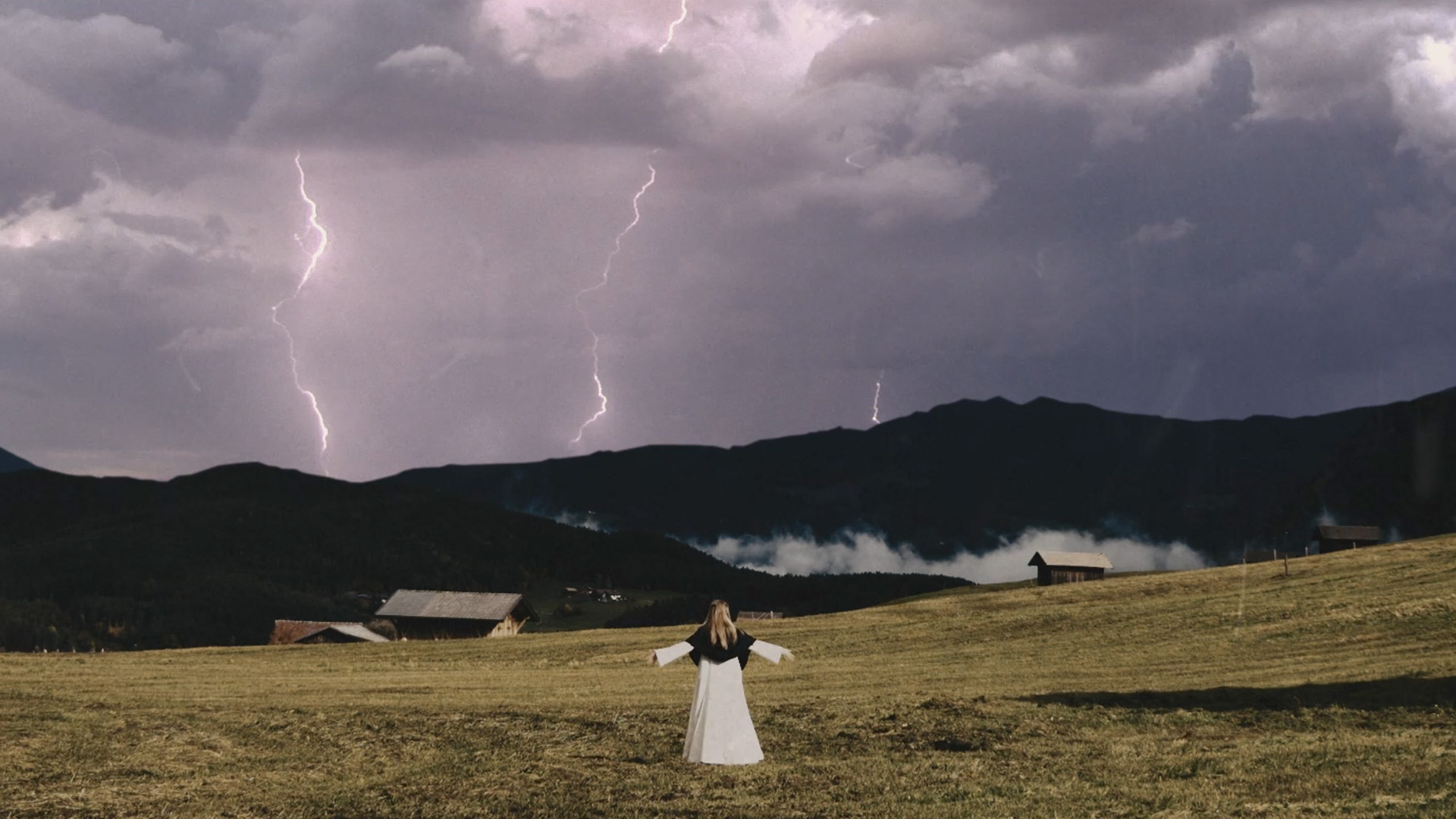
Docufiction, by Andrea Dalfino, 2022, Italy.
The Witches of Scillar is a documentary that delves deeply into the trials that took place in Alto Adige, in Castel Presule and surrounding areas at the beginning of the 16th century, following which more than 10 were condemned to the stake on charges of witchcraft, becoming the real and precursors of the infamous Witch Hunt. Starting from the analysis of the historical context and intertwining local legends with actual events and analyzing the locations of the events with the help and guidance of experts, this film offers a new historical perspective on what happened, culminating with the exposition of what remains of the witches in South Tyrol today and how the crimes of the inquisition are judged in retrospect today.
Alto Adige is a land full of mystery, where history and legend are intertwined, with its magical and fascinating scenarios that push the mind and imagination to wander, investigate, discover. Here is the Sciliar, a suggestive mountain massif located in the natural park of the same name against the backdrop of the Dolomites, and no other mountain is so full of myths and legends as this one, on which it is said that fairy creatures and spirits of all sorts live , and in the Middle Ages it was held up as a meeting place for witches and devils. Here, during the time of the Inquisition, 10 women accused of witchcraft were tried and killed. Director Andrea Dalfino made the documentary The Witches of the Sciliar, enriching the film with fictional scenes that retrace the intricate events of the Fiè trial.
LANGUAGE: Italian
SUBTITLES: English, Spanish, French, German, Portuguese
Medicine as Property: The Enclosure of Healing Knowledge
You are handed a piece of paper at the front desk before you even see a doctor. It lists what you are not allowed to bring into the consultation: no printed information from outside sources, no recordings, no “alternative” remedies for discussion unless pre-approved by the attending physician. The paper is polite. It is also a boundary declaration, a small legal territory staked out before you have spoken a single word.
The American Medical Association was founded in 1847 not primarily to improve care but to control who was permitted to deliver it. The founding delegates were explicit: irregular practitioners — herbalists, midwives, homeopaths, botanical healers — had to be expelled from the category of medicine itself, not because their outcomes were consistently inferior, but because their existence fragmented a market. Licensing laws that followed throughout the latter half of the nineteenth century did not emerge from epidemiological evidence. They emerged from organized professional lobbying that successfully persuaded state legislatures to define healing as a credential rather than a competence. The distinction sounds technical. Its consequences were civilizational.
Ivan Illich argued in 1975 that modern medicine had crossed a threshold he called iatrogenesis — not merely the harm caused by individual clinical errors, but a structural condition in which the medical system itself becomes the principal cause of suffering by disabling the human capacity to heal, to grieve, to age, and to die outside institutional supervision. What Illich identified was not incompetence but a kind of institutional metabolism: the system required dependency in order to reproduce itself. A population that retained its own healing knowledge was a population that had not yet been fully enclosed.
The word “enclosure” carries a specific historical weight that is rarely applied to knowledge, but ought to be. When English common lands were fenced off between the sixteenth and nineteenth centuries, the peasant communities who had worked and managed those lands were not simply displaced — they were made ignorant of their own practical inheritance by being severed from the terrain on which that knowledge had meaning. Herbal lore, wound treatment, fever management, midwifery: these were not primitive guesses. They were accumulated, tested, socially transmitted systems of care that had sustained communities for centuries. Professionalization performed the same operation on knowledge that enclosure performed on land. It did not destroy the commons outright. It reclassified common property as trespass.
The Flexner Report of 1910, commissioned by the Carnegie Foundation and written by Abraham Flexner — a man with no medical training whatsoever — became the instrument through which this reclassification was institutionalized at scale. The report evaluated 155 North American medical schools and recommended closing the majority, particularly the smaller, often Black-serving and women-serving institutions that trained practitioners in eclectic or botanical traditions. The schools that survived were those aligned with the German research-university model, heavily capitalized, oriented toward pharmaceutical intervention and laboratory science. Within fifteen years of the report’s publication, the number of medical schools in the United States dropped from 155 to 31. What vanished was not quackery. What vanished was pluralism.
What remains is a system in which the knowledge of how to manage a fever, set a splint, prepare a compress, or recognize the difference between a dangerous infection and a self-resolving one has been so thoroughly removed from ordinary life that its absence feels natural. People who grow their own food are considered eccentric. People who treat minor illness without a prescription are considered reckless. The criminalization of folk medicine did not begin with a law targeting healers directly — it began with the prior move of defining the healer out of existence, reclassifying centuries of embodied, relational, place-specific knowledge as the unlicensed practice of something that now belonged, exclusively, to someone else.

The Witch Is a Diagnosis

You are standing in a village square somewhere in the Rhineland, 1580-something, watching a woman be accused not of poisoning a well or cursing a child, though those are the charges read aloud — watching her be accused, in the only language the crowd will accept, of knowing too much about bodies and not enough about submission.
The word “witch” did the administrative work that no legal code could yet perform cleanly. It named a crime that was not a crime in any modern sense but rather a category of social illegibility: a woman who controlled reproductive knowledge, who knew which roots slowed bleeding and which fungi induced miscarriage, who held the confidence of women who could not speak openly to priests or husbands. Silvia Federici, in Caliban and the Witch published in 2004, does the unflinching genealogical work of showing that the European witch trials concentrated most lethally between roughly 1450 and 1650 were not an eruption of mass hysteria but a calculated assault on a specific class of practitioner at the precise historical moment when capitalist accumulation required total control over reproductive labor. The timing is not incidental. It is the argument.
Between 1580 and 1630 alone, some regions of what is now Germany executed more than a thousand women, and the disproportionate targeting of midwives, herbalists, and village healers is documented in the trial records themselves. The Malleus Maleficarum, published in 1487 by Heinrich Kramer, explicitly identifies the power to harm fertility — to impede conception, to cause miscarriage — as the central diagnostic criterion of witchcraft. This is not theology. It is a job description written in reverse, a criminalized map of exactly what a competent female healer in that period would have known how to do. The institution doing the persecuting understood precisely which knowledge needed to be extinguished.
What Federici exposes is the mechanism beneath the metaphysics: the enclosure of the commons in England and continental Europe simultaneously dispossessed rural populations of shared land and dismantled the informal economies through which traditional medicine had been transmitted. A woman who healed with plants was embedded in a network of material exchange — she was compensated in kind, she moved through common land to gather, she operated outside the emerging market in licensed medical services. Destroying her destroyed all three: her knowledge, her economic autonomy, and the communal infrastructure that made both possible. The stake was not a religious instrument. It was a form of structural adjustment.
The physician-surgeon guilds that consolidated power across European cities in the fifteenth and sixteenth centuries were explicit in their lobbying for the exclusion of women and unlicensed practitioners. The University of Paris Faculty of Medicine successfully prosecuted Jacoba Felicie in 1322 for practicing medicine without a license, despite testimony from her patients that she had cured them where licensed physicians had failed. The court’s response to this evidence was remarkable in its transparency: the quality of her outcomes was irrelevant. What mattered was that she had practiced at all. Competence, in that framing, was actually an aggravating factor — it made her competition more dangerous to the guild’s economic monopoly.
This logic did not dissolve with the Enlightenment. It reorganized. The criminalization of unlicensed practice in nineteenth-century Europe and America — formalized in the United States through the American Medical Association’s systematic campaign beginning in 1847 to delegitimize homeopaths, midwives, and botanical healers — inherited exactly this structure while stripping it of its supernatural vocabulary. The witch trial required a confession of diabolical pact. The modern unlicensed practice statute requires only a failure to hold the correct credential. The epistemological demand is identical: prove your knowledge through our institution or your knowledge does not exist.
What changed was only the costume worn by the tribunal sitting in judgment of who gets to touch a body with authority.
Placebo, Efficacy, and the Standard of Proof
You sit across from a doctor who has twelve minutes with you. He types while you speak. The prescription arrives before you finish describing the third symptom. Somewhere in that room, efficiency became care, and neither of you noticed the substitution.
The randomized controlled trial is not a neutral instrument. It is a philosophical commitment dressed in white linen, and its central wager — that you can isolate a single variable inside a living human being and call what you find truth — depends on a fiction so foundational that questioning it feels like questioning arithmetic. Ted Kaptchuk at Harvard Medical School spent decades demonstrating that the placebo effect is not noise to be subtracted from data but a genuine physiological event: endogenous opioids released, measurable immune modulations, real tissue changes. His 2010 paper in PLOS ONE showed that patients with irritable bowel syndrome improved even when told explicitly they were receiving a placebo. The ritual of being cared for, the consistency of encounter, the symbolic weight of a pill — these produced outcomes. The RCT had been designed specifically to exclude these forces from consideration, and what it excluded turned out to be, in certain conditions, the mechanism.
The philosopher of science Paul Feyerabend argued in Against Method in 1975 that science advances not by rigorous adherence to a single method but through the violation of established rules, through opportunism and theoretical anarchism. What biomedicine did instead was institutionalize one method and then use its monopoly to define all other methods as pre-scientific. The consequences were not merely academic. In the United States, the Flexner Report of 1910 restructured medical education around laboratory science and German research models, shutting down the majority of schools that practiced botanical, homeopathic, and eclectic traditions. Of the 155 medical schools operating in 1900, fewer than 30 remained by 1935. The knowledge those schools carried — much of it rooted in Indigenous, African American, and rural European healing traditions — was not disproven. It was defunded.
Community is not a confound. When an elderly Haitian woman applies herbal compresses to a child and speaks to the family about what the body is telling them, she is not failing to conduct a double-blind trial. She is practicing something for which the trial has no architecture. The healing she performs is relational in its structure: it requires the presence of shared belief, social trust, and intergenerational memory. You cannot randomize those variables without destroying the phenomenon you are trying to measure. Anthropologist Byron Good, in Medicine, Rationality, and Experience published in 1994, showed that illness is always interpreted through cultural narrative, and that treatment disconnected from that narrative systematically underperforms — not because the treatment is wrong, but because the epistemological container is too small.
What is structurally excluded from evidentiary standards then becomes legally vulnerable. If a practice cannot produce an RCT, it cannot claim efficacy. If it cannot claim efficacy, the state can frame its use not as medicine but as deception. This is not a logical necessity — it is a political choice encoded as a scientific one. The Dietary Supplement Health and Education Act of 1994 in the United States drew an explicit line: manufacturers could not claim that a substance treated disease without FDA approval, but disease had already been defined in terms that only biomedical categories could satisfy. The folk healer treating what she calls a tired blood condition in a language her patients understand is not making a claim that translates cleanly into ICD codes. The legal system does not reward her for that specificity — it punishes her for it.
There is a woman in a county jail in rural Tennessee right now who was arrested for practicing medicine without a license. She had delivered more than two hundred babies over thirty years without a single maternal death in her community, in a region where hospitals are forty miles away and maternal mortality among Black women runs at nearly three times the national average for white women.
The Pharmacopeia as Political Document
You have probably never thought of a government document as a weapon, but in 1820, eleven physicians gathered in Washington D.C. and produced exactly that. The first United States Pharmacopeia was not a neutral catalogue of healing substances. It was a selection — a deliberate narrowing of what medicine was permitted to mean. Of the hundreds of plant preparations, animal compounds, and mineral remedies that circulated through American households and Indigenous communities at the time, only those deemed sufficiently uniform, reproducible, and measurable made the list. The criterion was never therapeutic outcome. The criterion was standardization. Whether a remedy healed was secondary to whether it could be replicated identically, measured in grains, and described in Latin.
This distinction — between what works and what can be controlled — is the quiet engine behind the entire modern pharmaceutical order. The sociologist Paul Starr documented in his 1982 work The Social Transformation of American Medicine how the consolidation of medical authority in the United States was inseparable from the destruction of competing knowledge systems. What he traced through the rise of the American Medical Association, others have traced through the documents themselves. The Pharmacopeia did not simply describe drugs. It constituted them. To appear in its pages was to exist legally as medicine. To be absent was to begin the slow slide toward quackery, fraud, folk superstition — a slide that had nothing to do with efficacy and everything to do with whether the remedy had a constituency powerful enough to demand inclusion.
By 1906, that constituency had a name and an address. The Pure Food and Drug Act, signed by Theodore Roosevelt after years of pressure from both consumer advocates and pharmaceutical manufacturers, is remembered as a triumph of public safety against adulterated patent medicines. That memory is not false, but it is incomplete in a way that functions as ideology. The Act did target dangerous adulterations — the opium-laced syrups sold as infant calmers, the alcohol-saturated tonics marketed to temperance households. But it simultaneously established a regulatory framework whose primary operational test was commercial reproducibility. A remedy had to list its ingredients consistently across batches. It had to be describable in chemical terms. It had to be produced in a form that a regulatory body could inspect and a corporation could manufacture. The herbalist who grew her own valerian, prepared it differently each season according to the plant’s condition and the patient’s constitution, and charged nothing for the knowledge itself — she failed every single criterion, not because her remedy was dangerous, but because it was illegible to the apparatus designed to read only industrial production.
The legal scholar Renée Loux Knake has written about the way professional licensing functions as economic protectionism dressed in the language of consumer safety, and that observation applies with particular force here. What the 1906 Act accomplished was not the elimination of dangerous substances from commerce — many of those continued circulating under pharmaceutical patents for decades — but the elimination of the epistemological competition. Once legality was defined around reproducibility, patentability, and scale, an entire class of healing knowledge became structurally criminal without a single practitioner being directly named. The law did not say that plant medicine was illegal. It said that medicine was what the law could see, and it had designed its own vision to exclude everything it had not already decided to permit.
The bitterest irony is that this exclusion was sold as democratization. The Pharmacopeia, its architects argued, would protect ordinary Americans from charlatans by establishing a common standard. The standard it established, however, was one that only institutions with laboratories, lawyers, and capital could meet — which meant that the people most reliant on non-commercial healing, the rural poor, immigrant communities, freedpeople building medical sovereignty after emancipation, were the ones most thoroughly stripped of their remedies’ legal standing.
A vision curated by a filmmaker, not an algorithm
In this video I explain our vision
Colonialism's Second Wound: The Erasure of Indigenous Pharmacology

You are handed a pill and told it cures fever. You swallow it without ceremony, without gratitude, without the faintest curiosity about the woman who first pressed willow bark against a burning child’s forehead somewhere along a river that no longer carries its original name. The pharmaceutical industry calls this compound acetylsalicylic acid. Bayer trademarked it in 1899. The Haudenosaunee, the Assyrians, the ancient Egyptians — none of them filed a patent, because the knowledge was not property. It was inheritance. The colonial machine arrived, observed that inheritance, pocketed it, and then arrested its original custodians for practicing medicine without a license.
This is not metaphor. Between 1890 and 1950, across British India, French West Africa, and the settler colonies of the Americas, indigenous healers were systematically prosecuted under vagrancy laws, public health ordinances, and witchcraft statutes repurposed from European ecclesiastical tradition. The Indian Medical Degrees Act of 1916 established credentials that only institutions built on Western epistemology could grant, effectively rendering centuries of Ayurvedic and tribal knowledge legally unauthorized. The crime was not ignorance. The crime was knowledge that had not been certified by the colonizer.
Quinine stands as perhaps the most brutal illustration of this double movement. Jesuit missionaries extracted the bark of the cinchona tree from Andean communities in the 1630s, communities for whom the compound had been functional medicine against malaria for generations. By the nineteenth century, European pharmaceutical firms were producing quinine industrially, the British Empire was dosing its troops with it to sustain tropical campaigns, and the Quechua people who had cultivated and transmitted the knowledge of cinchona’s properties were simultaneously being dispossessed of the land those trees grew on. The pharmacological gift was received. The giver was made invisible, then criminal, then landless.
What makes this extraction especially insidious is that it operated alongside — not before or after, but simultaneously with — a theological and legal framework that characterized indigenous medicine as superstition. Frantz Fanon, writing in The Wretched of the Earth in 1961, described the colonial world as one divided not just by race and class but by epistemology: the colonizer possessed legitimate knowledge, the colonized practiced dangerous folklore. This was not accidental framing. It was policy. When a Zulu isangoma was prohibited from administering herbal treatments under South African colonial law, the prohibition was justified on public health grounds. The colonial administration was, at the same moment, shipping dried botanical samples to Kew Gardens for cataloguing and potential pharmaceutical development.
The legal architecture that emerged from colonialism did not dissolve with independence. The International Patent System, codified through the 1994 TRIPS Agreement within the World Trade Organization framework, protects pharmaceutical innovations for a minimum of twenty years. It contains no reciprocal mechanism for compensating source communities whose generational knowledge was the original innovation. A corporation that synthesizes an active compound found in an Amazonian plant used by the Yanomami for centuries can patent that synthesis and sue competitors for infringement, while the Yanomami themselves remain without legal standing to claim prior authorship. The structure does not merely fail to protect indigenous pharmacological knowledge. It actively converts that knowledge into private property the moment it passes through a laboratory.
Anthropologist Darrell Posey spent much of the 1980s documenting what he called biocultural knowledge among indigenous Amazonian communities, arguing in his 1996 work Beyond Intellectual Property that existing legal frameworks were congenitally incapable of accommodating collective, intergenerational, and non-commodifiable forms of knowing. He was not describing an oversight. He was describing a design. The system was not built for the bodies that produced the knowledge. It was built for the bodies that extracted it, and the extraction required, as a precondition, that the original practitioners be repositioned as unqualified, dangerous, or simply gone.
The Licensed Body and the Governed Self
You already know something is wrong the moment you fill out a form asking permission to treat your own infection with a plant your grandmother grew. The feeling is hard to name — a mixture of absurdity and quiet shame — because the form itself implies that the knowledge you carry in your body, passed through gesture and smell and seasonal rhythm, belongs to a jurisdiction that did not exist when your grandmother was alive.
Michel Foucault spent the better part of the 1970s mapping exactly this sensation. In Discipline and Punish, published in 1975, he argued that modern power does not primarily operate through prohibition — through the sovereign who says no — but through a far more intimate architecture that sorts, measures, classifies, and normalizes populations from within. The licensed body is not a free body that has been restricted. It is a body that has been produced by the licensing system itself, shaped into a subject who experiences unauthorized healing not as a legitimate ancestral practice but as a private deviance requiring correction. The prison Foucault described was never only the building with bars. It was the learned interiority of the inmate who begins to watch himself.
What the licensing apparatus achieves that outright prohibition never could is the colonization of self-perception. When herbalists in the United Kingdom were barred from making specific therapeutic claims under the 1968 Medicines Act and its subsequent regulatory tightening, the law did not simply restrict their public speech. It restructured how they understood their own competence. Practitioners who had diagnosed and treated successfully for decades began to doubt the validity of their own observation because it had not been validated by a credentialing body. The law inserted itself between the healer and her knowledge, and the gap it created felt, from the inside, like ignorance.
This is biopower operating at its most efficient: not forcing compliance through visible coercion, but making unauthorized self-knowledge feel inherently unreliable. The individual who grows valerian for insomnia, who ferments kefir for digestive trouble, who uses calendula on a wound, has not broken any law in most Western jurisdictions — and yet she performs these acts with an awareness of their marginality, an apologetic half-secrecy, as if waiting to be corrected by someone with the proper credentials. That waiting is itself a political condition. It is the posture of a governed self.
Historians of medicine like Barbara Ehrenreich and Deirdre English documented in their 1973 pamphlet Witches, Midwives, and Nurses how the professionalization of medicine in the late nineteenth and early twentieth centuries was not simply a technical achievement but a process of demographic consolidation — a systematic transfer of healing authority away from women, the poor, and rural communities toward a predominantly male, urban, credentialed class. By 1910, the Flexner Report had effectively transformed American medical education from a decentralized network of schools into a standardized institution modeled on Johns Hopkins, closing more than half of the country’s medical schools within two decades. What was erased in that consolidation was not incompetence. It was difference — a plurality of healing epistemologies that could not survive being measured against a single authorized standard.
The licensed body that emerged from this history is therefore not a politically neutral achievement. It is the embodied residue of a specific set of power struggles dressed in the neutral language of safety and scientific rigor. When contemporary regulation requires that a practitioner hold a state-recognized certificate before advising a neighbor on elderberry dosage, it is not primarily protecting that neighbor from harm. It is enforcing a particular theory of where knowledge legitimately resides — and that theory has a history of serving those who were already positioned to hold licenses, not those whose knowledge had always lived in the body, the garden, the kitchen, the inherited tongue.
What Survives Underground

Somewhere in a kitchen that smells of dried oregano and something older than oregano, a woman in her seventies is teaching her granddaughter which part of the elderberry to avoid and which part to trust. There is no certificate on the wall. There is no liability waiver on the table. There is only the transmission itself, oral and embodied, passing through hands and memory the way it has passed for longer than any licensing board has existed. The granddaughter is not being trained. She is being remembered into something.
What survives underground survives precisely because it cannot be made legible to the systems that would consume it. Ivan Illich wrote in 1976, in “Limits to Medicine,” that the medical establishment had become a major threat to health not through malice but through the logic of monopoly — the seizure of an entire domain of human experience and its repackaging as a professional commodity. What he could not have fully anticipated was the recursive consequence: that the seizure would be incomplete, that the knowledge pushed underground would mutate in the dark and emerge stranger, more resilient, and in some cases more dangerous precisely because it had been forced out of any dialogue with critical scrutiny. Suppression does not purify what it targets. It removes it from correction.
The anthropologist Paul Farmer, working across Haiti and Rwanda in decades of field research documented in works like “Pathologies of Power,” observed that communities excluded from formal healthcare did not simply wait in medical silence. They developed parallel pharmacopoeias, ritual healing frameworks, and diagnostic languages that addressed the social and spiritual dimensions of illness that biomedicine had already decided were not illness at all. This was not primitive residue. It was a sophisticated response to abandonment. The problem was that without any institutional interlocutor willing to take it seriously, it also had no mechanism for self-correction. Effective remedies coexisted with harmful ones, and the community had no external pressure to distinguish between them — not because the community was incapable, but because the only external pressure available was criminalization, which does not teach, it only silences.
There is a cost to what the granddaughter inherits in that kitchen, and it is not the cost that regulators identify. The regulators see liability, unverified claims, the risk of delayed diagnosis. These are real concerns, and they are not wrong to name them. But the cost that goes unacknowledged is the cost of the fracture itself — the fact that this knowledge cannot be studied, cannot be refined through honest institutional engagement, cannot be integrated with what formal medicine actually knows, because the relationship between the two has been structured as prosecution rather than conversation. The knowledge survives, but it survives in a form that cannot grow toward greater precision because growth requires exposure, and exposure, for this woman and her granddaughter, carries legal risk.
Ethnobotanist Wade Davis, in his 1985 work “The Serpent and the Rainbow” and in subsequent academic writings, documented how pharmaceutical corporations spent decades extracting bioactive compounds from exactly these underground traditions — traditions they had no legal or ethical interest in protecting — and then patenting derivatives of that extracted knowledge. The communities whose centuries of empirical observation had identified those compounds received nothing. Not credit. Not compensation. Not even the acknowledgment that what they had known constituted knowledge at all. The system that had declared their medicine illegal was simultaneously mining it for profit, which means the criminalization was never really about safety.
What survives underground survives because human beings have always known things about their own bodies that no institution gave them permission to know, and the act of passing that knowledge from one pair of hands to another is older than the concept of a crime, older than the concept of a state, older than the idea that knowing something without authorization could make you dangerous rather than wise.
🌿 When Healing Becomes a Crime
The criminalization of folk medicine reveals a deep tension between institutional power and ancestral knowledge. Across centuries, traditional healers, herbalists, and wise women have been persecuted, silenced, or dismissed by dominant systems of authority. These related articles explore the cultural, social, and philosophical dimensions of that ongoing conflict.
Ivan Illich and Medical Nemesis: When Medicine Does Harm
Ivan Illich‘s radical critique of modern medicine exposed how healthcare institutions can become instruments of harm rather than healing. His concept of iatrogenesis — the damage caused by medical systems themselves — resonates deeply with the historical suppression of folk remedies and traditional practitioners. Understanding Illich is essential to grasping why folk medicine has so often been treated as a threat rather than a resource.
GO TO THE SELECTION: Ivan Illich and Medical Nemesis: When Medicine Does Harm
Cultural resilience as a defense against the extinction of minorities
Cultural resilience describes the capacity of minority communities to preserve their identity and practices in the face of dominant forces seeking to erase them. Folk medicine is one of the most intimate expressions of this resilience, carrying centuries of botanical knowledge, ritual, and care within marginalized groups. When these traditions are criminalized, it is not only a legal act but a cultural wound inflicted upon living memory.
GO TO THE SELECTION: Cultural resilience as a defense against the extinction of minorities
The roots of social prejudice and the mechanisms of exclusion
Social prejudice operates through mechanisms of exclusion that label certain bodies of knowledge as dangerous, primitive, or superstitious. The persecution of folk healers throughout history is a textbook case of how institutional power constructs the boundary between legitimate and illegitimate knowledge. Examining the roots of prejudice helps us understand why folk medicine continues to be viewed with suspicion in many contemporary societies.
GO TO THE SELECTION: The roots of social prejudice and the mechanisms of exclusion
Anthroposophic Medicine: Healing the Body through the Spirit
Anthroposophic medicine represents one of the most articulate modern attempts to integrate spiritual and holistic dimensions into healing, challenging the reductive materialism of mainstream healthcare. Developed by Rudolf Steiner, it has itself faced institutional resistance and legal scrutiny, echoing the broader struggle of alternative healing traditions to gain recognition. Its history illuminates the persistent conflict between orthodox medicine and knowledge systems rooted in different cosmologies.
GO TO THE SELECTION: Anthroposophic Medicine: Healing the Body through the Spirit
Discover Independent Cinema on Indiecinema
If these themes stir something in you, Indiecinema is the streaming platform where cinema meets ideas, bodies, and resistance. Explore our curated selection of independent films that dare to question power, celebrate forbidden knowledge, and give voice to those the system would rather silence.
👉 EXPLORE THE CATALOG: Watch Indie Films in Streaming
A vision curated by a filmmaker, not an algorithm
In this video I explain our vision

